Noctua launched the NH-D15 G2 chromax.black edition in early 2026 at $189, and it supports next-gen LGA-1954 “Nova Lake-S” CPUs — a useful hedge if you plan to stay on the same cooler through the next Intel platform. Meanwhile, the Arctic Liquid Freezer III Pro has quietly become the thermal benchmark for 240mm AIOs, and the Thermalright Peerless Assassin 120 SE is still the most absurd performance-per-dollar purchase in PC cooling. If you’re deciding between air and liquid this year, the answer depends more on your use case than the marketing.
| Spec | Thermalright Peerless Assassin 120 SE 9.5/10 | DeepCool AK620 Unavailable 8.8/10 | Arctic Liquid Freezer III Pro 240 Unavailable 9/10 | NZXT Kraken 240 Unavailable 8.5/10 | Noctua NH-D15 G2 9.2/10 |
|---|---|---|---|---|---|
| Type | Dual Tower Air | Dual Tower Air | 240mm AIO | 240mm AIO | Dual Tower Air |
| TDP | 265W | 260W | — | — | 240W+ |
| Fans | 2x 120mm | 2x 120mm FDB | 2x 120mm PWM | 2x 120mm F120P | 2x 140mm NF-A14x25r G2 |
| Max RPM | 1550 RPM | 1850 RPM | — | — | 1500 RPM |
| Noise | 25.6 dBA | — | 30 dBA | — | — |
| Height | 155mm | 160mm | — | — | 168mm |
| Sockets | AM4, AM5, LGA1700, LGA1851 | AM4, AM5, LGA1700, LGA1851 | AM4, AM5, LGA1700, LGA1851 | AM4, AM5, LGA1700, LGA1851 | AM4, AM5, LGA1700, LGA1851 |
| Rating | 9.5/10 | 8.8/10 | 9/10 | 8.5/10 | 9.2/10 |
Prices change daily — tap Check Price for the current Amazon price.
Prices change daily — tap Check Price for the current Amazon price.
Quick Picks
- Best budget cooler (either category): Thermalright Peerless Assassin 120 SE — $35, 265W TDP, quieter than most AIOs
- Best AIO for high-TDP chips: Arctic Liquid Freezer III Pro 240 — $79, beats the EK 240 in thermal tests, includes VRM fan
- Best premium air cooler: Noctua NH-D15 G2 — $179, competes with 280mm AIOs with no pump to fail
Air vs AIO: What to Know Before Choosing
When air cooling wins
For any CPU under 150W TDP — which includes the Ryzen 7 9800X3D, Core Ultra 5 245K, and Ryzen 5 9600X — a dual-tower air cooler matches AIO performance at a fraction of the price. The Thermalright Peerless Assassin 120 SE costs $35 and keeps these CPUs comfortably cool. Paying $80–$100 for a 240mm AIO on these chips buys you maybe 3–5°C, which has zero impact on gaming performance or CPU longevity.
Air coolers also win on reliability. A dual tower has no pump, no tubes, no coolant, and no waterblock to degrade. Every AIO sold today will fail before a quality air cooler does, given enough years. If you want a cooler you never think about again, air is the right choice.
Case clearance matters: air coolers run tall. The Peerless Assassin 120 SE is 155mm, the AK620 is 160mm, and the NH-D15 G2 is 168mm. Most mid-towers accommodate these without issue, but compact ATX and mATX cases sometimes cap at 155–160mm. Measure before you buy.
When a 240mm AIO wins
High-TDP processors — the Core i9 14900K, Core Ultra 9 285K, Ryzen 9 9950X — push sustained all-core loads above 200W. At those power levels, a 240mm AIO keeps thermals flatter and maintains higher boost clocks for longer than a comparable air cooler. The Arctic Liquid Freezer III Pro 240’s extra-thick 38mm radiator and VRM fan address one of the main AIO weaknesses at this tier: starving the VRMs while cooling the CPU.
240mm AIOs also make more sense in small mid-towers and ITX cases where a dual-tower heatsink simply won’t fit, or where you want the top RAM slots accessible without obstruction. The NZXT Kraken 240 is a good fit here — it’s compact, comes with easy-to-use CAM software, and the LCD display is genuinely useful for monitoring temps without opening task manager.
PSU and mounting requirements
240mm AIOs typically install in a 240mm front or top fan position. Check that your case has a dedicated 240mm radiator mount; not all cases do. Air coolers just need a backplate — nearly universal for modern builds.
Neither category requires special PSU consideration. A quality 650W PSU handles any CPU paired with a cooler from this list.
Detailed Reviews
Thermalright Peerless Assassin 120 SE — $35
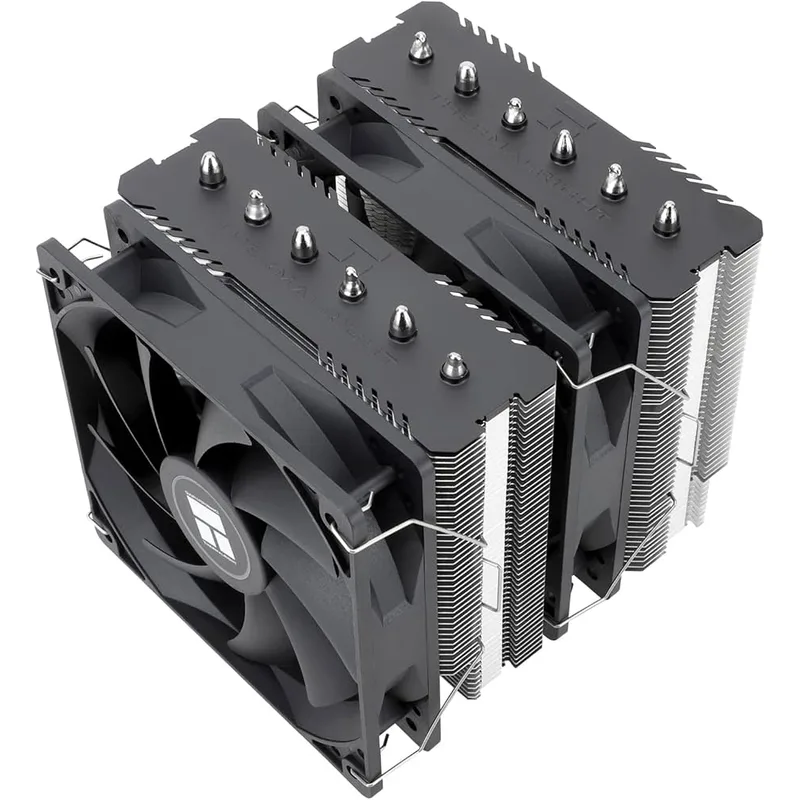
The Peerless Assassin 120 SE has been the best cooler for the money for over two years, and it hasn’t been displaced. At $35, it delivers 265W TDP handling via six copper heat pipes and two 120mm TL-C12C fans running at up to 1550 RPM. In testing by multiple reviewers, it keeps the Core i7-14700K in check during gaming loads and trades blows with 240mm AIOs in pure thermal performance.
The noise advantage is real and meaningful. At max fan speed it measures 25.6 dBA — quieter than the vast majority of 240mm AIOs when those AIOs are running their pumps and fans at comparable cooling output. At idle and light gaming loads, it drops near-silent.
The one hard constraint is height: 155mm means you need at least 155mm clearance between your motherboard and side panel. Most standard ATX mid-towers clear this easily. Compact cases — Fractal Define 7 Compact, Lian Li PC-O11 Air Mini — need a measurement before you buy.
Compatible with AMD AM4, AM5, and Intel LGA1700, LGA1851. Socket compatibility covers every current platform.
DeepCool AK620 — $65
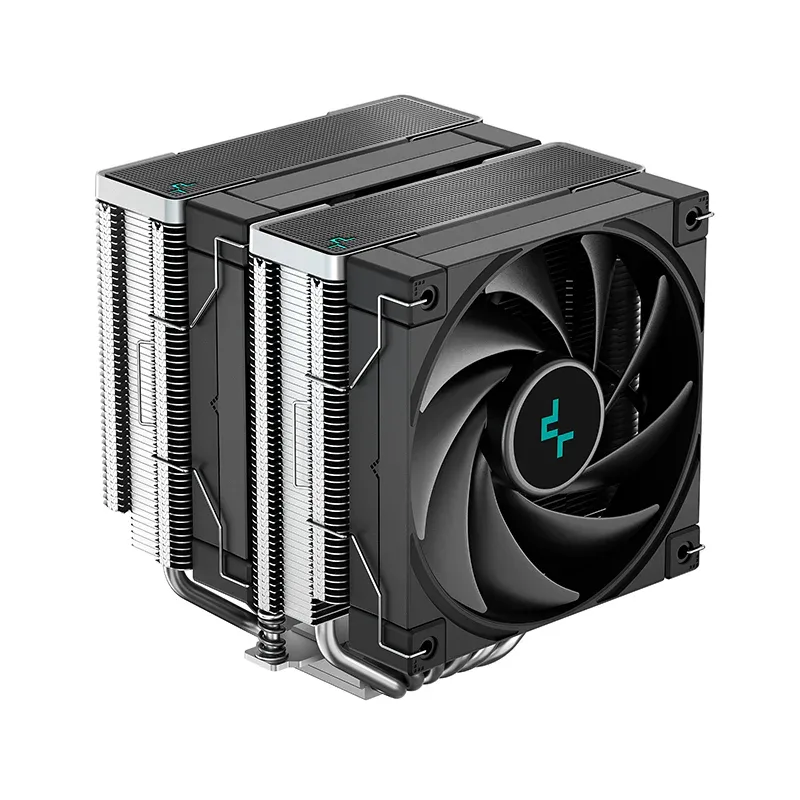
DeepCool AK620
The DeepCool AK620 is the right upgrade path from the Peerless Assassin if you need a few more degrees of headroom or want Fluid Dynamic Bearing fans for long-term noise consistency. At 260W TDP with dual 120mm FDB fans running up to 1850 RPM and 68.99 CFM airflow, it handles Ryzen 9 and Core i9 chips without breaking a sweat under gaming workloads.
The value case here is pricing: the AK620 at $65 undercuts comparable 240mm AIOs by $20–40. If you’re building around a Ryzen 9 9950X and budget matters, the AK620 delivers near-AIO cooling without the pump risk or tube routing overhead.
Its main limitation is the same as every dual-tower: you’re at 160mm height. That rules it out for cases with under 160mm clearance and means the top RAM slot may be blocked on boards with taller DIMMs. Check both specs before ordering.
Compatibility: AMD AM4/AM5, Intel LGA1700/1200/1151/1150/1851.
Arctic Liquid Freezer III Pro 240 — $79
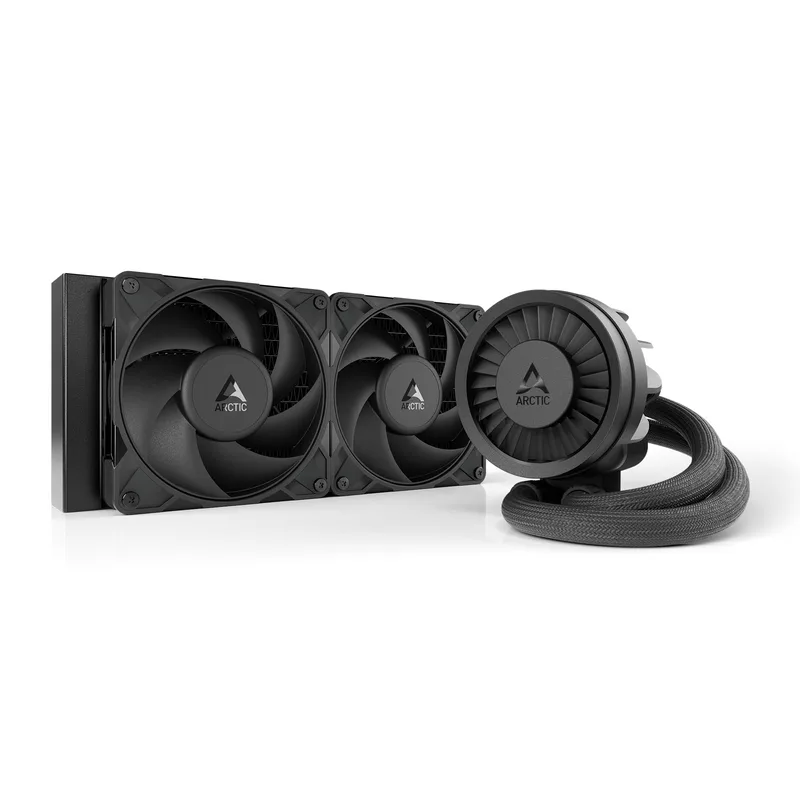
Arctic Liquid Freezer III Pro 240
The Arctic Liquid Freezer III Pro 240 is the best-performing 240mm AIO at this price point. Independent thermal testing shows it surpassing the EK 240 AIO — historically one of the strongest 240mm options — while sitting at a lower price. The Pro version adds an integrated VRM fan over the previous Liquid Freezer III, which makes a measurable difference on Intel Z890 and AMD X870E boards where VRM temps become the secondary constraint during sustained all-core workloads.
The 38mm radiator thickness is the key differentiator over standard 27mm designs. More fin surface area means the same fans move more total heat at lower RPM, which translates to lower noise at equivalent cooling performance. At full load it measures 30 dBA — competitive but not class-leading among 240mm AIOs.
The main ergonomic downside: Arctic’s tubing and pump block are bulkier than NZXT’s or Corsair’s. In tighter builds, routing the tubes cleanly requires more planning. The VRM fan also adds a slight buzz under high-TDP Intel loads, audible in a quiet room.
Compatible with AM4, AM5, LGA1700, LGA1851.
NZXT Kraken 240 — $100
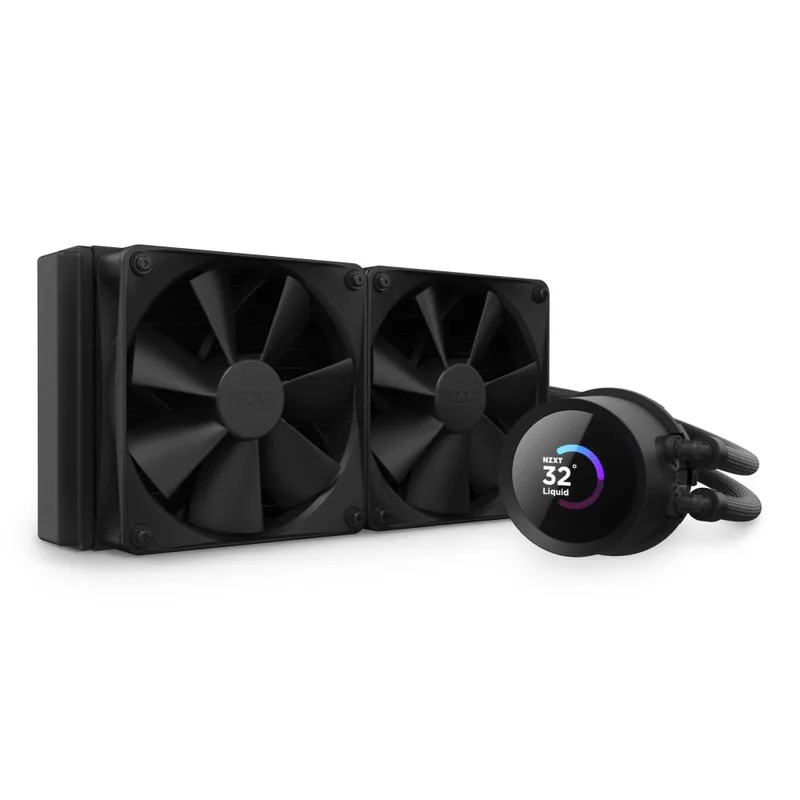
NZXT Kraken 240
The NZXT Kraken 240 costs roughly $20 more than the Arctic Liquid Freezer III Pro 240 and delivers slightly lower peak thermal performance in direct comparison. What it offers in return is a more polished user experience: the 1.54” LCD panel displays CPU temperature, load percentage, GPU metrics, or custom images; NZXT CAM software provides the clearest pump and fan control UI in the category; and the Asetek Gen 8 pump delivers reliable long-term performance backed by documented low failure rates.
For most mid-range builds — Ryzen 7, Core i7, Core Ultra 7 chips in the 65–125W TDP range — the Kraken 240 handles everything without issue. The XDA-Developers review noted it handles 125W TDP CPUs well, which covers the bulk of current mainstream gaming processors.
Where the Kraken 240 struggles to justify itself: against a $35 Thermalright PA120 SE on a Ryzen 7 9800X3D, you’re paying $65 more for marginal thermal gains. Against the $79 Arctic Liquid Freezer III Pro, you’re paying $21 more for worse peak performance but a better UI. Those trade-offs are legitimate for some builders — the LCD and CAM software are real advantages — but purely on value, the Kraken 240 comes third in this list.
Compatible with AM4, AM5, LGA1700, LGA1851.
Noctua NH-D15 G2 — $179
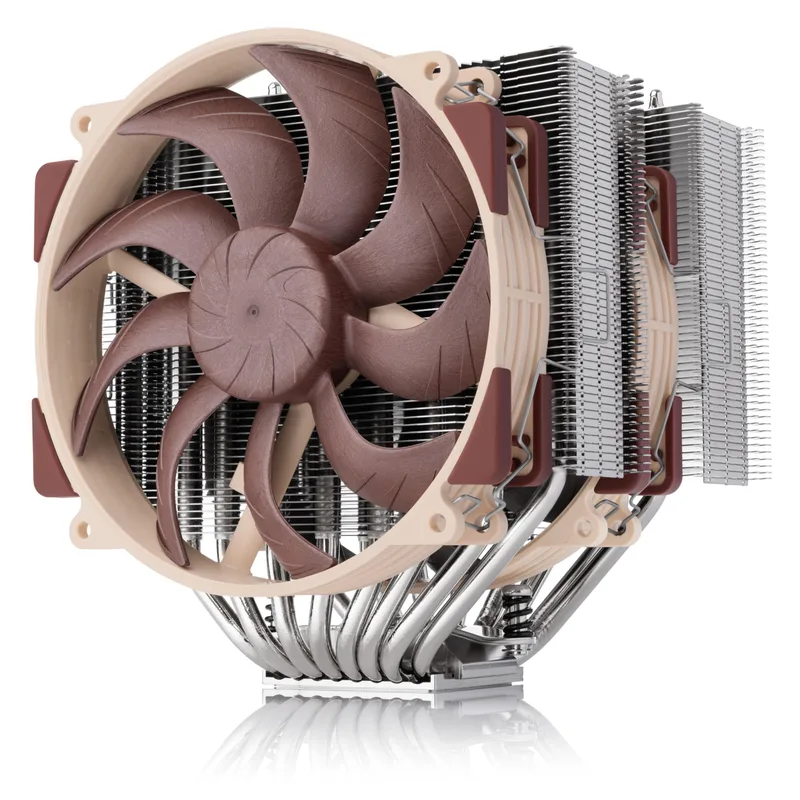
The Noctua NH-D15 G2 is Noctua’s first major dual-tower cooler redesign since the original NH-D15 in 2014. Eight heat pipes, dual 140mm NF-A14x25r G2 fans, and an asymmetric heatsink design deliver sustained 240W+ cooling — enough to outperform most 240mm AIOs and compete directly with 280mm liquid coolers. Tom’s Hardware’s review found it cooling an average of 240W in testing, a roughly 10W improvement over the original NH-D15.
Three variants exist: the standard version (best all-around), the HBC (High Base Convexity, optimized for Intel’s slightly convex IHS), and the LBC (Low Base Convexity, optimized for AMD’s flat AM5 IHS). The standard model covers both platforms adequately. If you’re on AM5 and cooling a Ryzen 9 9950X or 9950X3D, the LBC variant is worth the same price for 1–2°C better contact.
The two real trade-offs: height and noise. At 168mm, the NH-D15 G2 can block the top RAM slot on certain Z890 and X870E boards — verify your specific motherboard’s cooler clearance spec before ordering. At gaming loads, fans climb to around 40 dBA, which is louder than most competing coolers at similar thermal outputs. Not loud by any objective standard, but audible in a quiet room.
The chromax.black version launched in 2026 at $189 and adds Nova Lake-S (LGA-1954) compatibility for builders planning to stay on this cooler through Intel’s next platform generation.
Compatible with AM4, AM5, LGA1700, LGA1851. Chromax.black variant ($189) adds LGA-1954 support.
Comparison Table
FAQ
Does a 240mm AIO always outperform an air cooler at the same price?
No. The Thermalright Peerless Assassin 120 SE at $35 matches many 240mm AIOs in the $70–$90 range. At the same price point — comparing the $65 DeepCool AK620 against a $65 240mm AIO — the air cooler typically wins or ties in thermal performance. AIOs only clearly outperform air at the premium end, typically 280mm or 360mm radiators, not 240mm.
Which is better for the Ryzen 7 9800X3D?
The Thermalright Peerless Assassin 120 SE is the right cooler for the 9800X3D. AMD’s flagship gaming CPU has a 120W TDP that any dual-tower handles comfortably. Spending $100 on a 240mm AIO buys you 3–5°C under sustained all-core load — which doesn’t affect gaming performance or boost clock behavior on this chip.
Can a 240mm AIO handle the Core i9-14900K under sustained load?
Yes, but it’ll run its fans harder and louder than a 280mm or 360mm AIO would. The Arctic Liquid Freezer III Pro 240’s thick 38mm radiator and VRM fan give it more headroom than standard 240mm AIOs for this chip, but expect fan speeds to rise under sustained Cinebench or rendering workloads. For daily use and gaming, a 240mm AIO is adequate. For extended compute workloads, step up to 280mm or 360mm.
Do AIOs need maintenance?
Modern sealed AIOs require zero maintenance. The coolant is sealed at the factory and doesn’t need to be refilled or changed. The pump can develop a rattle or fail after 5–8 years; air coolers don’t have this failure mode. Both categories are effectively maintenance-free for the life of a typical build.
What case clearance do I need for the Noctua NH-D15 G2?
168mm minimum from motherboard tray to side panel. Most standard ATX mid-towers (Fractal North, Lian Li Lancool 216, NZXT H510) have 160–170mm clearance — verify your specific case spec. Compact mid-towers and mATX cases are a tighter fit.
The Bottom Line
For most builders pairing with a mainstream gaming CPU, the Thermalright Peerless Assassin 120 SE at $35 is the correct answer — it’s quieter, more reliable, and nearly as capable thermally as AIOs costing twice as much. If you’re running a high-TDP Intel or AMD chip under sustained workloads, the Arctic Liquid Freezer III Pro 240 at $79 delivers the best thermal performance in the 240mm AIO category without paying a premium for LCD cosmetics. The Noctua NH-D15 G2 at $179 is the right pick for builders who want air-cooler reliability at AIO-class performance and plan to stay on the same cooler through the next CPU generation.