Budget CPUs hit a turning point in early 2026: Zen 4 chips that launched at $229 now sell for $140-155, and Intel’s Raptor Lake lineup has been cut to the bone. For the first time, you can build a system capable of 1440p gaming at 60+ FPS and 1080p at 144 FPS without spending more than $200 on the processor alone. The five picks below cover every scenario — AM5 future-proofing, dirt-cheap AM4 builds, and Intel platforms optimized for multitasking.
Quick Picks
- Best overall under $200: AMD Ryzen 5 7600 (~$155) — Zen 4 IPC, AM5 upgrade path, Wraith Stealth cooler included.
- Best Intel value: Intel Core i5-13400F (~$155) — 10 cores, cheapest total platform cost, strong DDR4 compatibility.
- Tightest budget: AMD Ryzen 5 5600 (~$115) — Zen 3 with cooler included, pairs with sub-$70 AM4 boards for the lowest build cost.
Buying Guide
AM4 vs AM5 vs LGA1700: Which Platform Makes Sense?
AM4 (Ryzen 5 5600): The cheapest entry point. B450 and B550 boards sell for $60-90, DDR4 kits for 16GB run $35-50. Trade-off: AM4 is end-of-life. There are no new CPUs coming to this socket. If you’re building a budget rig you plan to sell or repurpose in two years, that’s fine. If you want to upgrade the CPU without touching the motherboard, AM4 is a dead end.
AM5 (Ryzen 5 7600, Ryzen 5 7500F): AMD has committed to AM5 support through at least 2027. Budget B650 boards now sell for $95-110. DDR5-5600 16GB kits run $55-70. The total platform cost is $40-60 higher than AM4, but the Ryzen 5 7600 included cooler offsets some of that gap.
LGA1700 (i5-13400F, i5-14400F): Intel’s LGA1700 is also technically dead-end — Arrow Lake uses LGA1851. However, B660/B760 boards are the cheapest option here, starting at $75. DDR4 compatibility gives you access to cheap memory if you’re building new or reusing parts. Best when DDR4 cost savings outweigh upgrade path concerns.
Gaming vs Productivity Priority
If gaming is 90%+ of your use case, the Ryzen 5 7600 and i5-13400F are within 2-5% of each other at 1080p. Pick based on total platform cost. The Ryzen 5 5600 trails both by 8-10% in frame rate — acceptable if budget is tight.
If you stream, encode, or render alongside gaming, the i5-13400F and i5-14400F have a real edge. Their 4-E-core design delivers 35-40% more multi-core throughput than 6-core AMD chips. Simultaneous 1080p60 streaming in OBS with x264 encoding chews through E-cores without touching gaming frame rates.
Do You Need Integrated Graphics?
All five CPUs in this list either lack an iGPU or have one so weak it’s unusable for gaming. The i5-13400F and i5-14400F are F-suffix — no iGPU at all. The Ryzen 5 7600 technically has RDNA 2 graphics (2 CUs), but it can only output a desktop signal — not game on it. The Ryzen 5 5600 and 7500F also have no iGPU. Plan your build around a dedicated GPU.
Detailed Reviews
AMD Ryzen 5 7600 — Best Overall Under $200
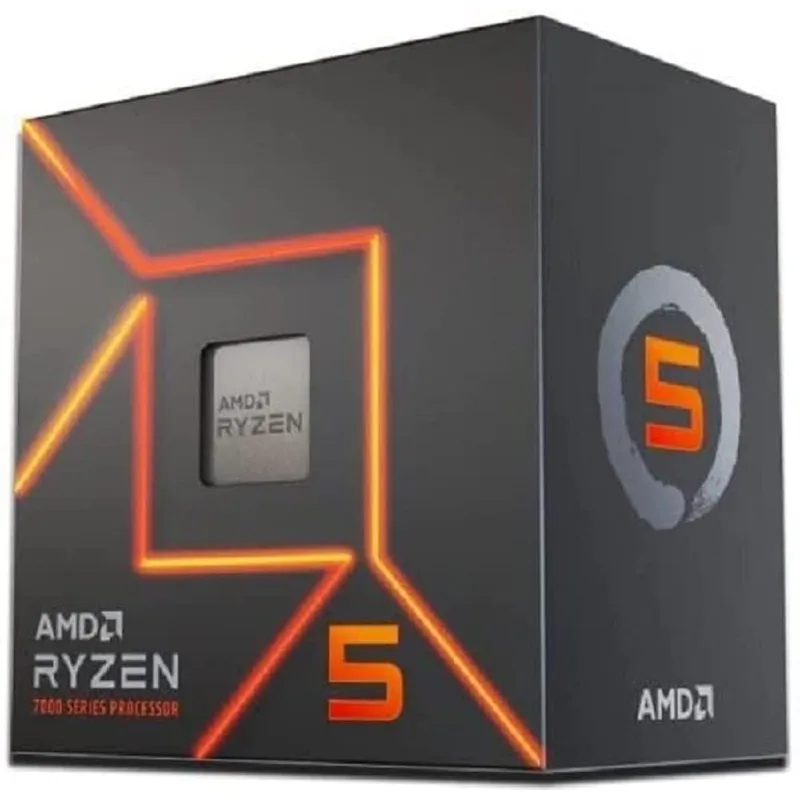
AMD Ryzen 5 7600
The Ryzen 5 7600 is the answer to “what’s the best CPU I can buy for under $200 in 2026” without any asterisks. Zen 4’s IPC jump over Zen 3 is 13-15%, and when combined with a 5.1 GHz boost clock, it outperforms the Ryzen 5 5600 by 8-12% at 1080p in CPU-bound scenarios like open-world titles and city builders.
Real-world gaming: in Cyberpunk 2077 at 1080p medium, the 7600 posts around 145 FPS vs the 5600’s ~130 FPS with an RTX 4070 — meaningful if you’re chasing 144 Hz. At 1440p, GPU bottlenecks equalize everything and the difference narrows to under 3%.
The 65W TDP means the bundled Wraith Stealth cooler is adequate for non-overclocked workloads. Temperatures under full Cinebench R23 multi-core load stay around 72-75°C with good case airflow. If you’re encoding video or running Blender jobs, step up to a $30 tower cooler like the Thermalright Assassin X 120 SE.
AM5 is the key future-proofing argument. Zen 5 CPUs (like the Ryzen 7 9800X3D at a potential future price drop) will slot into the same B650 board you buy today. That’s a concrete upgrade path versus LGA1700’s confirmed dead end.
Verdict: The Ryzen 5 7600 is the best pure-value budget CPU in early 2026. It costs the same as the i5-13400F, games slightly faster, runs cooler, ships with a cooler included, and sits on a platform with room to grow.
Intel Core i5-13400F — Best Intel Value
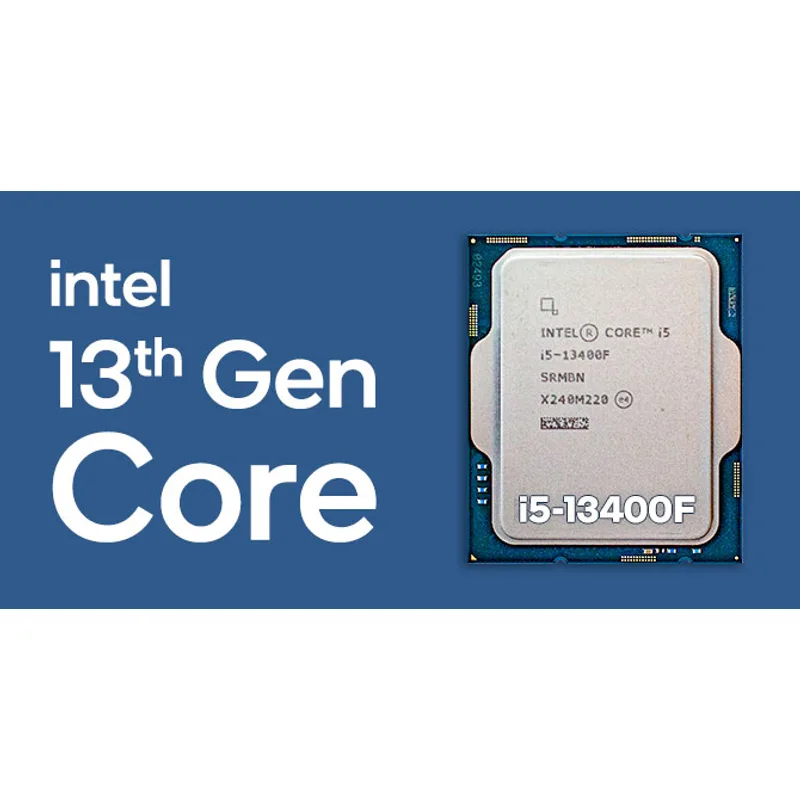
Intel Core i5-13400F
The i5-13400F launched in early 2023 and has dropped to $155 — the same price as the Ryzen 5 7600. On paper, the chip looks weaker in single-thread speed (4.6 GHz vs 5.1 GHz), but its 10-core layout tells a different story in multi-threaded workloads.
In Cinebench R23 multi-core, the i5-13400F scores around 17,500 vs the Ryzen 5 7600’s ~13,200. That 32% gap matters when encoding video, compiling code, or running Blender alongside Discord, a browser, and Spotify. For pure gaming, the difference collapses: the 13400F trails the 7600 by 2-4% at 1080p in most titles.
Where the i5-13400F genuinely wins: total platform cost. A B660M board costs $75-85. Pair it with DDR4-3200 16GB at $35 and you’re at $115 in motherboard + RAM before the CPU. That’s $20-30 cheaper than an equivalent AM5 budget build with DDR5. If you already own DDR4 memory, the savings are even larger.
The no-cooler situation is a real cost to factor in. Budget $25-35 for a Thermalright Assassin X 120 SE or similar. The chip also draws up to 148W in Turbo mode — nothing to worry about with decent case airflow, but it needs more than a case fan blowing past it.
Verdict: If you’re building on DDR4, reusing an LGA1700 board, or need maximum multi-core throughput for the money, the i5-13400F delivers. For new builds from scratch, the Ryzen 5 7600’s bundled cooler and better platform future make it the preferred choice by a narrow margin.
AMD Ryzen 5 5600 — Best Budget Pick
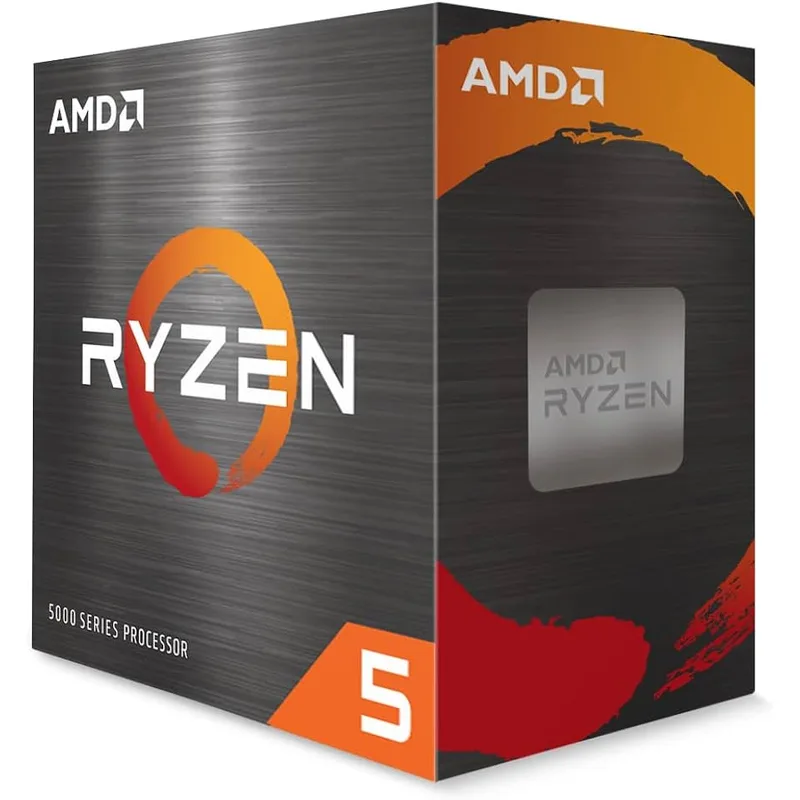
AMD Ryzen 5 5600
At $115 with a Wraith Stealth cooler in the box, the Ryzen 5 5600 is hard to argue against when the goal is minimal spend. Zen 3 launched in late 2020, but it’s still competitive enough to run modern titles at 1080p without leaving noticeable frames on the table.
In Counter-Strike 2 and Valorant, the performance difference between the Ryzen 5 5600 and a Ryzen 5 7600 is under 15 FPS at 1080p — imperceptible above 144 Hz where GPU becomes the bottleneck. In Microsoft Flight Simulator or Cities: Skylines II, the gap widens to 15-20% because those titles chew through single-thread IPC.
The AM4 platform cost story is compelling: a B450M board costs $65-75, DDR4-3200 16GB runs $35-45. Total motherboard + RAM = ~$100-120. Add the 5600’s $115 and you’re at $215-235 for CPU + motherboard + RAM. Comparable AM5 + DDR5 setups start around $310-330. That $80-100 difference pays for a GPU tier upgrade.
The honest downside is that AM4 is finished. Zen 5 won’t support it. The highest AM4 CPU available is the Ryzen 9 5950X, which sells for $250+. You’re not upgrading the processor in this system without also changing the motherboard. If you’re building a budget gaming rig you’ll replace in 2-3 years anyway, that’s fine. If you want to upgrade incrementally, AM4 is a dead end.
Verdict: The Ryzen 5 5600 is the pick when you’re maximizing GPU budget and need to cut cost on the processor. It plays well with everything released through 2026 at 1080p, ships with a cooler, and pairs with the cheapest boards available. Pair it with a B550 board for PCIe 4.0 access for future SSDs.
AMD Ryzen 5 7500F — Best AM5 Entry-Level
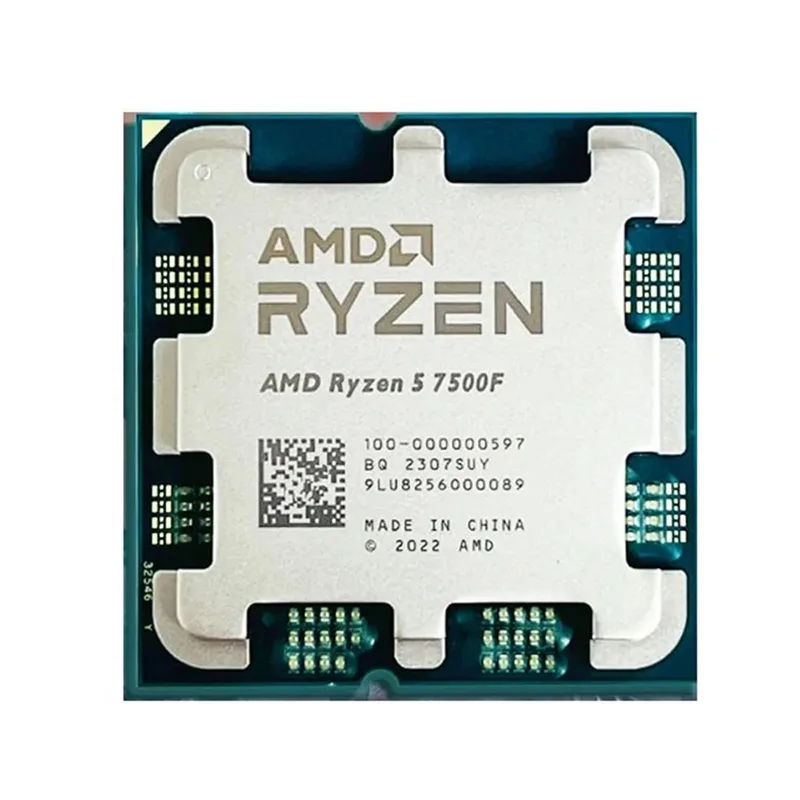
AMD Ryzen 5 7500F
The Ryzen 5 7500F is the Ryzen 5 7600 minus the integrated graphics (which was barely usable anyway) and minus $15. It runs at 5.0 GHz boost vs the 7600’s 5.1 GHz — a 2% single-thread difference that’s invisible in gaming benchmarks.
In side-by-side tests, the 7500F and 7600 differ by under 3 FPS at 1080p in GPU-limited scenarios. The 7500F runs the same 65W TDP, uses the same AM5 socket, and fits in the same B650 boards. If you were to buy both chips and swap them in a system, most users wouldn’t notice the difference.
The catch is availability. The Ryzen 5 7500F sells through a mix of third-party Amazon sellers and Newegg, and pricing fluctuates between $130-150. When it’s $140, it’s the better value over the 7600 at $155. When third-party sellers push it to $150+, the $5-15 savings doesn’t justify the slightly reduced cooler options (the 7500F ships without a cooler, unlike the 7600).
Verdict: Buy the Ryzen 5 7500F when it’s $140 or below. At that price it’s the most cost-efficient Zen 4 chip on the market. At $145+, the Ryzen 5 7600’s included Wraith Stealth cooler makes the slightly higher total cost equivalent or cheaper.
Intel Core i5-14400F — Best for Multitaskers
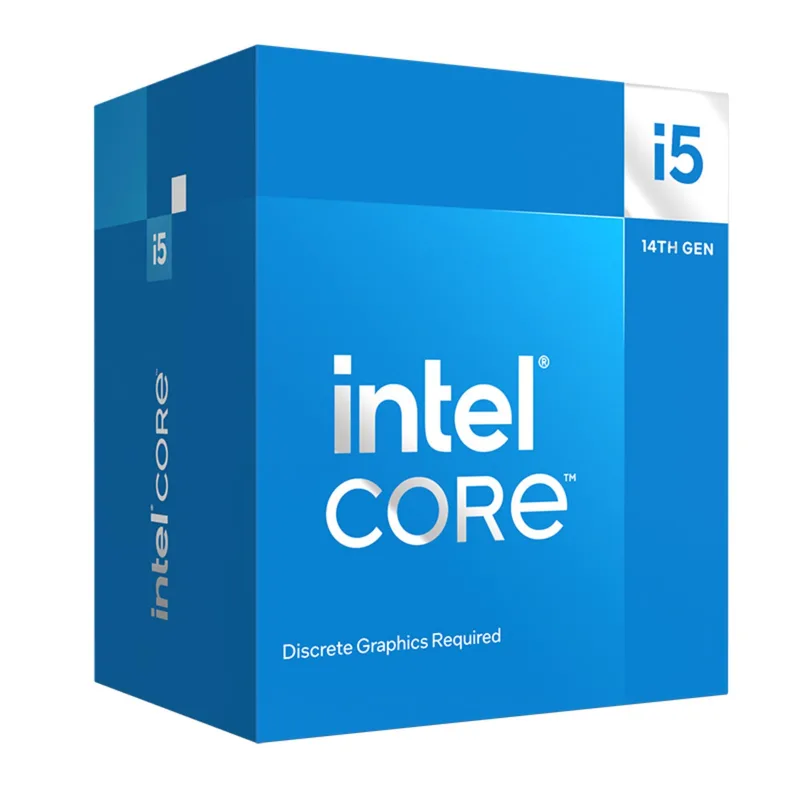
Intel Core i5-14400F
The i5-14400F is Intel’s Raptor Lake Refresh version of the i5-13400F. The core count is identical (10 cores, 6P + 4E), the platform is identical (LGA1700), and the performance difference is a 100 MHz P-core boost increase — 4.7 GHz vs 4.6 GHz — plus minor microcode improvements.
In raw benchmarks, the i5-14400F scores 3-5% higher than the i5-13400F in Cinebench R23 multi-core (~18,000 vs ~17,500). Gaming benchmarks at 1080p are within 1-2% — functionally identical. Blender and encoding workloads see the same narrow margin. It’s a refresh, not a generational leap.
The case for buying the i5-14400F over the i5-13400F is limited to one scenario: you already own an LGA1700 board from a 12th or 13th-gen Intel build and want the best drop-in upgrade. In that case, the i5-14400F over the i5-13400F adds $20 for a small performance bump with no platform cost. For new builds, the Ryzen 5 7600 offers better long-term platform value at the same price range.
The no-cooler situation applies here too — budget $25-35 for a tower cooler. Power behavior mirrors the i5-13400F: 65W TDP limit 1, but the chip will boost to 148W in sustained all-core workloads if your motherboard allows Multi-Core Enhancement (MCE). Disable MCE in BIOS for better thermals and power efficiency on budget coolers.
Verdict: The i5-14400F makes sense if you’re upgrading an existing LGA1700 system. For a new build, the i5-13400F saves $20 with near-identical results, or the Ryzen 5 7600 offers better platform longevity for the same total cost once a cooler is factored in.
Comparison Table
| Spec | AMD Ryzen 5 7600 $155 9.2/10 | Intel Core i5-13400F $155 8.8/10 | AMD Ryzen 5 5600 $115 8.3/10 | AMD Ryzen 5 7500F $140 8.6/10 | Intel Core i5-14400F $175 8.4/10 |
|---|---|---|---|---|---|
| Architecture | Zen 4 | Raptor Lake (6P + 4E cores) | Zen 3 | Zen 4 | Raptor Lake Refresh (6P + 4E cores) |
| Cores | 6 cores / 12 threads | 10 cores / 16 threads | 6 cores / 12 threads | 6 cores / 12 threads | 10 cores / 16 threads |
| Boost Clock | 5.1 GHz | 4.6 GHz | 4.4 GHz | 5.0 GHz | 4.7 GHz |
| Cache | 32MB L3 | 20MB L3 | 32MB L3 | 32MB L3 | 20MB L3 |
| Socket | AM5 | LGA1700 | AM4 | AM5 | LGA1700 |
| TDP | 65W | 65W (148W boost) | 65W | 65W | 65W (148W boost) |
| Rating | 9.2/10 | 8.8/10 | 8.3/10 | 8.6/10 | 8.4/10 |
FAQ
Is a 6-core CPU still good for gaming in 2026? Yes, for most titles. Games in 2026 are optimized for 6-8 cores, and a Ryzen 5 7600 at 5.1 GHz handles anything from Elden Ring to Cyberpunk 2077 without a CPU bottleneck at 1080p or 1440p. The only exceptions are heavily CPU-threaded simulators like Cities: Skylines II or Microsoft Flight Simulator 2024, where an 8-core chip adds 10-15% at 1080p.
Which socket should I choose for a budget build in 2026? AM5 (Ryzen 7000-series) for the best upgrade path — AMD has committed to AM5 support through at least 2027. AM4 (Ryzen 5000-series) if you’re maximizing GPU budget with the cheapest possible platform. LGA1700 if you already own compatible DDR4 RAM or an Intel motherboard.
Do I need DDR5 for the Ryzen 5 7600 or i5-14400F? The Ryzen 5 7600 and Ryzen 5 7500F require DDR5 — AM5 has no DDR4 support. The i5-13400F and i5-14400F (LGA1700) support both DDR4 and DDR5, depending on the motherboard. Budget B660/B760 boards typically come in DDR4 and DDR5 variants. DDR4 versions are cheaper by $15-25 and equally fast for gaming.
Will the Ryzen 5 7600 bottleneck an RTX 4070 or RX 7800 XT? No. At 1440p, neither the RTX 4070 nor the RX 7800 XT will be CPU-limited by the Ryzen 5 7600 in the vast majority of titles. The CPU will see near-100% GPU utilization with headroom to spare. At 1080p max settings, a small CPU bottleneck can appear in games like CS2 targeting 300+ FPS — upgrade to a Ryzen 7 chip for those edge cases.
Is the AMD Ryzen 5 5600 worth buying in 2026? For budget-first builds: yes. It’s $40 cheaper than the Ryzen 5 7600 and games within 10% of it at 1080p. The AM4 dead-end isn’t a problem if you’re planning a full system swap in 2-3 years anyway. Pair it with a B550 board to get PCIe 4.0 for NVMe SSDs.
The Bottom Line
At $155, the Ryzen 5 7600 is the best all-around budget CPU of early 2026 — Zen 4 IPC, AM5 upgrade path, and a bundled cooler make it the default recommendation for new builds. If you’re building on a tight total budget, the Ryzen 5 5600 at $115 saves $40 on the CPU alone, freeing that money for a better GPU. And if you need maximum multi-threaded throughput for streaming or content creation alongside gaming, the i5-13400F at $155 delivers 35-40% more Cinebench performance than any 6-core option here while keeping platform costs low.