The budget CPU market shifted in early 2026. Zen 5 chips that launched near $300 have dropped to $184, putting them within reach for anyone building a system under $200 on the processor alone. Meanwhile, older Zen 4 and Raptor Lake chips have climbed — the Ryzen 5 7600 now trades around $165, and some Intel Raptor Lake Refresh chips crossed the $200 threshold entirely. The five picks below are all available under $200 and cover every build scenario: best-in-class Zen 5 IPC, AM5 future-proofing on a tighter budget, and Intel for DDR4 reuse and multitasking.
| Spec | AMD Ryzen 5 9600X 9.3/10 | AMD Ryzen 5 7600 8.9/10 | Intel Core i5-13400F 8.6/10 | AMD Ryzen 5 7500F 8.5/10 | AMD Ryzen 5 5600 8.2/10 |
|---|---|---|---|---|---|
| Architecture | Zen 5 | Zen 4 | Raptor Lake (6P + 4E cores) | Zen 4 | Zen 3 |
| Cores | 6 cores / 12 threads | 6 cores / 12 threads | 10 cores / 16 threads | 6 cores / 12 threads | 6 cores / 12 threads |
| Boost Clock | 5.4 GHz | 5.1 GHz | 4.6 GHz | 5.0 GHz | 4.4 GHz |
| Cache | 32MB L3 | 32MB L3 | 20MB L3 | 32MB L3 | 32MB L3 |
| Socket | AM5 | AM5 | LGA1700 | AM5 | AM4 |
| TDP | 65W | 65W | 65W (148W boost) | 65W | 65W |
| Rating | 9.3/10 | 8.9/10 | 8.6/10 | 8.5/10 | 8.2/10 |
Prices change daily — tap Check Price for the current Amazon price.
Prices change daily — tap Check Price for the current Amazon price.
Quick Picks
- Best overall under $200: AMD Ryzen 5 9600X (~$184) — Zen 5 IPC, 5.4 GHz boost, AM5 platform.
- Best value Zen 4: AMD Ryzen 5 7600 (~$165) — Wraith Stealth cooler included, AM5 upgrade path, proven 1080p performer.
- Best Intel value: Intel Core i5-13400F (~$165) — 10 cores, cheapest total platform cost, strong DDR4 compatibility.
- Tightest budget: AMD Ryzen 5 5600 (~$105) — Zen 3 with Wraith Stealth included, pairs with sub-$70 AM4 boards.
Buying Guide
AM4 vs AM5 vs LGA1700: Which Platform Makes Sense in 2026?
AM4 (Ryzen 5 5600): The cheapest entry point by a significant margin. B450 and B550 boards sell for $60-90, DDR4 16GB kits run $35-50. The trade-off is that AM4 is end-of-life — no new CPUs are coming to this socket. The highest AM4 chip is the Ryzen 9 5950X, which now sells for $250+. If you’re building a budget rig you’ll replace entirely in two to three years, AM4 is perfectly fine. If you want incremental CPU upgrades without a board swap, AM4 has nothing left to offer.
AM5 (Ryzen 5 9600X, Ryzen 5 7600, Ryzen 5 7500F): AMD has committed to AM5 support through at least 2027. Budget B650 boards now sell for $95-110. DDR5-5600 16GB kits run $55-70. Total platform cost runs $40-60 higher than AM4, but the upgrade path is concrete — Zen 6 chips will drop into the same board you buy today.
LGA1700 (Intel budget builds): Intel’s LGA1700 is also a dead end — Arrow Lake uses LGA1851. However, B660/B760 boards remain the cheapest available, with B660M options starting at $80-90. DDR4 compatibility makes this the most cost-effective option if you already own compatible memory or are reusing parts from an older Intel build.
Gaming vs Productivity Priority
If gaming is your primary use case, the Ryzen 5 9600X is the top pick at 1080p CPU-limited scenarios. The 7600 trails by 5-8% — acceptable for anyone not chasing extreme high frame rates. The Ryzen 5 5600 trails further by 12-15%, which is noticeable above 144 Hz in CPU-sensitive titles.
If you stream, encode, or compile alongside gaming, the i5-13400F has a clear advantage. Its 10-core layout delivers 30-35% more multi-core throughput than the 6-core AMD chips. Running OBS with x264 encoding simultaneously with a game chews through E-cores without touching gaming frame rates. No 6-core chip in this list matches that.
Do You Need Integrated Graphics?
None of the chips in this list are reliable for gaming via integrated graphics. The Ryzen 5 7600 has RDNA 2 graphics (2 CUs) that can output a display signal but won’t run games meaningfully. The i5-13400F has no iGPU at all (F suffix). The Ryzen 5 9600X, 7500F, and 5600 also lack usable integrated graphics. Plan your build around a discrete GPU.
Detailed Reviews
AMD Ryzen 5 9600X — Best Overall Under $200
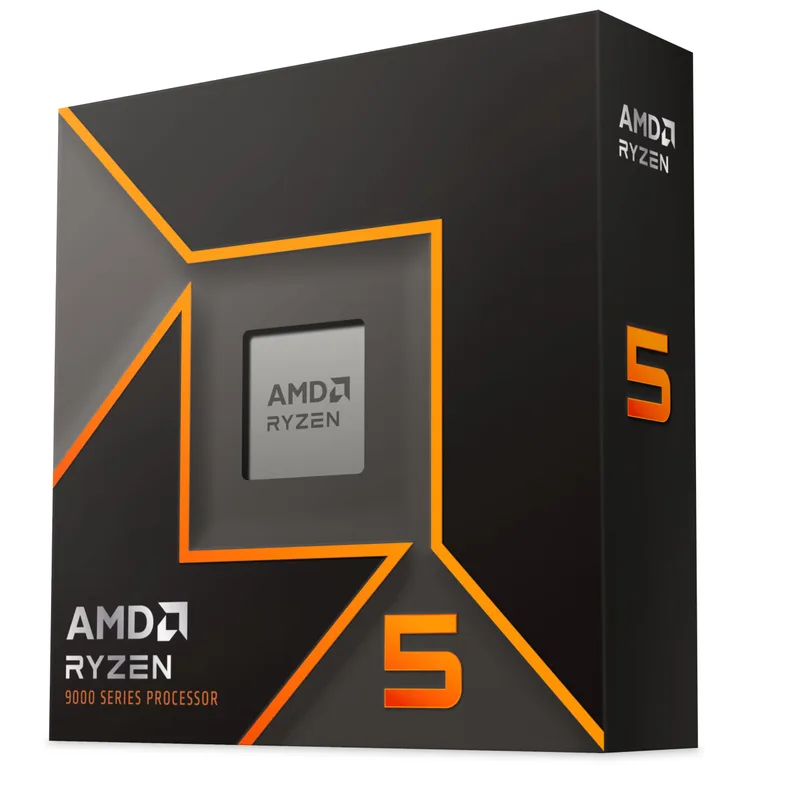
The Ryzen 5 9600X is the best budget CPU available under $200 in 2026. It launched at $279 in mid-2025; after a steady price decline it’s now available around $184, putting Zen 5 squarely in budget territory for the first time.
Zen 5 brings 8-10% IPC gains over Zen 4 in most workloads, combined with a 5.4 GHz boost clock — the highest of any chip in this roundup. In CPU-sensitive titles like Cities: Skylines II and Microsoft Flight Simulator, the 9600X pulls measurably ahead of the 7600 at 1080p. In GPU-limited scenarios at 1440p, the gap narrows to negligible. For a ~$20 premium over the Ryzen 5 7600, the performance advantage is real, if not dramatic.
The AM5 platform argument is the same as with the 7600: the upgrade path to future Zen CPUs exists without a board change. The Ryzen 7 9800X3D will eventually drop to a price that makes it a compelling drop-in upgrade on the same B650 board you buy today.
The 9600X ships without a cooler, unlike the 7600 which bundles the Wraith Stealth. Budget $25-35 for a Thermalright Peerless Assassin 120 SE or DeepCool AK400. At 65W TDP, any quality tower cooler handles it fine — an AIO is unnecessary.
Verdict: At $184, the Ryzen 5 9600X is the clear recommendation for new AM5 builds. Zen 5 IPC, the highest boost clock in this price range, and a future-proof platform make it the easy choice for anyone not constrained to the absolute minimum spend.
AMD Ryzen 5 7600 — Best Zen 4 Value
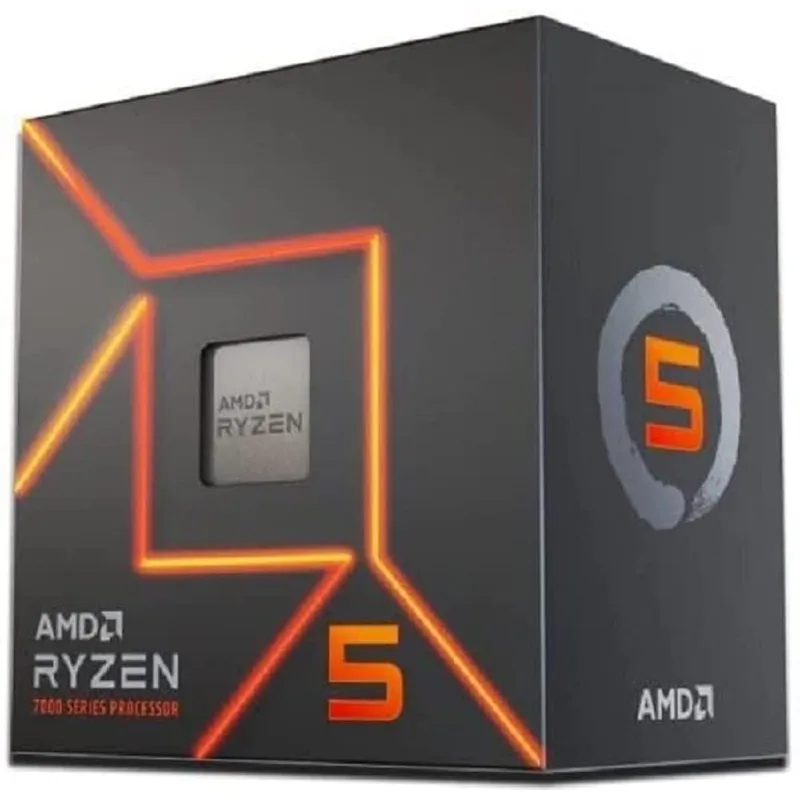
The Ryzen 5 7600 climbed from its 2025 low of around $135 to roughly $165 in early 2026, following broader supply tightening across the consumer CPU market. That narrows the gap with the Ryzen 5 9600X to about $20 — which makes the 9600X a better deal on pure performance for new builds. Where the 7600 still wins: the included Wraith Stealth cooler.
At $165 with a cooler included, the effective all-in cost is comparable to the 9600X at $184 plus a ~$30 tower cooler. For anyone building on the tightest AM5 budget, that $10-15 total cost difference may tip the scales toward the 7600.
Gaming-wise, the 7600 hits 144+ FPS at 1080p in nearly every title through 2026 with a mid-range GPU. At 1440p with an RTX 5060 Ti or RX 9070, the GPU becomes the bottleneck and the CPU choice matters almost nothing. Zen 4’s IPC and 5.1 GHz boost are not a bottleneck for the GPU tier most buyers pair with this chip.
Verdict: The Ryzen 5 7600 is the better pick if you’re budget-conscious on the total AM5 platform build — its included cooler effectively offsets most of the price gap versus the 9600X. For pure performance per dollar, the 9600X edges it out.
Intel Core i5-13400F — Best Intel Value
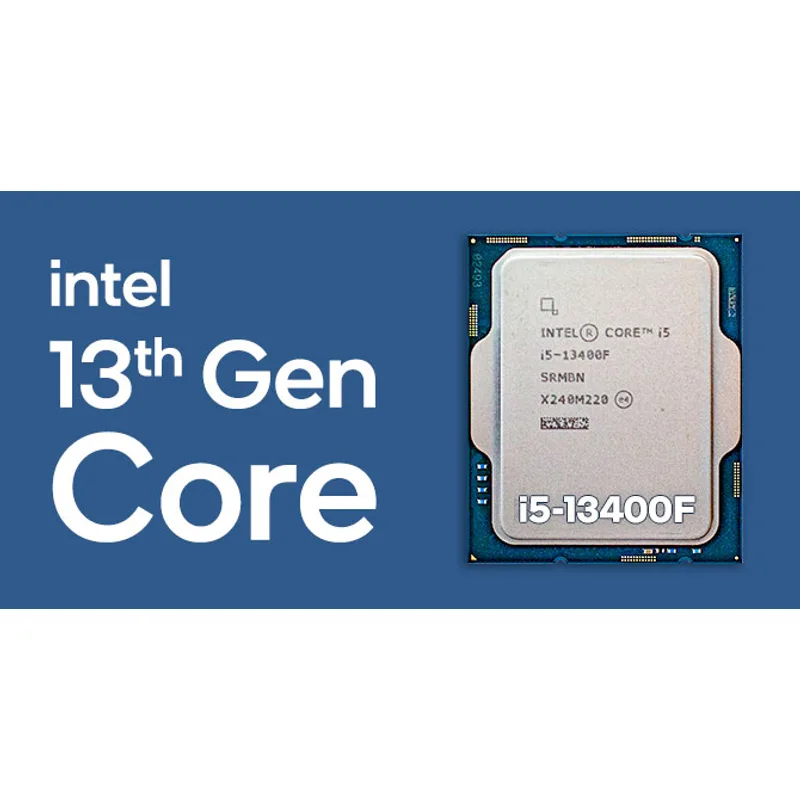
The i5-13400F launched in early 2026 and remains one of the best multi-core processors for the money in 2026. Its 10-core layout — 6 performance cores plus 4 efficiency cores — delivers multi-threaded throughput that no 6-core chip here can match.
In Cinebench R23 multi-core, the i5-13400F scores around 17,500 versus the Ryzen 5 7600’s ~13,200. That 30%+ gap matters for encoding, compiling, and any workload that scales with thread count. For pure gaming at 1080p, the difference collapses to 3-6% compared to the Ryzen 5 7600 — effectively a rounding error.
The strongest argument here is total platform cost when reusing DDR4. A B660M board costs $80-90; DDR4-3200 16GB runs $35. Total motherboard + RAM = ~$115-125 before the CPU. That’s $30-50 cheaper than an equivalent AM5 + DDR5 budget build. If you’re upgrading from an existing LGA1700 system or own DDR4 sticks, the savings stack.
The no-cooler situation adds to the effective cost — budget $25-35 for a Thermalright Assassin X 120 SE or similar. The chip also draws up to 148W in Turbo mode under sustained all-core load, so pair it with a case that has actual intake fans, not just a rear exhaust.
Verdict: The i5-13400F is the pick for streaming rigs, content creation workstations, and anyone reusing DDR4 memory or an existing LGA1700 board. For pure gaming on a new build, the AM5 chips offer better platform longevity at the same prices.
AMD Ryzen 5 7500F — Best AM5 Entry-Level
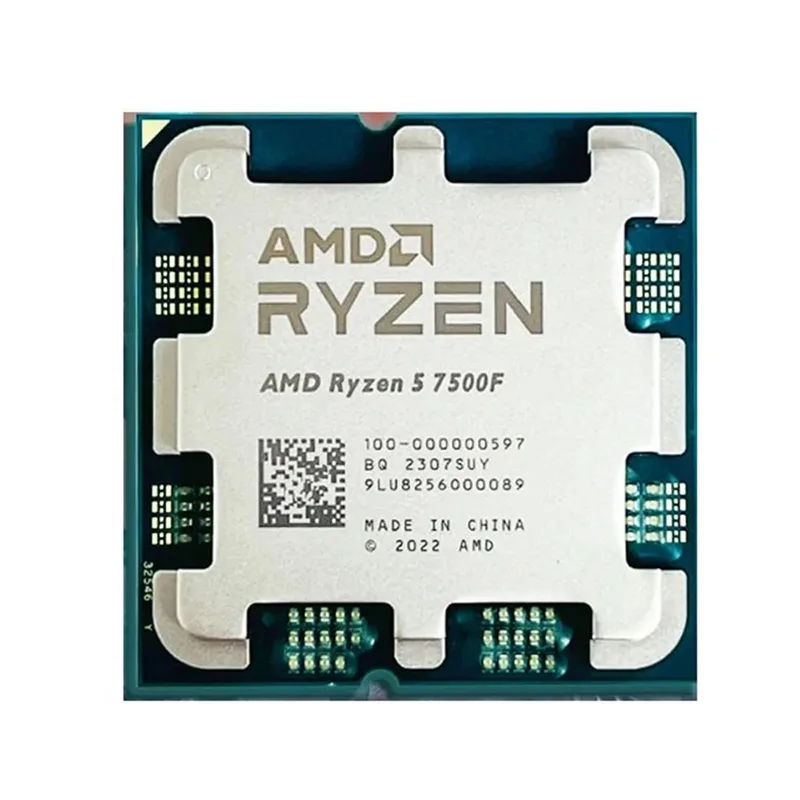
The Ryzen 5 7500F has dropped to around $130, making it the cheapest path to AM5 in this roundup. It runs at 5.0 GHz boost versus the 7600’s 5.1 GHz — a 2% single-thread difference that disappears in nearly every real-world gaming benchmark.
At $130, the 7500F is $35 cheaper than the 7600 and $54 cheaper than the 9600X. For a build where you’re stretching GPU budget, that $35-54 difference can mean stepping up a GPU tier — the difference between an RTX 5060 and an RTX 5060 Ti at current pricing. The performance you’re trading away is minimal: under 3-4 FPS difference at 1080p between the 7500F and the 7600 in GPU-limited scenarios.
The catch is availability. The 7500F sells primarily through third-party Amazon sellers and Newegg, and pricing swings between $130-150 depending on the day. When it’s at $130, it’s outstanding value. When third-party sellers push it toward $145, the 7600 with its included Wraith Stealth cooler becomes a better deal once cooler cost is factored in.
Verdict: The Ryzen 5 7500F is the move when you want AM5 at the lowest possible CPU price and you’re willing to watch availability. At $130, it’s the best price-per-frame on the AM5 platform. At $145+, the Ryzen 5 7600’s included cooler tips the value equation away from it.
AMD Ryzen 5 5600 — Best Budget Pick
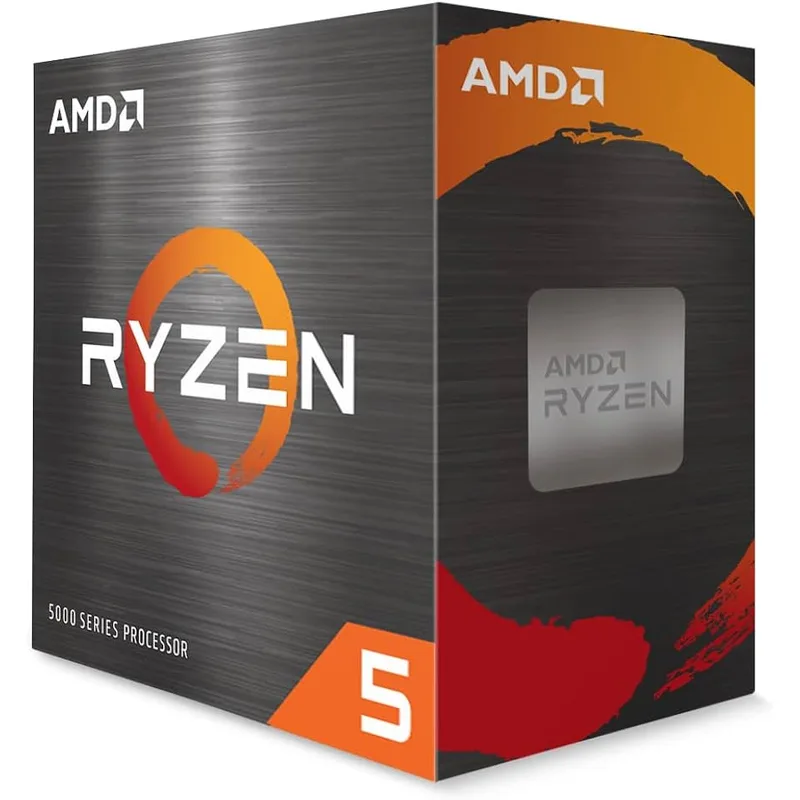
At $105 with a Wraith Stealth cooler in the box, the Ryzen 5 5600 is the chip you buy when the GPU budget matters more than the CPU tier. Zen 3 launched in late 2020, but it still delivers smooth 1080p gaming in 2026 — just not in CPU-bottlenecked titles where newer architecture makes a real difference.
In Counter-Strike 2 and Valorant, the gap between the Ryzen 5 5600 and a Ryzen 5 9600X at 1080p is under 20 FPS — imperceptible when the GPU is the bottleneck above 144 Hz. In Microsoft Flight Simulator or Cities: Skylines II, the gap widens to 15-20% because those titles are heavily single-thread dependent. For esports and mainstream AAA titles, the 5600 keeps up fine.
The AM4 platform cost is the headline: a B450M board costs $65-75, DDR4-3200 16GB runs $35-45. Total motherboard + RAM = ~$100-120. Add the 5600’s $105 and you’re at $205-225 for CPU + board + RAM. Equivalent AM5 + DDR5 builds start around $330-350. That $110-130 difference buys a GPU tier upgrade.
AM4 is finished. No new CPUs are coming to the socket. The highest available AM4 chip is the Ryzen 9 5950X at $250+. You’re not upgrading the processor without also changing the motherboard. For a budget rig you plan to replace fully in two to three years, that’s irrelevant. For incremental upgrades, it’s a dead end.
Verdict: The Ryzen 5 5600 is the pick when maximizing GPU budget and minimizing platform cost. It handles every mainstream game through 2026 at 1080p, ships with a cooler, and pairs with the cheapest boards available. Use a B550 board for PCIe 4.0 NVMe access.
Comparison Table
FAQ
Is a 6-core CPU still enough for gaming in 2026?
Yes, for most titles. Games through 2026 are optimized for 6-8 cores, and a Ryzen 5 9600X or 7600 at 5.1-5.4 GHz handles everything from Elden Ring to Cyberpunk 2077 without a CPU bottleneck at 1080p or 1440p. The exceptions are heavily single-thread-dependent simulators like Cities: Skylines II and Microsoft Flight Simulator, where an 8-core chip adds 10-15% at 1080p.
Which socket should I build on in 2026?
AM5 for the best upgrade path — AMD has committed support through at least 2027, and Zen 5 and Zen 6 chips drop into any B650 or B850 board without issue. AM4 if you’re maximizing GPU budget with the cheapest possible platform — accept that AM4 has no further CPU upgrades. LGA1700 if you already own DDR4 RAM or an Intel motherboard.
Does the Ryzen 5 9600X require DDR5?
Yes. The 9600X, 7600, and 7500F all require DDR5 — AM5 has no DDR4 support. The i5-13400F on LGA1700 supports both DDR4 and DDR5 depending on the motherboard. Budget B660/B760 DDR4 boards cost $15-25 less than DDR5 equivalents and deliver identical gaming performance.
Will the Ryzen 5 9600X bottleneck an RTX 5060 Ti or RX 9070?
No. At 1440p, neither card will be CPU-limited by the Ryzen 5 9600X in the vast majority of titles. The GPU hits near-100% utilization with CPU headroom to spare. At 1080p targeting 240+ FPS in esports titles, a small CPU bottleneck can appear in the most sensitive games — a Ryzen 7 chip addresses those edge cases.
Is the Ryzen 5 5600 worth buying in 2026?
For budget-first builds: yes. At $105 it’s $79 cheaper than the Ryzen 5 9600X and games within 12-15% of it at 1080p. The AM4 dead end isn’t a concern if you’re planning a full system swap in two to three years. Pair it with a B550 board for PCIe 4.0 NVMe access.
What cooler do I need for the i5-13400F or Ryzen 5 9600X?
The Thermalright Peerless Assassin 120 SE ($30) or DeepCool AK400 ($30) handle both chips at stock settings with temperatures under 75°C in extended gaming. For the Ryzen 5 7600 at 65W TDP, the included Wraith Stealth is sufficient for non-overclocked use.
The Bottom Line
At $184, the Ryzen 5 9600X is the best budget CPU to buy in 2026 — Zen 5 IPC, a 5.4 GHz boost clock, and an AM5 platform with years of upgrade headroom. For the tightest AM5 builds, the Ryzen 5 7600 at $165 makes sense specifically because its included cooler narrows the real cost gap versus the 9600X. If you’re reusing DDR4 memory or need heavy multi-threaded throughput, the i5-13400F at $165 delivers 30%+ more multi-core performance than any 6-core option here at the cheapest total platform cost. And if maximizing GPU budget is the priority, the Ryzen 5 5600 at $105 frees up $80 for a better graphics card.