The budget GPU market in 2026 is genuinely the most competitive it has been in years. NVIDIA’s Blackwell RTX 5060 launched at $299 in May 2025, AMD answered two weeks later with the RDNA 4-based RX 9060 XT at the same price, and Intel’s Arc Battlemage cards (B580 and B570) have been quietly undercutting both since late 2024. GPU prices have risen roughly 10–15% across the board since launch due to supply constraints from AI workload demand — but several strong options remain at or near $300.
Quick Picks
- Best overall: GIGABYTE RTX 5060 WINDFORCE OC — DLSS 4 Multi Frame Generation and GDDR7 bandwidth at $299 MSRP
- Most VRAM: ASRock Arc B580 Challenger 12GB — the only 12GB card under $300
- Best entry price: ASRock RX 7600 Challenger 8GB — sub-$230 with mature RDNA 3 drivers
Buying Guide
Resolution targets
At 1080p, every card on this list handles high or ultra settings in modern AAA titles. At 1440p, the Arc B580 (12GB VRAM) and RX 9060 XT provide the most headroom — the 8GB GDDR7 cards handle 1440p well today but will feel the squeeze in late-2026 releases. None of these cards are 4K gaming GPUs.
VRAM: the $300 debate
The 8GB vs. 12GB argument is real in 2026. Spider-Man 2 at 1440p runs 26% faster on the RX 9060 XT 16GB vs. the 8GB variant, according to GamersNexus. The Arc B580 sidesteps this by shipping 12GB at $279–$299. If you play texture-heavy open-world games, prioritize VRAM over raw core count.
PSU requirements
- RTX 5060 8GB: 550W minimum, single 8-pin connector
- RX 9060 XT 8GB: 550W minimum, single 8-pin connector
- Arc B580 12GB: 650W minimum — 190W TDP is the highest on this list
- Arc B570 10GB: 550W minimum
- RX 7600 8GB: 550W minimum
PCIe compatibility
The RTX 5060 uses PCIe 5.0 x8 physically. On a PCIe 4.0 system, it runs at x8 4.0, which offers no practical performance loss in gaming. The RX 9060 XT runs PCIe 5.0 x16 — full-bandwidth on any modern motherboard.
Detailed Reviews
1. GIGABYTE GeForce RTX 5060 WINDFORCE OC 8G
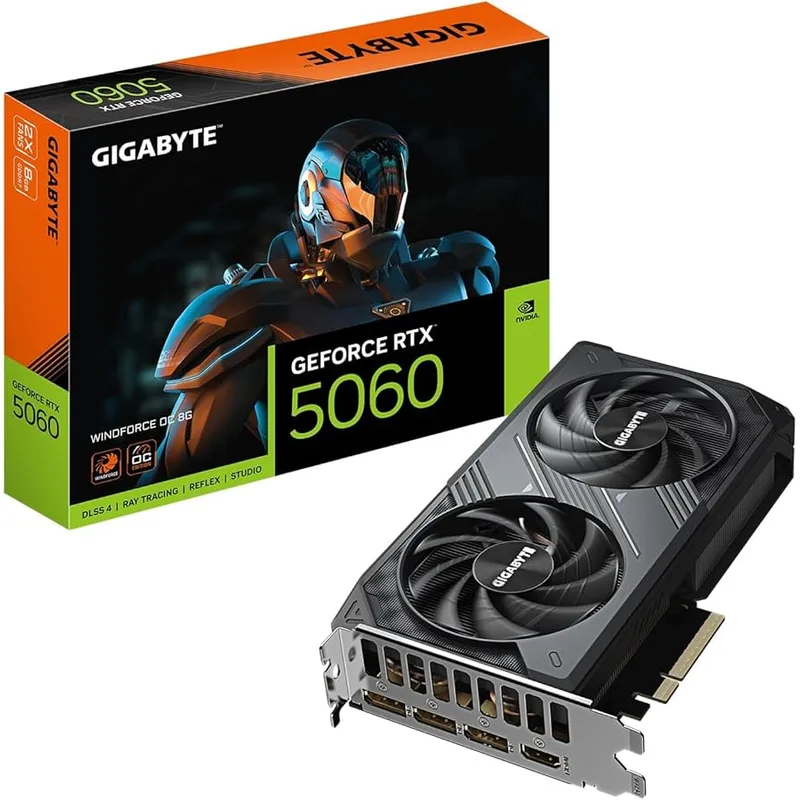
GIGABYTE GeForce RTX 5060 WINDFORCE OC 8G
The GIGABYTE RTX 5060 WINDFORCE OC represents NVIDIA’s Blackwell architecture at its most accessible. The GB206 chip packs 3,840 CUDA cores and, critically, uses GDDR7 memory instead of the GDDR6 that competitors offer at this price — that translates to 448 GB/s of memory bandwidth on a 128-bit bus, a meaningful advantage over the RX 9060 XT’s 322 GB/s.
In rasterization benchmarks, the RTX 5060 runs approximately 32% ahead of the RTX 4060 it replaces. At 1080p Ultra, you’re looking at framerates above 100fps in most recent AAA releases. The bigger story is DLSS 4’s Multi Frame Generation: in supported titles, it can multiply frame output by 4x. Cyberpunk 2077 at 1440p with path tracing goes from unplayable to a smooth 60+ fps average with DLSS 4 Quality enabled.
The WINDFORCE OC runs cool and quiet, with dual 80mm fans that shut off entirely below 60°C GPU temp. At 145W TDP, it fits in any case with a 550W PSU.
The catch: 8GB of VRAM. NVIDIA launched the RTX 5060 at $299 with 8GB while the Ti model shipped in two variants (8GB and 16GB). GamersNexus and TechSpot both noted this will constrain performance in late-2026 as games push VRAM requirements upward. It’s not a problem today — but it’s a real factor for a card you might keep three years.
2. ASRock Radeon RX 9060 XT Steel Legend 8GB
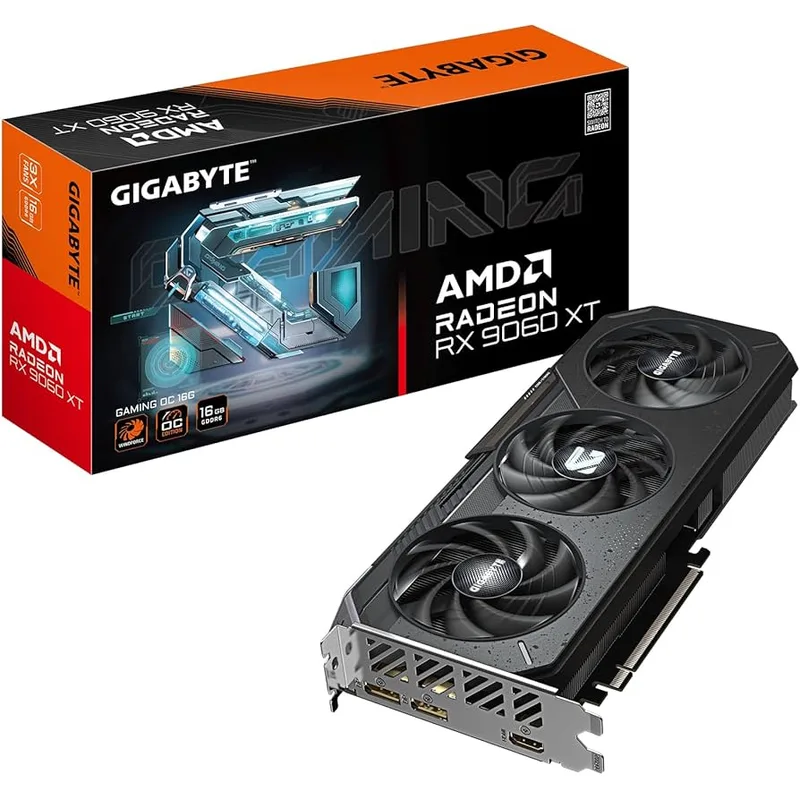
ASRock Radeon RX 9060 XT Steel Legend 8GB
AMD launched the RX 9060 XT on June 5, 2025, at $299 for the 8GB and $349 for the 16GB variant. The 8GB Steel Legend from ASRock features the Navi 44 RDNA 4 chip at a 3,320 MHz boost clock, 150W TDP, and full PCIe 5.0 x16 connectivity — that last detail matters compared to the RTX 5060’s x8 lane implementation.
RDNA 4 brings meaningful IPC gains over RDNA 3. The RX 9060 XT 8GB edges out the RTX 5060 in straight rasterization in most titles (by approximately 3–5%), while NVIDIA leads in ray tracing and wins decisively when DLSS 4 Multi Frame Generation is in play. If you don’t care about ray tracing and want maximum raw frames in raster workloads, the RX 9060 XT 8GB is the pick.
The ASRock Steel Legend cooler is triple-fan, quiet, and keeps the GPU under 75°C at sustained load. The metal backplate is a nice build-quality touch at this price.
The warning is the same as the RTX 5060: 8GB. AMD’s own TechRadar testing showed the 8GB model is “not as easy to write off” as assumed — it performs well at 1080p in the majority of titles, but at 1440p with texture-heavy games it can stutter where the 16GB variant doesn’t. Street prices have also risen to $329–$359 since launch, pushing it slightly past the $300 mark at most retailers as of March 2026.
3. ASRock Intel Arc B580 Challenger 12GB OC
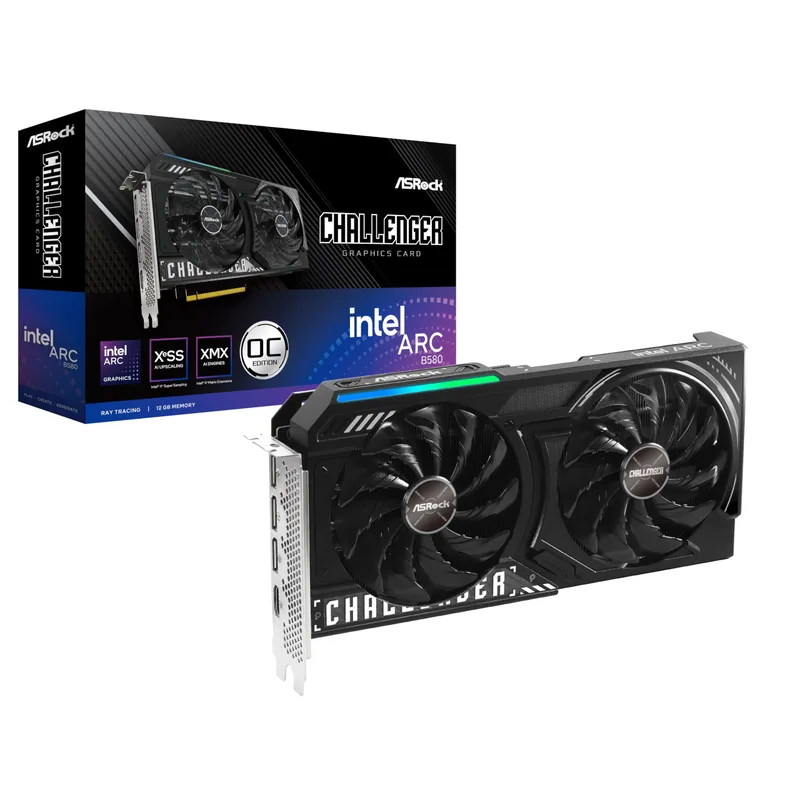
ASRock Intel Arc B580 Challenger 12GB OC
The Intel Arc B580 is the most unusual value proposition on this list: 12GB of GDDR6 on a 192-bit bus for $279–$299. No AMD or NVIDIA card at this price even comes close on VRAM capacity. If your concern is future-proofing VRAM headroom without spending $350+, the B580 is your card.
The Battlemage Xe2 architecture delivers genuine performance improvements over the A770. In testing by Tom’s Hardware and Hardware Unboxed, the B580 matches the RTX 4070 in rasterization performance in several DX12 and Vulkan titles — a remarkable result at this price point. At 1440p Medium–High settings, you’ll see 60–80fps averages in titles like Alan Wake 2 and Hogwarts Legacy.
The 190W TDP is the highest on this list. A 650W PSU is the minimum; a 750W unit is recommended if your CPU draws 125W+ under load. The B580 also requires a case with reasonable airflow — the 190W generates noticeably more heat than the 145–165W alternatives.
Intel’s driver situation has improved significantly since the A-series era. Battlemage drivers handle modern DX12 and Vulkan titles without issues. The caveat remains older DX11 games and a handful of competitive esports titles that still see occasional hitching. If you play primarily games released after 2020, you’ll likely never encounter this.
4. Sparkle Intel Arc B570 Guardian OC 10GB
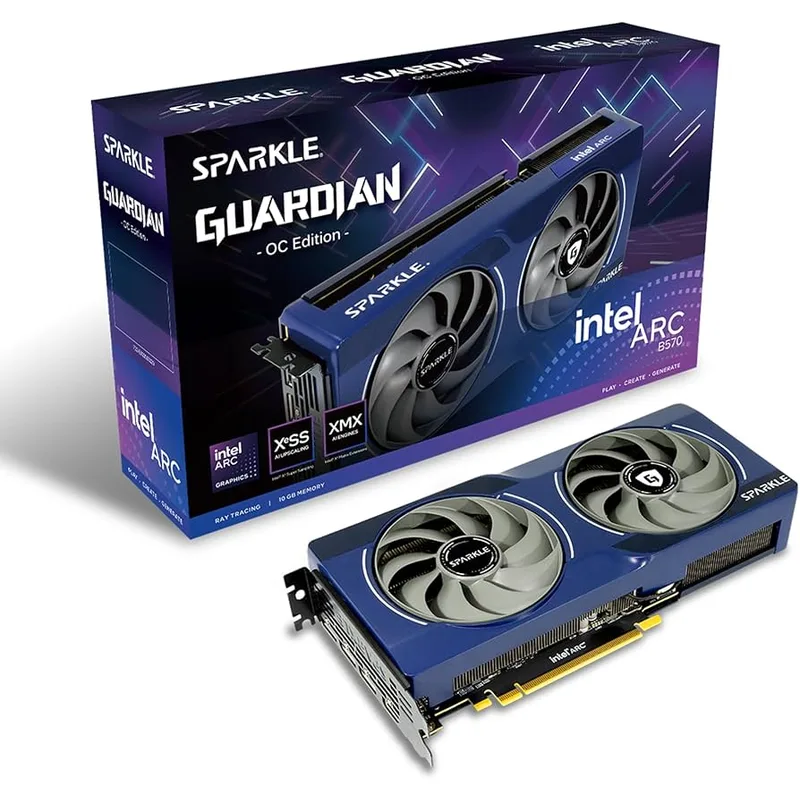
Sparkle Intel Arc B570 Guardian OC 10GB
The Arc B570 splits the difference between the B580 and budget alternatives. Ten gigabytes of GDDR6 at $229–$249 is more VRAM than the RTX 5060, RX 9060 XT 8GB, and RX 7600 combined — and the 192-bit bus is wider than the 128-bit configs AMD and NVIDIA use at this price.
In benchmarks, the B570 runs approximately 10% ahead of the RX 7600 8GB at 1080p Ultra settings. It lands in the same neighborhood as the RTX 4060 at stock clocks. The Sparkle Guardian OC’s factory overclock pushes the boost clock to 2,670 MHz, squeezing out a few extra frames without affecting thermals significantly.
The Guardian OC uses a dual-fan cooling solution that’s genuinely compact at 200mm — it’ll fit in any mid-tower or SFF case with a full-length slot. Power consumption at 150W is the same as the RX 9060 XT 8GB and significantly lower than the B580.
If you’re building a tight $600–$700 system and need to save money for a better CPU or SSD, the B570 at $229 gives you 10GB and respectable 1080p performance without the $70 premium the B580 commands.
5. ASRock AMD Radeon RX 7600 Challenger 8GB OC
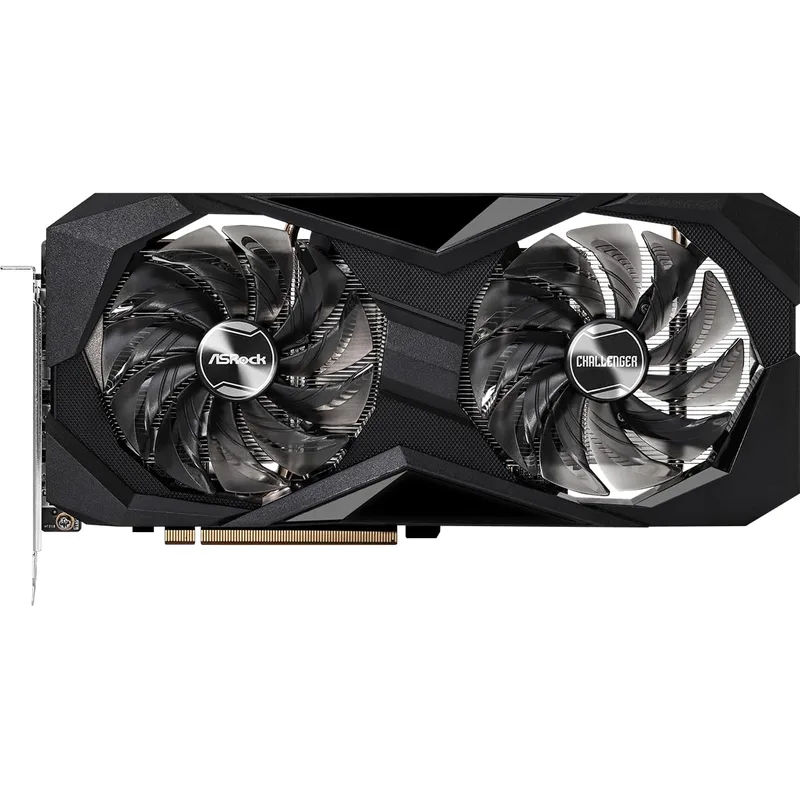
ASRock AMD Radeon RX 7600 Challenger 8GB OC
The RX 7600 is the oldest card on this list — RDNA 3, launched in 2023 — but it holds its own as the sub-$230 anchor for this roundup. If your total GPU budget is $200–$225, this is the best option with mature, fully-debugged drivers.
At 1080p, the RX 7600 handles competitive titles at high framerates: expect 160+ fps in Counter-Strike 2 and Valorant at high settings, 90+ fps in Cyberpunk 2077 1080p High. The RDNA 3 architecture handles ray tracing, though at meaningfully lower performance than RDNA 4 and Blackwell equivalents.
The ASRock Challenger edition runs a factory-overclocked core at 2,755 MHz boost and keeps temperatures below 78°C with a dual-fan silent cooler. At 165W TDP, a quality 550W PSU handles it comfortably.
The limitation is the 8GB/128-bit memory config, which is the narrowest on this list. The Arc B570 now performs similarly or better at a similar or lower price point — if the B570 is in stock at your retailer, it’s the better call. The RX 7600 earns its spot because of mature drivers, sub-$230 pricing, and proven reliability over two-plus years in the field.
| Spec | GIGABYTE GeForce RTX 5060 WINDFORCE OC 8G $299-$329 8.5/10 | ASRock Radeon RX 9060 XT Steel Legend 8GB $299-$339 8.3/10 | ASRock Intel Arc B580 Challenger 12GB OC $279-$299 8.2/10 | Sparkle Intel Arc B570 Guardian OC 10GB $229-$249 7.8/10 | ASRock AMD Radeon RX 7600 Challenger 8GB OC $199-$229 7.5/10 |
|---|---|---|---|---|---|
| architecture | Blackwell (GB206) | RDNA 4 (Navi 44) | Battlemage (Xe2) | Battlemage (Xe2) | RDNA 3 (Navi 33) |
| vram | 8GB GDDR7 | 8GB GDDR6 | 12GB GDDR6 | 10GB GDDR6 | 8GB GDDR6 |
| memoryBus | 128-bit | 128-bit | 192-bit | 192-bit | 128-bit |
| memoryBandwidth | 448 GB/s | 322 GB/s | 336 GB/s | 380 GB/s | 288 GB/s |
| tdp | 145W | 150W | 190W | 150W | 165W |
| pcie | PCIe 5.0 x8 | PCIe 5.0 x16 | PCIe 4.0 x16 | PCIe 4.0 x8 | PCIe 4.0 x8 |
| Rating | 8.5/10 | 8.3/10 | 8.2/10 | 7.8/10 | 7.5/10 |
FAQ
Is 8GB VRAM enough for gaming in 2026? It depends on the resolution and games you play. At 1080p, 8GB handles the vast majority of current titles without issue. At 1440p with texture-heavy games like Spider-Man 2 or Hogwarts Legacy, 8GB can stutter or require lowering texture quality. If you game at 1440p and plan to keep your card for 3+ years, the Arc B580’s 12GB is worth the $50 premium.
RTX 5060 vs. RX 9060 XT 8GB — which is better? For pure rasterization, the RX 9060 XT edges out the RTX 5060 by 3–5% in most titles and uses a full PCIe 5.0 x16 connection. For ray tracing and DLSS 4 Multi Frame Generation, the RTX 5060 has no equal at this price. If you play mostly AMD-supported titles and don’t use ray tracing, pick the RX 9060 XT. If DLSS 4 and ray tracing matter, pick the RTX 5060.
Do I need PCIe 5.0 for these cards? No. All five GPUs are backwards compatible with PCIe 4.0 and PCIe 3.0 systems. You’ll see no gaming performance difference running a PCIe 5.0 GPU on a PCIe 4.0 slot. Only on PCIe 3.0 x4 slots will you see any bandwidth constraints.
Which GPU is best for a $600 budget PC build? The Arc B570 at $229–$249 leaves more budget for a Ryzen 5 7600 or Core i5-13400F, 16GB DDR5, and a decent NVMe SSD. The B580 is the upgrade if you can spend $280–$300 on the GPU specifically.
Will GPU prices drop in 2026? They’ve risen 10–15% from launch MSRPs on most models due to supply being diverted to AI data center demand. No significant price relief is forecast in the near term. Buy when you need to — waiting hasn’t historically rewarded budget GPU buyers in this market environment.
The Bottom Line
The GIGABYTE RTX 5060 WINDFORCE OC is the top pick for anyone who wants DLSS 4 and the Blackwell architecture’s efficiency gains at $299. If you want maximum raster performance and PCIe 5.0 x16 bandwidth, the ASRock RX 9060 XT Steel Legend 8GB is the competitive alternative — though street prices have crept above $300. For buyers who prioritize VRAM headroom over raw clock speeds, the ASRock Arc B580 Challenger 12GB delivers 12GB of GDDR6 at $279–$299 and is the only card in this roundup that won’t feel VRAM-constrained at 1440p in late-2026 releases.