The budget CPU market in early 2026 has compressed into a tight window between $70 and $100 where a handful of chips punch well above their price. AMD’s Ryzen 5000 series remains dominant for AM4 builds while Intel’s 12th-gen Alder Lake options give you a path to DDR5 and a longer platform lifespan — both camps offer real value at this price point. Notably, AMD has reportedly been preparing a non-X Ryzen 5 9600 to undercut the Zen 5 lineup further, but it hasn’t launched as of March 2026, making the sub-$100 AM4 options still the smart buy right now.
| Spec | AMD Ryzen 5 5600 9/10 | Intel Core i5-12400F 8.8/10 | AMD Ryzen 5 5600G 8.5/10 | Intel Core i3-14100F 7.8/10 | AMD Ryzen 5 5500 7.6/10 |
|---|---|---|---|---|---|
| socket | AM4 | LGA1700 | AM4 | LGA1700 | AM4 |
| cores | 6 cores / 12 threads | 6 P-cores / 12 threads | 6 cores / 12 threads | 4 P-cores / 8 threads | 6 cores / 12 threads |
| baseClock | 3.5 GHz base / 4.4 GHz boost | 2.5 GHz base / 4.4 GHz boost | 3.9 GHz base / 4.4 GHz boost | 3.5 GHz base / 4.7 GHz boost | 3.6 GHz base / 4.2 GHz boost |
| tdp | 65W | 65W | 65W | 58W | 65W |
| cache | 35MB total cache | 18MB L3 cache | — | 12MB L3 cache | 19MB total cache |
| memorySupport | DDR4-3200 dual channel | DDR4 or DDR5 dual channel | DDR4-3200 dual channel | DDR4 or DDR5 dual channel | DDR4-3200 dual channel |
| Rating | 9/10 | 8.8/10 | 8.5/10 | 7.8/10 | 7.6/10 |
Prices change daily — tap Check Price for the current Amazon price.
Prices change daily — tap Check Price for the current Amazon price.
Quick Picks
- Best overall: AMD Ryzen 5 5600 — 6 cores with bundled cooler, best multi-threaded value in the bracket
- Best Intel: Intel Core i5-12400F — matches Ryzen 5600 gaming performance, DDR5 upgrade path
- Tightest budget: AMD Ryzen 5 5500 — $75 flat with a cooler, frees up more money for your GPU
Buying Guide: What Matters Under $100
Cores and Threads
At this price range, the jump from 4 cores to 6 cores is the most important buying decision you can make. The i3-14100F’s 4 P-cores are enough for gaming at 60-144 fps today, but background processes — Discord, a stream encoder, a browser — eat into that headroom fast. If you stream even occasionally, go 6-core.
Platform Cost Matters More Than CPU Cost
The cheapest CPU is not always the cheapest build. The Ryzen 5 5500 pairs with B450 boards starting at $60-70, landing you a full CPU + board platform for under $150. Intel’s 14th-gen i3 needs a B660/H670 board adding another $80-90, which shifts the math even if the CPU sticker is lower. Factor in total platform cost, not just the processor price.
Integrated Graphics: Do You Need Them?
The Ryzen 5 5600G is the only chip here with an iGPU. If you’re building a PC with no GPU initially, or you want a system that still boots if your GPU fails, the 5600G earns its price premium. For everyone else, the discrete GPU options (5600, 5500, i3-14100F, i5-12400F) are the better value.
Socket Compatibility
- AM4 chips (Ryzen 5 5600, 5500, 5600G): Compatible with A320, B450, B550, X570 motherboards. No path to Ryzen 7000/9000 (AM5) without a new board.
- LGA1700 chips (i5-12400F, i3-14100F): Compatible with B660, H670, Z690, B760, H770, Z790 motherboards. Supports DDR4 or DDR5 depending on the board.
PSU Requirements
All five chips on this list are 65W TDP or lower. A quality 450W or 550W PSU handles any of these CPUs paired with a mid-range GPU like an RTX 4060 or RX 7600.
Detailed Reviews
AMD Ryzen 5 5600 — Best Overall
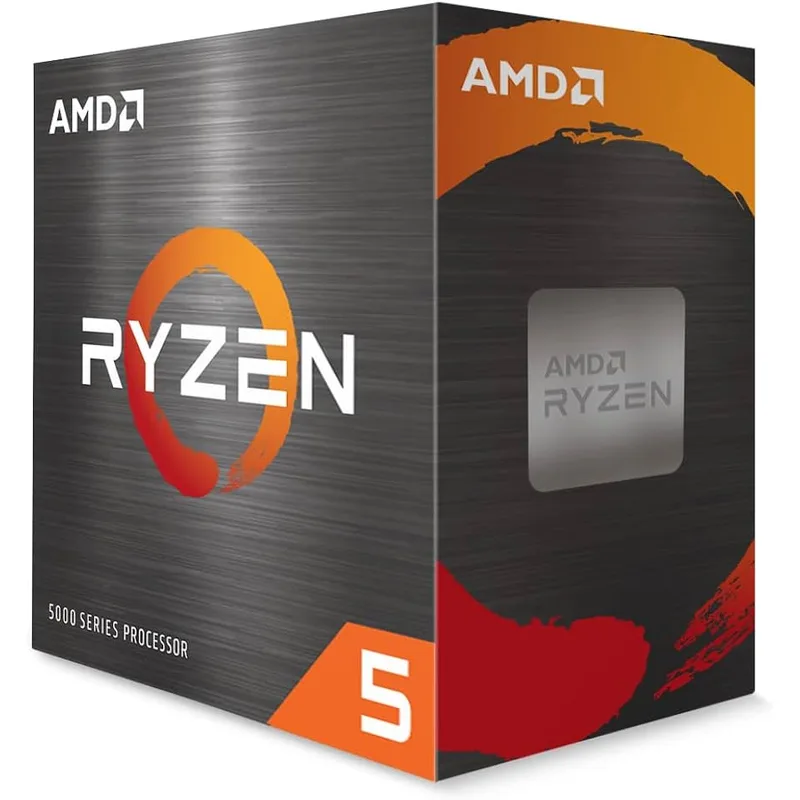
The Ryzen 5 5600 has been the benchmark for budget gaming CPUs since 2021, and in 2026 it still holds up because the games that matter haven’t moved far enough to outpace it. Paired with a GTX 1660 Super or RX 6600, you’re looking at GPU-limited performance in virtually every title at 1080p — meaning the CPU isn’t your bottleneck.
The key specs: 6 Zen 3 cores, 3.5 GHz base with a 4.4 GHz boost, and 32MB of L3 cache across the chiplet. That L3 cache matters — it reduces latency on branchy game workloads and is one reason the 5600 outperforms the i3-14100F in CPU-bound scenarios despite similar single-core clocks.
Multi-threaded workloads are where the 5600 separates itself from the i3-14100F. Cinebench R23 multi-core: ~13,700 points for the 5600 versus ~9,200 for the i3-14100F — a 48% gap. For gaming-only use cases, that gap shrinks to 5-10%, but if you ever open DaVinci Resolve, Blender, or run multiple applications at once, you’ll notice the difference.
Socket: AM4. Cooler: Wraith Stealth included. PSU recommendation: 450W+.
Intel Core i5-12400F — Best Intel Pick
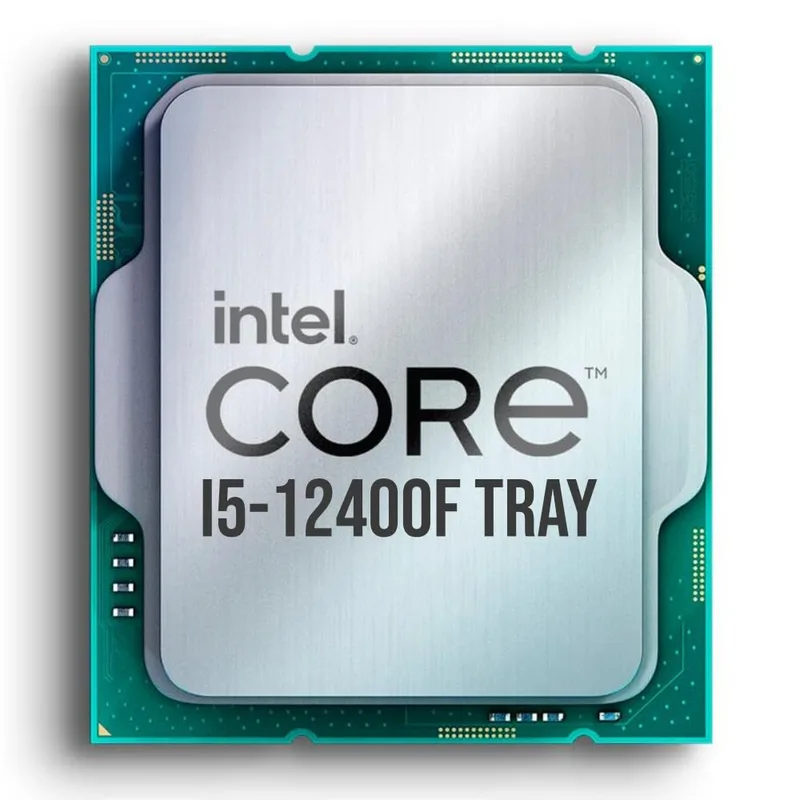
The i5-12400F launched in early 2022 and hasn’t aged poorly. Six P-cores running at up to 4.4 GHz, no efficiency cores complicating scheduling, and a clean 65W TDP keep it competitive with AMD’s Zen 3 best in this bracket. In Head-to-head gaming at 1080p with a GPU like the RX 7600, the 5600 and 12400F are within 3% of each other — effectively tied.
Where the 12400F earns points over the Ryzen 5 5600: the LGA1700 platform path. B760 motherboards support DDR5-6000+ out of the box, and you can drop in a 13th or 14th-gen i5/i7 without changing boards. That gives you more room to grow without a full platform rebuild.
There’s one hard requirement: you need a dedicated GPU. The 12400F has no iGPU (that’s what the “F” suffix means on Intel chips). Without a discrete card, you have no display output at all.
Cinebench R23 multi-core: approximately 14,800 points, slightly ahead of the Ryzen 5 5600 and nearly double the i3-14100F.
Socket: LGA1700. No cooler included — budget $20-30 for a cooler like the Thermalright Assassin Spirit 120. PSU recommendation: 450W+.
AMD Ryzen 5 5600G — Best for GPU-Free Builds
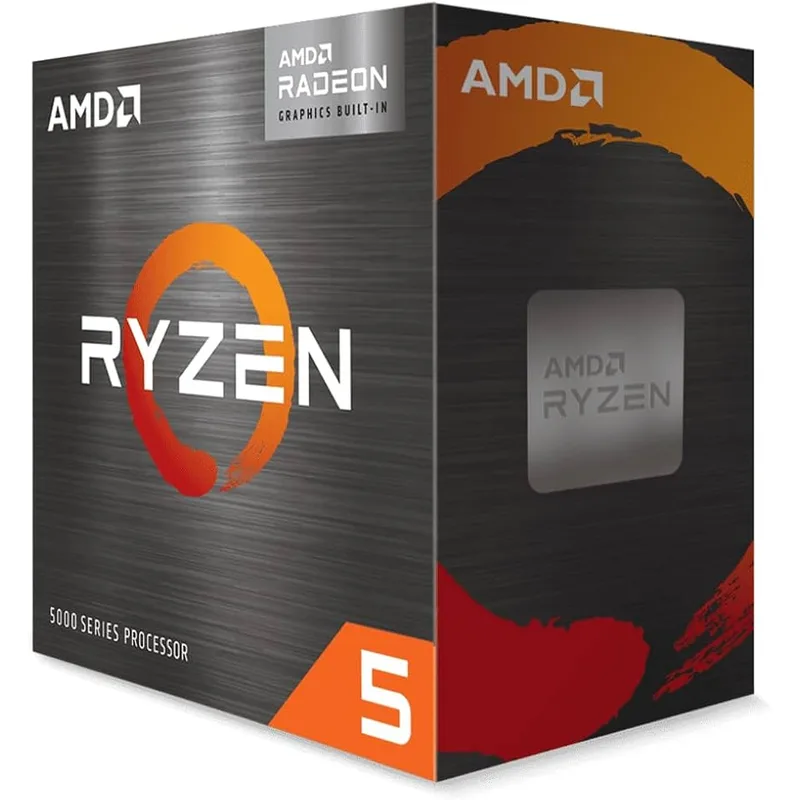
The 5600G is the only chip on this list that lets you build a complete PC with zero discrete GPU spend. The Radeon RX Vega 7 iGPU (512 shaders, 2.1 GHz) won’t replace a real graphics card, but it’s genuinely useful for light gaming: CS2 runs at 60+ fps at 1080p medium settings, Minecraft maxes out at native resolution, and older esports titles (Valorant, DOTA 2, League of Legends) stay playable at low-medium settings.
When you do add a discrete GPU, the 5600G’s CPU cores perform within a rounding error of the standard Ryzen 5 5600 in gaming benchmarks — the shared memory and lower cache don’t meaningfully hurt frame rates with a dedicated card installed.
The trade-off is memory bandwidth. The Vega 7 uses your system RAM as VRAM, so 16GB kits effectively become 14-15GB available to the system. DDR4-3600 dual channel is the sweet spot for iGPU gaming with the 5600G — faster RAM directly translates to more GPU bandwidth and higher frame rates.
Socket: AM4. Cooler: Wraith Stealth included. PSU recommendation: 350W+ for iGPU use, 450W+ with a discrete card.
Intel Core i3-14100F — Tightest Budget
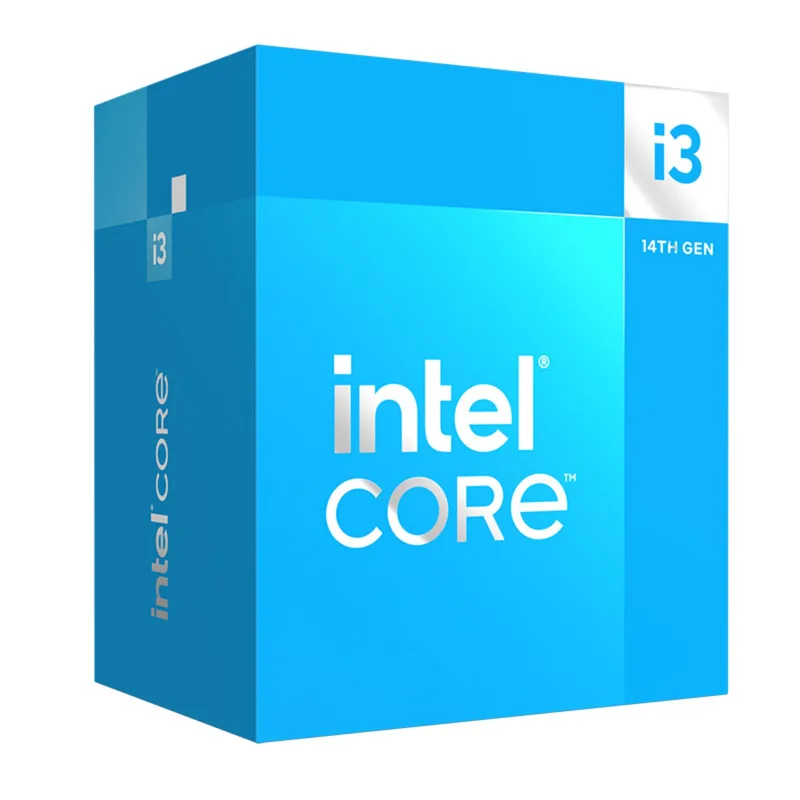
The i3-14100F is Intel’s sharpest budget chip. Four P-cores running at up to 4.7 GHz deliver single-core performance that’s competitive with anything in this price range, and that helps in older titles and emulation workloads that lean on high single-thread speeds. At $90, it’s the cheapest path to an LGA1700 platform.
The problem is threading. Four cores and 8 threads is tight in 2026. Titles like Cyberpunk 2077 and Microsoft Flight Simulator already show the 4-core limitation in CPU-bound scenarios — you’ll see frame dips that a 6-core chip wouldn’t produce. The i3-14100F is a solid gaming chip if you’re playing esports titles (Valorant, CS2, Rocket League), but it struggles under heavy multitasking or open-world games that push more cores.
It does have one compelling argument: LGA1700 upgrade headroom. You can start here and upgrade to an i5-13600KF or i7-13700K later without a new motherboard or RAM. For builders who need the absolute lowest upfront CPU cost and plan to upgrade within 12-18 months, this path makes sense.
Socket: LGA1700. No cooler included. PSU recommendation: 450W+ with a discrete GPU (required).
AMD Ryzen 5 5500 — Best Cheapest Option
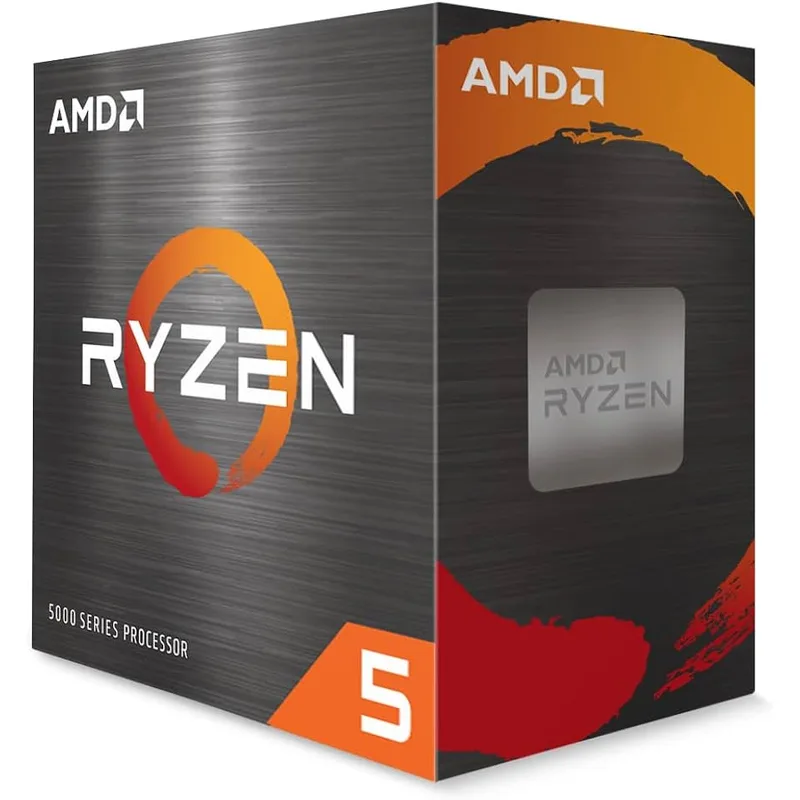
At $75, the Ryzen 5 5500 is the cheapest way to get 6 cores and 12 threads in a desktop PC. The CPU is based on the same Zen 3 architecture as the 5600, but AMD cut the L3 cache from 32MB to 19MB and dropped PCIe 4.0 support at the CPU level — the platform reverts to PCIe 3.0 for the GPU and primary NVMe slot.
In GPU-limited scenarios at 1080p, the 5500 performs within 5-8% of the 5600. The cache reduction shows up in CPU-sensitive benchmarks (Cinebench R23 single-core: ~1,510 vs ~1,620 for the 5600), but in actual gaming with a mid-range GPU, you’re looking at sub-5fps differences in most titles.
The PCIe 3.0 limitation matters more for storage than GPUs. An RTX 4060 or RX 7600 running on PCIe 3.0 x16 loses less than 2% performance versus PCIe 4.0. But if you want a high-speed PCIe 4.0 NVMe like a Samsung 990 Pro, you won’t get its full read speeds through the CPU’s PCIe 3.0 lanes.
The extra $20 for the Ryzen 5 5600 is worth it for most builds — more cache, PCIe 4.0, and slightly higher clocks. But if your budget is genuinely capped at $75, the 5500 with a $60-70 B450 board is a strong starting point.
Socket: AM4. Cooler: Wraith Stealth included. PSU recommendation: 450W+.
FAQ
Is 6 cores still enough for gaming in 2026?
For 1080p and 1440p gaming with a mid-range GPU, yes. The vast majority of games in 2026 are optimized for 6-8 cores, and having 6 cores with SMT (12 threads) keeps background processes from interfering with game performance. Games requiring more than 6 cores — like some open-world titles at maximum settings — tend to also require a high-end GPU that outprices this CPU bracket anyway.
Do I need a discrete GPU with these CPUs?
Four out of five chips here (Ryzen 5 5600, 5500, i5-12400F, i3-14100F) have no integrated graphics. You will need a dedicated GPU or you’ll have no video output. The only exception is the Ryzen 5 5600G, which has Radeon Vega 7 integrated graphics capable of light gaming.
Can I pair an i3-14100F with a B550 motherboard?
No. The i3-14100F uses the Intel LGA1700 socket, which requires a 600-series (B660, Z690) or 700-series (B760, Z790) motherboard. B550 is an AMD AM4 platform and physically incompatible with Intel 12th/13th/14th-gen processors.
Which is better for a $500 gaming build: AM4 Ryzen or LGA1700 Intel?
For pure gaming performance per dollar, the Ryzen 5 5600 wins. A B550M board runs around $75, putting the full CPU + board platform at roughly $170 — leaving $330 for GPU and other components in a $500 build. Intel’s 12th-gen 6-core paired with a B760 board runs closer to $200 total for the platform, but gives you a cleaner upgrade path and DDR5 support.
Will these CPUs bottleneck a mid-range GPU like an RTX 4060?
No — not at 1080p or 1440p. All five chips here are fast enough that an RTX 4060 is the bottleneck in nearly every modern title at these resolutions. You’d need a GPU in the RTX 4080/RX 7900 XTX range before CPU choice starts mattering at standard gaming resolutions.
The Bottom Line
For most builders, the AMD Ryzen 5 5600 is the buy. Six Zen 3 cores, a bundled cooler, and a cheap AM4 motherboard ecosystem add up to the best gaming-to-dollar ratio under $100 in March 2026. If you want to stay on Intel’s platform for the DDR5/upgrade path, the Intel Core i5-12400F matches it frame-for-frame in games and costs the same — you just need to budget a cooler separately. The Ryzen 5 5500 is the move if you need to squeeze every dollar toward a better GPU.