Two platforms, five chips, and a clear hierarchy. AMD’s 3D V-Cache continues to dominate pure gaming workloads, while Intel’s Arrow Lake architecture fights back on multi-threaded value. Here’s how to pick the right CPU for your build.
Quick Picks
Best gaming CPU: The AMD Ryzen 7 9800X3D is the fastest gaming processor available. Period. If frames-per-second at 1080p/1440p is the metric, nothing else comes close.
Best value: The AMD Ryzen 5 9600X at $189 games within 5-10% of chips costing $300+ more. It’s the rational choice for GPU-limited builds.
Best for content creators who game: The Intel Core Ultra 9 285K combines 24 cores with competitive gaming performance. Strong for mixed workloads.
Compatibility Notes
Socket AM5 (AMD): Ryzen 9000 series. Requires a 600-series motherboard (B650, X670, B850, X870). All AM5 boards use DDR5 exclusively. AMD has confirmed AM5 support through at least 2027, making it the safer long-term platform investment.
Socket LGA 1851 (Intel): Arrow Lake / Core Ultra 200 series. Requires a 800-series motherboard (B860, Z890). DDR5 only. Intel’s socket longevity track record is shorter — typically 2 generations.
DDR5 is mandatory on both platforms. DDR4 is not supported. Budget at least $70-90 for a quality 32GB DDR5 kit.
Buying Guide
Gaming-first builds: The CPU matters less than the GPU at resolutions above 1080p. At 1440p with a mid-range GPU, the difference between a $189 Ryzen 5 9600X and a $449 Ryzen 7 9800X3D is 2-5 FPS in most titles. Spend the savings on a better GPU.
1080p competitive gaming: This is where the 9800X3D earns its price. At 1080p with a high-end GPU, the CPU becomes the bottleneck, and 3D V-Cache’s massive L3 cache delivers measurable frame rate advantages.
Mixed gaming + productivity: If you stream, edit video, or compile code alongside gaming, core count matters. The Intel 285K or AMD 9950X justify their prices here.
Detailed Reviews
1. AMD Ryzen 7 9800X3D — Best Gaming CPU
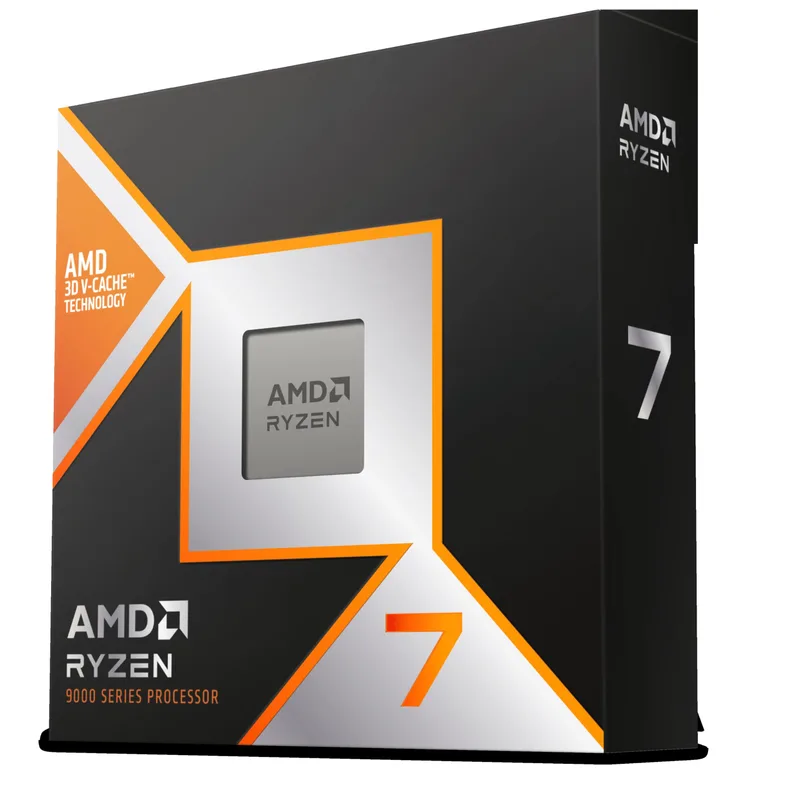
AMD Ryzen 7 9800X3D
The 9800X3D does one thing better than any other consumer CPU: gaming. AMD’s 3D V-Cache technology stacks an additional 64MB of L3 cache on the Zen 5 die, giving the CPU a massive advantage in cache-sensitive game engines. The result is 5-15% higher frame rates than the next-best option across a wide range of titles.
The 120W TDP is a practical advantage — a quality $40 tower cooler handles it comfortably. Combined with AM5’s platform longevity, this is the gaming CPU to buy if you’re building a system around maximum frame rates and plan to keep the motherboard for your next upgrade cycle.
The limitation is multi-threaded work. 8 cores and 16 threads are adequate for gaming with background Discord and Chrome, but fall short for serious video editing, 3D rendering, or heavy code compilation. If those workloads matter to you, look at the 9950X or 285K.
2. Intel Core Ultra 9 285K
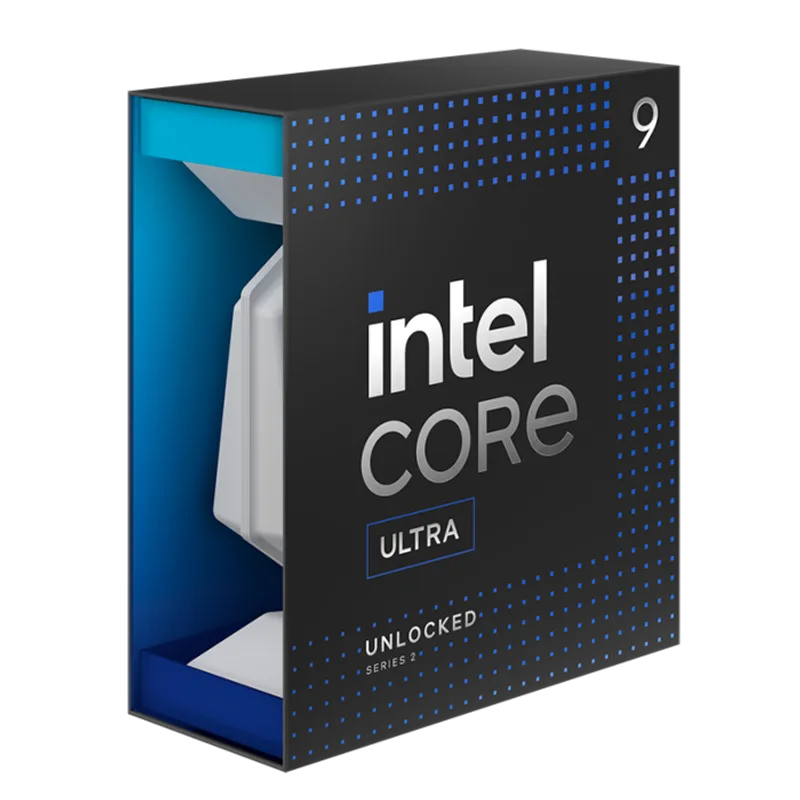
Intel Core Ultra 9 285K
Intel’s Arrow Lake flagship brings 24 cores to the table at a competitive price. For mixed workloads — gaming plus streaming, video editing, or software development — the 285K is genuinely compelling. The 8 P-cores handle single-threaded gaming loads, while the 16 E-cores tackle background tasks and multi-threaded work.
The gaming gap versus the 9800X3D is real but context-dependent. At 1440p with a mid-range GPU, you won’t notice. At 1080p with an RTX 5070, the 9800X3D pulls ahead by 5-15%. The question is whether 24-core productivity performance is worth that gaming trade-off to you.
Platform cost is the other consideration. LGA 1851 Z890 motherboards start around $250, while AM5 B850 boards start at $150. That $100 gap narrows the 285K’s value proposition.
3. AMD Ryzen 5 9600X — Best Value
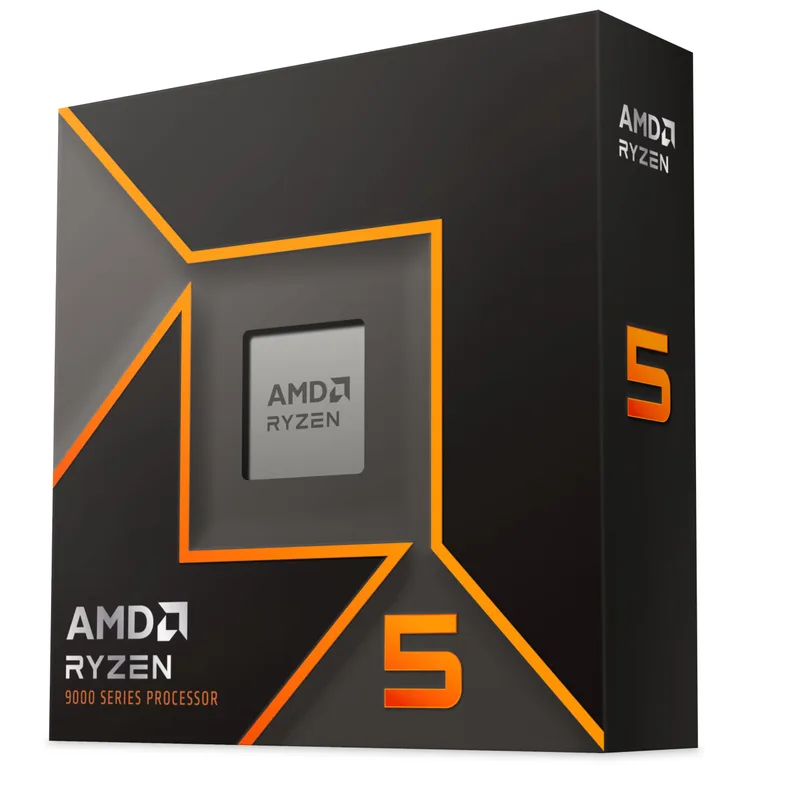
AMD Ryzen 5 9600X
The smartest CPU purchase for most gaming builds in 2026. At $189, the 9600X delivers Zen 5 IPC improvements, 5.4 GHz boost clocks, and gaming performance that sits within 5-10% of the 9800X3D in GPU-limited scenarios — which is most scenarios at 1440p and above.
The included Wraith Stealth cooler handles the 65W TDP adequately. It’s not silent under load, but it eliminates the $30-50 aftermarket cooler cost that Intel K-series chips require. For a budget build targeting 1440p gaming, pair this with a B850 motherboard and put the savings toward a better GPU.
4. Intel Core Ultra 5 245K
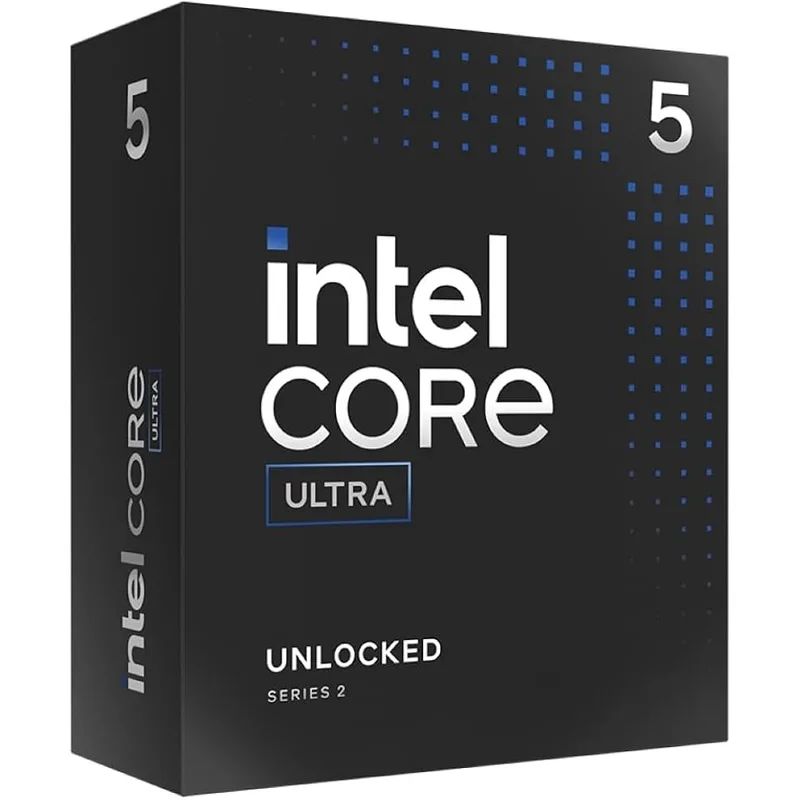
Intel Core Ultra 5 245K
A capable mid-range chip that struggles with positioning. At $269-$319, it needs to justify an $80-130 premium over the Ryzen 5 9600X. In gaming, it doesn’t — the two trade blows depending on the title. In multi-threaded productivity, the extra 8 E-cores provide a meaningful advantage over the 9600X’s 6 cores.
If you’re committed to the Intel ecosystem — perhaps because you already have an LGA 1851 motherboard or prefer Intel’s platform features — the 245K is a fine chip. But for new builders, the 9600X on AM5 offers better gaming value and a longer platform upgrade path.
5. AMD Ryzen 9 9950X
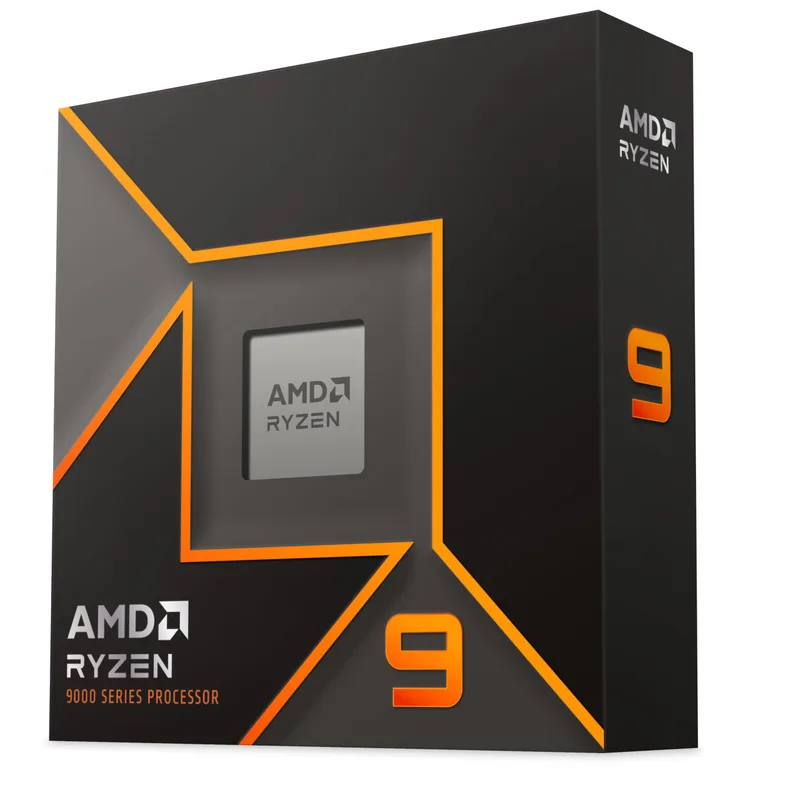
AMD Ryzen 9 9950X
AMD’s 16-core flagship is the productivity powerhouse on AM5. Video editors, 3D artists, and developers who also game will appreciate the balance. Gaming performance is within 3-5% of the 9800X3D in most titles — close enough that the productivity uplift from double the cores justifies the choice if you actually use them.
The catch: if you don’t run sustained multi-threaded workloads, the 9800X3D is faster in games and $40 cheaper. The 9950X only makes sense if those extra 8 cores see real utilization.
| Spec | AMD Ryzen 7 9800X3D $449-$469 9.4/10 | Intel Core Ultra 9 285K $516-$589 8.5/10 | AMD Ryzen 5 9600X $173-$189 9/10 | Intel Core Ultra 5 245K $269-$319 8/10 | AMD Ryzen 9 9950X $488-$519 8.3/10 |
|---|---|---|---|---|---|
| Cores/Threads | 8C/16T | 24C/24T (8P+16E) | 6C/12T | 14C/14T (6P+8E) | 16C/32T |
| Base/Boost | 4.7 / 5.2 GHz | 3.7 / 5.7 GHz | 3.9 / 5.4 GHz | 4.2 / 5.2 GHz | 4.3 / 5.7 GHz |
| Cache | 96MB 3D V-Cache + 8MB L2 | 36MB L3 + 40MB L2 | 32MB L3 + 6MB L2 | 24MB L3 + 26MB L2 | 64MB L3 + 16MB L2 |
| TDP | 120W | 125W (PBP) / 250W (MTP) | 65W | 125W (PBP) / 159W (MTP) | 170W |
| Socket | AM5 | LGA 1851 | AM5 | LGA 1851 | AM5 |
| DDR | DDR5-5600 (native) | DDR5-5600 (native) | DDR5-5600 (native) | DDR5-5600 (native) | DDR5-5600 (native) |
| Rating | 9.4/10 | 8.5/10 | 9/10 | 8/10 | 8.3/10 |
FAQ
Cooler Compatibility
AM5 coolers use the same mounting holes as AM4 in most cases. If you have a quality AM4 tower cooler, it likely works on AM5 with the same bracket or a free adapter from the manufacturer. Check before buying a new cooler.
LGA 1851 coolers share the same mounting as LGA 1700. Any cooler compatible with 12th/13th/14th Gen Intel works with Arrow Lake. Given the 285K’s 250W maximum turbo power, a 360mm AIO or premium dual-tower air cooler is strongly recommended.
Stock coolers: The Ryzen 5 9600X includes a Wraith Stealth — adequate for the 65W TDP but audible under load. The Ryzen 7 9800X3D and Ryzen 9 9950X do not include coolers. No Intel K-series chip includes a cooler.
AMD or Intel for gaming in 2026?
AMD. The Ryzen 7 9800X3D is the fastest gaming CPU, the Ryzen 5 9600X is the best value, and AM5 has a longer confirmed support window. Intel’s Arrow Lake competes on productivity but trails in pure gaming.
Is 6 cores enough for gaming?
Yes, for now. The Ryzen 5 9600X’s 6 cores handle current games without issues. Some upcoming titles are starting to use 8+ cores more aggressively, but 6 cores won’t bottleneck a mid-range GPU build in 2026.
Should I buy DDR5-5600 or DDR5-6000?
DDR5-5600 is the native speed for both AMD and Intel current-gen. DDR5-6000 kits offer 2-3% more bandwidth but cost 15-20% more. For gaming, DDR5-5600 at tight timings (CL30-CL36) is the sweet spot.
Is it worth upgrading from a Ryzen 7 7800X3D?
Marginal. The 9800X3D offers roughly 10% more gaming performance over the 7800X3D. Unless you’re chasing every frame at 1080p competitive, the upgrade isn’t compelling enough to justify $449.
The Bottom Line
The AMD Ryzen 7 9800X3D is the best gaming CPU in 2026. If budget matters more than the last 10% of frame rate — and it should for most builders — the Ryzen 5 9600X at $189 is the pick. Put the $260 savings toward a better GPU, where it’ll make a far bigger difference in your actual gaming experience.