AMD’s Ryzen 9 9950X3D launched in early 2026 with measurable gains in AI inference benchmarks, and the Threadripper PRO series continues to dominate professional multi-GPU training setups. Running local LLMs, training custom models, or building a data science workstation on a budget — the 2026 CPU market has a distinct answer for each use case.
| Spec | AMD Ryzen Threadripper PRO 7965WX 9.5/10 | AMD Ryzen 9 9950X 9.1/10 | AMD Ryzen 9 9950X3D 9/10 | Intel Core Ultra 9 285K 8.5/10 | AMD Ryzen 9 9900X 8.3/10 |
|---|---|---|---|---|---|
| cores | 24 Cores / 48 Threads | 16 Cores / 32 Threads | 16 Cores / 32 Threads | 24 Cores (8P + 16E) / 24 Threads | 12 Cores / 24 Threads |
| boost_clock | 5.3 GHz | 5.7 GHz | 5.7 GHz | 5.7 GHz | 5.6 GHz |
| base_clock | 4.2 GHz | 4.3 GHz | 4.3 GHz | 3.7 GHz | 4.4 GHz |
| l3_cache | 128MB | 64MB | 128MB (3D V-Cache) | 36MB | 64MB |
| tdp | 350W | 170W | 170W | 125W | 120W |
| socket | sTR5 | AM5 | AM5 | LGA1851 | AM5 |
| memory_channels | 8-Channel DDR5 | 2-Channel DDR5 | 2-Channel DDR5 | 2-Channel DDR5 | 2-Channel DDR5 |
| pcie_lanes | 128 PCIe 5.0 lanes | — | — | — | — |
| Rating | 9.5/10 | 9.1/10 | 9/10 | 8.5/10 | 8.3/10 |
Prices change daily — tap Check Price for the current Amazon price.
Prices change daily — tap Check Price for the current Amazon price.
Quick Picks
- Best professional workstation: AMD Threadripper PRO 7965WX — 128 PCIe 5.0 lanes and 8-channel DDR5 are mandatory for serious multi-GPU AI training rigs
- Best desktop CPU for ML: AMD Ryzen 9 9950X — 16 Zen 5 cores, 64MB L3 cache, and DDR5-6000 support cover most prosumer ML workloads at $649
- Best value: AMD Ryzen 9 9900X — 12 Zen 5 cores at $389 handle GPU offload management without breaking the budget
Buying Guide: CPU Priorities for ML Workloads
Most ML workloads are GPU-bound, not CPU-bound. Your GPU does the matrix math. Your CPU handles data preprocessing, job orchestration, and inference serving. That means a few things matter more than raw single-threaded speed:
Core count for preprocessing. During training, your CPU is often tokenizing, augmenting, and batching data to feed the GPU. An 8-core CPU can starve a high-end GPU on large datasets. 12-16 cores eliminate that bottleneck for almost all solo training setups.
Memory channels and bandwidth. 8-channel DDR5 (Threadripper PRO) moves data to the CPU roughly 4x faster than dual-channel AM5. For workloads that run partially on CPU — like large context window LLM inference or mixed-precision tasks — this matters. For GPU-only training, it’s less critical.
PCIe lanes for multi-GPU. An AM5 or LGA1851 desktop CPU has 24-28 PCIe lanes total. Running two GPUs means each gets PCIe x8 bandwidth, which is fine for most setups. Three or four GPUs require Threadripper’s 128 lanes to maintain full PCIe 5.0 x16 per card.
Cache size for local LLM inference. If you’re running models like Llama 3 or Mistral locally on CPU, larger L3 cache directly reduces inference latency. The 9950X3D’s 128MB 3D V-Cache shows measurable gains over standard Zen 5 for this use case.
Socket compatibility. AM5 CPUs (Ryzen 9000 series) pair with X870 or B650 motherboards. LGA1851 (Core Ultra) pairs with Z890. Threadripper PRO 7000 WX series requires a WRX90 motherboard — a distinct, expensive platform.
Detailed Reviews
AMD Ryzen Threadripper PRO 7965WX
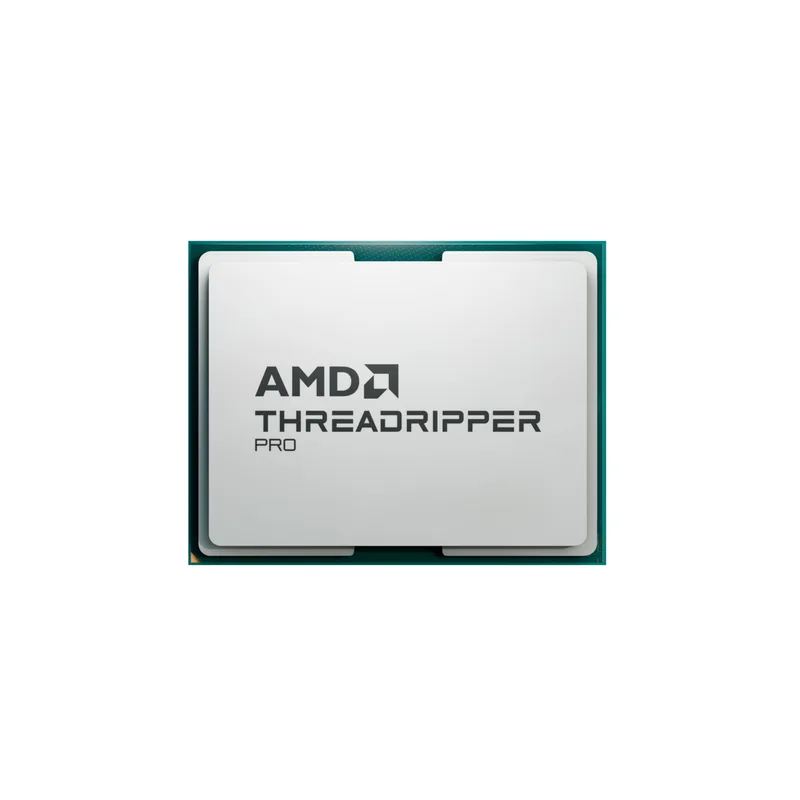
AMD Ryzen Threadripper PRO 7965WX
The Threadripper PRO 7965WX is in a different class than desktop CPUs. Its 128 PCIe 5.0 lanes support four GPUs at full x16 bandwidth simultaneously, which no AM5 or LGA1851 platform can match. The 8-channel DDR5 memory controller supports up to 2TB of ECC RDIMM, enabling datasets to live entirely in system RAM.
The 24 Zen 4 cores at 5.3 GHz boost clock aren’t dramatically faster per-core than Zen 5, but the workstation-class sustained throughput at 350W TDP is. Training jobs that throttle on desktop CPUs under load run at spec here because the platform is designed to dissipate that heat.
The platform cost is real. A WRX90 motherboard starts at $600. You’ll need a workstation case with proper airflow. Total platform cost crosses $4,000 before you add GPUs and RAM. That’s the appropriate context — this is for researchers and developers running multi-GPU training daily, not occasional hobby projects.
AMD Ryzen 9 9950X
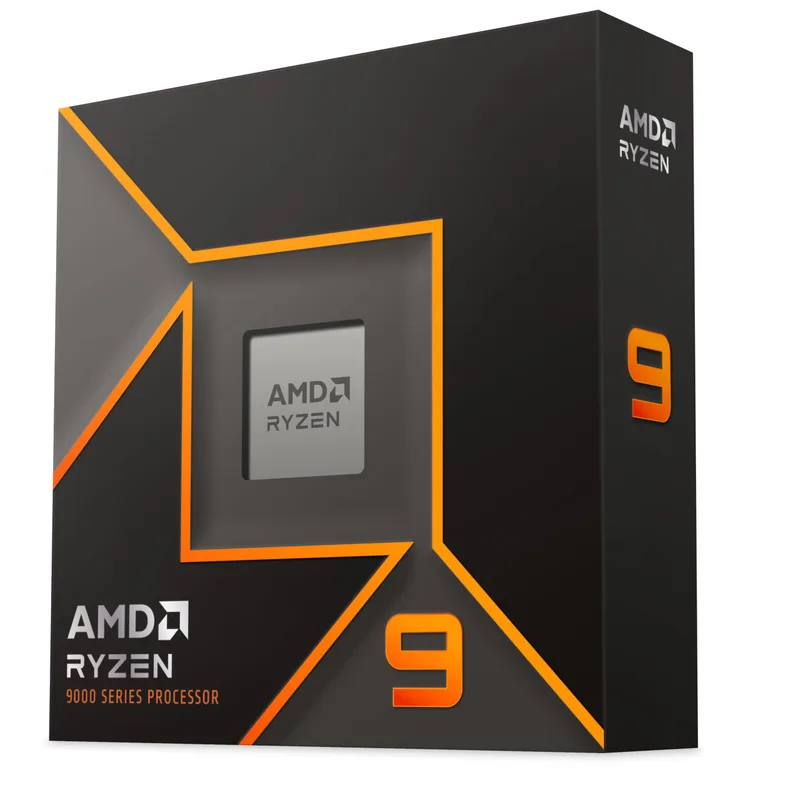
The Ryzen 9 9950X is the strongest desktop CPU for ML workloads in 2026. Its 16 Zen 5 cores post 3,100+ in Cinebench R24 multi-thread, outperforming the Core Ultra 9 285K by roughly 8% in sustained workloads where the 285K’s E-cores underperform.
Zen 5’s IPC uplift over Zen 4 is particularly useful in preprocessing pipelines — operations like tokenization, image augmentation, and data normalization run faster per cycle. The 64MB L3 cache handles working set fits better than the 285K’s 36MB.
For local LLM inference below 70B parameters, DDR5-6000 dual-channel provides enough memory bandwidth to keep token generation rates reasonable. The 9950X isn’t a bottleneck for Llama 3 8B or Mistral 7B inference at 4-bit quantization. Above 70B, you start feeling the dual-channel ceiling.
The 170W TDP demands a real cooler — minimum a 280mm AIO. With proper cooling, sustained all-core performance holds at spec through extended training runs.
AMD Ryzen 9 9950X3D
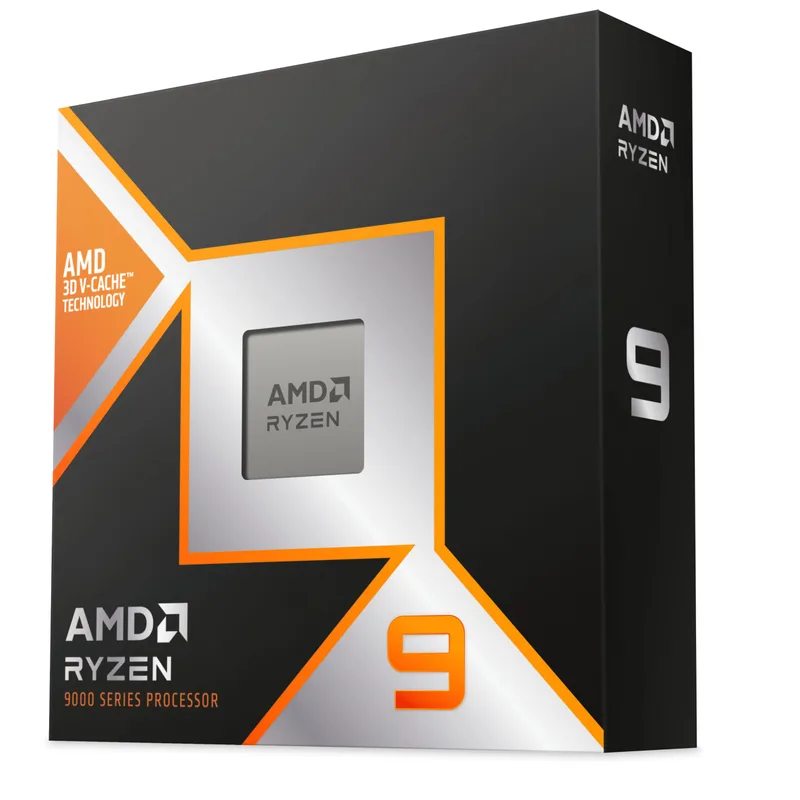
The Ryzen 9 9950X3D shares the same 16-core Zen 5 die as the 9950X but adds 64MB of stacked L3 cache, bringing total L3 to 128MB. StorageReview’s benchmarks show a 17% improvement in AI Computer Vision scores compared to the 9800X3D, driven by reduced cache misses in inference loops.
For local LLM inference, the extra L3 directly reduces the frequency of slow main memory accesses when the model’s key-value cache grows large during multi-turn conversations. Token generation on Llama 3 70B (quantized) is meaningfully faster than on the non-3D 9950X.
The $50 premium over the 9950X is justified if inference performance is your priority. If you’re primarily GPU training and only occasionally doing CPU inference, the standard 9950X makes more sense — training throughput is nearly identical between the two chips.
As a dual-purpose gaming and ML workstation CPU, the 9950X3D is unrivaled. It scores 37% ahead of the Core Ultra 9 285K at 1080p gaming while holding near-parity in ML preprocessing throughput.
Intel Core Ultra 9 285K
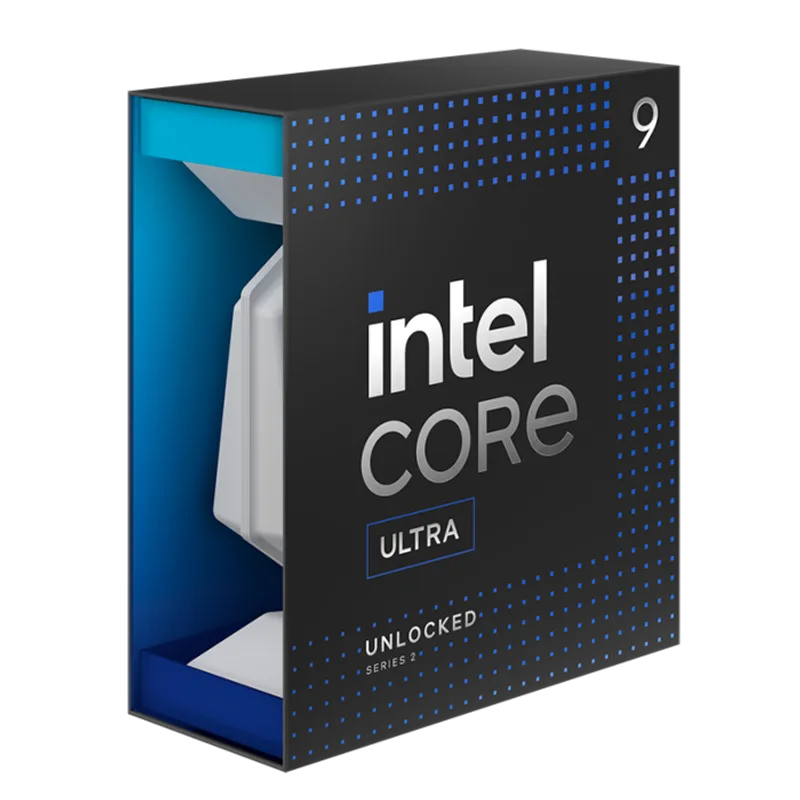
The Core Ultra 9 285K is Intel’s answer to the Ryzen 9000 series and brings one feature no AMD consumer desktop CPU has: a built-in NPU (Neural Processing Unit). The NPU handles specific AI inference tasks on-chip without touching the GPU, which is useful for applications like real-time video processing, live transcription, and other inference-heavy desktop tasks.
For traditional ML training, the 285K’s 24 cores (8 P-cores + 16 E-cores) match AMD’s multi-threaded count but deliver about 8% lower sustained throughput due to the E-cores’ reduced per-core capability. The 36MB L3 cache is the main limitation — significantly smaller than the 9950X’s 64MB, it causes more cache pressure during large matrix operations.
At $429, the 285K is a compelling budget ML platform. The LGA1851 socket pairs with Z890 motherboards starting around $200, and 125W TDP keeps power and cooling costs down. For solo GPU training setups where the CPU is mainly handling data pipelines, the 285K is rarely a bottleneck.
E-cores lack AVX-512 support, which affects a minority of ML frameworks that use AVX-512 vectorization. Most modern frameworks (PyTorch, TensorFlow) adapt well to the hybrid architecture.
AMD Ryzen 9 9900X
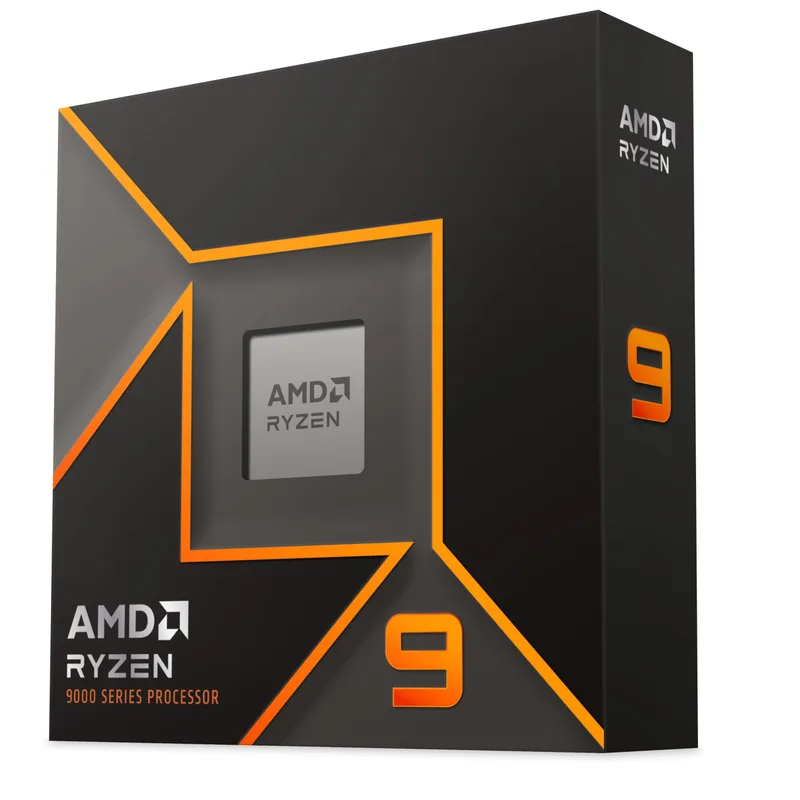
The Ryzen 9 9900X is the entry point for a capable Zen 5 ML workstation. At $389, it undercuts the 9950X by $260 while sacrificing only 4 cores and a moderate amount of multi-threaded throughput.
For single-GPU training setups, 12 cores at 5.6 GHz boost is more than sufficient to keep the GPU saturated during standard vision or NLP training pipelines. The bottleneck in those scenarios is the GPU, not the CPU. The 9900X only shows strain during extremely high-throughput CPU preprocessing — large-scale data augmentation pipelines where all 12 cores peg at 100% while the GPU waits.
The 64MB L3 cache (same as the 9950X, despite fewer cores) is a notable advantage over the Intel 285K for inference workloads. At 120W TDP, this runs cooler than any other chip in this roundup, compatible with quality air coolers like the Thermalright Phantom Spirit 120.
If your budget needs to prioritize GPU over CPU, the 9900X frees up $260 toward a better video card, which almost always translates to more ML performance than spending up to the 9950X.
FAQ
Does CPU matter much for GPU-based ML training?
Less than most people think, but it still matters. A weak CPU creates preprocessing bottlenecks that stall the GPU between batches. For single-GPU setups, 12-16 cores at modern IPC levels are sufficient. The CPU becomes more critical when you add more GPUs — each additional card increases the preprocessing and orchestration load.
How much RAM do I need for ML workloads?
32GB is the minimum for running local LLMs and medium-scale training jobs. 64GB is the practical sweet spot for most setups — it covers Llama 3 70B at 4-bit quantization in system RAM for CPU inference, plus headroom for the OS and data pipeline. 128GB+ is relevant for massive datasets or multi-GPU setups with high memory bandwidth requirements.
Do I need AVX-512 support for deep learning?
Not strictly. PyTorch and TensorFlow both work without AVX-512. However, frameworks compiled with AVX-512 optimizations can show 10-20% faster CPU-side operations (preprocessing, model loading) on chips that support it. AMD Ryzen 9000 series fully supports AVX-512. Intel’s hybrid Core Ultra chips support AVX-512 only on P-cores, not E-cores.
Is Threadripper PRO worth it over Ryzen 9950X for ML?
Only if you need more than two GPUs at full bandwidth, or if you need ECC memory and 8-channel bandwidth for very large datasets. For single or dual GPU training, the Ryzen 9950X covers everything at a fraction of the total platform cost. The Threadripper PRO platform makes sense for teams running training infrastructure, not individual developers.
Can I run local LLMs on CPU with these processors?
Yes, with trade-offs. The Ryzen 9 9950X3D with its 128MB L3 cache is the best option for CPU-only LLM inference, delivering usable performance on 7B-13B parameter models at 4-bit quantization. The 9950X and 9900X handle it adequately for 7B models. Anything above 30B parameters runs slow enough on CPU that GPU inference becomes necessary.
The Bottom Line
For professional multi-GPU training rigs, the AMD Threadripper PRO 7965WX is the only desktop processor with the PCIe bandwidth and memory channel count to support serious AI infrastructure. For prosumer ML workstations, the AMD Ryzen 9 9950X at $649 covers the vast majority of single-GPU training and inference needs. Budget builders get a capable Zen 5 platform from the AMD Ryzen 9 9900X at $389 — spend the savings on a better GPU.