The sub-$250 CPU market is the most competitive it has been in years. AMD’s Ryzen 5 9600X has dropped to $179 since its launch — a chip that competes with parts that cost twice as much at release — while Intel’s Arrow Lake 200-series has matured through BIOS updates to offer a real alternative for buyers who need more cores. If you’re building or upgrading a gaming PC and don’t want to spend north of $250 on the CPU alone, these five processors cover the full spectrum of needs.
| Spec | AMD Ryzen 5 9600X 9/10 | AMD Ryzen 7 7700 8.5/10 | Intel Core Ultra 5 245KF 8/10 | AMD Ryzen 5 9600 8/10 | Intel Core Ultra 5 225 7.5/10 |
|---|---|---|---|---|---|
| Cores / Threads | 6C / 12T | 8C / 16T | 14C / 14T (6P + 8E) | 6C / 12T | 10C / 10T (6P + 4E) |
| Architecture | Zen 5 (AM5) | Zen 4 (AM5) | Arrow Lake (LGA1851) | Zen 5 (AM5) | Arrow Lake (LGA1851) |
| Base / Boost | 3.9 GHz / 5.4 GHz | 3.8 GHz / 5.3 GHz | — | 3.8 GHz / 5.2 GHz | — |
| TDP | 65W | 65W | 125W | 65W | 65W |
| L3 Cache | 32MB | 32MB | 24MB | 32MB | 20MB |
| Memory | DDR5 | DDR5 | DDR5 | DDR5 | DDR5 |
| Rating | 9/10 | 8.5/10 | 8/10 | 8/10 | 7.5/10 |
Prices change daily — tap Check Price for the current Amazon price.
Prices change daily — tap Check Price for the current Amazon price.
Quick Picks
- Best overall: AMD Ryzen 5 9600X — Zen 5 at $179 is the strongest gaming value at this price
- Best for streaming/multitasking: AMD Ryzen 7 7700 — 8 cores and 65W TDP for $229
- Best Intel: Intel Core Ultra 5 245KF — 14 cores, fully unlocked, pushes the $250 ceiling
Buying Guide: What You Need to Know Before Choosing
Platform costs matter as much as CPU price
At this price bracket, the processor is rarely the most expensive purchase. Factor in your motherboard:
- AM5 (AMD Ryzen 7000 / 9000): B650 boards start around $100–$120, offering a solid entry point. The same socket will support AMD’s upcoming Zen 6 chips.
- LGA1851 (Intel Arrow Lake): B860 and H870 boards run $130–$180. If you buy the 245KF and need overclocking, a Z890 board adds another $50–$100 to the platform cost.
- LGA1700 (Intel 12th–14th Gen): End-of-life platform. No future upgrade path, but boards and CPUs can sometimes be sourced cheap.
If you’re starting fresh, AM5 is the easier long-term bet under $250. You can pair a 9600X or 9600 with a $110 B650 board and have a upgrade path to Zen 6 without swapping the motherboard.
Gaming vs. productivity priorities
Six cores is sufficient for every major gaming title in 2026 — most engines are optimized for 6–8 cores, and the IPC advantage of Zen 5 outweighs raw core count in games. If your workload includes video encoding, 3D rendering, or running a game and OBS simultaneously, 8+ cores start to matter. The Ryzen 7 7700 and Core Ultra 5 245KF address that need at the cost of platform money and, in the case of AMD, newer architecture.
DDR5 is the standard now
Every chip in this roundup requires DDR5. A 32GB DDR5-6000 CL30 kit runs around $65–$80 in 2026, making it a minor line item rather than a budget-breaker. AM5’s sweet spot is DDR5-6000; Intel’s Arrow Lake platform also performs well at that speed.
Detailed Reviews
1. AMD Ryzen 5 9600X — Best Overall Under $250
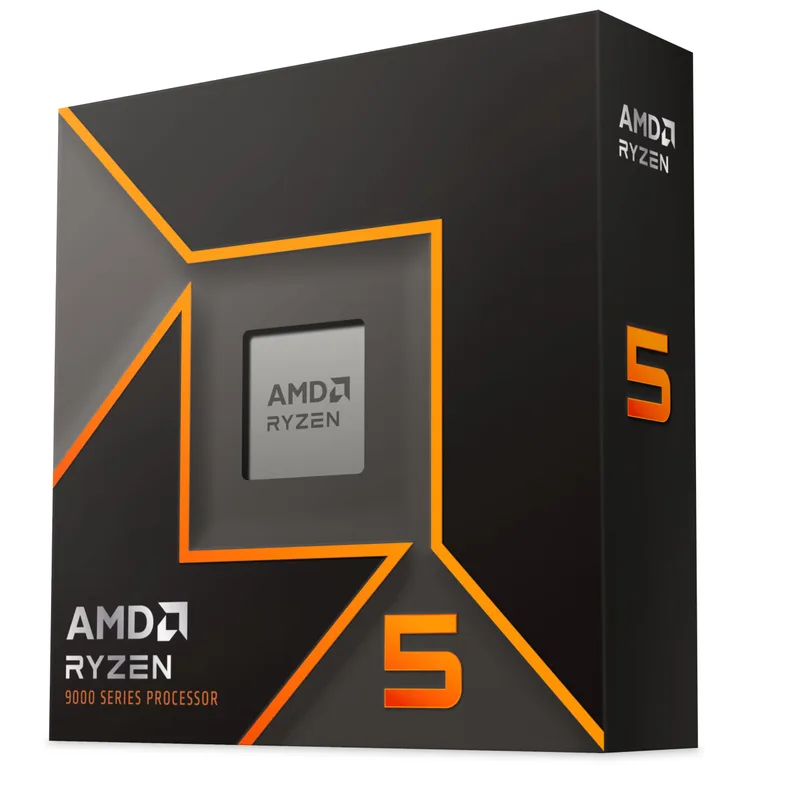
The Ryzen 5 9600X launched at $280 and has settled at $179 in 2026 — a 36% price drop that makes it one of the strongest gaming values on the market. Six Zen 5 cores with a 5.4 GHz single-core boost handle every current gaming title without any discernible bottleneck at 1440p. According to Tom’s Hardware’s review data, the 9600X averages within 2–3% of the much more expensive Ryzen 9 9900X in gaming workloads, because most game engines simply don’t scale past six well-clocked cores.
The 65W TDP is a genuine advantage. Budget air coolers like the DeepCool AK400 ($25) or even the included cooler from a 9600 kit keep the chip under 75°C under sustained load. The unlocked multiplier allows modest overclocking on B650 and X670 boards — a 200–300 MHz boost on all cores is achievable without exotic cooling.
AM5 longevity is real here. AMD has publicly committed to AM5 support through at least 2027, and Zen 6 chips will slot into the same socket. Buying a 9600X on a B650 board today gives you a clear upgrade path without a platform change.
Who it’s for: Any gamer building or upgrading on a budget who prioritizes frames-per-dollar over absolute peak performance.
2. AMD Ryzen 7 7700 — Best for Streaming and Multitasking
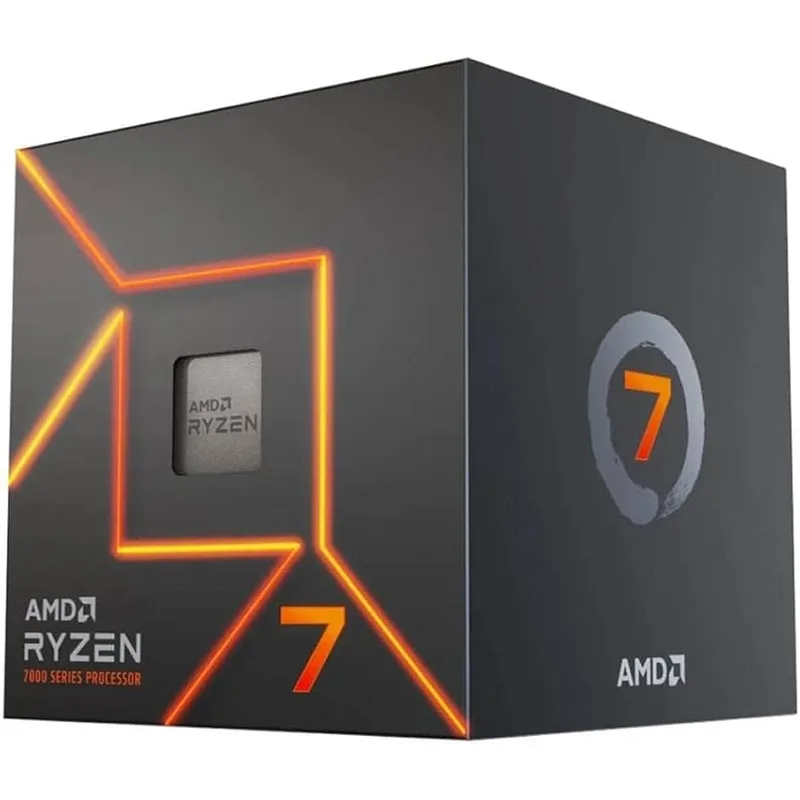
The Ryzen 7 7700 is the logical step up when your workload genuinely uses more than six cores. At $229, it sits $50 above the 9600X and delivers 8 Zen 4 cores at a 65W TDP — an unusual combination that makes it one of the most thermally efficient 8-core processors on the AM5 platform.
Gaming performance is close to the 9600X despite using Zen 4 instead of Zen 5. Zen 4’s per-core throughput trails Zen 5 by roughly 8–12%, but the 7700’s 5.3 GHz boost clock partially compensates. In titles that scale with core count — Baldur’s Gate 3, Microsoft Flight Simulator, Cities: Skylines 2 — the 7700 holds a measurable lead. In arcade-style titles and competitive shooters where raw clock speed dominates, the gap reverses.
The streaming use case is where the 7700 clearly earns its premium. Running OBS with x264 encoding while maintaining a game at high settings consumes 4–5 cores comfortably. On a 6-core 9600X, that leaves 1–2 cores free; on the 8-core 7700, you have real headroom. If you stream or run background tasks alongside games regularly, the $50 premium is justified.
Who it’s for: Streamers, content creators, or any builder who wants an efficient 8-core chip and is already on AM5 or planning a B650/X670 build.
3. Intel Core Ultra 5 245KF — Best Intel Under $250
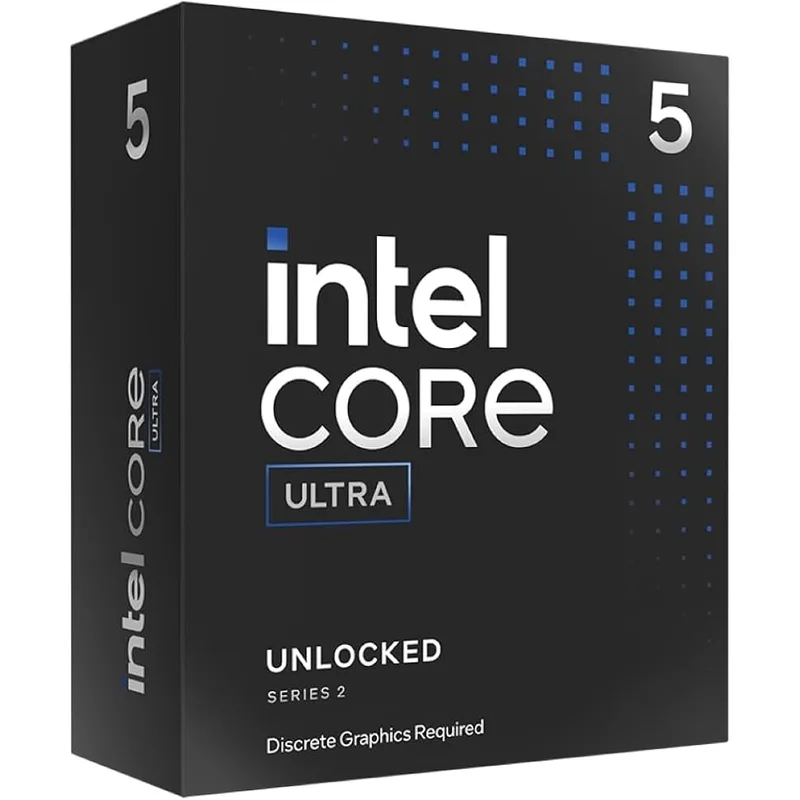
Intel’s Arrow Lake Core Ultra 5 245KF hits the $249 mark with 14 cores (6 Performance-cores + 8 Efficient-cores) and a fully unlocked multiplier. At launch, Arrow Lake’s gaming performance was a disappointment — early reviews showed it trailing Raptor Lake by 15–20% in several titles. Subsequent BIOS updates from board partners and microcode patches from Intel have significantly narrowed that gap through early 2026, but AMD’s Zen 5 still holds an edge in single-threaded gaming workloads.
Where the 245KF gains ground is in multi-threaded productivity. Eight Efficient-cores contribute meaningfully to background encoding, compilation, and file operations in a way that the Ryzen 5 9600X’s six cores can’t match. If your daily workflow includes video editing or software builds alongside gaming, the 245KF handles both without compromise.
The platform caveat matters: KF designation means no integrated graphics, and overclocking requires a Z890 motherboard. Budget a minimum of $180–$200 for the board, making the total platform cost substantially higher than an AM5 build with a B650. For buyers who need maximum core count under $250 and are comfortable with Intel’s ecosystem and the motherboard premium, it’s a compelling chip. For pure gaming, it’s harder to recommend over the 9600X at $179.
Who it’s for: Multi-tasking power users who want Intel’s ecosystem, the highest core count under $250, and don’t mind the Z890 platform cost.
4. AMD Ryzen 5 9600 — Best Budget Pick with Stock Cooler
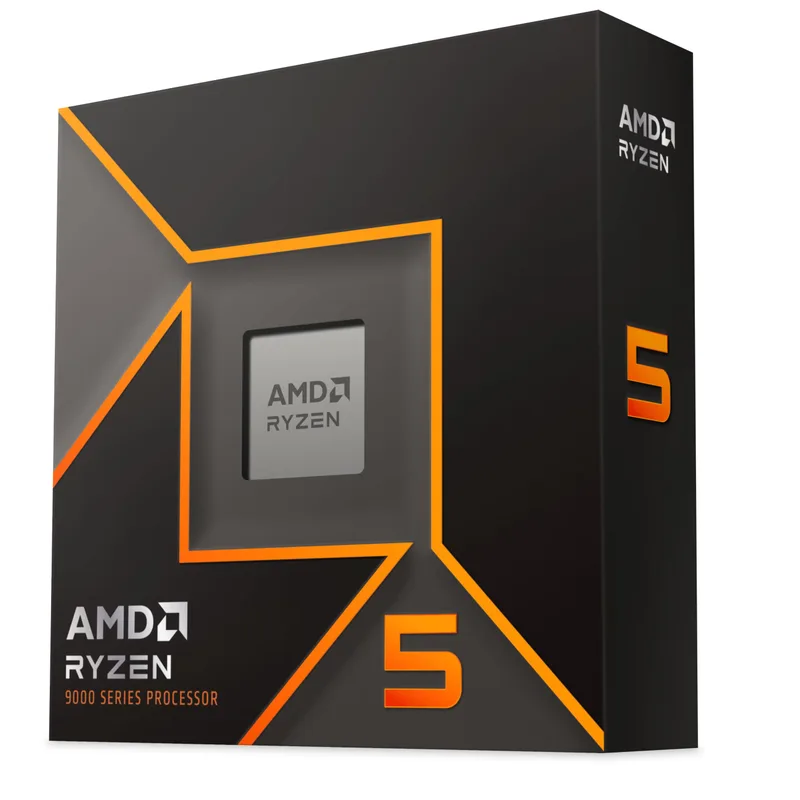
AMD’s non-X Ryzen 5 9600 arrived quietly in early 2026 with one key advantage over its faster sibling: it includes the Wraith Stealth cooler in the box. At $159 all-in — no additional cooler purchase needed — it’s the cheapest path to Zen 5 on AM5.
The performance difference from the 9600X is real but modest. The 9600 boosts to 5.2 GHz versus 5.4 GHz on the 9600X, a 200 MHz gap that manifests as a 5–8% performance difference in CPU-sensitive titles like CS2 and Rainbow Six Siege. In GPU-bottlenecked scenarios at 1440p with a mid-range card, the two chips produce indistinguishable results. The multiplier is locked on the non-X, so overclocking headroom is off the table.
If you’re budget-constrained and plan to pair this chip with a $300–$400 GPU, the $20 you save versus the 9600X — plus the $30–$40 you avoid spending on a cooler — is better spent on a faster graphics card. The Wraith Stealth is adequate for sustained gaming loads at the 9600’s 65W TDP.
Who it’s for: Budget builders who want Zen 5 at the lowest possible entry point and don’t need overclocking capability.
5. Intel Core Ultra 5 225 — Budget Intel with Integrated Graphics
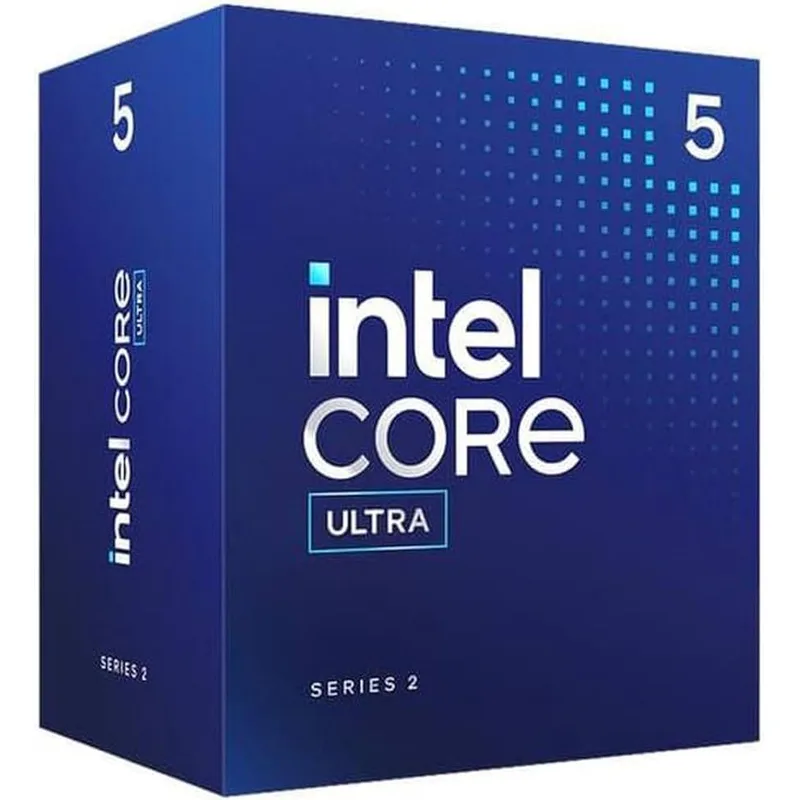
Intel Core Ultra 5 225
The Core Ultra 5 225 is Intel’s entry-level Arrow Lake desktop chip: 10 cores (6P + 4E), 4.9 GHz max boost, and a 65W TDP. Its distinguishing feature is the included Intel Arc Xe integrated graphics (16 execution units) — useful for display output in a pinch or basic desktop tasks, but not suitable for gaming without a discrete GPU.
Gaming performance trails every AMD chip in this roundup. Arrow Lake’s per-core throughput remains below Zen 5 even after optimization patches, and the 225’s 4.9 GHz boost and 20MB L3 cache compound the disadvantage. Owner reports and third-party benchmarks at sites like TechSpot place it noticeably behind the Ryzen 5 9600 in gaming — the chip it directly competes with on price.
Its redemption is the platform flexibility: the Core Ultra 5 225 works with B860 and H870 motherboards, which start around $130, giving Intel builders a path to a moderately priced system. If you’re already invested in an LGA1851 platform or require the Intel iGPU for a specific workflow, the 225 fills a niche. For a clean gaming build, either AMD Zen 5 chip at or below this price is a better choice.
Who it’s for: Intel-ecosystem builders who need integrated graphics in an Arrow Lake chip and can work within the 225’s performance ceiling.
FAQ
Is the Ryzen 5 9600X worth the premium over the 9600 non-X?
At a $20 price gap ($179 vs. $159), yes — if you’re buying a separate cooler anyway. The 9600X’s 5.4 GHz boost and unlocked multiplier deliver a measurable advantage in CPU-sensitive games like CS2, Valorant, and Rainbow Six Siege. If you’d otherwise pay $30+ for a cooler to run the 9600, the 9600X is cheaper overall and performs better.
Does the Ryzen 7 7700 still make sense when Zen 5 chips exist?
For pure gaming, the Ryzen 5 9600X is the stronger chip despite fewer cores and a newer architecture. The 7700 makes sense for buyers who regularly stream, run background workloads, or want a comfortable core-count buffer. Its 65W TDP makes it unusually efficient for an 8-core chip.
Does the Core Ultra 5 245KF require a Z890 motherboard?
Yes, if you want overclocking. The KF variant has an unlocked multiplier, which requires Z890 to use. For stock operation, a B860 or H870 board works fine — though those motherboards don’t support multiplier overclocking even with an unlocked chip. Budget accordingly.
Can these CPUs run games at 4K?
At 4K, GPU bottleneck dominates in virtually every game — any CPU in this roundup is sufficient for smooth 4K gaming with a capable GPU. The CPU choice matters most at 1080p and 1440p, where the CPU has a larger influence on frame rates, particularly minimum framerate consistency.
What AM5 motherboard should I pair with the 9600X or 9600?
The MSI PRO B650-P WiFi ($110) and ASUS Prime B650-PLUS ($120) are the most popular B650 boards at budget prices. Either supports DDR5-6000, PCIe 5.0 storage, and a future Zen 6 upgrade. For slightly more headroom, the MSI MAG B850 TOMAHAWK (~$160) adds USB 4 and a stronger VRM with better thermal headroom.
The Bottom Line
The AMD Ryzen 5 9600X at $179 is the best CPU under $250 in 2026. It delivers Zen 5 gaming performance, fits on any B650 AM5 board, and has a clear upgrade path to Zen 6. For streamers or multi-taskers who genuinely need more cores, the Ryzen 7 7700 at $229 is the logical next step. Intel’s Core Ultra 5 245KF earns consideration if you need 14 cores and can absorb the Z890 motherboard cost, but for gaming-first builds, AMD is the stronger value at every price point in this bracket.