The gaming mouse market is more competitive in 2026 than it has ever been. PC component giant be quiet! launched its first gaming mice — the Dark Perk Ergo and Dark Perk Sym — in February 2026 at $109.90, signaling that established hardware brands are moving into peripherals. At the same time, flagship mice like the Razer DeathAdder V4 Pro have settled at $149.99, bringing pro-tier wireless hardware within reach of mainstream buyers. With 8kHz polling now standard at the high end and ultralight designs under 60g available across every price bracket, the gap between best and budget has never been narrower.
| Spec | Logitech G Pro X Superlight 2 DEX Unavailable 9.3/10 | Razer Viper V3 Pro 9.1/10 | Razer DeathAdder V4 Pro 9/10 | BenQ Zowie EC2-DW Unavailable 8.8/10 | Corsair M75 AIR 8.4/10 |
|---|---|---|---|---|---|
| weight | 60g | 54g | 56g | 63g | 60g |
| sensor | HERO 2 (44,000 DPI) | Focus Pro 35K Gen-2 (35,000 DPI) | Focus Pro 45K Gen-2 (45,000 DPI) | PAW 3950 | Marksman Optical (26,000 DPI) |
| polling_rate | 8000Hz wireless | 8000Hz (with HyperPolling dongle) | 8000Hz (HyperSpeed Gen-2) | 4000Hz wireless | 2000Hz wireless |
| battery | Up to 95 hours | 95hr at 1000Hz / 17hr at 8000Hz | Up to 150 hours | Not specified (USB-C charging) | Up to 100 hours |
| connectivity | LIGHTSPEED 2.4GHz | HyperSpeed Wireless 2.4GHz | HyperSpeed Gen-2 2.4GHz | 4K Enhanced Receiver 2.4GHz | 2.4GHz & Bluetooth |
| design | Right-handed ergonomic | Symmetrical | Ergonomic right-handed | Asymmetrical right-handed | Symmetrical |
| Rating | 9.3/10 | 9.1/10 | 9/10 | 8.8/10 | 8.4/10 |
Prices change daily — tap Check Price for the current Amazon price.
Prices change daily — tap Check Price for the current Amazon price.
Quick Picks
- Best Overall: Logitech G Pro X Superlight 2 DEX — 8kHz wireless and HERO 2 sensor in a right-handed shape built around pro-tour feedback
- Best Value: Razer DeathAdder V4 Pro — 150-hour battery and 8kHz native polling at $149.99; 55 more hours of runtime than the Viper V3 Pro at the same price
- Best Budget: Corsair M75 AIR — 60g symmetrical wireless at $99.99, with 100-hour battery and Bluetooth
Buying Guide
Shape and Grip Style Come First
Mouse shape is the most personal hardware decision you can make. The “best sensor” means nothing if the shell causes fatigue after an hour. Three grip styles govern what shape you need:
- Palm grip — hand rests fully on the mouse; you need a longer mouse with a pronounced rear hump. The DeathAdder V4 Pro and Zowie EC2-DW are built for this.
- Claw grip — only the fingertips and lower palm contact the mouse; a medium-height, slightly arched shell like the Viper V3 Pro works well.
- Fingertip grip — only fingertips touch the mouse; a flat, short mouse with minimal rear rise is preferred. The Viper V3 Pro and M75 AIR both work here.
If you switch between grips, a symmetrical shape like the Viper V3 Pro or M75 AIR gives you more flexibility than an ergonomic right-hander.
Polling Rate: When Does It Matter?
Polling rate determines how often the mouse reports its position to your PC. At 1000Hz, the mouse reports 1,000 times per second (1ms intervals). At 8000Hz, it reports 8,000 times per second (0.125ms intervals).
In practice, the jump from 1000Hz to 8000Hz produces a measurable improvement in cursor feel at high sensitivity settings — you’ll notice less “micro-stutter” at 800 DPI+ in fast FPS games. Below 400 DPI, the difference is imperceptible. The M75 AIR’s 2000Hz ceiling is fine for most players; only competitive players chasing the smoothest possible 800 DPI cursor movement will feel constrained.
Note: The Razer Viper V3 Pro requires its separate HyperPolling dongle to reach 8000Hz — it ships with a standard dongle that tops out at lower polling rates. The DeathAdder V4 Pro and Superlight 2 DEX reach 8kHz with their included dongles.
Wireless Latency Is No Longer a Concern
The 2.4GHz wireless implementations from Razer (HyperSpeed Gen-2), Logitech (LIGHTSPEED), and Zowie’s 4K Enhanced Receiver all measure under 1ms in independent latency testing — the same range as USB-wired mice. The practical difference between a wired and wireless gaming mouse in 2026 is zero. Buy wireless unless your budget forces otherwise. For strong wired and wireless options at or below $50, see our best gaming mice under $50 guide. For the right surface to pair with your new mouse, see our best gaming mousepads for large desks guide.
Weight Benchmarks
- Under 55g — ultralight; the Viper V3 Pro at 54g sits here
- 55–65g — lightweight; the Superlight 2 DEX (60g), DeathAdder V4 Pro (56g), M75 AIR (60g), and EC2-DW (63g) all land here
- Over 65g — heavier; not represented in this roundup
The performance difference between 54g and 63g is meaningful only if you’re moving the mouse thousands of times per hour in games like CS2 — for most players, both feel “light.”
Detailed Reviews
1. Logitech G Pro X Superlight 2 DEX
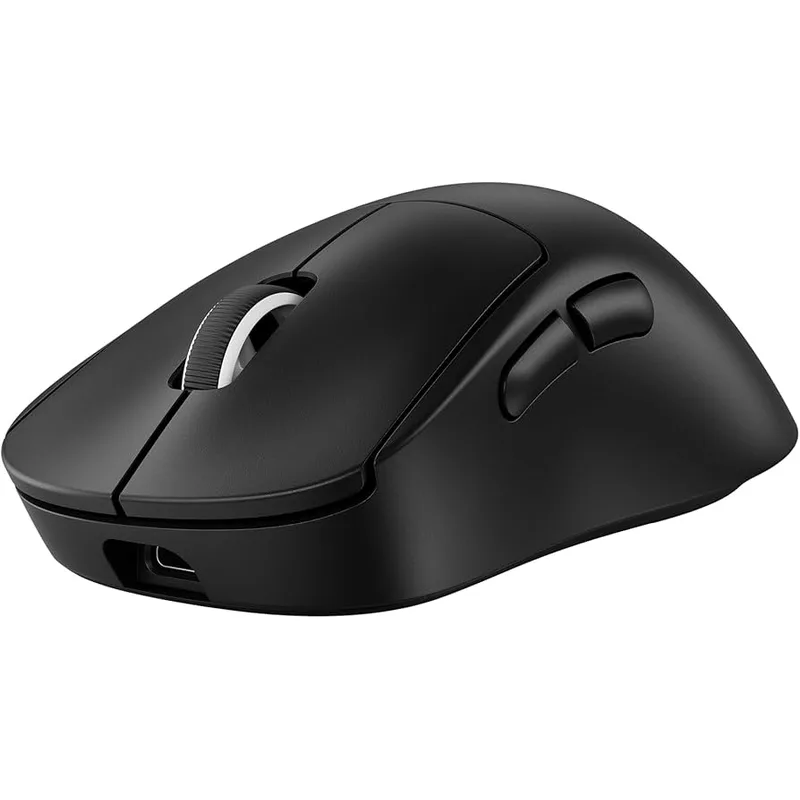
Logitech G Pro X Superlight 2 DEX
The Logitech G Pro X Superlight 2 DEX is Logitech’s flagship wireless gaming mouse, built around the HERO 2 sensor and an ergonomic right-handed shell refined through feedback from professional esports players. The DEX variant added an asymmetric shell with more pronounced thumb rest compared to the original Superlight 2, which was symmetrical.
The HERO 2 sensor tracks at up to 44,000 DPI, 888 IPS, and 88G of acceleration. At 800 DPI — the most common competitive setting — it runs flawlessly with zero smoothing, prediction, or jitter at any speed. The 8kHz wireless polling means your cursor position updates every 0.125ms over 2.4GHz, which is functionally indistinguishable from a USB cable.
Battery life is rated at 95 hours at 1000Hz polling, dropping to around 40 hours at 4000Hz. Logitech doesn’t officially rate 8000Hz battery life, but real-world testing puts it around 25–30 hours. The mouse charges via USB-C and a charge cradle is sold separately.
The main caveat is the right-hand-only design. Southpaws and players who switch between ergonomic and ambidextrous shapes are locked out entirely. If you fall in that category, the Viper V3 Pro is the better call.
At $149.99, the Superlight 2 DEX competes directly with the Razer Viper V3 Pro. The hardware specs are close; your choice comes down to shape preference and whether you want ergonomic (Logitech) or symmetrical (Razer).
2. Razer Viper V3 Pro
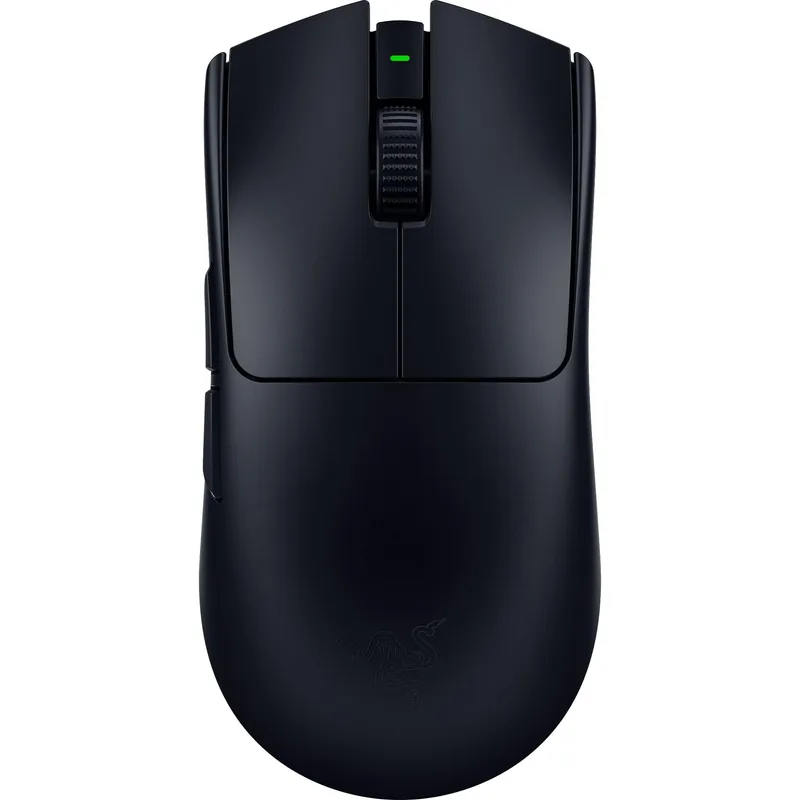
The Razer Viper V3 Pro is the lightest flagship wireless gaming mouse in this roundup at 54g — 6g lighter than the Superlight 2 DEX, 2g lighter than the DeathAdder V4 Pro. That difference is perceptible in extended sessions with a claw or fingertip grip, where the wrist lifts the mouse repeatedly.
The Focus Pro 35K Gen-2 sensor delivers 35,000 DPI maximum, 750 IPS tracking speed, and 70G acceleration. These numbers trail the HERO 2 and Focus Pro 45K on paper, but in practice the sensor performs identically at competitive DPI settings (400–1600 DPI). No smoothing, no prediction.
The 8kHz polling story is more complicated here. To reach 8000Hz, you need Razer’s HyperPolling Wireless Dongle, which is sold separately and takes up a second USB port alongside the standard HyperSpeed dongle. At standard polling with the included dongle, the Viper V3 Pro tops out at 1000Hz — fine for most players, but something to factor in if 8kHz is a priority.
Battery life is competitive at 95 hours on 1000Hz, but drops sharply to 17 hours at 8000Hz. If you’re running 8kHz all day for competitive play, you’ll charge it daily.
The symmetrical shape is the Viper V3 Pro’s defining feature. It accommodates left-handed players and works across grip styles. If you’ve ever used a Razer Viper and liked the feel, the V3 Pro is the natural upgrade.
3. Razer DeathAdder V4 Pro
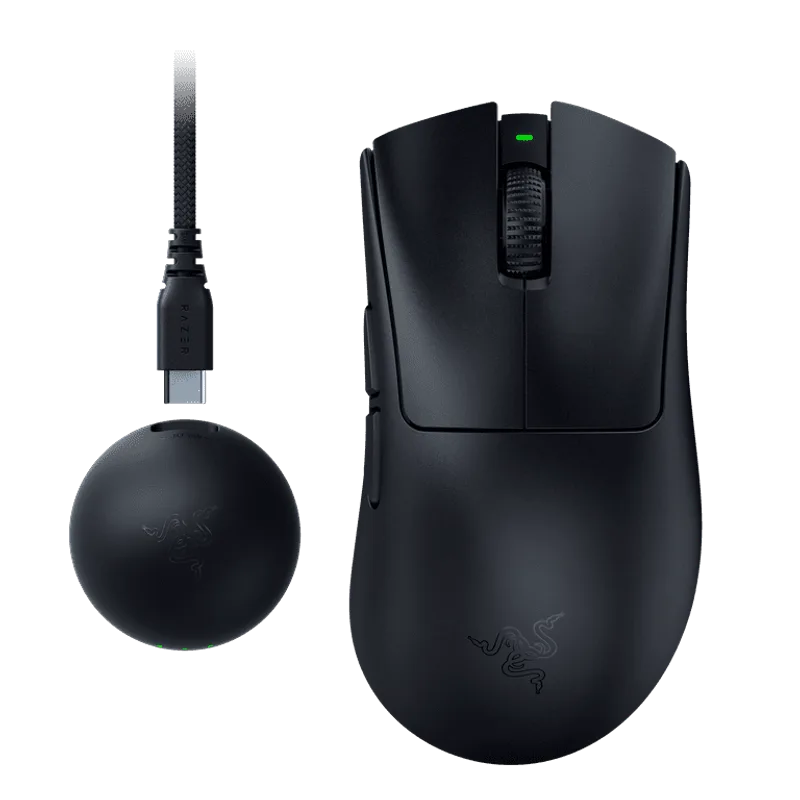
The Razer DeathAdder V4 Pro is the best value in this roundup at $149.99. At the same price as the Viper V3 Pro and Superlight 2 DEX, you get the same 8kHz polling, a higher-spec sensor (45K DPI Gen-2), and a dramatically longer battery life.
The 150-hour battery rating at 1000Hz is the headline number. That’s 55 hours more than the Viper V3 Pro and Superlight 2 DEX. At 8000Hz polling — enabled via HyperSpeed Gen-2 with the included dongle, no separate purchase required — battery life drops to roughly 30–35 hours, still ahead of the competition.
The Focus Pro 45K Gen-2 sensor supports 45,000 DPI and runs at 8kHz natively. In real-world tracking at 800 DPI, it performs identically to the Focus Pro 35K Gen-2 — both achieve sub-pixel accuracy with no filtering. The 10K DPI difference is irrelevant for competitive play.
The ergonomic shape is the classic DeathAdder hump with updates for weight reduction. At 56g, it’s among the lightest ergonomic mice available. The thumb rest is pronounced; palm grip players with medium-to-large hands will find it immediately comfortable. Claw grip players with smaller hands sometimes find the hump sits too high — if that’s you, the Viper V3 Pro’s lower profile works better.
At $149.99, the DeathAdder V4 Pro matches its direct competitors on price while leading them in battery life by a significant margin. It’s the strongest value in the wireless flagship tier right now.
4. BenQ Zowie EC2-DW
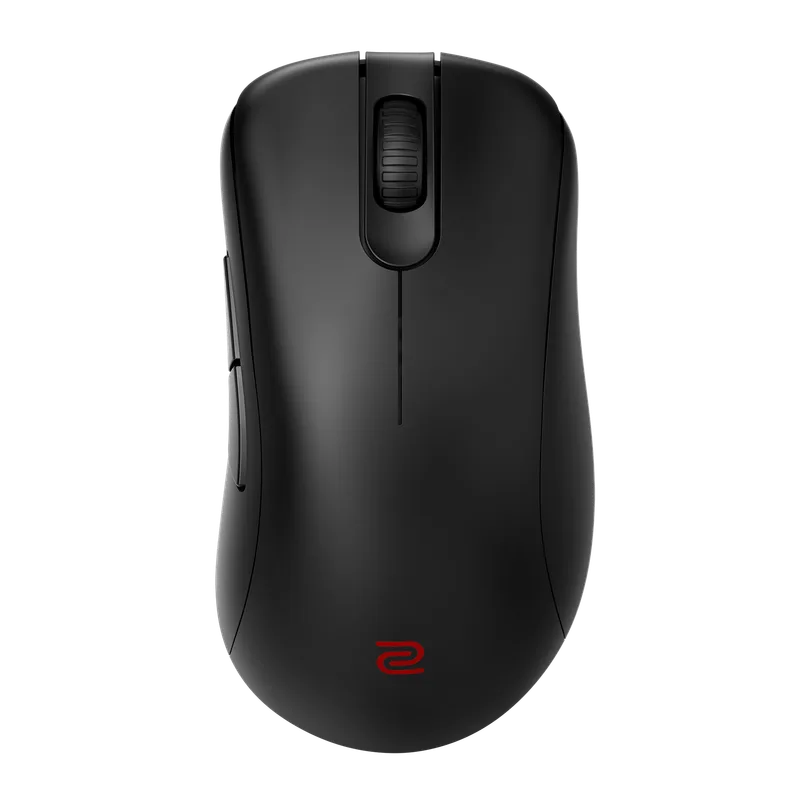
BenQ Zowie EC2-DW
The BenQ Zowie EC2-DW is the choice for players who want zero software involvement and a mouse shape validated by professional esports use over many years. The EC2 shape — medium-size, asymmetric, with a high right-side hump — has appeared in the setups of top-ranked CS2, Valorant, and PUBG players since 2016. For a roundup focused specifically on competitive FPS performance — including click latency comparisons and low-latency sensor rankings — see our best gaming mice for FPS guide.
The EC2-DW brings Zowie’s classic shape into the wireless era with a 4000Hz polling rate over 2.4GHz using their 4K Enhanced Receiver. The PAW 3950 sensor delivers consistent tracking without any calibration or driver setup — you plug it in and it works. DPI is configured via a hardware switch on the bottom of the mouse (400 / 800 / 1600 / 3200 options), and there are no RGB lights, no companion app, and no account login.
This intentional simplicity is both the EC2-DW’s strength and its limitation. For tournament use or LAN events where you can’t install software, the plug-and-play setup is irreplaceable. For players who want to tune lift-off distance, polling rate, or sensor settings, Zowie’s hardware-only approach offers no flexibility.
At 63g, it’s the heaviest mouse in this roundup — 9g more than the Viper V3 Pro and 3g more than the Superlight 2 DEX. The difference is real but not substantial. The shape compensates: the EC2’s ergonomic curve distributes that weight naturally across a palm grip.
At $149.99, the EC2-DW matches the Razer and Logitech flagships on price while delivering 4K polling in the proven EC shape. If the shape fits your hand and the plug-and-play, software-free design appeals to you, it’s worth the premium over budget alternatives.
5. Corsair M75 AIR
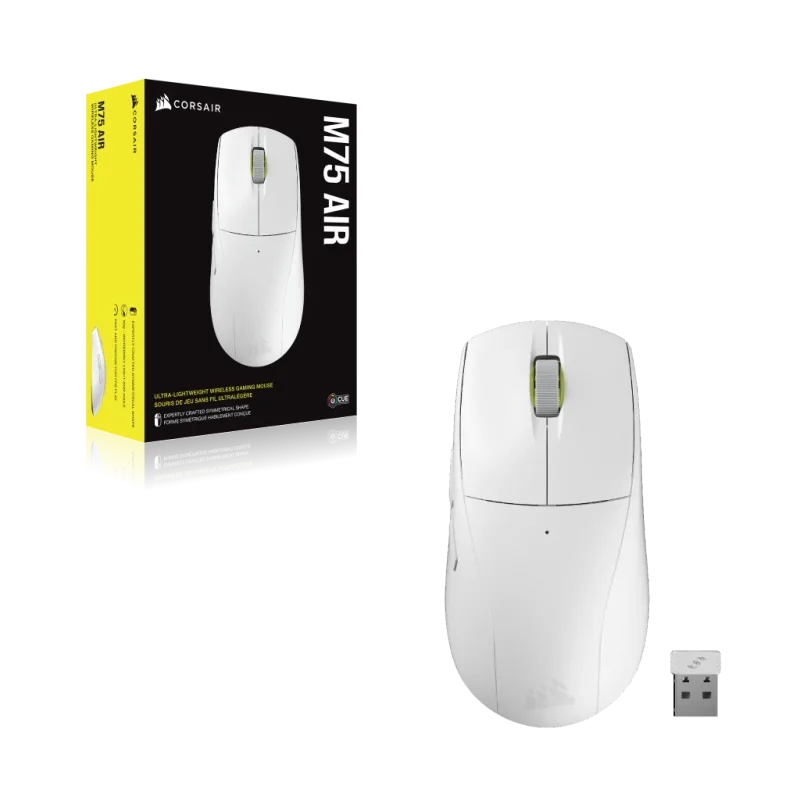
The Corsair M75 AIR is the strongest budget wireless gaming mouse available in 2026, delivering a 60g symmetrical design with 2.4GHz and Bluetooth connectivity at $99.99 — $50 below the Razer and Logitech flagships.
The Marksman optical sensor tracks at 26,000 DPI maximum with 650 IPS and 50G acceleration. These specs trail the HERO 2 and Focus Pro sensors, but at competitive DPI settings (400–1600 DPI), the real-world tracking performance is close. The polling ceiling of 2000Hz won’t satisfy players chasing 8kHz, but for casual-to-intermediate competitive play it’s more than sufficient.
Battery life is rated at 100 hours at 1000Hz polling — slightly longer than the Viper V3 Pro’s 95-hour rating, impressive for the price. Dual connectivity (2.4GHz for gaming, Bluetooth for secondary devices) adds practical versatility that none of the flagships offer.
The symmetrical shape accommodates both left and right-handed players. At 60g, it matches the Superlight 2 DEX in weight despite costing $57.99 less. The PTFE mouse feet and optical switches rated for 100 million clicks are solid quality at this price point.
The main limitations are the 2000Hz polling ceiling and the Marksman sensor’s lower tracking speed compared to HERO 2 and Focus Pro sensors. For players who demand the absolute ceiling in pointer precision and polling rate, the M75 AIR falls short of the flagships. For everyone else — especially players upgrading from a wired mouse under $40 — it’s a genuine step forward.
FAQ
Do I need a mouse pad with a gaming mouse? Yes. All optical sensors perform better on a consistent surface. A cloth mouse pad reduces tracking inconsistency caused by desk texture variation and gives the PTFE feet something to glide on. High-DPI gaming doesn’t require a large mat, but some consistent surface is needed for accurate tracking. For the best large-desk options — extended mats that fit both keyboard and mouse — see our best gaming mousepads for large desks guide.
What polling rate do I actually need? 1000Hz is sufficient for the vast majority of players. 8000Hz provides a measurably smoother cursor at 800 DPI and above in fast-paced FPS titles — you’ll feel it during rapid flicks in CS2 or Valorant. Below 400 DPI, you won’t notice the difference between 1000Hz and 8000Hz. If you’re not competing at a ranked level, 1000Hz is fine.
Is wireless gaming mouse latency comparable to wired? Yes. The 2.4GHz wireless implementations in all four wireless mice here (LIGHTSPEED, HyperSpeed Gen-2, Zowie 4K Enhanced Receiver, Corsair SLIPSTREAM) measure under 1ms of added latency in controlled testing — within the margin of measurement error for USB-wired mice. Bluetooth adds 2–8ms and is only suitable for desktop productivity use, not competitive gaming.
What’s the difference between the Logitech G Pro X Superlight 2 and the Superlight 2 DEX? The original Superlight 2 has a symmetrical shell that works for both right and left hands. The DEX version adds an asymmetric ergonomic shape with a thumb rest designed for right-handed use, based on input from Logitech’s pro roster. Both use the same HERO 2 sensor and 8kHz LIGHTSPEED wireless. If you prefer symmetrical shapes, the standard Superlight 2 is still available.
How does grip size affect mouse choice? Hand size primarily affects which size variant you need. The EC2-DW is a medium-size mouse — roughly 122mm long — suited for hands measuring 17–19cm from wrist to middle fingertip in a palm grip. The Viper V3 Pro (127mm) and DeathAdder V4 Pro (128mm) run slightly longer. For small hands under 17cm in a palm grip, or fingertip grip players of any hand size, a shorter mouse like the Corsair M75 AIR works better.
The Bottom Line
The gaming mouse market in 2026 delivers flagship wireless performance at increasingly reasonable prices. The Logitech G Pro X Superlight 2 DEX remains the benchmark for right-handed players who want the pro-endorsed 8kHz wireless experience. The Razer DeathAdder V4 Pro is the pick to make right now — at $149.99 it matches the Superlight 2 DEX on polling rate and price, while delivering 55 more hours of battery life. For players on a tighter budget, the Corsair M75 AIR at $99.99 delivers 60g wireless performance with a 100-hour battery that punches well above its price.