Affiliate disclosure: PCBuildRanked earns a commission on qualifying Amazon purchases at no extra cost to you.
The mid-range GPU market hit a genuine reset in 2025 when NVIDIA’s RTX 5060 family and AMD’s Radeon RX 9060 XT all landed within weeks of each other at the same mainstream price tier. The competition is the tightest it has been in years at 1080p, and GamersNexus’ controversial “Forbidden Review” of the RTX 5060 (NVIDIA reportedly attempted to restrict early coverage) made clear the stakes for both companies. Here are the five best graphics cards for 1080p gaming right now, from budget sub-$300 picks to a premium option that doubles as a future-proofed 1440p card.
| Spec | ASUS TUF GeForce RTX 5060 Ti 16GB OC Unavailable 9.1/10 | ASUS Dual GeForce RTX 5060 8GB OC Unavailable 8.5/10 | GIGABYTE Radeon RX 9060 XT Gaming OC 16G Unavailable 8.7/10 | GIGABYTE Radeon RX 9060 XT Gaming OC 8G 8.1/10 | Intel Arc B580 Limited Edition 12GB Unavailable 7.8/10 |
|---|---|---|---|---|---|
| GPU | NVIDIA Blackwell GB206 | NVIDIA Blackwell GB206 | AMD RDNA 4 Navi 44 | AMD RDNA 4 Navi 44 | Intel Xe2-HPG BMG-G21 |
| VRAM | 16GB GDDR7 | 8GB GDDR7 | 16GB GDDR6 | 8GB GDDR6 | 12GB GDDR6 |
| Memory Bus | 128-bit | 128-bit | 128-bit | 128-bit | 192-bit |
| Boost Clock | 2572 MHz | ~2500 MHz | 3130 MHz | ~3100 MHz | 2670 MHz |
| TDP | 180W | 145W | 150-182W | 150W | ~190W |
| Interface | PCIe 5.0 x16 | PCIe 5.0 x16 | PCIe 5.0 x16 | PCIe 5.0 x16 | PCIe 4.0 x8 |
| Rating | 9.1/10 | 8.5/10 | 8.7/10 | 8.1/10 | 7.8/10 |
Prices change daily — tap Check Price for the current Amazon price.
Prices change daily — tap Check Price for the current Amazon price.
Quick Picks
- Best Overall: ASUS TUF RTX 5060 Ti 16GB — The 19% gen-on-gen uplift over RTX 4060 Ti, 16GB GDDR7, and DLSS 4 MFG make this the cleanest high-refresh 1080p card.
- Best Value: ASUS Dual RTX 5060 8GB — 28% faster than the outgoing RTX 4060 at its mainstream launch price; DLSS 4 closes the gap on the Ti in supported titles.
- Best Budget: Intel Arc B580 12GB — More VRAM than anything else under $300; 18% ahead of the RTX 4060 in rasterization benchmarks.
Buying Guide: 1080p GPU Considerations
VRAM in 2026. 8GB GDDR7 is workable for 1080p gaming but already shows cracks in texture-heavy AAA titles and heavily modded games. Both the RTX 5060 and RX 9060 XT 8G launched at the same mainstream price tier with 8GB, and street prices have since drifted higher. Moving up to the RX 9060 XT 16GB gets you double the VRAM on the same RDNA 4 architecture for considerably more at street prices. If you plan to stay at 1080p for 3+ years, 16GB is the safer long-term choice.
PSU requirements. The RTX 5060 (145W) works with a 550W PSU minimum, though 650W is more comfortable. The RX 9060 XT peaks at 182W—650W is the practical minimum for a full system. The Arc B580 draws up to 190W despite its budget price point; plan accordingly. The RTX 5060 Ti at 180W also needs a 650W or better PSU.
DLSS 4 vs FSR 4 vs XeSS. DLSS 4 Multi Frame Generation is NVIDIA-exclusive and provides the largest single-GPU performance boost in supported titles. AMD’s FSR 4 is competitive in quality but trails DLSS 4 in most side-by-side comparisons. XeSS on Intel Arc is GPU-agnostic but shows best results on Arc hardware. If you play many recent games and prioritize maximum frame rates, NVIDIA’s upscaling ecosystem is currently ahead.
Ray tracing. RDNA 4 in the RX 9060 XT doubles ray tracing throughput vs RDNA 3, meaningfully closing the gap with NVIDIA—but NVIDIA still leads by roughly 29% in heavily ray-traced scenes at 1080p. For 1080p play with ray tracing occasionally enabled, either platform is viable. For consistent ray tracing at max settings, the RTX 5060 or 5060 Ti has the advantage.
PCIe generation and slot. Every card here supports PCIe 4.0 or 5.0, so bottlenecks are not a concern on any current platform. The B580 runs PCIe 4.0 x8 rather than x16—no measurable impact at this performance tier.
Detailed Reviews
1. ASUS TUF GeForce RTX 5060 Ti 16GB OC — Best Overall
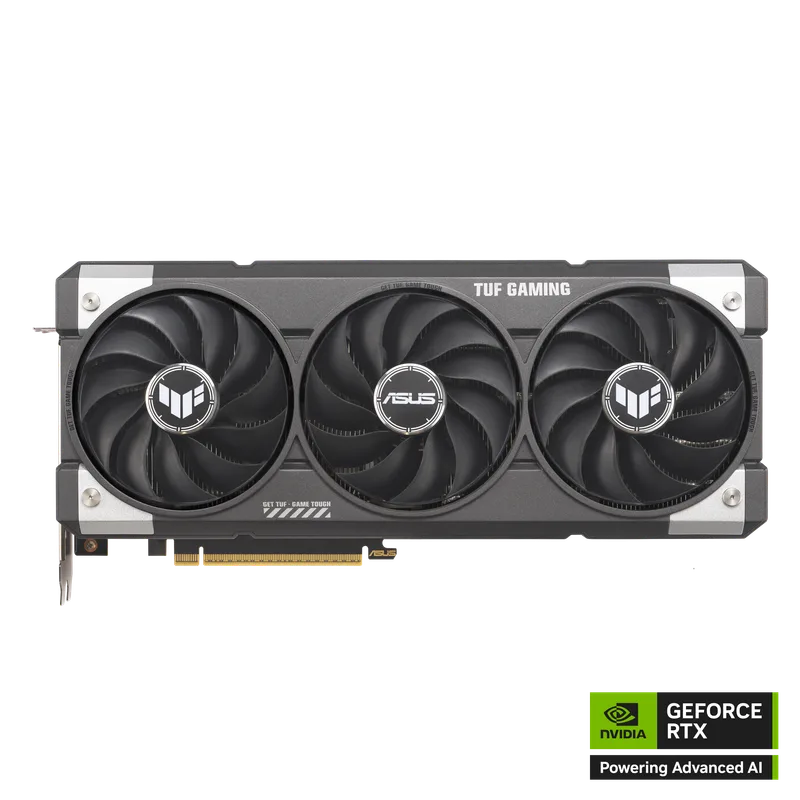
ASUS TUF GeForce RTX 5060 Ti 16GB OC
The RTX 5060 Ti 16GB is the strongest argument for a “future-proofed 1080p” build in 2026. With 4608 Blackwell CUDA cores and 16GB GDDR7 on a 128-bit bus, it delivers 19% more performance than the RTX 4060 Ti at 1080p—and that’s before DLSS 4 Multi Frame Generation enters the picture. In Tom’s Hardware evaluations, the 16GB variant provides 7% better FPS-per-dollar than its 8GB sibling at 1080p ultra, while also giving you legitimate 1440p capability as a secondary use case.
At 180W TDP, the ASUS TUF version fits comfortably on a 650W PSU. The three Axial-tech fans handle thermals well, and the military-grade component rating provides extra build confidence. The main friction is pricing: street prices have climbed above MSRP, running $619–$679 in March 2026. At the lower end of that range this GPU is excellent value; at the upper end you’re paying a premium that partially justifies stepping up to an RTX 5070 budget.
Specific game results at 1080p ultra (native, no upscaling): Space Marine 2 averages 120+ FPS, Star Wars Jedi: Survivor runs above the RTX 4060 Ti by a comfortable margin, and Cyberpunk 2077 reaches playable native frame rates with DLSS 4 Quality pushing it above 100 FPS. Paired with a 144Hz or 165Hz 1080p monitor, this card runs everything at or near the refresh limit.
2. ASUS Dual GeForce RTX 5060 8GB OC — Best Value
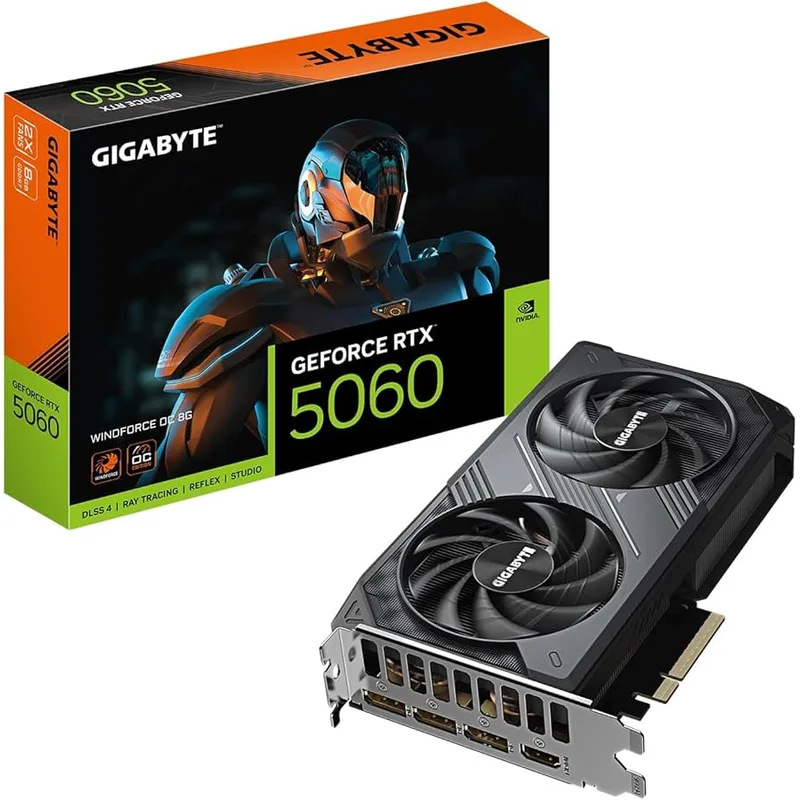
ASUS Dual GeForce RTX 5060 8GB OC
The RTX 5060 landed amid controversy—GamersNexus published benchmarks NVIDIA had reportedly attempted to restrict pre-launch, labeling it the “Forbidden Review.” The measured results told the real story: the RTX 5060 is 28% faster than the RTX 4060 at 1080p in rasterization and matches the older RTX 3070 in several titles. That’s a meaningful generational step up for the mainstream tier. For a complete breakdown of AIB models, thermals, and DLSS 4 results, see our RTX 5060 review.
The 8GB GDDR7 memory at 448 GB/s bandwidth is the standout spec at this price point. Compare that to the RTX 4060’s 272 GB/s GDDR6—the increased bandwidth reduces texture loading stalls in demanding titles even when the 8GB capacity is under pressure. Specific comparisons: Delta Force hits 138 FPS at 1080p, Space Marine 2 averages 100 FPS, and Counter-Strike 2 sits well above 200 FPS at competitive settings.
The 8GB ceiling is the honest limitation. In texture-heavy AAA games with ultra settings and high-resolution texture packs, you’ll see occasional VRAM-related stutters. This is manageable with slightly reduced texture settings, but it’s a real trade-off for a card that will be in systems for 4+ years. At launch MSRP it was an easy recommendation; at current street prices, the RX 9060 XT 16GB warrants a direct price comparison before you click buy.
PSU requirement: 550W minimum; 600W or better for system headroom.
3. GIGABYTE Radeon RX 9060 XT Gaming OC 16G — Best AMD
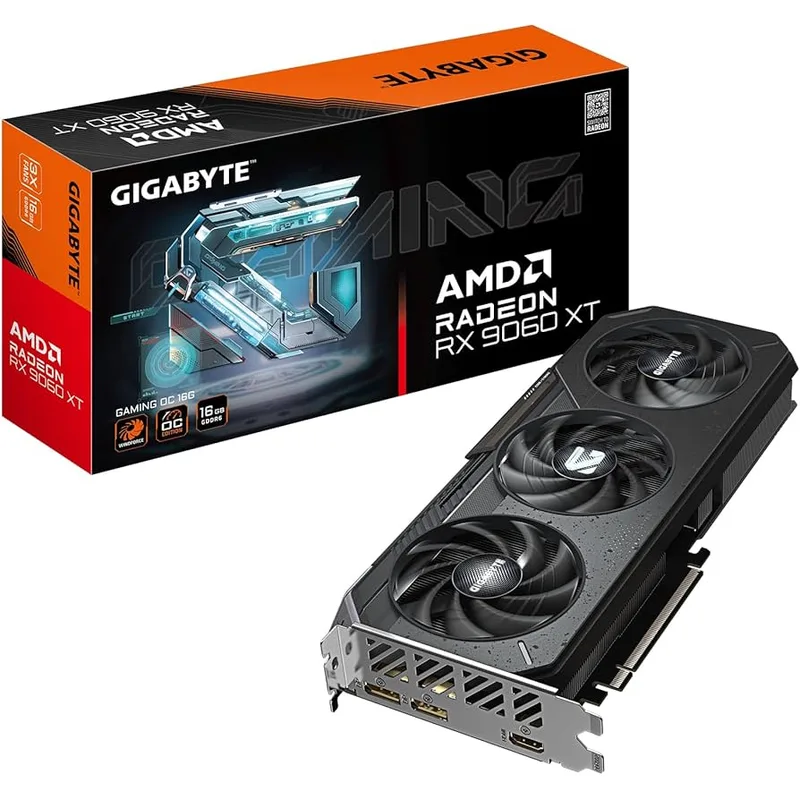
GIGABYTE Radeon RX 9060 XT Gaming OC 16G
AMD launched the RX 9060 XT on June 5, 2025, with a pointed pitch: the 16GB model at a lower MSRP than the RTX 5060 Ti 16GB while delivering within ~5% of its performance. Pre-launch and post-launch benchmarks confirmed the gap is invisible in most real-world gaming sessions at 1080p. GamersNexus reviewed it as AMD’s “needs to just shut up” situation: AMD overclaimed in marketing, but the product itself is genuinely strong.
RDNA 4’s Navi 44 GPU brings 32 compute units with meaningfully improved ray tracing hardware—double the throughput vs RDNA 3. Pure rasterization at 1080p outpaces the RTX 5060 by ~6%, making it the faster native GPU for games like Counter-Strike 2 and other non-RT titles. Against the RTX 5060 Ti, the gap is present but small.
The 16GB GDDR6 is a clear differentiator against the mainstream-tier competition. Both the RTX 5060 and RX 9060 XT 8GB ship with 8GB; stepping to the 9060 XT 16GB gets you 16GB on the same RDNA 4 silicon—see the current price above—for noticeably more than either 8GB option at street prices. For anyone who plays modded games, uses VRAM-heavy texture packs, or plans to stay on this GPU for 4+ years, the upgrade is worth it.
The GIGABYTE Gaming OC model runs a 3130 MHz boost clock and includes a solid dual-fan cooler with 0dB idle mode. PSU requirement: 650W minimum given the 150-182W peak draw.
4. GIGABYTE Radeon RX 9060 XT Gaming OC 8G — Best Budget AMD
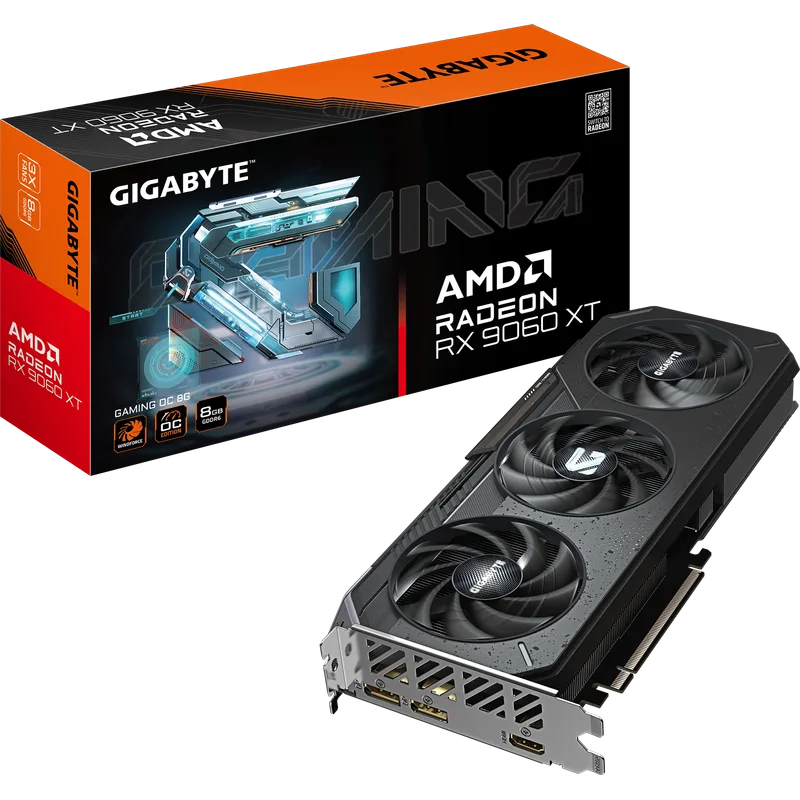
GIGABYTE Radeon RX 9060 XT Gaming OC 8G
The RX 9060 XT 8GB and the RTX 5060 launched at the same mainstream price tier and represent the most competitive GPU matchup in years. In raw rasterization at 1080p, the 9060 XT 8G edges the RTX 5060 by roughly 6%—a lead you’ll notice in frame rate comparisons, but not in day-to-day gaming perception. For esports titles, the advantage is meaningful: CS2 and Valorant sit at 240+ FPS at 1080p high settings on this card, making it well-suited for 240Hz monitors.
The RDNA 4 architecture gives it genuine ray tracing capability—not the afterthought that RDNA 2/3 RT was—but NVIDIA’s RTX 5060 still leads by ~29% in heavily RT-lit scenes. If ray tracing is a priority, the RTX 5060 or 5060 Ti is the better choice. For pure rasterization gaming and esports, the 9060 XT 8G leads.
The 8GB GDDR6 bandwidth (288 GB/s) is the chip’s weakest spec—notably lower than the RTX 5060’s 448 GB/s GDDR7. In VRAM-constrained scenarios, that bandwidth gap shows up more than the raw capacity number suggests. For standard 1080p gaming at high or ultra settings without texture overhauls, neither is a problem. For heavily modded Skyrim or Cyberpunk 2077 with 4K texture packs, both 8GB cards struggle and the RX 9060 XT 8G’s lower bandwidth is an additional disadvantage.
Street prices have climbed above launch MSRP, landing in the $349–$369 range. At these prices, the RTX 5060’s better ray tracing and DLSS 4 ecosystem become more competitive against the 9060 XT 8G.
PSU requirement: 600W minimum.
5. Intel Arc B580 Limited Edition 12GB — Best Budget
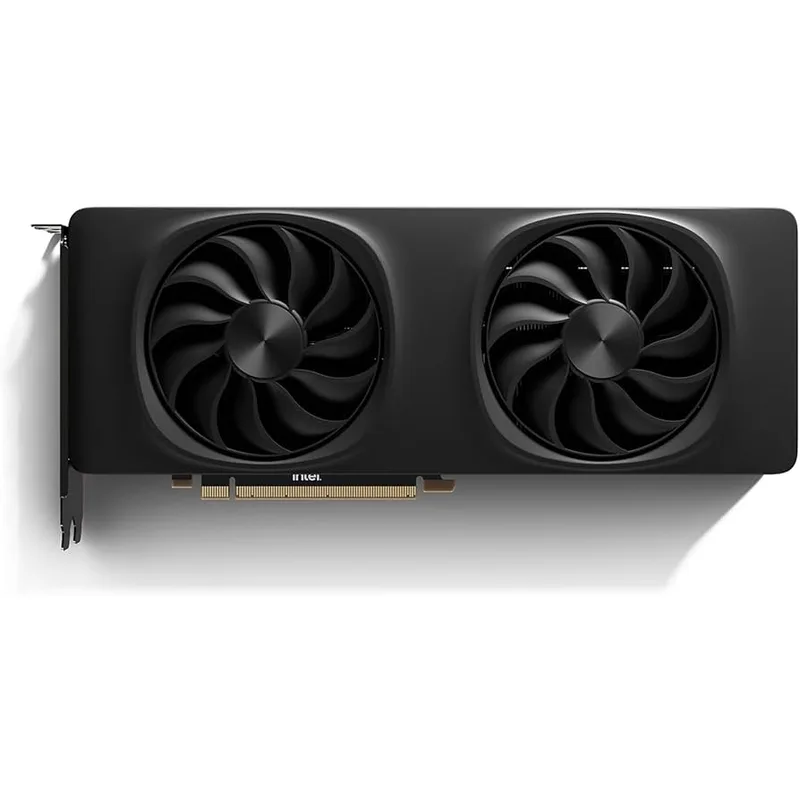
Intel Arc B580 Limited Edition 12GB
Intel’s Battlemage launch in December 2026 was a genuine surprise. The Arc B580 undercuts everything in its tier while delivering 12GB GDDR6 on a 192-bit memory bus—more VRAM than any competitor under $300. Tom’s Hardware called it the “new $249 GPU champion” at launch, and the benchmark evidence supports that headline — street prices have returned closer to MSRP at $249–$259 when in stock.
At 1080p in demanding titles, the B580 averages 82 FPS with ray tracing and upscaling disabled, outpacing the RTX 4060 by 18%. Specific comparisons: 15% faster than the RTX 4060 in Cyberpunk 2077 Phantom Liberty at 1080p, 17% faster in Dying Light 2, and 20-25% faster in Spider-Man Remastered. At $279, this performance profile has no direct competitor.
The caveats are real. The B580 is CPU-sensitive: paired with a Ryzen 7 9800X3D, it leads the RTX 4060 by 18%; paired with a Ryzen 5 5600, it falls behind both the RTX 4060 and RX 7600. If you’re on an older AM4 platform with a budget CPU, research your specific combination before buying. Arc drivers have improved substantially since the A-series era, but occasional issues in DX9/DX11 titles persist. The PCIe 4.0 x8 slot (not x16) is a spec note worth knowing, though it doesn’t impact performance at this tier.
For a clean, modern-CPU build on a tight budget—or for anyone who plays games where VRAM capacity matters—the B580 is the recommendation. PSU requirement: 650W minimum given the ~190W peak draw.
FAQ
Is 8GB VRAM enough for 1080p gaming in 2026?
For most games at 1080p high or ultra settings, yes. The RTX 5060 and RX 9060 XT 8GB both handle standard 1080p well. Problems appear in texture-modded games, high-resolution texture pack downloads, and some late-2025 AAA titles at ultra settings. If you plan to use this GPU for 4+ years, the RX 9060 XT 16GB is a more conservative long-term choice.
RTX 5060 or RX 9060 XT 8GB—which should I buy?
For ray-traced games: RTX 5060, by about 29% in heavily lit scenes. For pure rasterization: RX 9060 XT 8GB leads by ~6%. For upscaling quality and software ecosystem: RTX 5060 with DLSS 4. Both cards sit in similar street price territory right now, so availability and in-store pricing should be the final tiebreaker. For a detailed benchmark breakdown across a range of games, see our RTX 5060 vs RX 9060 XT comparison.
Do I need a new PSU for any of these GPUs?
The RTX 5060 (145W) is the easiest on PSU requirements—a quality 550W unit handles it in most builds. Every other GPU here draws 150-190W and needs a 650W PSU for comfortable system headroom. The Arc B580 draws the most (~190W) despite its low price, so don’t pair it with a budget 450W unit.
Is the RTX 5060 Ti worth it over the RTX 5060 for 1080p?
At the lower end of current street pricing, yes—the 16GB GDDR7 and 19% generational uplift over RTX 4060 Ti are meaningful. At the upper end of the $479-$559 range, the cost-effectiveness gap narrows considerably. The 16GB model is overkill for strict 1080p use but gives you a card that handles 1440p credibly if you ever upgrade your monitor.
Does the Intel Arc B580 work well with AMD CPUs?
On newer AMD CPUs (Ryzen 7 7700X and newer), the B580 performs as expected from published benchmarks. On older AM4 CPUs like the Ryzen 5 5600 or 5600X, performance drops noticeably—the B580 can fall behind the RTX 4060 in those configurations. Intel Arc GPUs benefit from modern PCIe implementations; if you’re on a B450 or X470 board, verify PCIe 4.0 support before buying.
Should I wait for newer 1080p GPUs?
The RTX 5060 and RX 9060 XT are the current generation at this price tier with no announced successors in the near term. If you need a GPU now, the current lineup is the right time to buy. If you can wait 6-12 months, prices on these models should settle closer to MSRP as supply normalizes.
The Bottom Line
For 1080p gaming in 2026, the ASUS TUF RTX 5060 Ti 16GB is the strongest all-around pick—it runs every current title comfortably at 1080p ultra and gives you 1440p capability as a bonus. If the current 5060 Ti street prices are too steep, the ASUS Dual RTX 5060 8GB delivers a 28% generational leap over the RTX 4060 with full DLSS 4 support. The GIGABYTE RX 9060 XT 16GB is the AMD card to buy if you want 16GB VRAM without paying 5060 Ti prices. And at the budget end, the Intel Arc B580 12GB remains the most competitive sub-$300 GPU Intel has shipped—12GB VRAM at a price where competitors are still selling you 8GB.