Affiliate disclosure: PCBuildRanked earns a commission on qualifying Amazon purchases at no extra cost to you.
AMD’s RX 9070 XT reshuffled the 1440p GPU market at launch and that remains true heading into mid-2026. At around $719 street, it delivers rasterization performance within 3% of NVIDIA’s RTX 5070 Ti — a card that now runs $1,049 (see our RTX 5070 Ti review for full AIB breakdowns) — making it the most disruptive value proposition at this resolution in years. Meanwhile, street prices across the board have shifted since launch: the RX 9070 has climbed from $549 to ~$619, the RTX 5070 has risen to ~$749, and the Intel Arc B580 has risen from $249 to ~$299. Here are the five best GPUs for 1440p gaming at current prices.
| Spec | Sapphire Pulse AMD Radeon RX 9070 XT Gaming 16GB 9.2/10 | Gigabyte GeForce RTX 5070 Ti Gaming OC 16G Unavailable 8.7/10 | ASUS TUF GeForce RTX 5070 12GB GDDR7 OC 8.3/10 | Sapphire Pulse AMD Radeon RX 9070 Gaming 16GB 8.1/10 | Intel Arc B580 Limited Edition 12GB Unavailable 7.8/10 |
|---|---|---|---|---|---|
| architecture | RDNA 4 (Navi 48) | Blackwell (GB203) | Blackwell (GB205) | RDNA 4 (Navi 48) | Xe2 Battlemage (BMG-G21) |
| vram | 16GB GDDR6 | 16GB GDDR7 | 12GB GDDR7 | 16GB GDDR6 | 12GB GDDR6 |
| memory_bus | 256-bit | 256-bit | 192-bit | 256-bit | 192-bit |
| compute_units | 64 (4096 SPs) | — | — | 56 (3584 SPs) | — |
| boost_clock | 2970 MHz | 2588 MHz | 2580 MHz | 2520 MHz | 2670 MHz |
| tdp | 304W | 300W | 250W | 220W | 190W |
| Rating | 9.2/10 | 8.7/10 | 8.3/10 | 8.1/10 | 7.8/10 |
Prices change daily — tap Check Price for the current Amazon price.
Prices change daily — tap Check Price for the current Amazon price.
Quick Picks
- Best Overall: Sapphire Pulse RX 9070 XT — Matches RTX 5070 Ti rasterization at 1440p for $330 less. Best frames-per-dollar at this resolution.
- Best High-End: Gigabyte RTX 5070 Ti Gaming OC — DLSS 4 Multi Frame Generation and 144+ fps native at 1440p ultra justify the premium for 240Hz builds.
- Best Budget: Intel Arc B580 Limited Edition — 86 FPS at 1440p ultra with 12GB VRAM. Still the best under-$300 pick despite the price rise to $299.
Buying Guide: What You Need to Know Before Choosing a 1440p GPU
How Much VRAM Do You Need at 1440p?
At 1440p ultra settings, most current titles stay comfortably within 10-12GB of VRAM. The RTX 5070’s 12GB is workable for the majority of games, but VRAM pressure appears in texture-heavy titles like Hogwarts Legacy and Star Wars Outlaws at maximum settings. Cards with 16GB — the RX 9070 XT, RX 9070, and RTX 5070 Ti — have comfortable headroom at 1440p and won’t show VRAM-related stutters in any current release.
DLSS 4 vs FSR 4 at 1440p
NVIDIA’s DLSS 4 Multi Frame Generation generates up to three additional frames per rendered frame using dedicated Tensor cores. At 1440p with a 144Hz or 240Hz display, this translates to significantly higher perceived frame rates in supported titles — the RTX 5070 reaches well over 200 fps in DLSS-optimized games. AMD’s FSR 4 is the strongest competitor upscaling solution released to date, but it lacks hardware-accelerated frame generation and trails DLSS in motion clarity at high speeds. If your game library is DLSS-optimized and you’re on a 240Hz monitor, NVIDIA cards benefit disproportionately.
PSU Requirements
| GPU | TDP | Minimum PSU |
|---|---|---|
| RTX 5070 Ti | 300W | 750W |
| RX 9070 XT | 304W (417W peak) | 700W |
| RTX 5070 | 250W | 650W |
| RX 9070 | 220W | 650W |
| Intel Arc B580 | 190W | 550W |
NVIDIA Blackwell cards use the 12VHPWR (16-pin) connector. If your PSU doesn’t have a native 16-pin cable, use only the adapter bundled with the card — do not daisy-chain third-party adapters. The RX 9070 XT and RX 9070 use standard dual 8-pin connectors with no adapter required.
The 1440p Market in April 2026
The RX 9070 XT remains the dominant value pick at 1440p, but the pricing story has gotten messier since launch. The Sapphire Pulse runs ~$719 street — 20% above its $599 MSRP — while some ASUS models have pushed as high as $939-$989 after a recent price hike. The RX 9070 has climbed from $549 to $619, while the RTX 5070 now runs $749 — a $130 gap that makes the RX 9070 the clear value pick for buyers who don’t prioritize DLSS 4.
For pure rasterization per dollar, AMD still leads. For frame generation with DLSS 4 and a 240Hz display, NVIDIA holds the edge — particularly in titles optimized for Multi Frame Generation where the gap to AMD widens substantially.
Detailed Reviews
1. Sapphire Pulse AMD Radeon RX 9070 XT Gaming 16GB
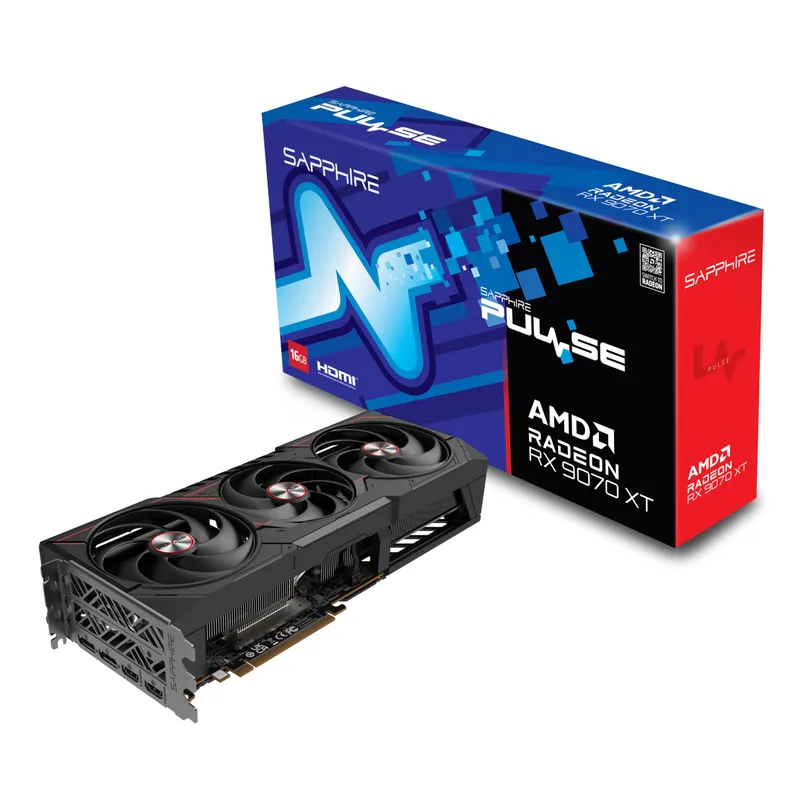
The Sapphire Pulse RX 9070 XT is the most consequential GPU release at 1440p in 2026. AMD’s RDNA 4 Navi 48 die delivers 4096 stream processors across 64 compute units, with 16GB of GDDR6 on a 256-bit bus providing 643 GB/s of bandwidth. At 1440p, it benchmarks within 3% of the RTX 5070 Ti across the majority of rasterized titles analyzed by GamersNexus and Tom’s Hardware — trading blows in F1 24, Cyberpunk 2077, Resident Evil 4, and Starfield.
The RX 9070 XT averages 152 FPS in Cyberpunk 2077 at 1440p ultra without any upscaling. It runs approximately 8% ahead of the RTX 5070 in rasterization at this resolution, meaning AMD’s card is faster in raw frames than NVIDIA’s nominally competing chip. That’s a significant shift from where RDNA 3 sat against Ada Lovelace.
RDNA 4 also made genuine progress on ray tracing. The RX 9070 XT is roughly 15-20% behind the RTX 5070 Ti in RT-heavy workloads like Cyberpunk 2077 Overdrive — a real gap, but no longer the 30-40% deficit that RDNA 3 showed. For titles that use ray tracing moderately, the difference is imperceptible.
The Sapphire Pulse cooler is one of the better thermal solutions in the RX 9070 XT lineup — dual-fan, compact enough for standard ATX mid-towers, and significantly quieter under sustained load than the XFX Swift or ASRock Challenger models. Standard dual 8-pin power connectors mean no adapter requirements. One important note: some manufacturers have raised prices on their RX 9070 XT models in April 2026 — ASUS TUF and Prime variants now run $939-$989. The Sapphire Pulse at ~$719 is the most reasonably priced version currently. Deals occasionally push it back toward $699, so a price alert is worthwhile.
2. Gigabyte GeForce RTX 5070 Ti Gaming OC 16G
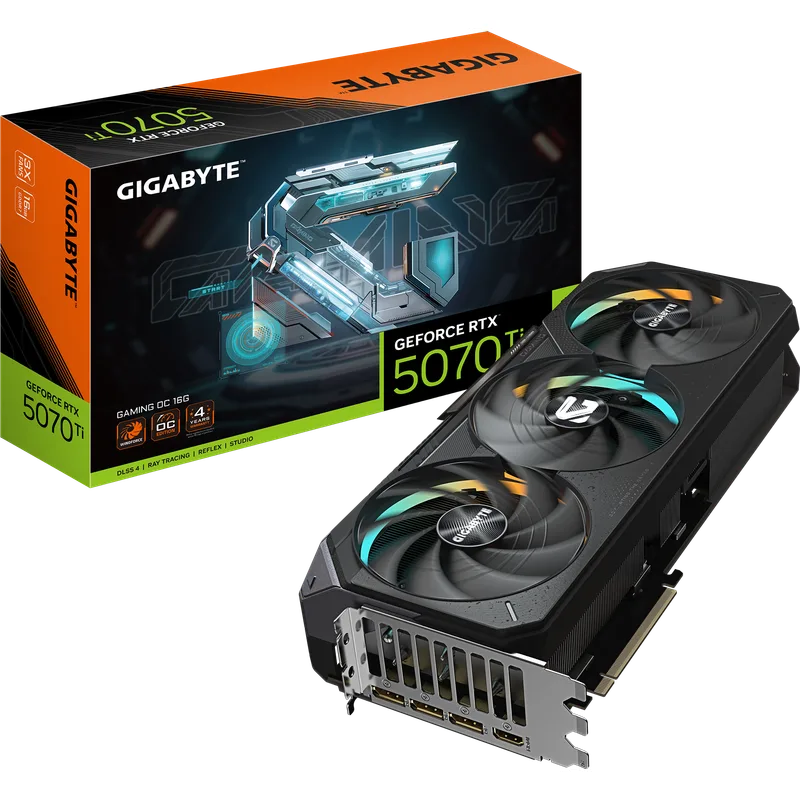
Gigabyte GeForce RTX 5070 Ti Gaming OC 16G
The Gigabyte RTX 5070 Ti Gaming OC is for builders who want maximum 1440p headroom — 144+ fps native at ultra settings with room to push toward 240Hz targets using DLSS 4. It shares the same GB203 die as the RTX 5080 with 8,960 CUDA cores active, 16GB of GDDR7 at 896 GB/s bandwidth, and a 300W TDP.
At 1440p, the RTX 5070 Ti averages roughly 187 FPS in Final Fantasy XIV and sustains well over 144 fps in most modern AAA titles at ultra settings without any upscaling. It’s approximately 20% faster than the RTX 4070 Ti Super in rasterization — a meaningful generational step. The rasterization delta over the RX 9070 XT is just 3% on average, which is where the pricing conversation starts.
Where the RTX 5070 Ti pulls clearly ahead at 1440p is DLSS 4 Multi Frame Generation. At 240Hz, the difference between a card sustaining 160 fps natively versus 220+ fps with DLSS 4 Frame Generation is tangible in fast-paced titles. This card justifies the premium specifically if your display is 240Hz and your game library is DLSS-optimized.
Gigabyte’s WINDFORCE cooling keeps temperatures reasonable, though it runs noticeably louder than ASUS TUF or MSI Gaming X Trio alternatives. Street pricing has dropped slightly to $1,049, still 40% above the $749 MSRP. The gap to the $719 RX 9070 XT is $330 for approximately 3% more rasterization. This card is for buyers who specifically want DLSS 4 and maximum headroom — not those optimizing for frames per dollar.
3. ASUS TUF GeForce RTX 5070 12GB GDDR7 OC
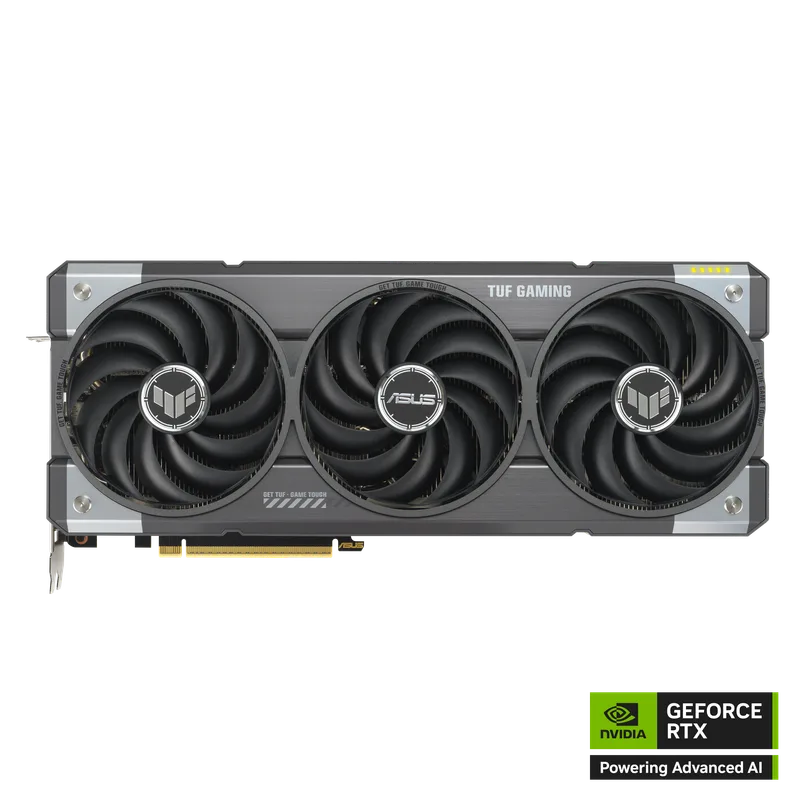
The ASUS TUF RTX 5070 OC is the DLSS 4 entry point into Blackwell at 1440p. At $749 street, it sits $130 above the RX 9070 ($619) — a meaningful premium that only makes sense if you actively use DLSS 4 frame generation.
The RTX 5070 runs the GB205 die with 6,144 CUDA cores, 12GB of GDDR7 on a 192-bit bus (672 GB/s bandwidth), and a 250W TDP that fits comfortably on a 650W PSU. The ASUS TUF triple-fan cooler is among the better thermal solutions on any RTX 5070 — keeping the card below 73°C at sustained load with quiet fan operation.
In rasterization at 1440p, the RTX 5070 trails the RX 9070 XT by 7-17% depending on the title — a real deficit in games without DLSS support. In DLSS 4 titles at 1440p, frame generation at Quality mode produces smooth results at 200+ fps in supported games. AI upscaling quality at Quality or Balanced preset outperforms FSR 4’s equivalent at high frame rates.
The 12GB GDDR7 is functional at 1440p for most titles with a real ceiling in VRAM-heavy releases. Hogwarts Legacy ultra textures, Star Wars Outlaws max settings, and similar releases show frame time spikes when 12GB fills. For mainstream 1440p gaming across most titles it’s fine.
At $749 vs the RX 9070’s $619, you’re paying $130 for DLSS 4 access. If your game library is heavily DLSS-optimized and you’re on a 240Hz setup, the RTX 5070 justifies the premium. For a varied library without heavy DLSS coverage, the RX 9070 wins on value and VRAM.
4. Sapphire Pulse AMD Radeon RX 9070 Gaming 16GB
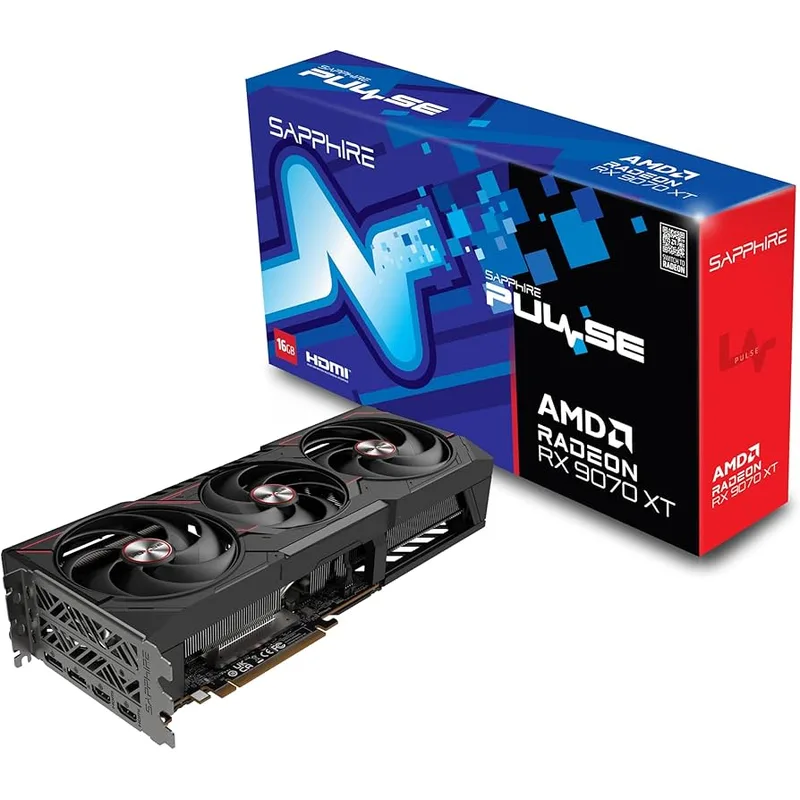
The Sapphire Pulse RX 9070 runs the same Navi 48 die as the RX 9070 XT with 56 of 64 compute units active (3,584 stream processors vs 4,096), a lower boost clock of 2520 MHz, and a 220W TDP. At launch it was the obvious value champion at $549. At $619, its positioning is more complicated.
At 1440p ultra, the RX 9070 runs 8% behind the RX 9070 XT and about 4% behind the RTX 5070 in rasterization. For 1440p/144Hz gaming, it clears that target in the majority of current titles without upscaling. The 16GB GDDR6 at 576 GB/s remains its standout spec — no other card under $625 at 1440p carries this much VRAM.
The current price reality: at $619, the RX 9070 is $130 below the RTX 5070 ($749). The RX 9070 wins on VRAM (16GB vs 12GB) and value, loses on upscaling ecosystem (FSR 4 vs DLSS 4), and loses on bandwidth (576 GB/s vs 672 GB/s). For a builder with a varied game library where DLSS coverage isn’t a priority, the $130 savings and 16GB VRAM make the RX 9070 the clear pick. For a DLSS-heavy library on a 240Hz display, the RTX 5070 at $749 may be worth the premium.
The Sapphire Pulse cooling solution remains excellent — dual-fan, runs cool, and avoids the noise spikes that some competing RX 9070 AIBs show at peak boost. The 220W TDP makes it compatible with quality 650W PSUs and keeps temperatures manageable in tight cases.
5. Intel Arc B580 Limited Edition 12GB
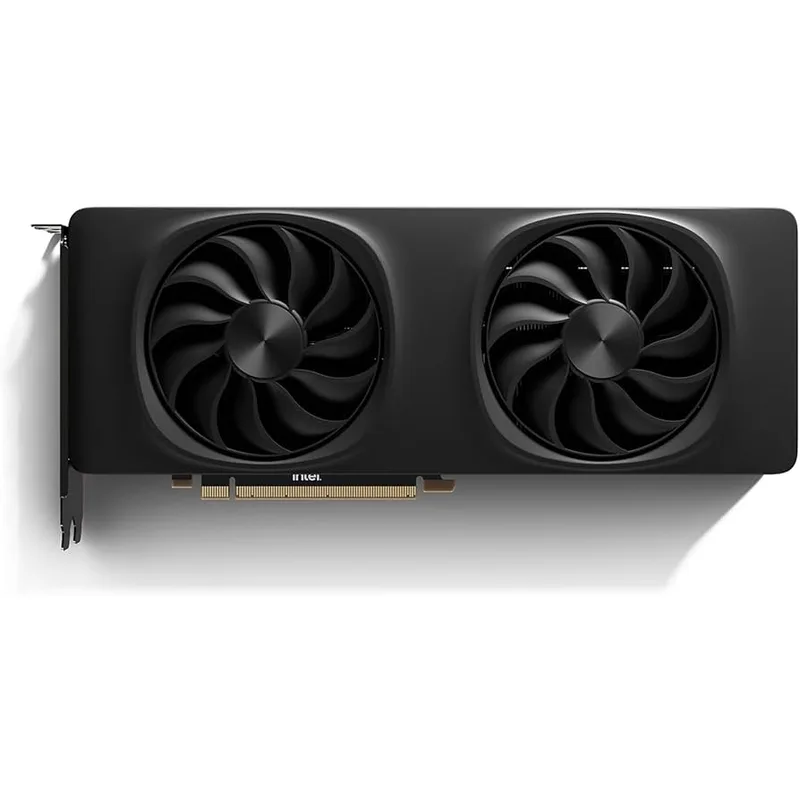
Intel Arc B580 Limited Edition 12GB
The Intel Arc B580 Limited Edition is still the most capable budget GPU for 1440p gaming, but the $249 launch price is history. At $299 street — a 20% increase from MSRP — it’s still the right call under $300, but the value margin over competing budget options has narrowed.
The Xe2 “Battlemage” architecture puts 20 Xe-Cores on a 192-bit memory bus with 12GB of GDDR6, delivering 456 GB/s of bandwidth and a 190W TDP. At 1440p ultra, the B580 averages approximately 86 FPS across a cross-section of titles — 10% faster than the RTX 4060 at the same resolution. The 12GB VRAM advantage over budget NVIDIA options is especially meaningful at 1440p where texture budgets start to matter, and both XeSS upscaling and hardware ray tracing are hardware-accelerated on Arc.
Driver quality has improved substantially since launch. DX12 and Vulkan titles run reliably; the remaining rough edges appear in older DX9/DX11 games. For a modern post-2022 game library, the B580 is a reliable daily driver.
At $299 with 12GB VRAM and genuine 1440p capability, the B580 still stands alone in its tier. The RTX 4060 (8GB, ~$310) and RX 7600 (8GB, similar pricing) offer less VRAM and lower 1440p performance. For a tight-budget 1440p build, this is still the correct pick. For a full roundup of the best GPUs below $500 — including the B580, RTX 5060 Ti, and RX 9070 — see our best GPUs under $500 guide.
FAQ
Is the RX 9070 XT really as fast as the RTX 5070 Ti at 1440p?
In rasterization, yes. Independent analysis from GamersNexus and Tom’s Hardware shows the RX 9070 XT within 3% of the RTX 5070 Ti at 1440p across a wide game selection — the AMD card wins some titles and loses others by single-digit margins. The RTX 5070 Ti pulls ahead in RT-heavy workloads and with DLSS 4 Multi Frame Generation. For primarily rasterized titles without heavy ray tracing, the RX 9070 XT at $719 vs the RTX 5070 Ti at $1,049 isn’t a close decision.
Does the RX 9070 still make sense now that it’s $619?
The answer changed since launch. At $549, the RX 9070 was a clear best value. At $619 with the RTX 5070 now at $749, the $130 gap makes the RX 9070 the obvious pick for most buyers. The RX 9070 wins on VRAM (16GB vs 12GB) and value; the RTX 5070 wins on DLSS 4 frame generation. For a DLSS-heavy game library on a 240Hz display, the RTX 5070 is worth considering. For most buyers, the RX 9070 at $619 is the right call.
Does the RTX 5070’s 12GB VRAM hurt it at 1440p?
For most games, 12GB is fine at 1440p ultra. Pressure appears in specific titles: Hogwarts Legacy ultra textures, Star Wars Outlaws max settings, and a handful of other VRAM-intensive releases show measurable frame time spikes when 12GB fills. For the majority of 1440p gaming, 12GB is workable. The AMD RDNA 4 cards at 16GB have a comfort advantage in those edge cases.
What PSU do I need for the RX 9070 XT?
AMD rates the RX 9070 XT at 304W board power, but power spikes reach 417W under peak GPU load. A quality 700W PSU handles the RX 9070 XT alongside a mid-range CPU. In high-end builds with a 65W+ CPU at full load, step up to 750W to avoid power delivery issues.
Is Intel Arc B580 reliable for daily gaming in 2026?
For a modern DX12/Vulkan game library, yes. Driver quality has improved substantially since launch and performance is consistent in current releases. Rough edges remain in older DX9/DX11 titles. For a game library focused on post-2022 titles, the B580 is a solid daily driver at $299.
Should I wait for the RTX 5060 Ti for 1440p gaming?
The RTX 5060 Ti targets 1080p primarily. Based on NVIDIA’s tier positioning, expect it to land below the RTX 5070 in raw performance — and likely below the RX 9070 and Arc B580 in VRAM capacity. For 1440p as your resolution target, the cards on this list are the correct tier. Lower-tier Blackwell cards won’t deliver the 1440p headroom these picks offer.
The Bottom Line
The Sapphire Pulse RX 9070 XT remains the definitive 1440p GPU recommendation — matching RTX 5070 Ti rasterization for $330 less, with 16GB VRAM and no adapter requirements. The value case is slightly weaker than at launch given the ~$719 street price, but it’s still the best frames-per-dollar option at this resolution. For 240Hz builders committed to DLSS 4, the Gigabyte RTX 5070 Ti Gaming OC at $1,049 delivers the headroom to justify the premium. And the Intel Arc B580 at $299 sets the floor for accessible 1440p gaming — despite the price increase from its $249 launch, nothing else under $300 matches it on VRAM or 1440p performance.