The GPU market in 2026 finally has real competition at every price point. NVIDIA’s Blackwell architecture delivered the generational leap that Ada Lovelace promised but didn’t quite land, and AMD’s RDNA 4 cards are pushing back hard on value — especially in VRAM. Here’s where the money makes sense.
Quick Picks
Best overall: The NVIDIA RTX 5070 delivers RTX 4080-class performance at $549 MSRP. If you game at 1440p, this is the card.
Best for VRAM headroom: The AMD RX 9070 XT packs 16GB GDDR6 and trades blows with the RTX 5070 in rasterization. Better for modded games and content creation workflows.
Best value: The RTX 5060 Ti 16GB at $389 gets you 16GB GDDR7 and DLSS 4 — the sweet spot for 1080p and entry 1440p builds.
Buying Guide
Resolution determines budget. At 1080p, a $389 RTX 5060 Ti handles everything. At 1440p, the RTX 5070 or RX 9070 XT hit the performance-per-dollar sweet spot. True 4K at max settings still demands $800+ cards not covered here.
VRAM matters more than ever. Modern titles at high settings consume 10-12GB routinely. Cards with 12GB will feel the pressure within 18 months. If you keep GPUs for 3+ years, prioritize 16GB.
Power supply compatibility. Check your PSU wattage and connector type before buying. The RTX 5070 needs 650W minimum; the RX 9070 XT wants 750W. The RTX 5060 Ti’s 180W draw is the most forgiving.
PCIe generation. All cards here work on PCIe 3.0 and newer motherboards. The RTX 5060 Ti’s x8 interface could see minor bottlenecks on PCIe 3.0 — if you’re on a board that old, consider the full x16 cards instead.
Detailed Reviews
1. NVIDIA GeForce RTX 5070 — Editor’s Pick
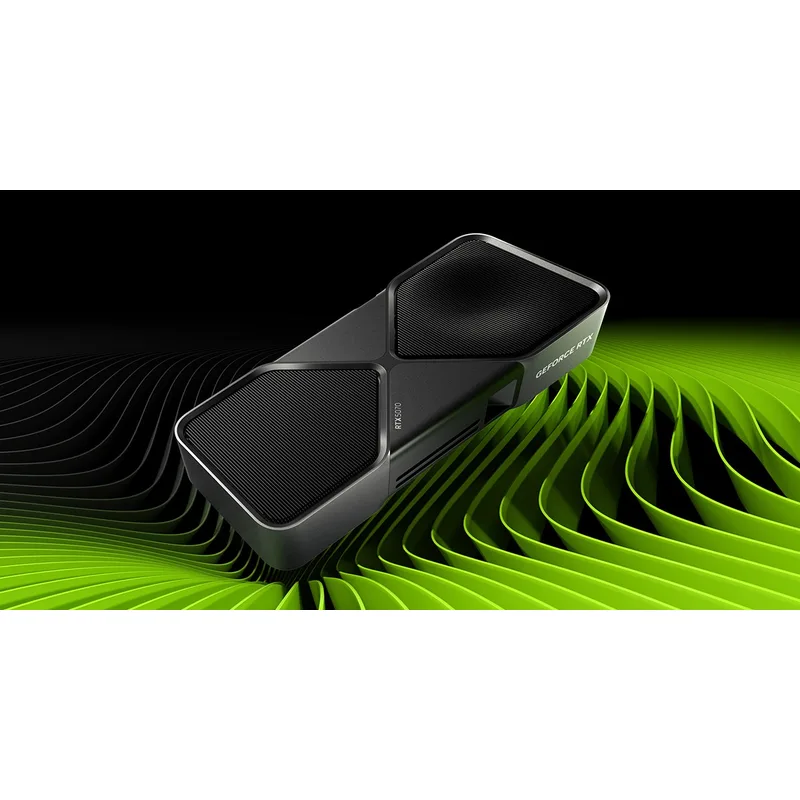
NVIDIA GeForce RTX 5070
The RTX 5070 is the first Blackwell card that delivers on the “buy the xx70, get last-gen xx80 performance” promise. In practice, it matches or beats the RTX 4080 in rasterization across virtually every current title, and DLSS 4’s Multi Frame Generation pushes frame rates into territory that makes 1440p 165Hz monitors feel effortless.
The 12GB GDDR7 is the one caveat. It’s enough today, and GDDR7’s improved bandwidth partially compensates for the capacity, but this is the card’s shelf-life limiter. For pure gaming at 1440p over the next 2-3 years, it won’t matter. For 4K or heavily modded Skyrim/Fallout, the 16GB cards below are safer bets.
2. AMD Radeon RX 9070 XT — Best AMD
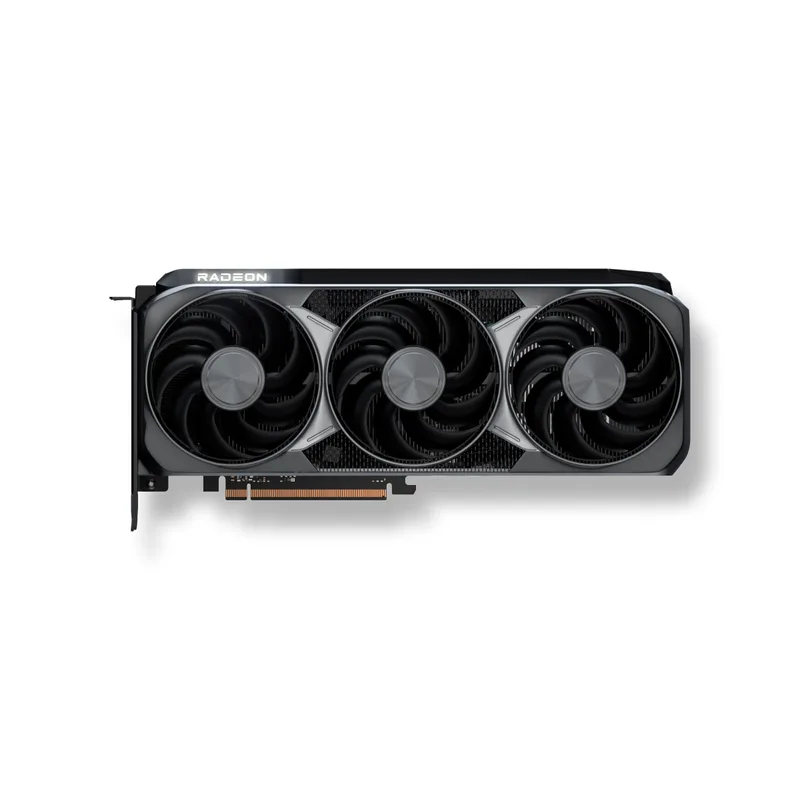
AMD Radeon RX 9070 XT
AMD’s RDNA 4 flagship for the mid-range segment. The 16GB GDDR6 buffer gives it a real advantage in VRAM-heavy scenarios — Cyberpunk 2077 with mods, Hogwarts Legacy at max textures, video editing in DaVinci Resolve. In pure rasterization, it trades blows with the RTX 5070 depending on the title.
The trade-offs are power (300W vs 250W) and ray tracing (still behind NVIDIA). If you care about RT, the RTX 5070 wins. If you care about VRAM and run Linux, the 9070 XT wins. Both are excellent cards — your priorities determine the pick.
3. NVIDIA GeForce RTX 5060 Ti — Best Value
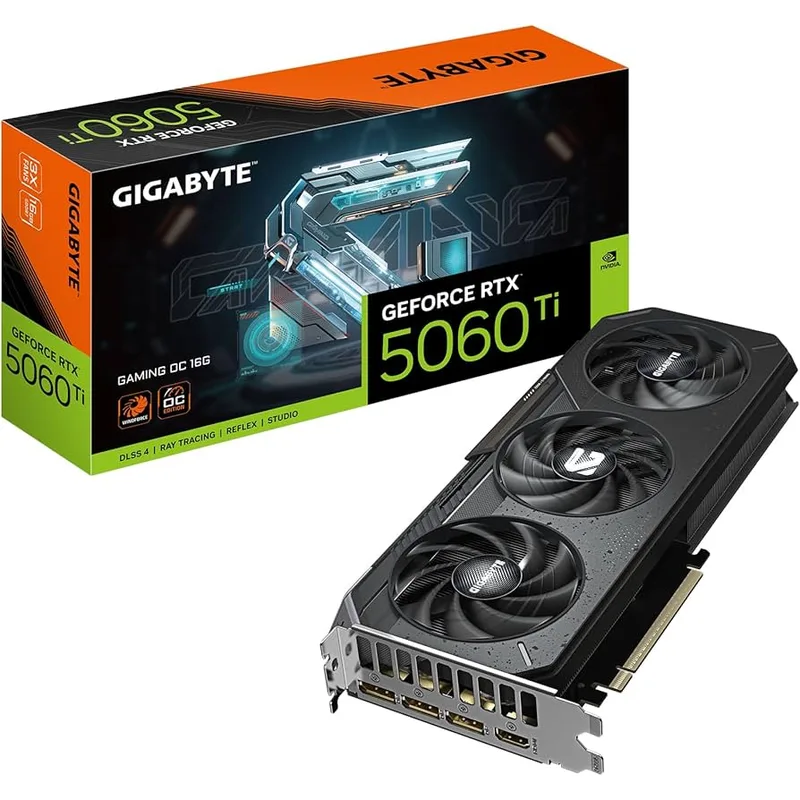
NVIDIA GeForce RTX 5060 Ti
The most interesting card on this list from a value perspective. At $389, you get 16GB GDDR7 and DLSS 4 support. The 180W TDP means it runs cool and quiet in virtually any case with basic airflow, and it doesn’t demand PSU upgrades from builders running 550W units.
Performance sits roughly 20-25% behind the RTX 5070. At 1080p, that doesn’t matter — everything runs at high/ultra with frames to spare. At 1440p, you’ll dial back a few settings in the most demanding titles, but DLSS 4 closes much of that gap in supported games.
4. AMD Radeon RX 9070
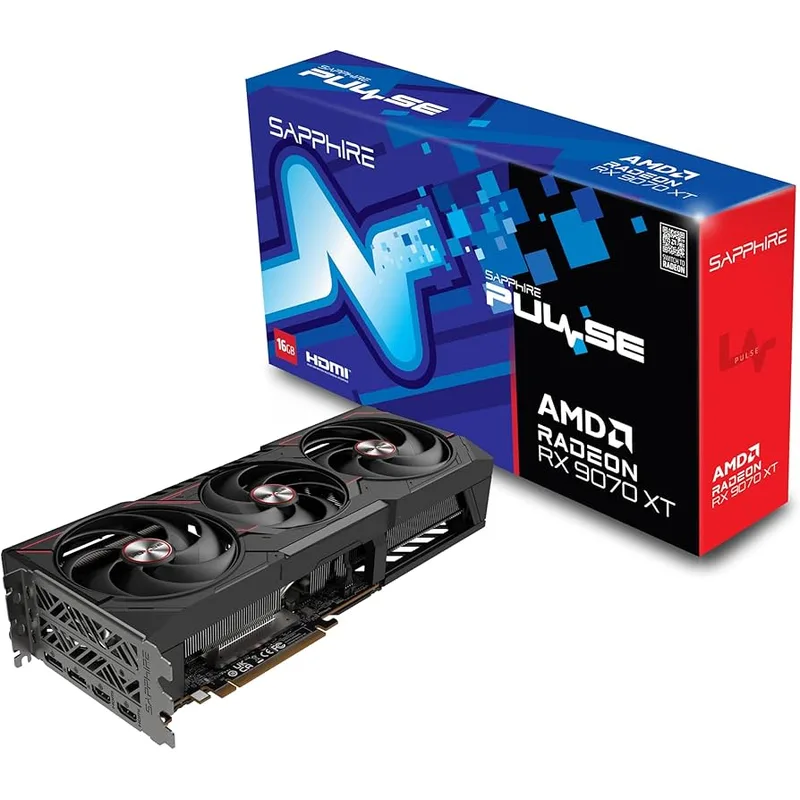
AMD Radeon RX 9070
The non-XT RX 9070 is a solid card on paper — 16GB, 220W, competitive rasterization. The problem is positioning. At $549, it sits right next to the RTX 5070 at $549 MSRP, and NVIDIA’s ray tracing and DLSS 4 advantages make that a tough comparison. If the RX 9070 dropped to $479, it would be an easy recommendation. At $549, it’s a harder sell unless you specifically value AMD’s open-source driver stack.
5. NVIDIA GeForce RTX 4070 Super
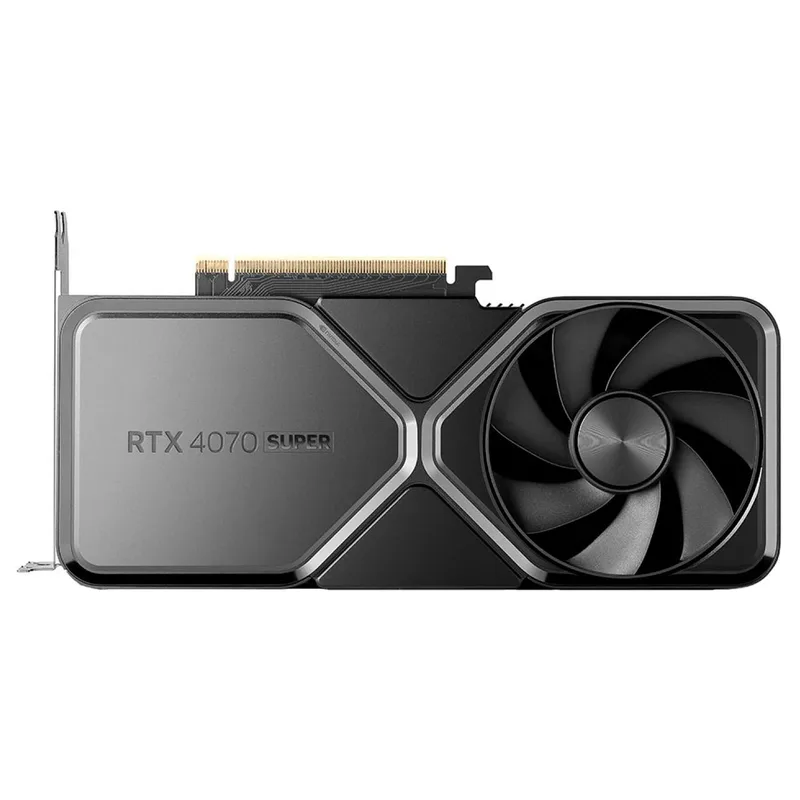
NVIDIA GeForce RTX 4070 Super
A previous-generation card that still performs well at 1440p. The appeal is finding one at or below $500 — a price that gets you mature drivers, DLSS 3 Frame Generation, and zero launch-window surprises. The 12GB VRAM is increasingly tight, and new stock is disappearing, but if you find one at the right price it’s a known quantity.
| Spec | NVIDIA GeForce RTX 5070 $549-$629 9.2/10 | AMD Radeon RX 9070 XT $599-$729 9/10 | NVIDIA GeForce RTX 5060 Ti $389-$549 8.7/10 | AMD Radeon RX 9070 $549 8.4/10 | NVIDIA GeForce RTX 4070 Super $499-$600 8.2/10 |
|---|---|---|---|---|---|
| GPU | NVIDIA Blackwell GB205 | AMD RDNA 4 Navi 48 | NVIDIA Blackwell GB206 | AMD RDNA 4 Navi 48 (cut-down) | NVIDIA Ada Lovelace AD103 |
| VRAM | 12GB GDDR7 | 16GB GDDR6 | 16GB GDDR7 | 16GB GDDR6 | 12GB GDDR6X |
| TDP | 250W | 300W | 180W | 220W | 220W |
| Interface | PCIe 5.0 x16 | PCIe 4.0 x16 | PCIe 5.0 x8 | PCIe 4.0 x16 | PCIe 4.0 x16 |
| Outputs | 3x DP 2.1, 1x HDMI 2.1 | 3x DP 2.1, 1x HDMI 2.1 | 3x DP 2.1, 1x HDMI 2.1 | 3x DP 2.1, 1x HDMI 2.1 | 3x DP 1.4a, 1x HDMI 2.1 |
| Rating | 9.2/10 | 9/10 | 8.7/10 | 8.4/10 | 8.2/10 |
FAQ
Display Output Compatibility
All five cards on this list support HDMI 2.1, which means 4K at 120Hz to compatible TVs and monitors. The RTX 5070, 5060 Ti, and both RX 9070 variants also include DisplayPort 2.1 outputs, enabling 4K at 240Hz on next-generation monitors.
The RTX 4070 Super uses DisplayPort 1.4a — sufficient for 1440p at 240Hz or 4K at 120Hz, but it won’t drive the upcoming DP 2.1 monitors at their full refresh rates.
Cable note: DisplayPort 2.1 requires UHBR cables to hit full bandwidth. The cables bundled with most monitors are DP 1.4-rated. Budget -20 for a certified UHBR cable if you’re buying a DP 2.1 monitor.
Ray Tracing and Upscaling in 2026
Ray tracing adoption has reached a tipping point. Most AAA titles released in 2026 include RT options, and several use it as the default rendering path. NVIDIA maintains a meaningful RT performance lead — the RTX 5070’s RT cores outperform the RX 9070 XT’s by roughly 30-40% in titles like Cyberpunk 2077 and Alan Wake 2.
DLSS 4’s Multi Frame Generation is the other NVIDIA advantage. By generating multiple interpolated frames per rendered frame, it effectively doubles perceived frame rates in supported titles. AMD’s FSR 4 competes on spatial upscaling but lacks an equivalent frame generation technology at launch.
If you primarily play competitive multiplayer titles where RT is irrelevant, AMD’s VRAM advantage matters more. If you play single-player AAA games where RT and frame generation enhance the experience, NVIDIA’s ecosystem advantage is real.
Which GPU should I buy for 1440p gaming in 2026?
The RTX 5070. It hits the performance sweet spot at $549 with DLSS 4 support, and its 250W TDP keeps the total build cost reasonable. The RX 9070 XT is the alternative if you want 16GB VRAM.
Is 12GB VRAM enough in 2026?
For 1080p and most 1440p gaming, yes. For 4K, heavily modded open-world games, or if you plan to keep the card for 3+ years, prioritize 16GB. The trend in VRAM consumption is only going up.
Should I wait for prices to drop?
GPU pricing in 2026 has stabilized compared to the post-launch surges. If you need a card now, buy now. Waiting for meaningful drops means waiting for the next generation, which is 12-18 months out.
RTX 5070 or RX 9070 XT?
RTX 5070 if you value ray tracing, DLSS 4, and lower power draw. RX 9070 XT if you value 16GB VRAM, Linux compatibility, and don’t care about RT. Both are excellent — the right answer depends on your priorities.
Is the RTX 4070 Super still worth buying in 2026?
Only at the right price. Under $480, it’s a solid 1440p card with mature drivers. Above $500, the RTX 5060 Ti 16GB at $389 or the RTX 5070 at $549 are better buys.
The Bottom Line
The RTX 5070 is the best GPU for most gamers in 2026. It delivers the performance, efficiency, and feature set that makes 1440p gaming at high-to-max settings effortless. If VRAM headroom is your top priority, the RX 9070 XT is the pick. And if you’re building on a budget, the RTX 5060 Ti 16GB at $389 is the smartest money on this list.