Affiliate disclosure: PCBuildRanked earns a commission on qualifying Amazon purchases at no extra cost to you.
The high-end CPU market shifted twice in early 2026. AMD’s Ryzen 9 9950X3D launched and claimed the top gaming-plus-productivity slot. Then prices collapsed — the Ryzen 9 9900X3D dropped 25% below its MSRP to around $450, fundamentally changing the value calculus at this tier. And on April 22, 2026, AMD launches the Ryzen 9 9950X3D2 (Dual Edition) at $899, the first consumer chip with dual-stacked 3D V-Cache. If you’re spending over $400 on a processor right now, here’s exactly what to buy and why.
| Spec | AMD Ryzen 9 9950X3D 9.7/10 | AMD Ryzen 9 9900X3D 9/10 | AMD Ryzen 7 9800X3D 9.5/10 | Intel Core Ultra 9 285K 7.5/10 | AMD Ryzen 9 9950X 8.4/10 |
|---|---|---|---|---|---|
| cores | 16 Cores / 32 Threads | 12 Cores / 24 Threads | 8 Cores / 16 Threads | 24 Cores (8P + 16E) / 24 Threads | 16 Cores / 32 Threads |
| boost_clock | 5.7 GHz | 5.5 GHz | 5.2 GHz | 5.7 GHz | 5.7 GHz |
| base_clock | 4.3 GHz | 4.4 GHz | 4.7 GHz | 3.7 GHz | 4.3 GHz |
| l3_cache | 128MB (3D V-Cache) | 128MB (3D V-Cache) | 96MB (3D V-Cache) | 40MB | 64MB |
| tdp | 170W | 120W | 120W | 125W | 170W |
| socket | AM5 | AM5 | AM5 | LGA1851 | AM5 |
| Rating | 9.7/10 | 9/10 | 9.5/10 | 7.5/10 | 8.4/10 |
Prices change daily — tap Check Price for the current Amazon price.
Prices change daily — tap Check Price for the current Amazon price.
Quick Picks
- Best overall: AMD Ryzen 9 9950X3D — 16-core Zen 5 with 3D V-Cache runs 37% faster than Intel’s flagship in gaming and matches the non-3D 9950X in productivity. Street price is ~$675 as all X3D SKUs have dipped below MSRP.
- Best value right now: AMD Ryzen 9 9900X3D — Price dropped 25% below MSRP to ~$450. Gets you 28% more 1080p gaming speed than Intel’s best, 12 cores for multitasking, and a manageable 120W TDP.
- Best pure gaming pick: AMD Ryzen 7 9800X3D — Within 0.4% of the 9950X3D in games at ~$419. The rational choice if gaming is your only priority.
- Best Intel option: Core Ultra 9 285K — Arrow Lake’s productivity lead is real, but at $557 it now costs more than AMD’s faster gaming chips.
Buying Guide
Socket and Platform
Every AMD chip here runs on AM5 (LGA1718). You’ll need a 600-series motherboard — X670E, X670, B650E, B650, or the newer X870/B850 boards. AM5 is AMD’s primary desktop socket through at least 2027, so the platform has long-term viability.
Intel’s Core Ultra 9 285K requires a Z890 motherboard on the LGA1851 socket. Z790 boards from Raptor Lake are not compatible with Arrow Lake. DDR5 is mandatory on this platform.
Memory
All five CPUs use DDR5. For AMD’s 9000-series X3D chips, DDR5-6000 at CL30 is the optimal configuration. The 3D V-Cache architecture is highly sensitive to memory latency — tighter timings matter more than raw frequency. Pushing past DDR5-6000 can sometimes hurt gaming performance on these chips because the memory controller falls outside its optimal mode.
The Intel 285K supports DDR5 with CUDIMM (Clocked Unbuffered DIMMs) for higher validated speeds on Z890.
Cooler Requirements
- 9800X3D, 9900X3D (120W TDP): A 240mm AIO or a mid-tier air cooler like the Thermalright Peerless Assassin 120 SE keeps both chips within thermal limits without issue.
- 9950X3D, 9950X (170W TDP): A 280mm or 360mm AIO is the minimum — or a top-tier tower like the Noctua NH-D15. Under-cooled, these chips thermal throttle and forfeit their boost clock advantage entirely.
- Core Ultra 9 285K (125W TDP): Arrow Lake runs considerably cooler than Raptor Lake at equivalent TDP. A 240mm AIO is sufficient for stock operation.
Gaming vs. Productivity
Gaming-only build? The 9800X3D at $419 is the answer. The 9950X3D adds zero meaningful gaming performance — the gap is 0.4% across the 1080p suite. The extra $256 buys 8 cores, which only matters if you run parallel workloads.
Split gaming and heavy workloads? The 9950X3D at $675 is the only chip that delivers gaming performance matching the 9800X3D and productivity throughput matching the non-3D 9950X simultaneously.
Gaming plus streaming or heavy multitasking but not full rendering? The 9900X3D at $450 has become genuinely interesting. At launch pricing of $599, it was easy to dismiss. At $450 — just $31 more than the 9800X3D — you get four extra cores for OBS encoding, virtualization, or compilation without sacrificing much gaming performance.
Detailed Reviews
1. AMD Ryzen 9 9950X3D — Best All-Arounder
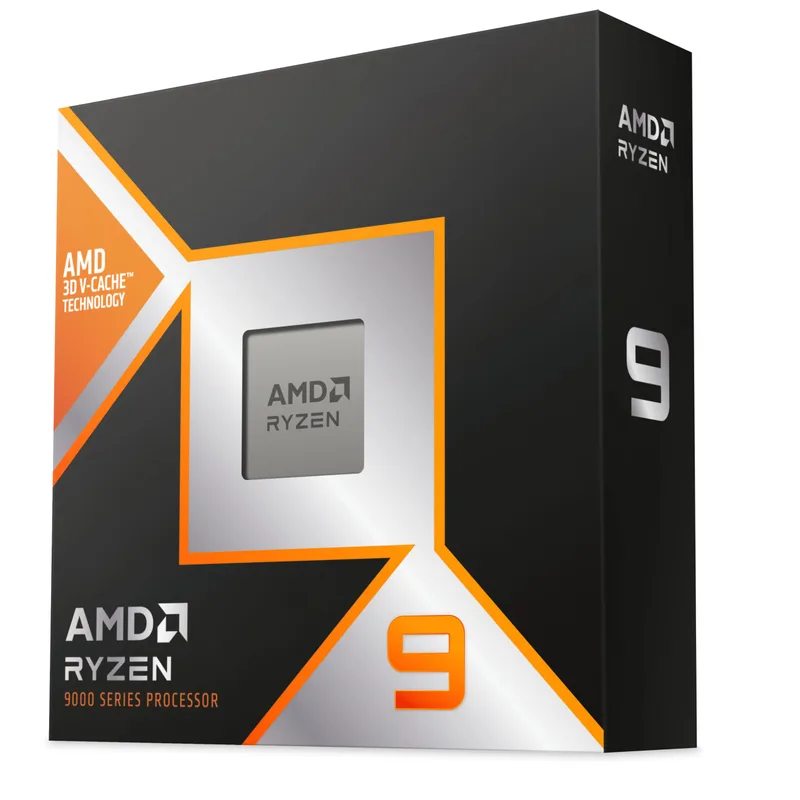
The AMD Ryzen 9 9950X3D is what happens when AMD puts 3D V-Cache on a productivity chip. The 16-core Zen 5 design uses a dual-CCD layout with 128MB of total L3 cache — one CCD carries the 3D V-Cache stack, the other doesn’t, which is why cache-sensitive workloads scale differently across the two die halves.
In gaming, it runs 37% faster than Intel’s Core Ultra 9 285K at 1080p. Against the 9800X3D — the previous gaming king — the margin is 0.4%, a statistical tie. The real story is that gaming and productivity are no longer mutually exclusive on this chip: the 9950X3D scores 42% higher in multi-threaded workload throughput versus the 9800X3D while matching the non-3D 9950X in Blender, Handbrake, and code compilation.
The 170W TDP is the main cost. Pair it with a 360mm AIO to hold boost clocks under sustained loads. Street price has slipped to around $675 from the $699 MSRP — all 9000X3D SKUs have now dropped below MSRP. For users who game in the evenings and render or compile all day, nothing else on this list covers both workloads as cleanly.
Worth noting: AMD’s Ryzen 9 9950X3D2 (Dual Edition) launches April 22, 2026 at $899. It features dual 3D V-Cache stacking across both CCDs, which should address the single-CCD cache limitation of the current 9950X3D. If your timing is flexible and the $899 price is within range, it may be worth evaluating — but that’s a separate tier entirely.
Pair with DDR5-6000 CL30 for best gaming results. An X670E or X870 board maximizes PCIe 5.0 lane availability for NVMe and GPU bandwidth.
2. AMD Ryzen 9 9900X3D — The Best Value at Current Pricing
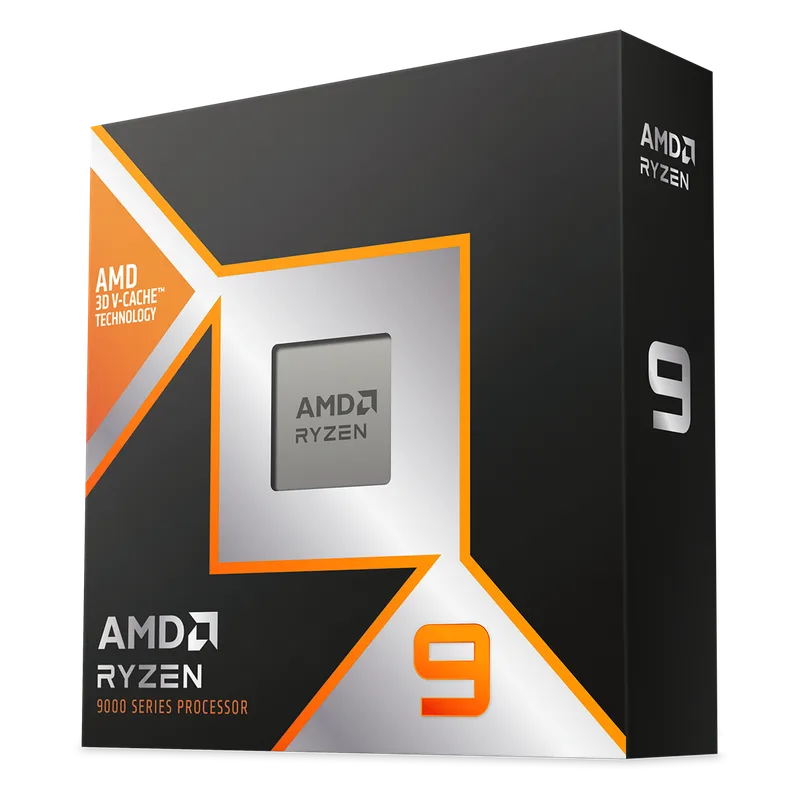
The AMD Ryzen 9 9900X3D launched at $599 and received a lukewarm reception — squeezed between a cheaper 9800X3D that matched it in gaming and a pricier 9950X3D that beat it in productivity. But at its current street price of ~$450, 25% below MSRP, the calculus changes significantly.
For $31 more than the 9800X3D, you get four extra cores, 28% faster 1080p gaming than the Core Ultra 9 285K, and a 120W TDP that fits the same 240mm AIO cooling solution. If you run OBS software encoding while gaming, do occasional virtualization, or compile code regularly, those 12 cores earn their keep. Pure gamers will still find the 9800X3D rational, but anyone with mixed workloads should take a hard look at this gap.
Gaming performance is strong by any measure: 28% faster than the Core Ultra 9 285K, and within a few percent of the 9800X3D at 1440p and 4K where the cache advantage narrows. The 128MB 3D V-Cache configuration is identical to the 9950X3D — the difference is four fewer cores and a 120W instead of 170W TDP.
At $450, this chip has become the recommendation for anyone who wants premium gaming performance without the 9950X3D’s cooling and cost demands. It’s a very different proposition than it was at $599.
3. AMD Ryzen 7 9800X3D — The Rational Gaming Choice
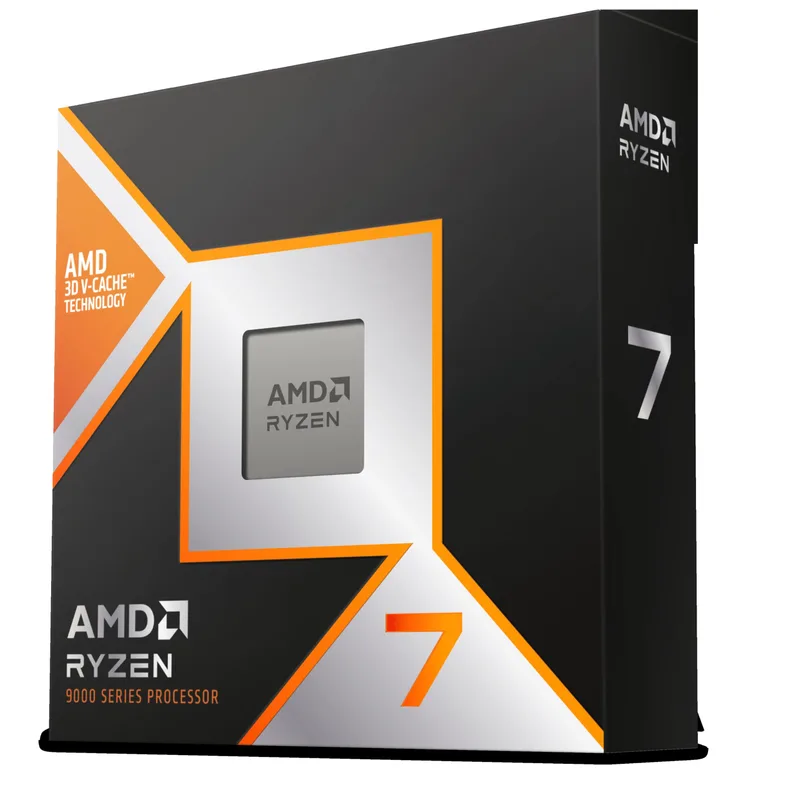
AMD Ryzen 7 9800X3D
The AMD Ryzen 7 9800X3D arrived in late 2026 and has held its position as the most gaming-efficient processor available. The 8-core, 16-thread chip with 96MB of 3D V-Cache ties the $675 9950X3D within 0.4% across a 1080p gaming suite — the difference is too small to perceive in actual gameplay.
Street price has dipped to around $419, down from the original $479 MSRP. The 120W TDP keeps thermals manageable; a Thermalright Peerless Assassin 120 SE or Noctua NH-U12A handles it cleanly. DDR5-6000 CL30 is the optimal memory pairing — the tight-latency memory controller on 3D V-Cache chips responds more to timings than raw frequency.
The limitation is thread count. Editing 4K video in DaVinci Resolve, running Blender renders, compiling large codebases — 8 cores at 5.2 GHz is meaningfully slower than 12 or 16 cores for these workloads. For a dedicated gaming PC — the majority of builds at this price — 8 cores has not been a bottleneck in any title released through early 2026. The 9800X3D remains the answer when gaming performance per dollar is the primary metric.
Runs on any AM5 motherboard. B650 boards work fine since the 9800X3D doesn’t require PCIe 5.0 on the M.2 slot from the CPU.
4. Intel Core Ultra 9 285K — Intel’s Best, With Caveats
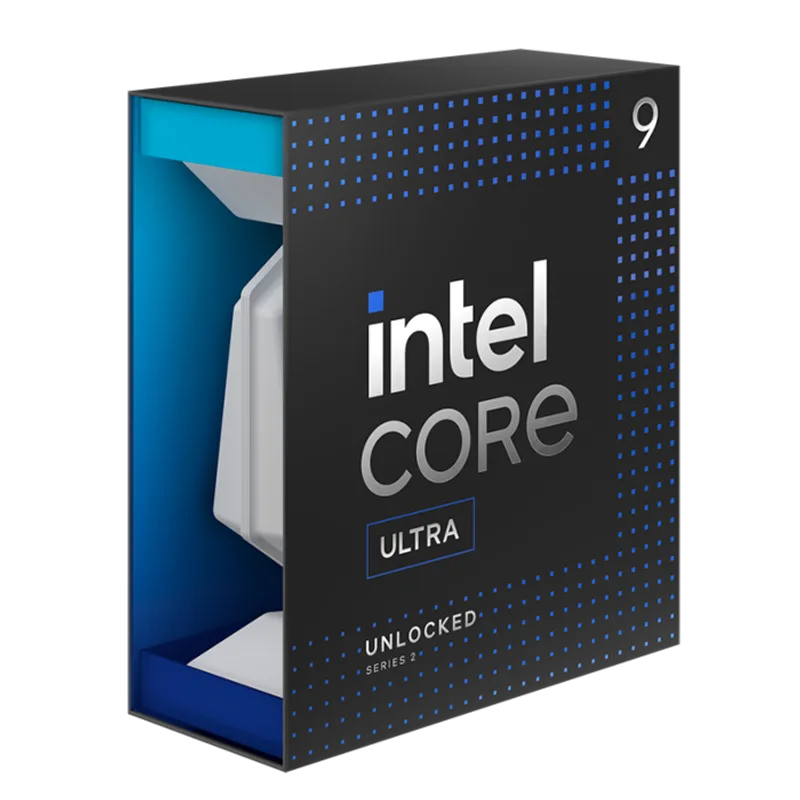
Intel Core Ultra 9 285K
The Intel Core Ultra 9 285K occupies an increasingly difficult competitive position in 2026. Its 24-core design (8 P-cores + 16 E-cores) scores 14% ahead of the Core i9-14900K in multi-core Cinebench and delivers lower gaming power draw than any Intel desktop CPU since Alder Lake. But at its current street price of ~$557, it costs more than both the Ryzen 9 9900X3D ($450) and 9800X3D ($419) — chips that deliver substantially better gaming performance.
The gaming shortfall is well-documented. The 285K averages 37% slower than the Ryzen 9 9950X3D and 28% slower than the 9900X3D in 1080p gaming benchmarks. It also trails Intel’s own i9-14900K by around 8% in gaming — Arrow Lake’s architectural changes hurt IPC in gaming workloads at launch. Microcode and BIOS updates have recovered some ground, but the gap to AMD’s X3D lineup remains large.
Where the 285K makes sense: you’re building primarily for productivity — compilation, scientific simulation, content encoding — and gaming is secondary. It’s also the only chip here with an Intel-native NPU for AI-accelerated workflows. For a new build where gaming is the primary use case, AMD’s lineup outperforms at every price point in this roundup.
Requires a Z890 motherboard and LGA1851 socket. DDR5 only, no DDR4 support on this platform.
5. AMD Ryzen 9 9950X — Best Pure Productivity Value
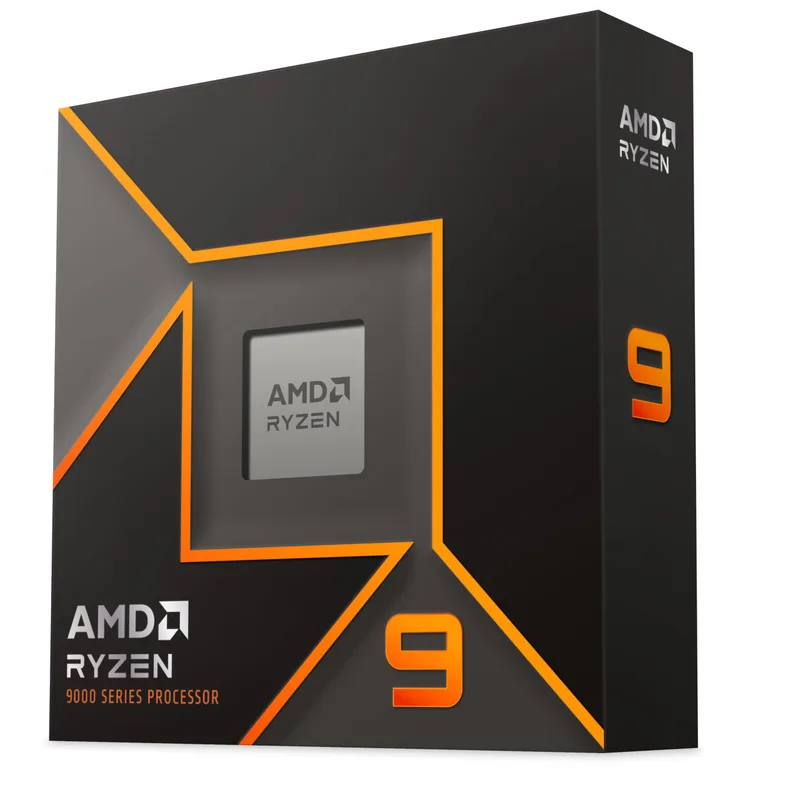
AMD Ryzen 9 9950X
The AMD Ryzen 9 9950X is the non-3D version of AMD’s 16-core Zen 5 flagship. Without the 3D V-Cache stack, L3 cache sits at 64MB versus 128MB on the 9950X3D, and gaming performance drops below the 9800X3D by a visible margin at 1080p. The trade-off is price: at ~$519, it’s $156 less than the 9950X3D while delivering productivity benchmarks within 2-5% across most workloads.
Rendering, encoding, simulation, compilation — all scale with core count and clock speed, not cache size. The 9950X runs at the same 5.7 GHz max boost and 4.3 GHz base as the 9950X3D across all 16 cores. In Blender, Handbrake, Cinebench multi-core, and code compilation, the performance gap between the two is noise.
If your PC is primarily a workstation that also plays games at 1440p or 4K — where the GPU is the bottleneck regardless — the 9950X saves $156 with no meaningful productivity trade-off. At 1080p high-refresh-rate gaming, the 3D V-Cache difference is visible and the 9950X3D pulls well ahead. Same 170W TDP as the 9950X3D — budget for a 360mm AIO either way.
Comparison
FAQ
Is the Ryzen 9 9950X3D worth $675 over the 9800X3D?
Only if you use those extra 8 cores. In gaming, the difference is 0.4% — you won’t feel it. In productivity workloads (rendering, encoding, streaming), the 9950X3D delivers 42% more multi-threaded throughput. If your machine does both regularly, yes. If it’s a pure gaming PC, no — put that $256 toward a better GPU or monitor.
Does the Core Ultra 9 285K make sense for gaming in 2026?
Not as a primary gaming CPU. At $557, it costs more than the AMD 9900X3D ($450) and 9800X3D ($419) while being 28-37% slower in 1080p gaming. For a workstation that also games occasionally, or an Intel platform upgrade, it’s defensible. A gaming-first build should choose one of AMD’s X3D chips.
What is the Ryzen 9 9950X3D2, and should I wait for it?
The Ryzen 9 9950X3D2 (Dual Edition) launches April 22, 2026 at $899. It’s the first consumer processor with 3D V-Cache stacked on both CCDs, which should eliminate the single-CCD cache limitation of the current 9950X3D. If budget allows and you can wait a few weeks to read reviews, it’s worth evaluating. If you need a CPU now, the 9950X3D at $675 is the current best all-around option.
What motherboard do I need for the Ryzen 9 9950X3D?
Any AM5 board works: X870E, X870, X670E, X670, B650E, or B650. For the 9950X3D’s 170W TDP, choose a board with a solid VRM — at least 14+2 phases. X870E boards like the ASUS ROG Crosshair X870E or MSI MEG X870E ACE are safe choices for sustained loads.
Can I run the Ryzen 9 9900X3D on a B650 board?
Yes. At 120W TDP, the 9900X3D runs comfortably on any B650 board with a decent VRM. No need to step up to B650E or X670 unless you need extra PCIe lanes. A board with 12+ phase VRM handles the sustained load without throttling.
What’s the difference between the 9950X3D and the 9950X?
The 3D model adds an extra 64MB of L3 cache via AMD’s 3D V-Cache stacking, bringing total L3 to 128MB. This dramatically improves gaming performance — especially at 1080p. Productivity performance is nearly identical, with a 2-5% gap in most workloads. The 3D version costs ~$156 more at current pricing.
The Bottom Line
The Ryzen 9 9950X3D at ~$675 is the clear winner for anyone who needs serious productivity throughput without giving up AMD’s gaming lead — 16 cores, 3D V-Cache, 37% faster than Intel’s flagship in games. For pure gaming, the Ryzen 7 9800X3D at $419 reaches the same gaming performance at 0.4% behind and costs $256 less. The Ryzen 9 9900X3D has become a genuine recommendation at its current ~$450 street price: 12 cores, 120W TDP, 28% faster in games than the 285K, for just $31 more than the 9800X3D. Intel’s Core Ultra 9 285K at $557 is the right choice only if you’re locked into the Intel ecosystem or prioritize the AI engine and pure productivity throughput over gaming.