Amazon just knocked $80 off the SteelSeries Arctis Nova Pro Wireless during its Big Spring Sale (bringing it to $299), making this a strong moment to buy at the top of the market. At the same time, the Audeze Maxwell — packed with 90mm planar magnetic drivers and an 80-hour battery — is holding at $299 and outperforms anything near it on pure audio quality. Below, five headsets that actually deliver across different needs and budgets.
| Spec | SteelSeries Arctis Nova Pro Wireless Unavailable 9.4/10 | Audeze Maxwell (PlayStation/PC) 9.3/10 | Razer BlackShark V2 Pro (2023) 9/10 | Logitech G Pro X 2 Lightspeed 8.8/10 | HyperX Cloud Alpha Wireless 8.5/10 |
|---|---|---|---|---|---|
| drivers | Premium Hi-Fi + ANC | 90mm planar magnetic | 50mm Triforce Titanium | 50mm graphene | Dual-chamber 50mm dynamic |
| wireless | 2.4GHz + Bluetooth | 2.4GHz + Bluetooth 5.3 | 2.4GHz + Bluetooth 5.2 | LIGHTSPEED 2.4GHz + Bluetooth + 3.5mm | 2.4GHz (PC/PS5/Switch) |
| battery | 22 hrs per battery (hot-swap) | 80+ hrs (20-min fast charge) | 70 hrs | 50 hrs | 300 hrs |
| mic | ClearCast Gen 2 retractable | AI noise-filtering boom + earcup mics | HyperClear Super Wideband 9.9mm | 6mm cardioid, Blue VO!CE technology | Detachable noise-canceling |
| anc | Yes — hybrid ANC | — | — | — | — |
| weight | 338g | 490g | 320g | 339g | 336g |
| Rating | 9.4/10 | 9.3/10 | 9/10 | 8.8/10 | 8.5/10 |
Prices change daily — tap Check Price for the current Amazon price.
Prices change daily — tap Check Price for the current Amazon price.
Quick Picks
- Best overall: SteelSeries Arctis Nova Pro Wireless — hot-swap batteries, hybrid ANC, and simultaneous multi-device connection. Nothing else combines all three.
- Best audio quality: Audeze Maxwell — 90mm planar magnetic drivers at $299 is unmatched value if audio fidelity is your priority.
- Best budget wireless: HyperX Cloud Alpha Wireless — 300-hour battery and solid build at $159 with no compromises that matter for PC gaming.
Wireless Gaming Headset Buying Guide
2.4GHz vs. Bluetooth
2.4GHz wireless is the standard for gaming. It runs below 20ms latency — imperceptible in most gameplay — and maintains a stable signal across a room. Every headset here uses 2.4GHz as its primary connection.
Bluetooth adds convenience (phone calls, mobile use) but tops out at 40–80ms latency depending on codec — fine for casual use, not for competitive play. The Nova Pro Wireless, Audeze Maxwell, BlackShark V2 Pro, and G Pro X 2 all include both. The HyperX Cloud Alpha is 2.4GHz only.
Battery Life Reality Check
Manufacturer battery figures are tested at mid volume without wireless features like ANC active. Real-world life drops 20–30% with ANC on. The HyperX’s 300-hour claim is genuinely exceptional — it’s measured without an ANC drain because it has none. The Nova Pro’s 22-hours-per-battery figure is per swappable cell, and the included second battery means effective runtime is unlimited if you swap and recharge.
Mic Quality for Gaming
Gaming headsets fall into two camps: retractable mics (like the Nova Pro’s ClearCast Gen 2) and detachable boom mics (BlackShark V2 Pro, G Pro X 2, Cloud Alpha). Retractable mics are more convenient but typically narrower pattern. Detachable booms allow closer mic placement and wider capsule diameters — the BlackShark’s 9.9mm Super Wideband mic is the clear winner for voice quality here.
Planar Magnetic vs. Dynamic Drivers
Dynamic drivers (used in the BlackShark, G Pro X 2, Cloud Alpha) push air with a cone and voice coil. They’re tunable, affordable, and have been dominant in gaming headsets for years.
Planar magnetic drivers (Audeze Maxwell’s 90mm units) move the entire diaphragm surface simultaneously, reducing distortion and delivering a more accurate soundstage. The tradeoff is weight — planars require stronger magnetic arrays, which is why the Maxwell is 490g versus the BlackShark’s 320g.
Platform Compatibility
All five headsets work on PC. PS5 and Switch compatibility requires USB dongle support — all five provide this except the G Pro X 2 needs a USB-A to USB-C adapter on Switch. Xbox native wireless support requires its own protocol; the standard BlackShark V2 Pro uses HyperSpeed USB, which works on Xbox via the dongle. Check the variant if Xbox is your primary platform.
Detailed Reviews
1. SteelSeries Arctis Nova Pro Wireless
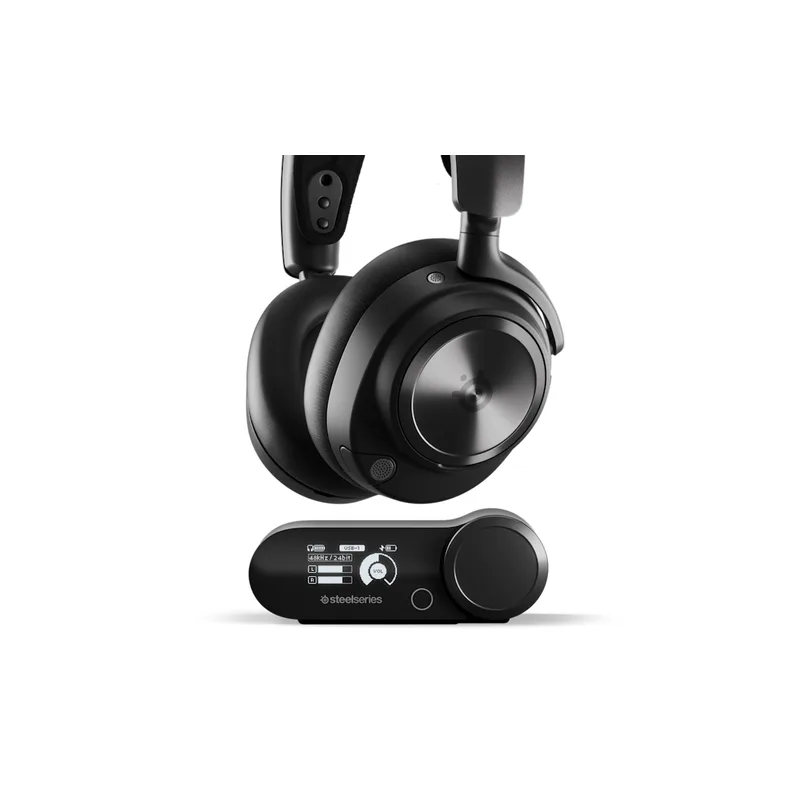
SteelSeries Arctis Nova Pro Wireless
The SteelSeries Arctis Nova Pro Wireless is in a position no other gaming headset occupies: it combines active noise cancellation, hot-swappable batteries, and simultaneous multi-device wireless in a single package under $380. That combination is why it’s sat at the top of virtually every “best gaming headset” list since 2022 — and still does in 2026.
The Infinity Power System is the headline feature. Two batteries ship in the box; one in the headset, one charging in the base station. When the active battery dies, you click out the dead cell and click in the charged one. The swap takes three seconds and the headset doesn’t power off. If you game for 4+ hours daily, this is the feature that eliminates battery anxiety entirely.
Hybrid ANC is genuinely useful here — SteelSeries’ implementation reduces mechanical noise (fans, HVAC, keyboard) by around 20–25dB, which is on par with mid-tier consumer earbuds but unusual in gaming headsets. The ClearCast Gen 2 mic retracts flush into the left earcup when not in use, and its bidirectional noise-canceling pickup handles a loud environment well.
Sound profile is balanced with a slight V-shape (boosted bass and treble, recessed mids) — optimized for gaming but works for music. The Sonar Software lets you adjust EQ per application on PC. The main frustration is comfort over long sessions: the stock leatherette ear cushions compress and run warm after 3 hours. SteelSeries’ replacement foam cushions are a recommended aftermarket fix.
Who should buy it: PC or PS5 gamers who want the single most fully-featured wireless headset and don’t want to compromise on battery life or noise isolation.
2. Audeze Maxwell (PlayStation/PC)
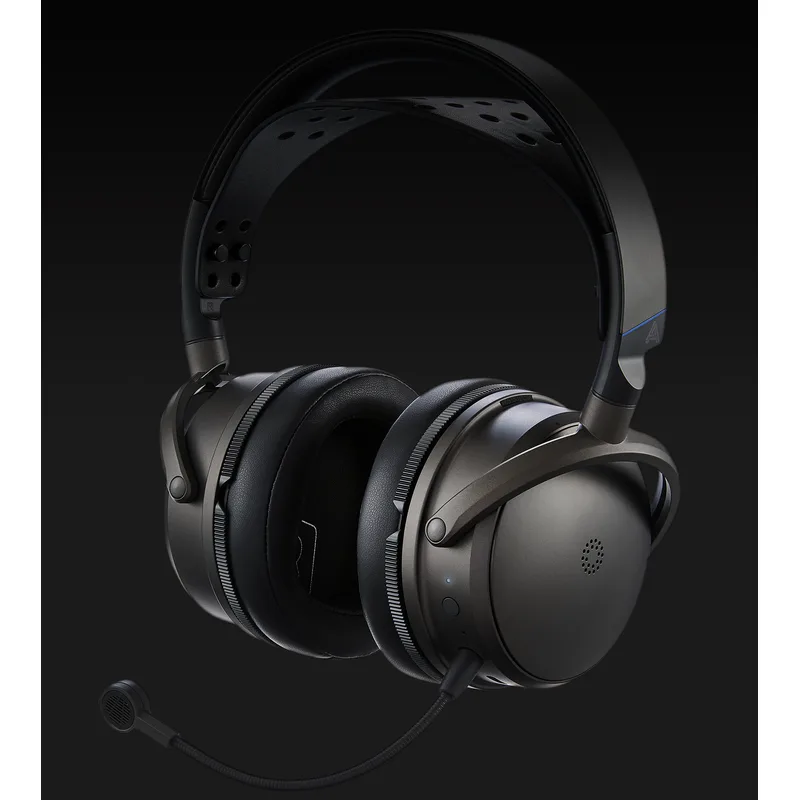
The Audeze Maxwell is the only gaming headset using planar magnetic drivers at this price. Audeze’s 90mm drivers are roughly three times larger in surface area than the 50mm dynamic drivers in every other headset here, and the difference is audible: the Maxwell’s soundstage is wider and more accurate, with cleaner transient response on gunshots, footsteps, and musical instruments.
Battery life is exceptional — Audeze rates it at 80+ hours and real-world use confirms multi-day sessions between charges. The 20-minute fast charge that delivers a full day of use is a genuinely useful feature for a headset you forgot to charge overnight.
The wireless implementation goes further than most: the Maxwell uses ultra-wideband 2.4GHz with triple the typical range and transmits at 24-bit/96kHz — audiophile-grade resolution wirelessly. Bluetooth 5.3 handles secondary device connections.
The weight is the honest caveat. At 490g, the Maxwell is heavy. The G Pro X 2 and BlackShark are 150–170g lighter. Over a 4-hour gaming session, that difference is felt. The headband distributes weight reasonably, but anyone sensitive to head pressure will notice. There’s also no ANC, which is notable at the $299 price point.
Who should buy it: Audiophiles and single-player gamers who prioritize sound quality and don’t need ANC. The Maxwell delivers studio-headphone quality in a gaming form factor.
3. Razer BlackShark V2 Pro (2026)
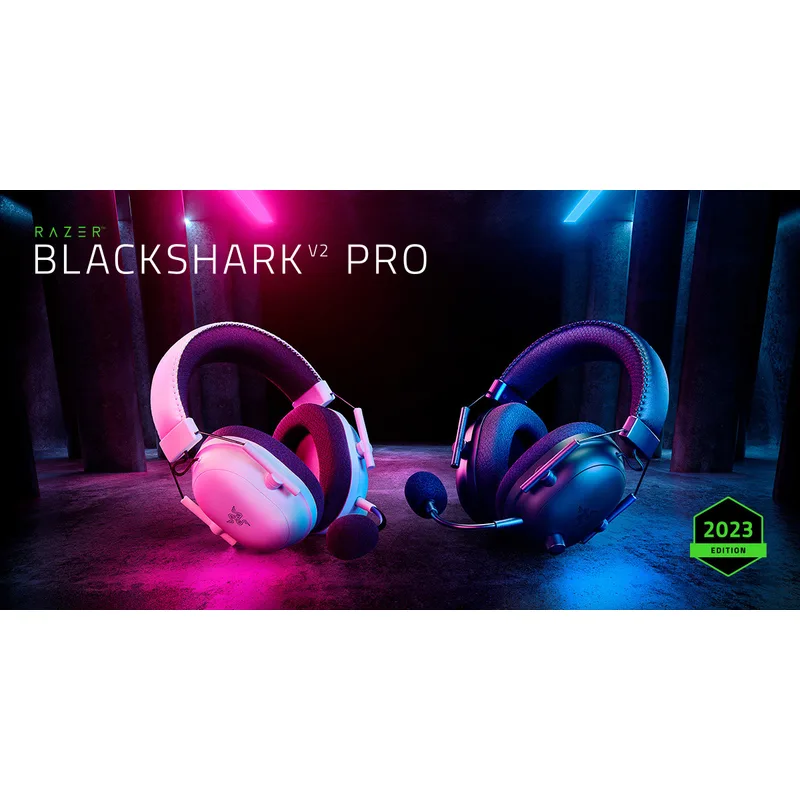
The Razer BlackShark V2 Pro (2026) is the practical pick for most gamers. At $199, it costs $100 less than the Nova Pro, loses ANC and the hot-swap battery system, but gains a 70-hour single-charge battery that exceeds both premium headsets and a microphone that Tom’s Hardware called broadcast quality.
The 2026 revision was significant: battery life jumped from 24 hours to 70 hours, Bluetooth 5.2 was added alongside 2.4GHz wireless, and Razer replaced the mic with a 9.9mm Super Wideband capsule. The mic improvement is audible — the wider capsule captures voice with more natural tonality and the cardioid pattern rejects more side noise than the original.
Sound signature is Razer’s FPS-tuned profile: elevated mids for footstep clarity, forward highs for direction cuing. This works exceptionally well in competitive shooters. In RPGs and narrative games, the boosted mids make voices sound compressed. The Razer app’s EQ presets help but don’t fully correct the profile for music listening.
At 320g, it’s the lightest premium wireless headset in this roundup. The plush memory foam earcups are large enough to fit over most ears, and the headband pressure is low enough for all-day wear without the hot-spots common on tighter headsets.
Who should buy it: PC and PS5 gamers who prioritize value, long battery life, and mic quality over ANC. The best headset under $200 if your priority is voice communication.
4. Logitech G Pro X 2 Lightspeed
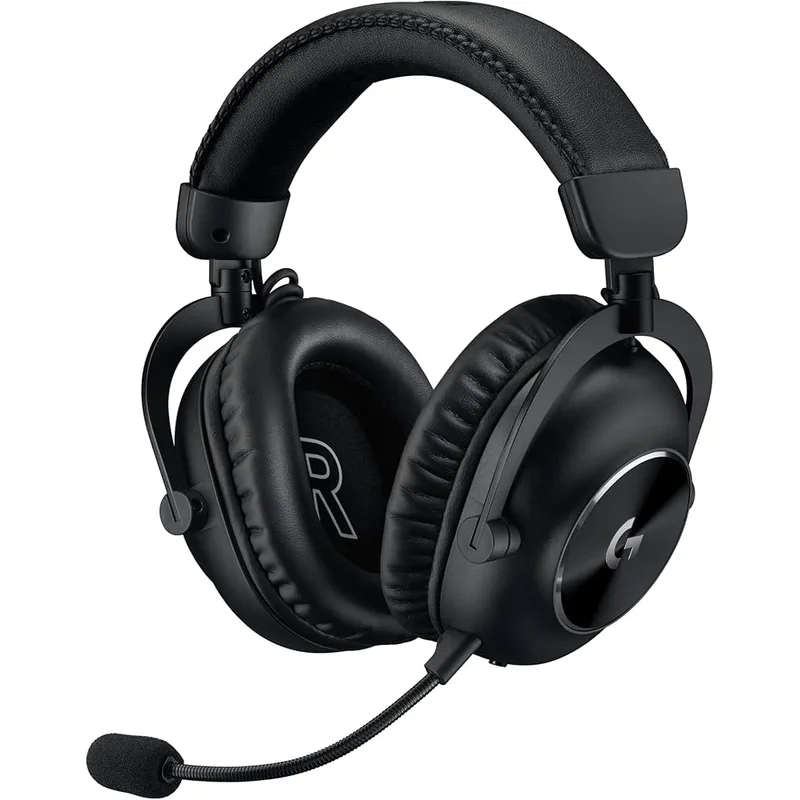
The Logitech G Pro X 2 Lightspeed is designed for competitive gaming, and the hardware reflects that focus. The 50mm graphene drivers are the key differentiator: graphene’s tensile strength allows thinner diaphragms that respond faster to transient signals (like gunshots) with lower distortion than conventional mylar drivers at the same SPL.
LIGHTSPEED wireless operates in the 5.8GHz band with a 1ms reported polling rate — lower latency than most 2.4GHz gaming headsets. The simultaneous Bluetooth means you can stay connected to your phone for calls while playing on PC, with audio mixing handled automatically. The 3.5mm fallback adds compatibility with older consoles and mobile devices.
The 6mm cardioid mic with Blue VO!CE processing is competitive with the BlackShark’s 9.9mm unit for most use cases — the VO!CE noise suppression removes keyboard clatter and background noise in real time, though the Maxwell’s AI-based filtering is more aggressive.
Where the G Pro X 2 falls short is value at MSRP. At $249, you’re paying a premium for the graphene drivers and LIGHTSPEED without getting ANC or an exceptional battery (50 hours is solid but not standout). It regularly sells for $189–$199, which is where it belongs in this lineup. Check current pricing before buying.
Who should buy it: Competitive PC gamers who care about low wireless latency and driver accuracy. Less compelling for console players or those who want ANC.
5. HyperX Cloud Alpha Wireless
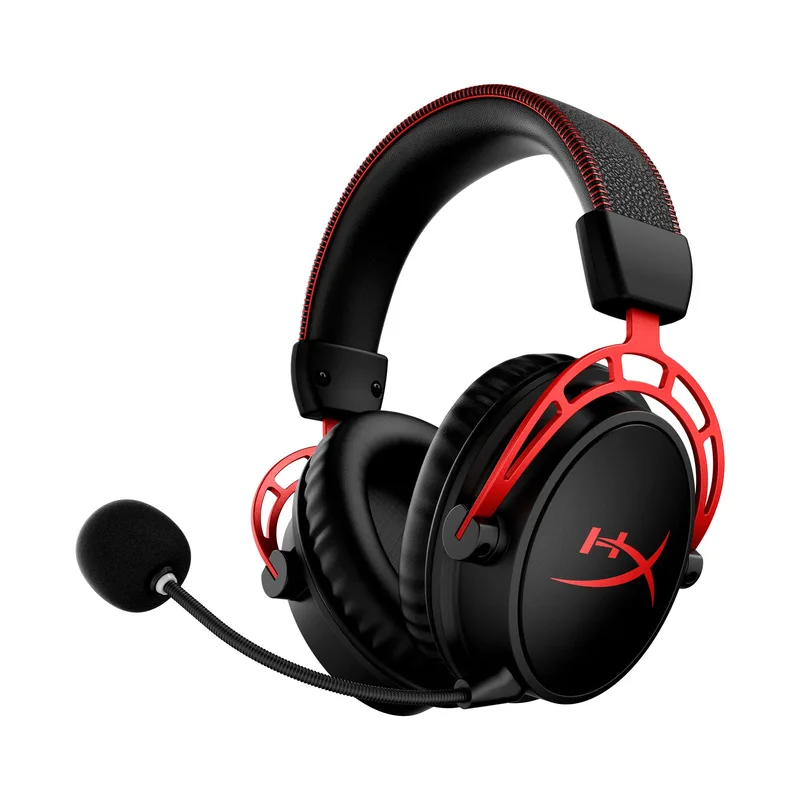
The HyperX Cloud Alpha Wireless has one feature that stands alone in this category: a 300-hour rated battery life. That’s not a typo. The dual-chamber driver design runs at low power, the 2.4GHz dongle is efficient, and HyperX stripped the spec list of anything that would drain the cell faster. No ANC, no RGB, no multi-device wireless — just audio and endurance.
The dual-chamber driver is the sound engineering story. HyperX separates the bass chamber from the midrange/high chamber within the same 50mm driver housing, allowing each frequency range to be tuned independently. The result is less bass bleed into mids compared to single-chamber designs — voices and footsteps stay distinct even with heavy bass content in the soundtrack.
Build quality over-delivers at $159. The aluminum frame survives drops without flex, the memory foam cushions are genuine foam (not cheap vinyl over foam), and the leatherette breathes reasonably for a closed-back design. This is the headset you buy, forget to charge for three weeks, and it still has battery.
The limitations are real: 2.4GHz only means no Bluetooth for phone calls, no Xbox support without an adapter, and HyperX Ngenuity EQ software only runs on Windows. If you’re a PC gamer who doesn’t need cross-device switching, none of these are dealbreakers.
Who should buy it: Budget-conscious PC or PS5 gamers who want premium build quality, good audio, and zero battery anxiety. The best value wireless headset at $159.
FAQ
Do I need ANC in a gaming headset?
ANC is useful if you game in noisy environments — home offices with loud fans, open-plan spaces, or anywhere with persistent background noise. If you game in a quiet room with closed-back earcups providing passive isolation, ANC adds marginal benefit. Of the five headsets here, only the SteelSeries Arctis Nova Pro Wireless includes hybrid ANC.
What’s the difference between 2.4GHz and LIGHTSPEED wireless?
LIGHTSPEED is Logitech’s branded 2.4GHz implementation, typically operating in the 5.8GHz sub-band with a reported 1ms wireless latency. Standard 2.4GHz gaming headsets (Razer’s HyperSpeed, SteelSeries’ 2.4GHz) report 4–8ms latency. In practice, neither figure is perceptible in gameplay — both are far below the 20ms threshold where human perception detects audio lag.
Is the Audeze Maxwell worth $300 over the HyperX Cloud Alpha at $159?
For competitive multiplayer: no. The HyperX’s dual-chamber drivers are accurate enough for footstep cuing, and the $140 savings buy a better GPU upgrade. For single-player games, music, and movies where soundstage and tonal accuracy matter, the Maxwell’s planar drivers are audibly superior.
How long does a wireless gaming headset actually last before the battery degrades?
Lithium-ion cells in gaming headsets typically retain 80% capacity after 500 charge cycles. At 50 hours per cycle (BlackShark V2 Pro), that’s 25,000 hours of use before noticeable degradation — roughly 10 years of daily 7-hour sessions. The HyperX’s 300-hour cycle means even fewer charge events per year, making it the best long-term battery story here.
Can I use any of these on Nintendo Switch 2?
All five work on Switch 2 in handheld or docked mode via their respective USB dongles. The Switch 2 added USB-C audio support, so check whether your headset ships with a USB-C dongle or requires an adapter. The Razer BlackShark V2 Pro explicitly lists Switch 2 compatibility on its Amazon page.
The Bottom Line
For most PC and PS5 gamers, the SteelSeries Arctis Nova Pro Wireless is the correct buy — its hot-swap battery system, hybrid ANC, and multi-device wireless are features you’ll use every session. If audio quality is the priority and weight is tolerable, the Audeze Maxwell delivers planar magnetic drivers at a price that previously required spending $500+. On a tighter budget, the HyperX Cloud Alpha Wireless at $159 offers the best battery life in the category and a build quality that punches well above its price.