Disclosure: PCBuildRanked earns from qualifying Amazon purchases.
DDR5 prices in 2026 have become a serious planning factor for PC builders. A 32GB DDR5-6000 kit that sat around $95 in mid-2025 now regularly sells for $300-450 — a 300-400% increase driven by AI server memory demand eating into consumer DRAM supply, compounded by tariff pressure on imported components. DDR4 hasn’t been spared either: kits that were $60-70 a year ago now run $150-200. That price shock makes the DDR4 vs DDR5 question more complicated than it seemed in 2025, and for budget-constrained builders on Intel LGA1700, DDR4 is genuinely back in the conversation.
This guide breaks down which generation makes sense based on your platform, budget, and what you’re actually building.
| Spec | G.Skill Trident Z5 Neo RGB DDR5-6000 CL30 32GB Unavailable 9.2/10 | Corsair Vengeance DDR5-6000 CL28 32GB Unavailable 9/10 | Kingston FURY Beast DDR5-5200 CL36 32GB Unavailable 8.3/10 | G.Skill Ripjaws V DDR4-3600 CL16 32GB Unavailable 8.8/10 | Corsair Vengeance LPX DDR4-3200 CL16 32GB 8/10 |
|---|---|---|---|---|---|
| type | DDR5 | DDR5 | DDR5 | DDR4 | DDR4 |
| speed | DDR5-6000 (PC5-48000) | DDR5-6000 (PC5-48000) | DDR5-5200 (PC5-41600) | DDR4-3600 (PC4-28800) | DDR4-3200 (PC4-25600) |
| capacity | 32GB (2x16GB) | 32GB (2x16GB) | 32GB (2x16GB) | 32GB (2x16GB) | 32GB (2x16GB) |
| timings | CL30-38-38-96 | CL28-36-36-96 | CL36-38-38-80 | CL16-19-19-39 | CL16-20-20-38 |
| voltage | 1.35V | 1.40V | 1.25V | 1.35V | 1.35V |
| profile | AMD EXPO + Intel XMP 3.0 | AMD EXPO + Intel XMP 3.0 | AMD EXPO | Intel XMP 2.0 | Intel XMP 2.0 |
| Rating | 9.2/10 | 9/10 | 8.3/10 | 8.8/10 | 8/10 |
Prices change daily — tap Check Price for the current Amazon price.
Prices change daily — tap Check Price for the current Amazon price.
RAM at a Glance
| Kit | Type | Speed | Timings | Capacity | Approx. Price |
|---|---|---|---|---|---|
| G.Skill Trident Z5 Neo | DDR5 | 6000 MT/s | CL30 | 32GB | $299-$399 |
| Corsair Vengeance DDR5 | DDR5 | 6000 MT/s | CL28 | 32GB | $279-$369 |
| Kingston FURY Beast | DDR5 | 5200 MT/s | CL36 | 32GB | $179-$229 |
| G.Skill Ripjaws V | DDR4 | 3600 MT/s | CL16 | 32GB | $149-$179 |
| Corsair Vengeance LPX | DDR4 | 3200 MT/s | CL16 | 32GB | $119-$149 |
Prices as of April 2026 — DDR5 and DDR4 pricing is highly volatile due to AI-driven DRAM demand and tariff pressure. Check current listings before buying.
Platform Compatibility: The Most Important Factor
Before speed tiers or timings matter at all, your platform determines which generation you can even use.
DDR5-only platforms (no DDR4 option):
- AMD AM5 — Ryzen 7000 and Ryzen 9000 series require DDR5
- Intel LGA1851 — Core Ultra 200 series (Arrow Lake) requires DDR5
Platforms supporting both DDR4 and DDR5 (via separate board SKUs):
- Intel LGA1700 — 12th gen Alder Lake, 13th gen Raptor Lake, 14th gen Raptor Lake Refresh
- Your motherboard SKU determines which you get — DDR4 and DDR5 boards are not interchangeable
If you’re on AM5 or planning a Core Ultra 200 build, stop here — DDR5 is your only option. If you’re on Intel LGA1700, DDR4 remains fully viable. At current April 2026 prices, DDR4 32GB still runs roughly $100-250 less than comparable DDR5 kits — a meaningful savings even after both generations have surged from 2025 lows.
Why These Picks
G.Skill Trident Z5 Neo DDR5-6000 CL30 hits AMD’s documented Infinity Fabric sweet spot. Ryzen 7000 and 9000 CPUs perform best when memory and fabric clocks synchronize at 3000 MHz (memory speed / 2), and DDR5-6000 achieves that exactly. Going faster than 6000 MT/s on AM5 requires running the fabric in asynchronous mode, which adds latency and partially offsets the raw bandwidth gain.
Corsair Vengeance DDR5-6000 CL28 targets Intel LGA1700 users who want DDR5 without switching platforms. The CL28 timings are tighter than most DDR5-6000 kits, which matters more on Intel’s memory controller than AMD’s at similar speeds.
Kingston FURY Beast DDR5-5200 is the entry DDR5 option for anyone who needs a DDR5-only platform but wants to keep memory costs under $230. DDR5-5200 still clears what DDR4-3600 delivers in bandwidth, though the gap is narrower than marketing implies.
G.Skill Ripjaws V DDR4-3600 CL16 is the best DDR4 kit for Intel LGA1700 builders who want the most speed their platform supports efficiently. DDR4-3600 is the XMP sweet spot for Intel 12th/13th gen — latency and bandwidth both improve meaningfully over DDR4-3200.
Corsair Vengeance LPX DDR4-3200 CL16 covers budget Intel builds. The real-world gaming delta between DDR4-3200 CL16 and DDR4-3600 CL16 is small enough (1-2% in most titles) that the extra $30 only makes sense if you’re pushing a competitive 1080p rig.
RAM Deep Dives
G.Skill Trident Z5 Neo RGB DDR5-6000 CL30 32GB
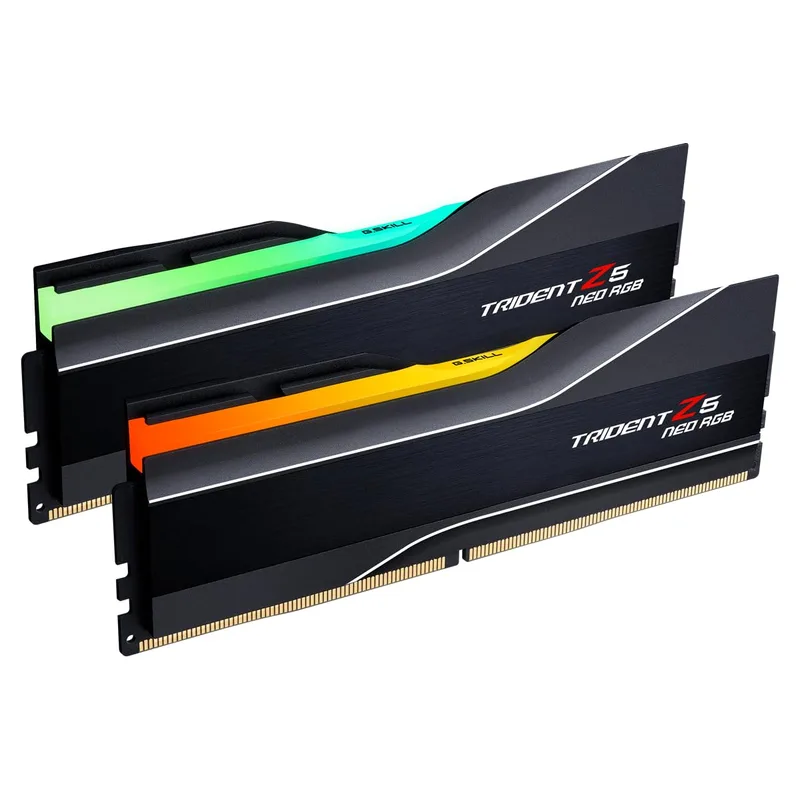
G.Skill Trident Z5 Neo RGB DDR5-6000 CL30 32GB
The G.Skill Trident Z5 Neo RGB DDR5-6000 CL30 is the standard recommendation for AM5 builds. DDR5-6000 with CL30 timings runs in synchronous mode with Ryzen’s Infinity Fabric — the memory controller, fabric clock, and DRAM all operate at 3000 MHz, eliminating the latency penalty that faster DDR5 speeds introduce on AMD platforms.
G.Skill uses Samsung or SK Hynix A-die on this kit depending on production batch, both of which have strong overclocking headroom for tightening timings beyond CL30. The matte black heatspreader keeps the profile at 44mm tall, clearing most tower coolers, and the RGB zone is subtle enough to not overwhelm smaller cases.
The market context in April 2026 is difficult. This kit sat around $95 in mid-2025. By early 2026 prices had climbed past $170, and as of April 2026 market pricing sits in the $299-399 range at major retailers — driven by AI server DRAM demand and component tariffs. For AM5 builds there’s no DDR4 alternative, so this is still the right choice. Set up a CamelCamelCamel price alert rather than paying peak rates.
Corsair Vengeance DDR5-6000 CL28 32GB
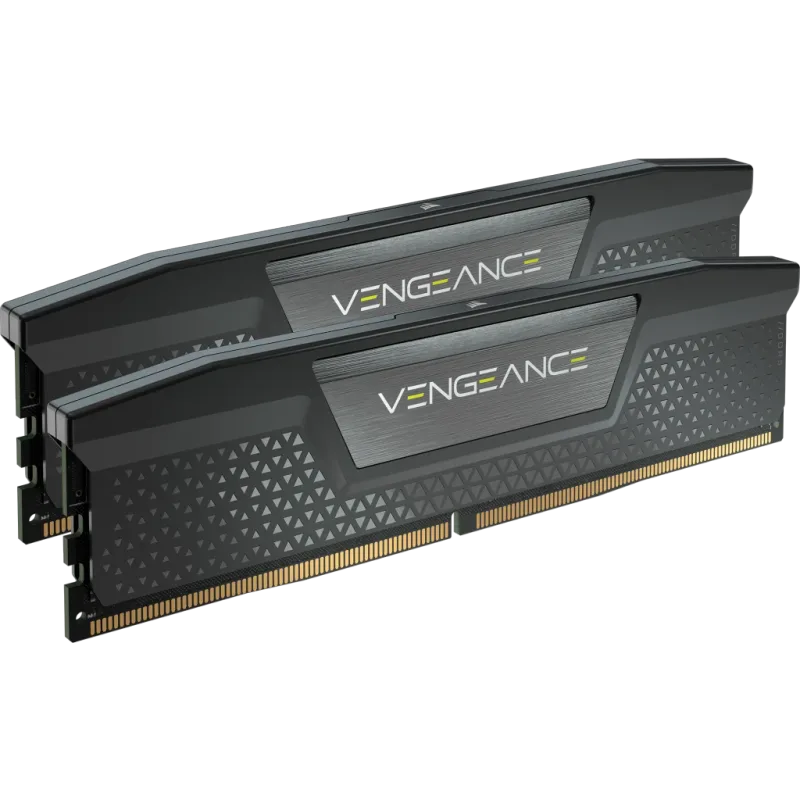
Corsair Vengeance DDR5-6000 CL28 32GB
The Corsair Vengeance DDR5-6000 CL28 offers tighter primary timings than most DDR5-6000 kits. CL28 vs CL30 reduces access latency from roughly 10 ns to 9.3 ns at 6000 MT/s — a measurable improvement in latency-sensitive workloads, though the gaming impact typically rounds to 1-2%.
This kit runs at 1.40V, slightly above the G.Skill’s 1.35V, which is how Corsair achieves tighter timings without a higher-binned DRAM die. The dual AMD EXPO and Intel XMP 3.0 profiles work reliably on both platforms — enable the profile in BIOS and you’re done.
If you’re building on Intel LGA1700 or Core Ultra 200 and already have Corsair peripherals using iCUE, the ecosystem integration is a genuine convenience. If you’re not in the Corsair ecosystem, the G.Skill Z5 Neo is comparable at similar pricing.
Kingston FURY Beast DDR5-5200 CL36 32GB
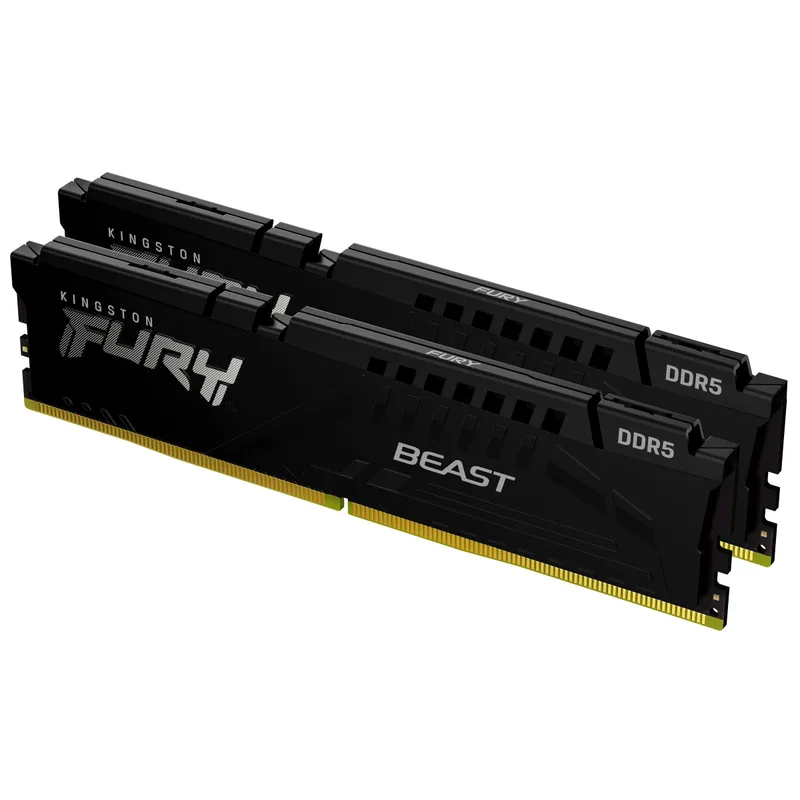
Kingston FURY Beast DDR5-5200 CL36 32GB
The Kingston FURY Beast DDR5-5200 CL36 is the most affordable DDR5 kit in this roundup at $179-229, making it relevant for any DDR5-platform build where memory budget is constrained.
At DDR5-5200, bandwidth is approximately 41,600 MB/s theoretical, compared to 48,000 MB/s for DDR5-6000. That gap matters in tasks like video encoding, large dataset processing, and AI inference where memory bandwidth is the limiting factor. In gaming, the difference between DDR5-5200 and DDR5-6000 narrows considerably — typically 3-5% at 1080p and under 1% at 1440p.
One compatibility note: this EXPO-only SKU (KF552C36BBEK2-32) does not include an Intel XMP profile. It boots on Intel platforms at JEDEC defaults (DDR5-4800), but you won’t get advertised DDR5-5200 speed without the Intel-tuned variant. Verify the SKU before buying if you’re on an Intel board.
G.Skill Ripjaws V DDR4-3600 CL16 32GB
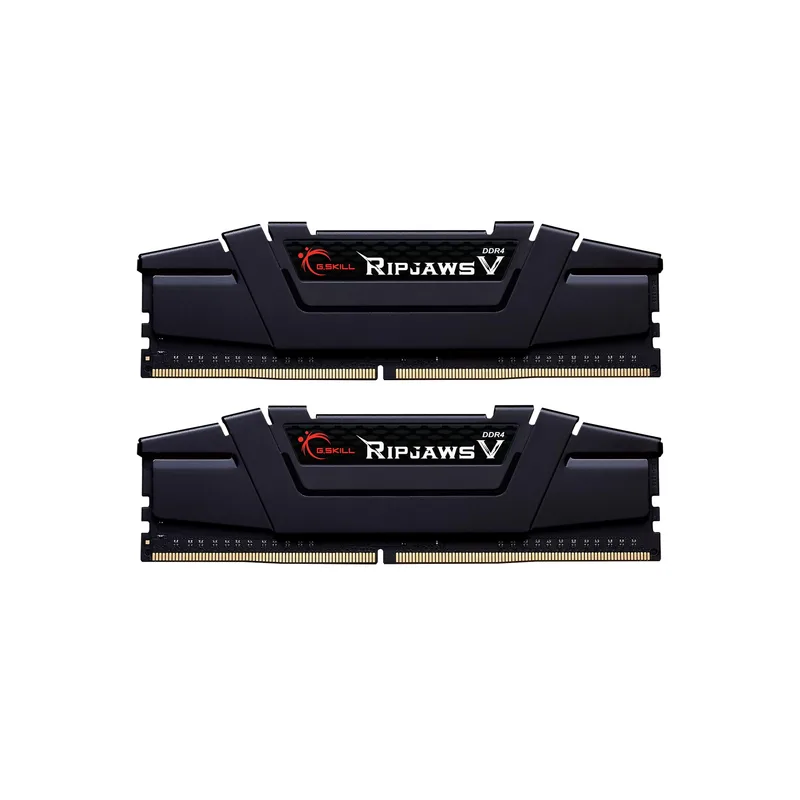
G.Skill Ripjaws V DDR4-3600 CL16 32GB
The G.Skill Ripjaws V DDR4-3600 CL16 is the right DDR4 kit for anyone building on Intel LGA1700. DDR4-3600 CL16 achieves 57,600 MB/s theoretical bandwidth and 8.9 ns true latency — tighter than DDR4-3200 CL16’s 10 ns and meaningfully better than the DDR4-3200 CL18 kits bundled into many prebuilt systems.
Even at April 2026 inflated prices (~$149-179), this kit costs roughly $120-220 less than DDR5-6000 options. That savings still funds a faster NVMe drive, additional storage, or better CPU cooling — all of which produce larger real-world improvements than the DDR5 bandwidth advantage at 1440p gaming. The RAM pricing crisis has compressed the DDR4 vs DDR5 cost gap from 2025 levels, but DDR4 maintains a meaningful discount.
The trade-off is future-proofing. DDR4 is a dead end: upgrading to AM5 or an Arrow Lake board means replacing both RAM and motherboard. If you’re planning to stay on LGA1700 for 2-3 more years, that’s a non-issue. If you’re likely to upgrade platforms within 18 months, DDR5 makes more financial sense despite the premium.
Corsair Vengeance LPX DDR4-3200 CL16 32GB
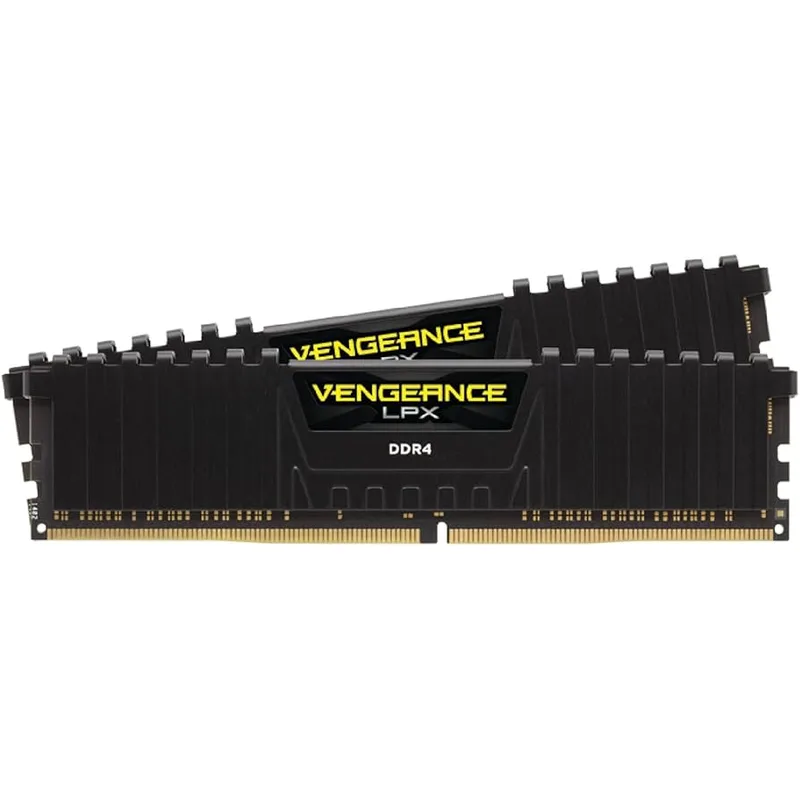
The Corsair Vengeance LPX DDR4-3200 CL16 is the budget DDR4 option for Intel builds — the lowest-priced 32GB kit in this roundup at $119-149, with a low-profile heatspreader and compatibility across every LGA1700 board made.
DDR4-3200 CL16 achieves 10 ns true latency and 51,200 MB/s theoretical bandwidth. Compared to DDR4-3600 CL16, the bandwidth gap is roughly 10% and the gaming impact is typically 1-2% at 1080p in CPU-limited scenarios. For the majority of gaming builds running at 1440p or 4K, the difference is within benchmark noise.
The 31mm low-profile design is a practical advantage in small form factor cases where tall RGB heatspreaders compete with tower cooler clearance. If your build uses a compact Micro-ATX or Mini-ITX case, the Vengeance LPX’s dimensions matter more than its timings.
Which Should You Buy?
The decision tree in April 2026 is straightforward, though the pricing context has changed significantly from early 2025:
You must use DDR5 if: You’re building on AMD AM5 (Ryzen 7000/9000) or Intel LGA1851 (Core Ultra 200). No exceptions — these platforms are DDR5-only.
DDR5 is worth the premium if: You’re on Intel LGA1700, you’re keeping this build for 4+ years, and the current DDR5 premium ($120-250 over DDR4) represents less than 15% of your total build budget.
DDR4 is the smarter choice if: You’re on Intel LGA1700 with a total build budget under $1,500, you plan to upgrade the platform within 2 years anyway, or you’re dropping in existing DDR4 from a previous system.
Don’t pay peak prices if you can wait. DDR5 and DDR4 pricing in 2026 is historically elevated — a structural shortage driven by AI server memory demand consuming DRAM fab capacity. Industry analysts expect meaningful consumer price relief no earlier than H2 2026 as new fab capacity comes online. Use CamelCamelCamel price alerts rather than paying peak listings.
Performance Expectations
Gaming performance differences between DDR4 and DDR5 are real but modest at typical resolutions:
| Scenario | DDR4-3600 CL16 | DDR5-5200 CL36 | DDR5-6000 CL30 |
|---|---|---|---|
| 1080p CPU-limited gaming | Baseline | +4-6% avg FPS | +6-9% avg FPS |
| 1440p gaming (GPU-limited) | Baseline | +0-2% avg FPS | +1-3% avg FPS |
| 4K gaming | Baseline | under 1% difference | under 1% difference |
| Video encoding (Handbrake) | Baseline | +8-12% | +12-16% |
| Large file compression (7-Zip) | Baseline | +6-10% | +10-14% |
Note: Intel LGA1700 figures. AMD AM5 comparisons aren’t applicable since the platform is DDR5-only.
DDR5 advantages are most visible at 1080p in CPU-limited gaming and in bandwidth-heavy productivity workloads. At 1440p and 4K, GPU throughput is the bottleneck and RAM generation contributes essentially nothing to frame rates.
Upgrade Path
If you’re on DDR4 (Intel LGA1700): Your upgrade order should be GPU → CPU → full platform refresh. When you upgrade to AM5 or a future DDR5-only Intel platform, you’ll replace both the motherboard and RAM simultaneously. At April 2026 pricing, a DDR5-ready AM5 platform (board + 32GB DDR5-6000 RAM) costs roughly $550-700 vs. an equivalent LGA1700 DDR4 build at $380-480. That gap is larger than it was a year ago — factor it into platform timing.
If you’re already on DDR5: Don’t upgrade within the same platform. The performance ceiling on DDR5-6000 CL30 for gaming is effectively reached — moving to DDR5-8000 delivers sub-2% gaming gains that are invisible in practice. Spend upgrade budget on GPU VRAM or faster NVMe storage instead.
On 64GB vs 32GB: 32GB covers most gaming and standard productivity workloads through 2027. The only cases where 64GB matters today are video editing with 4K or higher footage, 3D rendering with large scene files, and running multiple virtual machines. Gaming alone doesn’t require 64GB yet — and with 64GB DDR5 kits running $600-800 at April 2026 prices, waiting makes sense for most builders.
FAQ
Does DDR5 require a new motherboard?
Yes. DDR4 and DDR5 use different physical slots — same 288-pin count, but the notch position differs. You cannot install DDR5 in a DDR4 slot or vice versa. If your board doesn’t specify DDR5 support, you need a new motherboard.
Is DDR5-6000 actually faster than DDR5-4800 in games?
In CPU-limited scenarios at 1080p, DDR5-6000 CL30 outperforms DDR5-4800 (JEDEC default) by roughly 8-12% in CPU-dependent games like strategy titles, simulators, and open-world games. In GPU-limited 1440p/4K gaming, the gap closes to 1-3% or less.
Does RAM speed matter more on AMD vs Intel?
AMD Ryzen 7000/9000 (AM5) is more sensitive to memory speed than Intel because the CPU’s Infinity Fabric interconnect runs at half the memory frequency. Running DDR5-6000 instead of DDR5-4800 on AM5 also increases the fabric clock from 2400 MHz to 3000 MHz, improving latency for inter-core communication. Intel’s memory controller is less directly coupled, so the gains from faster DDR5 are real but smaller.
Will DDR5 prices come down in 2026?
Industry analysts expect DDR5 supply tightness to persist through most of 2026, with AI and HBM production consuming significant DRAM fab capacity. Meaningful consumer price relief is more likely in H2 2026 or early 2027 as new fab capacity comes online. April 2026 prices are near the peak of the current cycle based on analyst projections — but “near the peak” doesn’t mean a rapid decline is imminent.
Can I mix DDR4 and DDR5 in the same system?
No. RAM generation is determined entirely by your motherboard’s slot design. You install either DDR4 or DDR5 depending on which your board supports — mixing generations in the same system is not possible.
Is it worth waiting to build until DDR5 prices drop?
If your current system is functional, waiting until H2 2026 is reasonable — analysts project some price relief in that window. If you’re replacing a failed system or upgrading from a GPU-bottlenecked build, waiting 6+ months to save $100-150 on RAM likely isn’t worth the lost time. Build now with the best available pricing, or use existing DDR4 if your platform supports it.
The Bottom Line
For AMD AM5 or Intel Core Ultra 200 builders, the G.Skill Trident Z5 Neo RGB DDR5-6000 CL30 is the right DDR5 kit — it hits the Infinity Fabric sweet spot on AM5 and works with XMP on Intel. If you need the lowest DDR5 entry cost, the Kingston FURY Beast DDR5-5200 at $179-229 covers the platform requirement without paying full DDR5-6000 pricing. For Intel LGA1700 builders, the G.Skill Ripjaws V DDR4-3600 CL16 delivers essentially the same 1440p gaming performance for $149-179 — still $120-220 less than DDR5-6000 kits even after the DDR4 price surge. The DDR5 premium makes sense for long-term platform holders and bandwidth-heavy workloads. For budget LGA1700 builds, DDR4 remains the honest recommendation.