Disclosure: PCBuildRanked earns a commission on qualifying Amazon purchases at no extra cost to you.
GPU prices were volatile throughout early 2026 as AI wafer demand crowded out gaming GPU production. RTX 50-series AIB cards now sit $250–$1,300 above their launch MSRPs depending on the tier, while AMD’s RX 9070 XT has settled around $699 — $100 above its $599 MSRP but still the clearest value in the mid-to-high-end segment. That pricing gap makes understanding benchmark data more critical than ever: a faster GPU on paper doesn’t automatically mean the right choice for your resolution and budget. This guide covers five cards spanning every tier from $249 to $3,299+, explains what benchmark numbers actually mean, and shows you how to use that data to make the right call.
| Spec | MSI GeForce RTX 5090 32G Gaming Trio OC Unavailable 9.2/10 | NVIDIA GeForce RTX 5080 Founders Edition 8.3/10 | MSI GeForce RTX 5070 Ti 16G Gaming Trio OC Plus 8/10 | XFX Swift AMD Radeon RX 9070 XT Triple Fan 9/10 | Intel Arc B580 Limited Edition Unavailable 8.5/10 |
|---|---|---|---|---|---|
| vram | 32GB GDDR7 | 16GB GDDR7 | 16GB GDDR7 | 16GB GDDR6 | 12GB GDDR6 |
| bus | 512-bit | 256-bit | 256-bit | 256-bit | 192-bit |
| cuda_cores | 21,760 | 10,752 | 8,960 | — | — |
| boost_clock | 2,497 MHz | 2,617 MHz | 2,580 MHz | 2,970 MHz | 2,670 MHz |
| psu_requirement | 1000W | 750W | 700W | 800W | 400W |
| interface | PCIe 5.0 | PCIe 5.0 | PCIe 5.0 | PCIe 5.0 | PCIe 4.0 |
| Rating | 9.2/10 | 8.3/10 | 8/10 | 9/10 | 8.5/10 |
Prices change daily — tap Check Price for the current Amazon price.
Prices change daily — tap Check Price for the current Amazon price.
Quick Picks
- Best overall value: RX 9070 XT (~$699) — 4K-capable performance, 16GB GDDR6, available from multiple AIB partners
- Best for DLSS ecosystem: RTX 5070 Ti (~$999) — DLSS 4 MFG, 16GB GDDR7, solid 1440p/4K performance
- Budget 12GB pick: Arc B580 ($249) — best VRAM-per-dollar at this price, 1080p/144Hz capable
- No-compromise 4K: RTX 5080 (~$1,249) — 4K/120Hz comfortable, 16GB GDDR7, Founders Edition closest to sane pricing
GPU Hierarchy at a Glance
| Card | Tier | VRAM | Target Resolution | Street Price |
|---|---|---|---|---|
| RTX 5090 (MSI Trio OC) | Flagship | 32GB GDDR7 | 4K/144Hz+ | $3,299+ |
| RTX 5080 (FE) | High-End | 16GB GDDR7 | 4K/60–120Hz | $1,249+ |
| RTX 5070 Ti (MSI Trio OC Plus) | Upper Mid-Range | 16GB GDDR7 | 1440p/144Hz – 4K/60Hz | $999+ |
| RX 9070 XT (XFX Swift) | Value High-End | 16GB GDDR6 | 1440p/144Hz – 4K/60Hz | $699 |
| Arc B580 (Limited Edition) | Budget | 12GB GDDR6 | 1080p/144Hz – 1440p/60Hz | $249 |
The RX 9070 XT still stands out: it delivers 4K-capable performance at $699 while the cards above it cost $300–$2,600 more. That gap is why understanding benchmarks matters — raw tier labels hide value differences this large.
Understanding GPU Tiers
Flagship ($3,000+): The RTX 5090 is the only card in this bracket. AIB models now run $3,299–$3,500, putting it far outside reach for most builds. It’s 30–69% faster than the RTX 5080 at 4K, which sounds enormous until you realize the price difference is now over $2,000. Makes sense only if you’re running a 4K/240Hz panel or doing heavy GPU-accelerated content creation work.
High-End ($1,100–$1,500): The RTX 5080 targets 4K gaming at high refresh rates. The 14.7–17.5% performance edge over the RTX 5070 Ti shrinks further at 1440p. At ~$1,249 for the Founders Edition it’s more accessible than it was at launch, but still $250 above its $999 MSRP. If you’re not on a 4K display, that extra $250 over the 5070 Ti rarely shows up in your frame times.
Upper Mid-Range ($800–$1,100): The RTX 5070 Ti and RX 9070 XT both occupy this tier. Both handle 1440p/144Hz with no compromises and 4K at consistent 60 FPS. The RTX 5070 Ti costs $300 more than the RX 9070 XT for 8–16% more rasterization performance — GamersNexus noted this poor value ratio when the 5070 Ti launched, and it hasn’t improved since.
Budget ($200–$400): The Arc B580 at $249 delivers 1080p high-refresh and capable 1440p gaming with 12GB GDDR6. No other GPU at this price offers anywhere near that VRAM capacity.
Card-by-Card Analysis
RTX 5090 — Flagship
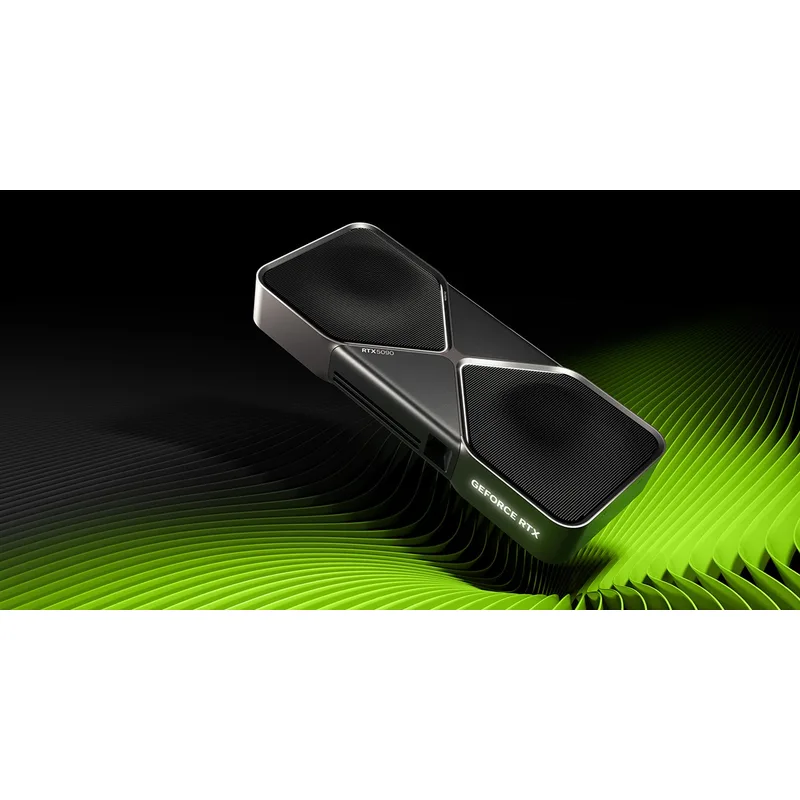
MSI GeForce RTX 5090 32G Gaming Trio OC
The RTX 5090 uses NVIDIA’s Blackwell architecture with 21,760 CUDA cores and 32GB GDDR7 on a 512-bit bus. At 4K Ultra with ray tracing maxed, it averages 57% more frames than the RTX 5080 in GPU-limited scenarios. At 1440p that gap collapses to roughly 17% because the CPU becomes the bottleneck in well-optimized titles — for help diagnosing and resolving this, see our GPU bottleneck guide.
The 32GB frame buffer is overkill for current games. Where it matters: GPU-accelerated rendering in DaVinci Resolve, Stable Diffusion, and AI-assisted video encoding can saturate 16GB quickly. If your workload is purely gaming, the extra VRAM doesn’t translate to higher frame rates today.
AIB street prices have surged to $3,299–$3,500 as of May 2026, putting the MSI Gaming Trio OC at over $1,300 above MSRP. Plan for a $150+ Corsair or Seasonic 1000W 80+ Gold PSU to pair with this card. At these prices, only consider it if you own a 4K/144Hz+ display and budget is genuinely not a constraint.
RTX 5080 — High-End
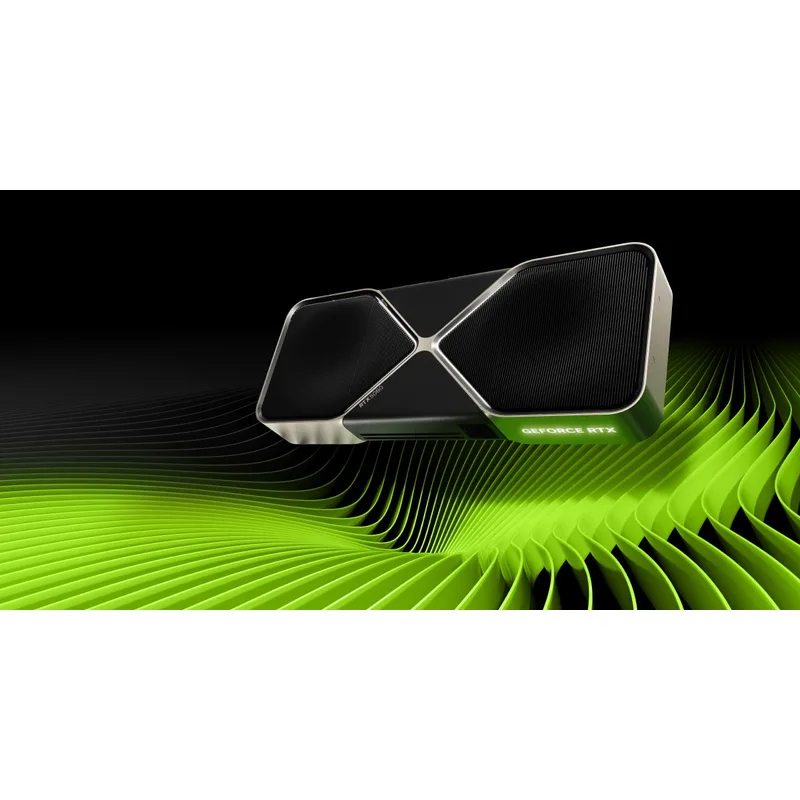
With 10,752 CUDA cores and 16GB GDDR7, the RTX 5080 is the second-fastest gaming GPU available. The 256-bit memory bus delivers 960 GB/s of bandwidth — enough for 4K textures without compression artifacts.
The Founders Edition uses a dual-slot cooler that runs quiet under sustained load. DLSS 4 with Multi Frame Generation is the headline feature: in supported titles like Cyberpunk 2077 and Alan Wake 2, it can double rendered frame rates with minimal visual artifacts at 4K. The FE is consistently the most available RTX 5080 variant and closest to reasonable pricing at around $1,249.
The value question comes down to your display. At $1,249 vs. the RTX 5070 Ti at $999, you’re paying $250 for a 14.7–17.5% advantage at 4K — and that delta shrinks at 1440p. Right call if you have a 4K/120Hz or faster panel; harder to justify on a 1440p monitor.
RTX 5070 Ti — Upper Mid-Range
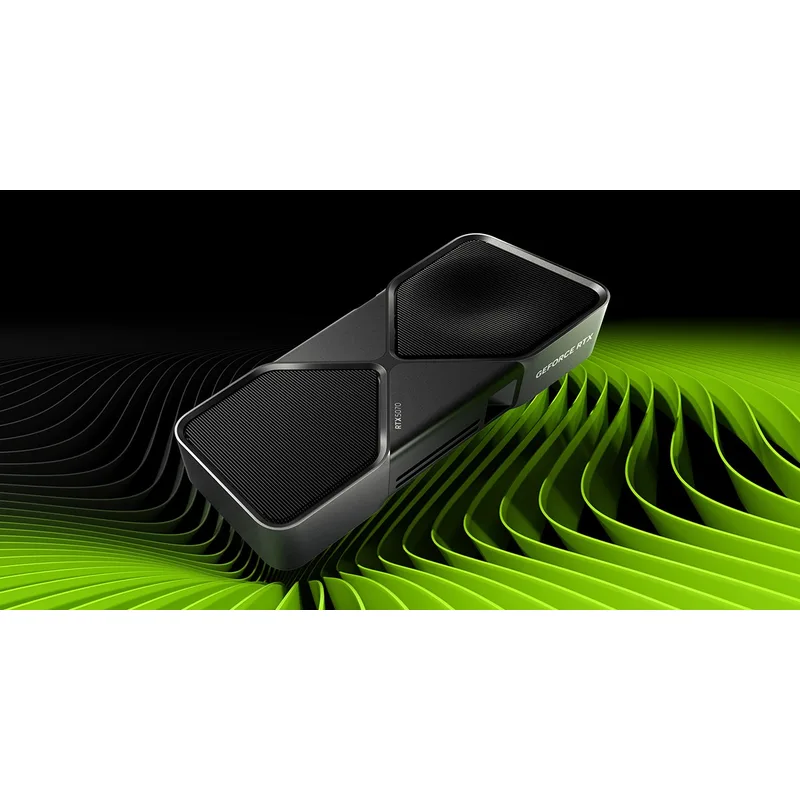
The RTX 5070 Ti’s 8,960 CUDA cores and 16GB GDDR7 place it in an awkward value spot. It’s faster than the RX 9070 XT in every benchmark, but only by 8–16% in rasterization while costing $300 more at current street prices. The MSI Gaming Trio OC Plus runs at a boosted 2,580 MHz versus the reference 2,497 MHz, with the TRI FROZR 4 cooling solution keeping thermals well managed under load.
Where the RTX 5070 Ti earns its premium: DLSS 4 Multi Frame Generation, NVIDIA Broadcast for streaming, and Reflex for competitive titles are features the RX 9070 XT can’t replicate. If you’re already in the Nvidia ecosystem — G-Sync monitor, DLSS-accelerated apps, NVENC encoding — the 5070 Ti is the entry point into DLSS 4 MFG and makes sense as a long-term platform investment. For pure rasterization value, the RX 9070 XT is the better answer.
RX 9070 XT — Best Value
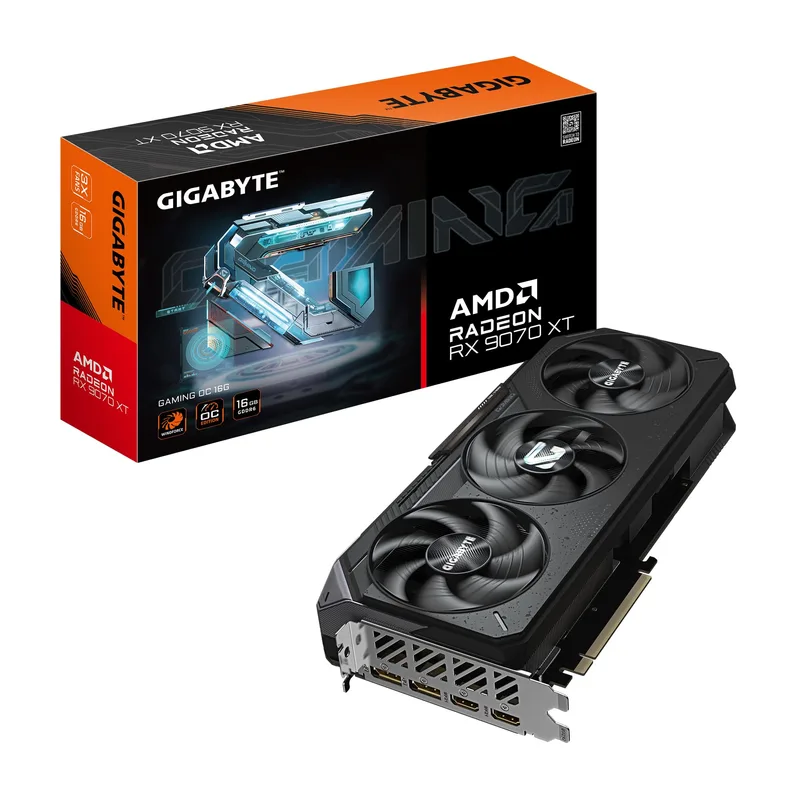
AMD’s RDNA 4 architecture in the RX 9070 XT remains the benchmark value story of 2026. It’s the cheapest GPU that consistently hits 60 FPS average at 4K Ultra settings across current titles. Launched at $599, it’s now settled at $699–$729 across multiple AIB partners as supply normalized — above the original MSRP, but significantly more accessible than any comparable Nvidia option.
The 16GB GDDR6 frame buffer is larger than what any Nvidia card under $1,000 ships with. GDDR6’s lower bandwidth compared to GDDR7 shows up in a handful of bandwidth-intensive games — typically 3–5 fps behind the RTX 5070 Ti in those edge cases — but it’s not a consistent disadvantage across most titles.
AMD’s FSR 4 upscaling is competitive with DLSS at quality presets. The ecosystem is narrower, but for pure rasterization gaming at 1440p or 4K/60Hz, the $300 savings over the RTX 5070 Ti is hard to argue against unless you specifically need DLSS features.
Intel Arc B580 — Budget Pick
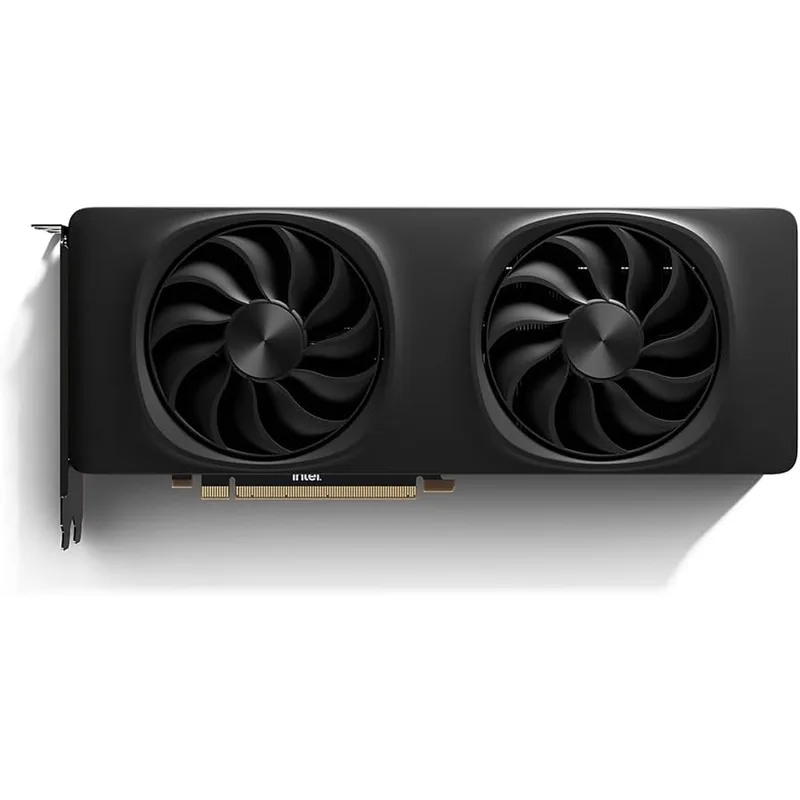
Intel Arc B580 Limited Edition
The Arc B580 uses Intel’s Xe2 (Battlemage) architecture with 12GB GDDR6 on a 192-bit bus. At $249 it’s the cheapest way to get 12GB of VRAM — more than the RTX 4060 at twice its price, and relevant for 1440p texture packs and heavily modded games that push past 8GB.
At 1080p/144Hz it matches or beats the RTX 4060 in most titles. At 1440p it’s playable at medium-to-high settings. Ray tracing is a clear weak point — the B580 trails the RX 9070 XT by 40–50% in ray-traced workloads.
Driver quality has improved significantly since Arc’s launch. The B580 is stable across major titles as of 2026 drivers. Edge-case compatibility issues still surface occasionally, but they’re no longer the weekly occurrence they were in 2023. Requires a PCIe 4.0 x16 slot and a 400W PSU — the lowest power bar of any GPU in this guide.
How to Read Benchmark Charts
1440p vs. 4K results tell different stories. The RTX 5090 leads the RTX 5080 by roughly 17% at 1440p but by 30–69% at 4K depending on the title. If your monitor is 1440p, use 1440p benchmark numbers — don’t let 4K marketing claims drive your purchase.
Average FPS vs. 1% low. Average frame rate tells you throughput; 1% low tells you smoothness. A card averaging 90 FPS with a 1% low of 42 FPS will feel stuttery. Look for 1% lows above 60 FPS for a consistently smooth experience. Sites like GamersNexus and Hardware Unboxed publish both metrics — prioritize outlets that include them.
Synthetic vs. in-game benchmarks. 3DMark Time Spy and Port Royal are useful for quick comparisons but don’t always reflect real-game performance. A GPU that scores 15% higher in Time Spy may lead by 8% in actual games. Use synthetic scores for rough ranking only; rely on game-specific data for final decisions.
Ray tracing benchmarks are separate. A GPU’s rasterization rank and ray tracing rank can differ by multiple positions. The RX 9070 XT and RTX 5070 Ti are close in rasterization; the RTX 5070 Ti pulls ahead by 20–30% in ray-traced titles due to NVIDIA’s hardware RT pipeline. If you play ray-traced games heavily, weight those results accordingly.
Check driver recency. AMD and Intel release frequent driver updates that materially change benchmark results. A review from six months ago may not reflect current performance. Always check the review date and driver version before trusting a benchmark table.
Watch for VRAM headroom. Some benchmark sites report VRAM usage that looks lower than it actually is due to driver-level compression. At 1440p Ultra in texture-heavy titles, 8GB cards hit their limits — 12GB is safe through 2026, 16GB is future-proof at 1440p.
Performance by Resolution
Expected average FPS in demanding titles (Cyberpunk 2077, Alan Wake 2, Black Myth: Wukong) at Ultra settings, rasterization only:
| Card | 1080p | 1440p | 4K |
|---|---|---|---|
| RTX 5090 | 165+ FPS | 140+ FPS | 95–115 FPS |
| RTX 5080 | 155 FPS | 120 FPS | 70–85 FPS |
| RTX 5070 Ti | 145 FPS | 105 FPS | 60–72 FPS |
| RX 9070 XT | 140 FPS | 98 FPS | 58–68 FPS |
| Arc B580 | 100 FPS | 65 FPS | 38–45 FPS |
These are rasterization numbers. Add DLSS 4 MFG to the RTX cards or FSR 4 to the RX 9070 XT and numbers at 4K roughly double in supported titles.
When to Upgrade
Upgrading from an RTX 3080 or RX 6800 XT: The RTX 5070 Ti and RX 9070 XT represent 60–80% more raw performance. At $699, the RX 9070 XT is the clearest upgrade path for 1440p gaming. If you’re moving to 4K and have budget, the RTX 5080 at $1,249 gives a more comfortable ceiling.
Upgrading from an RTX 4070 or RX 7800 XT: The RX 9070 XT is about 30% faster at 1440p and meaningfully faster at 4K. The Arc B580 is not an upgrade from these cards — it’s slower in most scenarios. The RTX 5070 Ti makes sense if you’re already in the Nvidia ecosystem and want to stay there.
Upgrading from an RTX 4090 or RX 7900 XTX: The RTX 5080 is roughly on par with the RTX 4090 at 1440p; the RTX 5090 is the only clear step up. Used RTX 4090 cards at $1,000–$1,200 remain competitive with the RTX 5080 at $1,249 — a legitimate alternative if you’re comfortable buying used.
Wait or buy now (May 2026): RX 9070 XT cards are the most available option at predictable pricing ($699–$729). RTX 50-series AIB models carry large premiums — the RTX 5080 FE is the most reasonably priced Nvidia option at $1,249. RTX 5090 pricing at $3,299+ is unlikely to drop significantly until NVIDIA’s next generation applies pressure. If you’re targeting the RX 9070 XT tier, now is a reasonable time to buy. For RTX 5080 or higher, watching supply and pricing through Q3 2026 may save meaningful money.
FAQ
What GPU benchmark sites are most reliable?
GamersNexus and Hardware Unboxed publish the most thorough GPU reviews with 1% low data, thermal testing, and noise measurements. Tom’s Hardware’s GPU hierarchy is useful for a quick relative ranking. Avoid sites that publish only average FPS without 1% lows — they’re hiding stutter data.
Does VRAM size actually matter at 1440p?
For current games at 1440p Ultra, 8GB cards hit their limits in texture-heavy titles like Hogwarts Legacy and Starfield with mods. 12GB gives you safe headroom through 2026; 16GB is future-proof at 1440p. VRAM compression tricks benchmark results — some cards show lower usage than they’re actually accessing.
Is the RX 9070 XT worth it over the RTX 5070 Ti in 2026?
For rasterization gaming at 1440p or 4K/60Hz, yes — it’s 8–16% slower for $300 less at current street prices. If you rely on DLSS-specific features (Reflex, Broadcast, Multi Frame Generation), the RTX 5070 Ti has value beyond raw frame rates. For most gamers, the RX 9070 XT is the smarter spend.
What PSU do I need for each card?
Arc B580: 400W. RTX 5070 Ti: 700W. RTX 5080: 750W. RX 9070 XT: 800W. RTX 5090: 1000W. Always buy name-brand units (Corsair, Seasonic, be quiet!) with 80+ Gold certification or better.
Are older GPU generations worth buying in 2026?
The RTX 4090 remains faster than the RTX 5080 at 4K in most games. Used RTX 4090 cards at $1,000–$1,200 are legitimate alternatives to the RTX 5080 at $1,249 if you’re comfortable buying used. The RTX 4080 Super at used prices competes with the RTX 5070 Ti.
How do AMD FSR 4 and NVIDIA DLSS 4 compare?
At native resolution both AMD and Nvidia cards compete purely on rasterization performance. With upscaling at Quality preset, DLSS 4 generally produces slightly sharper output in head-to-head comparisons; FSR 4 is much improved over FSR 3 and is competitive. The key difference is Multi Frame Generation — DLSS 4 MFG generates up to three extra frames per rendered frame. FSR 4 does not currently support this. If MFG matters to you, that’s an Nvidia-only feature today.
The Bottom Line
The RX 9070 XT at ~$699 is still the benchmark value story of 2026 — 4K/60Hz capable, 16GB GDDR6, and available from multiple AIB partners without the extreme premiums hitting Nvidia cards. The Arc B580 at $249 is the correct budget pick if you need 12GB VRAM with a low power draw. The RTX 5080 FE at ~$1,249 is the most sensible Nvidia option for buyers who need DLSS 4 at 4K without paying RTX 5090 money. The RTX 5090 is only justified at $3,299+ if you own a 4K/144Hz+ display and have the PSU and airflow to support it. For everything in between, pull 1440p numbers from GamersNexus or Hardware Unboxed and weigh the RX 9070 XT’s $300 price advantage seriously before defaulting to Nvidia’s premium tier.