Intel just reshuffled the mid-range CPU market on March 26, 2026, launching the Core Ultra 200S Plus series — the Ultra 7 270K Plus at $299 and the Ultra 5 250K Plus at $199 — with DDR5-7200 support and a new Binary Optimization Tool designed to claw back gaming ground from AMD. Meanwhile, AMD is quietly working on Ryzen refresh chips with boosted clocks and doubled TDPs to compete. The CPU war is moving fast, but the current generation already tells a clear story: AMD owns gaming, Intel owns multi-threaded workloads, and the right pick depends entirely on what you’re building.
Quick Picks
- Best gaming CPU (any price): AMD Ryzen 7 9800X3D — 96MB 3D V-Cache eliminates CPU bottlenecks that Intel can’t touch
- Best for productivity and content creation: Intel Core Ultra 9 285K — 24 cores at $449 handle rendering workloads that 8-core AMD chips can’t match
- Best budget buy: AMD Ryzen 5 9600X — Zen 5 IPC and AM5 platform longevity at $280
AMD vs Intel in 2026: What Actually Matters
Gaming: AMD Wins — and It’s Not Close
The Ryzen 7 9800X3D’s 96MB L3 cache is the clearest performance advantage in the CPU market right now. In Baldur’s Gate 3, the 9800X3D delivers 175 FPS versus the Core Ultra 9 285K’s 117 FPS — a 49% gap in a CPU-sensitive title. In Cyberpunk 2077, the advantage narrows to 21%, and in ACC it reaches 75%. These aren’t cherry-picked outliers. Any game that stresses the CPU cache — simulators, strategy games, open-world RPGs — shows AMD pulling ahead.
Intel’s hybrid architecture (P-cores for heavy tasks, E-cores for background work) performs well in productivity but doesn’t translate to frame rates the way 3D V-Cache does. There’s no Arrow Lake chip with 3D V-Cache. For pure gaming, AMD holds the advantage at every price point.
Productivity and Content Creation: Intel Wins
Flip the workload to Blender, video encoding, or heavily-threaded compilation, and the Core Ultra 9 285K’s 24 cores dominate. Eight Zen 5 cores are efficient and fast per-core, but they can’t match 24 Arrow Lake cores in multi-threaded throughput. If you’re running DaVinci Resolve, compiling large codebases, or rendering 3D scenes daily, the 285K earns its price.
The Core Ultra 7 265K at $310 sits in a useful middle ground: 20 cores beat the Ryzen 7 9700X in rendering while losing ground in gaming. If your work is 70% creative software and 30% gaming, the 265K makes sense.
Platform Longevity: AMD Has the Edge
AMD’s AM5 socket is confirmed through Zen 6 (next generation). If you buy an X870 or B850 motherboard today with the Ryzen 7 9700X, you can drop in a Ryzen 9800X3D or a future Zen 6 chip without replacing the board. Intel’s LGA1851 has no confirmed roadmap past Arrow Lake Refresh — the new Core Ultra 200S Plus chips still use LGA1851, which extends the platform somewhat, but AMD’s multi-generation commitment is clearer.
Power Consumption
AMD’s Zen 5 chips at 65W TDP are genuinely efficient. The Ryzen 7 9700X runs cool enough on a quality tower cooler; the 9800X3D steps up to 120W but stays manageable. Intel’s Arrow Lake chips nominally run at 125W base power but spike to 250W+ under all-core loads — the Core Ultra 9 285K requires a 360mm AIO to maintain clock speeds under sustained workloads.
The Socket and Motherboard Cost
AMD builds start with B850 boards at $130-$180 for a solid mid-range platform. Intel Z890 entry points sit at $200+ for decent boards, and you need Z890 to unlock overclocking on K-series chips. Budget for $50-$100 more on the Intel platform total before considering the CPU price difference.
Detailed Reviews
AMD Ryzen 7 9800X3D — The Best Gaming CPU, Full Stop
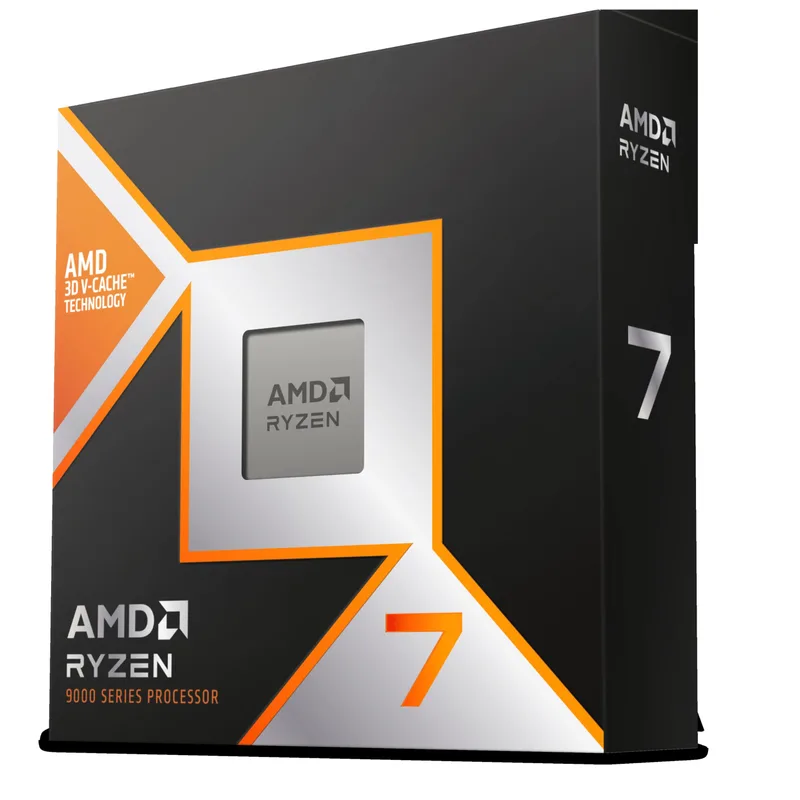
AMD Ryzen 7 9800X3D
The Ryzen 7 9800X3D does one thing better than any other desktop processor: it keeps your GPU fed with data in cache-sensitive games. The 64MB 3D V-Cache stacked on top of the native 32MB Zen 5 L3 creates a 96MB pool that eliminates the memory latency bottlenecks that hold back competing chips. In Baldur’s Gate 3 at 1080p with an RTX 4090, the 9800X3D hits 175 FPS while the Core Ultra 9 285K reaches 117 FPS — a 49% gap that no GPU upgrade can fix if you’re on the Intel chip.
It’s not just one genre. The cache advantage shows in strategy games, flight sims, open-world titles, and anything that streams lots of game state through the CPU. In Cyberpunk 2077 the lead is 21%; in ACC it’s 75%. The 9800X3D is the right call for any build where gaming is the primary workload.
The trade-offs are real but minor. At 120W TDP it runs warmer than the 65W Ryzen 7 9700X — plan for a 240mm+ AIO or a premium tower cooler like the Noctua NH-D15. And for multi-threaded rendering, eight cores hit a ceiling: the Core Ultra 9 285K finishes Blender BMW renders significantly faster. If you spend more time in Blender than Baldur’s Gate, the 9800X3D is the wrong chip.
For a pure gaming build, it’s the correct answer at $479. The closest Intel alternative (285K) costs more, consumes more power, and still loses in gaming by double-digit percentages.
Intel Core Ultra 9 285K — 24 Cores for Serious Workloads
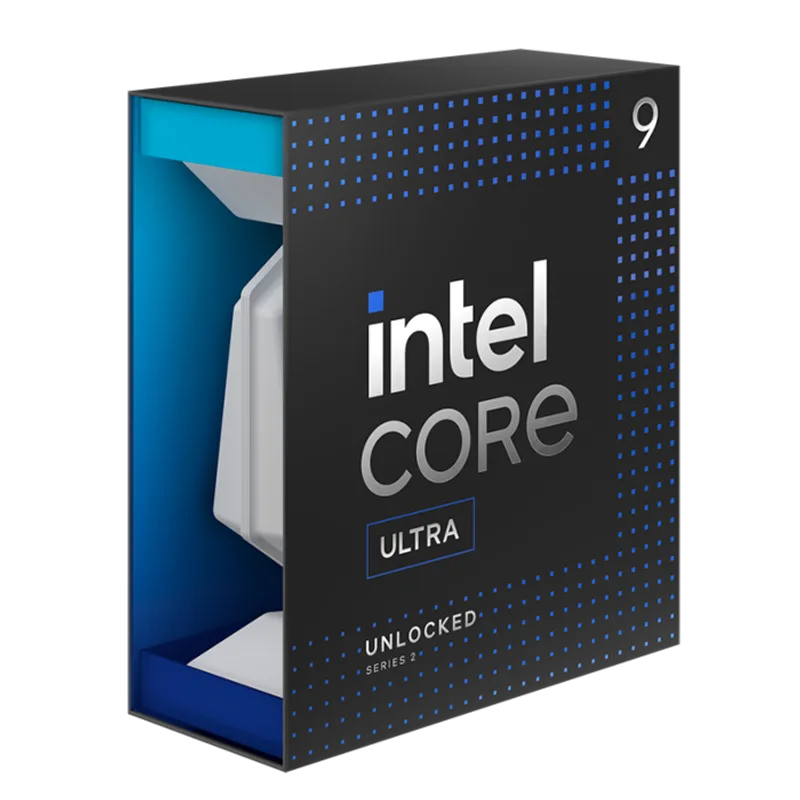
Intel Core Ultra 9 285K
The Core Ultra 9 285K makes sense when your CPU spends more time rendering than gaming. Twenty-four cores — eight high-performance Lion Cove P-cores boosting to 5.7 GHz and sixteen Skymont E-cores handling background work — deliver multi-threaded throughput that AMD’s 8-core Zen 5 can’t match. In Cinebench R23 multi-thread, the 285K scores around 43,000 versus the 9800X3D’s 23,000. In Blender, the render time gap is similarly decisive.
Arrow Lake dropped the hyperthreading that Raptor Lake used, settling for 24 physical threads instead of 48. This was a deliberate architectural shift toward cleaner efficiency over raw thread counts. The result is a chip that’s genuinely more power-efficient than 13th/14th gen Intel under mixed loads, though it still spikes hard under sustained all-core work — budget for a 360mm AIO.
At $449, it undercuts its own launch price by ~$140. The new Core Ultra 200S Plus chips launching in late March 2026 with DDR5-7200 support add pressure, but the 285K remains the better value for buyers who don’t need DDR5-7200 memory speeds. Pair it with a mid-range Z890 board and 32GB DDR5-6000 and you have a capable creative workstation.
For gaming alongside productivity, the 285K holds up — it’s not slow in games, it just loses to the 9800X3D in CPU-sensitive scenarios by meaningful margins. If your gaming is mostly GPU-bound at 4K with an RTX 5080, the difference shrinks to 10% or less.
Intel Core Ultra 7 265K — The Midrange Intel Option
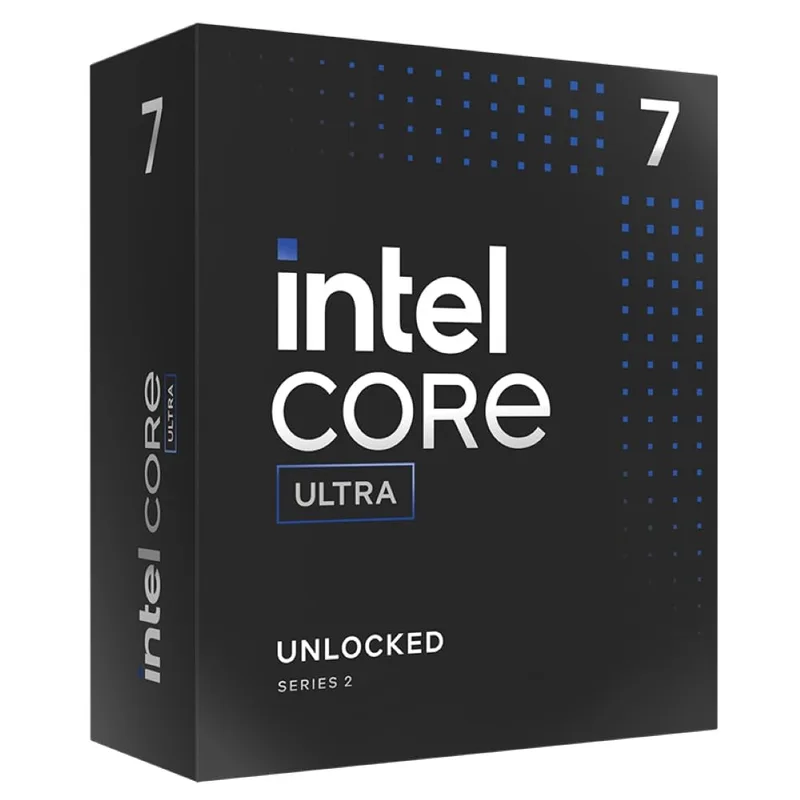
Intel Core Ultra 7 265K
The Core Ultra 7 265K targets the builder who wants Intel’s multi-threaded headroom without the 285K’s price. Twenty cores (8P + 12E), a 5.5 GHz boost, and 30MB cache land at $310 — now below the Ryzen 7 9700X’s $360 price tag. In rendering workloads, it beats the 9700X. In gaming, the 9700X pulls ahead.
That trade-off defines who should buy it. If your split is 60% productivity software and 40% gaming, the 265K is a reasonable choice. If you game more than you render, spend $50 more on the Ryzen 7 9700X or $170 more on the 9800X3D depending on your budget.
The Z890 platform requirement adds real cost. A quality B-series Z890 board (MSI MAG Z890 Tomahawk, ASUS TUF Gaming Z890-Plus) starts at $200, pushing the platform cost to $510 before RAM, cooler, and storage. That’s $30 more than a comparable Ryzen 7 9700X build on a B850 motherboard, despite the CPU being cheaper.
Arrow Lake doesn’t overclock as dramatically as Raptor Lake did. The 265K has headroom to 5.6-5.7 GHz on P-cores with quality cooling, but gains are modest. The value is in the stock performance and core count, not the overclocking ceiling.
AMD Ryzen 7 9700X — Efficient Zen 5 for Mixed Builds
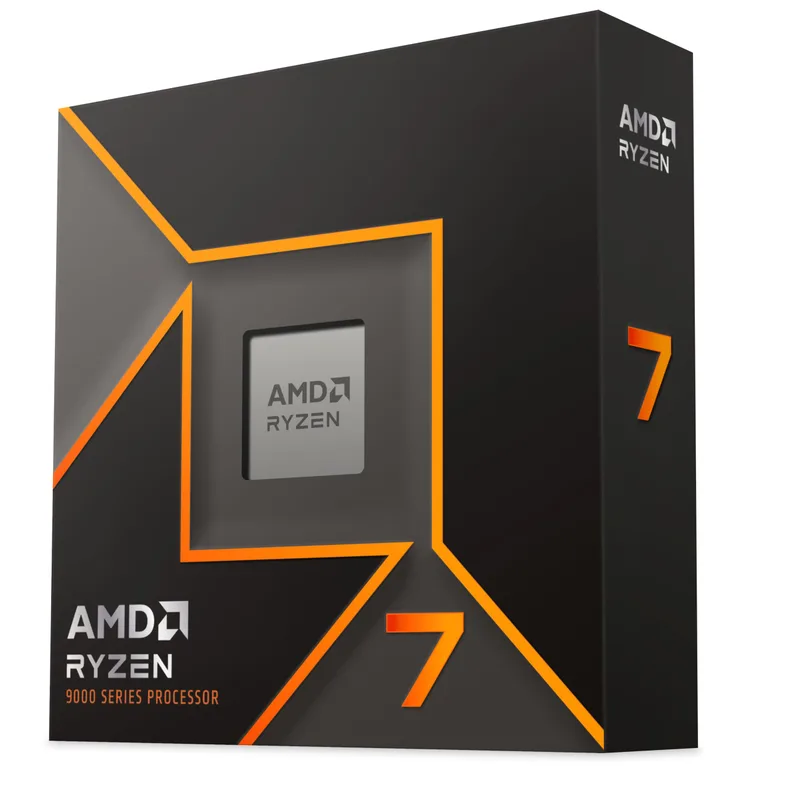
AMD Ryzen 7 9700X
The Ryzen 7 9700X is the sensible choice when you want modern Zen 5 performance without the 9800X3D premium and without Intel’s power demands. At 65W TDP, this chip runs on a Noctua NH-U12S or any quality 120mm tower cooler — no AIO required, no temperature anxiety. For small form factor builds or budget systems that skip premium cooling, this matters.
Zen 5’s IPC improvements over Zen 4 are genuine: about 16% better single-threaded performance in mixed workloads. The 9700X hits 5.5 GHz boost, matching the Core Ultra 7 265K’s peak P-core frequency. In lightly-threaded tasks — web development compilation, light video editing, gaming — it trades blows with the 265K while running quieter and cooler.
Where the 9700X falls short: eight cores aren’t enough for demanding content creation alongside background tasks. Blender, DaVinci Resolve, and Handbrake encode sessions that saturate all cores will show the 265K’s extra cores and threads pulling ahead. And in gaming, the absence of 3D V-Cache keeps it 15-25% behind the 9800X3D in cache-sensitive titles.
At $360 on AM5, the 9700X makes the most sense for moderate gaming builds where you’re also doing software development, light content creation, or streaming. The AM5 platform gives you a clean path to drop in a Zen 6 chip when AMD releases it.
AMD Ryzen 5 9600X — Zen 5 Gaming Value
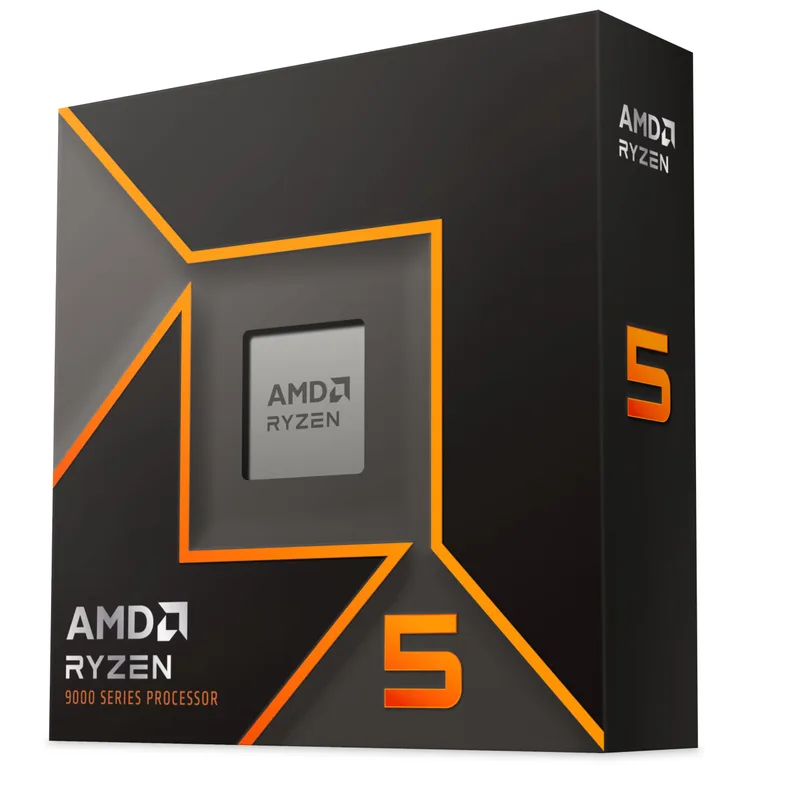
AMD Ryzen 5 9600X
The Ryzen 5 9600X is the entry point for Zen 5 and AM5, and it punches harder than its price suggests. Six cores and 38MB L3 cache combine with a 5.4 GHz boost to deliver 1080p gaming frame rates within 5-8% of the Ryzen 7 9700X in most titles. For 1440p gaming where the GPU is the bottleneck, the gap closes to 2-3%. If you’re pairing this with an RTX 4070 or RX 7900 GRE and targeting 1440p, the 9600X won’t hold you back.
The 65W TDP means AMD’s Wraith Prism or any budget cooler handles day-to-day loads. Only heavy multi-threaded workloads push toward the TDP ceiling, and for a $280 chip, that’s the expected trade-off.
Two pressure points in 2026: Intel launched the Core Ultra 5 250K Plus at $199 on March 26, 2026, with more cores and DDR5-7200 support — a credible budget Intel alternative. And on AMD’s own lineup, the 9700X at $360 offers two extra cores and the full eight-core headroom for streaming and content creation for $80 more. If you stream your gaming or multitask heavily, the $80 step to the 9700X is worth it.
The 9600X belongs in budget gaming builds where you want AM5 longevity and plan to upgrade the CPU later. Buy the chip now, upgrade to Zen 6 when it arrives.
| Spec | AMD Ryzen 7 9800X3D $479 9.5/10 | Intel Core Ultra 9 285K $449 8.5/10 | Intel Core Ultra 7 265K $310 7.8/10 | AMD Ryzen 7 9700X $360 8/10 | AMD Ryzen 5 9600X $280 8.2/10 |
|---|---|---|---|---|---|
| Architecture | Zen 5 + 3D V-Cache | Arrow Lake (Lion Cove P-cores + Skymont E-cores) | Arrow Lake (Lion Cove P-cores + Skymont E-cores) | Zen 5 | Zen 5 |
| Cores | 8 cores / 16 threads | 24 cores (8P + 16E) / 24 threads | 20 cores (8P + 12E) / 20 threads | 8 cores / 16 threads | 6 cores / 12 threads |
| Boost Clock | 5.2 GHz | 5.7 GHz | 5.5 GHz | 5.5 GHz | 5.4 GHz |
| Cache | 96MB L3 (32MB + 64MB 3D V-Cache) | 36MB L3 | 30MB L3 | 40MB L3 | 38MB L3 |
| Socket | AM5 | LGA1851 | LGA1851 | AM5 | AM5 |
| TDP | 120W | 125W | 125W | 65W | 65W |
| Rating | 9.5/10 | 8.5/10 | 7.8/10 | 8/10 | 8.2/10 |
Frequently Asked Questions
Is AMD or Intel better for gaming in 2026? AMD, specifically the Ryzen 7 9800X3D. The 96MB 3D V-Cache advantage is decisive in CPU-sensitive titles — the gap ranges from 20% to 75% against the Core Ultra 9 285K depending on the game. Intel offers no Arrow Lake chip with 3D V-Cache, so AMD’s gaming lead is structural, not temporary.
Is Intel’s new Core Ultra 200S Plus worth waiting for over the current 285K? The Ultra 7 270K Plus at $299 and Ultra 5 250K Plus at $199 bring DDR5-7200 support and Intel’s new Binary Optimization Tool, which Intel claims improves IPC. These are strong mid-range options for productivity-focused builds. For gaming, AMD’s 3D V-Cache advantage remains even against the new Intel chips. If you need a CPU now, the current lineup delivers known performance; if you can wait until April 2026, the 270K Plus pricing reshuffles the Intel mid-range value.
Do AMD Ryzen 9000 series CPUs need a new motherboard? No — AM5 boards from the Ryzen 7000 era (X670, B650) support Ryzen 9000 series via BIOS update. The newer X870 and B850 boards add PCIe 5.0 M.2 slots and Wi-Fi 7, but an existing AM5 board works fine.
What motherboard should I pair with an Intel Core Ultra 200K series chip? You need an Intel 800-series chipset (Z890 for K-series CPUs). Z890 boards from MSI, ASUS, and Gigabyte start around $200. B860 boards at $150 support the non-K variants (like the Core Ultra 9 285) without overclocking. There’s no cheaper chipset option for unlocked K-series overclocking.
Will AMD’s AM5 platform last for Zen 6? Yes — AMD has confirmed AM5 compatibility through Zen 6. Builders on AM5 today can upgrade their CPU without replacing the motherboard when Zen 6 arrives. Intel’s LGA1851 has less clarity on long-term support beyond the current generation.
The Bottom Line
For gaming, the AMD Ryzen 7 9800X3D is the correct answer at $479 — no Intel chip in 2026 can match its 96MB cache advantage in CPU-bound titles. For demanding productivity workloads like Blender, DaVinci Resolve, and large compilation tasks, the Intel Core Ultra 9 285K’s 24 cores at $449 justify Intel’s platform premium. Mid-range builders choosing between the Core Ultra 7 265K at $310 and the Ryzen 7 9700X at $360 should decide based on workload: Intel for rendering-heavy work, AMD for gaming-first builds with long platform longevity in mind.