The AMD RX 9000 series launched in March 2025 and changed the GPU conversation. For the first time in years, AMD cards are trading blows with NVIDIA at the same price points — and in rasterization at 1440p and 4K, the RX 9070 XT flat-out beats the RTX 5070 in most benchmarks while costing $80 less at street price. But NVIDIA still holds a meaningful lead in ray tracing, DLSS 4 adoption, and software ecosystem depth. Here’s the full breakdown by tier.
| Spec | Sapphire Pulse AMD Radeon RX 9070 16GB 8.8/10 | NVIDIA GeForce RTX 5070 12GB GDDR7 Unavailable 8.6/10 | Sapphire Pulse AMD Radeon RX 9070 XT 16GB 9.1/10 | MSI GeForce RTX 5070 Ti 16G Gaming Trio OC 8.9/10 | ASUS TUF GeForce RTX 5080 16GB GDDR7 OC 9/10 |
|---|---|---|---|---|---|
| architecture | RDNA 4 | Blackwell | RDNA 4 | Blackwell | Blackwell |
| vram | 16GB GDDR6 | 12GB GDDR7 | 16GB GDDR6 | 16GB GDDR7 | 16GB GDDR7 |
| memory_bus | 256-bit | 192-bit | 256-bit | 256-bit | 256-bit |
| compute_units | 56 CUs | — | 64 CUs | — | — |
| tdp | 200W | 250W | 220W | 300W | 360W |
| recommended_psu | 650W | 650W | 700W | 750W | 850W |
| Rating | 8.8/10 | 8.6/10 | 9.1/10 | 8.9/10 | 9/10 |
Prices change daily — tap Check Price for the current Amazon price.
Prices change daily — tap Check Price for the current Amazon price.
Quick Picks
- Best value — AMD side: Sapphire Pulse RX 9070 16GB ($629) — 16GB GDDR6 for $20 less than the RTX 5070 with stronger 4K rasterization
- Best value — NVIDIA side: NVIDIA RTX 5070 12GB FE ($649) — DLSS 4 and superior ray tracing if those features matter to you
- Best overall GPU for 1440p: Sapphire Pulse RX 9070 XT ($729) — outperforms RTX 5070 Ti in rasterization at $120 less
AMD vs NVIDIA: What Actually Matters in 2026
Rasterization Performance
At 1440p and 4K in pure rasterization (no ray tracing, no upscaling), AMD’s RDNA 4 architecture holds its own. The RX 9070 XT leads the RTX 5070 by 0–18% across tested titles at 4K depending on the game, per GamersNexus testing. The RX 9070 (non-XT) sits in the same competitive range against the RTX 5070 while offering 4GB more VRAM at nearly identical price.
Ray Tracing
NVIDIA retains a clear lead. The RTX 5000 series consistently outperforms AMD RDNA 4 in ray-traced workloads across titles. If you play games heavy on path tracing or full RT — titles like Cyberpunk 2077 with full ray tracing mode, Alan Wake 2, or Indiana Jones — the RTX cards deliver a noticeably smoother experience.
Upscaling: DLSS 4 vs FSR 4
DLSS 4’s Multi Frame Generation is available in over 125 games and generates multiple AI-rendered frames between real frames. The result is effective framerates well above native, though input latency requires NVIDIA Reflex to stay competitive. FSR 4, AMD’s response, has improved image quality substantially over FSR 3, but game adoption is still growing and the quality gap at equivalent upscaling ratios remains.
VRAM
This is where AMD wins outright in the $600–$750 tier. The RX 9070 and RX 9070 XT both ship with 16GB GDDR6, while the RTX 5070 ships with 12GB GDDR7. In 4K gaming with texture mods or in productivity tasks (video editing, AI image generation), 16GB is meaningfully better than 12GB. GDDR7’s higher bandwidth (28 Gbps) partially compensates, but for raw capacity the AMD cards have the edge.
Power Efficiency
AMD RDNA 4 runs cooler and more efficiently than the previous RDNA 3 generation. The RX 9070’s 200W TDP is notably lower than the RTX 5070’s 250W at similar or better rasterization performance. If you’re working with a smaller PSU or a compact case with limited airflow, the AMD cards are easier to cool.
Software and Ecosystem
NVIDIA’s CUDA ecosystem is mature. Professionals doing AI training, video encoding (NVENC), or using software tied to CUDA acceleration benefit from the NVIDIA platform. AMD’s ROCm has improved but remains behind in software breadth. For pure gaming, this distinction matters less — both AMD and NVIDIA have solid gaming drivers in 2026.
Tier-by-Tier Comparison
~$630–$650: RX 9070 vs RTX 5070
Both cards target 1440p high refresh and 4K medium-to-high settings. The RX 9070 wins in raw rasterization and VRAM (16GB vs 12GB). The RTX 5070 wins in ray tracing and has DLSS 4. At this price point, your game library is the deciding factor.
~$730–$850: RX 9070 XT vs RTX 5070 Ti
The RX 9070 XT is the stronger value buy — it matches or beats the RTX 5070 Ti in 1440p rasterization at $120 less. For straight gaming without heavy RT, it’s the better GPU per dollar. The RTX 5070 Ti makes sense if you prioritize DLSS 4 Multi Frame Generation and ray tracing.
$1,200+: RTX 5080
AMD has no RDNA 4 card competing at this tier. The RTX 5080 with 10752 CUDA cores is a 4K 144Hz card, particularly with DLSS 4. If you need this performance tier, NVIDIA is your only current-gen option.
Detailed Reviews
Sapphire Pulse AMD Radeon RX 9070 16GB
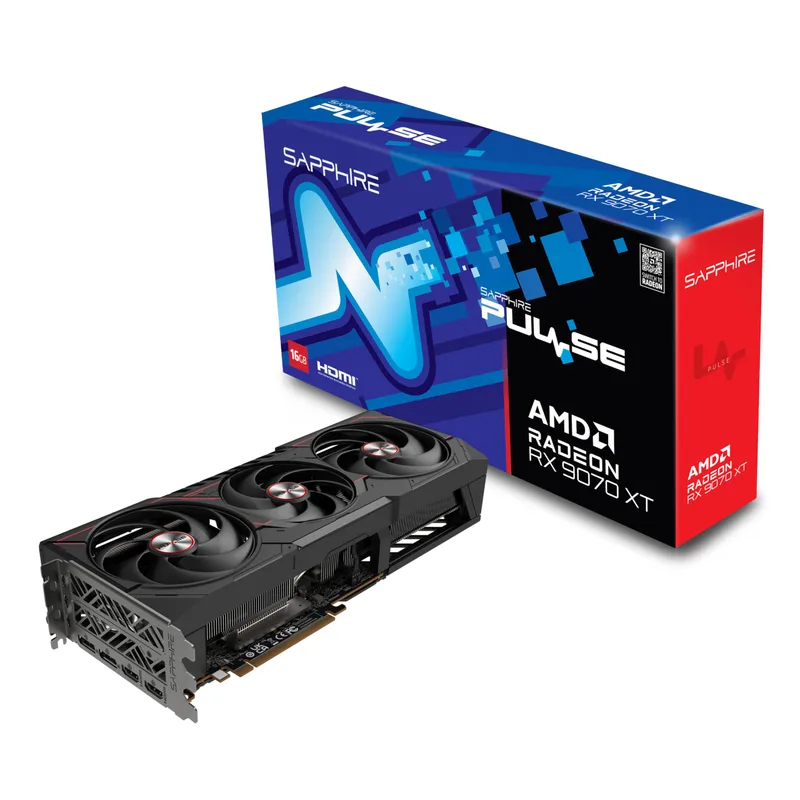
The Sapphire Pulse RX 9070 is the value pick on the AMD side. With 56 RDNA 4 Compute Units, 16GB of GDDR6 on a 256-bit bus, and a 200W TDP, it punches above its price in rasterization. In GamersNexus testing, the RX 9070 leads the RTX 5070 by 0–18% at 4K native depending on the title, while offering 4GB more VRAM at the same rough street price.
The Pulse cooling solution is quiet under load with dual fans and a compact 2-slot design. The card draws power via a single 16-pin connector and recommends a 650W PSU minimum — achievable on a mid-range build without upgrading the power supply.
Ray tracing is where the RX 9070 gives ground. In RT-heavy games it trails the RTX 5070, and FSR 4 image quality, while better than FSR 3, doesn’t fully match DLSS 4 at equivalent upscaling ratios. For a gaming-only build running a mix of standard and RT titles, it’s an excellent $629 card.
NVIDIA GeForce RTX 5070 12GB GDDR7
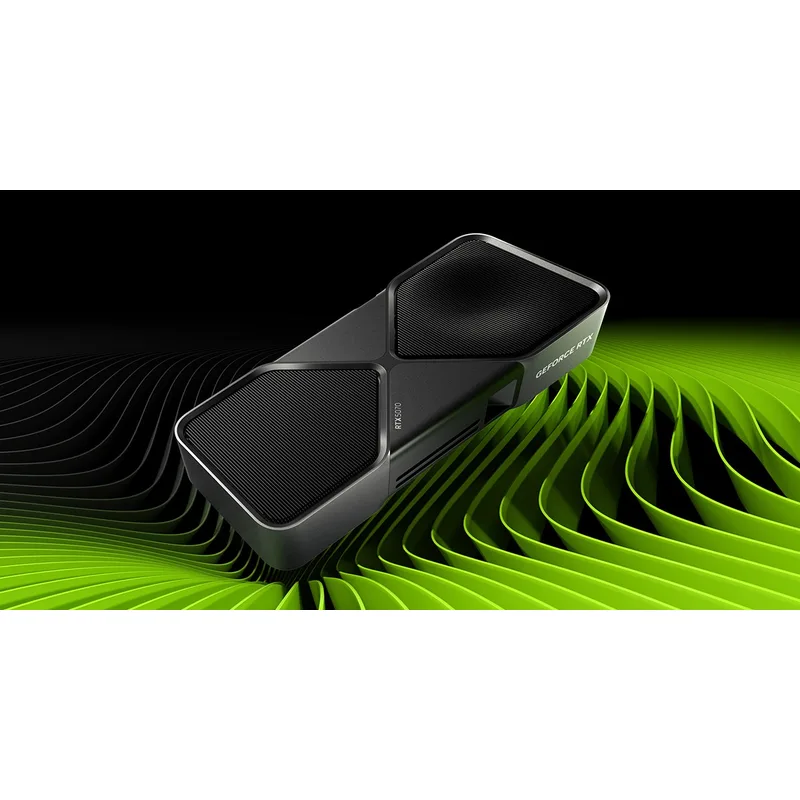
NVIDIA GeForce RTX 5070 12GB GDDR7
The RTX 5070 Founders Edition is NVIDIA’s mainstream Blackwell GPU. 6144 CUDA cores, 12GB GDDR7 on a 192-bit bus, and full DLSS 4 support including Multi Frame Generation. The street price has settled around $649 — $100 above the $549 MSRP since launch, which significantly affects its value argument.
DLSS 4 Multi Frame Generation is a real differentiator. In supported titles like Cyberpunk 2077, Alan Wake 2, and Black Myth: Wukong, effective framerates with DLSS 4 and MFG push well above what native rendering delivers. Ray tracing performance is also ahead of the RX 9070 in the majority of titles.
The 12GB VRAM is the card’s biggest weakness in 2026. Against a $629 card with 16GB, the 4GB deficit is hard to ignore for future-proofing. If your library is heavy on DLSS-supported titles or you do AI creative work with GPU acceleration, the RTX 5070 earns its premium. Otherwise, the RX 9070’s VRAM lead is hard to argue with.
Requires a 650W PSU minimum.
Sapphire Pulse AMD Radeon RX 9070 XT 16GB
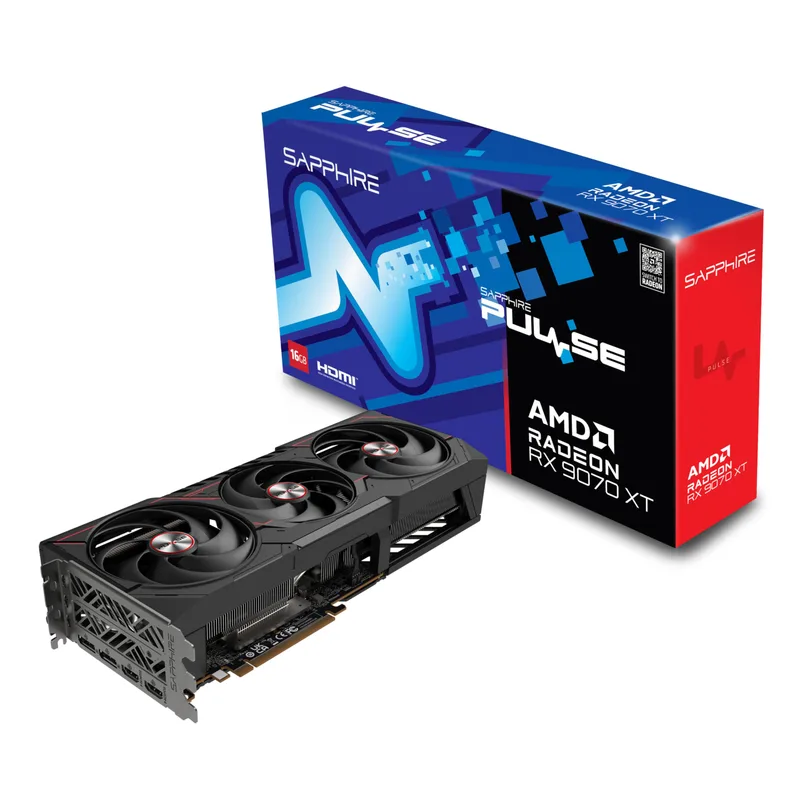
The RX 9070 XT is AMD’s best-value GPU in years. Stepping up to 64 RDNA 4 Compute Units with the same 16GB GDDR6 / 256-bit bus as the non-XT, it consistently beats the RTX 5070 Ti at 1440p rasterization while costing significantly less. That’s a striking reversal from the RDNA 3 era, where AMD routinely trailed at similar prices.
The Sapphire Pulse cooler runs quiet — under 40 dB in most loads — and handles the 220W TDP without thermal throttling. The card ships with dual HDMI 2.1 and dual DisplayPort 2.1 outputs, supporting up to 4K 240Hz or dual 4K displays.
The trade-offs are DLSS (you get FSR 4 instead) and ray tracing, where the RTX 5070 Ti still leads. For competitive and mainstream AAA gaming without heavy path tracing, the RX 9070 XT at $729 is the clear performance-per-dollar winner in its tier. Requires a 700W PSU.
MSI GeForce RTX 5070 Ti 16G Gaming Trio OC
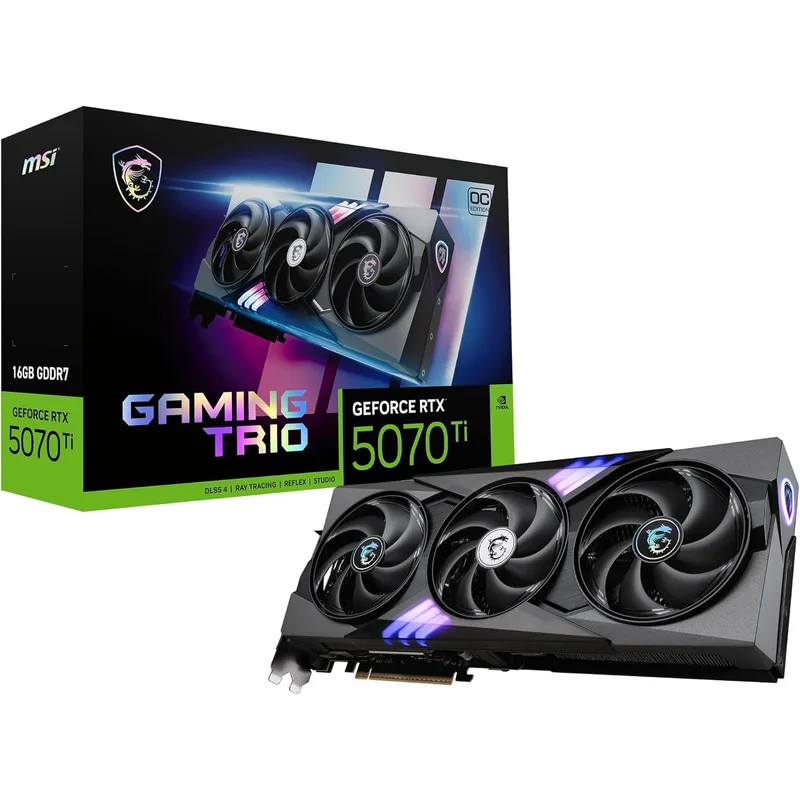
MSI GeForce RTX 5070 Ti 16G Gaming Trio OC
The MSI RTX 5070 Ti Gaming Trio OC is where NVIDIA’s mid-range tops out before the RTX 5080. It pairs 16GB of GDDR7 memory on a 256-bit bus with a factory overclocked Blackwell die, boosting to 2482 MHz. The TRI FROZR 4 triple-fan cooler handles the 300W TDP quietly even under sustained 4K load.
DLSS 4 with Multi Frame Generation is the card’s strongest argument. In supported titles, MFG can push 4K 60+ fps into 4K 120+ territory, making it viable for high-refresh 4K displays. Ray tracing performance is clearly ahead of the RX 9070 XT in titles like Cyberpunk 2077 with full RT mode enabled.
The value question is harder to answer. Against the RX 9070 XT at $729, the RTX 5070 Ti at $849 costs $120 more for comparable or slightly worse rasterization performance — unless your library leans heavily DLSS-enabled. If it does, the 5070 Ti is the right call. Requires a 750W PSU.
ASUS TUF GeForce RTX 5080 16GB GDDR7 OC
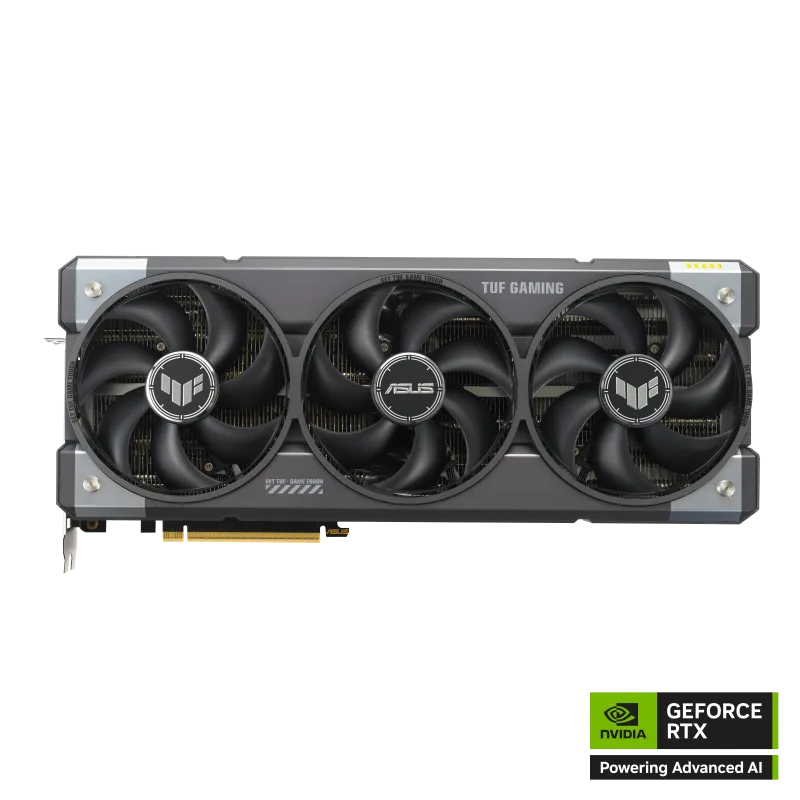
ASUS TUF GeForce RTX 5080 16GB GDDR7 OC
The ASUS TUF RTX 5080 sits at the top of NVIDIA’s mainstream stack with 10752 CUDA cores and 16GB GDDR7 on a 256-bit bus. At 4K, it’s the GPU for 144Hz gaming with ray tracing enabled — particularly with DLSS 4 MFG doing the heavy lifting. The TUF cooling solution uses a vapor chamber and three axial fans across a 3.6-slot design, keeping temperatures below 70°C under full load.
The RTX 5080 occupies a tier where AMD currently has no RDNA 4 answer. The RX 9080 hasn’t launched as of early 2026, leaving the RTX 5080 and RTX 5090 without direct AMD competition. That means NVIDIA can price accordingly — and at $1,249 street, the 5080 carries a premium over the RX 9070 XT that’s hard to justify unless you need 4K high-refresh with ray tracing.
For content creators using CUDA-dependent software (DaVinci Resolve, Stable Diffusion with CUDA acceleration, video encoding via NVENC), the RTX 5080 is the all-in-one productivity and gaming card. Requires an 850W PSU.
FAQ
Does AMD or NVIDIA have better drivers in 2026? Both have improved substantially. NVIDIA’s drivers have historically been more polished, and that remains true — AMD occasionally ships day-one driver issues, though they’re resolved faster now. For gaming, both are stable. NVIDIA’s software suite (GeForce Experience, DLSS Frame Gen) has more features. AMD’s Adrenalin software is leaner and less intrusive.
Should I buy an RTX 5070 or RX 9070? If your game library includes many DLSS 4-supported titles or you care about ray tracing, take the RTX 5070. If you want more VRAM and pure rasterization performance at 1440p and 4K, the RX 9070 delivers more for less money. The 16GB vs 12GB difference will matter more over time.
Is the RX 9070 XT worth $729 over the RX 9070 at $629? The $100 premium buys you 8 more Compute Units, which translates to roughly 8–12% better performance across most titles at 1440p. If you’re targeting 1440p 144Hz in demanding games, yes. If you’re mostly at 1080p or you’re fine with medium-high rather than maxed settings, the non-XT is the smarter buy.
Does the RTX 5070 Ti justify $849 over the RX 9070 XT at $729? In games that support DLSS 4 Multi Frame Generation, the effective framerate jump is real and worth considering. In pure native rasterization, the RX 9070 XT is the better value. Pick the 5070 Ti if DLSS 4 and ray tracing lead your priorities. Pick the 9070 XT if you want raw frames per dollar.
Do I need a new PSU for these GPUs? RX 9070 and RTX 5070: 650W minimum. RX 9070 XT: 700W. RTX 5070 Ti: 750W. RTX 5080: 850W. These are firm minimums — budget 50–100W of headroom above your CPU’s TDP plus the GPU TDP to be safe. A quality 80+ Gold PSU from Seasonic, Corsair, or be quiet! is sufficient.
The Bottom Line
For value-oriented 1440p and 4K gaming, AMD wins this generation. The RX 9070 XT at $729 is the most compelling GPU of 2026 — it trades blows with or beats the RTX 5070 Ti in rasterization at $120 less, with 16GB of VRAM and a 220W TDP. The RX 9070 at $629 is nearly as good and gives you 4GB more VRAM than the competing RTX 5070 for less money.
NVIDIA’s case rests on DLSS 4, ray tracing, and CUDA. If those features are central to how you play or work, the RTX 5070 FE at $649 and RTX 5080 at $1,249 remain compelling — but you’ll pay a meaningful premium for them.