AMD’s RX 9070 XT launched in February 2026 and immediately rattled NVIDIA’s pricing. It delivers 95% of RTX 5070 Ti rasterization performance for $150 less, and in some titles — notably Assassin’s Creed Shadows — it outright beats the NVIDIA card. That makes the NVIDIA vs AMD question more competitive than it’s been in years. Here’s where each brand wins and where it doesn’t.
Quick Picks
- Best value right now: AMD RX 9070 XT — $599-$729, 95% of RTX 5070 Ti performance at 80% of the cost. The pick for 1440p gamers who don’t need ray tracing.
- Best for ray tracing and DLSS: RTX 5070 Ti — $749-$850, 14% faster in RT workloads and DLSS 4 Multi Frame Generation support in 125+ games.
- Best flagship: RTX 5090 — No AMD equivalent at this tier. If you want best-in-class 4K performance and budget isn’t the constraint, nothing comes close.
NVIDIA vs AMD: What to Know Before Choosing
Rasterization — AMD’s strength
Standard (non-ray-traced) rendering is where AMD closes the gap most effectively. The RX 9070 XT trails the RTX 5070 Ti by only ~5% at 1440p rasterization on average, and in rasterization-heavy workloads like open-world games, it’s essentially tied or faster. The RX 9070 XT runs Assassin’s Creed Shadows 15% faster than the RTX 5070 Ti at 1440p native.
Ray Tracing — NVIDIA’s lead
The RTX 5070 Ti leads by ~14% in ray traced workloads compared to the RX 9070 XT. That gap compounds when using DLSS 4 vs. FSR 4 — NVIDIA’s upscaling is sharper, handles motion artifacts better, and Multi Frame Generation adds significant frames in supported games. If you run Cyberpunk 2077 RT Overdrive, Control, or Alan Wake 2 at max settings, NVIDIA retains a noticeable edge.
VRAM
AMD is more generous across the board. Both the RX 9070 XT and RX 9070 ship with 16GB GDDR6 at their respective price points. The RTX 5070 ships with only 12GB GDDR7 at a similar price — enough for 2026 titles, but a tighter headroom. The RTX 5080 and 5090 also use GDDR7 which is 40% faster bandwidth-wise than the AMD GDDR6, but raw capacity favors AMD in the mid-range.
PSU Requirements
| GPU | TDP | Minimum PSU |
|---|---|---|
| RTX 5090 | 575W | 850W+ |
| RTX 5080 | 360W | 750W |
| RTX 5070 Ti | 300W | 750W |
| RX 9070 XT | 300W | 750W |
| RX 9070 | 220W | 650W |
The RX 9070 stands out at 220W — it’s the most power-efficient card in this comparison and pairs well with a 650W PSU, making it a clean upgrade target for older systems.
Software Ecosystem
NVIDIA’s CUDA accelerates AI/ML workloads roughly 2x faster than AMD’s ROCm platform. If you use DaVinci Resolve, Blender CUDA rendering, or train models, NVIDIA maintains a large tooling advantage. For pure gaming, the gap in software ecosystem has narrowed — FSR 4 handles upscaling well, and AMD’s driver quality has been solid since RDNA 4 launched.
Detailed Reviews
NVIDIA GeForce RTX 5090 — Blackwell Flagship
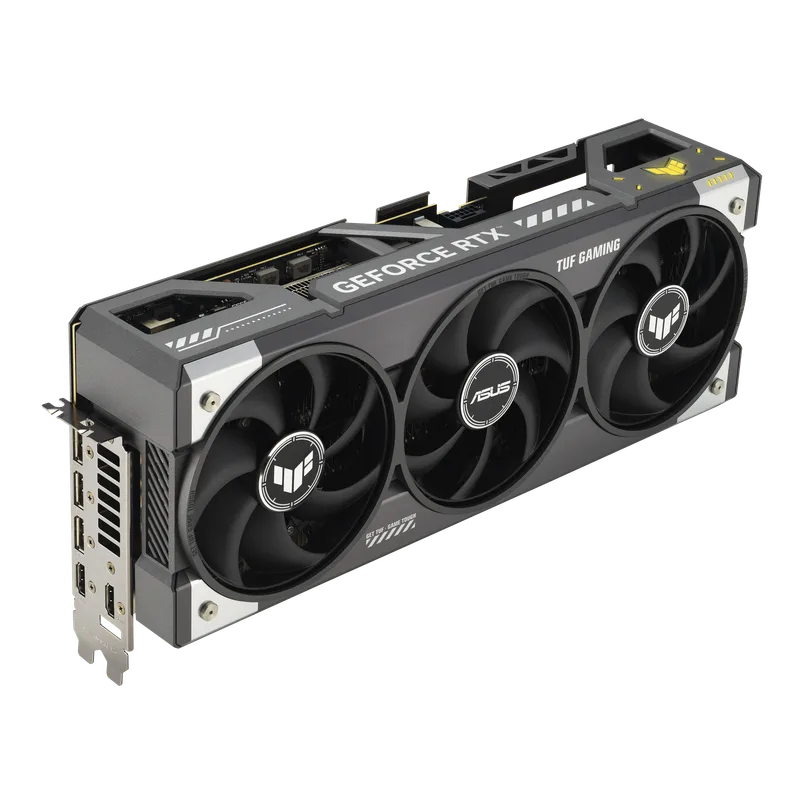
NVIDIA GeForce RTX 5090 (ASUS TUF OC)
The RTX 5090 uses NVIDIA’s GB202 die with 32GB GDDR7 on a 512-bit bus — 70% more memory bandwidth than the RTX 5080. It’s the only GPU that genuinely runs 4K at native resolution with RT Overdrive enabled in Cyberpunk 2077 above 60 FPS without upscaling. That performance comes at a hard cost: 575W TDP means you need an 850W PSU minimum, and street prices ran well above the $1,999 MSRP throughout early 2026.
There’s no AMD competitor at this tier. The RX 9070 XT — AMD’s fastest current card — gets outpaced by ~22% at 4K RT workloads. If you’re building a 4K content creation workstation or a no-compromise gaming rig, the RTX 5090 is the answer. For everyone else, it’s excessive.
Requires a 16-pin (600W) connector or 4x 8-pin adapter. Verify cable before ordering.
NVIDIA GeForce RTX 5080 — High-End Without Flagship Cost
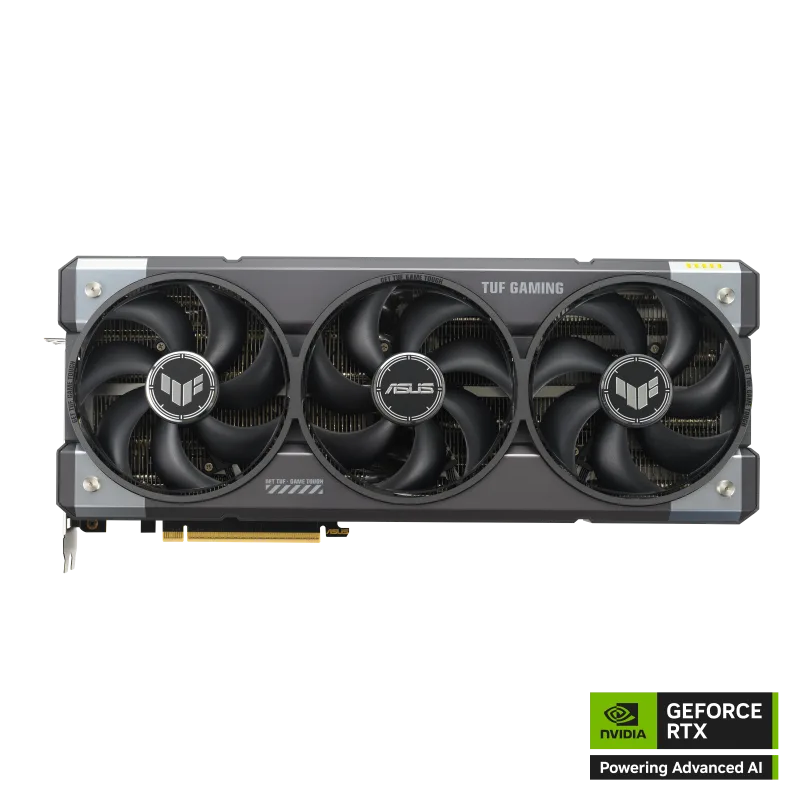
NVIDIA GeForce RTX 5080 (ASUS TUF OC)
The RTX 5080 sits in an awkward spot in early 2026. At $999 MSRP it’s reasonable; at $1,249 street pricing it’s harder to justify against the RTX 5070 Ti at $749-$850. The performance uplift over the 5070 Ti is real — particularly in 4K RT workloads — but the gap in rasterization is less dramatic.
VRAM is identical to the 5070 Ti at 16GB, so the extra $300-$500 in street pricing buys you faster compute performance and greater 4K RT headroom. If you can find it near $999 MSRP, it’s a strong choice. At current street pricing, the 5070 Ti or RX 9070 XT often make more practical sense.
NVIDIA GeForce RTX 5070 Ti — The NVIDIA Value Sweet Spot
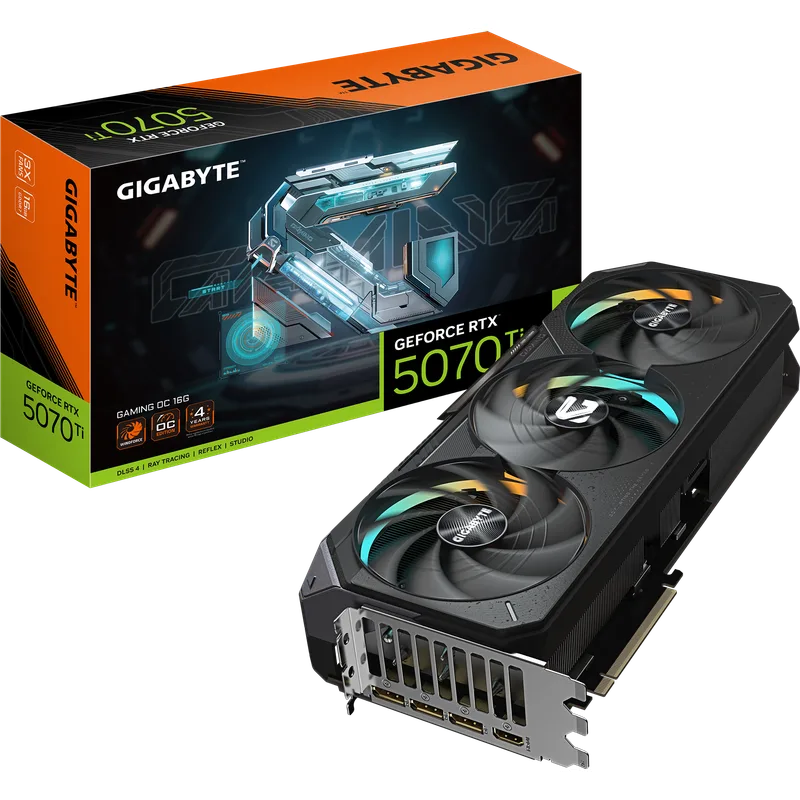
NVIDIA GeForce RTX 5070 Ti (Gigabyte Gaming OC)
The RTX 5070 Ti is NVIDIA’s most competitive card against AMD in 2026. At $749 MSRP, it faces the $599 RX 9070 XT directly — and whether it wins depends entirely on your use case.
In rasterization: ~5% faster on average at 1440p, essentially tied in many open-world titles. The Gigabyte Gaming OC version runs near-identical clocks to the Founders Edition while adding better thermal headroom.
In ray tracing: ~14% faster than RX 9070 XT. If you run Alan Wake 2, Portal RTX, or Cyberpunk RT Overdrive at any resolution, that gap is visible and consistent.
DLSS 4 Multi Frame Generation is the deciding factor for many buyers. In supported titles it can nearly double frame rates at high settings — something FSR 4 does not replicate at this tier.
The 16GB GDDR7 at 28 Gbps gives the 5070 Ti a memory bandwidth advantage over the RX 9070 XT’s GDDR6, which translates to smoother frame pacing in 4K scenarios even where overall FPS is similar.
AMD Radeon RX 9070 XT — AMD’s Best Card in Years
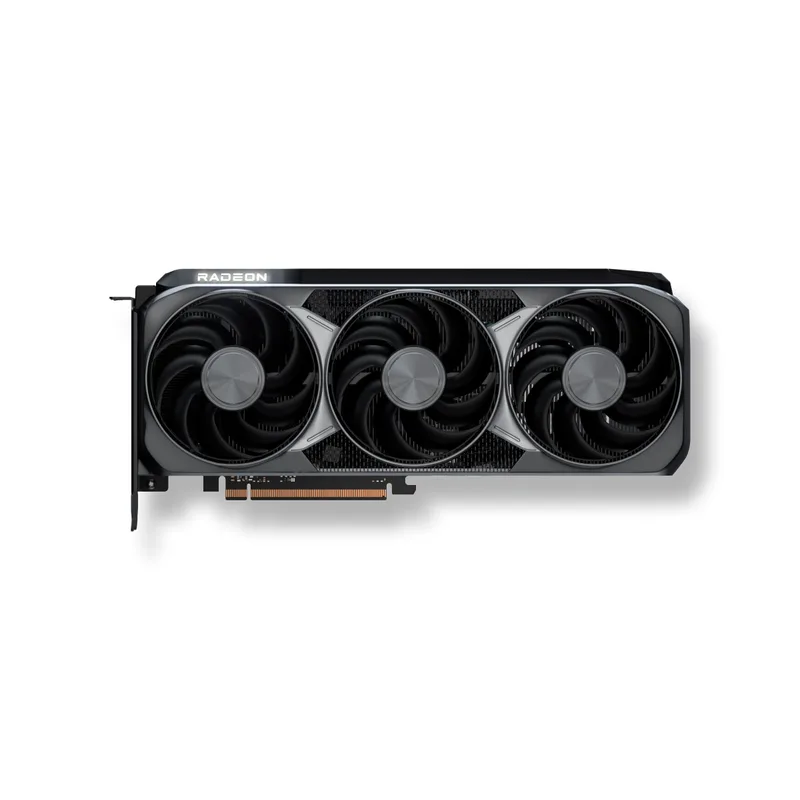
AMD Radeon RX 9070 XT (PowerColor Reaper)
The RX 9070 XT launched in February 2026 at $599 MSRP and immediately became the card to recommend for 1440p gaming. GamersNexus testing showed it matching the RTX 5070 Ti in several rasterization workloads while priced $150 lower — a value ratio AMD hasn’t achieved against NVIDIA in the high-performance tier for several generations.
RDNA 4 brings AMD’s 3rd-gen RT hardware, which cuts the ray tracing gap vs. NVIDIA compared to RDNA 3. It still trails the RTX 5070 Ti by ~14% in heavy RT workloads, but it’s no longer the non-starter that RDNA 3 was.
The 16GB GDDR6 at this price point is genuinely generous. The RTX 5070 ships with only 12GB at a similar price — if you run modded games, texture-heavy titles, or future-proofing matters to you, the AMD VRAM advantage is real.
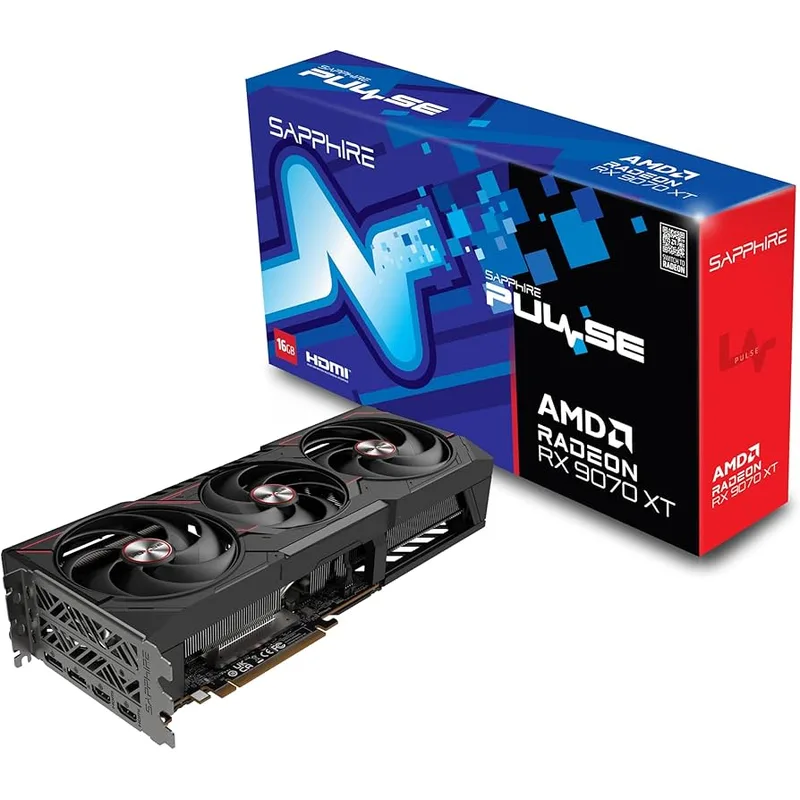
The PowerColor Reaper and Sapphire Pulse are the two recommended variants — both run cool, quiet, and at or near reference clocks without the price premium of reference cards.
AMD Radeon RX 9070 — Power Efficiency Champion
AMD Radeon RX 9070 (Gigabyte Gaming OC)
The non-XT RX 9070 uses the same Navi 48 die at lower clocks, 220W TDP, and a $549 MSRP. For systems with a 650W PSU, it’s one of the most practical upgrades available in 2026.
The performance delta from the XT is ~10% at 1440p — meaningful but not dramatic. The GIGABYTE Gaming OC variant adds a mild factory overclock that narrows the gap further. If your gaming is mostly 1440p at high settings and you’re not chasing max at all times, the RX 9070 is the budget-smart choice over the XT.
The 16GB GDDR6 is the standout feature at $549. NVIDIA’s RTX 5070 at $549-$629 ships with only 12GB GDDR7 — faster bandwidth, less capacity. For texture-heavy open-world games and modded titles, the AMD VRAM advantage will matter more over time.
Head-to-Head Comparison
| Spec | NVIDIA GeForce RTX 5090 (ASUS TUF OC) $1,999-$2,900 9.5/10 | NVIDIA GeForce RTX 5080 (ASUS TUF OC) $999-$1,249 8.8/10 | NVIDIA GeForce RTX 5070 Ti (Gigabyte Gaming OC) $749-$850 8.7/10 | AMD Radeon RX 9070 XT (PowerColor Reaper) $599-$729 9.1/10 | AMD Radeon RX 9070 (Gigabyte Gaming OC) $549-$620 8.5/10 |
|---|---|---|---|---|---|
| GPU | NVIDIA Blackwell GB202 | NVIDIA Blackwell GB203 | NVIDIA Blackwell GB203 | AMD RDNA 4 Navi 48 | AMD RDNA 4 Navi 48 |
| VRAM | 32GB GDDR7 | 16GB GDDR7 | 16GB GDDR7 | 16GB GDDR6 | 16GB GDDR6 |
| TDP | 575W | 360W | 300W | 300W | 220W |
| Interface | PCIe 5.0 x16 | PCIe 5.0 x16 | PCIe 5.0 x16 | PCIe 4.0 x16 | PCIe 4.0 x16 |
| Outputs | 3x DP 2.1, 1x HDMI 2.1 | 3x DP 2.1, 1x HDMI 2.1 | 3x DP 2.1, 1x HDMI 2.1 | 3x DP 2.1, 1x HDMI 2.1 | 3x DP 2.1, 1x HDMI 2.1 |
| Target | 4K Ultra / Content Creation | 4K High / 1440p Max | 1440p Max / 4K High | 1440p Max / Entry 4K | 1440p High / Entry 1440p Max |
| Rating | 9.5/10 | 8.8/10 | 8.7/10 | 9.1/10 | 8.5/10 |
FAQ
Is NVIDIA or AMD better for gaming in 2026? For pure rasterization gaming, AMD’s RX 9070 XT offers better value than any NVIDIA card in its price range. For ray tracing and DLSS upscaling quality, NVIDIA still leads. Choose AMD for 1440p value, NVIDIA if you care about RT or need CUDA for productivity work.
Does DLSS vs FSR matter in 2026? Yes, meaningfully. DLSS 4 with Multi Frame Generation is supported in 125+ games and provides both better image quality and substantially higher frame rates vs. native in compatible titles. FSR 4 has closed the image quality gap but doesn’t support Multi Frame Generation at the mid-range tier. For pure rasterization gaming, the difference is smaller.
How much VRAM do I need for 1440p gaming in 2026? 12GB handles 1440p max settings in the vast majority of current titles. 16GB provides comfortable headroom for texture mods, future titles, and multi-monitor setups. Both the RX 9070 XT and RTX 5070 Ti ship with 16GB — the RTX 5070 at 12GB is the one card in this tier that’s tighter on VRAM.
Is the RTX 5090 worth it? At $1,999 MSRP, it’s justified for 4K enthusiasts who want best-in-class performance and run RT-heavy titles. At current street pricing of $2,900+, it’s harder to defend — the RTX 5080 at $1,249 handles 4K high settings in nearly all games and costs less than half.
Will AMD release a card to compete with the RTX 5090? No announced AMD card currently competes at the RTX 5090 tier. RDNA 4 tops out at the RX 9070 XT. AMD’s next high-end response would require a next-generation architecture.
The Bottom Line
AMD wins at value. The RX 9070 XT delivers 95% of RTX 5070 Ti rasterization performance at $150 less — the clear pick for 1440p gaming without ray tracing. NVIDIA wins at ray tracing, upscaling, and the flagship tier. The RTX 5070 Ti is the right call if you run RT-heavy titles or want DLSS 4 Multi Frame Generation. For 4K no-compromise builds, the RTX 5090 has no real competition from AMD in early 2026.