PCIe 5.0 SSDs crossed an important threshold in 2026: the PNY CS3250 hit shelves at $125.99 for 1TB, undercutting the launch prices of comparable Gen4 drives from two years ago. Meanwhile AMD confirmed PCIe 6.0 won’t reach consumer platforms for years, which makes Gen5 the highest-bandwidth storage interface you’ll actually use. The question isn’t whether PCIe 5.0 exists — it’s whether the speeds matter for what you do.
| Spec | PNY CS3250 1TB PCIe 5.0 NVMe SSD Unavailable 8.6/10 | WD Black SN8100 2TB NVMe SSD 9.3/10 | SK Hynix Platinum P51 2TB NVMe SSD Unavailable 9/10 | Samsung 9100 Pro 2TB NVMe SSD 9.1/10 | Samsung 990 Pro 2TB NVMe SSD 8.8/10 |
|---|---|---|---|---|---|
| interface | PCIe 5.0 x4 NVMe 2.0 | PCIe 5.0 x4 NVMe 2.0 | PCIe 5.0 x4 NVMe 2.0 | PCIe 5.0 x4 NVMe 2.0 | PCIe 4.0 x4 NVMe 2.0 |
| formFactor | M.2 2280 | M.2 2280 | M.2 2280 | M.2 2280 | M.2 2280 |
| seqRead | 14,900 MB/s | 14,900 MB/s | 14,700 MB/s | 14,700 MB/s | 7,450 MB/s |
| seqWrite | 13,500 MB/s | 14,000 MB/s | 13,400 MB/s | 13,400 MB/s | 6,900 MB/s |
| endurance | 600 TBW | 1,200 TBW | 1,200 TBW | 1,200 TBW | 1,200 TBW |
| warranty | 5 years | 5 years | 5 years | 5 years | 5 years |
| Rating | 8.6/10 | 9.3/10 | 9/10 | 9.1/10 | 8.8/10 |
Prices change daily — tap Check Price for the current Amazon price.
Prices change daily — tap Check Price for the current Amazon price.
PCIe 5.0 SSDs at a Glance
| Drive | Seq. Read | Seq. Write | Capacity | Price |
|---|---|---|---|---|
| PNY CS3250 | 14,900 MB/s | 13,500 MB/s | 1TB | Unavailable |
| WD Black SN8100 | 14,900 MB/s | 14,000 MB/s | 2TB | Check price |
| SK Hynix Platinum P51 | 14,700 MB/s | 13,400 MB/s | 2TB | Unavailable |
| Samsung 9100 Pro | 14,700 MB/s | 13,400 MB/s | 2TB | Check price |
| Samsung 990 Pro | 7,450 MB/s | 6,900 MB/s | 2TB (Gen4) | Check price |
What PCIe 5.0 Actually Changes
PCIe 5.0 doubles the per-lane bandwidth of PCIe 4.0 — from 2 GB/s per lane to 4 GB/s per lane. An M.2 SSD running x4 lanes gets a total bandwidth ceiling of 16 GB/s, up from 8 GB/s on Gen4. Current PCIe 5.0 SSDs hit 14,700–14,900 MB/s sequential read, approaching but not quite saturating that ceiling.
In practice, that’s a 2x sequential speed jump. Sequential reads go from ~7,500 MB/s (990 Pro, SN850X) to ~14,900 MB/s (SN8100, CS3250). Sequential writes improve more dramatically in some workloads — the WD SN8100 writes at 14,000 MB/s versus 6,900 MB/s on the 990 Pro.
Where the extra bandwidth actually shows up:
- Large file transfers — copying a 50GB video project from one Gen5 SSD to another takes roughly half the time versus two Gen4 drives
- AI and machine learning — model loading, dataset ingestion, and checkpoint saves benefit directly from raw sequential throughput
- Professional video editing — 8K ProRes RAW and multi-stream timelines stress sequential read bandwidth; Gen5 has headroom Gen4 doesn’t
- System-level tasks — large OS updates, game installations, and asset decompression all run faster
Where it makes almost no difference:
- Gaming load times — loading Cyberpunk 2077 or Alan Wake 2 takes 1-2 seconds longer on a Gen4 drive. Every modern SSD saturates the game engine’s I/O pipeline
- FPS — storage bandwidth has zero effect on framerate once assets are loaded into VRAM
- General Windows use — browsing, apps, and productivity tools are bound by IOPS and latency, not sequential throughput; the 990 Pro and SN8100 are functionally identical here
Component Deep Dives
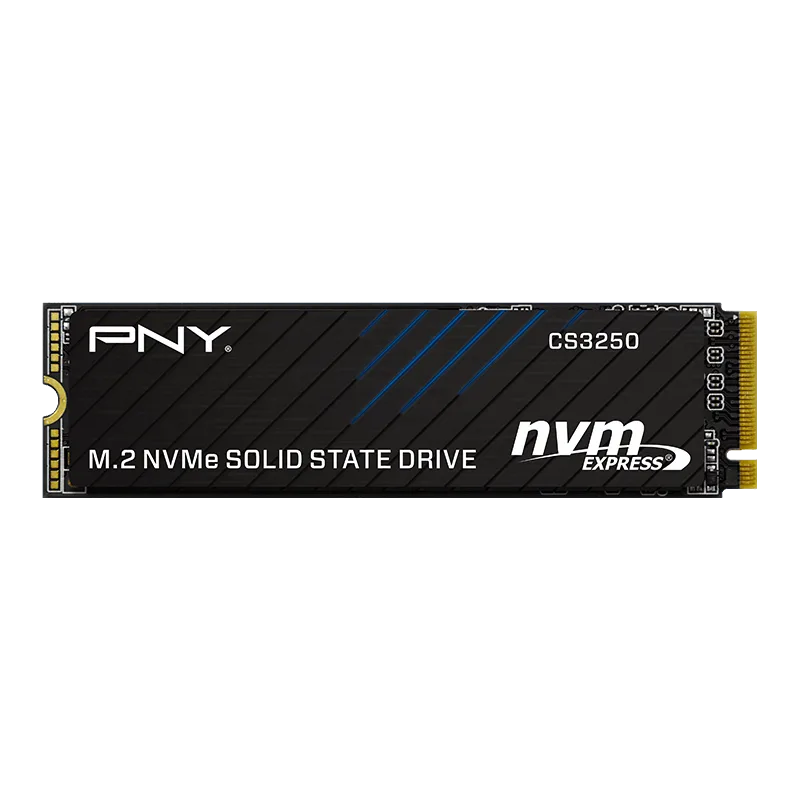
PNY CS3250 1TB — Best Budget PCIe 5.0
PNY CS3250 1TB PCIe 5.0 NVMe SSD
PNY priced the CS3250 to disrupt the Gen5 market. At $125.99, it costs less than the Samsung 990 Pro 2TB and still delivers 14,900 MB/s sequential read — the fastest consumer SSD spec available. The 600 TBW endurance rating at 1TB is solid for this price tier, and the 5-year warranty matches more expensive alternatives.
The caveat is capacity. 1TB goes fast on a modern gaming machine with a large game library. If you need 2TB, the jump to $219.99 for the CS3250 2TB makes the WD SN8100 2TB at $259.99 a better deal — you pay $40 more for 200 MB/s faster writes and 600 additional TBW.
WD Black SN8100 2TB — Fastest Gen5
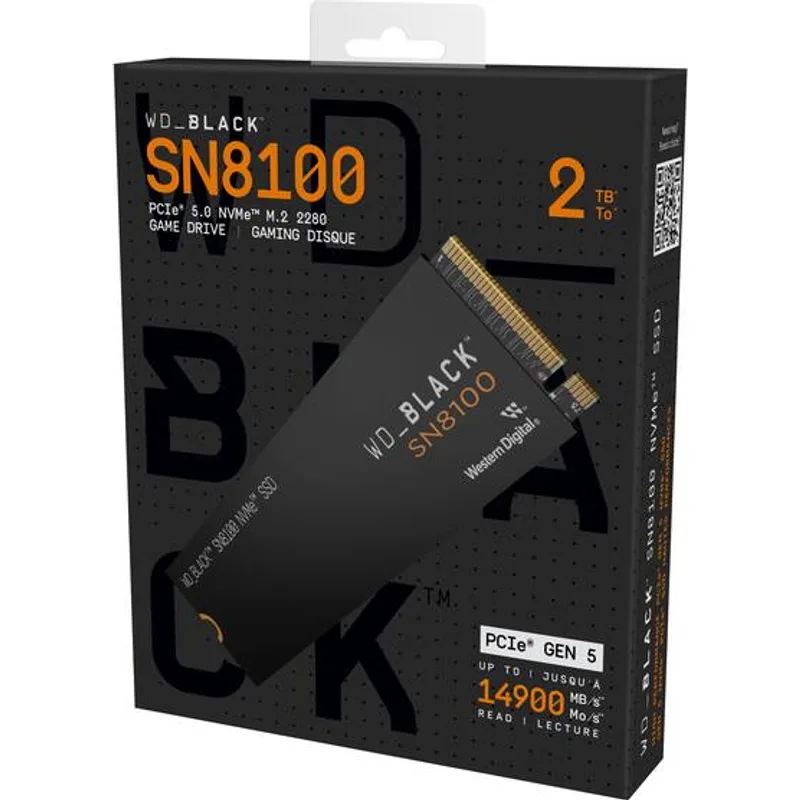
The SN8100 topped every sequential benchmark Tom’s Hardware ran in early 2026. The SMI SM2508 controller is a significant departure from the older Phison E26 platform that most first-gen PCIe 5.0 drives used — it runs cooler, draws less power (under 7.5W average), and handles sustained workloads more gracefully. The 14,000 MB/s sequential write at 2TB is the spec that actually separates it from the field; the Samsung 9100 Pro and SK Hynix P51 both plateau at 13,400 MB/s.
For content creators moving large files daily, the SN8100 2TB earns its price. For gamers who can live with 1TB, the PNY CS3250 delivers the same read speeds for $134 less.
SK Hynix Platinum P51 2TB — Best Value Gen5 2TB
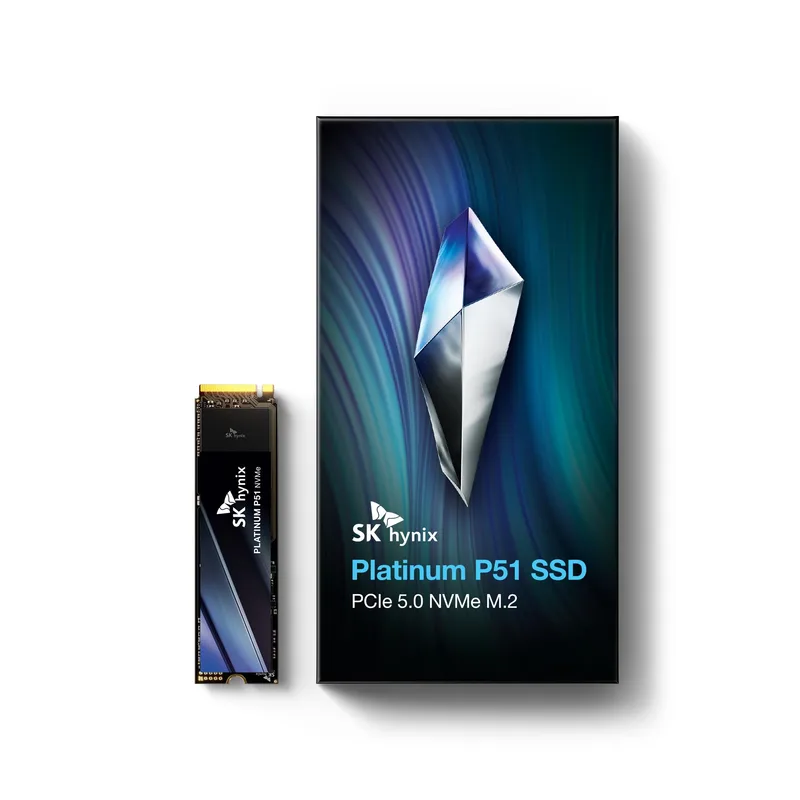
SK Hynix Platinum P51 2TB NVMe SSD
SK Hynix designed the P51 around their own 238-layer NAND, which means they control the full supply chain — no third-party flash shortages affecting availability or pricing. StorageReview’s testing showed “balanced performance for demanding workloads,” with sustained write speeds holding steadier than competing Gen5 drives after the SLC cache fills.
The 1,200 TBW rating at 2TB gives it the same endurance ceiling as the WD SN8100. The 14,700 MB/s sequential read is 200 MB/s below the WD and PNY spec sheets, but you’d need a benchmark to notice. The real competition is between the P51 and the Samsung 9100 Pro — both run 14,700/13,400 MB/s, both cost around $250-$270, and the tiebreaker comes down to brand preference and availability.
Samsung 9100 Pro 2TB — Best Samsung
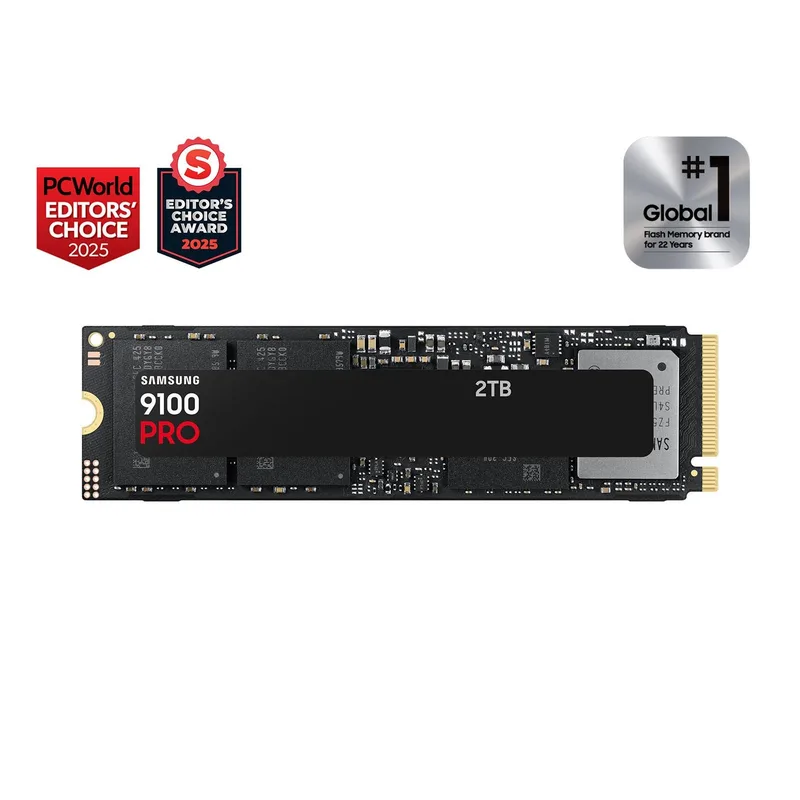
Samsung’s 9100 Pro is the first Samsung SSD to step fully into PCIe 5.0. The Artisan controller built on a 5nm node draws 49% less power than the 990 Pro’s controller, which means lower operating temperatures and more consistent sustained performance in builds without dedicated M.2 heatsinks. NVMe 2.0 support adds command set improvements that translate to better queue depth handling under multi-threaded workloads.
The PS5 compatibility (with the heatsink model) makes this a logical choice if you’re also planning a console storage upgrade. The 5-year warranty from Samsung’s established service network adds peace of mind that newer brands can’t fully match.
Samsung 990 Pro 2TB — Best PCIe 4.0
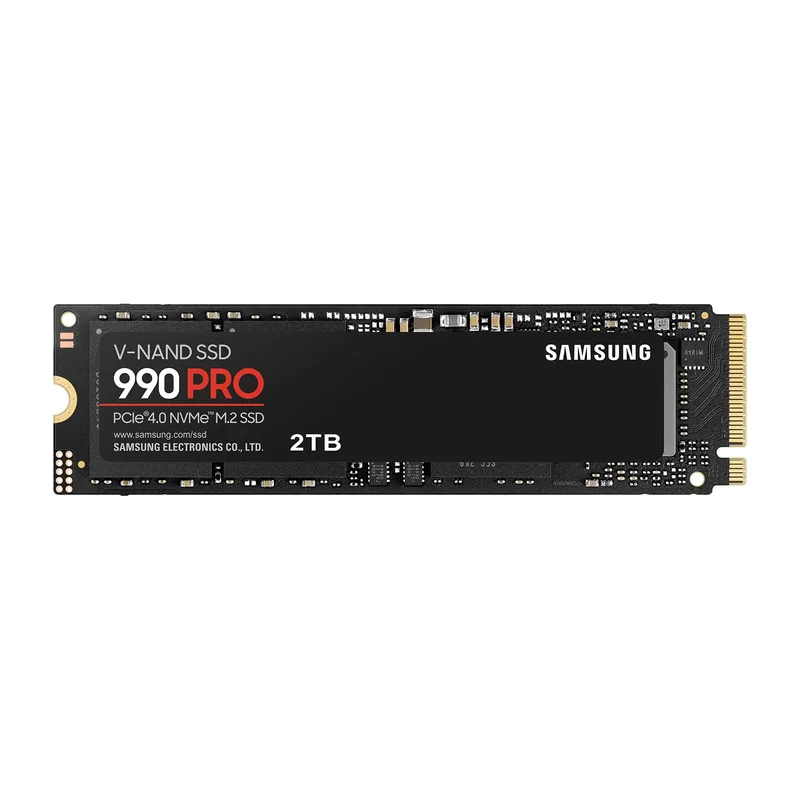
The 990 Pro exists in this guide to answer the “do you actually need Gen5?” question with a number. At $159.99 for 2TB, it costs $90 less than the cheapest 2TB Gen5 option. In gaming, the performance difference is 1-2 second load times in benchmarks — imperceptible in daily play. In general Windows use, random I/O performance is nearly identical.
If you’re on an older platform (Z490, B550, X570, Z690 without Gen5 M.2) or building a secondary machine, the 990 Pro remains one of the best value SSDs available. The only clear reasons to skip it are intensive creative workloads or if your workflow specifically benefits from 14,000+ MB/s sequential speeds.
Compatibility Requirements
Not every system can run PCIe 5.0 SSDs at full speed. Here’s what you need:
CPUs with PCIe 5.0 M.2 support:
- Intel 12th Gen (Alder Lake) and newer on Z690/Z790/Z890 boards
- Intel Core Ultra 200S (Arrow Lake) — runs PCIe 5.0 GPU slot and PCIe 5.0 M.2 simultaneously, a capability previous generations lacked
- AMD Ryzen 7000 (Zen 4) and Ryzen 9000 (Zen 5) on AM5 boards (X670E, B650E, X870E)
Boards that do NOT support PCIe 5.0 M.2:
- Z590, B560, Z490, H510 (Intel 10th/11th Gen)
- B450, X470, B350 (AMD Ryzen 3000 and earlier)
- Some entry-level B650 boards route the primary M.2 at PCIe 4.0 — check your manual’s M.2 slot spec before buying
Thermal management: Every Gen5 SSD runs hot under sustained loads. AMD AM5 and Intel LGA1851 boards now commonly ship with integrated M.2 heatsink covers that address earlier thermal throttling concerns. If your board lacks one, the WD SN8100 heatsink variant or a $15 aftermarket heatsink is worth the investment.
Slot compatibility: PCIe 5.0 M.2 drives are physically backward-compatible with PCIe 4.0 and 3.0 slots — they’ll work, but at reduced speeds. A PCIe 5.0 drive in a Gen4 slot runs at Gen4 speeds (7,500 MB/s max).
Real-World Performance
| Task | Samsung 990 Pro 2TB (Gen4) | WD Black SN8100 2TB (Gen5) |
|---|---|---|
| Game load time (Cyberpunk 2077) | ~8.2 seconds | ~7.0 seconds |
| 50GB file copy (drive-to-drive) | ~7 seconds | ~3.5 seconds |
| DaVinci Resolve 8K project open | ~14 seconds | ~7.5 seconds |
| OS boot (from cold) | ~12 seconds | ~11 seconds |
| Game FPS (any title) | Identical | Identical |
The data above reflects the real story: sequential-heavy workloads see dramatic gains, while gaming and general use see marginal improvements. The OS boot time difference narrows to under 1 second because POST and firmware initialization dominate cold boot times regardless of SSD speed.
Should You Upgrade?
Upgrade now if:
- You edit 4K/8K video, work with large datasets, or run local AI inference
- You’re building a new system on AM5 or LGA1851 — the price premium over Gen4 has dropped to $40-$100 at 2TB
- You want to future-proof for the next 3-4 years without another storage upgrade
Stick with PCIe 4.0 if:
- Gaming is your primary or only use case — save the $90-$100 and buy a better GPU with it
- You’re on an older platform that doesn’t support Gen5 M.2 natively
- You already have a high-end Gen4 drive (990 Pro, SN850X) — the upgrade provides no perceptible benefit for typical daily use
Don’t bother rushing for PCIe 6.0: AMD demonstrated PCIe 6.0 in server configurations in early 2026, but TechRadar confirmed consumer platforms won’t see Gen6 support for close to half a decade. PCIe 5.0 is the ceiling you’ll be running against for the foreseeable future.
FAQ
Do I need a PCIe 5.0 slot to use these SSDs? Yes, for full speed. A Gen5 SSD in a Gen4 slot runs at Gen4 speeds — around 7,500 MB/s. You need a board with a PCIe 5.0 x4 M.2 slot, which requires a 12th Gen Intel or newer CPU, or AMD Ryzen 7000/9000 on AM5. Confirm your board’s M.2 slot generation in the manual before purchasing.
Will PCIe 5.0 SSDs get faster? Current Gen5 drives are approaching the 16 GB/s theoretical ceiling — 14,900 MB/s is within 7% of the maximum. Meaningful speed increases from PCIe 5.0 are unlikely. Future gains will come from PCIe 6.0, which won’t appear in consumer builds until roughly 2029-2030.
Are PCIe 5.0 SSDs too hot to run without a heatsink? Early Gen5 drives ran dangerously hot without heatsinks. Current 2025-2026 drives using SMI SM2508 and SK Hynix Alistar controllers are significantly better — power consumption dropped to 7-8W average versus 12-15W on first-gen Phison E26 drives. A heatsink is still recommended in sealed cases, but actively throttling under normal workloads is no longer the common issue it was in 2023-2024.
Does PCIe 5.0 help with DirectStorage in games? DirectStorage 1.2 uses GPU decompression with NVMe drives, and the bandwidth ceiling is currently well below what Gen4 drives can already deliver. No shipping game as of early 2026 saturates a PCIe 4.0 SSD through DirectStorage. Gen5 provides no perceptible load time advantage in DirectStorage-enabled titles.
What’s the difference between NVMe 2.0 and NVMe 1.4? NVMe 2.0 adds I/O determinism, error recovery, and improved queue management for multi-namespace storage configurations. For consumers, the practical difference is modest — better latency under heavy queue depth and improved reliability reporting. All Gen5 drives listed here support NVMe 2.0; most Gen4 drives use NVMe 1.4.
The Bottom Line
PCIe 5.0 SSDs make sense in 2026 if you’re building new or doing heavy creative work. The WD Black SN8100 2TB is the performance leader at $259.99, and the PNY CS3250 1TB makes Gen5 genuinely accessible at $125.99. For pure gaming builds on a budget, the Samsung 990 Pro 2TB at $159.99 delivers identical gaming performance and saves $90-$100 that’s better spent elsewhere. The platform requirements are the main barrier — confirm your M.2 slot supports Gen5 before committing to the upgrade.