At GDC 2026 in late March, NVIDIA announced DLSS 4.5 with 6X Dynamic Multi Frame Generation, available March 31 — and it’s exclusive to RTX 5000 cards. That announcement reshapes the ray tracing calculus for the second time in twelve months. The question of whether RT is “worth it” in 2026 has a more nuanced answer than it did two years ago: yes, on the right GPU, with the right upscaling stack, in the right games.
This guide explains how ray tracing actually works, where the performance cost comes from, and which GPU gives you the most RT per dollar in 2026.
| Spec | NVIDIA GeForce RTX 5080 Founders Edition 9/10 | MSI GeForce RTX 5070 Ti 16G Gaming Trio OC 9.2/10 | NVIDIA GeForce RTX 5070 Founders Edition Unavailable 8.8/10 | Sapphire Pulse AMD Radeon RX 9070 XT 16GB 8.5/10 | NVIDIA GeForce RTX 4070 Super Founders Edition 7.8/10 |
|---|---|---|---|---|---|
| vram | 16GB GDDR7 | 16GB GDDR7 | 12GB GDDR7 | 16GB GDDR6 | 12GB GDDR6X |
| bus | 256-bit | 256-bit | 192-bit | 256-bit | 192-bit |
| architecture | Blackwell (GB203) | Blackwell (GB203) | Blackwell (GB205) | RDNA 4 (Navi 48) | Ada Lovelace (AD104) |
| rt_cores | 5th Gen, 84 RT Cores | 5th Gen, 70 RT Cores | 5th Gen, 48 RT Cores | 3rd Gen, 64 RT Accelerators | 4th Gen, 60 RT Cores |
| tdp | 360W | 300W | 250W | 304W | 220W |
| psu_recommended | 850W+ | 750W+ | 650W+ | 750W+ | 650W+ |
| Rating | 9/10 | 9.2/10 | 8.8/10 | 8.5/10 | 7.8/10 |
Prices change daily — tap Check Price for the current Amazon price.
Prices change daily — tap Check Price for the current Amazon price.
GPUs at a Glance
| GPU | VRAM | Architecture | RT Generation | Approx. Price |
|---|---|---|---|---|
| RTX 5080 FE | 16GB GDDR7 | Blackwell | 5th Gen | $999-$1,249 |
| RTX 5070 Ti (MSI Trio) | 16GB GDDR7 | Blackwell | 5th Gen | $749-$899 |
| RTX 5070 FE | 12GB GDDR7 | Blackwell | 5th Gen | $549-$649 |
| RX 9070 XT (Sapphire Pulse) | 16GB GDDR6 | RDNA 4 | 3rd Gen | $599-$729 |
| RTX 4070 Super FE | 12GB GDDR6X | Ada Lovelace | 4th Gen | $449-$499 |
Prices as of March 2026. RTX 5000 cards remain above MSRP due to constrained availability; RX 9070 XT launched at $599 but has seen upward price pressure from demand.
How Ray Tracing Actually Works
Traditional rasterization doesn’t simulate light — it approximates it. Shadows are pre-baked or computed using shadow maps. Reflections are faked with screen-space techniques or cube maps. Ambient occlusion is a rough approximation of how light bounces in corners. These shortcuts are fast because they avoid simulating actual light behavior.
Ray tracing replaces some or all of those approximations by casting actual rays from the camera into the scene and calculating where they intersect with geometry, how they reflect or refract, and what light sources they reach. The result is shadows with accurate penumbras, reflections that show off-screen geometry, and global illumination that fills areas with indirect light bouncing from surfaces.
The three tiers you’ll see in games:
-
Selective ray tracing — A title enables RT for one effect only, typically shadows or reflections. The performance cost is modest (10-20% GPU overhead) and the visual improvement is real but subtle. Control with RT reflections falls here.
-
Full ray tracing — Multiple effects — shadows, reflections, AO, and sometimes indirect lighting — are all ray-traced. This is the middle tier most “ray tracing enabled” checkboxes enable. Performance cost is significant: 30-60% GPU overhead versus rasterization at the same resolution.
-
Path tracing — Every light interaction is computed via ray tracing, including indirect lighting, caustics, and full global illumination. This is what Cyberpunk 2077’s “Overdrive” mode and Alan Wake 2 use at maximum settings. Performance cost is severe — expect 60-75% lower fps versus rasterization.
The dedicated RT cores on modern GPUs (NVIDIA’s Shader/RT cores, AMD’s RT Accelerators) handle the BVH traversal (the spatial data structure that determines which triangles each ray might hit) in hardware rather than shader cores, which is why RT-capable GPUs perform so much better than shader-only implementations.
The DLSS 4 and FSR 4 Multiplier
RT performance in 2026 can’t be evaluated without understanding AI upscaling and frame generation.
DLSS 4 Super Resolution uses a Transformer neural network to reconstruct detail from a lower-resolution rendered frame. Running Cyberpunk at 1440p internal resolution and upscaling to 4K output adds roughly zero perceptible quality loss at Quality mode while cutting the raw rendering workload by ~44%.
DLSS 4 Multi Frame Generation (RTX 5000 series only) generates 2, 3, or 4 additional frames between each rendered frame using optical flow AI. With 4x MFG, the card is rendering 1 frame and generating 3 — a 4x displayed frame rate multiplier over the base rendering rate. DLSS 4.5 adds a 6x mode and Dynamic MFG, which adjusts the multiplier automatically to hit a target frame rate.
FSR 4 (RDNA 4 Radeon RX 9000 series only) introduces neural super resolution using an RNNA-based model, competing with DLSS 4 SR in image quality for the first time. FSR 4 does not include Multi Frame Generation — AMD’s fluid motion frames add one generated frame, not two or three.
The practical implication: at a GPU with the same native RT output, DLSS 4 MFG can deliver 3-4x the displayed frame rate versus FSR 4 + Fluid Motion Frames. NVIDIA’s advantage in path-traced gaming is substantially larger when MFG is counted than when native performance alone is measured.
Why These Picks
NVIDIA GeForce RTX 5080 is the highest RT performer outside the RTX 5090. At 4K, its 5th-gen RT cores and 16GB GDDR7 make path-traced Cyberpunk 2077 Overdrive playable with 4x MFG, exceeding 120fps displayed output. The catch is pricing: $999 MSRP has stayed out of reach for most buyers in March 2026, with street prices running $999-$1,249 at major retailers.
MSI RTX 5070 Ti Gaming Trio OC is the better value at $749-$899. With 16GB GDDR7 on the same 256-bit bus as the RTX 5080, it avoids the VRAM constraints that affect 12GB cards in path-traced workloads. In Cyberpunk 2077 RT Ultra at 1440p, it delivers 80-95fps natively and climbs past 200fps displayed with 4x MFG. The Trio’s triple-fan cooling handles the 300W TDP without throttling.
NVIDIA GeForce RTX 5070 is the entry point for RTX 5000’s RT + MFG stack at $549 MSRP. Its 12GB GDDR7 is sufficient for 1440p path tracing and most 4K workloads. Where it falls short is in VRAM-intensive 4K path tracing with Ultra textures — Cyberpunk’s Overdrive mode at native 4K pushes past 12GB, requiring resolution scaling or texture quality reductions.
Sapphire Pulse RX 9070 XT represents AMD’s biggest RT generational leap. RDNA 4’s 64 third-generation RT Accelerators deliver 45% better RT performance than the RX 7900 XTX and close a significant portion of the gap to NVIDIA — though the RTX 5070 still leads by roughly 21-38% in RT-heavy workloads. The 16GB GDDR6 buffer is a genuine advantage over the RTX 5070 at similar pricing.
NVIDIA RTX 4070 Super is the last-gen option for buyers who want an RT-capable card under $500. Ada Lovelace’s 4th-gen RT cores handle selective and full RT modes competently at 1080p-1440p. The hard ceiling is DLSS 3 vs. DLSS 4: single-frame generation caps the frame rate multiplier and path-traced titles remain below 30fps native at 1440p, where DLSS 3 FG brings them to 50-60fps — functional but not smooth.
GPU Deep Dives
NVIDIA GeForce RTX 5080 Founders Edition
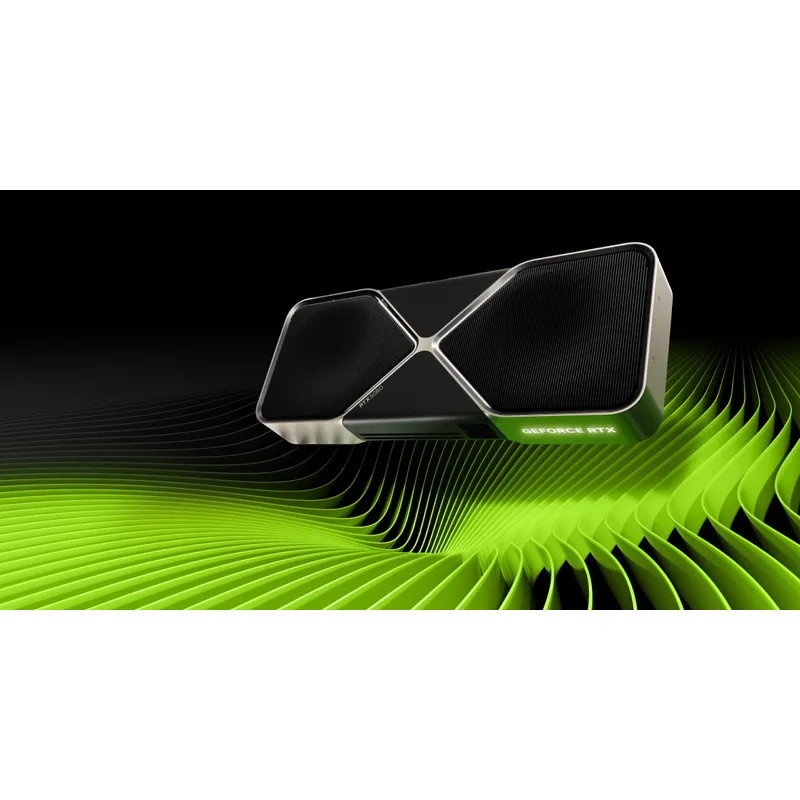
The NVIDIA GeForce RTX 5080 carries 84 fifth-generation RT cores running in the GB203 die, backed by 16GB GDDR7 on a 256-bit bus at 960 GB/s bandwidth. That memory bandwidth — 50% higher than the RTX 4080’s 716 GB/s — matters substantially in path-traced workloads where each ray intersection requires fetching data from the BVH structure.
At 4K Cyberpunk 2077 Overdrive (full path tracing), the RTX 5080 delivers approximately 50fps native. That’s not playable on its own. With DLSS 4 at Quality mode upscaling and 4x MFG active, displayed output climbs to 120+ fps — the first time path-traced 4K in that workload has been functionally smooth without the RTX 5090’s $1,999 price tag.
The pricing reality is uncomfortable. RTX 5080 Founders Edition sits at $999 MSRP, but availability in March 2026 has held street prices at $999-$1,249. At the high end of that range, the RTX 5070 Ti at $749-$899 delivers 80-85% of the 5080’s RT output for 30% less money. The 5080 makes the most sense if you’re targeting 4K path tracing specifically and need the VRAM headroom that the 5070 Ti’s 16GB also provides — the incremental RT performance advantage at 4K path tracing is real but narrower than the price gap.
At 360W TDP, an 850W PSU is the minimum; a 1000W unit gives headroom for a modern CPU without rail loading concerns.
MSI GeForce RTX 5070 Ti 16G Gaming Trio OC
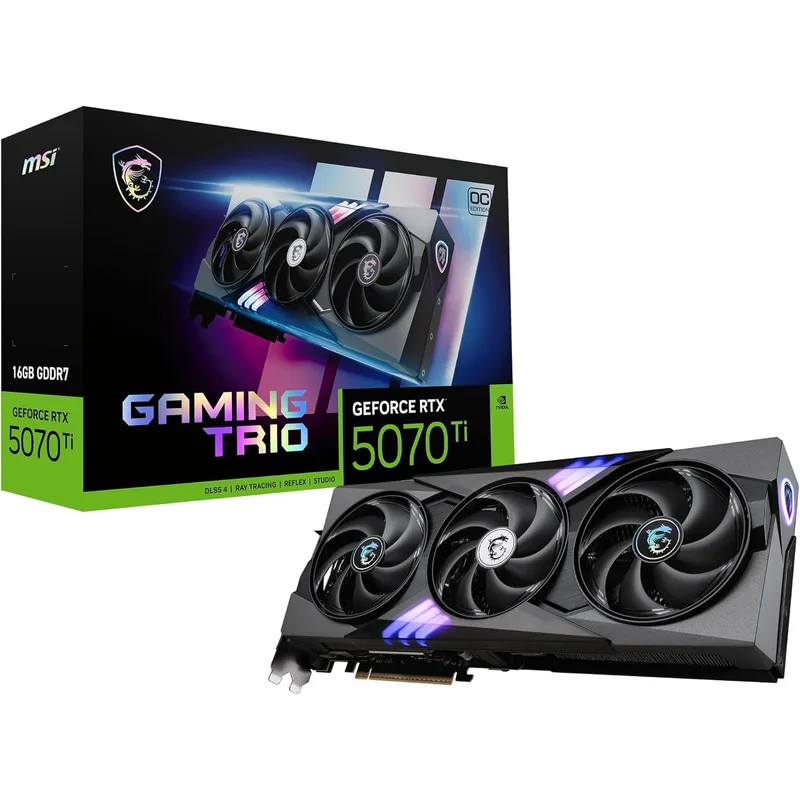
The MSI RTX 5070 Ti 16G Gaming Trio OC uses a trimmed Blackwell GB203 die with 70 RT cores versus the 5080’s 84, paired with the same 16GB GDDR7 / 256-bit bus configuration. In pure RT throughput, the gap between the 5070 Ti and 5080 is roughly 15-20% in Cyberpunk 2077 RT workloads and 3DMark Speed Way benchmarks — not enough to justify the $200-350 premium the 5080 carries in current market pricing.
At 1440p with Cyberpunk 2077 RT Ultra and DLSS 4 Quality mode, the 5070 Ti delivers 80-95fps natively — playable without MFG if you’re targeting 60fps. Enable 2x MFG and that climbs to ~160fps. Enable 4x MFG and displayed output exceeds 200fps at 1440p, which is the sweet spot for 165Hz monitor owners.
The MSI TRI FROZR 4 cooling solution handles the 300W TDP well in sustained RT workloads. RT loads tend to have higher GPU utilization variance than rasterization — the BVH traversal creates irregular compute loads — and the triple-fan design keeps core temperature under 75°C across both burst and sustained scenarios.
One important compatibility note: 300W TDP requires a 750W PSU minimum with a modern CPU in the system. If you’re upgrading from a GTX 1080 Ti-era build, check the PSU first.
NVIDIA GeForce RTX 5070 Founders Edition
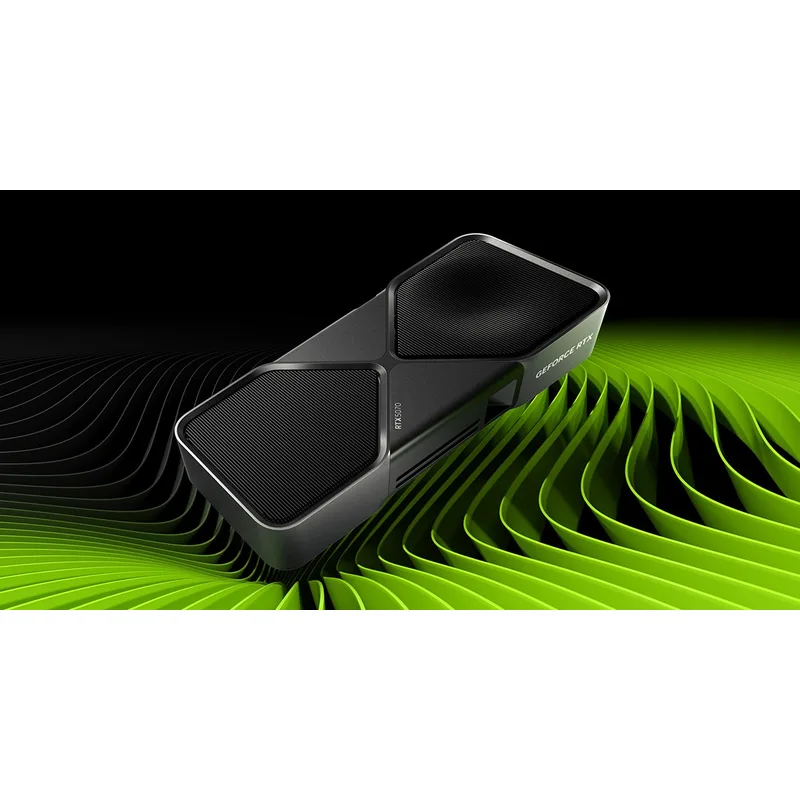
NVIDIA GeForce RTX 5070 Founders Edition
The NVIDIA GeForce RTX 5070 is the most interesting RT story in 2026. On paper, 48 RT cores on a 12GB GDDR7 / 192-bit bus sits meaningfully below the RTX 5070 Ti in RT throughput. At 1440p, native RT performance in Cyberpunk 2077 RT Ultra lands at 60-65fps — playable, but not comfortable margin above 60Hz.
Enable 4x DLSS MFG and displayed output at 1440p reaches 170-180fps. That’s a 2.5-3x effective frame rate multiplier on top of DLSS Quality super resolution, turning a 60fps native render into 170fps output that’s smooth on any 144Hz or 165Hz panel. No other card at $549-$649 in 2026 can do this.
The VRAM ceiling is the honest downside. At 4K with Cyberpunk 2077 Overdrive (Overdrive RT preset, Ultra textures), native 4K pushes the 12GB GDDR7 to capacity. The practical workaround is running DLSS at Quality mode, which renders at ~1800p equivalent and keeps VRAM usage under the limit — the output is 4K with minimal visible quality loss. If you’re specifically targeting native 4K path tracing without upscaling, the RTX 5070 Ti or RTX 5080 with 16GB is the right call.
For 1440p RT gaming — the most common use case — the RTX 5070 with DLSS 4 delivers more displayed RT frames than the RX 9070 XT or RTX 4070 Super at competitive pricing.
Sapphire Pulse AMD Radeon RX 9070 XT 16GB
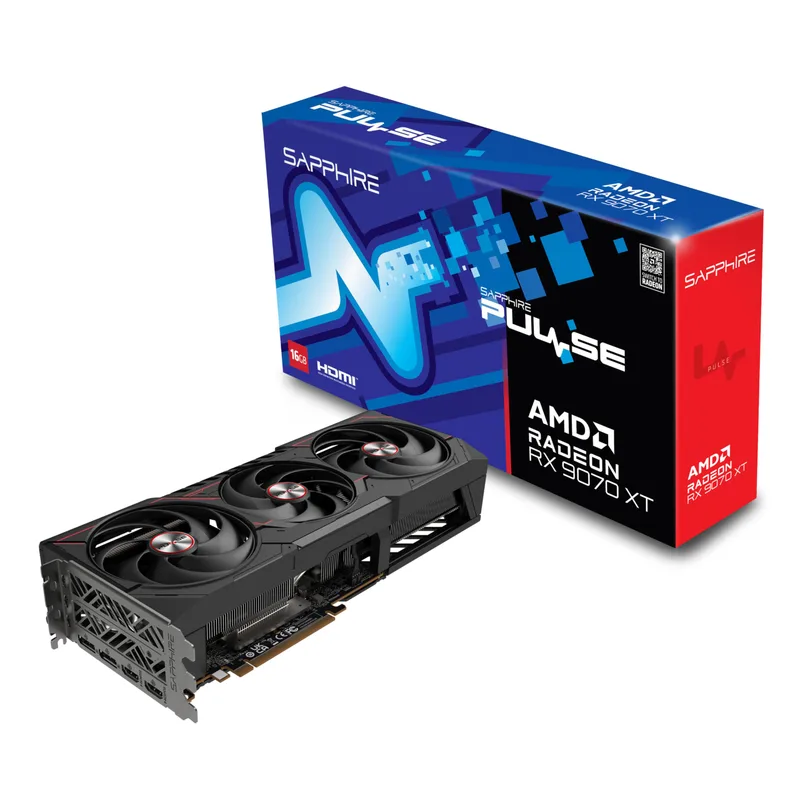
The Sapphire Pulse RX 9070 XT brings RDNA 4’s most significant architectural change: 64 third-generation RT Accelerators that operate at roughly double the RT throughput per clock of RDNA 3. Compared to the RX 7900 XTX, the RX 9070 XT improves RT performance by approximately 45% in GamersNexus testing — a larger RT generational gain than anything AMD has shipped previously.
Against NVIDIA, the gap remains real but has narrowed. The RTX 5070 leads the RX 9070 XT by approximately 21% in 3DMark Speed Way and by a wider margin (around 38%) in Black Myth: Wukong at 4K RT. Performance variance across titles is high — some games show AMD within 10-15% of NVIDIA, others show a 35-40% gap depending on how RT effects are implemented.
The 16GB GDDR6 on a 256-bit bus is a genuine advantage at a price point where the RTX 5070 has only 12GB. In path-traced titles where VRAM capacity is the binding constraint rather than RT compute, the 9070 XT holds its position longer. For buyers who play Cyberpunk Overdrive at 4K or work in applications that stress GPU VRAM, the extra 4GB matters.
FSR 4 neural super resolution (Radeon RX 9000 only) closes the upscaling quality gap to DLSS 4 Super Resolution significantly, but AMD’s Fluid Motion Frames adds one generated frame, not two or three. The effective displayed frame rate ceiling with FSR 4 + FMF at 4K path tracing remains well below what DLSS 4 4x MFG delivers on RTX 5000 cards.
NVIDIA GeForce RTX 4070 Super Founders Edition
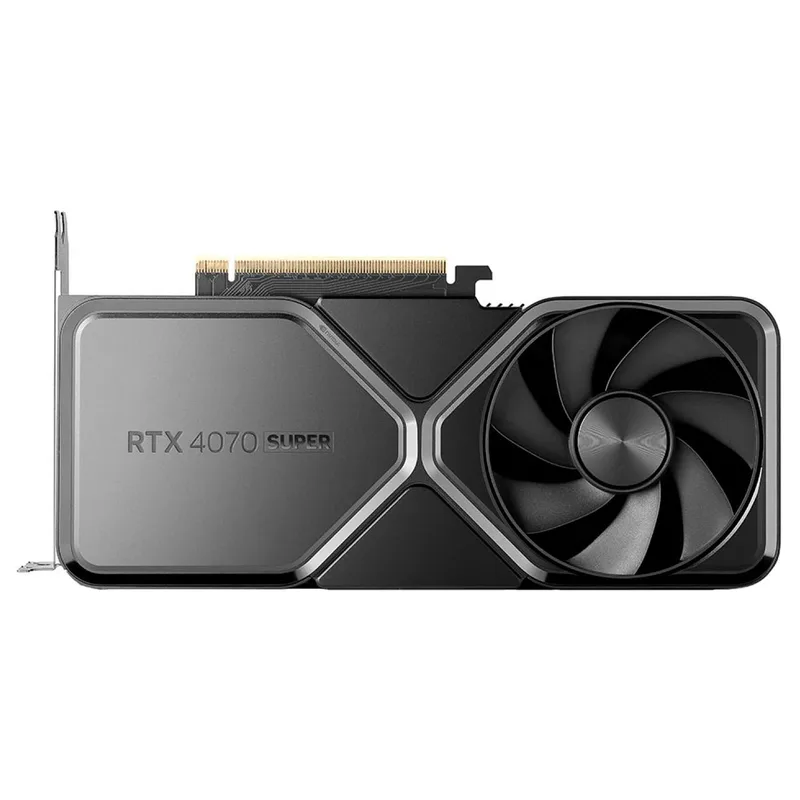
The NVIDIA RTX 4070 Super represents the last-generation price entry for ray tracing at $449-$499. Ada Lovelace’s 4th-gen RT cores are capable hardware — the 60 RT cores in the AD104 die handle selective RT (shadow and reflection effects only) and full RT (all effects short of path tracing) at 1080p-1440p without falling below 50fps with DLSS Quality enabled.
Where the RTX 4070 Super hits its limit is path tracing and DLSS 3. Full path tracing in Cyberpunk Overdrive at 1440p drops to 25-30fps native. DLSS 3 single-frame generation pushes that to ~50-60fps displayed — playable at low settings, but the frame pacing of single-frame gen can be perceptible in fast motion. DLSS 4’s multi-frame generation is locked to RTX 5000 architecture and isn’t coming to Ada Lovelace via driver update.
At $449-$499 in March 2026, the RTX 4070 Super competes with the RX 9070 XT at ~$600 and the RTX 5070 at ~$549-$649. For pure RT value, the RTX 5070’s DLSS 4 MFG makes the $100-$150 premium look justified when RT gaming is a priority. The 4070 Super’s case is strongest for 1080p-1440p selective RT at a strict budget ceiling.
When Is Ray Tracing Worth Enabling?
The answer depends entirely on which GPU you’re running and which game you’re playing.
Enable RT without hesitation: On an RTX 5070 or faster, full RT (not path tracing) at 1440p with DLSS Quality enabled delivers a better visual and frame-rate result than native 4K rasterization on most titles. Control, Cyberpunk 2077 (RT Ultra preset, not Overdrive), Metro Exodus Enhanced Edition, Quake II RTX, and Minecraft RTX are all designed around RT as the primary lighting solution — the visual difference versus rasterization is not subtle.
Enable RT selectively: On an RTX 4070 Super or RX 9070 XT at 1440p, enable RT reflections and RT shadows but leave global illumination on rasterization fallback where the game allows it. Most titles permit per-effect RT toggles. This delivers the most visible RT improvements (accurate reflections, soft contact shadows) at a 15-25% GPU overhead rather than 50-60%.
Skip RT: At 1080p on a GPU below RTX 4070 Super, RT overhead reduces frame rates without delivering the resolution headroom that makes the trade-off worthwhile. Path tracing is a non-starter on any card below the RTX 5070 Ti for 4K, and below the RTX 5070 for 1440p with MFG.
Performance Expectations
Cyberpunk 2077 at 1440p, RT Ultra preset (full RT, not Overdrive), with DLSS/FSR at Quality mode:
| GPU | Native RT FPS | With AI SR (Quality) | With 4x MFG | Notes |
|---|---|---|---|---|
| RTX 5080 FE | ~90-100 fps | ~110-125 fps | ~200+ fps | 4x MFG available, DLSS Quality ~1800p internal |
| RTX 5070 Ti | ~80-95 fps | ~100-115 fps | ~190-200 fps | 16GB GDDR7 — no VRAM constraints |
| RTX 5070 FE | ~60-65 fps | ~80-95 fps | ~170-180 fps | 4x MFG, Blackwell exclusive |
| RX 9070 XT | ~45-55 fps | ~65-80 fps (FSR 4) | ~90-105 fps (FMF, 1x gen) | No multi-frame gen; FMF adds 1 frame only |
| RTX 4070 Super | ~35-45 fps | ~50-65 fps | ~80-100 fps (1x gen only) | DLSS 3 FG; single-frame generation only |
MFG figures are displayed frame rates, not rendered. Latency increases with MFG — NVIDIA Reflex partially offsets this. Testing based on available launch benchmarks and GamersNexus/TechSpot review data.
Cyberpunk 2077 at 4K, Overdrive (full path tracing), with DLSS Quality:
| GPU | Native PT FPS | DLSS Quality + 4x MFG | VRAM Notes |
|---|---|---|---|
| RTX 5080 FE | ~50 fps | ~120+ fps | 16GB — no constraints |
| RTX 5070 Ti | ~40-48 fps | ~100-110 fps | 16GB — no constraints |
| RTX 5070 FE | ~28-35 fps | ~80-95 fps | 12GB — requires DLSS Quality to stay under limit |
| RX 9070 XT | ~20-28 fps | ~40-55 fps (FMF only) | 16GB capacity OK; MFG absent |
| RTX 4070 Super | ~15-22 fps | ~35-45 fps (1x FG) | Not recommended for path tracing |
Upgrade Path
If you’re on a pre-RT GPU (GTX 1000/2000 series without RT cores): Any card from RTX 3070 onward has functional RT cores. The current sweet spot for a new purchase is RTX 5070 — the DLSS 4 MFG exclusivity makes it the correct minimum tier if RT is a primary use case. Don’t buy an RTX 3000 or RTX 4060 for RT gaming in 2026; the MFG limitation is real.
If you’re on RTX 4070 / RTX 4070 Ti: The RTX 5070 Ti is the logical step up if path tracing at 1440p-4K matters to you. The jump from 4th-gen to 5th-gen RT cores plus DLSS 4 MFG is the most meaningful RT performance increase you can achieve without an RTX 5090. If you’re satisfied with 1440p full RT (not path tracing), the RTX 4070 Super to RTX 4070 Ti range is still productive — wait for 5070 Ti pricing to settle closer to MSRP if possible.
If you’re on an RX 6000 / 7000 AMD card: RDNA 4’s RT improvements are substantial — the RX 9070 XT is the right AMD RT card for 2026 if you want to stay in the AMD ecosystem. If ray tracing is your priority over rasterization value, NVIDIA’s MFG advantage is difficult to argue past. The RX 9070 XT’s 16GB buffer is the strongest competitive argument against the RTX 5070 specifically.
On DLSS 4 vs FSR 4 for non-RT workloads: At 1440p upscaling quality, FSR 4 on RDNA 4 and DLSS 4 Super Resolution on Blackwell are genuinely competitive — the quality gap has largely closed for static scenes. The divergence appears in motion sharpness and transparency rendering, where DLSS 4’s Transformer model maintains an edge. For pure rasterization gaming with upscaling, both stacks are functional.
FAQ
Does enabling ray tracing always make a game look better? Not universally. RT improves visual accuracy in games designed around it as the primary lighting system (Cyberpunk Overdrive, Alan Wake 2, Quake II RTX). In games that added RT as an option post-launch over a rasterized lighting system, the improvement can be subtle or inconsistent. Check Digital Foundry’s game-specific RT analysis before assuming the performance cost is worth it for a specific title.
What’s the difference between ray tracing and path tracing? Ray tracing can refer to using real-time ray casting for individual effects — just reflections, just shadows — while the rest of the frame uses rasterization. Path tracing is fully ray-traced rendering where every light interaction, including indirect bounces, caustics, and global illumination, is computed via ray casting. Path tracing is far more demanding and is what “Overdrive mode” in Cyberpunk 2077 refers to.
Does DLSS 4 Multi Frame Generation add input latency? Yes. Generating frames between rendered frames means the displayed frame may be 2-3 render cycles old. NVIDIA Reflex reduces the scan-out latency component, partially offsetting MFG’s latency penalty. In practice, 4x MFG adds roughly 15-25ms of additional display latency versus base rendering. Competitive gaming is affected; single-player RT games are not.
Will AMD get Multi Frame Generation parity? AMD has not announced Multi Frame Generation (multiple generated frames per rendered frame) for FSR. Fluid Motion Frames adds one generated frame per rendered frame, equivalent to DLSS 3 FG. DLSS 4’s 2-6x multi-frame generation remains NVIDIA-exclusive through March 2026 with no public AMD roadmap for equivalent technology.
Is the RTX 4070 Super still worth buying in 2026 for RT? At $449-$499, it handles 1080p-1440p selective RT and full RT competently with DLSS Quality enabled. If path tracing is a priority, $549-$649 for the RTX 5070 makes more financial sense given the DLSS 4 MFG difference. The RTX 4070 Super is the correct answer only if budget strictly caps at $500.
The Bottom Line
For 1440p RT gaming in 2026, the NVIDIA RTX 5070 Founders Edition at $549 MSRP is the minimum sensible entry if ray tracing is a priority — DLSS 4 Multi Frame Generation turns native 60fps RT into 170fps displayed output, and no card below it in the RTX 5000 stack supports MFG. For 4K RT gaming with path-tracing headroom, the MSI RTX 5070 Ti 16G Gaming Trio OC at $749-$899 delivers the best RT-per-dollar of any current Blackwell card, with 16GB GDDR7 that avoids the VRAM constraints the 12GB RTX 5070 hits in Cyberpunk Overdrive. The Sapphire Pulse RX 9070 XT is the right call if you want 16GB GDDR6 at the RTX 5070’s price tier and are comfortable with DLSS 4 MFG being off the table.