The TDP debate got louder in early 2026 after AMD leaked details of a Zen 5 refresh where some 65W chips reportedly push base clocks up by 400 MHz while still listing the same wattage — and Intel’s Arrow Lake flagships continue running north of 200W under load despite an official 125W label. TDP numbers on box and spec sheets have rarely been more confusing. This guide explains what they actually measure, how to read them, and how to use them to choose the right cooler and PSU.
| Spec | AMD Ryzen 5 9600X 8.5/10 | AMD Ryzen 7 9800X3D 9.5/10 | Intel Core Ultra 7 265K 8.2/10 | AMD Ryzen 9 9950X 8.8/10 | Intel Core Ultra 9 285K 7.9/10 |
|---|---|---|---|---|---|
| architecture | Zen 5 | Zen 5 + 3D V-Cache | Arrow Lake (Core Ultra 200S) | Zen 5 | Arrow Lake (Core Ultra 200S) |
| cores | 6C / 12T | 8C / 16T | 20C (8P + 12E) / 20T | 16C / 32T | 24C (8P + 16E) / 24T |
| boost_clock | 5.4 GHz | 5.2 GHz | 5.5 GHz | 5.7 GHz | 5.7 GHz |
| socket | AM5 | AM5 | LGA 1851 | AM5 | LGA 1851 |
| tdp | 65W | 120W | 125W (PBP) / 250W MTP | 170W | 125W (PBP) / 250W MTP |
| peak_power | ~75W sustained | ~110W sustained gaming | ~180W sustained multi-thread | ~195W sustained workloads | ~198–260W under all-core load |
| Rating | 8.5/10 | 9.5/10 | 8.2/10 | 8.8/10 | 7.9/10 |
Prices change daily — tap Check Price for the current Amazon price.
Prices change daily — tap Check Price for the current Amazon price.
CPUs at a Glance: TDP vs. Real-World Power Draw
| CPU | TDP (Official) | Sustained Load Draw | Peak Draw | Cooler Minimum |
|---|---|---|---|---|
| AMD Ryzen 5 9600X | 65W | ~75W | ~90W | 65W air cooler |
| AMD Ryzen 7 9800X3D | 120W | ~90–115W gaming | ~130W | 120W air cooler |
| Intel Core Ultra 7 265K | 125W (PBP) | ~180W all-core | ~200W | 240mm AIO |
| AMD Ryzen 9 9950X | 170W | ~195W | ~210W | 280mm AIO |
| Intel Core Ultra 9 285K | 125W (PBP) | ~198W | ~260W | 360mm AIO |
The Core Ultra 9 285K table entry tells the whole story: a CPU with a 125W label that needs a 360mm AIO to stay stable under real workloads.
What TDP Actually Means
The Original Definition
TDP — Thermal Design Power — was created so system integrators could size coolers and power delivery. Intel defined it as the heat a cooling solution must dissipate when the processor runs at base frequency with a workload representative of real applications. It was never intended to represent peak or worst-case power consumption.
The problem: modern CPUs rarely run at base clock. Every chip ships with turbo boost enabled by default, and most tasks — games, compilers, video editors — trigger sustained boost states that draw significantly more power than the TDP implies.
Intel’s Two Numbers: PBP and MTP
Intel now separates base power into two figures:
- PBP (Processor Base Power) — what Intel calls “TDP.” The Core Ultra 9 285K’s PBP is 125W.
- MTP (Maximum Turbo Power) — the absolute ceiling the chip can draw in burst scenarios. The 285K’s MTP is 250W.
Most Z890 motherboards ship with power limits set to Adaptive Mode, which allows sustained all-core draw well above PBP. In Cinebench R23 multi-thread runs, the 285K averages ~198W. In AVX-heavy workloads with some board configurations, it approaches 260W. The 125W PBP number appears on the box, but it describes behavior that never occurs under actual use.
AMD’s PPT System
AMD uses a different framework:
- TDP — same concept as PBP, describes base operating conditions
- PPT (Package Power Tracking) — the actual motherboard power delivery limit AMD specifies for each chip
The Ryzen 9 9950X carries a 170W TDP with a 200W PPT. Under HandBrake x265 encoding, it measures around 194W — close to the PPT ceiling. AMD’s numbers are generally more honest than Intel’s. The Ryzen 5 9600X at 65W TDP typically draws 70–80W under sustained gaming, which makes the label useful for cooling decisions.
Why “TDP” Gets Misquoted
Motherboard defaults changed everything. When Intel introduced its Performance Hybrid architecture on 12th Gen, it also removed default power limits on Z-series boards, letting the chip draw whatever it wants. OEMs followed by shipping boards in “unlimited” modes. The i9-14900K — rated 125W PBP — regularly drew 250W+ in reviews because no limit was enforced. Arrow Lake improved efficiency dramatically, but the same measurement confusion persists.
CPU Deep Dives: TDP in Practice
1. AMD Ryzen 5 9600X — The Honest 65W Label
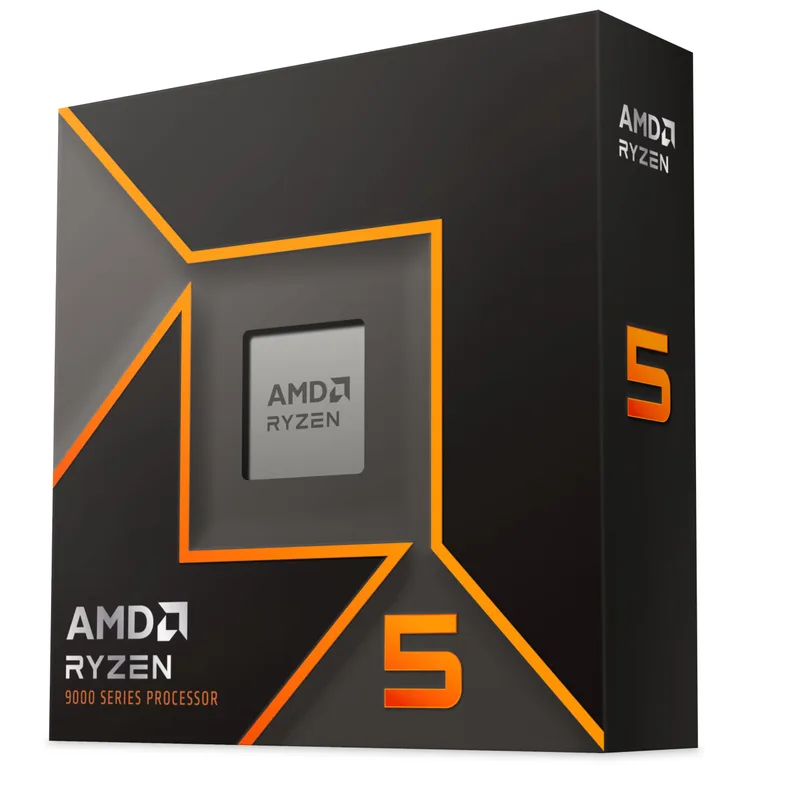
The Ryzen 5 9600X is the cleanest example of a TDP label that means what it says. Under gaming workloads, it pulls 65–75W consistently. Under the Cinebench R24 single-core loop, it hits around 80W. Even in worst-case stress tests like Prime95 without AVX, it tops out around 88W.
That predictability matters practically. A $30 Thermalright Assassin X120 SE rated for 130W handles it comfortably with temperature headroom to spare. You don’t need to second-guess cooler specs or worry about thermal throttling on a B650 board running default settings.
For a build capped at $700–$900, the 9600X delivers gaming performance within 5% of the Ryzen 7 9800X3D at $260 less — and the thermal simplicity is part of the value proposition.
Socket: AM5 | Cooler class: 65W air (e.g., Thermalright Assassin X120 SE, be quiet! Pure Rock 2)
2. AMD Ryzen 7 9800X3D — Conservative TDP Rating
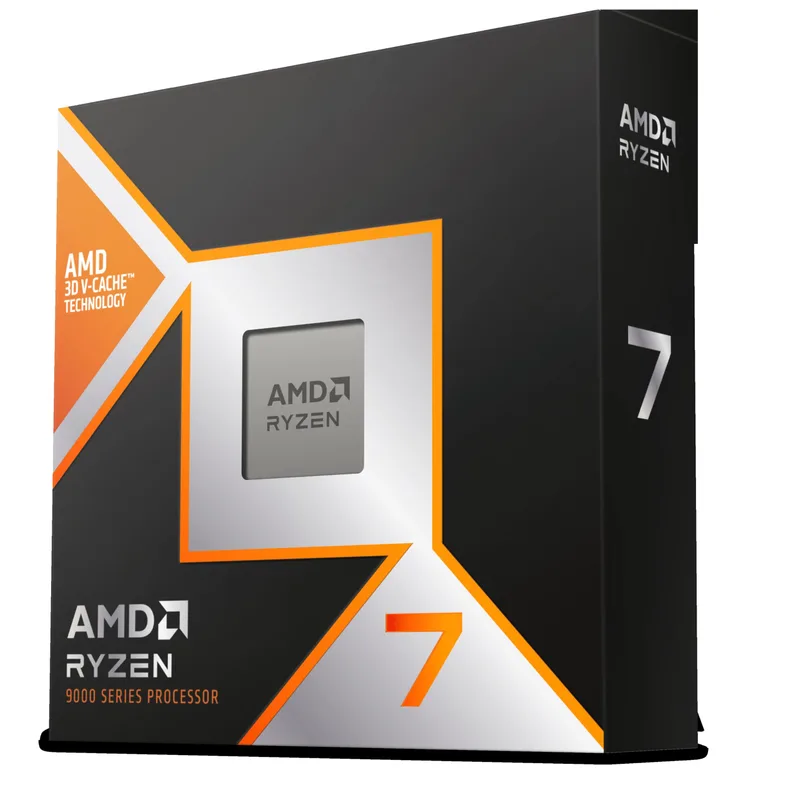
The Ryzen 7 9800X3D carries a 120W TDP, but gaming workloads typically only pull 90–115W — below the rating. That’s because AMD conservatively rates 3D V-Cache chips: the stacked SRAM adds heat density concerns that make the engineers pad the TDP ceiling, but the CPU doesn’t come close to that ceiling in most gaming use cases.
The result is a chip that runs cool in the scenario where you actually use it. A Thermalright Peerless Assassin 120 SE (~$35, rated 240W) has enough margin. Under AVX-heavy compute — rendering, compilation — the 9800X3D does approach 130W, but those workloads aren’t why you’d buy this chip.
The takeaway for TDP literacy: a chip’s TDP under its primary use case may differ from its TDP under stress tests. The 9800X3D is a gaming chip; rate your cooling for gaming power draw, not worst-case synthetic.
Socket: AM5 | Cooler class: 120W+ air or 240mm AIO
3. Intel Core Ultra 7 265K — The Gap Begins
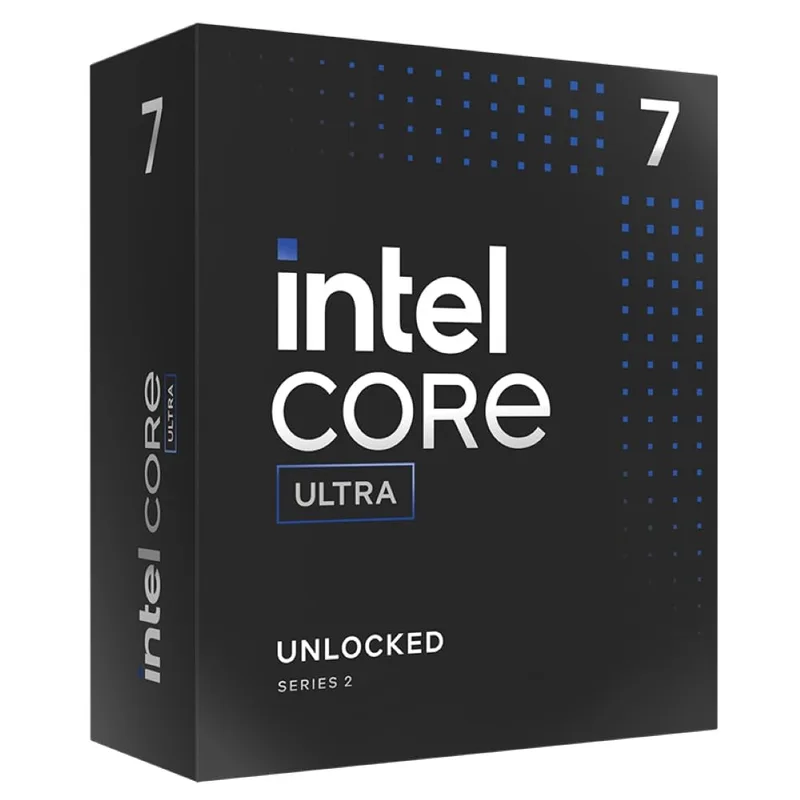
The Core Ultra 7 265K lists 125W PBP. Under actual workloads with a Z890 board at Adaptive Mode defaults, the chip draws 180–200W all-core in Cinebench R23. Gaming draws are lower — around 100–130W — which is why a 240mm AIO is sufficient for gaming-focused builds.
Where the 265K shows TDP misleading users most: anyone who buys a 150W-rated air cooler based on the 125W PBP label will find the chip thermal throttling in productivity workloads. Intel’s Adaptive Mode allows sustained multi-core turbo that the PBP number never anticipated.
The 265K’s Arrow Lake efficiency is real, though. Under equivalent workloads, it draws roughly 50W less than the 13th Gen i9-13900K at the same task completion rate. Arrow Lake’s improvement over its predecessors is genuine — the 125W label just doesn’t tell you that story.
Socket: LGA 1851 | Cooler class: 240mm AIO minimum for sustained workloads, 280mm+ preferred
4. AMD Ryzen 9 9950X — High TDP, Honest Rating
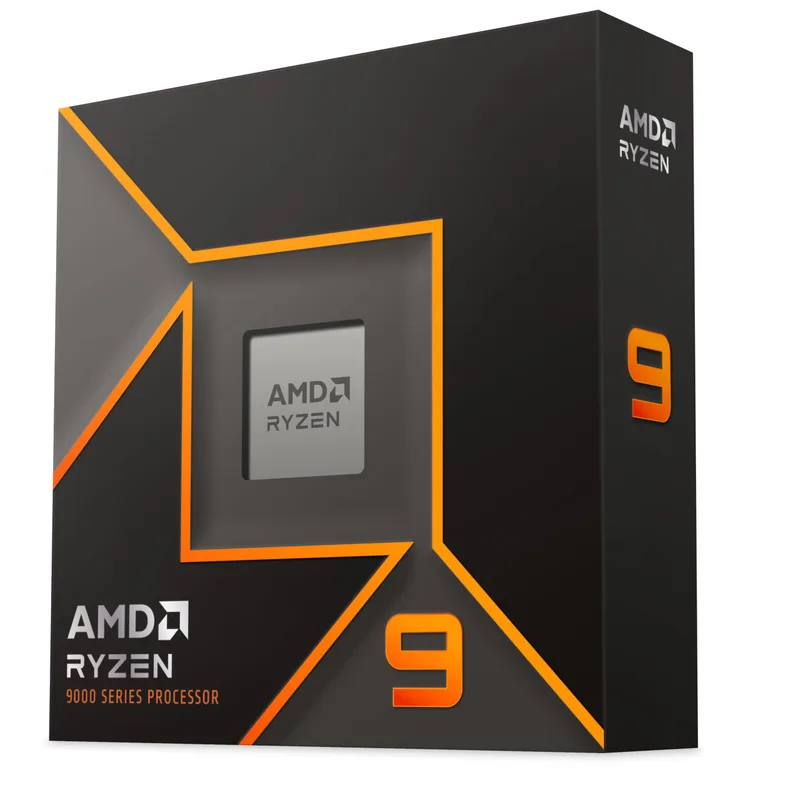
The Ryzen 9 9950X at 170W TDP / 200W PPT is one of the most transparent power ratings in the current market. Under HandBrake x265 — a sustained real-world workload — it draws around 194W, right at the PPT ceiling. Under Prime95 with AVX, it can reach around 200–210W briefly.
That honesty matters for planning. If you’re building a workstation around the 9950X, you know you need a 360mm AIO and a 1000W PSU. The numbers on AMD’s spec sheet get you close to what you’ll actually measure.
The 9950X’s 16 cores and 32 threads justify the power budget in creative workloads: it outperforms the 9800X3D by roughly 80% in Blender multi-thread rendering while drawing only 65–80% more power. The performance-per-watt scaling at 16 cores is solid. What it isn’t is a gaming chip — buy the 9800X3D for games, the 9950X for workstations.
Socket: AM5 | Cooler class: 280mm or 360mm AIO required
5. Intel Core Ultra 9 285K — The Widest TDP Gap
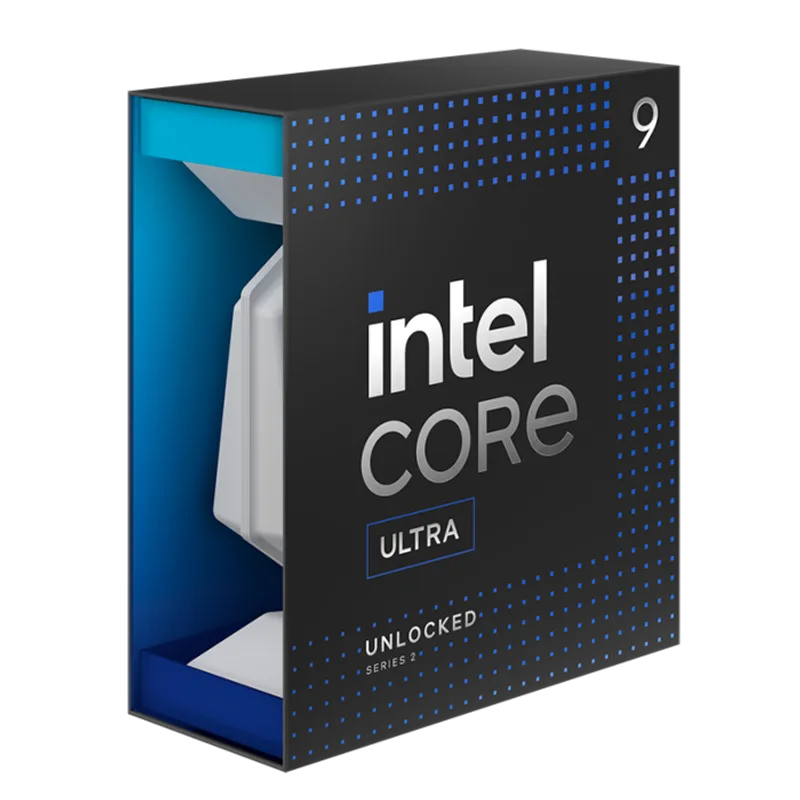
The Core Ultra 9 285K is the most instructive example of TDP disconnect in 2026. Official PBP: 125W. MTP ceiling: 250W. Actual Cinebench R23 all-core average: ~198W. Actual peak under certain board configurations: ~260W.
That’s a 2× gap between the label consumers see on the box and the power the chip actually draws. You cannot size a cooler for the 285K based on its PBP spec. You need a 360mm AIO rated for 250W+ to keep it running at full boost without throttling.
To be fair, the 285K is genuinely more efficient than the chips it replaced. The 14900K drew 320W+ regularly under the same workloads. Arrow Lake cut that to ~198-260W and delivered comparable or better performance. That’s meaningful progress — but the 125W label doesn’t communicate any of it, which is exactly the problem with TDP as a consumer metric.
The 285K earns its place in multi-threaded workstations: 24 cores edge out the Ryzen 9 9950X in Cinebench R24 multi-thread benchmarks. Gaming, though, is not its strength — Zen 5 AMD chips beat it in most titles.
Socket: LGA 1851 | Cooler class: 360mm AIO minimum — no exceptions
Cooling Requirements by TDP Class
Matching your cooler to actual power draw (not the TDP label) prevents thermal throttling and premature cooler wear.
| Power Draw Class | Cooler Tier | Example Coolers | Cost |
|---|---|---|---|
| Up to 65W | Entry air | Thermalright Assassin X120 SE, be quiet! Pure Rock 2 | $25–40 |
| 65W–120W | Mid air | Thermalright Peerless Assassin 120 SE, Noctua NH-U12S | $35–60 |
| 120W–180W | Dual-tower air or 240mm AIO | Noctua NH-D15, DeepCool AK620, Corsair H100i | $60–120 |
| 180W–250W | 280mm or 360mm AIO | Corsair H150i, NZXT Kraken 360, Arctic Liquid Freezer III 360 | $100–160 |
| 250W+ | High-end 360mm AIO or custom loop | Corsair H170i, Enermax LIQFUSION 360, custom loop | $150+ |
For Intel’s “125W PBP” chips (265K, 285K), budget from the 180W+ row — not the 65W–120W row. The PBP label describes a state that never occurs under real workloads on a Z890 board.
PSU Planning Based on TDP
A common mistake: adding CPU TDP plus GPU TDP and rounding up. For Intel chips especially, you need to budget for actual sustained CPU draw.
| Build Scenario | CPU Actual Draw | GPU Draw (est.) | Recommended PSU |
|---|---|---|---|
| Budget (9600X + RX 7700) | 75W | 140W | 550W Gold |
| Mid-range (9800X3D + RTX 4070) | 115W | 200W | 650W Gold |
| High-end (9950X + RTX 4090) | 200W | 450W | 1000W Platinum |
| Flagship (285K + RTX 4090) | 260W | 450W | 1000–1200W Platinum |
The RTX 4090 draws up to 450W under load. Pair it with a 285K at 260W, add 50–80W for board, RAM, and storage, and you’re targeting 760–790W peak system draw. A 1000W PSU at 80% load is appropriate — not a 750W unit.
When TDP Matters Most for Your Build
Small form factor builds: ITX and mATX cases have limited airflow. A 65W chip like the 9600X fits a Noctua NH-L12S. A 285K drawing 260W needs an AIO radiator that may not fit at all. Match TDP to your case’s cooling capacity before buying the CPU.
Noise targets: Lower TDP means the cooler fan runs slower. The 9600X on a quality air cooler can run near-silent at 35°C ambient. The 285K under load will push a 360mm AIO to 1500+ RPM.
Power bills at scale: The difference between a 65W and 200W CPU adds up. Running 8 hours/day over a year: 65W = ~190 kWh, 200W = ~584 kWh. At $0.15/kWh, that’s roughly $28 vs. $88 per year — a $60 difference that erodes savings on a cheaper chip over time.
Overclocking: Higher base TDP chips have more thermal headroom to exploit. The 9950X’s 200W PPT has overhead to push all 16 cores in PBO. The 9600X’s 65W PPT is tight — aggressive PBO tuning gains 2–5% before hitting power limits.
FAQ
Q: Can I use the TDP number to choose my PSU? For AMD chips rated 65W–170W, the TDP is close enough to actual draw that you can use it as a planning number, adding 15% buffer. For Intel Arrow Lake chips with PBP ratings, use the MTP figure (250W for the flagship SKUs) as your PSU planning baseline. Never use PBP as the ceiling.
Q: My CPU runs hotter than expected. Is TDP the cause? Probably not TDP itself — more likely the motherboard is running no power limits, allowing the chip to boost indefinitely. Check your BIOS for PL1/PL2 settings (Intel) or PPT/TDC/EDC limits (AMD). Restoring manufacturer defaults typically brings sustained power draw in line with TDP ratings and reduces temperatures.
Q: Does a higher TDP always mean more heat? More watts always means more heat. But thermal design also matters — a 170W AMD chip spread across a large IHS may run cooler than a 150W Intel chip with a smaller die. Heat density (watts per square millimeter of IHS) matters as much as total wattage.
Q: Is TDP the same across desktop and laptop CPUs? No. Mobile TDP ratings (15W, 28W, 45W) refer to completely different power and thermal envelopes than desktop ratings. A laptop’s Ryzen 9 9955HX at 55W TDP is not comparable to a desktop 9950X at 170W — different silicon configurations, different voltage targets.
Q: Will future CPUs improve TDP accuracy? AMD has historically maintained more honest TDP labeling. Intel has moved to the PBP/MTP dual-number system, which is more transparent than a single TDP figure — if you know where to look. Until motherboard defaults change, the gap between label and reality will persist for Intel’s unlocked K-series chips.
The Bottom Line
TDP is a thermal engineering target, not a power meter reading. AMD’s Zen 5 chips (9600X, 9800X3D, 9950X) rate close to actual sustained draw, making them easier to plan around. Intel’s Arrow Lake K-series uses a base TDP (PBP) that describes conditions that never occur under real workloads — size your cooler and PSU for the MTP figure instead. The Ryzen 5 9600X at 65W is the most straightforward chip to cool and power in the current lineup; the Core Ultra 9 285K is the starkest reminder that the number on the box often has little to do with what the chip actually draws.