Affiliate disclosure: PCBuildRanked earns a commission on qualifying Amazon purchases at no extra cost to you.
The AMD Ryzen 7 9800X3D has made Intel’s gaming narrative essentially impossible to defend in 2026. It beats Intel’s flagship Core Ultra 9 285K by roughly 35% at 1080p across a wide game library, and that gap hasn’t narrowed. Intel’s Arrow Lake Refresh (launched March 26, 2026) brought the promising Core Ultra 7 270K Plus at $299 — but even that chip doesn’t close the gap against AMD’s 3D V-Cache lineup.
Meanwhile, AMD expanded its X3D stack in March 2026 with the Ryzen 9 9900X3D ($599) and Ryzen 9 9950X3D ($699), pushing the 9800X3D one tier lower and putting downward pressure on its price: it’s now $420, down from $479 at launch. If you’re building a gaming PC, the AMD case has never been clearer.
| Spec | AMD Ryzen 7 9800X3D 9.5/10 | Intel Core Ultra 9 285K 7.8/10 | AMD Ryzen 9 9950X 8.8/10 | Intel Core Ultra 5 245K 7/10 | AMD Ryzen 5 9600X 8.2/10 |
|---|---|---|---|---|---|
| cores | 8 cores / 16 threads | 24 cores (8P + 16E) / 24 threads | 16 cores / 32 threads | 14 cores (6P + 8E) / 14 threads | 6 cores / 12 threads |
| boost_clock | 5.2 GHz | 5.7 GHz | 5.7 GHz | 5.2 GHz | 5.4 GHz |
| l3_cache | 96MB (3D V-Cache) | 36MB | 64MB | 24MB | 32MB |
| tdp | 120W | 125W | 170W | 125W | 65W |
| socket | AM5 | LGA 1851 | AM5 | LGA 1851 | AM5 |
| architecture | Zen 5 | Arrow Lake | Zen 5 | Arrow Lake | Zen 5 |
| Rating | 9.5/10 | 7.8/10 | 8.8/10 | 7/10 | 8.2/10 |
Prices change daily — tap Check Price for the current Amazon price.
Prices change daily — tap Check Price for the current Amazon price.
Quick Picks
- Gamers: AMD Ryzen 7 9800X3D ($420) — fastest gaming CPU at any price, now cheaper than at launch
- Content creators / streamers: AMD Ryzen 9 9950X ($529) — 32 threads, native AVX-512, down from $649 earlier this year
- Budget builders: AMD Ryzen 5 9600X ($199) — 65W, AM5 socket, down to $199 after sustained price cuts
AMD vs Intel in 2026: What Actually Changed
Arrow Lake’s Gamble Didn’t Pay Off for Gaming
Intel’s Arrow Lake (Core Ultra 200 series) launched on LGA 1851 in late 2026 with a completely redesigned tile-based architecture. The big moves: eliminated hyperthreading (so a 24-core 285K has 24 threads, not 48), and dramatically cut power consumption versus Raptor Lake.
The efficiency improvement is real. The 285K pulls significantly less power than the 13900K/14900K under workloads, and it runs cooler. But the gaming performance regressed. Reviewers at GamersNexus and Tom’s Hardware found the 285K averaging 8% slower than Intel’s own 14900K in 1080p gaming benchmarks, and ~12% slower than AMD’s previous-gen 7800X3D at launch.
Then AMD released the 9800X3D. The gap widened further.
Intel responded with Arrow Lake Refresh in March 2026. The Core Ultra 7 270K Plus ($299) added ~15% gaming uplift over the 265K and matched the 285K’s 24-core count at two-thirds the price. The Core Ultra 5 250K Plus ($199) added four E-cores and DDR5-7200 support over the 245K. Intel cancelled the planned Core Ultra 9 290K Plus, leaving the 270K Plus as the effective flagship of the Refresh lineup. These are welcome improvements — but neither closes the gap against the 9800X3D in gaming.
AMD’s Platform Longevity Advantage
AMD has used AM5 for Ryzen 7000, 8000, and 9000 series processors. If you buy a B650 or X670 motherboard today, you have a documented upgrade path to future Zen 6 chips. AMD expanded the X3D stack in March 2026: the Ryzen 9 9900X3D ($599, 12 cores) and Ryzen 9 9950X3D ($699, 16 cores) both launched, adding gaming-plus-workstation options above the 9800X3D.
Intel’s LGA 1851 supports Arrow Lake Refresh drop-ins on existing Z890 boards — that’s a genuine plus. But Intel’s track record of socket changes every 1-2 generations makes the long-term upgrade path harder to trust compared to AM5.
For budget builders, this matters: a $199 Ryzen 5 9600X on an AM5 B650 board can upgrade to a 9800X3D later without touching the motherboard. The same board also supports every X3D chip AMD currently sells.
Power and Thermals
AMD’s Zen 5 efficiency advantage is clear at the lower end. The Ryzen 5 9600X runs at 65W TDP — a $30 tower cooler handles it. The Ryzen 7 9800X3D sits at 120W, manageable with a 240mm AIO or a quality tower like the Thermalright Peerless Assassin.
Intel’s Arrow Lake chips run at 125W base power. The 9950X is the outlier on the AMD side at 170W — it genuinely needs a 360mm AIO or better under sustained multi-core loads.
CPU Matchups by Use Case
Pure Gaming (Any Budget)
AMD wins every tier. The 9800X3D at $420 now costs $137 less than Intel’s 285K at $557 — and outgames it by ~35% at 1080p. At the budget tier, the Ryzen 5 9600X at $199 outpaces the Intel Core Ultra 5 245K at $269 by 12–17% in CPU-bound games, for $70 less.
Intel’s Arrow Lake Refresh 270K Plus at $299 is a meaningful step forward for Intel gaming performance, but it still trails the 9800X3D. At 4K, the gap shrinks significantly as the GPU takes over — but you’re still not giving anything up by choosing AMD.
Video Editing and Content Creation
This is genuinely competitive. Intel’s 285K has 24 cores and 24 threads; AMD’s 9950X has 16 cores and 32 threads. In single-core-sensitive applications like some Adobe Premiere workflows, the 285K’s 5.7 GHz P-cores are fast. In heavily parallelized work — Blender, Handbrake, DaVinci Resolve rendering — the 9950X’s 32 threads pull ahead, and its native AVX-512 support accelerates specific scientific and encoding tasks that Intel handles through software emulation.
At $529 vs the 285K at $557, the 9950X actually costs $28 less than Intel’s flagship — and still delivers more in thread-heavy workloads. If you want gaming on top of workstation performance, the 9950X3D at $699 adds 3D V-Cache — no compromises required.
Streaming + Gaming Simultaneously
The Ryzen 7 9800X3D handles this well despite having 8 cores, because the 3D V-Cache architecture keeps game performance high while the CPU handles encoding in parallel. The 9600X is where you’ll feel the strain — 6 cores with x265 encoding running alongside a demanding title at 1080p produces frame time variance. The 9800X3D at $449 is the right call if you stream regularly.
Budget Builds Under $250
The Ryzen 5 9600X at $199 is the standout. It outgames Intel’s Core Ultra 5 245K at $269 while running cooler at 65W vs 125W and sitting on AM5 for future upgrades. Intel’s Arrow Lake Refresh 250K Plus at $199 is the better Intel budget option over the 245K — same price, more cores, better gaming — but AMD still leads at this tier.
Detailed Reviews
AMD Ryzen 7 9800X3D
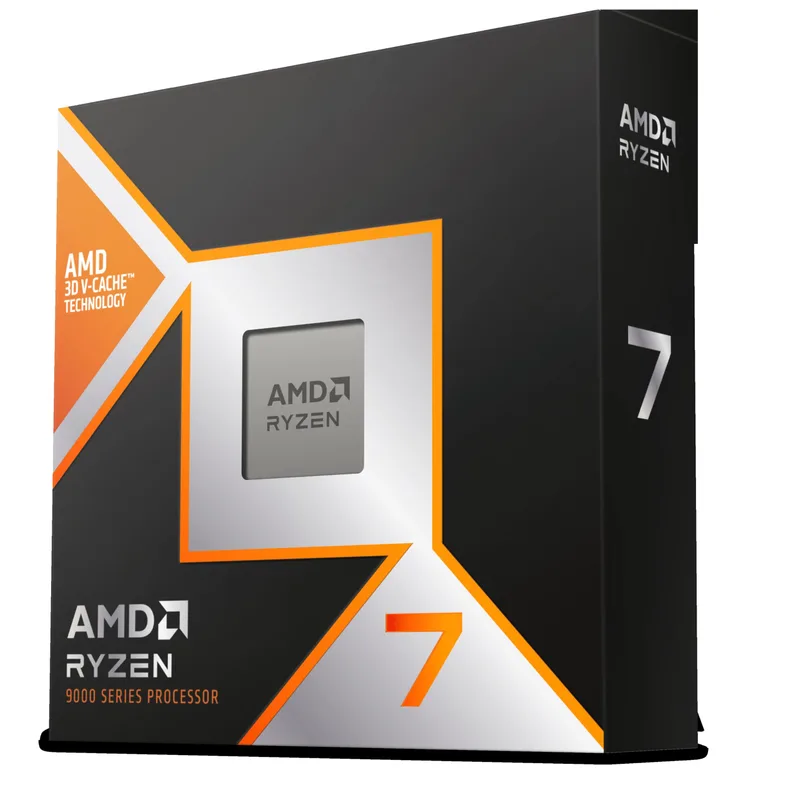
The AMD Ryzen 7 9800X3D is the best gaming CPU on the market. The 96MB L3 cache from 3D V-Cache stacking reduces cache misses in game workloads — that’s why the 9800X3D beats Intel’s 24-core 285K in gaming while having only 8 cores. The 5.2 GHz boost clock and Zen 5 IPC improvements push single-threaded performance further, and 120W TDP is respectably controlled.
At $420 (down from $479 at launch), the 9800X3D delivers better value than it did when it launched. AMD’s new X3D chips above it — the 9900X3D ($599) and 9950X3D ($699) — add more cores for workstation+gaming scenarios, but for pure gaming the 9800X3D remains the dominant choice at its price.
Socket AM5 means your next upgrade — Zen 6 or a future X3D tier — doesn’t require a new motherboard. Pair it with an RTX 5070 or RX 9070 XT for the current mid-high-end sweet spot.
Intel Core Ultra 9 285K
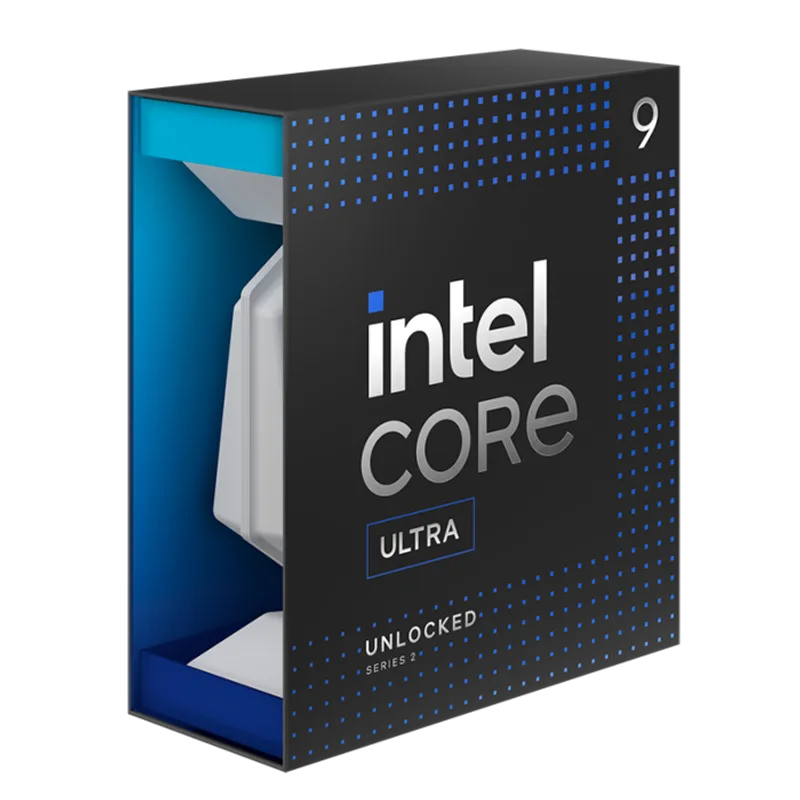
The Intel Core Ultra 9 285K is a strong productivity chip that happened to ship in the same generation as AMD’s best gaming CPU. Its 24-core Arrow Lake architecture scores 41,558 on Cinebench Multi, handles 4K video rendering with authority, and runs substantially cooler and quieter than the Raptor Lake chips it replaced.
Its value position has worsened. At $557, it now costs $108 more than the 9800X3D — and loses in gaming by ~35% at 1080p. The Arrow Lake Refresh introduced the Core Ultra 7 270K Plus at $299 with similar core count and ~15% better gaming than the 265K, making the 285K a harder sell even within the Intel lineup.
The 285K is best suited for workstation-adjacent users: video editors, 3D artists, developers who compile large codebases. If your workload is primarily gaming, the 9800X3D costs the same and games dramatically faster.
AMD Ryzen 9 9950X
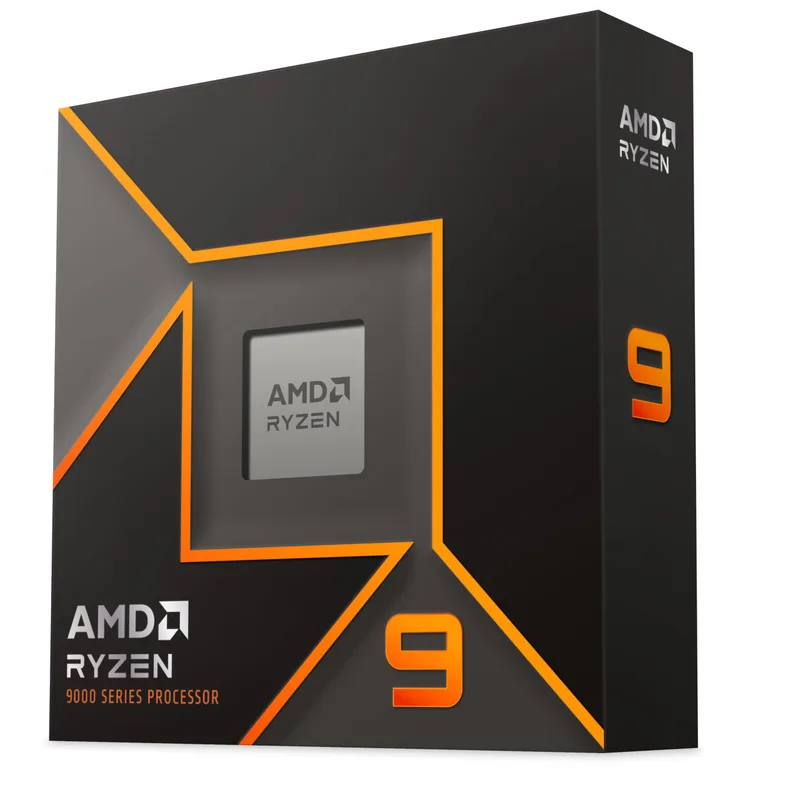
The AMD Ryzen 9 9950X is AMD’s desktop workstation chip. Its 16-core/32-thread layout with Zen 5 architecture reaches 228,600 points in Cinebench 2026 multi-core, and native AVX-512 support gives it a measurable edge in scientific computing, ML inference, and encoding pipelines that benefit from 512-bit SIMD operations.
At $529 (down from $649), the 9950X is better value than it’s ever been. It matches the 285K in productivity and beats it in thread-heavy workloads — on the same AM5 platform as the $199 Ryzen 5 9600X. For a creator who also games, the 9950X3D ($699) adds 3D V-Cache to this foundation. But for pure content creation without heavy gaming, the standard 9950X at $529 saves $170 over the X3D version.
The 170W TDP remains the genuine caveat. A 360mm AIO is the minimum recommendation under sustained multi-core load.
Intel Core Ultra 5 245K
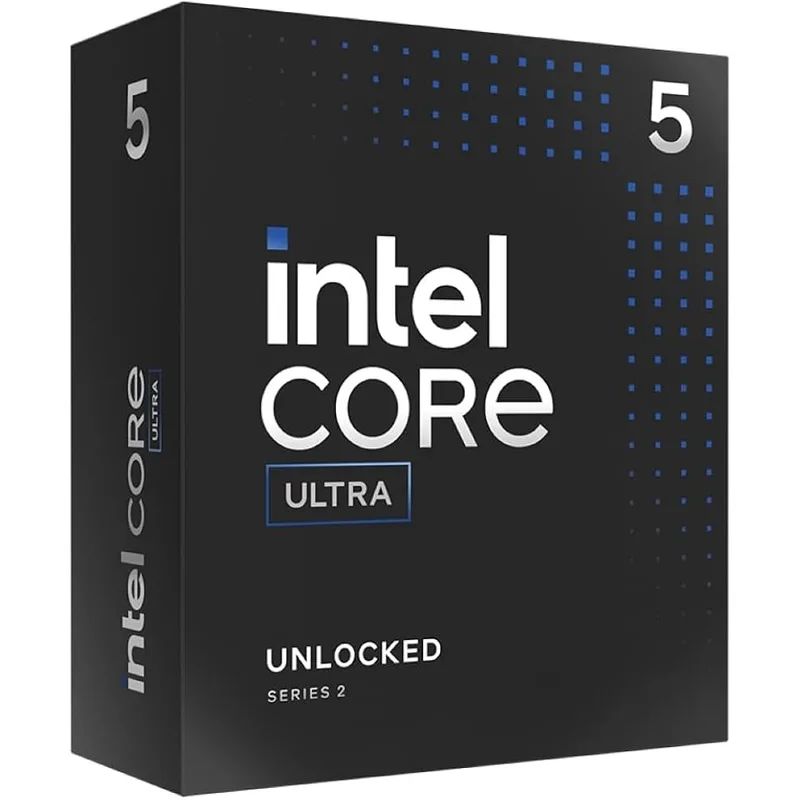
Intel Core Ultra 5 245K
The Intel Core Ultra 5 245K entered LGA 1851 at $299 and has since dropped to $269. Its 14-core/14-thread configuration (6 P-cores + 8 E-cores) delivers multi-threaded performance competitive with last-gen Core i7, with a clear upgrade path to the 285K or new 270K Plus on the same Z890 board.
The honest picture: the 245K has been superseded by the Arrow Lake Refresh Core Ultra 5 250K Plus ($199, 18 cores, DDR5-7200, ~13% better gaming). Paying $220 for the 245K when the 250K Plus offers more cores and better performance at $21 less is hard to justify unless you find the 245K at a steep discount. For Intel platform entry, check the 250K Plus pricing first.
AMD Ryzen 5 9600X
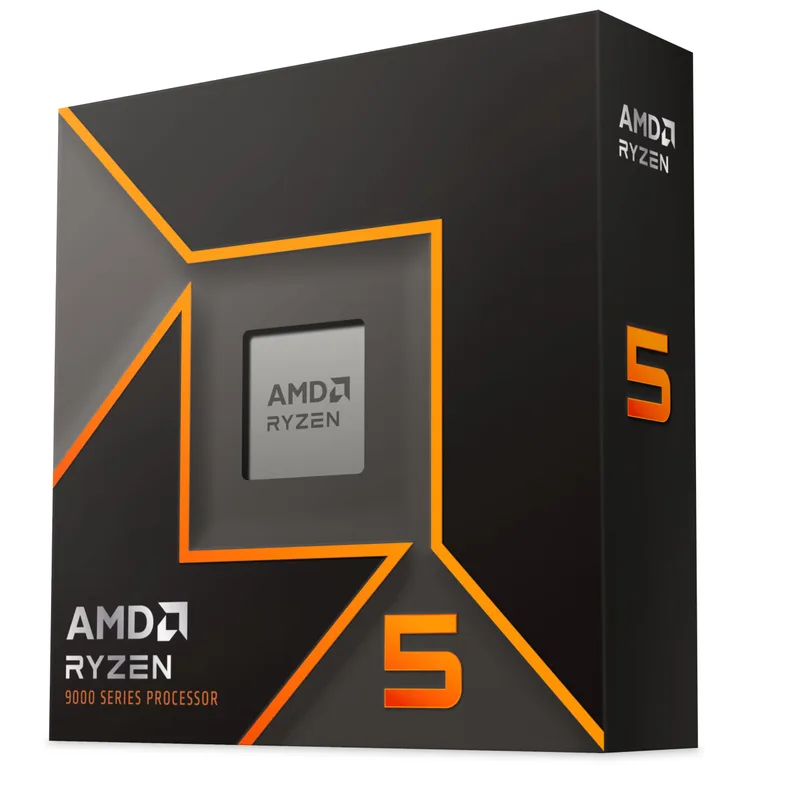
The AMD Ryzen 5 9600X is now $199 after sustained price cuts over the past year — and at that price it’s one of the sharpest value plays in desktop CPUs. Six Zen 5 cores at 5.4 GHz boost, 32MB L3 cache, and a 65W TDP combine into the most thermally efficient option on this list. Cinebench 2026 single-core of 133 points is enough single-threaded speed to keep a mid-range GPU from being CPU-bottlenecked at 1080p or 1440p.
The 65W TDP is a lifestyle benefit: it runs on a $30 tower cooler, stays quiet under gaming loads, and doesn’t demand premium VRMs. Any AM5 B650 board supports it — and the same board supports an upgrade to the 9800X3D or Zen 6 later.
The 6-core ceiling matters for streaming and heavy multi-threaded workloads. As a dedicated gaming CPU paired with a mid-range GPU, the 9600X handles its job without complaint.
Buying Guide: AMD vs Intel Decision Framework
If gaming is your primary workload: AMD. The Ryzen 7 9800X3D at $449 is the correct answer at any resolution below 4K. At 4K the GPU dominates, but AMD still doesn’t lose.
If you do video editing, 3D rendering, or compilation: AMD pulls ahead. The Ryzen 9 9950X at $529 edges out the 285K at $557 in multi-threaded work and costs less. Intel still leads in single-core-sensitive tasks that depend on its 5.7 GHz P-cores, but the price-to-performance equation now favors AMD even for productivity.
If you’re on a budget: AMD wins clearly. The 9600X at $199 outgames the 245K at $269 while drawing half the power. Intel’s 250K Plus at $199 is a better Intel option than the 245K — but AMD still leads in gaming efficiency at this tier.
If you care about upgrade path: AM5 has a documented multi-generation roadmap. LGA 1851 supports Arrow Lake Refresh drop-ins, but Intel’s history of frequent socket changes limits long-term confidence.
If you’re upgrading from an existing Intel system: If you already have Z890, the Arrow Lake Refresh 270K Plus at $299 is a compelling in-socket upgrade. If you’re building fresh, start with AMD unless you have specific Intel software or ecosystem requirements.
FAQ
Is AMD better than Intel for gaming in 2026?
Yes, clearly. The Ryzen 7 9800X3D beats the Core Ultra 9 285K by ~35% at 1080p. Intel’s Arrow Lake Refresh 270K Plus improved gaming by ~15% over the 265K, but it still trails the 9800X3D. At every price tier, AMD’s Ryzen 9000 series matches or beats Intel’s current lineup in CPU-bound gaming.
Does Intel still make sense for any workload?
Yes — the Core Ultra 9 285K is competitive in multi-threaded productivity and single-core-heavy application workloads. The Arrow Lake Refresh 270K Plus at $299 is a strong value play on the Intel side for productivity + reasonable gaming. If your primary workload is content creation and you don’t game heavily, Intel is worth evaluating.
What is Intel’s Arrow Lake Refresh?
Intel launched Arrow Lake Refresh on March 26, 2026 with two chips: the Core Ultra 7 270K Plus ($299, 24 cores, ~15% gaming uplift over the 265K) and the Core Ultra 5 250K Plus ($199, 18 cores, ~13% gaming gain over the 245K). Both drop into existing Z890 motherboards. Intel cancelled the planned Core Ultra 9 290K Plus, leaving the 270K Plus as the top Refresh option.
Is AMD’s AM5 socket worth it for platform longevity?
AM5 has already spanned three CPU generations (Ryzen 7000, 8000, 9000) and AMD continues to expand the lineup with the 9900X3D and 9950X3D launched in March 2026. A board you buy today has a documented upgrade path. Intel’s LGA 1851 supports Arrow Lake Refresh drop-ins, but Intel’s history of frequent socket changes limits long-term confidence.
Do I need a new motherboard to upgrade from Ryzen 7000 to Ryzen 9000?
No. AM5 motherboards with B650, X670, X870, or X870E chipsets are compatible with Ryzen 9000 series processors, including the 9800X3D and the new 9900X3D/9950X3D X3D chips. Some boards require a BIOS update first.
What’s the minimum cooler for each CPU listed?
Ryzen 5 9600X: Any 120mm tower or better. Ryzen 7 9800X3D: 240mm AIO or quality dual-tower. Ryzen 9 9950X: 360mm AIO required. Intel 285K and 245K: both run at 125W base, so a 240mm AIO minimum is recommended for sustained workloads.
The Bottom Line
AMD wins 2026. The Ryzen 7 9800X3D at $420 is the fastest gaming CPU at its price by a margin Intel has no answer for — including the Arrow Lake Refresh. The Ryzen 9 9950X dropped to $529 and matches or beats Intel’s Core Ultra 9 285K in productivity for most multi-threaded workloads. The Ryzen 5 9600X at $199 undercuts every Intel mid-range option while gaming faster and drawing half the power.
Intel’s Arrow Lake Refresh meaningfully improved the platform, and the Core Ultra 7 270K Plus at $299 is the most compelling Intel chip in years for a balanced build. But for a gaming-focused build in 2026, the AMD pick is clear at every price tier.