Disclosure: PCBuildRanked earns from qualifying Amazon purchases.
The GPU market in 2026 finally has real competition at every price point. NVIDIA’s Blackwell architecture delivered the generational leap that Ada Lovelace promised but didn’t quite land, and AMD’s RDNA 4 cards are pushing back hard on value — especially in VRAM. Prices are elevated across the board due to supply constraints and tariff impacts, but the performance-per-dollar math has never been clearer. Here’s where the money makes sense.
| Spec | MSI GeForce RTX 5070 VENTUS 2X OC 12G 9.2/10 | Sapphire Pulse RX 9070 XT 16GB 9/10 | MSI Gaming RTX 5060 Ti 16G OC Unavailable 8.7/10 | GIGABYTE Radeon RX 9070 Gaming OC 16G 8.4/10 | NVIDIA GeForce RTX 4070 Super 7.8/10 |
|---|---|---|---|---|---|
| GPU | NVIDIA Blackwell GB205 | AMD RDNA 4 Navi 48 | NVIDIA Blackwell GB206 | AMD RDNA 4 Navi 48 (cut-down) | NVIDIA Ada Lovelace AD103 |
| VRAM | 12GB GDDR7 | 16GB GDDR6 | 16GB GDDR7 | 16GB GDDR6 | 12GB GDDR6X |
| TDP | 250W | 300W | 180W | 220W | 220W |
| Interface | PCIe 5.0 x16 | PCIe 4.0 x16 | PCIe 5.0 x8 | PCIe 4.0 x16 | PCIe 4.0 x16 |
| Outputs | 3x DP 2.1, 1x HDMI 2.1 | 2x DP 2.1, 2x HDMI 2.1 | 3x DP 2.1, 1x HDMI 2.1 | 3x DP 2.1, 1x HDMI 2.1 | 3x DP 1.4a, 1x HDMI 2.1 |
| Rating | 9.2/10 | 9/10 | 8.7/10 | 8.4/10 | 7.8/10 |
Prices change daily — tap Check Price for the current Amazon price.
Prices change daily — tap Check Price for the current Amazon price.
Quick Picks
Best overall: The NVIDIA RTX 5070 delivers RTX 4080-class performance at $599-$649 street. If you game at 1440p, this is the card to beat.
Best for VRAM headroom: The AMD RX 9070 XT packs 16GB GDDR6 and trades blows with the RTX 5070 in rasterization. Better for modded games and content creation workflows.
Best value: The RTX 5060 Ti 16GB at $429 MSRP gets you 16GB GDDR7 and DLSS 4 in a 180W package — the sweet spot for 1080p and entry 1440p builds.
Buying Guide
Resolution determines budget. At 1080p, the $429 RTX 5060 Ti handles everything at high-to-ultra settings — see our best GPUs for 1080p gaming guide for a full roundup at that tier. At 1440p, the RTX 5070 or RX 9070 XT hit the performance-per-dollar sweet spot. True 4K at max settings still demands $800+ cards — for the full flagship NVIDIA option, see our RTX 5080 review. For a curated list of every top-tier card above $600, see our best high-end GPUs over $600 guide. For a complete high-end build around the RTX 5070, see our $1,500 gaming PC build guide. For builders working with a tighter budget, see our best GPUs under $200 guide for the strongest entry-level options. For cards in the $500–$600 value tier — including the RTX 5060 Ti 16GB and RX 9060 XT 16GB — see our best GPUs under $600 guide.
VRAM matters more than ever. Modern titles at high settings consume 10-12GB routinely. Cards with 12GB will feel the pressure within 18 months. If you plan to keep a GPU for 3+ years, prioritize 16GB over raw clock speed. For a full breakdown by resolution and game type, see how much VRAM you actually need. For GPUs optimized for video editing, 3D rendering, and professional creative workflows, see our best workstation GPUs for content creators guide. For GPU picks optimized for machine learning, AI model training, and inference workloads, see our best GPUs for machine learning guide.
Power supply compatibility. Check your PSU wattage and connector type before buying. The RTX 5070 needs 650W minimum; the RX 9070 XT wants 750W. The RTX 5060 Ti’s 180W draw is the most forgiving on the list and pairs fine with a quality 550W unit.
PCIe generation. All cards here work on PCIe 3.0 and newer. The RTX 5060 Ti’s x8 interface could see minor bottlenecks on PCIe 3.0 — if you’re on a board that old, the full x16 cards are safer picks.
Benchmark data. For per-game performance breakdowns across the GPU stack, see our GPU benchmark guide. If streaming is part of your use case, see our dedicated best GPUs for streaming in 2026 roundup which evaluates NVENC and AV1 encoder performance specifically.
Tariffs and pricing volatility. GPU prices in early 2026 are elevated. AMD officially raised the RX 9070 XT’s MSRP from $599 to $619 due to rising GDDR6 memory costs, and street prices run $50-150 above MSRP across the board. If you spot a card at or near MSRP, that’s a deal worth taking immediately.
Detailed Reviews
1. NVIDIA GeForce RTX 5070 — Editor’s Pick
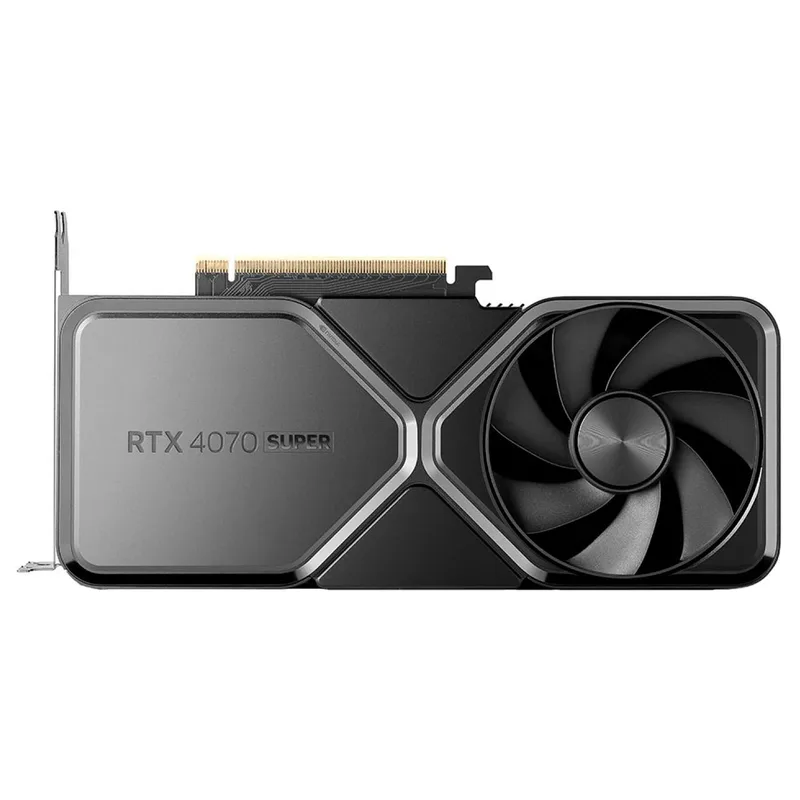
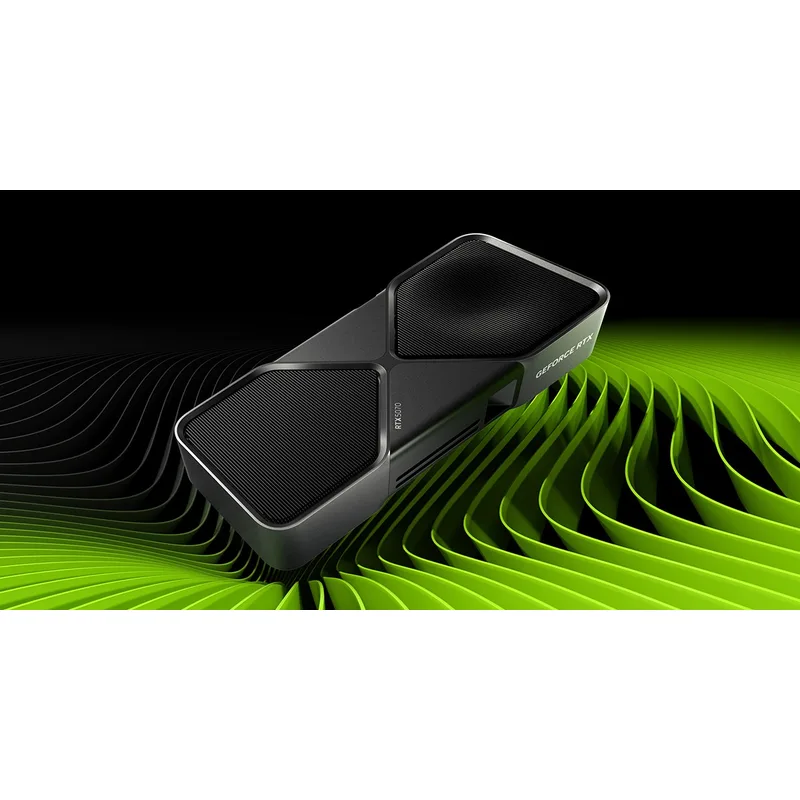
The RTX 5070 is the first Blackwell card that fully delivers on the “buy the xx70, get last-gen xx80 performance” promise. It matches or beats the RTX 4080 in rasterization across virtually every current title, and DLSS 4’s Multi Frame Generation pushes frame rates into territory that makes 1440p 165Hz monitors feel effortless.
Street pricing has settled around $599-$649 — $50-100 above the $549 MSRP, but still strong value for the performance level. The 250W TDP pairs cleanly with any quality 650W PSU, and being on Blackwell means the newest driver ecosystem with full DLSS 4 support for years ahead.
The 12GB GDDR7 is the one caveat worth taking seriously. GDDR7’s bandwidth advantage partially compensates for the lower capacity, and 12GB handles everything at 1440p today. But for 4K or heavily modded open-world games — or if you plan to keep this card past 2028 — the 16GB options below are safer long-term bets.
2. AMD Radeon RX 9070 XT — Best AMD
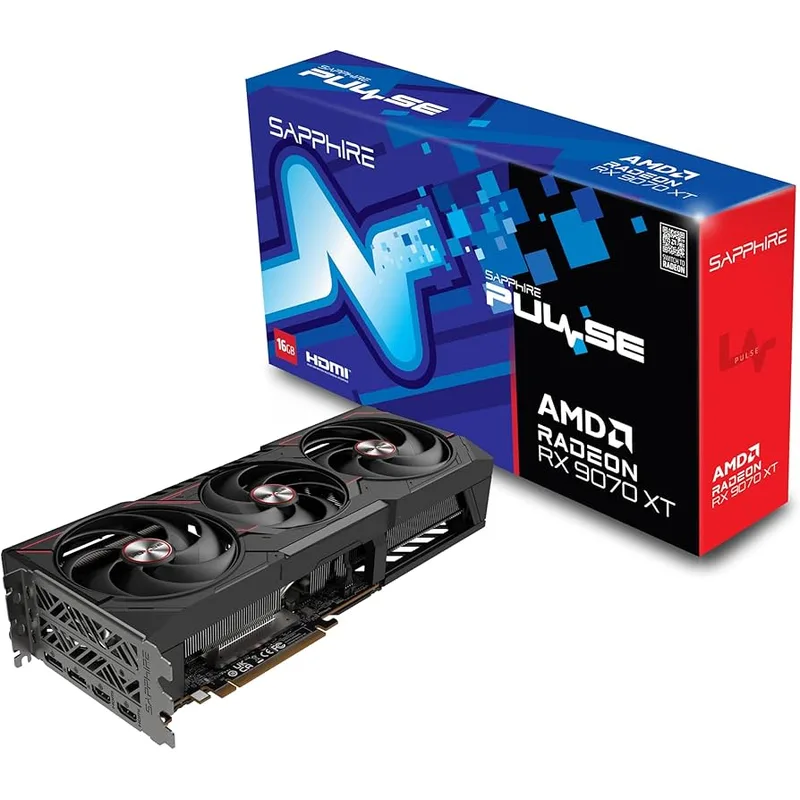
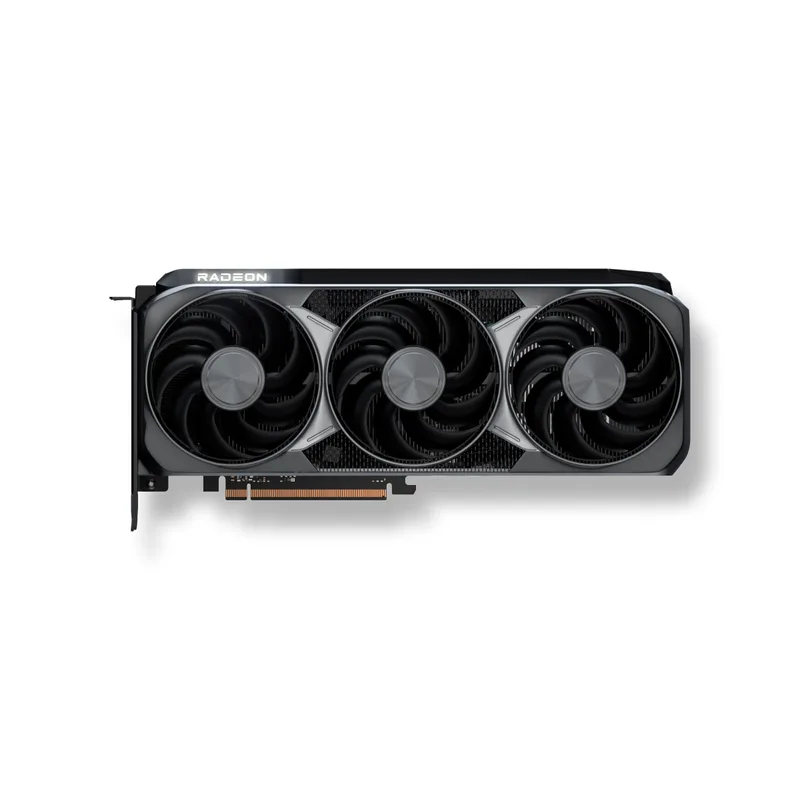
AMD’s RDNA 4 flagship for the mid-range segment. The 16GB GDDR6 buffer is its strongest differentiator — Cyberpunk 2077 with mods, Hogwarts Legacy at max textures, DaVinci Resolve video editing workflows. In pure rasterization, it trades blows with the RTX 5070 depending on the title.
Current street pricing has climbed to $699-$749, up significantly from the original $599 MSRP (now officially $619 following AMD’s price increase). At $599, the 9070 XT was an easy recommendation as a VRAM-first alternative to the RTX 5070. At $699-$749, you’re paying $100-150 more than an RTX 5070 for 16GB VRAM while losing ray tracing performance and DLSS 4.
Still the right call if VRAM headroom is non-negotiable, you run Linux, or you prefer AMD’s ecosystem. But the price premium has narrowed the use case compared to launch. For a deeper look at AMD vs NVIDIA platform trade-offs — drivers, software ecosystems, and long-term support — see our AMD vs NVIDIA ecosystem breakdown.
3. NVIDIA GeForce RTX 5060 Ti — Best Value
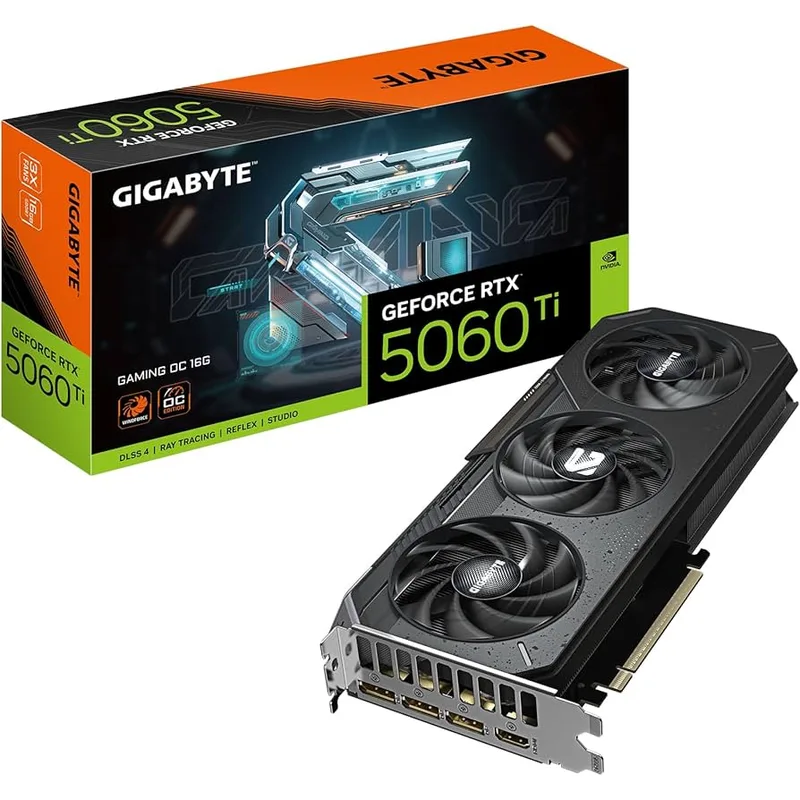
MSI Gaming RTX 5060 Ti 16G OC
The most interesting card on this list from a value standpoint. At the $429 MSRP, you get 16GB GDDR7 and DLSS 4 in a 180W package that works with any quality 550W PSU. No previous mid-range card at this price point offered that combination.
Performance sits roughly 20-25% behind the RTX 5070. At 1080p, that gap is irrelevant — everything runs at high-to-ultra with frames to spare. At 1440p, you’ll dial back settings in the most demanding titles, but DLSS 4 Quality mode closes much of that deficit in supported games.
One critical note: the 8GB variant exists at $379. Don’t buy it. The $50 premium for 16GB is the most obvious value decision in the current GPU market — 8GB will be genuinely painful within 18 months. For more options at this price tier including the RX 9060 XT and a full comparison of cards between $300 and $500, see our best GPUs under $500 guide.
4. AMD Radeon RX 9070
GIGABYTE Radeon RX 9070 Gaming OC 16G
The non-XT RX 9070 offers 16GB, 220W, and competitive rasterization in a more thermally relaxed package than the XT. The positioning problem is real, though. At $629-$709, it sits within striking distance of the RTX 5070 — and at that overlap, NVIDIA’s ray tracing, DLSS 4, and lower power draw are hard advantages to argue against.
AMD has reportedly shifted production priority toward the XT variant, which is showing up in limited shelf availability for the non-XT. For a detailed look at the non-XT’s specs and value, see our AMD RX 9070 review. If the RX 9070 were reliably available at $499, it would be a strong recommendation. At $629+, it requires either a genuine AMD preference or a specific disinterest in RT gaming to make the case. For the mid-range segment between the RTX 5060 Ti and RTX 5070, see our best GPUs under $400 guide.
5. NVIDIA GeForce RTX 4070 Super — Used Market Only
NVIDIA GeForce RTX 4070 Super
New stock has effectively exited the market — third-party Amazon listings sit above $800, making this a non-starter against a new RTX 5060 Ti at $429 or RTX 5070 at $599. On the used market (eBay, local listings), units around $450-$480 remain reasonable for builders who want a proven 1440p card with mature drivers and zero launch-window risk.
The 12GB GDDR6X is feeling tight for some 2026 titles at max settings, and without DLSS 4 Multi Frame Generation, the longevity story is shorter than Blackwell cards at comparable prices. A used unit under $470 with a solid warranty is acceptable; anything above that, the RTX 5060 Ti wins decisively.
Display Output Compatibility
All five cards support HDMI 2.1, enabling 4K at 120Hz to compatible TVs and monitors. The RTX 5070, 5060 Ti, and both RX 9070 variants include DisplayPort 2.1 outputs, which support 4K at 240Hz on next-generation DP 2.1 monitors.
The RTX 4070 Super uses DisplayPort 1.4a — sufficient for 1440p at 240Hz or 4K at 120Hz, but it won’t push DP 2.1 monitors to their full refresh rates.
Cable note: DisplayPort 2.1 requires UHBR-rated cables to achieve full bandwidth. Most monitor bundles include DP 1.4-rated cables. Budget ~$20 for a certified UHBR cable if you’re pairing a DP 2.1 card with a DP 2.1 monitor.
Ray Tracing and Upscaling in 2026
Ray tracing adoption has reached a tipping point. Most AAA titles released in 2026 include RT options, and several use it as the default rendering path. NVIDIA maintains a meaningful RT lead — the RTX 5070’s RT cores outperform the RX 9070 XT’s by roughly 30-40% in demanding titles like Cyberpunk 2077 and Alan Wake 2.
DLSS 4’s Multi Frame Generation is NVIDIA’s other major ecosystem advantage. By generating multiple interpolated frames per rendered frame, it effectively doubles perceived frame rates in supported titles. AMD’s FSR 4 competes on spatial upscaling quality but doesn’t currently offer an equivalent frame generation solution at this tier.
For competitive multiplayer where RT is irrelevant and raw frame rates dominate, AMD’s VRAM advantage matters more than the RT gap. For single-player AAA games where path tracing and frame generation meaningfully enhance the experience, NVIDIA’s ecosystem lead is real and growing with each new title that ships DLSS 4 support. For a comprehensive breakdown of the full NVIDIA vs AMD ecosystem — drivers, software, Linux support, and long-term platform decisions — see our NVIDIA vs AMD GPU comparison.
FAQ
Which GPU should I buy for 1440p gaming in 2026?
The RTX 5070. At $599-$649 street, it hits the performance sweet spot with full DLSS 4 support and a 250W TDP that keeps the total build cost reasonable. The RX 9070 XT is the alternative if 16GB VRAM is a hard requirement and the $100-150 premium is acceptable.
Is 12GB VRAM enough in 2026?
For 1080p and most 1440p gaming at standard settings, yes. For 4K, heavily modded open-world games, or if you plan to keep the card for 3+ years, prioritize 16GB. VRAM consumption across AAA titles is trending up with no slowdown in sight.
Should I wait for GPU prices to drop?
Current street prices are elevated due to supply constraints and tariff impacts, but significant drops require either supply normalization or the next GPU generation — both are 12-18 months out at minimum. If you need a card now, buying at the right price today is the practical call.
RTX 5070 or RX 9070 XT in 2026?
RTX 5070 if you value ray tracing, DLSS 4, and lower power draw — and especially now that the price gap has widened to $100-150. RX 9070 XT if 16GB VRAM is non-negotiable and you prefer AMD’s ecosystem or Linux compatibility. The RTX 5070 is the stronger overall value at current market prices. For a complete head-to-head, see our RTX 5070 vs RX 9070 XT comparison.
Is the RTX 4070 Super still worth buying in 2026?
Only on the used market, under $480. New listings are priced above $800 from third-party sellers — avoid those completely. Under $470 used with a clean transaction history, it’s a solid proven 1440p card. Above that threshold, the RTX 5060 Ti 16GB at $429 new is a better purchase in every measurable way.
How much PSU do I need for these GPUs?
RTX 5060 Ti: 550W quality unit works fine. RTX 5070 and RX 9070: 650W minimum. RX 9070 XT: 750W — the 300W TDP leaves less headroom. A quality 650W 80+ Gold unit (Seasonic Focus, Corsair RM, be quiet! Straight Power) runs $80-$110.
The Bottom Line
The RTX 5070 is the best GPU for most gamers in 2026. It delivers the performance, efficiency, and feature set that makes 1440p gaming at high-to-max settings effortless, at a street price that’s genuinely competitive for the tier. If 16GB VRAM is your top priority and the current premium is acceptable, the RX 9070 XT makes its case. And for budget-first 1080p or entry 1440p builds, the RTX 5060 Ti 16GB at $429 is the smartest money on this list. For a comprehensive roundup of the best performance-per-dollar picks across all price tiers, see our best value GPUs guide.