Picking a CPU in March 2026 is more interesting than it’s been in years. Intel just announced the Core Ultra 7 270K Plus and Core Ultra 5 250K Plus on March 11 — landing March 26 with claimed 15% gaming improvements over Arrow Lake — while AMD’s Ryzen 7 9800X3D has quietly dropped below its MSRP to $449. The result: genuine competition at every price tier, and a few landmines to avoid. This guide cuts through the noise.
| Spec | AMD Ryzen 5 9600X 8.5/10 | Intel Core Ultra 5 245K 7.8/10 | Intel Core Ultra 7 265K 8.2/10 | AMD Ryzen 7 9800X3D 9.5/10 | AMD Ryzen 9 9950X3D 9.2/10 |
|---|---|---|---|---|---|
| architecture | Zen 5 | Arrow Lake (Core Ultra 200S) | Arrow Lake (Core Ultra 200S) | Zen 5 + 3D V-Cache | Zen 5 + 3D V-Cache |
| cores | 6C / 12T | 14C (6P + 8E) / 14T | 20C (8P + 12E) / 20T | 8C / 16T | 16C / 32T |
| boost_clock | 5.4 GHz | 5.2 GHz | 5.5 GHz | 5.2 GHz | 5.7 GHz |
| l3_cache | 32MB | 24MB | 30MB | 96MB (64MB 3D V-Cache) | 128MB (64MB 3D V-Cache) |
| socket | AM5 | LGA 1851 | LGA 1851 | AM5 | AM5 |
| tdp | 65W | 125W | 125W | 120W | 170W |
| Rating | 8.5/10 | 7.8/10 | 8.2/10 | 9.5/10 | 9.2/10 |
Prices change daily — tap Check Price for the current Amazon price.
Prices change daily — tap Check Price for the current Amazon price.
CPUs at a Glance
| CPU | Price | Best For | Socket | TDP |
|---|---|---|---|---|
| AMD Ryzen 5 9600X | Check price | Budget gaming / AM5 entry | AM5 | 65W |
| Intel Core Ultra 5 245K | Check price | Budget Intel / multitasking | LGA 1851 | 125W |
| Intel Core Ultra 7 265K | Check price | Productivity / content creation | LGA 1851 | 125W |
| AMD Ryzen 7 9800X3D | Check price | Pure gaming | AM5 | 120W |
| AMD Ryzen 9 9950X3D | Check price | Gaming + heavy workloads | AM5 | 170W |
What Actually Matters When Choosing a CPU
Core Count vs. Clock Speed
More cores help encoding, compiling, and rendering. Higher clocks help gaming. Most titles today use 8–12 threads efficiently — beyond that, you’re paying for workstation workloads, not gaming. The Ryzen 7 9800X3D proves this: 8 cores at 5.2 GHz with 96MB of cache outperforms 16-core chips in most games by 10–20%.
The Cache Advantage (3D V-Cache Explained)
AMD’s 3D V-Cache stacks an extra die of SRAM on top of the CPU’s CCD, delivering 96–128MB of L3 cache versus the typical 32–64MB. Cache-starved games like Microsoft Flight Simulator, Hogwarts Legacy, and Cyberpunk 2077 see 15–35% better 1% lows with 3D V-Cache chips. If your primary use is gaming, this matters more than raw clock speed.
Platform Costs: AM5 vs. LGA 1851
AMD’s AM5 platform is more affordable at the low end. A B650 motherboard runs $90–$130 and supports the full range from the Ryzen 5 9600X up to the 9950X3D. Intel’s LGA 1851 for the 265K requires a Z890 board, which starts around $200 and quickly climbs to $300+ for better VRMs.
Total platform costs (CPU + board + DDR5 kit):
| Tier | AMD AM5 | Intel LGA 1851 |
|---|---|---|
| Budget | ~$380 (9600X + B650 + 32GB DDR5) | ~$580 (245K + Z890 + 32GB DDR5) |
| Mid-range | ~$640 (9800X3D + B650E + 32GB DDR5) | ~$590 (265K + Z890 + 32GB DDR5) |
DDR5 Is Now Standard
Both AM5 and LGA 1851 are DDR5-only platforms. Budget for a 32GB DDR5-6000 kit — around $70–$85 — for AM5 builds. Intel’s Z890 boards support up to DDR5-9600 with CUDIMMs on the 270K Plus.
CPU Deep Dives
1. AMD Ryzen 5 9600X — Best Budget Pick
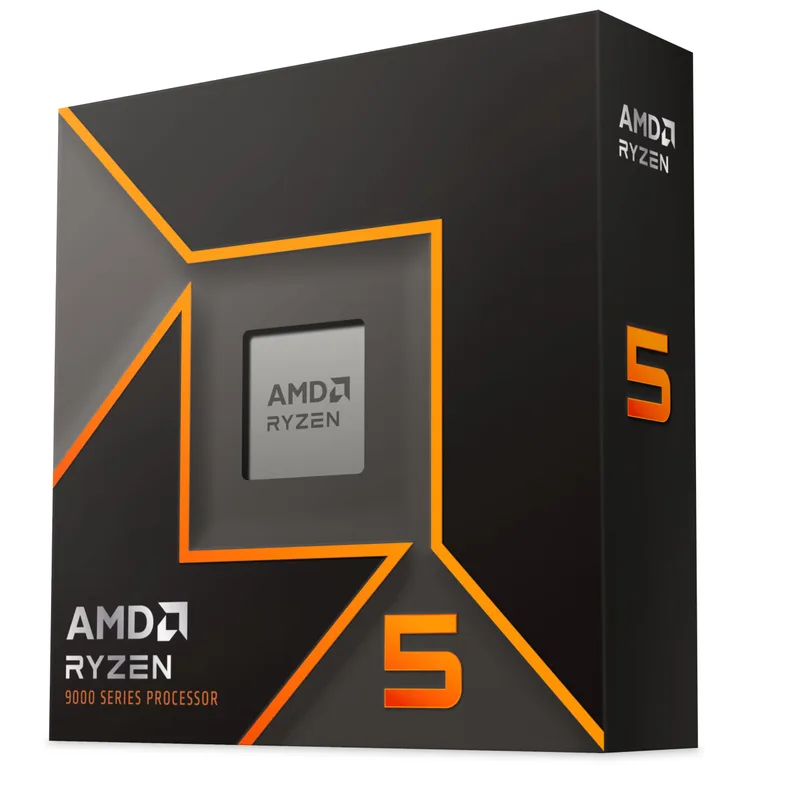
The Ryzen 5 9600X is the cheapest way onto the Zen 5 platform, and it performs well above its price. At 1080p and 1440p paired with a GPU like the RX 7700 or RTX 4060, it stays within 5% of the much pricier 9800X3D in most titles. The 65W TDP is the real story — it runs comfortably cool on a $30 Thermalright Assassin X120 SE without needing a Z-series board or premium cooler.
Where it falls short: six cores are tight for streaming while gaming, and CPU-limited titles at 4K with a fast GPU will show the gap to the 9800X3D more clearly. For anyone on a $700–$900 build budget, though, it’s the correct anchor.
Socket: AM5 | DDR5 speed: up to DDR5-5600 officially (runs faster in practice)
2. Intel Core Ultra 5 245K — Best Budget Intel Option
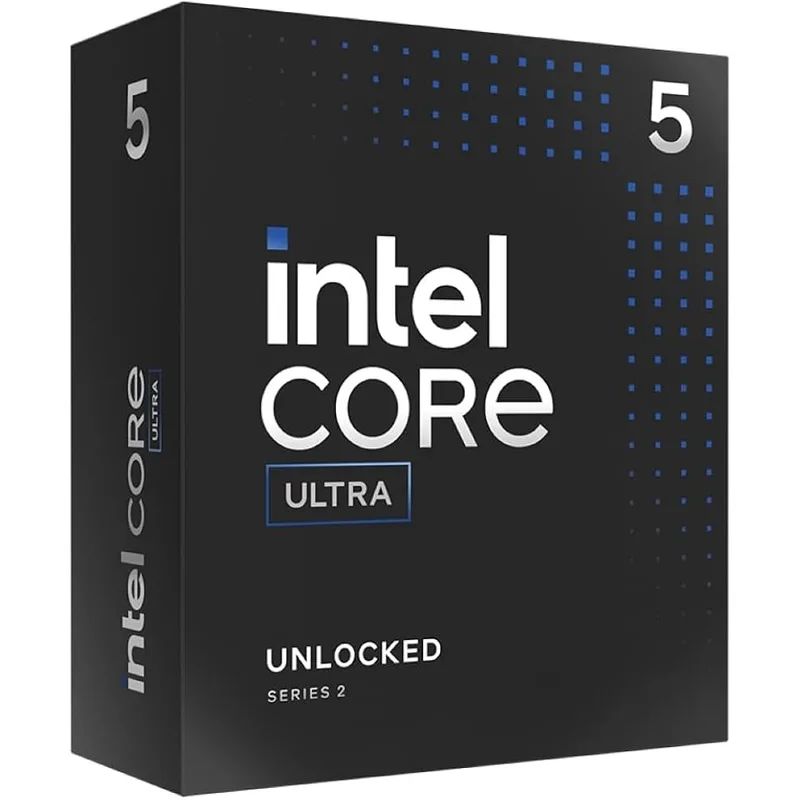
The Core Ultra 5 245K doesn’t win in straight gaming performance against AMD’s Zen 5 chips — it trades roughly even with the Ryzen 5 9600X while costing $80 more. What it does offer is 14 hybrid cores for multitasking, a built-in NPU for AI workloads, and a path to future Intel upgrades on the LGA 1851 socket.
One significant caveat: Intel announced on March 11, 2026 that the Core Ultra 5 250K Plus launches March 26 at $199 — the same price as the 9600X, with more E-cores and improved cache latency. If you’re set on Intel and not in a rush, waiting two weeks for the 250K Plus is worth considering. The 245K is still a solid chip, but it’s immediately obsoleted at its current price.
Socket: LGA 1851 | Requires: Z890 or B860/H870 motherboard
3. Intel Core Ultra 7 265K — Best for Productivity
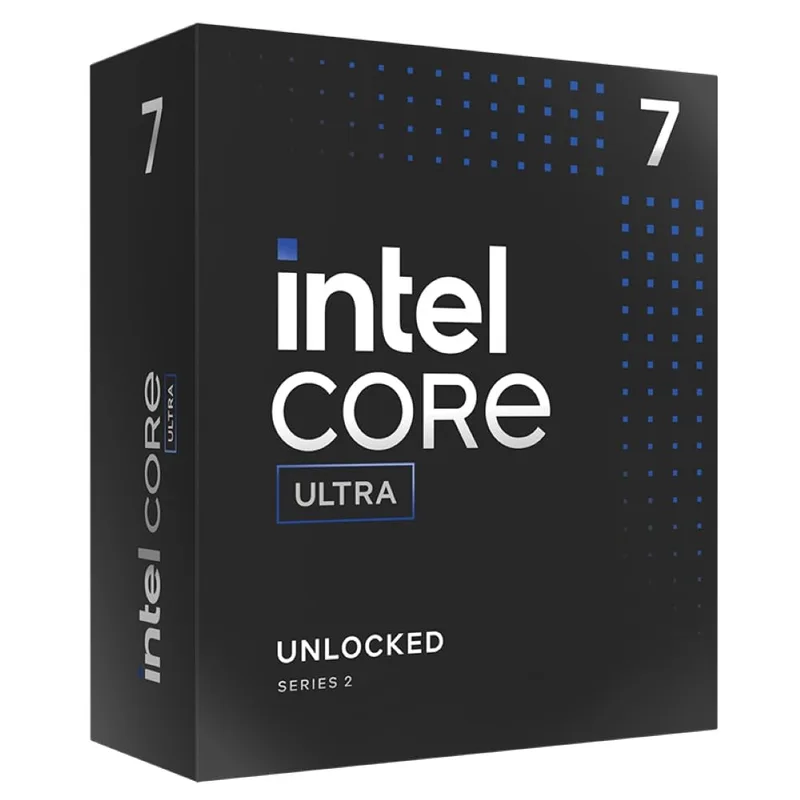
After Intel’s price cuts, the Core Ultra 7 265K sits at $300 — making it the most affordable 20-core desktop chip on the market. In Cinebench R24 multi-thread, it scores around 1,900 points versus the Ryzen 7 9800X3D’s ~1,300, a 46% advantage. Video encoding in HandBrake runs proportionally faster too.
Gaming is where it struggles relative to AMD. In CPU-limited scenarios, the 265K trails the 9800X3D by 10–20%, mostly because Arrow Lake’s IPC and cache structure doesn’t keep up with Zen 5 + 3D V-Cache for latency-sensitive game engines.
The same March 26 caveat applies here: the Core Ultra 7 270K Plus launches at $299 with more E-cores and Intel’s Binary Optimization Tool for improved gaming. The 265K makes sense if it’s discounted below $275; otherwise the 270K Plus is the better buy on an LGA 1851 platform.
Socket: LGA 1851 | Recommended board tier: Z890 ($200+) for overclocking
4. AMD Ryzen 7 9800X3D — Best Gaming CPU
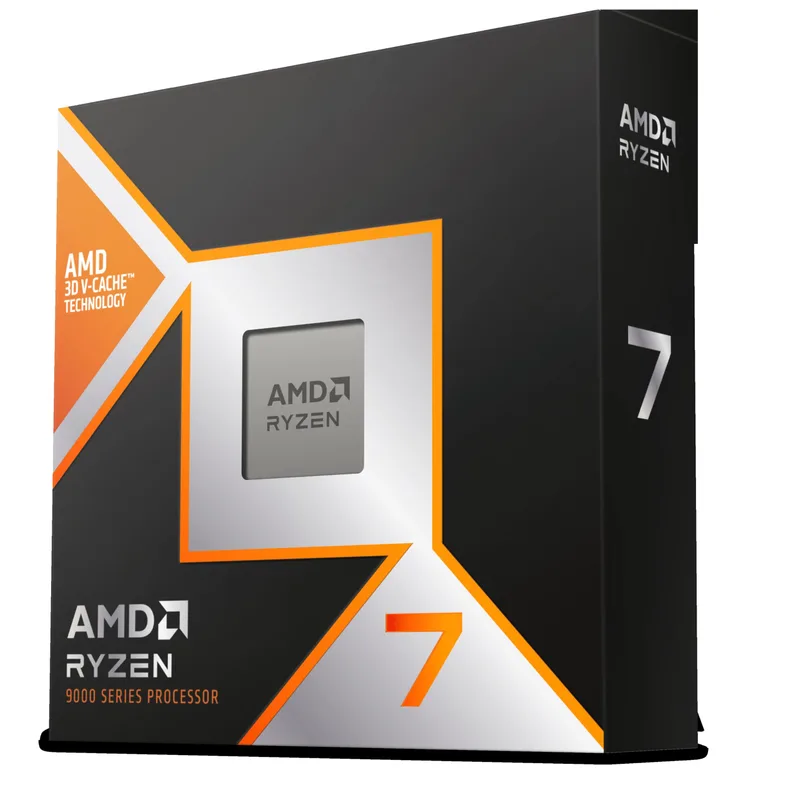
The Ryzen 7 9800X3D is the clearest recommendation on this list for anyone whose primary workload is gaming. Its 96MB of L3 cache eliminates the memory bottleneck that slows down most modern game engines at high framerates, and the Zen 5 core design delivers top single-threaded IPC. At 1440p with an RTX 4080 or RX 9070 XT, it routinely posts 10–18% higher 1% lows than the best Intel gaming chips.
The 8-core count is deliberately chosen — AMD limits the 3D V-Cache die to 8 cores to keep the cache density workable. If you stream, render, or compile heavily alongside gaming, those 8 cores will hit walls that the 9950X3D won’t. But for pure frame output, nothing else touches it.
It dropped below MSRP to $449 in early 2026 as inventory normalized. Paired with a $120 B650E board and a 360mm AIO, a complete gaming build comes together around $800 total.
Socket: AM5 | Cooler requirement: 240mm AIO minimum recommended given 120W TDP
5. AMD Ryzen 9 9950X3D — Best All-Around
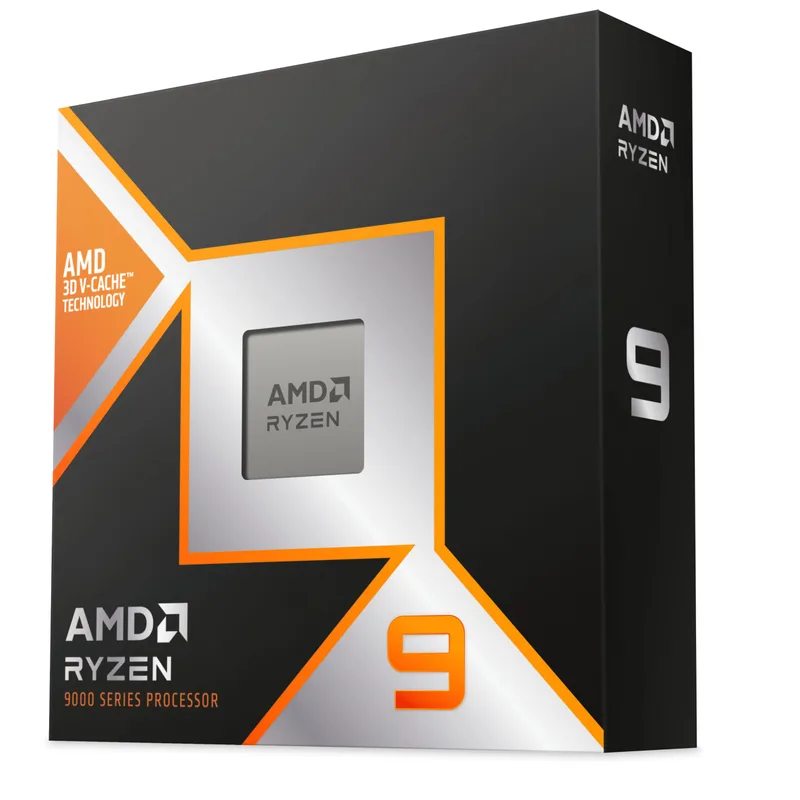
The Ryzen 9 9950X3D is what you buy when you need the 9800X3D’s gaming performance and the 9950X’s workstation throughput simultaneously. With 16 Zen 5 cores, 32 threads, and AMD’s second-generation 3D V-Cache pushing L3 to 128MB, it scores around 3,700 in Cinebench R24 multi-thread while matching the 9800X3D in gaming benchmarks to within 2–3%.
The 170W TDP is not optional — this chip requires a 280mm or 360mm AIO. On a 240mm cooler it will throttle under sustained load. Budget $100+ for cooling on top of the $675 CPU cost.
For streamers who game at competitive framerates, 3D artists, or video editors who also game seriously, the $226 premium over the 9800X3D earns its keep. For anyone who mostly games, it doesn’t.
Socket: AM5 | Recommended board: X870 or X870E for full PCIe 5.0 lanes
Key Considerations Before You Buy
Matching CPU to GPU: A Ryzen 5 9600X paired with an RTX 4090 is a wasted pairing — the GPU will bottleneck before the CPU limits it. Conversely, a 9950X3D on an RX 6600 is money down the drain. Match tiers: 9600X with a $250–$350 GPU, 9800X3D with a $400–$600 GPU, 9950X3D with $600+ cards.
Cooler compatibility: AMD’s 9800X3D and 9950X3D use AM5 (LGA1718) — verify your cooler has an AM5 bracket. Intel’s LGA 1851 uses the same physical mounting hole pattern as LGA 1700, so most modern Intel coolers fit with the existing backplate.
Motherboard VRM quality matters at 125W+: The Intel 245K and 265K pull 125W during all-core loads. A B860 board with a weak VRM will throttle the CPU during sustained workloads. For the 265K, budget at least $180 for a board with 12+ power stages.
The 270K Plus window: If you want Intel and can wait until March 26, the Core Ultra 7 270K Plus at $299 and Core Ultra 5 250K Plus at $199 are objectively better than the chips they replace at the same price. The 265K only makes sense on a steep discount.
Performance Expectations by Tier
Gaming (1440p, paired with RX 9070 XT)
| CPU | Avg FPS | 1% Low | CPU-Limited Titles |
|---|---|---|---|
| Ryzen 5 9600X | ~175 | ~148 | Competitive |
| Core Ultra 5 245K | ~168 | ~138 | Competitive |
| Core Ultra 7 265K | ~178 | ~148 | Competitive + Productivity |
| Ryzen 7 9800X3D | ~205 | ~178 | All genres |
| Ryzen 9 9950X3D | ~202 | ~176 | All genres |
These figures are representative ranges based on published benchmark aggregates. Actual results vary by game engine.
Multi-Threaded Productivity (Cinebench R24 Multi)
| CPU | Score (approx.) | Use Case |
|---|---|---|
| Ryzen 5 9600X | ~950 | Office, light editing |
| Core Ultra 5 245K | ~1,250 | Multitasking, AI apps |
| Core Ultra 7 265K | ~1,900 | Video encoding, compiling |
| Ryzen 7 9800X3D | ~1,300 | Gaming primary |
| Ryzen 9 9950X3D | ~3,700 | Full workstation |
Upgrade Path
If you buy the Ryzen 5 9600X: AMD has committed to AM5 support through at least Zen 6. Your next upgrade is the Ryzen 7 9800X3D or a future 3D V-Cache chip — same socket, no board swap needed. You’ll also benefit from EXPO DDR5 speeds as BIOS matures.
If you buy the Core Ultra 5 245K or 265K: Intel’s LGA 1851 will support the 270K Plus and future Core Ultra 300S chips. You don’t need to swap boards for at least one more generation. That said, Intel’s socket history is less predictable than AMD’s current AM5 commitment.
If you buy the 9800X3D: The next logical upgrade is the 9950X3D if your workload grows beyond gaming, or a future next-gen X3D chip when they release. The 9800X3D will hold up for 3+ years in gaming — the 3D V-Cache advantage compounds as games get more asset-heavy.
If you buy the 9950X3D: You’re at the top of the current AM5 stack. Upgrade only when Zen 6 X3D chips arrive with demonstrably better IPC.
FAQ
Q: Does the Ryzen 7 9800X3D work with B650 motherboards? Yes. The 9800X3D is fully supported on B650, B650E, X670, and X870 boards. A B650E board for $120–$140 is the recommended pairing — the extra PCIe lane bandwidth matters for the second M.2 slot.
Q: Do I need to overclock to get the most out of these CPUs? No. The Ryzen 9600X and 9800X3D have locked multipliers — AMD handles performance via Precision Boost Overdrive (PBO), which you enable in BIOS for a few percent gain without manual tuning. Intel’s K-series chips are overclockable but Arrow Lake’s architecture doesn’t scale as dramatically as past generations did.
Q: Is DDR5 speed important for gaming? For AMD AM5 chips, yes — Zen 5 is notably sensitive to memory latency. Running a DDR5-6000 kit at CL30 versus a DDR5-4800 kit can improve gaming performance by 3–8%. For Intel’s Arrow Lake, DDR5 speed matters more for CUDIMMs, which are currently expensive niche products.
Q: Should I wait for the Intel 270K Plus? If you’re in the Intel camp and can wait until March 26, yes. The 270K Plus ($299) replaces the 265K directly with more cores and improved gaming performance. If you find the 265K at $249 or less, the value equation changes.
Q: What’s the minimum cooler for the Ryzen 7 9800X3D? AMD rates it at 120W TDP. A Thermalright Peerless Assassin 120 SE ($35) handles it fine in a mid-tower case with decent airflow. A 240mm AIO gives more thermal headroom if you run PBO+ in a warm room.
The Bottom Line
For most builders in 2026, the AMD Ryzen 7 9800X3D is the answer — nothing else delivers its gaming performance at $449 on a platform where a capable B650E board costs $120. Builders on tighter budgets should look at the Ryzen 5 9600X, which hits 90–95% of its performance for $260 less. Intel users get the best deal from the Core Ultra 7 265K for productivity-heavy workloads, though the incoming 270K Plus at the same price deserves a two-week wait. The Ryzen 9 9950X3D earns its $675 ask only if your workload genuinely demands both elite gaming and workstation-class multi-threading.