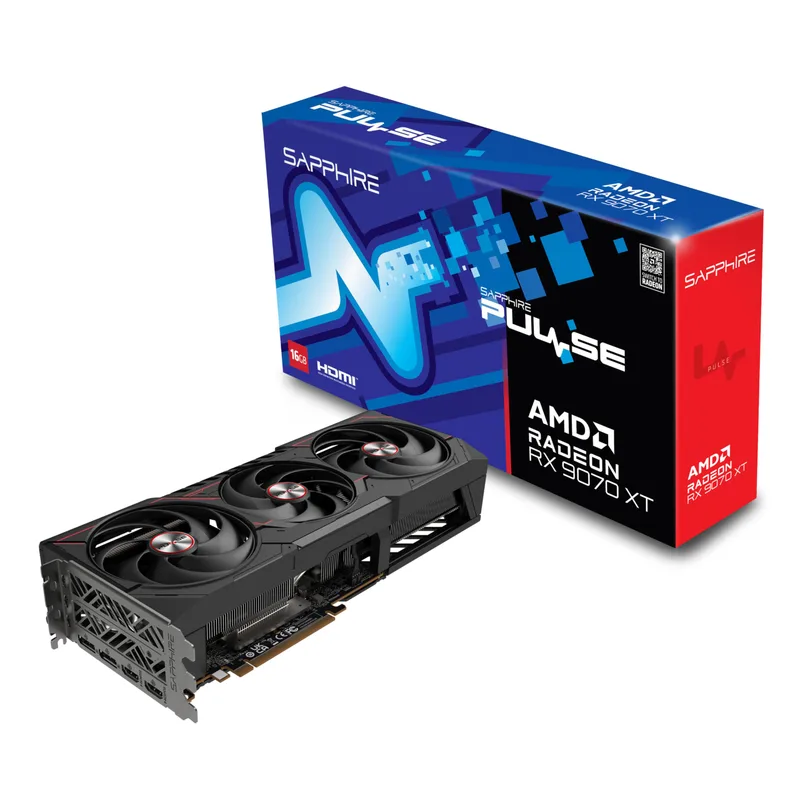
The AMD Radeon RX 9070 XT launched as AMD’s most competitive mainstream GPU in years — and the market agreed. Street prices sat around $699 at launch in April 2026 and have since risen to ~$789 — well above the $599 MSRP — but even there the value case is strong: you get 4K rasterization that matches or beats the RTX 5070 Ti, which currently sells for $300+ more.
This review covers the Sapphire Pulse as the reference-equivalent partner card, with full 1440p and 4K benchmark comparisons versus the RTX 5070 and RTX 5070 Ti. For a comparison of all RX 9070 XT AIB options across cooling, price, and clock speeds, see our RX 9070 XT AIB roundup.
| Spec | Sapphire Pulse AMD Radeon RX 9070 XT 16GB 9/10 | MSI GeForce RTX 5070 12G Ventus 2X OC 8/10 | MSI RTX 5070 Ti 16G Gaming Trio OC Plus 8.5/10 |
|---|---|---|---|
| architecture | RDNA 4, 64 CUs, 4096 stream processors | Blackwell GB205, 6144 CUDA cores | Blackwell GB203, 8960 CUDA cores |
| boost_clock | 2970 MHz (reference) | 2512 MHz | 2452 MHz (reference) |
| memory | 16GB GDDR6, 256-bit, 640 GB/s | 12GB GDDR7, 192-bit | 16GB GDDR7, 256-bit |
| tdp | 304W | 250W | 300W |
| pcie | PCIe 5.0 x16 | PCIe 5.0 x16 | PCIe 5.0 x16 |
| display | 2x HDMI 2.1, 2x DisplayPort 2.1a | 1x HDMI 2.1b, 3x DisplayPort 2.1b | 1x HDMI 2.1b, 3x DisplayPort 2.1b |
| Rating | 9/10 | 8/10 | 8.5/10 |
Prices change daily — tap Check Price for the current Amazon price.
Prices change daily — tap Check Price for the current Amazon price.
Specifications
| Spec | AMD Radeon RX 9070 XT |
|---|---|
| Architecture | RDNA 4 (Navi 48) |
| Compute Units | 64 |
| Stream Processors | 4,096 |
| Boost Clock | 2970 MHz (reference) |
| Memory | 16GB GDDR6 |
| Memory Speed | 20 Gbps |
| Memory Bus | 256-bit |
| Memory Bandwidth | 640 GB/s |
| TDP | 304W |
| Process Node | TSMC 4nm |
| PCIe Interface | PCIe 5.0 x16 |
| Power Connectors | 2x 8-pin (adapter included) |
| MSRP | $599 |
| Street Price | ~$789–$799 (August 2026) |
What RDNA 4 Fixes
The RX 9070 XT’s predecessor, the RX 7900 XTX, delivered competitive rasterization as AMD’s highest-end RDNA 3 card. What it couldn’t do was ray tracing or AI inferencing at competitive levels — RDNA 3’s ray tracing hardware fell 30–40% behind Nvidia’s equivalent generation, and AMD had nothing close to DLSS.
RDNA 4 addresses both shortcomings with third-generation ray tracing accelerators and second-generation AI accelerators. The RT uplift is substantial: in Dragon’s Dogma 2 at 4K, the 9070 XT matches the RTX 5070 Ti within 3.6%. In lighter RT workloads across most titles, the gap has effectively closed. Nvidia still maintains an advantage in the most demanding RT scenarios — Cyberpunk 2077 4K RT Ultra, Black Myth Wukong — but AMD is no longer a non-starter for ray tracing builds.
RDNA 4 also moves to TSMC’s 4nm process from the 5nm RDNA 3 node, allowing higher compute density. The 304W TDP is substantial, but it’s essentially level with the RTX 5070 Ti at 300W.
Gaming Performance
The 9070 XT’s rasterization numbers are the headline story. Based on GamersNexus and Tom’s Hardware benchmark data across multiple titles:
4K Rasterization Performance
| Game | RX 9070 XT | RTX 5070 Ti | RTX 5070 |
|---|---|---|---|
| Dragon’s Dogma 2 | 70 FPS | 74 FPS | 56 FPS |
| Resident Evil 4 Remake | 103 FPS | 107 FPS | 79 FPS |
| Starfield | 98 FPS | 96 FPS | 81 FPS |
| Cyberpunk 2077 | 53 FPS | 50 FPS | 41 FPS |
The 9070 XT runs within 6% of the RTX 5070 Ti across most 4K titles — and actually outpaces it in Starfield and Cyberpunk 2077 rasterization. Against the RTX 5070, the gap is decisive: the 9070 XT is 20–30% faster depending on the title. For 4K rasterization, AMD has produced a card that competes above its price tier.
1440p Performance
At 1440p, the 9070 XT stays within 6% of the RTX 5070 Ti on either side depending on the title, and consistently outpaces the RTX 5070 by 15–20%. For a 1440p 165Hz monitor, the 9070 XT delivers high-refresh rates across demanding AAA titles with settings maxed.
Ray Tracing Performance
AMD made the largest generational RT leap the company has achieved with RDNA 4, and for most games it shows:
| Title (4K RT) | RX 9070 XT | RTX 5070 Ti | Delta |
|---|---|---|---|
| Dragon’s Dogma 2 | Near parity | — | 3.6% slower |
| Cyberpunk 2077 RT Ultra | — | — | 23.5% slower |
| Black Myth: Wukong | — | — | ~22% slower |
For games like Dragon’s Dogma 2 and Resident Evil 4, the 9070 XT’s RT performance is close enough to Nvidia’s that most players won’t notice the difference. In Cyberpunk 2077 and Black Myth: Wukong with full RT enabled, Nvidia’s advantage is real and measurable. If you play primarily those titles with RT maxed, the RTX 5070 Ti’s hardware advantage matters.
The 9070 XT’s 16GB GDDR6 also helps in heavy RT scenarios: the RTX 5070’s 12GB GDDR7 hits VRAM pressure at 4K with RT on and Ultra texture quality, where the 9070 XT’s 4GB advantage prevents stuttering.
Power and Efficiency
The 9070 XT’s 304W TDP is its biggest drawback relative to Nvidia. The RTX 5070 Ti runs at 300W for similar rasterization performance, so the two are essentially equal in power draw at this tier. The RTX 5070, however, achieves its (lower) performance at only 250W, making it the more efficient card per frame in that matchup.
In Starfield at 1440p, the RTX 5070 Ti achieves roughly 0.48 FPS/W versus the 9070 XT’s 0.34 FPS/W. Nvidia’s Blackwell architecture is measurably more efficient per watt than RDNA 4. For small-form-factor builds or power-constrained systems, this matters.
PSU requirement: AMD recommends a 750W PSU for the RX 9070 XT. With a modern Ryzen 7 9800X3D or Intel Arrow Lake system, a quality 850W PSU gives comfortable headroom. Do not pair this card with a sub-650W PSU.
The Competition
MSI GeForce RTX 5070 12G Ventus 2X OC
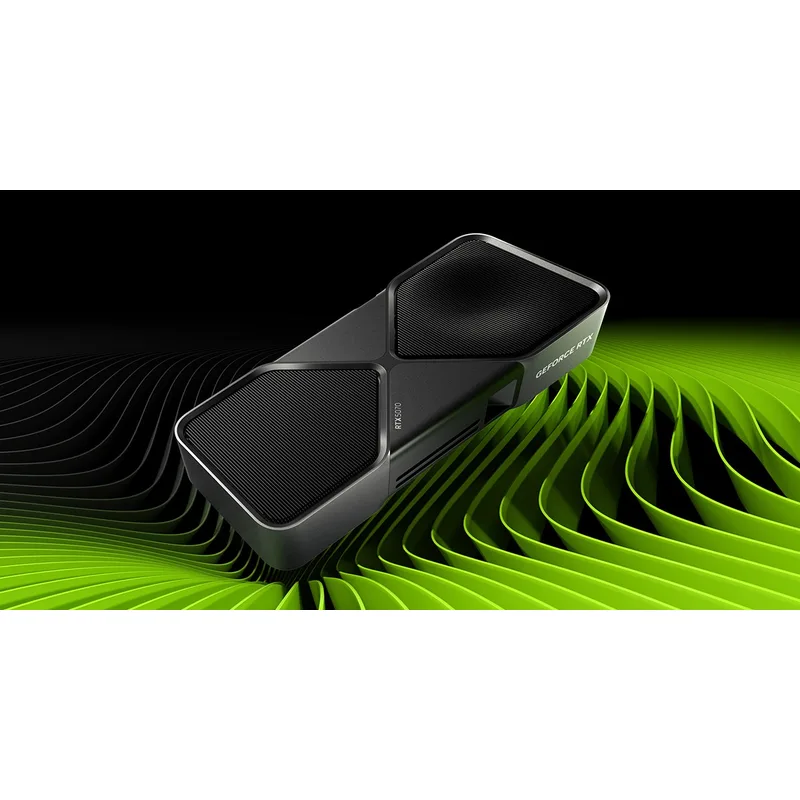
The MSI GeForce RTX 5070 Ventus 2X OC sits at ~$629 street as of April 2026, up from its $549 MSRP. It runs 20–30% slower than the 9070 XT at 4K rasterization, draws 54W less, and comes with 12GB GDDR7 instead of 16GB GDDR6. The VRAM difference is increasingly relevant at 4K: several current titles already push past 12GB with RT and Ultra texture settings, and the RTX 5070 stutters in those scenarios.
Where the RTX 5070 wins: DLSS 4 Multi Frame Generation is a genuine multiplier in supported games, efficiency is best-in-class, and Nvidia’s driver history is more stable. At 1440p with a DLSS-heavy game library, the RTX 5070 is a legitimate choice. For pure 4K rasterization performance per dollar at current prices, it loses to the 9070 XT.
MSI RTX 5070 Ti 16G Gaming Trio OC Plus
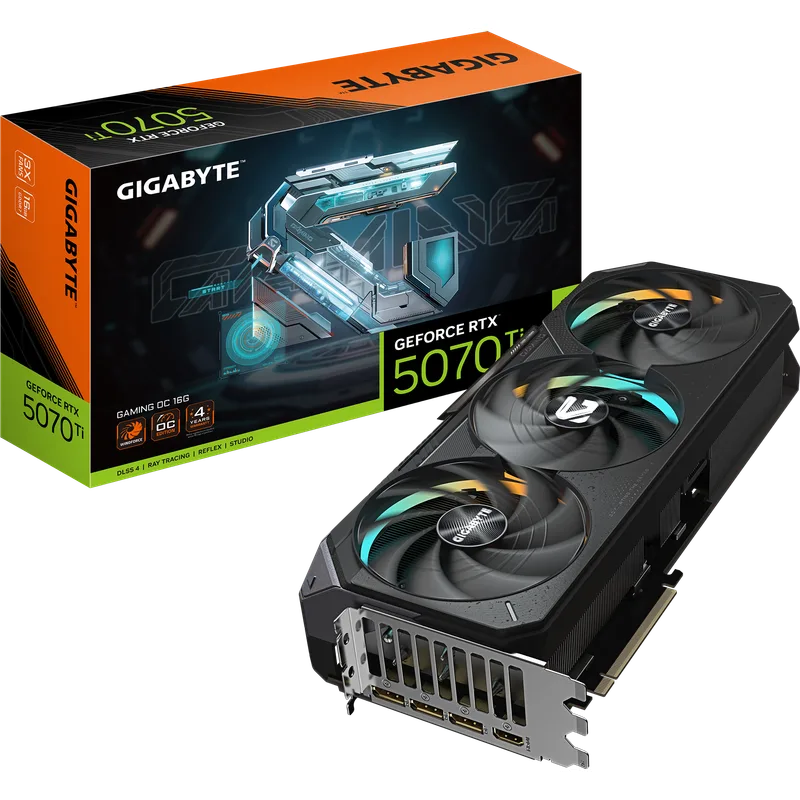
The MSI RTX 5070 Ti Gaming Trio OC Plus would be a tighter comparison at its $749 MSRP — 16GB GDDR7, better ray tracing, DLSS 4, and ~5% faster rasterization for $50 more. At $999–$1,100 street (April 2026), it is not. You’re paying $300+ more for that 5% rasterization advantage and a meaningful RT edge in two heavy workloads (Cyberpunk 2077, Black Myth Wukong 4K RT). The value math doesn’t work at current prices. If RTX 5070 Ti cards return to MSRP, the calculation changes for dedicated ray tracing builds. For a full head-to-head between the RTX 5070 Ti and this card, see our RTX 5070 Ti vs RX 9070 XT comparison.
Who Should Buy the RX 9070 XT
Buy the RX 9070 XT if:
- You game at 1440p or 4K and prioritize rasterization performance per dollar
- You want 16GB VRAM to stay ahead of rising texture and RT memory budgets
- RTX 5070 Ti street prices are above $850 (they’re at $999+ in April 2026)
- You’re comfortable with AMD’s driver ecosystem
Consider the RTX 5070 instead if:
- You game primarily at 1440p and prioritize power efficiency or DLSS 4 support
- You’re building a small-form-factor or thermally constrained system
Consider the RTX 5070 Ti instead if:
- RTX 5070 Ti prices drop back toward $749 MSRP
- You play Cyberpunk 2077 or Black Myth Wukong with full RT enabled regularly
FAQ
Does the RX 9070 XT support FSR 4?
Yes. FSR 4 (FidelityFX Super Resolution 4) is AMD’s RDNA 4-exclusive upscaler, using machine learning to generate frames similar to DLSS. FSR 4 produces noticeably better image quality than FSR 3.1, though it can still appear slightly softer than DLSS 4 in motion. FSR 3’s frame generation also works on RX 9070 XT.
What PSU does the RX 9070 XT need?
AMD’s official recommendation is 750W. With a modern mid-range system (Ryzen 7 9800X3D, DDR5, NVMe SSD), peak system draw stays under 550W under gaming load, making a quality 750W PSU comfortable. For overclocked boards or high-TDP builds, 850W is the safer choice.
How does the RX 9070 XT compare to the RX 7900 XTX?
The 9070 XT is 5–10% faster than the RX 7900 XTX in rasterization, which launched at $999. The gap in ray tracing is larger — RDNA 4’s RT hardware is substantially improved over RDNA 3. The 9070 XT replaces the 7900 XTX as AMD’s value-per-performance sweet spot at a lower price.
Is 16GB VRAM actually useful right now?
At 4K with modern AAA titles using ray tracing and Ultra texture packs, yes. Several current releases push past 12GB in these conditions, causing stutter on cards with 12GB GDDR7 (like the RTX 5070). The 9070 XT’s 16GB buffer handles current titles cleanly and provides a longer runway before VRAM becomes the bottleneck.
Does the RX 9070 XT support PCIe 4.0 motherboards?
Yes. PCIe 5.0 x16 is backwards compatible with PCIe 4.0 x16 slots. There is no measurable gaming performance difference on PCIe 4.0 versus PCIe 5.0 at current GPU bandwidth requirements.
The Bottom Line
The AMD Radeon RX 9070 XT is the most competitive mainstream GPU AMD has produced. Matching the RTX 5070 Ti in 4K rasterization while costing $300 less at April 2026 street prices is a genuine achievement. The 16GB VRAM advantage over the RTX 5070 is increasingly practical, RDNA 4’s ray tracing is finally in the same conversation as Nvidia, and the Sapphire Pulse runs cool and quiet under sustained load.
The caveats are real: 304W TDP is higher than ideal, street prices above MSRP chip away at the value proposition, and Nvidia still leads in ray tracing efficiency and software polish. But for a 1440p or 4K gaming build in 2026, the RX 9070 XT at ~$789 beats the RTX 5070 Ti on value and the RTX 5070 on outright performance. AMD has built their answer to Nvidia’s mainstream tier — and it’s a strong one. If the 304W TDP is a concern, the non-XT RX 9070 drops to 220W with a modest performance cut.