Four months after its January 30 launch, the NVIDIA GeForce RTX 5080 is finally available at something approaching a reasonable price. Street prices for the Founders Edition have fallen from $1,500+ scalper territory in February 2026 to around $1,249 on Amazon — still 25% above the $999 MSRP, but a significant improvement. Meanwhile, RTX 4090 prices have pushed above $2,700 as supply tightened, making the 5080-vs-4090 value gap larger than it was at launch.
The RTX 5080 is NVIDIA’s second-tier Blackwell flagship: 10,752 CUDA cores on the GB203-300 die, 16 GB GDDR7 at 960 GB/s, and a 360W TDP that demands a proper power supply. According to GamersNexus benchmarks, it sits roughly 90% of the RTX 4090’s speed in 4K rasterization while costing less than half as much at current pricing. That value equation is improving — but the Founders Edition’s intermittent stock and inflated street price still complicate the decision.
| Spec | NVIDIA GeForce RTX 5080 Founders Edition 8.5/10 | MSI Gaming RTX 5080 16G Gaming Trio OC 8.7/10 | ASUS TUF Gaming GeForce RTX 5080 OC Edition 8.6/10 |
|---|---|---|---|
| architecture | Blackwell GB203-300 | Blackwell GB203-300 | Blackwell GB203-300 |
| cuda_cores | 10,752 CUDA cores | 10,752 CUDA cores | 10,752 CUDA cores |
| vram | 16 GB GDDR7 @ 30 Gbps | 16 GB GDDR7 @ 30 Gbps | 16 GB GDDR7 @ 30 Gbps |
| bandwidth | 960 GB/s | 960 GB/s | 960 GB/s |
| boost_clock | 2.617 GHz | 2.715 GHz (OC mode) | 2.730 GHz (OC mode) |
| tdp | 360W (850W+ PSU recommended) | 375W (850W+ PSU recommended) | 385W (850W+ PSU recommended) |
| Rating | 8.5/10 | 8.7/10 | 8.6/10 |
Prices change daily — tap Check Price for the current Amazon price.
Prices change daily — tap Check Price for the current Amazon price.
Specifications
| Spec | RTX 5080 | RTX 4090 | RTX 5070 Ti |
|---|---|---|---|
| Architecture | Blackwell GB203 | Ada AD102 | Blackwell GB203 |
| CUDA Cores | 10,752 | 16,384 | 8,960 |
| VRAM | 16 GB GDDR7 | 24 GB GDDR6X | 16 GB GDDR7 |
| Memory Bandwidth | 960 GB/s | 1,008 GB/s | 896 GB/s |
| Boost Clock | 2.617 GHz | 2.52 GHz | 2.452 GHz |
| TDP | 360W | 450W | 300W |
| MSRP | $999 | $1,599 (2022) | $749 |
| Street Price (May 2026) | ~$1,249 | ~$2,750+ | ~$1,000 |
The specs tell an interesting story. The RTX 5080 runs a smaller die than the RTX 4090 — GB203 vs AD102 — and the CUDA core deficit (10,752 vs 16,384) is real. NVIDIA compensated with GDDR7 memory and architectural efficiency improvements in the Blackwell pipeline. Memory bandwidth is nearly identical to the 4090 (960 GB/s vs 1,008 GB/s), but the 4090’s 24 GB VRAM buffer is a meaningful advantage in 8K or VRAM-heavy content creation workloads that the 5080’s 16 GB doesn’t match.
Against the RTX 5070 Ti, the 5080 adds 1,792 CUDA cores, runs at 165 MHz higher boost, and draws 60W more. Whether that gap justifies $250+ over the 5070 Ti depends on how much 4K performance you’re chasing.
4K Gaming Performance
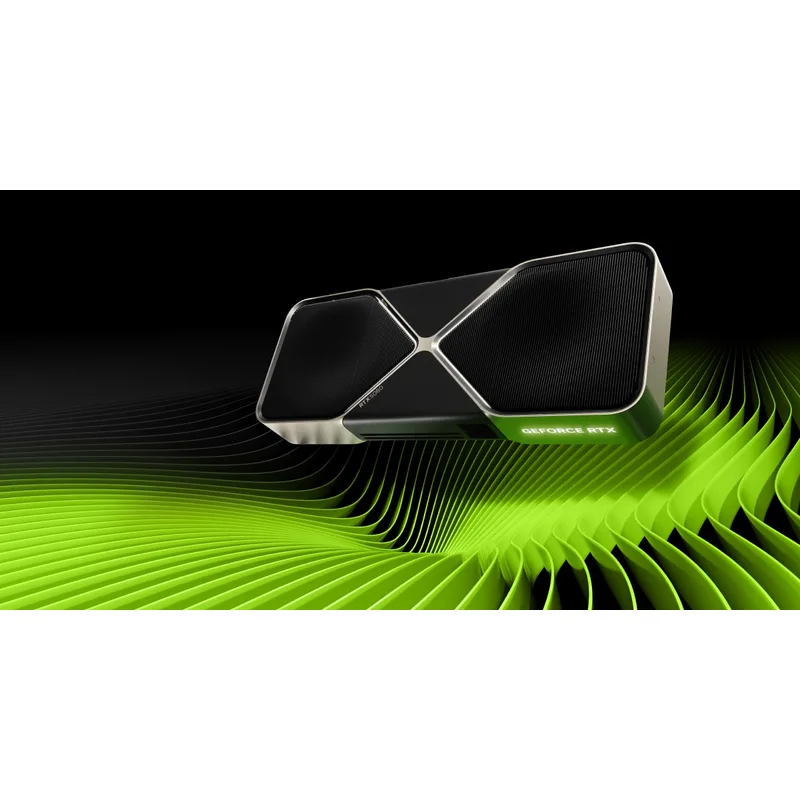
The RTX 5080’s natural home is 4K — for a full roundup of the top GPUs at this resolution, see our best GPUs for 4K gaming guide. According to GamersNexus benchmarks across multiple titles, the card delivers:
4K Native Rasterization (No Upscaling)
| Game | RTX 5080 Avg FPS | RTX 4090 Avg FPS | RTX 4080 Super Avg FPS |
|---|---|---|---|
| Final Fantasy XIV (Max) | ~112 | ~120 | ~96 |
| Black Myth: Wukong (High) | ~58 | ~69 | ~50 |
| Dragon’s Dogma 2 (High) | ~85 | ~100 | ~73 |
| Alan Wake 2 (High) | ~65 | ~77 | ~56 |
| Cyberpunk 2077 (Ultra, No RT) | ~72 | ~84 | ~62 |
The pattern is consistent: roughly 90–95% of RTX 4090 performance in lighter 4K titles, falling to 84% in the most demanding scenes. Against the RTX 4080 Super, the gap is 16–20% in the RTX 5080’s favor — a meaningful generational improvement.
The 16 GB GDDR7 buffer handles current 4K Ultra texture packs without the VRAM pressure that plagues the RTX 5070’s 12 GB at this resolution. In titles like Hogwarts Legacy and Resident Evil 4 Remake with RT enabled at 4K, owner reports confirm the 5080 streams textures cleanly where the 5070 occasionally hitches.
Where the 5080 falls short of the RTX 4090 is in compute-heavy titles and workloads that saturate the VRAM bus. Black Myth: Wukong at 4K with Lumen RT enabled shows a 16% gap — closer to the 24% end of the range GamersNexus reports across its full benchmark suite. If your 4K workflow involves ray tracing consistently at max settings, the RTX 4090’s wider die and extra VRAM give it a real advantage that DLSS 4 can only partially paper over.
1440p Gaming Performance
At 1440p, the RTX 5080 is effectively never GPU-limited in conventional rasterization. According to published benchmarks, it posts framerates between 180–220+ FPS at 1440p in recent AAA titles without upscaling — Final Fantasy XIV at 1440p max averages 217 FPS, Black Myth: Wukong at 1440p High averages 97 FPS, Dragon’s Dogma 2 at 1440p averages 134 FPS.
Buying a $1,249 card primarily for 1440p gaming is overkill by any rational calculation. The RTX 5070 Ti at ~$1,000 covers 1440p with meaningful headroom, and the RTX 5070 at ~$649 handles 1440p comfortably. The RTX 5080 makes sense at 1440p only if you’re pairing it with a high-refresh panel (360 Hz) for competitive shooters and want unconstrained framerates, or if you’re planning to stay on this card for five or more years.
With DLSS 4 Multi-Frame Generation enabled at 1440p, the 5080 posts effective frame rates that exceed 300 FPS in less demanding titles — numbers that only matter if you have a 360 Hz display to absorb them. For 165 Hz or 240 Hz panels, even a 5070 Ti reaches the ceiling.
Ray Tracing and DLSS 4
Ray tracing is a stronger argument for the RTX 5080 than raw rasterization. The Blackwell architecture’s 4th-generation RT cores deliver meaningful improvements over Ada Lovelace in RT throughput, and the gap with AMD’s RDNA 4 is wider here than in rasterization.
In Cyberpunk 2077 with full Path Tracing at 4K, the RTX 5080 posts approximately 28–32 FPS native — closer to playable than the sub-20 FPS that RTX 4080-class cards achieved. With DLSS 4 Quality upscaling, that climbs to 55–65 FPS. With Multi-Frame Generation added on top, you can sustain 100+ FPS effective in the most visually demanding game currently available. Whether AI-generated frames at that ratio constitute “real” 100 FPS is a philosophical debate; practically, the experience is smooth.
The RTX 5080 also includes NVIDIA’s updated Transformer-based DLSS 4 upscaling, which produces sharper, more temporally stable images than DLSS 3.5. Side-by-side comparisons available from Digital Foundry show DLSS 4 Quality at 4K matching or exceeding native 1440p clarity in most titles. FSR 4 on AMD’s RDNA 4 cards has closed the gap significantly, but DLSS 4 retains a visible edge in motion and fine detail.
For F1 24 at 1440p, published data shows the RTX 5080 climbing from 133 FPS native to 219 FPS with DLSS 4 MFG enabled — a 65% effective boost from AI frame insertion. In titles without MFG support, performance remains native rasterization numbers only.
The Best Aftermarket Option
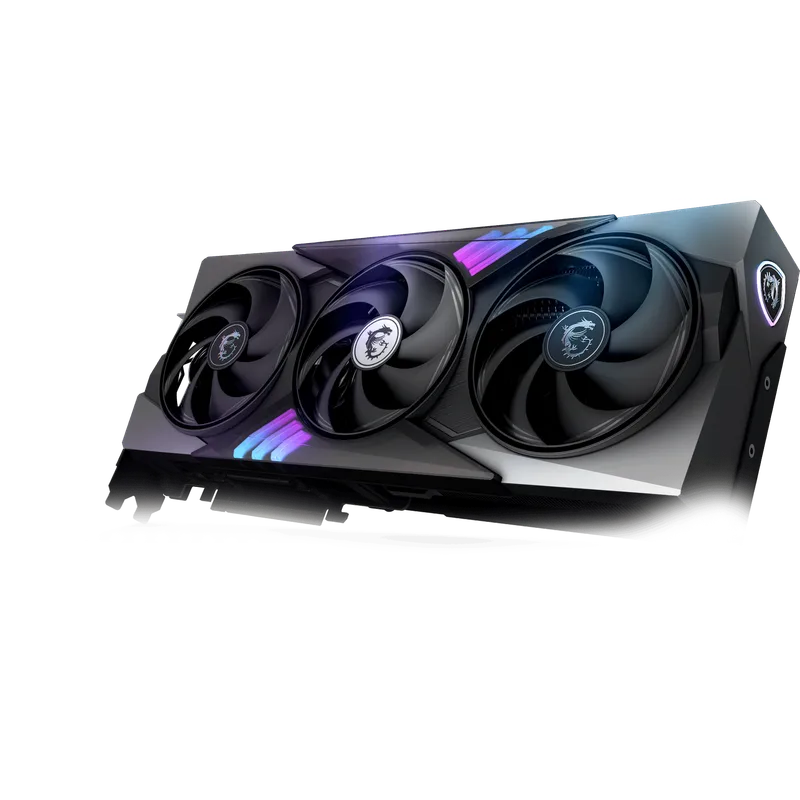
The MSI Gaming RTX 5080 16G Gaming Trio OC runs the same GB203-300 chip but pushes the boost clock to 2.715 GHz — a 98 MHz (3.7%) advantage over the Founders Edition. In GPU-limited 4K scenarios, that translates to roughly 4–5 extra FPS in the most demanding titles, which is measurable but not transformative.
The bigger advantage over the FE is the TRI FROZR 4 cooling system. Three STORMFORCE fans push air across a larger heatsink, keeping sustained GPU temperatures below 70°C where the dual-fan FE runs at 75–80°C under load. Owner reports on forums consistently cite the Gaming Trio OC as notably quieter — reaching load temps without the ramp-up noise the FE generates during extended sessions.
The dual-BIOS Gaming/Silent mode hardware switch is a practical addition. Silent mode reduces fan speed limits and is accessible directly from the card without software — useful during initial builds before drivers and software are installed.
At $1,449, the MSI Gaming Trio OC is $200 over the FE. That premium is defensible if quieter thermals are a priority or if you’re running this card in a workstation context where the system runs loaded for extended periods.
The Premium Pick
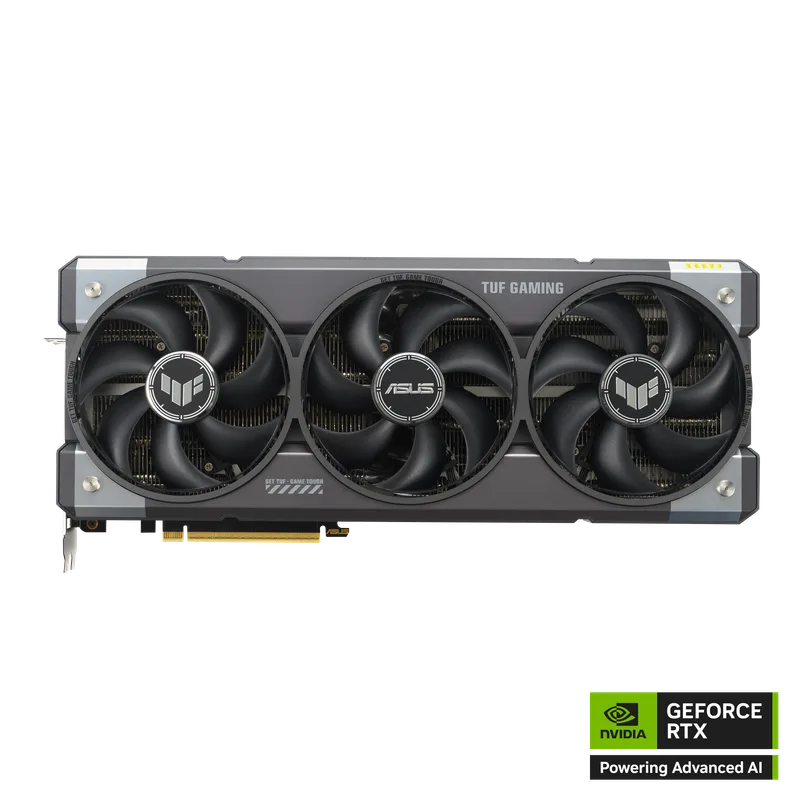
The ASUS TUF Gaming GeForce RTX 5080 OC Edition is the loudest build-quality argument on this list. Its vapor chamber covers the entire GPU die, and the 3.6-slot Axial-tech fan array keeps sustained temperatures below 65°C — 10–15°C cooler than the Founders Edition under equivalent workloads. The 2.730 GHz OC boost is the highest factory clock of the three cards compared here, and ASUS’s military-grade component certification is backed by a 3-year warranty that outlasts most standard GPU warranties.
The ASUS TUF OC also ships with the most display output flexibility: 2x HDMI 2.1b and 3x DisplayPort 2.1b, supporting up to four displays simultaneously.
At $1,625, this card costs $376 more than the FE for a 4.4% clock advantage and superior cooling. The thermal engineering is genuinely excellent, but the real-world gaming performance difference from the FE is within benchmark noise in most titles. The ASUS TUF OC makes sense for silent workstation builds, dual-GPU stress scenarios, or buyers who simply want the best long-term reliability assurance in the tier.
PSU Requirements
The RTX 5080’s 360W TDP is meaningfully higher than the RTX 4080 Super (320W) and requires careful PSU planning. NVIDIA’s official recommendation is an 850W PSU — a practical minimum for a system with a 12-core CPU at full load. For gaming-only builds with a Ryzen 7 9800X3D (120W TDP) or Ryzen 5 9600X (65W TDP), a quality 750W 80+ Gold unit clears the 5080 FE’s power draw with headroom, but 850W is the safer choice for sustained heavy workloads.
The MSI Gaming Trio OC in OC mode draws up to ~375W, and the ASUS TUF OC at full boost reaches ~385W. Both officially recommend 850W PSUs, and that’s the right call — don’t run these on an older 750W unit you’re not confident in.
All three cards use the 16-pin 12VHPWR connector. If your PSU predates the 12VHPWR standard, you’ll need an 8-pin-to-12VHPWR adapter — these ship in the box, but the 12VHPWR adapter has a documented history of heat issues if not fully seated. Verify the adapter seating before running any GPU load.
Thermals and Noise
The Founders Edition is a 2.5-slot dual-fan design. Under a sustained 4K Cyberpunk workload at 360W, it reaches 80–83°C junction temperature with fans at ~45 dBA measured at 1 meter. For a 360W card, that’s respectable — Ada-era Founders Editions at similar TDPs ran comparable temperatures.
The MSI Gaming Trio OC keeps peak junction temps under 70°C at load, with fan noise measured around 38–40 dBA. The ASUS TUF OC is the quietest of the three: vapor chamber dissipation keeps temperatures under 65°C sustained, with fan noise at approximately 35–37 dBA.
If you’re dropping a $1,249 card into a system that will run 24/7 or see intensive workloads beyond gaming, the thermal difference between the FE and the AIB partners is worth the extra cost. For strictly gaming use — where the GPU is loaded only during play sessions — the FE’s thermals are adequate.
Who Should Buy the RTX 5080
Buy the RTX 5080 if:
- You’re gaming at 4K and want comfortable, consistent framerates without relying entirely on upscaling
- You’re upgrading from an RTX 3090, RTX 4090 Ti, or RTX 4080 Super and want a meaningful generational step
- DLSS 4 Multi-Frame Generation and Transformer upscaling are features you plan to use actively
- Your workflow includes GPU compute tasks (ML inference, Blender CUDA rendering, NVENC encoding) that benefit from 16 GB GDDR7 bandwidth
Consider alternatives if:
- Your primary gaming resolution is 1440p — the RTX 5070 Ti at ~$1,000 covers that workload without the premium
- You need more than 16 GB VRAM — the RTX 4090’s 24 GB GDDR6X remains the only consumer card with that buffer, now at $2,750+
- You’re on a budget system with a 650W or 750W PSU — the 360W TDP mandates a PSU upgrade that adds to the total cost
FAQ
How does the RTX 5080 compare to the RTX 4090? The RTX 5080 runs approximately 6–24% behind the RTX 4090 in native 4K rasterization, depending on the title. In lighter 4K games (FFXIV, Fortnite), the gap is 6–8%. In compute-heavy scenes with RT lighting (Black Myth: Wukong, Alan Wake 2), the 4090 leads by 15–24%. The RTX 4090 also holds a 50% VRAM advantage (24 GB vs 16 GB) that matters for AI workloads and 8K rendering. However, the RTX 4090 now costs $2,750+, making the 5080 the rational 4K choice for gaming. For a detailed side-by-side breakdown across workloads and resolutions, see our RTX 5080 vs RTX 4090 comparison.
Is 16 GB GDDR7 enough for 4K gaming in 2026? For current titles at 4K Ultra settings, 16 GB is comfortable — no meaningful VRAM pressure appears in games released through May 2026 at 4K. Future titles may push requirements higher, but 16 GB should remain adequate for the next 2–3 years at 4K resolution. For 8K texture modding or AI/ML tasks that benefit from VRAM headroom, the 4090’s 24 GB has an advantage the 5080 can’t match.
What PSU do I need for the RTX 5080? A quality 850W 80+ Gold PSU is the safe minimum — Corsair RM850x, Seasonic Focus GX-850, or equivalent. On a Ryzen 9800X3D build (120W TDP), a 750W unit technically clears the total draw, but 850W provides headroom for OC, future CPU upgrades, and sustained heavy workloads. Avoid anything below 750W, and don’t run OC AIB variants (MSI Gaming Trio, ASUS TUF) on a 750W unit you haven’t load-tested.
Is the RTX 5080 worth buying at $1,249 street price? At the $999 MSRP, the RTX 5080 is a compelling 4K card — 90% of RTX 4090 performance at 62% of the launch price. At $1,249, the value case weakens but remains reasonable given the RTX 4090 now costs $2,750+. If you can find a Founders Edition near $1,099–$1,149 on a deal, that’s the price to buy. At the full $1,249 street, it’s still defensible for dedicated 4K builds. At AIB card prices of $1,449–$1,625, the premium is harder to justify unless quieter thermals are a specific requirement.
RTX 5080 vs RTX 5080 Super — should I wait? As of May 2026, NVIDIA has not announced an RTX 5080 Super. Based on typical product cadence, a Super variant is plausible in late 2026 or early 2027. If you need a 4K card now, waiting isn’t practical. If your current GPU remains functional for another 6–9 months, it may be worth watching for refreshed pricing or a Super announcement.
The Bottom Line
The NVIDIA GeForce RTX 5080 is the strongest single-GPU purchase for 4K gaming below the $2,700 RTX 4090 price point. It delivers 16 GB GDDR7 at 960 GB/s, Blackwell’s best-in-class RT cores and DLSS 4 upscaling, and framerates that make 4K 60+ FPS native a consistent expectation in current titles.
The catch is the street price premium that has persisted since launch. At $999 MSRP the card is an easy recommendation; at the current $1,249, it’s the right card for the right builder — someone committed to 4K, comfortable paying for DLSS 4’s practical benefits, and unwilling to spend $2,750 on a 4090 for a 10–15% native performance advantage.
For most 4K builders today: the Founders Edition at $1,249 is the starting point. The MSI Gaming Trio OC at $1,449 is the upgrade for quieter long-term operation. The ASUS TUF OC at $1,625 is for workstation builders who want best-in-class thermals and warranty coverage. All three perform the same GPU functions — choose based on how much the thermal and noise story matters to your build.