The NVIDIA GeForce RTX 5070 launched in early 2025 with a $549 MSRP and a bold claim: performance matching the RTX 4090. By January 2026, reviews have clarified what that claim actually means — NVIDIA was comparing frame rates with Multi-Frame Generation enabled, not native performance. Strip away the AI-generated frames and the RTX 5070 is a solid 1440p GPU with a real VRAM problem, a street price around ~$599, and a direct competitor in the AMD RX 9070 XT that beats it in native rasterization for less money.
That doesn’t make it a bad card. DLSS 4 is genuinely impressive, the Blackwell architecture brings real improvements in ray tracing, and for buyers who live in the NVIDIA ecosystem, it’s the right step up from an RTX 3080 or RTX 4070. But the RTX 5070 is an awkward product, and the context matters.
| Spec | NVIDIA GeForce RTX 5070 Founders Edition Unavailable 7.2/10 | ASUS TUF GeForce RTX 5070 OC Edition Unavailable 7.5/10 | XFX Swift AMD Radeon RX 9070 XT 8.4/10 |
|---|---|---|---|
| architecture | Blackwell GB205-300 | Blackwell GB205-300 | RDNA 4 Navi 48 |
| cuda_cores | 6,144 CUDA cores | 6,144 CUDA cores | — |
| vram | 12 GB GDDR7 @ 28 Gbps | 12 GB GDDR7 @ 28 Gbps | 16 GB GDDR6 @ 20 Gbps |
| bandwidth | 672 GB/s | 672 GB/s | 640 GB/s |
| boost_clock | 2.512 GHz | 2.55 GHz (OC mode) | 2.97 GHz |
| tdp | 250W (750W+ PSU recommended) | 265W (800W+ PSU recommended) | 304W (800W+ PSU recommended) |
| Rating | 7.2/10 | 7.5/10 | 8.4/10 |
Prices change daily — tap Check Price for the current Amazon price.
Prices change daily — tap Check Price for the current Amazon price.
Specifications
| Spec | RTX 5070 | RTX 4070 Super | RX 9070 XT |
|---|---|---|---|
| Architecture | Blackwell GB205 | Ada Lovelace AD104 | RDNA 4 Navi 48 |
| CUDA / Compute Units | 6,144 CUDA | 7,168 CUDA | 64 CUs |
| VRAM | 12 GB GDDR7 | 12 GB GDDR6X | 16 GB GDDR6 |
| Memory Bandwidth | 672 GB/s | 504 GB/s | 640 GB/s |
| Boost Clock | 2.512 GHz | 2.475 GHz | 2.97 GHz |
| TDP | 250W | 220W | 304W |
| MSRP | $549 | $599 (launch) | $549 |
| Street Price | ~$599 | ~$400 used | ~$719 |
The raw spec comparison is telling. The RTX 5070 has fewer CUDA cores than the RTX 4070 Super it notionally replaces at this tier. NVIDIA shrunk the die down (GB205 vs the larger Ada AD104) and compensated with faster GDDR7 memory and architectural efficiency improvements. The memory bandwidth jump from 504 GB/s to 672 GB/s is meaningful for 4K, but the 12 GB VRAM cap is where the card stumbles — the RX 9070 XT ships with 16 GB GDDR6 at nearly identical bandwidth.
1440p Gaming Performance
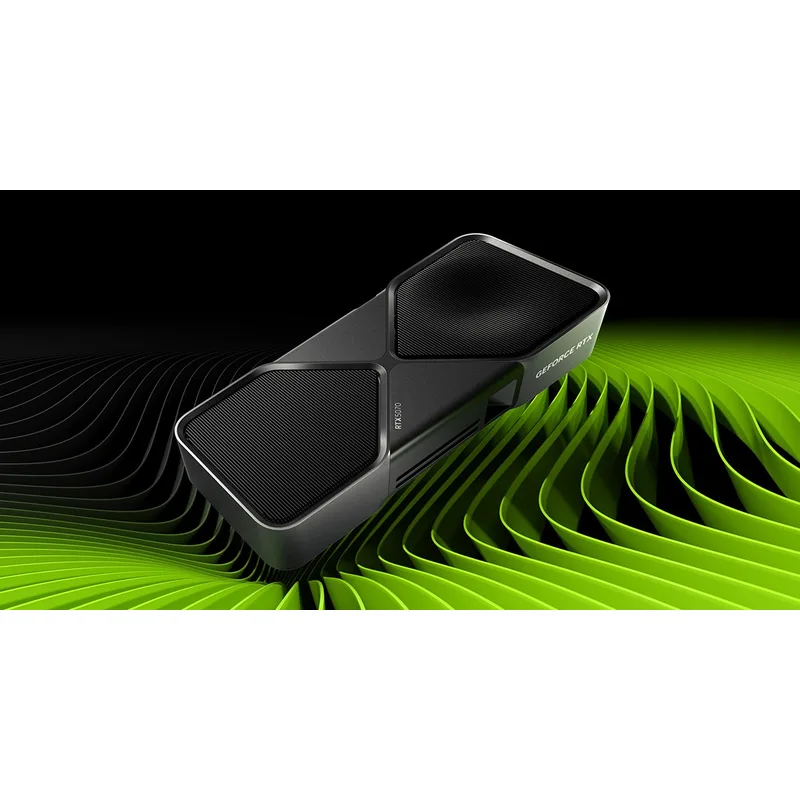
NVIDIA GeForce RTX 5070 Founders Edition
At 1440p, the RTX 5070 is a capable card, but the RX 9070 XT consistently outpaces it in native rasterization. Across GamersNexus and Tom’s Hardware benchmarks:
1440p Rasterization (Native, No Upscaling)
| Game | RTX 5070 Avg FPS | RX 9070 XT Avg FPS | RTX 4070 Super Avg FPS |
|---|---|---|---|
| Cyberpunk 2077 (Ultra) | ~88 | ~97 | ~78 |
| Alan Wake 2 (High) | ~82 | ~91 | ~72 |
| The Witcher 4 | ~95 | ~108 | ~84 |
| Counter-Strike 2 | ~380 | ~395 | ~340 |
| Call of Duty: Black Ops 6 | ~145 | ~158 | ~128 |
The RX 9070 XT leads by 7-15% in most 1440p rasterization tests. For native gaming without upscaling, AMD has the clear edge here. The RTX 5070 does close that gap when DLSS 4 Quality mode is enabled — DLSS 4 with Transformer architecture produces sharper, more temporally stable images than FSR 4 at equivalent quality settings.
With DLSS 4 Multi-Frame Generation at 1440p, the RTX 5070 posts frame rates that bear little relation to its native performance — 200+ FPS in Cyberpunk at 1440p Ultra is achievable, but that number includes 1 real frame for every 1-3 AI-generated frames. Whether you trust that framing is a personal call.
4K Gaming Performance
4K is where the 12 GB VRAM constraint starts to bite. AMD’s 16 GB buffer gives the RX 9070 XT more headroom for high-resolution texture streaming, and the gap in native performance widens at 4K.
Across 4K benchmark data, the RTX 5070 averages approximately 52-55 FPS while the RX 9070 XT averages 65-68 FPS — a roughly 25-30% gap in native rasterization. In VRAM-heavy titles like Hogwarts Legacy at 4K Ultra or Resident Evil 4 Remake with RT enabled, the RTX 5070’s 12 GB starts to show texture pop-in that the RX 9070 XT avoids.
For 4K native gaming, the RTX 5070 is not the right choice unless DLSS 4 MFG is a priority feature for you. With MFG enabled, the RTX 5070 can comfortably sustain 60+ FPS “effective” frame rates in most 4K titles, but you’re relying on AI frame generation to get there.
Ray Tracing and DLSS 4
This is the RTX 5070’s strongest suit. Nvidia’s 4th-generation RT cores in the Blackwell architecture deliver a genuine improvement in ray tracing throughput, and DLSS 4 with Transformer-based upscaling is the best upscaling solution currently available.
In Cyberpunk 2077 with full Path Tracing at 1440p, the RTX 5070 posts approximately 38-42 FPS native — playable with DLSS 4 Quality mode pushing it to 75-80 FPS with better image quality than DLSS 3.5 achieved. The RX 9070 XT manages around 28-32 FPS native in the same scenario, a ~25% gap that FSR 4 doesn’t fully close.
If ray tracing and visual fidelity are your priority and you’re buying a card specifically for RT-heavy titles, the RTX 5070 makes more sense — see our best GPUs for ray tracing guide for more context. For straightforward rasterization gaming, the RX 9070 XT wins on pure frames.
The Aftermarket: ASUS TUF OC
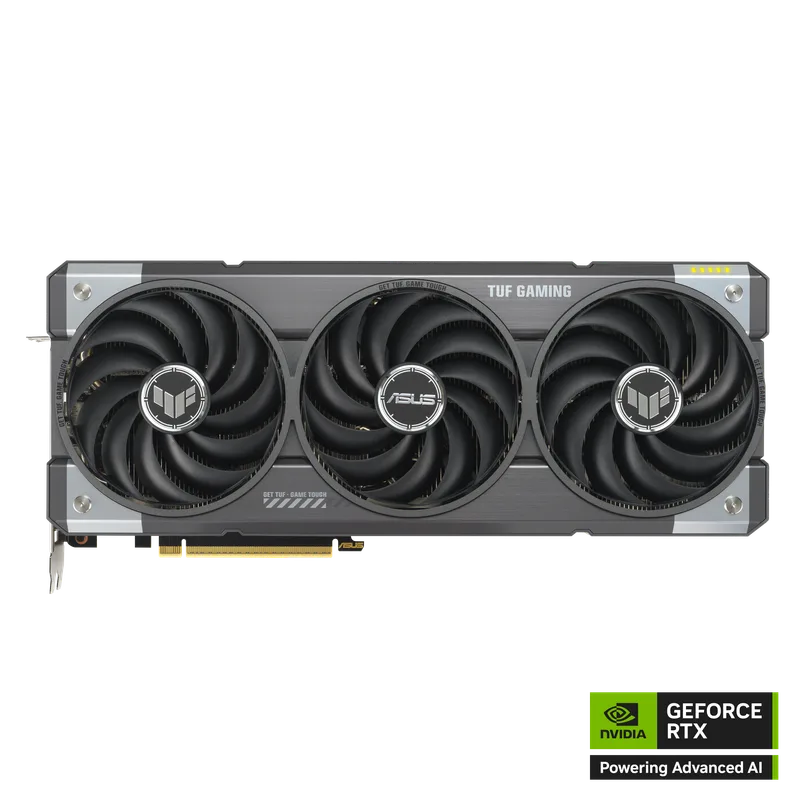
ASUS TUF GeForce RTX 5070 OC Edition
The ASUS TUF GeForce RTX 5070 OC is the most commonly recommended aftermarket RTX 5070 variant. Its triple-fan Axial-tech cooler keeps the GPU 3-5°C cooler than the Founders Edition under sustained load, which matters if you’re running long gaming sessions or doing any GPU compute work.
The OC mode boost clock of 2.55 GHz gives a small performance bump (~1-2%) over the Founders Edition. Not worth paying $250 extra over a $549 MSRP FE for the performance alone, but ASUS builds quality hardware, and at $799 the improved thermals and 3-year warranty are worth it for buyers who keep cards long-term.
The 3.125-slot width means you need to check case clearance — it won’t fit in tight mATX builds. Power draw increases to ~265W in OC mode, so budget an 800W PSU.
The Competition
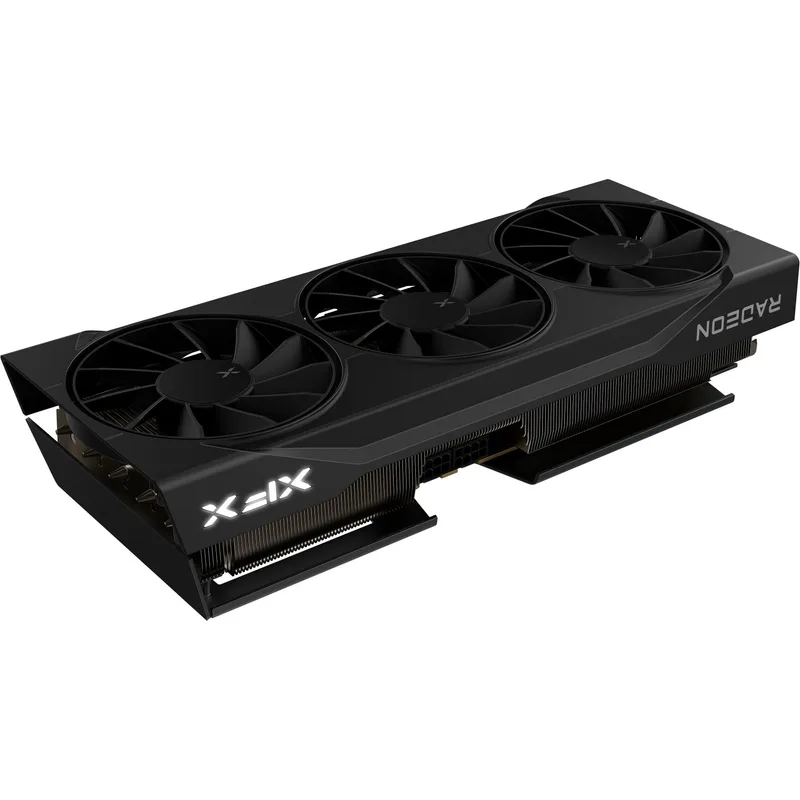
The XFX Swift AMD Radeon RX 9070 XT is the RTX 5070’s direct competition, and by raw performance metrics it’s the better card for most buyers. 16 GB GDDR6 vs 12 GB GDDR7, faster native rasterization at both 1440p and 4K. Current street prices favor the RTX 5070 FE at ~$599 vs the XFX Swift at ~$719 — a $120 gap that changes the value equation.
The XFX Swift is a solid AIB option with a clean triple-fan design and competitive pricing. AMD’s RDNA 4 architecture also makes meaningful RT improvements over RDNA 3, though it still can’t match Blackwell’s RT hardware efficiency.
Where the RX 9070 XT falls short: FSR 4 is good but not as refined as DLSS 4, AMD’s driver support for content creation is less mature, and CUDA is simply unavailable if your workflow touches ML, Blender CUDA rendering, or NVENC encoding.
For a pure gaming machine: buy the RX 9070 XT. For a machine that games and creates: the RTX 5070 makes sense despite the VRAM compromise. For a detailed side-by-side, see our RTX 5070 vs RX 9070 XT comparison.
PSU Requirements
The RTX 5070 draws 250W peak, and NVIDIA recommends a 750W PSU. In practice, pair a 750W 80+ Gold PSU with a Ryzen 7 9800X3D or similar, and you’re fine. If you’re running a 12-core Intel CPU at full load simultaneously, step up to an 850W unit. The ASUS TUF OC variant at 265W warrants an 800W minimum.
The RTX 5070 uses the 16-pin 12VHPWR connector (or adapter from dual 8-pin) — make sure your PSU has the appropriate connector.
Thermals and Noise
The Founders Edition is a 2-slot dual-fan design. It runs quietly at gaming loads — typically 40-45 dBA measured at 1 meter — but the compact cooling design means temperatures peak around 83-85°C under sustained gaming. That’s within safe operating range but warm for a $549 GPU.
The ASUS TUF OC sits 3-5°C cooler and runs at 35-38 dBA, making it meaningfully quieter for the same workload.
Who Should Buy the RTX 5070
Buy the RTX 5070 if:
- You’re upgrading from an RTX 3080, RTX 3090, or RTX 4070 and want to stay in the NVIDIA ecosystem
- DLSS 4 quality and Multi-Frame Generation are priorities for you
- You play RT-heavy titles like Cyberpunk 2077, Alan Wake 2, or Returnal where Blackwell’s RT advantage matters
- You use GPU-accelerated creative tools tied to CUDA or NVENC
Buy the RX 9070 XT instead if:
- Your primary concern is native rasterization performance per dollar
- You’re gaming at 4K without heavy reliance on upscaling
- 16 GB VRAM future-proofing matters to you
- You don’t use CUDA-dependent software
FAQ
Does the RTX 5070 actually match RTX 4090 performance? No — not in native rasterization. NVIDIA’s claim was based on frame rates with DLSS 4 Multi-Frame Generation enabled, which generates AI frames in addition to real rendered frames. In native rasterization, the RTX 5070 performs closer to a fast RTX 4070 Super. The RTX 4090 is still meaningfully faster across the board.
Is 12 GB VRAM enough in 2026? For 1440p, 12 GB is adequate for most current titles at high settings. At 4K Ultra settings in demanding open-world games, you’ll start to see VRAM pressure — texture streaming hitches are observed in some titles. The RX 9070 XT’s 16 GB buffer handles these scenarios more gracefully. For pure 1440p gaming, 12 GB is workable but not comfortable long-term.
What PSU do I need for the RTX 5070? 750W is the official minimum for the Founders Edition. A 750W 80+ Gold unit (Corsair RM750x, Seasonic Focus GX-750) is sufficient for builds with an 8-12 core CPU. If you’re running a high-core-count Intel chip under heavy load alongside the GPU, budget for an 850W PSU.
Is the RTX 5070 worth buying above MSRP? At the $549 MSRP, the RTX 5070 is competitive despite its VRAM limitations — DLSS 4 and ray tracing performance make it a reasonable pick for NVIDIA buyers. At the current street price of ~$649, the value proposition weakens significantly. At ~$599, the RTX 5070 FE now sits $120 below the XFX Swift RX 9070 XT at ~$719. If raw native rasterization performance per dollar is the priority, compare the full RX 9070 XT lineup — budget AIB options start around $699 — before committing.
RTX 5070 vs RTX 5070 Ti — is the upgrade worth it? The RTX 5070 Ti adds 16 GB GDDR7, 8,960 CUDA cores (vs 6,144), and roughly 25-30% more rasterization performance. At the RTX 5070 Ti’s $749 MSRP, it’s the clearly better card — 4K gaming becomes genuinely comfortable and the VRAM concern disappears. The problem is the 5070 Ti has also suffered from supply issues, with street prices reaching $1,000-1,300 in early 2026. If you can find a 5070 Ti at or near MSRP, buy that instead. For a direct comparison of how the Ti stacks up against AMD’s best, see our RTX 5070 Ti vs RX 9070 XT comparison.
The Bottom Line
The NVIDIA GeForce RTX 5070 is a capable 1440p GPU with the best DLSS 4 and ray tracing performance in its price class. The Blackwell architecture delivers real improvements in efficiency and visual feature quality, and DLSS 4’s Transformer model is a meaningful step up from DLSS 3.5.
The problems are real, though. Twelve gigabytes of VRAM at this price point looks thin against the RX 9070 XT’s 16 GB, and the AMD card beats the RTX 5070 in native rasterization by 7-30% depending on resolution and title. Street prices have settled around ~$599, still above the $549 MSRP but meaningfully below the $649+ peaks seen earlier in 2026.
If you’re a committed NVIDIA user, value DLSS 4 and RT performance, or need CUDA for creative work, the RTX 5070 FE at ~$599 is a solid choice. For pure native rasterization performance, the RX 9070 XT still wins on frames-per-dollar — though its street prices have risen to $699–$849, which changes the math compared to earlier in 2026. For the full NVIDIA flagship experience at 4K without VRAM constraints, see our RTX 5080 review. To compare all RTX 5070 AIB variants from ASUS, MSI, GIGABYTE, and ZOTAC by price and cooling, see our best RTX 5070 cards roundup.