The AMD Ryzen 5 9600X launched at $279 in August 2024. By May 2026, street prices have fallen to around $179 — which changes the calculus entirely. At launch it was a tough sell against the i5-14600K. At $179, it’s one of the sharpest CPU values on the market. This review covers whether the 9600X deserves a spot in your next build at its current price, how it stacks up against Intel’s competing chip and its own predecessor, and where it falls short.
| Spec | AMD Ryzen 5 9600X 8.6/10 | Intel Core i5-14600K Unavailable 7.8/10 | AMD Ryzen 5 7600X 7.2/10 |
|---|---|---|---|
| cores | 6 cores / 12 threads | 14 cores (6P + 8E) / 20 threads | 6 cores / 12 threads |
| base_clock | 3.9 GHz base / 5.4 GHz boost | 3.5 GHz base / 5.3 GHz boost | 4.7 GHz base / 5.3 GHz boost |
| cache | 38 MB total (32 MB L3 + 6 MB L2) | 24 MB L3 | 38 MB total (32 MB L3 + 6 MB L2) |
| tdp | 65W | 125W (up to 181W PL2) | 105W |
| socket | AM5 (Zen 5) | LGA1700 (Raptor Lake) | AM5 (Zen 4) |
| memory | DDR5-5600 (up to DDR5-6000 OC) | DDR5-5600 / DDR4-3200 | DDR5-5200 (up to DDR5-6000 OC) |
| Rating | 8.6/10 | 7.8/10 | 7.2/10 |
Prices change daily — tap Check Price for the current Amazon price.
Prices change daily — tap Check Price for the current Amazon price.
Specifications
| Spec | AMD Ryzen 5 9600X |
|---|---|
| Architecture | Zen 5 (Granite Ridge) |
| Cores / Threads | 6C / 12T |
| Base Clock | 3.9 GHz |
| Boost Clock | 5.4 GHz |
| L2 Cache | 6 MB (1 MB per core) |
| L3 Cache | 32 MB |
| Total Cache | 38 MB |
| TDP | 65W (PPT: 88W) |
| Socket | AM5 |
| Memory Support | DDR5-5600 (JEDEC), DDR5-6000+ (OC) |
| PCIe | PCIe 5.0 x16 (GPU), PCIe 4.0 x4 (NVMe) |
| iGPU | None |
| MSRP | $279 |
| Street Price | ~$179 |
What Changed From the Ryzen 5 7600X
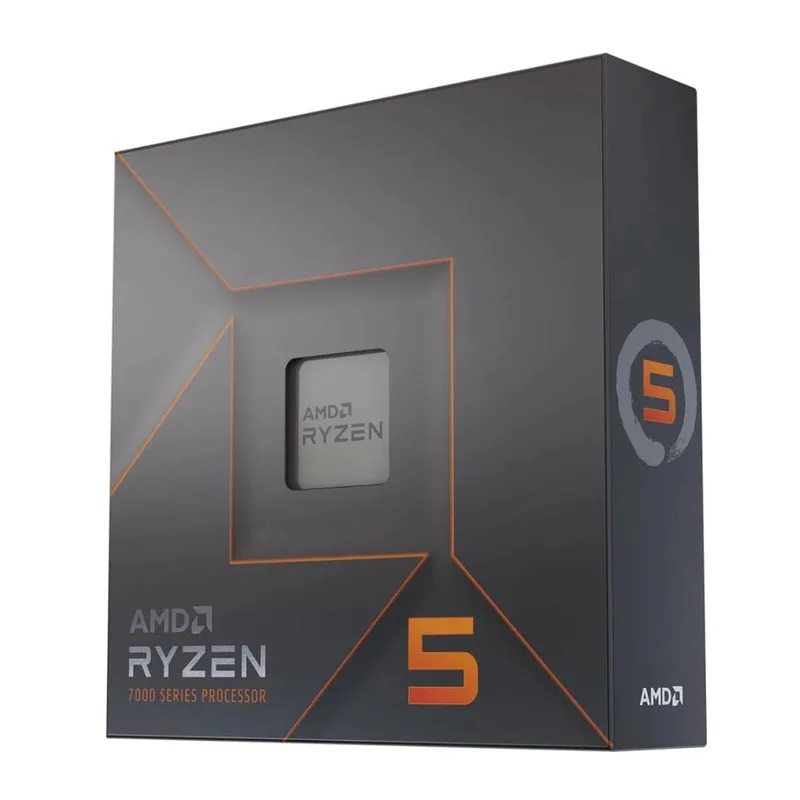
The 7600X was built on Zen 4 and carried a 105W TDP — which sounds manageable until you realize AMD’s actual power limit (PPT) ran the chip at up to 142W under sustained workloads. Thermals were a consistent complaint, with the chip pushing past 90°C on modest coolers.
The 9600X makes two meaningful changes. First, Zen 5 drops the process node from 5nm to 4nm and delivers AMD’s claimed ~16% IPC improvement. Second, the TDP drops to 65W — and this time the PPT actually reflects real-world power draw, maxing out at 88W. In practice, that means the 9600X runs under 70°C on a $40 tower cooler and pulls significantly less power from the wall.
The multi-threaded performance gain is measurable: the 9600X posts ~16,286 in Cinebench R23 at 65W, compared to roughly 14,300 for the 7600X at its default 105W setting — approximately 14% faster. Cinebench R24 puts the 9600X at ~962 multi-core.
The single-core story is similar: 5.4 GHz boost versus the 7600X’s 5.3 GHz, combined with Zen 5’s IPC uplift, translates to a consistent lead in single-threaded workloads.
Gaming Performance
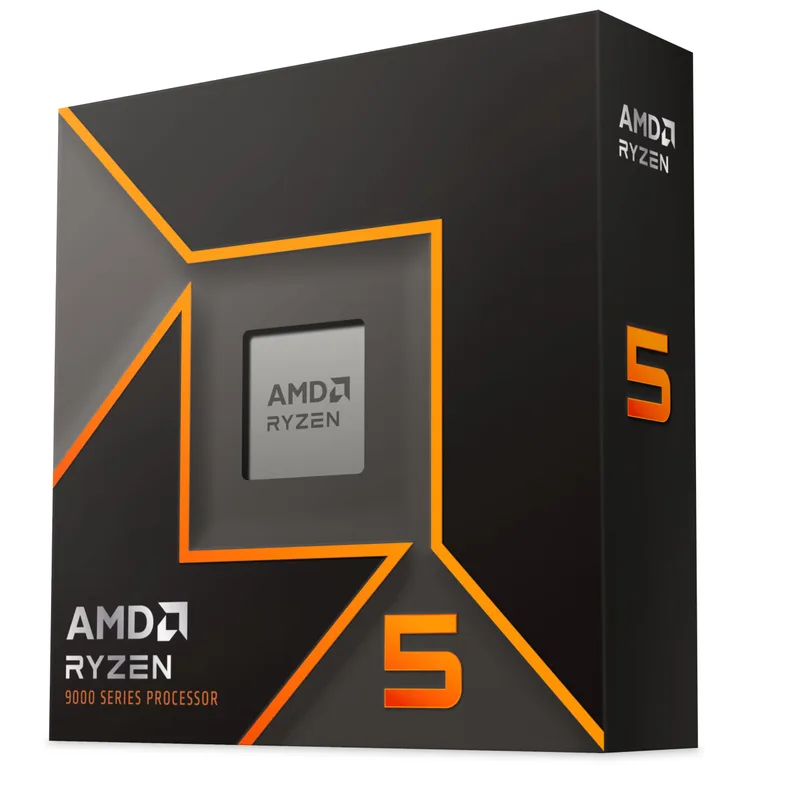
Based on owner reports and benchmark data from reviewers including TechPowerUp and PC Gamer, the 9600X delivers strong 1440p gaming performance when paired with a mid-range or high-end GPU.
Gaming Benchmarks (1080p, CPU-Limited Scenarios)
| Game | Ryzen 5 9600X | i5-14600K | Ryzen 5 7600X |
|---|---|---|---|
| The Witcher 3 | ~90 FPS avg | ~95 FPS avg | ~87 FPS avg |
| Starfield | ~111 FPS avg | ~127 FPS avg | ~104 FPS avg |
| Forza Horizon 5 | ~240 FPS avg | ~244 FPS avg | ~236 FPS avg |
The i5-14600K averages roughly 7% higher FPS across gaming titles in CPU-limited scenarios, according to comparative reviews. That gap is real, but it closes considerably at 1440p and disappears entirely at 4K, where the GPU becomes the bottleneck in practically every modern game.
For 1440p gaming at 144Hz or 165Hz — the most popular monitor segment in 2026 — the 9600X is never the bottleneck when paired with anything from an RX 7700 XT to an RTX 5070. The six-core configuration is sufficient for every major game title as of 2026, and the Zen 5 single-thread advantage keeps frame pacing consistent even in lightly threaded titles.
For competitive gaming at 240Hz or 360Hz (esports titles like Counter-Strike 2, Valorant, or Apex Legends), the chip keeps up without issue. These titles are far more GPU-limited than CPU-limited at competitive settings.
Productivity Performance
Six cores put the 9600X behind Intel’s 14-core i5-14600K in parallelized workloads. In Cinebench R23 multi-core, the i5-14600K scores roughly 24,000 — around 47% higher than the 9600X’s 16,286. For video encoding in Handbrake, 3D rendering in Blender, or large compilation jobs, the i5-14600K pulls noticeably ahead.
That said, Zen 5’s single-core advantage means the 9600X is faster in any task that doesn’t scale cleanly across many cores. Web compiling, Python scripting, most office applications, and lighter video editing workloads run at least as fast on the 9600X as on the 14600K, because single-thread IPC matters more than core count in those scenarios.
If your workload is streaming + gaming simultaneously, the 9600X handles it — but you’ll want to encode in NVENC (GPU-based) rather than software encoding to avoid gaming performance hits.
Thermals and Power
Under gaming load, the 9600X typically sits at 60-70°C with a basic 120mm tower cooler and stays under 70°C with a 240mm AIO or a 5-pipe air cooler. The 88W PPT cap means mid-range coolers handle this chip with room to spare.
The contrast with the i5-14600K is significant. Intel’s chip peaks at 177W in sustained workloads — that requires a 240mm AIO minimum for stable operation and drives substantially higher electricity costs over time. The 9600X’s 88W ceiling is closer to the thermal profile of Intel’s efficiency-focused chips.
The 9600X ships without a cooler, which is standard for unlocked AMD desktop CPUs. Budget at least $35-45 for something like the Cooler Master Hyper 212 or ID-Cooling SE-226-XT, both of which handle the chip comfortably. For a full rundown of cooler pairings, see our best CPU coolers for gaming.
Platform: AM5 Compatibility
The 9600X uses AMD’s AM5 socket and drops into any AM5 motherboard — B650, B650E, X670, X670E, X870, or X870E — with a current BIOS. A B650 board in the $120-160 range is entirely appropriate for gaming with the 9600X. The budget required for the full platform (CPU + board + DDR5 RAM) comes in meaningfully lower than an equivalent Intel build, because B650 motherboards cost less than comparable Z790 options and DDR5 pricing has normalized significantly since 2024.
AMD has committed to AM5 support through at least 2027. If you buy the 9600X now and want to upgrade to a Ryzen 7 or Ryzen 9 chip later, you keep the board and DDR5 kit. LGA1700 (the i5-14600K’s socket) has no upgrade path beyond 14th-gen CPUs.
DDR5-6000 CL30 is the performance sweet spot for AM5 CPUs. Kingston Fury Beast and Corsair Vengeance DDR5-6000 kits (32GB/2x16GB) run $80-100. Running DDR5-4800 costs roughly 3-4% gaming performance on AM5 chips.
For AM5 motherboard recommendations across all budgets, see our best AM5 motherboards guide.
The Competition
Intel Core i5-14600K
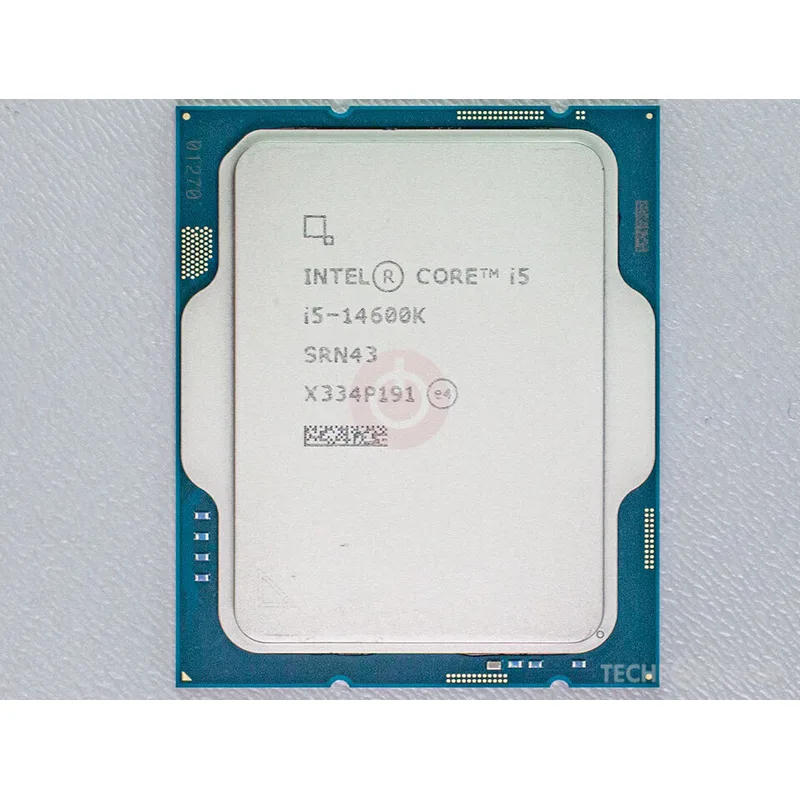
Intel Core i5-14600K at ~$249 is the most direct alternative. It posts ~7% better average gaming FPS and dominates in multi-threaded workloads thanks to its 14-core/20-thread configuration. If you need strong productivity throughput alongside gaming — video editing, 3D rendering, or heavy compilation — the 14600K is worth the $50 premium and the associated cooling/platform costs.
The problem is the platform. LGA1700 is end-of-life. A Z790 board adds $150+ to the build cost, there’s no upgrade path beyond 14th gen, and the 177W power ceiling means you need better cooling. When you factor in platform costs, the 9600X build comes out cheaper overall and offers an upgrade path on AM5. For a more current head-to-head against Intel’s budget gaming chip, see our Ryzen 5 9600X vs Core Ultra 5 245K comparison.
AMD Ryzen 5 7600X
AMD Ryzen 5 7600X at ~$159 is the budget AM5 entry point. It delivers 92-95% of the 9600X’s gaming performance for $40 less. If your primary goal is 1440p gaming and nothing else, the 7600X gets you there. The main trade-offs are the 105W TDP (you need a better cooler) and Zen 4’s lower productivity performance. The $40 gap between the 7600X and 9600X is also narrowing their value-per-watt argument: the 9600X’s 65W ceiling is a real advantage for 24/7 usage and warmer ambient environments. The 9600X is the better long-term buy; the 7600X is the cheapest way onto AM5 today.
FAQ
Does the Ryzen 5 9600X support overclocking?
Yes. The 9600X is fully unlocked and supports manual frequency and voltage overclocking via the BIOS. That said, the returns are modest — Zen 5’s boost algorithm is already aggressive, and pushing manual OC above 5.4 GHz requires significant voltage increases that raise thermals without proportional performance gains. The more effective approach is Precision Boost Overdrive (PBO) with Curve Optimizer in the BIOS, which stabilizes boost clocks and can improve performance by 2-4% without raising peak temperatures.
What motherboard should I pair with the 9600X?
For a gaming-focused build, a B650 board in the $120-160 range is the correct choice. The MSI MAG B650 TOMAHAWK WiFi ($160) and ASUS Prime B650-Plus ($130) are reliable options with solid VRMs that won’t throttle the 9600X’s modest 88W power draw. Only consider an X870 board if you specifically need PCIe 5.0 x16 bandwidth for a future GPU — for current-gen GPUs, PCIe 4.0 x16 (available on B650) is sufficient.
Is the 9600X good for streaming?
For streaming with GPU-based encoding (NVENC on Nvidia, AV1 on Radeon RX 7000/9000), yes — the 9600X handles gaming + streaming simultaneously without meaningful performance loss. For software (x264/x265) encoding, the six-core configuration limits quality at high bitrates. If streaming is a significant part of your use case and you need software encoding, the i5-14600K or AMD Ryzen 7 9700X are better fits.
Which GPU should I pair with the 9600X?
The 9600X pairs well with GPUs from the RX 7600 XT ($270) through the RTX 5070 ($600). At the budget end, an RX 7700 XT or RTX 4060 Ti are strong matches for 1440p gaming. Pairing a 9600X with an RTX 5090 or RX 9070 XT is theoretically fine but slightly wasteful — you’d want a 9800X3D to eliminate any CPU-side constraints in the most CPU-intensive titles. For GPU recommendations, see our best GPUs for gaming guide.
Does the 9600X have integrated graphics?
No. Ryzen 5000/7000/9000-series desktop CPUs without a “G” suffix (e.g., 5600G, 7600G) don’t include integrated graphics. You need a dedicated GPU to get any display output. Budget for even a cheap placeholder card if you’re building the system without a discrete GPU ready.
The Bottom Line
The AMD Ryzen 5 9600X at ~$179 is one of the best CPU values in the AM5 ecosystem right now. It’s not the fastest chip at any price point — the i5-14600K beats it in multi-threaded workloads, and the Ryzen 7 9800X3D is in a different league for gaming — but for a mainstream 1440p gaming build, the 9600X hits the right balance of performance, efficiency, and platform longevity.
The 65W TDP is the underrated selling point. It runs cool on cheap coolers, draws less power over years of daily use, and doesn’t demand a premium board to stay stable. Combined with AM5’s upgrade path and the price drop from $279 to ~$179, the 9600X has quietly become the practical first choice for builders who want a capable gaming CPU without overbuying.
If you need serious multi-threaded throughput, the i5-14600K ($249) is worth considering despite its dead-end platform. If you’re purely budget-constrained, the Ryzen 5 7600X ($159) gets you on AM5 for less. But for the majority of gaming builds in 2026, the 9600X is the Goldilocks option.