The 240mm AIO has quietly become the default cooler size for mid-range to high-end desktop builds. It fits where most 280mm and 360mm units can’t, clears tall RAM in more cases, and still keeps modern Ryzen 7 and Core Ultra 7 chips under control across sustained workloads. The market in 2026 has deepened considerably — you can spend $52 or $170 and get a competent cooler either way, but the right choice depends on your CPU, case, and how much you care about aesthetics.
| Spec | ARCTIC Liquid Freezer III Pro 240 Unavailable 9.3/10 | DeepCool LT520 240mm Unavailable 8.5/10 | Corsair iCUE H100i Elite CAPELLIX XT Unavailable 8.2/10 | NZXT Kraken Elite 240 2024 Unavailable 8.6/10 | Thermalright Frozen Prism 240 ARGB 8/10 |
|---|---|---|---|---|---|
| radiator | 240mm / 38mm thick | 240mm / 27mm thick | 240mm / 27mm thick | 240mm / 27mm thick | 240mm / 27mm thick |
| fans | 2x 120mm P12 Pro PWM (200–3000 RPM) | 2x 120mm FK120 FDB (500–2250 RPM) | 2x 120mm AF120 RGB Elite PWM (400–2100 RPM) | 2x 120mm F120P PWM (500–2400 RPM) | 2x 120mm TL-E12 PWM (800–1850 RPM) |
| pump | PWM controlled, 400–2500 RPM | 4th Gen dual-chamber, 3100 RPM | Ceramic bearing, coolant-temp controlled | NZXT Turbine pump (10% higher flow vs Gen 1) | PWM, 3300 RPM max, 23 dB(A) |
| vrm_fan | Integrated 40mm PWM (400–2500 RPM) | — | — | — | — |
| socket_support | AM4, AM5, LGA1700, LGA1851 | AM4, AM5, LGA1700, LGA1200, LGA1851 | AM4, AM5, LGA1700, LGA1200, LGA2066 | AM4, AM5, LGA1700, LGA1200, LGA1851 | — |
| warranty | 6 years | 3 years | 5 years | 6 years | 1 year |
| Rating | 9.3/10 | 8.5/10 | 8.2/10 | 8.6/10 | 8/10 |
Prices change daily — tap Check Price for the current Amazon price.
Prices change daily — tap Check Price for the current Amazon price.
Quick Picks
- Best overall: ARCTIC Liquid Freezer III Pro 240 — 38mm radiator and integrated VRM fan deliver performance that competes with many 280mm AIOs at ~$72.
- Best for aesthetics: NZXT Kraken Elite 240 2026 — 2.72-inch IPS LCD at 690 nits with NZXT CAM integration for $170.
- Best budget: Thermalright Frozen Prism 240 ARGB — solid Ryzen 5 and Core i5 cooling with LGA1851 and AM5 support at ~$52.
Buying Guide: 240mm AIO in 2026
Radiator Thickness Matters More Than Size
Most 240mm AIOs ship with a standard 27mm thick radiator. The ARCTIC Liquid Freezer III Pro 240 runs a 38mm unit — 41% thicker. That added depth directly translates to more fin surface area and better heat dissipation under sustained loads. The tradeoff is case compatibility: check whether your case specifies 240mm support for 38mm thick radiators, not just standard 27mm units.
The VRM Cooling Argument
ARCTIC’s integrated 40mm VRM fan is a practical feature, not marketing. On B650/B850 boards with modest voltage regulator heatsinks, active airflow from the pump head can drop VRM temperatures 5–10°C under sustained Cinebench loads. If you’re running a Ryzen 9 9900X or 9950X on a mid-range motherboard, that headroom matters for boost clock sustain.
CPU Power Class and Radiator Choice
A 240mm AIO is well-matched for:
- Ryzen 5 9600X (65W base / ~120W PBO): any cooler on this list handles it comfortably
- Ryzen 7 9800X3D (120W TDP / ~170W peak): DeepCool LT520 or ARCTIC LF III Pro recommended
- Ryzen 9 9900X / Core Ultra 7 265K (125–150W base / 200W+ all-core): ARCTIC LF III Pro 240 is the right call; a 360mm AIO is preferable for sustained 250W+ loads
The Thermalright Frozen Prism handles 65–95W-class chips well. Above ~150W sustained, its 1850 RPM fan ceiling becomes the limiting factor.
Software Requirements
- ARCTIC Liquid Freezer III Pro: No software required — pump and fans run on PWM headers directly from the motherboard. Works with any fan control utility.
- DeepCool LT520: ARGB hub syncs with motherboard software (ASUS Aura, MSI Mystic Light, Gigabyte RGB Fusion). No proprietary app needed.
- Corsair iCUE H100i Elite CAPELLIX XT: Requires iCUE for RGB control. Thermal function works without it, but you lose per-zone LED customization.
- NZXT Kraken Elite 240 2026: Requires NZXT CAM for LCD control. Lightweight at ~80MB idle.
- Thermalright Frozen Prism: No software. Operates entirely through motherboard PWM and ARGB headers.
LGA1851 Compatibility
All five coolers on this list support Intel LGA1851 (Arrow Lake). The ARCTIC Liquid Freezer III Pro includes a custom contact frame that must be installed separately to optimize contact on the IHS geometry — follow the included installation guide, as the frame snaps into the CPU socket retention clips.
Detailed Reviews
1. ARCTIC Liquid Freezer III Pro 240 — Best Overall
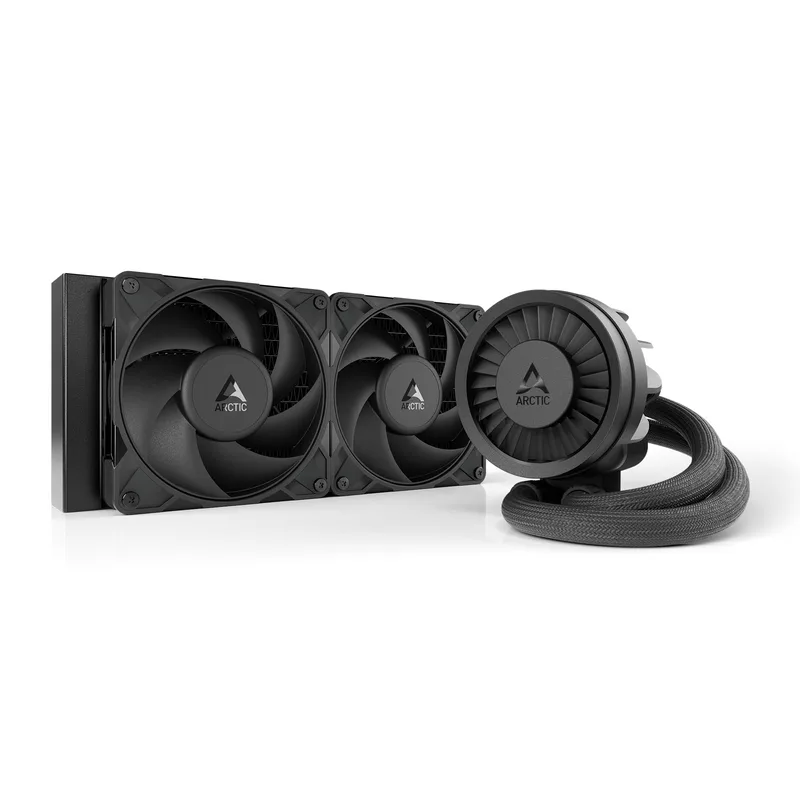
ARCTIC Liquid Freezer III Pro 240
The ARCTIC Liquid Freezer III Pro 240 stands out in the 240mm market because of two structural advantages: a 38mm radiator and an integrated VRM fan. Most 240mm coolers use 27mm radiators. The 38mm unit provides 41% more fin depth, which increases the surface area available for heat exchange without requiring a jump to 280mm or 360mm formats.
Under sustained loads with a Ryzen 9 9950X3D, Tom’s Hardware rated the LF III Pro as delivering chart-topping noise-normalized performance — meaning it stays quieter than competitors while achieving the same temperatures. The P12 Pro fans run at 200–3000 RPM via PWM, with the lower range producing nearly inaudible results during typical desktop workloads.
The VRM fan sits on the pump head and blows air toward the socket area at 400–2500 RPM. This is not cosmetic — on boards like the ASUS TUF Gaming B850-PLUS where VRM heatsinks are adequate but not oversized, the additional airflow reduces VRM temperatures under all-core workloads. If you’re pushing a 65W TDP chip, the fan makes minimal difference. For anything 125W and above with PBO enabled, it provides meaningful thermal headroom.
Arctic’s mounting system covers AM4, AM5, LGA1700, and LGA1851. Intel users receive a custom contact frame that must be installed before mounting — a 5-minute step that ensures proper contact on the LGA1851 IHS. The 6-year warranty and ~$72 price make this the strongest value in the 240mm segment.
2. DeepCool LT520 240mm — Best Mid-Range
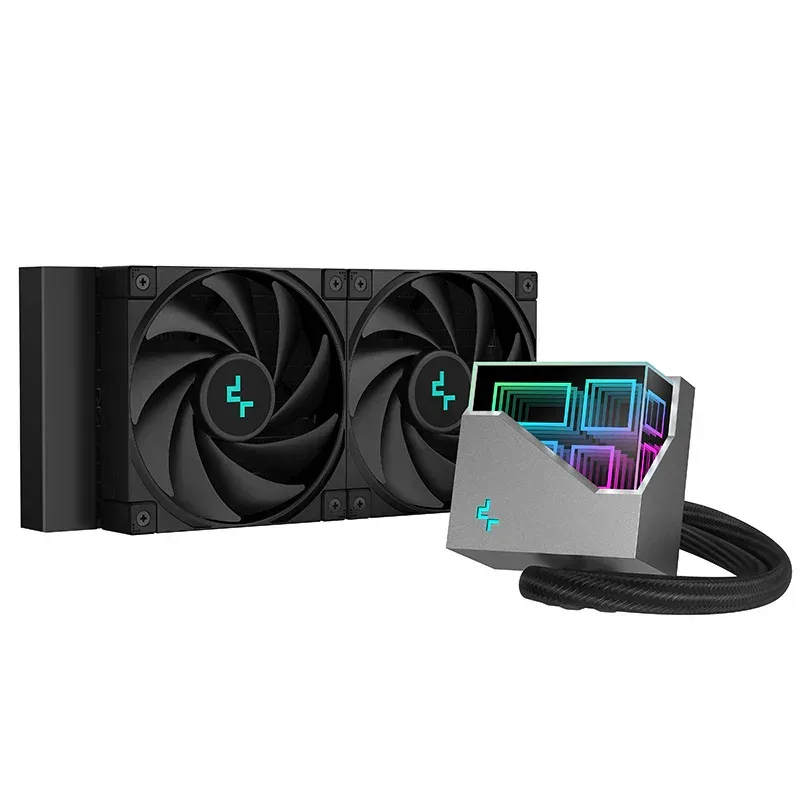
DeepCool LT520 240mm
The DeepCool LT520 targets the $89–109 price window where buyers want more visual presence than the ARCTIC but don’t need an LCD display. The pump head’s multidimensional infinity mirror is one of the more distinctive designs in the AIO market — a geometric reflective surface with ARGB LEDs that creates a depth effect rather than a simple backlit logo.
Cooling performance centers on the 4th generation dual-chamber pump, which DeepCool rates at 3100 RPM and 280W TDP. In practice, two FK120 FDB fans at 2250 RPM deliver 85.85 CFM through the standard 27mm radiator, handling Ryzen 7 and Core i7-class chips through sustained Cinebench runs without thermal throttling. For a Ryzen 7 9800X3D — which rarely sustains its peak power envelope for more than 20–30 seconds at a time — the LT520 provides comfortable headroom.
Where the LT520 trails the ARCTIC is pure sustained thermal performance under 200W+ workloads. The 27mm radiator has less surface area, and there’s no VRM fan to assist motherboard power delivery cooling. For Ryzen 9 or Core Ultra 9 class chips running compute workloads, budget up to the 360mm tier or the LF III Pro.
The ARGB header requirement is worth noting: the LT520 uses 5V ARGB, not 12V RGB. Boards from 2022 onward universally provide this header, but verify if you’re running an older platform.
3. Corsair iCUE H100i Elite CAPELLIX XT — Best RGB Ecosystem
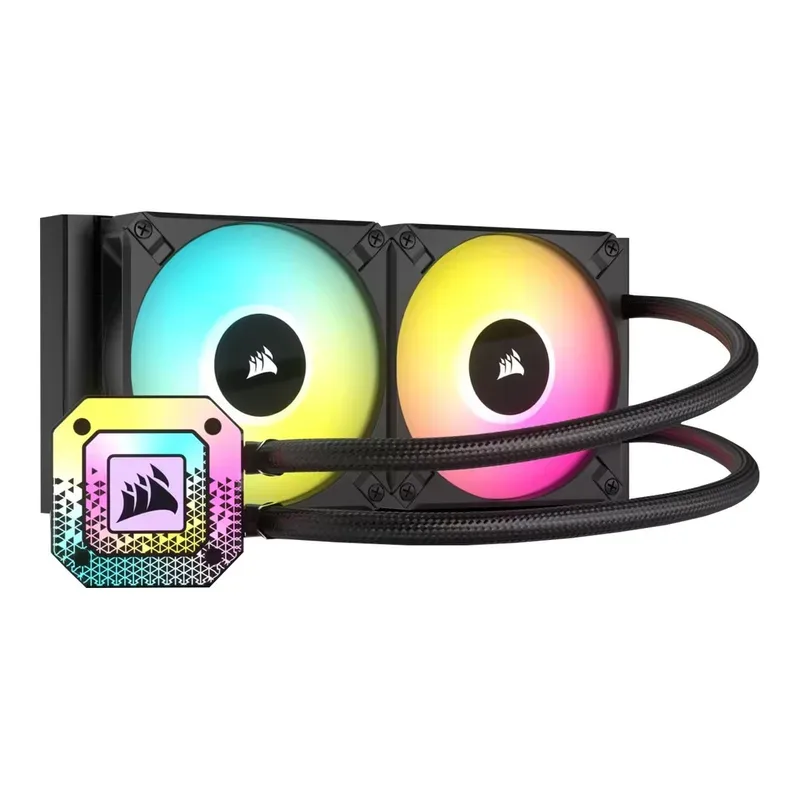
Corsair iCUE H100i Elite CAPELLIX XT
The Corsair iCUE H100i Elite CAPELLIX XT is the logical choice if you’re building around Corsair peripherals and want centralized lighting control. The included iCUE Commander CORE manages up to six Corsair RGB fans from a single hub — a meaningful cable management advantage in builds with multiple case fans.
The CAPELLIX LED array (33 LEDs in the pump head, 16 per AF120 fan) produces bright, consistent color at lower power draw than traditional SMD LEDs. At ~$125, the cooler sits at a reasonable point for RGB performance, though it’s $50 above the ARCTIC LF III Pro for broadly comparable thermal output.
The most distinct engineering choice here is fan speed behavior. Most AIOs tie fan speed to CPU temperature, which creates jarring fan ramp-ups during brief CPU spikes — a 3-second burst from an email client triggering fans to 2000 RPM. The H100i XT ties speed to coolant temperature instead. Coolant temperature changes slowly, so fan speed changes slowly, even when the CPU briefly peaks. The result is noticeably smoother acoustic behavior during mixed workloads.
Corsair’s Amazon listing notes Intel LGA1700 and LGA1200 support. Arrow Lake (LGA1851) compatibility is not explicitly listed on the Amazon product page — confirm with Corsair support before purchasing for an Arrow Lake system.
4. NZXT Kraken Elite 240 2026 — Best LCD Display
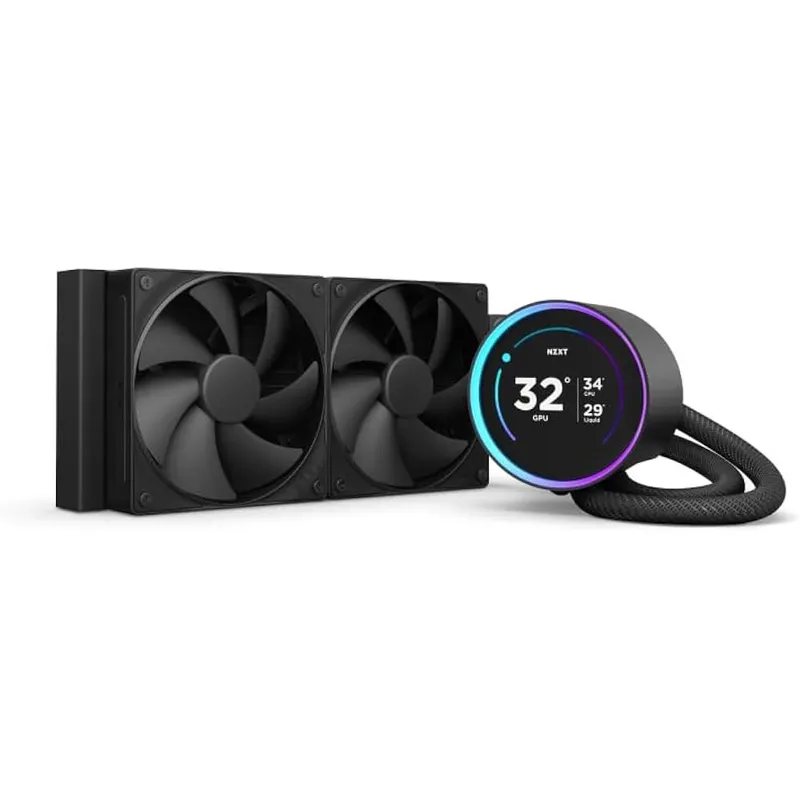
NZXT Kraken Elite 240 2024
The NZXT Kraken Elite 240 2026 is the premium display option in the 240mm format. The 2.72-inch IPS panel runs at 640×640 with a 690 cd/m² backlight — bright enough to remain readable in a lit room, which is a genuine differentiator over the 1.54-inch or 2.36-inch displays on earlier Kraken models and competitors.
Display options through NZXT CAM include real-time CPU temperature, clock speed, fan RPM, static images, animated GIFs, and integration with Google Photos, Spotify, and YouTube for album art display. The software overhead is modest at ~80MB RAM idle, lower than Corsair’s iCUE.
The NZXT Turbine pump in the 2026 revision delivers 10% higher flow rate than the first-generation Kraken. At 1500 RPM, the 240mm Kraken Elite 2026 achieves temperatures within a few degrees of 280mm coolers from previous generations. Supported sockets include AM4, AM5, LGA1700, LGA1200, and LGA1851.
The honest trade-off is price. At ~$170, the Kraken Elite 240 2026 costs $98 more than the ARCTIC LF III Pro 240 while delivering similar or slightly lower peak thermal performance. You’re paying for the display, the aesthetic design, and NZXT CAM integration. If those matter for your build, the premium is justified. If they don’t, the ARCTIC is the better purchase.
5. Thermalright Frozen Prism 240 ARGB — Best Budget
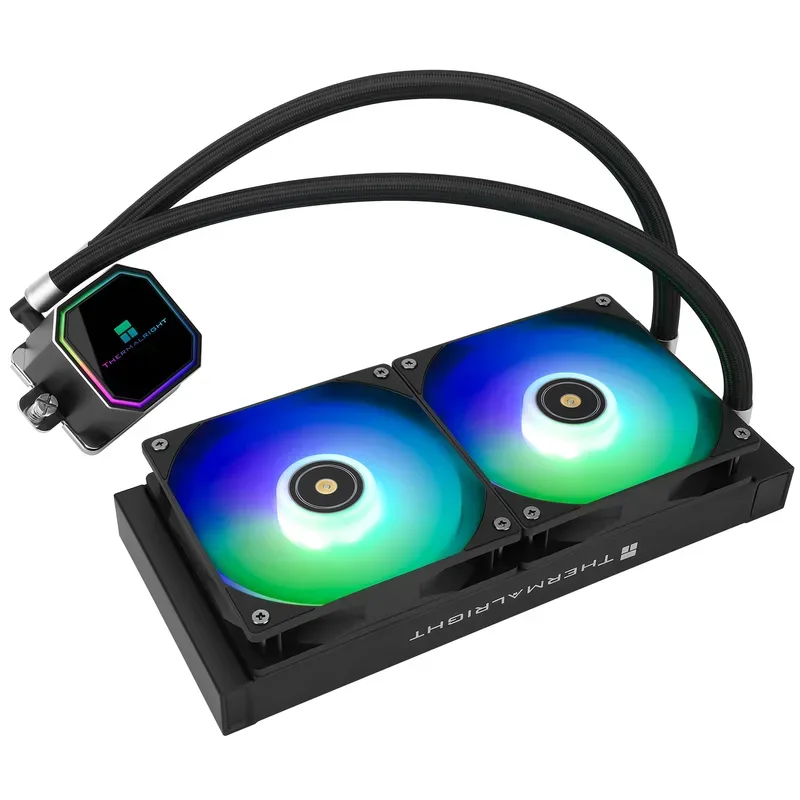
The Thermalright Frozen Prism 240 ARGB is the answer for builders who need liquid cooling under $55. At that price, most competitors offer basic single-color LEDs or no lighting at all — the Frozen Prism includes ARGB with 3300 RPM pump performance at a 23 dB(A) noise level.
The pump design uses a flat copper base water block with a 40,000-hour MTTF rating. Real-world results show it taking Intel Core i5-class chips from 95°C with a tower cooler down to ~81°C under sustained all-core loads — a 14°C improvement that brings high-performance budget chips into safe operating range.
The TL-E12 fans are the limiting factor. At 1850 RPM maximum with 70.4 CFM airflow, they’re adequate for 65–95W chips and acceptable for short bursts from 125W-class processors. For sustained rendering or compile workloads on a Ryzen 9 or Core i9, the fan ceiling becomes the constraint. This cooler is correctly matched to Ryzen 5, Core i5, and Core i3 processors.
Thermalright covers AM4, AM5, LGA1150/1151/1200/1700, and LGA1851 in the box — no adapter purchases required. The one-year warranty is the most notable weakness; compare to ARCTIC’s six-year and NZXT’s six-year coverage.
FAQ
Can a 240mm AIO handle a Ryzen 9 9900X?
Yes, with conditions. The ARCTIC Liquid Freezer III Pro 240 handles the 9900X across sustained all-core workloads, aided by the 38mm radiator and VRM fan. The DeepCool LT520 manages it in shorter-duration loads. For extended rendering or simulation workloads at full all-core power, a 360mm AIO is a more appropriate pairing.
Does the 38mm radiator on the ARCTIC LF III Pro fit most cases?
Most ATX mid-tower cases that list 240mm top or front radiator support accommodate 38mm thickness. The critical variable is top-mount radiator clearance alongside tall DDR5 RAM kits — some cases list only 27–30mm clearance between the top panel and the RAM slots. Measure or check case specifications before purchasing.
Do I need software to use an AIO cooler?
The ARCTIC Liquid Freezer III Pro and Thermalright Frozen Prism run entirely via motherboard PWM headers — no software required beyond whatever fan control is built into your BIOS or motherboard utility. The DeepCool LT520 ARGB requires a 5V ARGB header but no dedicated app. The Corsair and NZXT coolers require their respective software (iCUE and CAM) for display and lighting control, though thermal function operates without them.
Are 240mm AIOs compatible with Intel LGA1851 out of the box?
All five coolers on this list support LGA1851. The ARCTIC Liquid Freezer III Pro requires installation of its included custom contact frame, which is a separate step from the main mounting bracket. The other four coolers use standard LGA1851 mounting brackets that ship in the box.
Is a 240mm AIO worth it over a good air cooler like the Noctua NH-D15 G2?
At $72, the ARCTIC LF III Pro 240 competes with the NH-D15 G2 ($180) on thermal performance while costing $108 less and clearing RAM without compatibility concerns. The NH-D15 G2 wins on noise-normalized performance at lower power levels, has no pump to fail, and requires no software. For 125W-and-under chips, either choice is defensible. For 200W+ sustained workloads, the LF III Pro 240 pulls ahead.
The Bottom Line
The ARCTIC Liquid Freezer III Pro 240 is the correct choice for most 2026 builds at ~$72 — the 38mm radiator and integrated VRM fan give it a structural advantage over standard 27mm AIOs without the cost of a 280mm or 360mm format. For mid-range builds where ARGB visual appeal matters, the DeepCool LT520 at ~$99 delivers a distinctive infinity mirror design with 280W TDP headroom. Budget builders pairing with Ryzen 5 or Core i5 chips will find the Thermalright Frozen Prism 240 ARGB at ~$52 provides genuine thermal improvement over tower coolers at a price that leaves room in the build budget for other components.