Affiliate disclosure: PCBuildRanked earns a commission on qualifying Amazon purchases at no extra cost to you.
The budget GPU market in March 2026 is the most competitive it has been in years — and also the most expensive relative to launch prices. NVIDIA’s Blackwell RTX 5060 launched at $299 MSRP in May 2025, AMD answered with the RDNA 4 RX 9060 XT at the same price, and Intel’s Arc Battlemage cards (B580 and B570) have been undercutting both since late 2024. The problem: supply constraints from AI datacenter demand have pushed most of these cards 10–40% above MSRP. The RTX 5060 now sells for $329–$349; the RX 7600 has jumped from sub-$230 to $249–$279, eroding its entry-level position. The recommendations below reflect real-world March 2026 street prices.
| Spec | GIGABYTE GeForce RTX 5060 WINDFORCE OC 8G 8.5/10 | ASRock Radeon RX 9060 XT Steel Legend 8GB 8.3/10 | ASRock Intel Arc B580 Challenger 12GB OC 8.2/10 | Sparkle Intel Arc B570 Guardian OC 10GB 7.8/10 | ASRock AMD Radeon RX 7600 Challenger 8GB OC 7.2/10 |
|---|---|---|---|---|---|
| architecture | Blackwell (GB206) | RDNA 4 (Navi 44) | Battlemage (Xe2) | Battlemage (Xe2) | RDNA 3 (Navi 33) |
| vram | 8GB GDDR7 | 8GB GDDR6 | 12GB GDDR6 | 10GB GDDR6 | 8GB GDDR6 |
| memoryBus | 128-bit | 128-bit | 192-bit | 192-bit | 128-bit |
| memoryBandwidth | 448 GB/s | 322 GB/s | 336 GB/s | 380 GB/s | 288 GB/s |
| tdp | 145W | 150W | 190W | 150W | 165W |
| pcie | PCIe 5.0 x8 | PCIe 5.0 x16 | PCIe 4.0 x16 | PCIe 4.0 x8 | PCIe 4.0 x8 |
| Rating | 8.5/10 | 8.3/10 | 8.2/10 | 7.8/10 | 7.2/10 |
Prices change daily — tap Check Price for the current Amazon price.
Prices change daily — tap Check Price for the current Amazon price.
Quick Picks
- Best overall: GIGABYTE RTX 5060 WINDFORCE OC — DLSS 4 Multi Frame Generation and GDDR7 bandwidth, currently $329-$349
- Most VRAM: ASRock Arc B580 Challenger 12GB — the only 12GB card at or under $300
- Best value: Sparkle Arc B570 Guardian OC 10GB — 10GB GDDR6 at $199-$210, now cheaper and faster than the RX 7600
Buying Guide
Resolution targets
At 1080p, every card on this list handles high or ultra settings in modern AAA titles. At 1440p, the Arc B580 (12GB VRAM) and RX 9060 XT provide the most headroom — the 8GB options handle 1440p well today but will show strain in late-2026 releases. None of these are 4K gaming GPUs.
VRAM: the $300 debate
The 8GB vs. 12GB argument is significant in 2026. The RX 9060 XT 8GB shows a 26% performance deficit vs. the 16GB model in VRAM-heavy titles at 1440p. The Arc B580 sidesteps this by shipping 12GB at $279–$299. For texture-heavy open-world games at 1440p, VRAM capacity matters more than raw clock speed.
PSU requirements
- RTX 5060 8GB: 550W minimum, single 8-pin connector
- RX 9060 XT 8GB: 550W minimum, single 8-pin connector
- Arc B580 12GB: 650W minimum — 190W TDP is the highest on this list
- Arc B570 10GB: 550W minimum
- RX 7600 8GB: 550W minimum
PCIe compatibility
The RTX 5060 uses PCIe 5.0 x8 physically. On a PCIe 4.0 system, it runs at x8 4.0 — no practical gaming performance loss. The RX 9060 XT runs PCIe 5.0 x16, full-bandwidth on any modern motherboard.
Detailed Reviews
1. GIGABYTE GeForce RTX 5060 WINDFORCE OC 8G
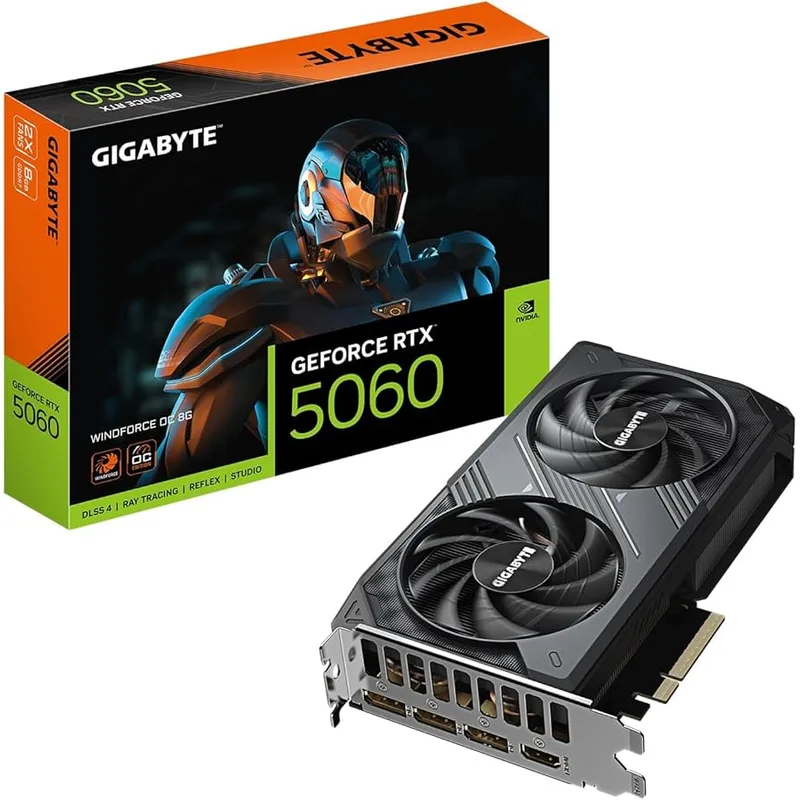
The GIGABYTE RTX 5060 WINDFORCE OC is NVIDIA’s Blackwell architecture at its most accessible price point. The GB206 chip packs 3,840 CUDA cores and uses GDDR7 memory where competitors stick to GDDR6 — that delivers 448 GB/s of bandwidth on a 128-bit bus, a meaningful advantage over the RX 9060 XT’s 322 GB/s.
In rasterization, the RTX 5060 runs approximately 32% ahead of the RTX 4060 it replaces. At 1080p Ultra, framerates clear 100fps in most recent AAA releases. The bigger story is DLSS 4 Multi Frame Generation: in supported titles it can multiply frame output significantly. Cyberpunk 2077 at 1440p with path tracing goes from unplayable to a smooth 60+ fps average with DLSS 4 Quality mode enabled.
The WINDFORCE OC runs cool and quiet — dual 80mm fans shut off entirely below 60°C. At 145W TDP, it fits any case with a 550W PSU.
Street prices have risen to $329–$349 in March 2026, up from the $299 launch MSRP. At that price it competes more directly with the Arc B580 12GB. The 8GB VRAM ceiling is the real trade-off: early reviews flagged this as the card’s long-term constraint as games push VRAM requirements in late 2026. Not a problem for most games today — but worth weighing if you plan to keep the card three years.
2. ASRock Radeon RX 9060 XT Steel Legend 8GB
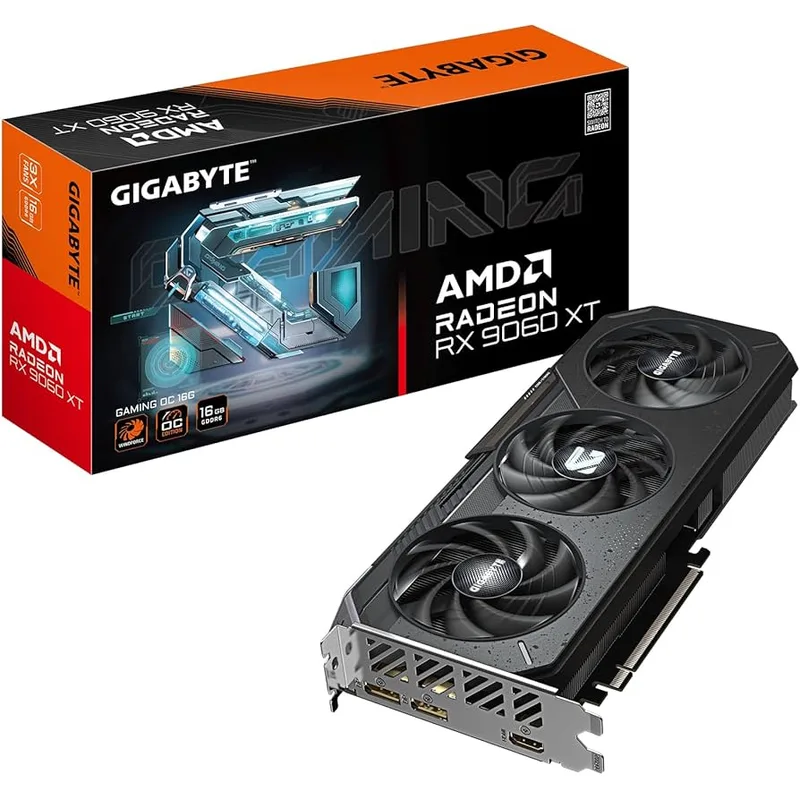
AMD launched the RX 9060 XT at $299 for the 8GB variant on June 5, 2025, with full PCIe 5.0 x16 connectivity — a detail that matters compared to the RTX 5060’s x8 lane implementation. The ASRock Steel Legend runs the Navi 44 RDNA 4 chip at a 3,320 MHz boost clock with 150W TDP.
RDNA 4 delivers meaningful IPC gains over RDNA 3. The RX 9060 XT 8GB edges out the RTX 5060 in straight rasterization in most titles (roughly 3–5%), while NVIDIA leads in ray tracing and wins clearly when DLSS 4 Multi Frame Generation is active. For raster-focused gaming without ray tracing, the RX 9060 XT is the call.
The ASRock Steel Legend cooler is triple-fan, quiet, and keeps the GPU under 75°C at sustained load. The metal backplate is a solid build-quality touch at this price.
The same VRAM caveat applies: the 8GB model shows a 26% performance gap vs. the 16GB variant in VRAM-heavy titles at 1440p. Street prices have moved to $329–$359 since launch, making the price-per-performance comparison with the Arc B580 12GB tighter than it was at launch.
3. ASRock Intel Arc B580 Challenger 12GB OC
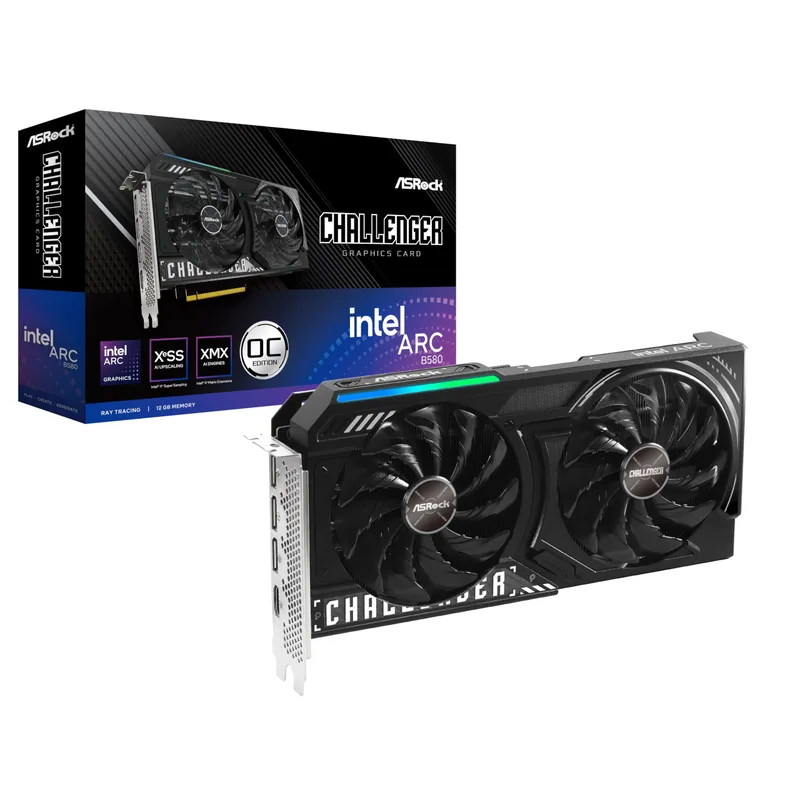
The Intel Arc B580 makes the most distinctive case on this list: 12GB of GDDR6 on a 192-bit bus for $279–$299. No AMD or NVIDIA card at this price comes close on VRAM capacity. If future-proofing VRAM headroom matters without crossing $300, the B580 is the answer.
Per Tom’s Hardware and Hardware Unboxed reviews, the B580 matches the RTX 4070 in rasterization in several DX12 and Vulkan titles — a remarkable result at this price. At 1440p Medium–High settings, expect 60–80fps in titles like Alan Wake 2 and Hogwarts Legacy.
The 190W TDP is the highest here. A 650W PSU is the minimum; 750W is recommended if your CPU draws 125W+ under load. The B580 runs noticeably hotter than the 145–165W alternatives and needs adequate case airflow.
Intel’s Battlemage drivers handle modern DX12 and Vulkan titles without issues. The remaining caveat: older DX11 games and some competitive esports titles still see occasional hitching. Gaming primarily on titles released after 2020, you’ll likely never encounter it.
As of March 2026, the B580 at $279–$299 is arguably the strongest value pick if you game at 1440p. The 12GB advantage over every competing 8GB option is significant for multi-year longevity. For a deeper dive into this card’s performance, see our full Intel Arc B580 review.
4. Sparkle Intel Arc B570 Guardian OC 10GB
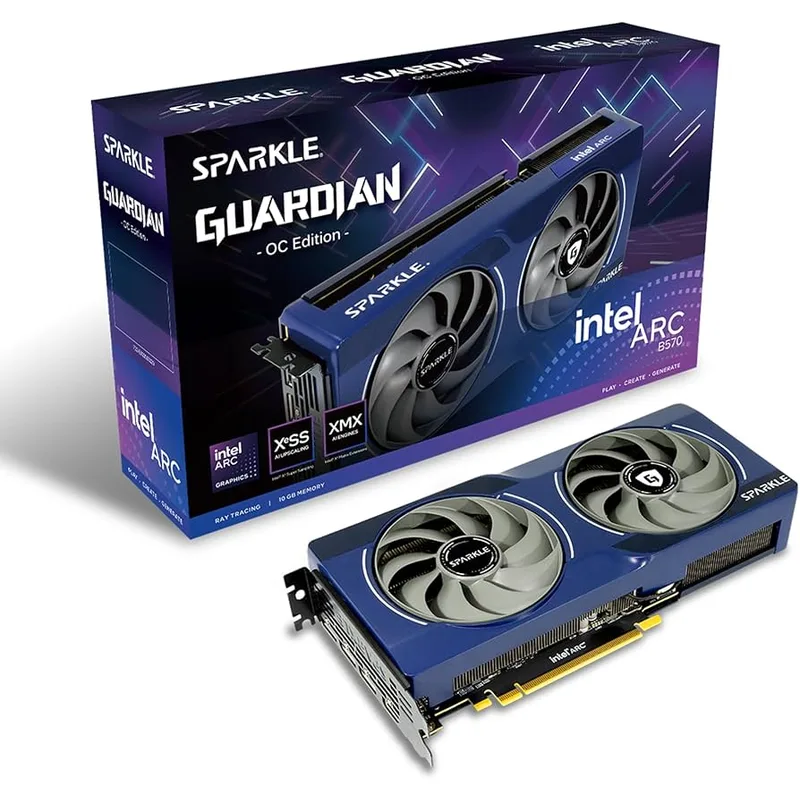
The Arc B570 splits the difference between the B580 and tighter budgets. Ten gigabytes of GDDR6 at $199–$210 is more VRAM than the RTX 5060, RX 9060 XT 8GB, and RX 7600 combined — on a 192-bit bus that’s wider than the 128-bit configs AMD and NVIDIA use at this price.
In benchmarks, the B570 runs approximately 10% ahead of the RX 7600 8GB at 1080p Ultra settings. It lands in the same performance neighborhood as the RTX 4060 at stock clocks. The Guardian OC’s factory overclock pushes boost to 2,670 MHz with minimal thermal impact.
The Guardian OC uses a dual-fan cooling solution compact at 200mm — fits any mid-tower or SFF case with a full-length slot. Power draw at 150W is identical to the RX 9060 XT 8GB and significantly lower than the B580.
Critically, the B570 has fallen to $199–$210 as of March 2026, significantly undercutting the RX 7600 ($249–$279) while beating it in most benchmarks. For a $600–$700 total build budget, the B570 at $199–$210 leaves meaningful money for a better CPU or SSD.
5. ASRock AMD Radeon RX 7600 Challenger 8GB OC
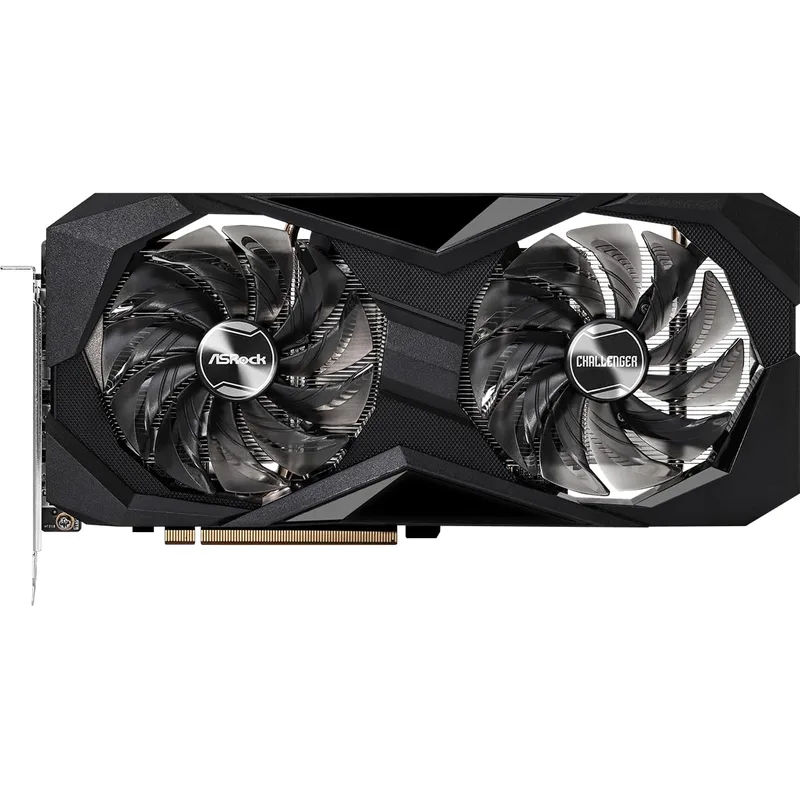
ASRock AMD Radeon RX 7600 Challenger 8GB OC
The RX 7600 is the oldest card here — RDNA 3, launched in 2026 — and its value position has shifted in March 2026. It once sat clearly below $230 as the entry-level anchor for this segment. It now commonly sells for $249–$279, which puts it directly alongside the Arc B570 that outperforms it.
At 1080p the RX 7600 still delivers solid results: 160+ fps in Counter-Strike 2 and Valorant at high settings, 90+ fps in Cyberpunk 2077 at 1080p High. The RDNA 3 architecture is fully mature with two-plus years of stable driver releases and zero compatibility surprises.
The ASRock Challenger runs a factory-overclocked core at 2,755 MHz boost and stays below 78°C with its dual-fan cooler. At 165W TDP, a quality 550W PSU is sufficient.
The value case has weakened. At $249–$279, you’re paying near-Arc-B570 prices for less VRAM (8GB vs. 10GB), a narrower bus (128-bit vs. 192-bit), and generally lower benchmark performance. The RX 7600 makes sense if you specifically need mature AMD driver compatibility, have software requirements tied to the AMD stack, or find it discounted below $230. At current prices, the Arc B570 is the better default choice.
FAQ
Is 8GB VRAM enough for gaming in 2026?
At 1080p, 8GB handles the vast majority of current titles without issue. At 1440p with texture-heavy games, 8GB can require lowering texture quality or cause stutters in the most demanding titles. Planning to game at 1440p and keep the card three or more years? The Arc B580’s 12GB is worth the $30–$50 premium over the 8GB alternatives.
RTX 5060 vs. RX 9060 XT 8GB — which should I buy?
For pure rasterization, the RX 9060 XT edges the RTX 5060 by 3–5% in most titles and offers full PCIe 5.0 x16 connectivity. For ray tracing and DLSS 4 Multi Frame Generation, the RTX 5060 has no competition at this price tier. Both now sell for $329–$359 in March 2026, so price is no longer a differentiator. Pick based on your game library: raster-focused games favor the RX 9060 XT; ray tracing and DLSS-supported titles favor the RTX 5060.
Is the Arc B580 actually a good GPU in 2026?
Yes. Per Tom’s Hardware and Hardware Unboxed reviews, the B580 matches the RTX 4070 in rasterization in several DX12 and Vulkan titles at $279–$299. The 12GB GDDR6 on a 192-bit bus is the strongest VRAM configuration at this price by a wide margin. Driver quality for modern titles is solid. The caveats are DX11 hitching in older games and the 190W power draw. For a direct head-to-head between the Arc B580 and the RX 7600, see our Intel Arc B580 vs RX 7600 comparison.
Do I need PCIe 5.0 for these GPUs?
No. All five GPUs are backwards compatible with PCIe 4.0 and PCIe 3.0 systems. Gaming performance sees no meaningful difference running a PCIe 5.0 GPU on a PCIe 4.0 slot. Only PCIe 3.0 x4 slots create any real bandwidth constraints.
Arc B570 vs. RX 7600 — which is the better budget pick in 2026?
The Arc B570 at $199–$210. It offers 10GB GDDR6 on a 192-bit bus vs. the RX 7600’s 8GB on 128-bit, outperforms it in most 1080p benchmarks by roughly 10%, and undercuts it significantly in price as of March 2026. The RX 7600’s remaining advantage is mature AMD driver compatibility for software-specific requirements.
Will GPU prices drop in 2026?
Supply constraints from AI datacenter demand have pushed prices 10–40% above launch MSRPs. The RTX 5060 launched at $299 and now sells for $329–$349. The RX 7600 has jumped roughly 25% from its sub-$230 price earlier this generation. No significant near-term price relief is forecast. Buy when you need to — waiting has not rewarded budget GPU buyers in this market.
The Bottom Line
The GIGABYTE RTX 5060 WINDFORCE OC is the top pick for buyers who want DLSS 4 and Blackwell efficiency at $329–$349. For maximum raster performance at the same street price, the ASRock RX 9060 XT Steel Legend 8GB is the competitive alternative with full PCIe 5.0 x16. For 1440p longevity, the ASRock Arc B580 Challenger 12GB delivers the best VRAM value at $279–$299 — 12GB GDDR6 that no 8GB card can match when VRAM constraints hit. At $199–$210, the Sparkle Arc B570 is now the clear call over the RX 7600, with more VRAM, a wider memory bus, and better benchmark performance at a significantly lower price.