Mini-ITX cases used to mean a compromise: pay a premium for a case, then pay again for an SFX power supply and a low-profile cooler just to make it fit. That’s changed. The ASUS Prime AP201 and Cooler Master N200 now bring 330mm+ GPU clearance and standard ATX PSU compatibility below $100, and the Jonsbo D31 Mesh pushes GPU clearance to 400mm at a similar price — numbers that used to require a $150+ case. Here are five ITX-capable cases that stay under $100, evaluated on what actually matters for a small build: GPU length, CPU cooler height, and whether you need a specialty power supply to make it work.
| Spec | ASUS Prime AP201 9.1/10 | Jonsbo D31 Mesh 8.8/10 | Cooler Master N200 8.3/10 | SilverStone SG13 8.2/10 | Jonsbo NV10 7.8/10 |
|---|---|---|---|---|---|
| formFactor | Micro-ATX / Mini-ITX | Micro-ATX / Mini-ITX / Mini-DTX | Micro-ATX / Mini-ITX | Mini-ITX / Mini-DTX | Mini-ITX (HTPC-style) |
| volume | 33L | ~31L | — | 11.5L | 4.5L |
| gpuClearance | 338mm | Up to 400mm | 330mm | ~268mm | 190mm low-profile, 40mm max height |
| cpuCoolerMax | 170mm | 168mm | 165mm | 61mm (ATX PSU) / 82mm (SFX + adapter) | 38mm |
| radSupport | 360mm top, 120mm rear | 360mm top or bottom | Fan-only, no included AIO mounts | — | — |
| psuType | Standard ATX | ATX/SFX, 100-220mm | Standard ATX (PS2), up to 180mm | ATX up to 150mm, or SFX with PP08B adapter | 1U Flex, up to 150mm |
| Rating | 9.1/10 | 8.8/10 | 8.3/10 | 8.2/10 | 7.8/10 |
Prices change daily — tap Check Price for the current Amazon price.
Prices change daily — tap Check Price for the current Amazon price.
Quick Picks
- Best Overall: ASUS Prime AP201 — 338mm GPU clearance, 170mm CPU cooler height, and a standard ATX PSU in one case
- Best GPU Clearance: Jonsbo D31 Mesh — fits up to 400mm graphics cards, longer than anything else on this list
- Best Budget: Cooler Master N200 — the cheapest case here and still takes a full-size ATX PSU
Buying Guide: What to Know Before Choosing a Budget ITX Case
ATX PSU vs SFX PSU — this is the real price difference
The biggest hidden cost in ITX building isn’t the case, it’s the power supply. A quality SFX unit from Corsair or Silverstone runs $100-$150, while a comparable ATX unit costs $70-$110. Three cases here — the AP201, N200, and SG13 — accept a standard ATX PSU, which is why they can hit these price points. The D31 Mesh takes either. Only skip a standard-ATX case if you specifically need the smaller SFX footprint for airflow or clearance reasons.
GPU clearance varies more than case size suggests
Case volume doesn’t predict GPU clearance reliably. The 31L D31 Mesh (400mm) actually outfits longer cards than the 33L AP201 (338mm), while the ultra-compact 11.5L SG13 still manages 268mm — enough for most dual-slot cards but not flagship triple-fan models. Measure your specific GPU’s length before ordering; add 10-15mm of margin for cable clearance at the PCIe power connector.
CPU cooler height separates the “real” ITX cases from HTPC boxes
Three cases in this roundup — AP201 (170mm), N200 (165mm), and D31 Mesh (168mm) — clear standard tower air coolers like the Noctua NH-U12S or Thermalright Peerless Assassin. The SG13 caps out at 61-82mm, requiring a low-profile cooler such as the Noctua NH-L9i-17xx. The NV10 goes further, at 38mm — that’s below almost every aftermarket cooler on the market, so it’s limited to the stock cooler that ships with your CPU or an equally thin low-profile unit.
Not every “ITX case” is built for a gaming GPU
The Jonsbo NV10 is worth including here because it’s a genuinely well-built 4.5L enclosure, but its 40mm GPU height limit rules out every current discrete graphics card except the thinnest low-profile workstation cards. Treat it as a NAS, HTPC, or iGPU-only build case, not a gaming pick. If you want an SFX power supply to pair with any of the cases here that support it, the Corsair SF750 is a common choice for builders who outgrow the standard-ATX options.
Detailed Reviews
1. ASUS Prime AP201
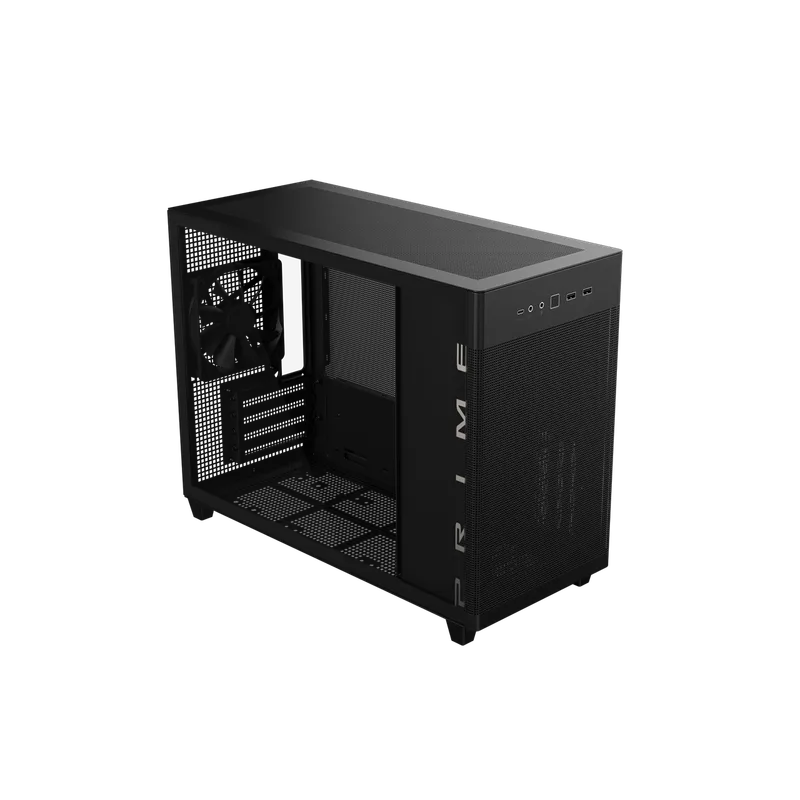
The AP201 is technically a micro-ATX case, but it’s become one of the most-recommended ITX enclosures anyway because it solves the two things that make budget ITX cases frustrating: it takes a standard ATX power supply, and it fits a real tower cooler. At 170mm of CPU cooler clearance and 338mm of GPU length, you can run something like a Thermalright Peerless Assassin 120 SE next to an RTX 5070-class card without hunting for low-profile parts.
The pre-installed 200mm front fan and 360mm top radiator support mean the AP201 also works well if you want liquid cooling later — you’re not locked into air cooling to hit these prices. At 33L it’s noticeably bigger than the SG13 or NV10, so if desk space is the priority over raw cooling headroom, look at the SilverStone instead.
2. Jonsbo D31 Mesh
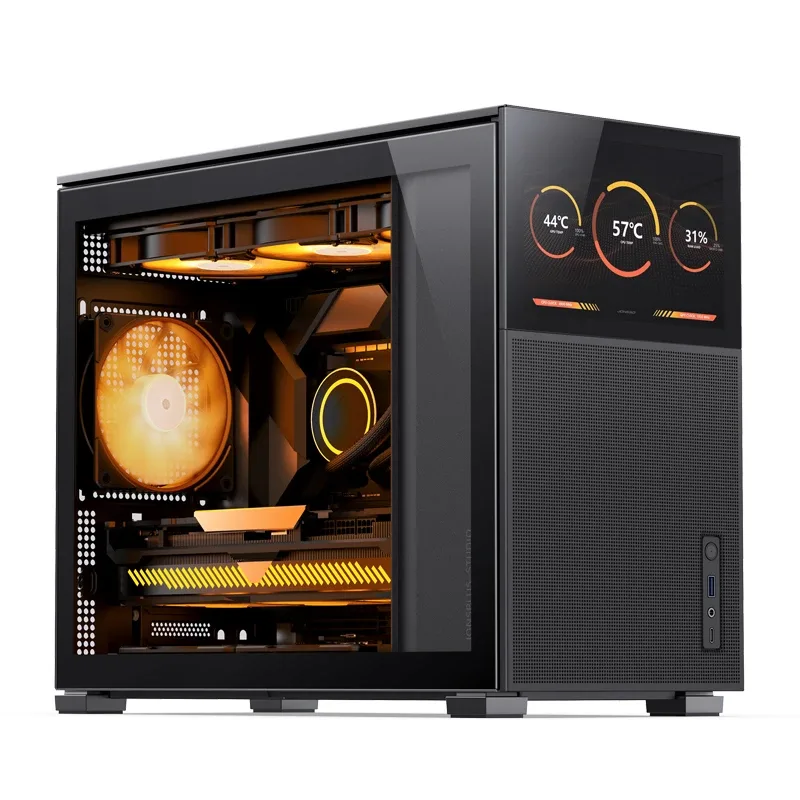
The D31 Mesh’s headline spec is GPU clearance: up to 400mm, which covers essentially every consumer graphics card sold today, including triple-fan flagship AIB cards that don’t fit in most sub-$100 cases. That clearance comes with a tradeoff — the case has four different PSU mounting positions specifically because a longer PSU eats into the space available for your GPU, so you’ll want to check your specific PSU length against your GPU length before finalizing a build.
360mm radiator support on both the top and bottom panels also makes this the most AIO-friendly case in the roundup. Combined with ATX/SFX PSU flexibility, it’s the pick if your build centers on a long, powerful GPU rather than raw compactness.
3. Cooler Master N200
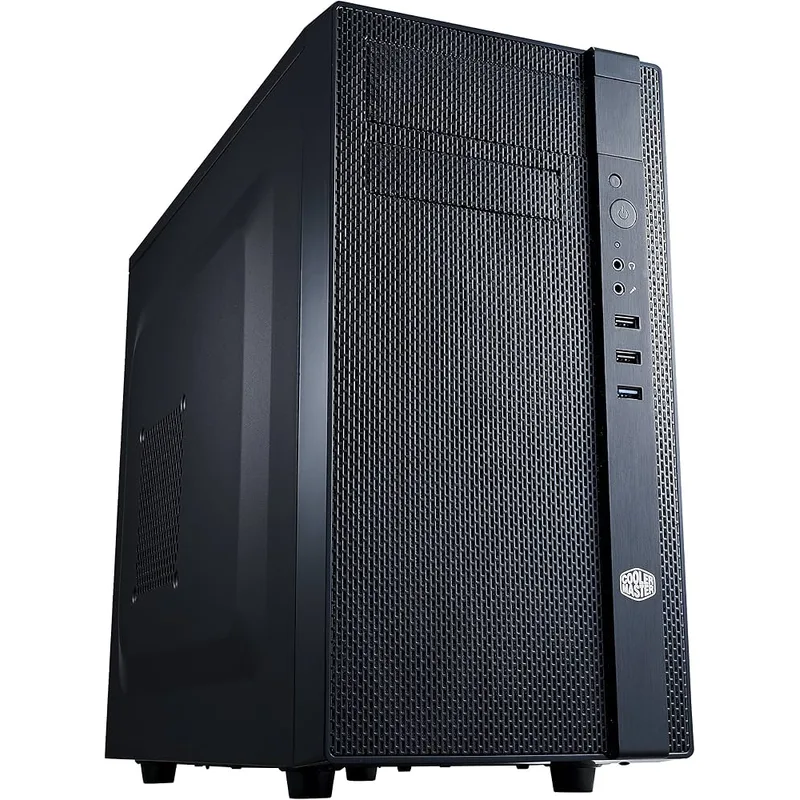
The N200 is the cheapest case here, and it earns its budget spot honestly: 330mm of GPU clearance and 165mm of CPU cooler height are real numbers that fit an RTX 4070-class card and a full-size air cooler like the Dark Rock Pro 4, not compromises typical of the price tier. It also takes a standard ATX PSU, so total system cost stays low.
What you’re not getting is modern styling or built-in AIO support — the N200’s design has been around for over a decade, and Cooler Master hasn’t added USB-C or dedicated radiator mounts to it. If you’re air-cooling and want the lowest total cost of the group, it’s the pragmatic choice; if you want radiator support or newer I/O, spend the extra $10-15 on the AP201.
4. SilverStone SG13
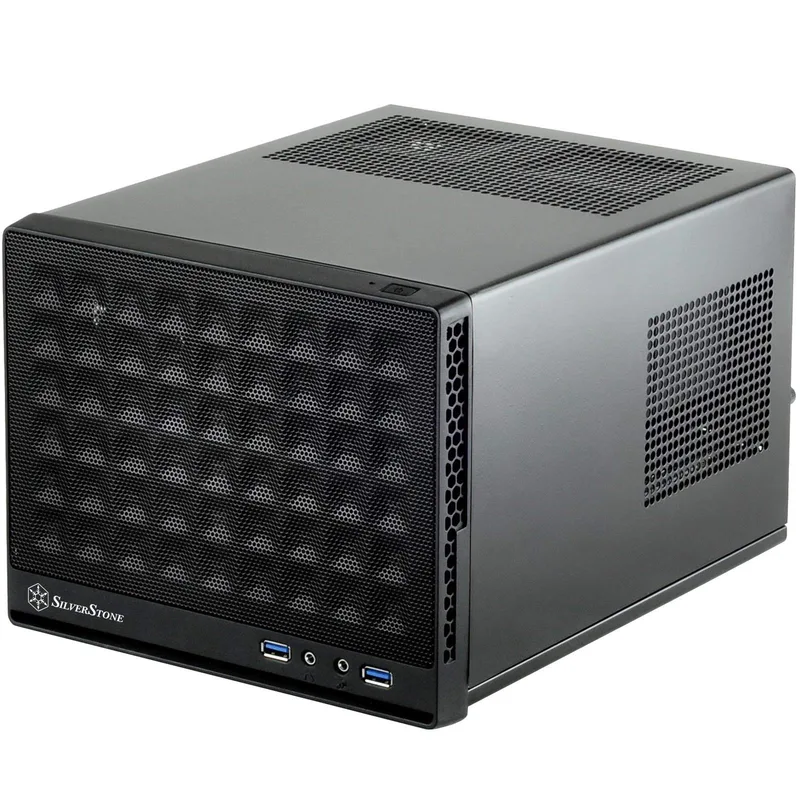
The SG13 has been a small-form-factor staple for years, and it still holds up as the most compact case here that fits a genuine discrete GPU rather than a low-profile-only card. At 11.5L, it’s less than a third the volume of the AP201 while still clearing roughly 268mm of GPU length — enough for most dual-slot cards, though not the longest triple-fan flagships.
The tradeoff is CPU cooler height: with the standard ATX PSU mount, you’re capped at 61mm, which means a low-profile cooler like the Noctua NH-L9i-17xx. SilverStone sells a separate PP08B adapter that swaps in an SFX PSU and raises the limit to 82mm, but that’s an extra purchase on top of the case. If your build genuinely needs to be this small, the tradeoff is worth it; if not, the AP201 or N200 give you more cooling room per dollar.
5. Jonsbo NV10
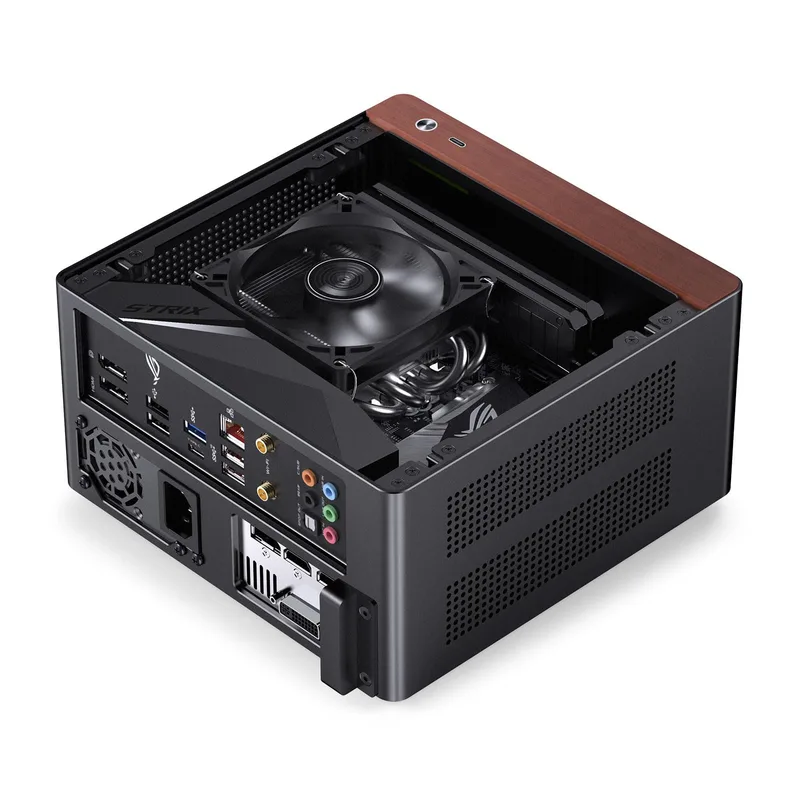
The NV10 isn’t a gaming case, and it shouldn’t be judged as one. At 4.5L — roughly an eighth the volume of the AP201 — it’s built around a 1U Flex power supply and a 38mm CPU cooler clearance, dimensions that only work with a stock cooler and either an iGPU or a low-profile card under 40mm tall. What you get in exchange is genuinely striking build quality: aluminum-alloy panels with a walnut-trim front that looks more like a piece of furniture than a PC case, plus an included PCIe 4.0 riser cable.
Use it for a silent NAS, an HTPC connected to a TV, or a Ryzen APU media box — anywhere you don’t need a discrete GPU. For an actual gaming build, even the smallest gaming-capable case in this roundup, the SilverStone SG13, is a better fit.
FAQ
Can I put a real gaming GPU in every case on this list?
No. The ASUS Prime AP201, Jonsbo D31 Mesh, Cooler Master N200, and SilverStone SG13 all fit full-size discrete GPUs, with clearance ranging from roughly 268mm to 400mm. The Jonsbo NV10 is the exception — its 40mm GPU height limit restricts it to low-profile cards, so it’s suited to iGPU, NAS, or HTPC builds rather than gaming.
Do I need an SFX power supply for a budget ITX build?
Not necessarily. The AP201, N200, and SG13 all accept a standard ATX power supply, which typically costs $30-$50 less than a comparable SFX unit. The D31 Mesh supports either. Only the NV10 requires a specialty PSU — a 1U Flex unit — which does carry a price premium.
Which case fits the biggest CPU cooler?
The ASUS Prime AP201 leads at 170mm, enough for nearly any tower air cooler on the market. The Jonsbo D31 Mesh (168mm) and Cooler Master N200 (165mm) are close behind. The SilverStone SG13 caps out at 61-82mm depending on PSU choice, and the Jonsbo NV10 at just 38mm — both require low-profile coolers.
Is a smaller case always a worse choice for cooling?
Generally, yes, unless the case is specifically engineered around airflow at that size. The 11.5L SG13 trades CPU cooler height for its footprint, and the 4.5L NV10 trades both GPU size and cooler height. If cooling headroom matters more than desk footprint, the 31-33L AP201 or D31 Mesh give you significantly more thermal margin for the same or lower price.
What’s the cheapest way to build a small-form-factor gaming PC?
Pair the Cooler Master N200 with a standard ATX power supply and an air cooler like the Noctua NH-U12S — this avoids the SFX PSU premium entirely while still supporting an RTX 4070-class GPU. It’s the lowest total-cost path to a real ITX gaming build among the cases here.
The Bottom Line
For most budget ITX builders in 2026, the ASUS Prime AP201 is the strongest all-around pick — 338mm of GPU clearance, a 170mm CPU cooler limit, and standard ATX PSU support cover nearly any build without forcing compromises. If your GPU is unusually long, the Jonsbo D31 Mesh stretches to 400mm of clearance for a similar price. Builders who just want the lowest total cost should look at the Cooler Master N200 — it’s the cheapest case here and still takes a standard ATX PSU and a full tower cooler. Once you’ve picked a case, our how to build a small form factor PC guide walks through component selection and assembly order for an ITX build.