The AMD Ryzen 7 9800X3D launched in November 2026 and as of April 2026, it’s still the fastest gaming CPU you can buy. GamersNexus called it “RIP Intel” at launch, and nothing Intel has released since has closed the gap in gaming. If you’re building or upgrading a gaming PC in 2026 and budget isn’t the primary constraint, this is the chip.
The 9800X3D pairs AMD’s Zen 5 architecture with second-generation 3D V-Cache — and the cache placement change matters more than it sounds. Here’s the full breakdown.
| Spec | AMD Ryzen 7 9800X3D 9.4/10 | AMD Ryzen 7 7800X3D 8.7/10 | Intel Core Ultra 9 285K 7.8/10 |
|---|---|---|---|
| cores | 8 cores / 16 threads | 8 cores / 16 threads | 24 cores (8P + 16E) / 24 threads |
| base_clock | 4.7 GHz base / 5.25 GHz boost | 4.2 GHz base / 5.0 GHz boost | 3.7 GHz base / 5.7 GHz boost |
| cache | 104 MB total (64 MB 3D V-Cache) | 96 MB total (64 MB 3D V-Cache) | 36 MB L3 |
| tdp | 120W | 120W | 125W |
| socket | AM5 (Zen 5) | AM5 (Zen 4) | LGA1851 (Arrow Lake) |
| memory | DDR5-5600 (up to DDR5-6000 OC) | DDR5-5200 (up to DDR5-6000 OC) | DDR5-6400 / DDR4-3200 |
| Rating | 9.4/10 | 8.7/10 | 7.8/10 |
Prices change daily — tap Check Price for the current Amazon price.
Prices change daily — tap Check Price for the current Amazon price.
Specifications
| Spec | AMD Ryzen 7 9800X3D |
|---|---|
| Architecture | Zen 5 (Granite Ridge) |
| Cores / Threads | 8C / 16T |
| Base Clock | 4.7 GHz |
| Boost Clock | 5.25 GHz |
| L2 Cache | 8 MB |
| L3 Cache | 96 MB (32 MB native + 64 MB 3D V-Cache) |
| Total Cache | 104 MB |
| TDP | 120W |
| Socket | AM5 |
| Memory Support | DDR5-5600 (JEDEC), DDR5-6000+ (OC) |
| PCIe | PCIe 5.0 x16 (GPU), PCIe 4.0 x4 (NVMe) |
| MSRP | $479 |
| Street Price | ~$420 |
What Changed From the 7800X3D
The 7800X3D stacked its 64 MB V-Cache on top of the CCD (the compute chiplet). That caused a significant thermal bottleneck — the cache acted as an insulating layer, trapping heat and forcing AMD to reduce boost clocks to compensate. The 7800X3D’s max boost was capped at 5.0 GHz for that reason.
With the 9800X3D, AMD flipped the stack. The 64 MB V-Cache now sits below the cores, between the CCD and the substrate. Heat travels directly up through the cores and out the IHS without fighting through the cache. AMD measured a 46% reduction in thermal resistance. The result: boost clocks jump from 5.0 GHz to 5.25 GHz, and you’re no longer leaving IPC on the table to manage temperatures.
Combined with Zen 5’s ~10-16% IPC improvement over Zen 4, the 9800X3D is the first X3D chip that doesn’t feel like a gaming-only compromise.
Gaming Performance
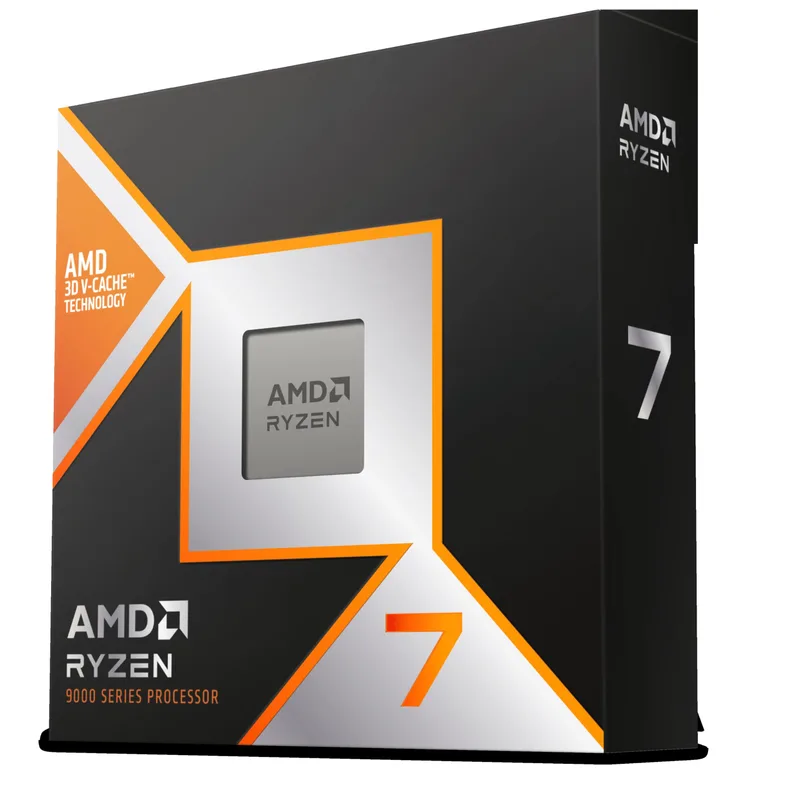
The 9800X3D dominates in CPU-bound gaming scenarios. Based on GamersNexus and Tom’s Hardware benchmark data:
1080p Gaming (CPU-Limited Scenarios)
| Game | 9800X3D Avg FPS | 7800X3D Avg FPS | Core Ultra 9 285K Avg FPS |
|---|---|---|---|
| Starfield | 169 | 145 | 124 |
| Cyberpunk 2077 | 140 | 129 | 96 |
| Counter-Strike 2 | 668 | 591 | 519 |
| Baldur’s Gate 3 | ~185 | ~162 | ~138 |
The 9800X3D is approximately 8-21% faster than the 7800X3D depending on the title, and roughly 35% faster than the Intel Core Ultra 9 285K on average across CPU-bound gaming workloads. At 4K, the GPU becomes the bottleneck in most games and the CPU gap shrinks — but at 1440p high refresh and 1080p competitive play, the 9800X3D is measurably ahead. For a full game-by-game benchmark breakdown of these two processors, see our Ryzen 7 9800X3D vs Core Ultra 7 265K comparison.
Counter-Strike 2 is the most extreme example: the 9800X3D pushes 668 average FPS paired with an RTX 4090 — 13% faster than the 7800X3D and nearly 30% faster than Intel’s 285K. For high-refresh competitive play, that margin is real.
Productivity Performance
Zen 5’s IPC bump changes how the 9800X3D handles non-gaming workloads compared to its predecessor. The 7800X3D was always a liability for creators because its cache throttled boost clocks under productivity loads. The 9800X3D doesn’t have that problem.
In Cinebench R23, the 9800X3D scores around 23,000 multi-core — solidly above the 7800X3D (~20,000) and within striking distance of the Core Ultra 9 285K’s multi-threaded numbers on tasks that don’t scale past 8 cores. For streaming, video encoding in Handbrake, or Blender, the 9800X3D is the stronger chip than any previous X3D processor.
That said, the Core Ultra 9 285K’s 24-core count (8 P-cores + 16 E-cores) gives it a clear multi-threaded lead in heavily parallelized workloads like 3D rendering and large compilation jobs. If your workflow is 60% productivity and 40% gaming, the 285K or AMD Ryzen 9 9950X are worth considering instead — see our Ryzen 9 9950X vs Core Ultra 9 285K head-to-head for a detailed breakdown.
Thermals and Power
Under gaming load, the 9800X3D typically runs 70-80°C with a 240mm AIO or a solid 5-6 heat pipe tower cooler like the Noctua NH-D15 or be quiet! Dark Rock Pro 5. The 120W TDP is accurate in practice — this is not a chip that runs hot by default. For a detailed rundown on what TDP means in practice, see our TDP explained guide.
A 240mm AIO is sufficient. You don’t need a 360mm cooler unless you’re doing sustained heavy productivity workloads back-to-back. The 9800X3D can be safely undervolted for even lower temps and identical gaming performance, since V-Cache workloads are not frequency-sensitive beyond ~5.0 GHz. See our best CPU coolers for gaming for recommendations at every price tier.
Overclocking the traditional frequency route does not improve gaming performance on X3D chips — the cache is what matters. Undervolting via Curve Optimizer in the BIOS is the correct approach.
Platform: AM5 and Motherboard Compatibility
The 9800X3D drops into any AM5 motherboard — B650, B650E, X670, X670E, X870, or X870E — with a BIOS update. A B650 board in the $150-200 range is completely adequate for gaming. You only need X870 if you want PCIe 5.0 bandwidth for a future GPU upgrade.
AMD has committed to AM5 support through at least 2027, so the platform has room to grow. The 9800X3D’s successor will also be AM5, meaning your board and DDR5 RAM remain usable if you upgrade later.
DDR5-6000 with tight timings (CL30) is the sweet spot for the 9800X3D. Running slower DDR5-4800 will cost you 3-5% gaming performance. Most DDR5-6000 kits are plug-and-play via EXPO/XMP.
The Competition
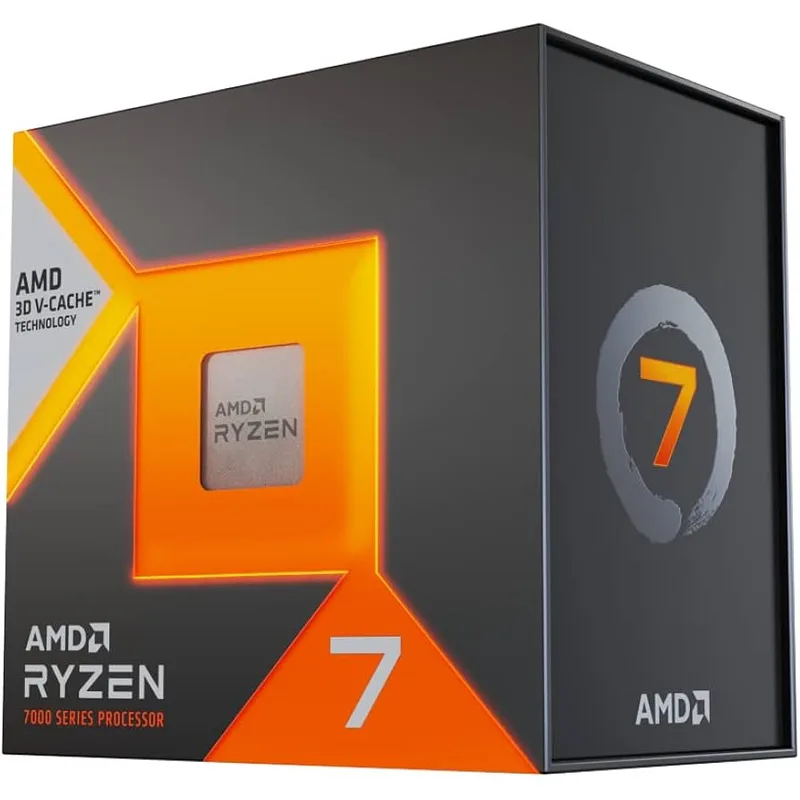
AMD Ryzen 7 7800X3D at ~$349 is the clearest alternative. It delivers 90-95% of the 9800X3D’s gaming performance for roughly $70 less. Note that the 7800X3D has risen from its early-2025 lows — it’s no longer the steep bargain it once was. If your monitor is 144Hz 1440p and you’re not chasing maximum competitive FPS, the gap between 145 and 169 average FPS in Starfield is invisible during actual gameplay. The 7800X3D remains a solid buy, but the value gap over the 9800X3D is narrower than it used to be.
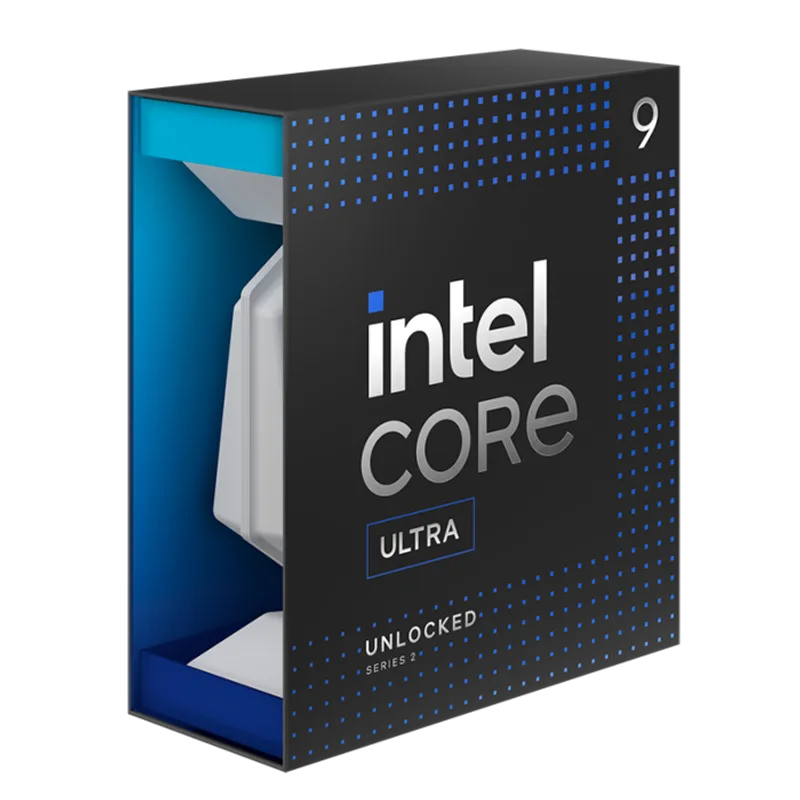
Intel Core Ultra 9 285K
Intel Core Ultra 9 285K at ~$535 is priced above the 9800X3D and trails it by roughly 35% in gaming. The 285K is the stronger choice only if you need 24 cores for professional workloads — video production, large-scale compilation, 3D rendering — and want to do some gaming on the side. For a gaming-first build, there’s no scenario where the 285K makes more sense than the 9800X3D at current prices. Read our full Intel Core Ultra 9 285K review for complete gaming and productivity benchmarks.
FAQ
Does the 9800X3D support overclocking?
Traditional frequency overclocking doesn’t improve gaming performance on X3D processors — the 3D V-Cache benefits from frequency only up to a point, after which cache latency matters more than raw GHz. Use Curve Optimizer in the BIOS to undervolt, which stabilizes boost clocks and reduces thermals. This approach consistently improves real-world gaming performance by 1-3%.
Which motherboard should I pair with the 9800X3D?
For gaming, a B650 board in the $150-200 range is the practical choice. The ASUS ROG Strix B650E-F and MSI MAG B650 TOMAHAWK WiFi are popular options. If you want PCIe 5.0 x16 for a future GPU, step up to an X870 board. Avoid the cheapest B650 boards (under $130) — they have VRM limitations that can cause instability under sustained productivity loads. For a full breakdown of the top X870E options that pair well with the 9800X3D in enthusiast builds, see our best X870E motherboards guide.
Is DDR5 required for the 9800X3D?
Yes. AM5 is DDR5-only — there is no DDR4 option on this platform. DDR5-6000 CL30 kits are the current sweet spot for price and performance. Budget-friendly options from Kingston Fury Beast and Corsair Vengeance run around $90-110 for a 32GB (2x16GB) DDR5-6000 kit.
Will a next-gen Ryzen X3D replace it soon?
The AMD Ryzen 9 9850X3D has appeared in early retail listings at around $500 — a successor is in the pipeline. If it launches at that price point, the 9800X3D will likely drop further and remain competitive for most gaming use cases. Buying now is reasonable; the AM5 platform is supported through at least 2027.
Does the 9800X3D have integrated graphics?
No. Like all Ryzen desktop CPUs without a “G” suffix, the 9800X3D requires a dedicated GPU. Budget at minimum an RX 7600 XT or RTX 4060 to pair with it.
The Bottom Line
The AMD Ryzen 7 9800X3D is the fastest gaming processor available in 2026, and it’s the first X3D chip that doesn’t require you to sacrifice productivity performance to get there. The flipped V-Cache design solves the thermal bottleneck that held the 7800X3D back, and Zen 5’s IPC gains make it genuinely capable outside of games.
At ~$420, the value case is strong. The Ryzen 7 7800X3D at ~$349 has crept up in price — the ~$70 gap between the two chips is easier to justify now than it was a year ago. If you’re building a competitive gaming rig around a high-refresh 1440p or 1080p monitor, the 9800X3D is the best chip on the mainstream desktop platform. For a casual 4K gaming setup where the GPU is always the bottleneck, either chip does the job.