The AMD Ryzen 9 9900X launched at $499 in late 2026 to middling reviews — reviewers noted its 12 cores added little gaming performance over the 8-core 9700X, making it a hard sell at MSRP. By May 2026, street prices have fallen to roughly $359, and with the Ryzen 9 9900X3D now on shelves at $599, the 9900X has carved out a clear identity: it’s the productivity CPU for creators who don’t need maximum core count and don’t want to pay 9950X money.
| Spec | AMD Ryzen 9 9900X 8.2/10 | AMD Ryzen 9 9950X 8.9/10 | AMD Ryzen 7 9700X 8.5/10 |
|---|---|---|---|
| cores | 12 cores / 24 threads | 16 cores / 32 threads | 8 cores / 16 threads |
| base_clock | 4.4 GHz base / 5.6 GHz boost | 4.3 GHz base / 5.7 GHz boost | 4.5 GHz base / 5.5 GHz boost |
| cache | 76 MB total (64 MB L3) | 80 MB total (64 MB L3) | 40 MB total (32 MB L3) |
| tdp | 120W | 170W | 65W |
| socket | AM5 (Zen 5) | AM5 (Zen 5) | AM5 (Zen 5) |
| memory | DDR5-5600 official (DDR5-6000 OC) | DDR5-5600 official (DDR5-6000 OC) | DDR5-5600 official (DDR5-6000 OC) |
| Rating | 8.2/10 | 8.9/10 | 8.5/10 |
Prices change daily — tap Check Price for the current Amazon price.
Prices change daily — tap Check Price for the current Amazon price.
Who Should Buy the Ryzen 9 9900X?
The 9900X earns its place in a specific scenario: you’re doing a mix of video editing, 3D rendering, or heavy multitasking, and you’re building on AM5. The 12 cores deliver ~40% more multi-core throughput than the 9700X in applications that use them — Blender, HandBrake, DaVinci Resolve timeline scrubbing, streaming while gaming. If those workloads describe your day, the $94 premium over the 9700X pays off quickly.
If gaming is your primary use case, the 9900X is a waste of money. The extra 4 cores park in nearly every game, and 1440p frame rates are within 2 FPS of the cheaper 9700X across titles like Dragon’s Dogma 2, Final Fantasy XIV: Dawntrail, and F1 24. The 9800X3D at ~$449 is the gaming CPU to beat on AM5, and the 9700X handles 99% of gaming workloads for $265.
Core Specs
The 9900X is built on TSMC’s 4nm process, the same node as the rest of the Granite Ridge lineup. It runs 12 cores across two CCDs with 32 MB L3 per CCD (64 MB total), boosting to 5.6 GHz on its fastest cores. AMD rates it at 120W TDP — a significant improvement over the 7900X’s 170W, making mid-range coolers viable.
Key specifications:
- Architecture: Zen 5, Granite Ridge
- Process node: TSMC 4nm
- Cores / Threads: 12 / 24
- Base / Boost clock: 4.4 GHz / 5.6 GHz
- L3 Cache: 64 MB (32 MB per CCD)
- TDP: 120W (PPT up to ~142W)
- Socket: AM5 — compatible with all B650, X670, B850, and X870 boards
- Memory support: DDR5-5600 official, DDR5-6000 EXPO/XMP OC
Productivity Performance
This is where the 9900X makes its case. In Cinebench 2026 multi-core, the 9900X scores approximately 1,768 — 40% ahead of the 9700X’s ~1,260, and well above Intel’s Core Ultra 5 245K (~1,100). The 9950X scores ~2,204, which is 25% faster than the 9900X. That gap matters if you’re running Blender professionally — the 9950X finishes a Blender Monster benchmark approximately 23% faster.
In Cinebench R24, the 9900X hits ~1,892 multi-core, with single-core around 139. Single-core is nearly identical to the 9700X and 9950X — all three use the same Zen 5 cores at similar clocks.
For video encoding in HandBrake x265, the 9900X handles 4K60 source material smoothly, leveraging all 12 cores at sustained boost clocks. Power draw during full all-core loads peaks around 176W at the EPS12V connectors — measurably more than the 120W TDP label suggests under worst-case AVX workloads, but still significantly below the 7900X’s 199W at the same tasks.
Cooler recommendation: The 9900X at 120W TDP runs at ~70°C under sustained all-core rendering with a quality 240mm AIO or Noctua NH-D15 G2. Air coolers like the DeepCool AK620 ($65) are adequate for gaming and mixed use. If you plan to leave Blender renders running for hours, step up to a 360mm AIO.
Gaming Performance
Benchmarks from GamersNexus and TechPowerUp confirm the 9900X’s gaming limitation: the 12 cores spend most game workloads parked, leaving effective performance essentially equivalent to the 8-core 9700X.
At 1440p with an RTX 5070 in recent titles:
- Dragon’s Dogma 2: 9900X and 9700X within 2 FPS AVG (~90 FPS)
- Final Fantasy XIV: Dawntrail: Tied at ~333 FPS AVG
- F1 24: 9900X at ~383 FPS AVG, 9700X at ~379 FPS AVG — negligible gap
- CPU-bound titles at 1080p: 9900X occasionally pulls ahead by 3–5%, but only in titles that explicitly scale beyond 8 cores, which is a shrinking list
The 9900X3D, released March 2026 at $599 MSRP, does change the gaming picture with 3D V-Cache stacked on one CCD. Its 128 MB cache brings gaming performance close to the 9800X3D. But at $240 more than the 9900X’s current street price, it’s a different product for a different buyer.
The Main Product
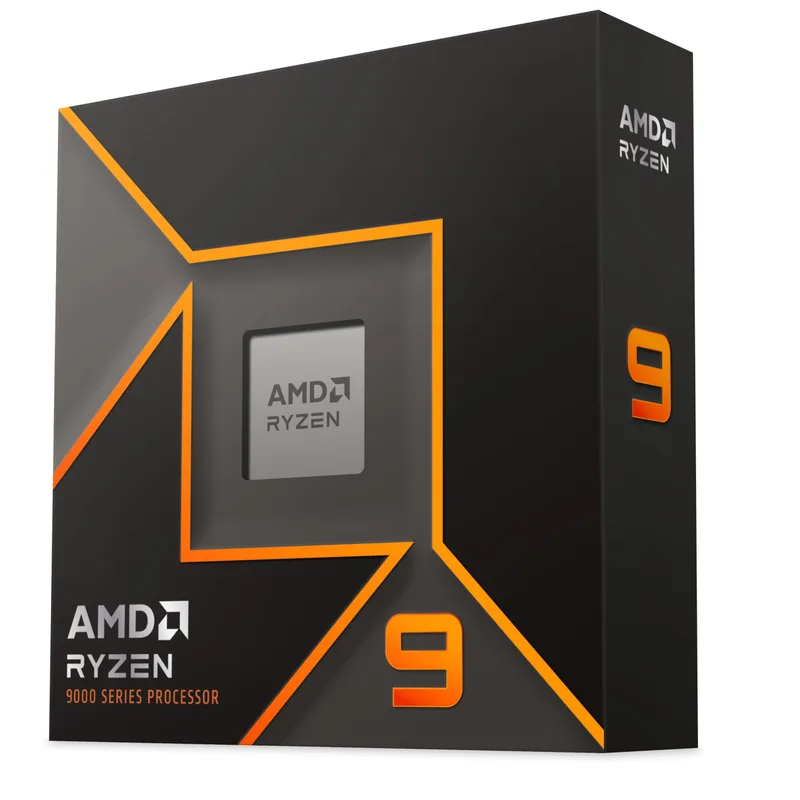
The 9900X at ~$359 is the sweet spot for a 12-core Zen 5 chip. Cinebench 2026 multi of ~1,768 sits 25% below the 9950X but costs $140 less — for most non-professional rendering workloads, that gap is workable. The 120W TDP and broad AM5 board compatibility round out a solid productivity CPU recommendation.
Step Up: The Ryzen 9 9950X
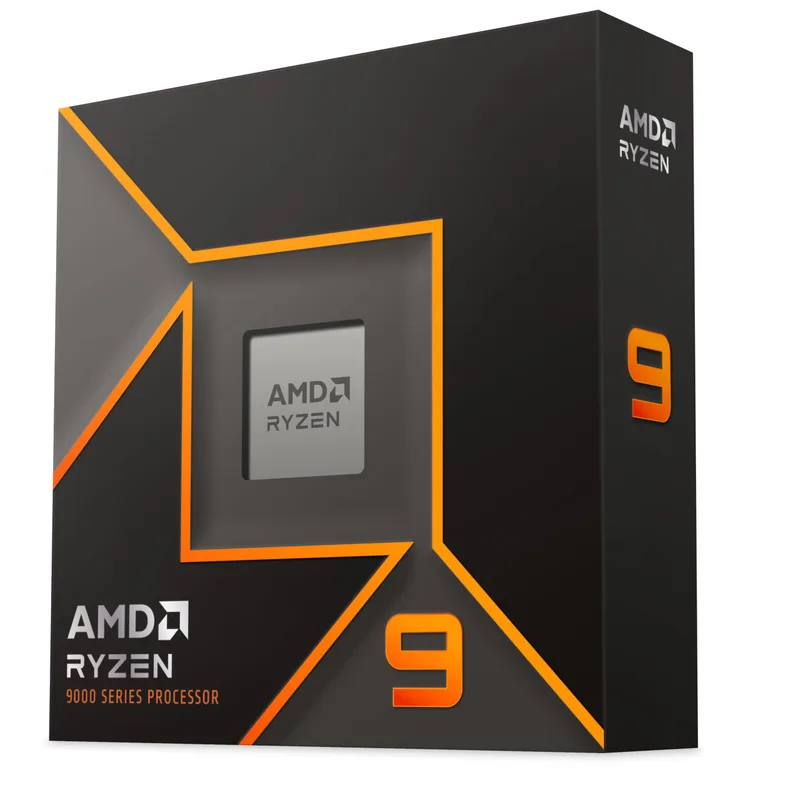
The 9950X at $499 adds 4 cores (16 total), bumps the boost ceiling to 5.7 GHz, and scores ~2,204 in Cinebench 2026 multi. That’s roughly 25% faster than the 9900X in Blender, 30%+ faster in 7-Zip decompression, and measurably quicker in HandBrake x265 encodes.
The trade-off is 170W TDP — you’ll need at minimum a quality 240mm AIO, and AMD recommends a 360mm for sustained all-core loads. In Cinebench 2026 stress tests, the 9950X runs at ~81°C on a 360mm AIO versus the 9900X’s ~70°C. For professional workloads where time is money — 3D rendering farms, high-volume video encoding, scientific computation — the $140 premium is justified. For casual creative work or home studio use, the 9900X handles it.
Step Down: The Ryzen 7 9700X
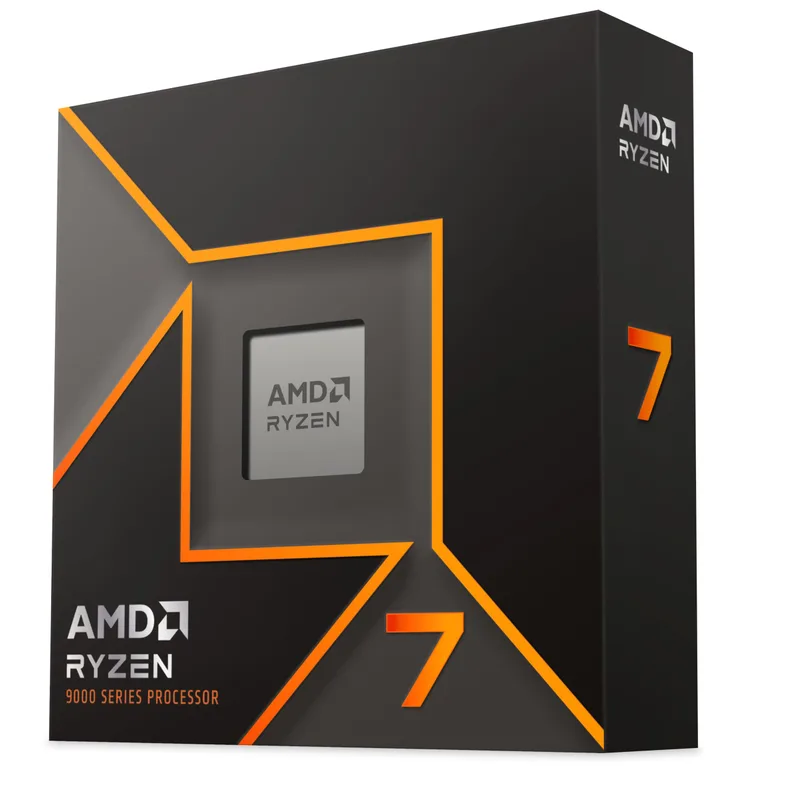
The 9700X at $265 is the brutally logical counter-argument to the 9900X for gamers. At 1440p, it matches the 9900X FPS within rounding error. It runs at 65W TDP, making it compatible with budget coolers. It costs $94 less. For anyone gaming-first, the 9700X is the correct choice on this platform.
Where the 9700X falls short: sustained multi-core productivity. It’s ~40% slower than the 9900X in Cinebench 2026 multi-core, which translates to noticeably longer Blender render times and HandBrake encodes. Streaming gameplay at 1080p60 with x264 is manageable on the 9700X, but running OBS with NVENC offloads that burden to the GPU anyway — leaving the 9700X’s 8 cores largely sufficient for most creators.
Frequently Asked Questions
Does the Ryzen 9 9900X need a new motherboard? The 9900X uses AM5 socket, which is compatible with all B650, X670, B850, and X870 motherboards. If you’re upgrading from Zen 4 (7000 series), your existing AM5 board works with a BIOS update. Upgrading from AM4 (Ryzen 5000 and older) requires a new motherboard.
Is the Ryzen 9 9900X good for video editing? Yes, for most users. 12 cores at Zen 5 IPC handle 4K editing in DaVinci Resolve and Premiere Pro well — timeline scrubbing is smooth and export times are competitive. Professional studios encoding large volumes of footage daily should consider the 9950X for its 25% rendering advantage.
How does the 9900X compare to the 9900X3D? The 9900X3D launched in March 2026 at $599 MSRP and adds 3D V-Cache that significantly improves gaming performance. For pure productivity, the 9900X3D’s V-Cache provides no rendering benefit — rendering benchmarks between the two are essentially identical. The 9900X at ~$359 is the better buy for productivity-focused builds; the 9900X3D is for the niche buyer who needs both gaming and heavy multi-core work from one chip.
What cooler do I need for the Ryzen 9 9900X? For gaming and mixed light workloads: any quality 240mm AIO or a dual-tower air cooler like the DeepCool AK620 ($65) handles it without issue. For sustained all-core rendering: a 360mm AIO or Noctua NH-D15 G2 ($180) keeps temperatures below 75°C. The 9900X is notably easier to cool than the 9950X at 120W vs 170W.
Does the 9900X support DDR5-6000? Officially, the 9900X is rated for DDR5-5600. DDR5-6000 CL30 kits run stably on most B850 and X870 boards via EXPO/XMP profiles — AMD’s EXPO certification at 6000 MHz CL30 is the sweet spot for Zen 5 performance. Kits from Kingston FURY Beast ($399), G.Skill Trident Z5 Neo RGB ($489), and Corsair Vengeance DDR5-6000 ($430) all work well on AM5.
The Bottom Line
At $359, the AMD Ryzen 9 9900X is a solid content creation CPU that was overpriced at launch and is now correctly valued. The 12-core Zen 5 configuration delivers Cinebench 2026 multi scores of ~1,768 — strong for video editing, Blender, and streaming — at a 120W TDP that doesn’t demand a premium cooling solution. It loses nothing against the 9700X in gaming, but you shouldn’t pay $94 more than the 9700X ($265) unless multi-core productivity workloads are a real part of your week. If they are, the 9900X is the right chip. If rendering and encoding dominate your workflow, spend the extra $140 for the 9950X ($499) and its 25% multi-core lead.