The AMD Ryzen 9 9950X launched in August 2024 at $649 and immediately hit a credibility problem: at that price, reviewers struggled to recommend it over the 9900X for anything other than professional rendering. Two years of price drops changed the math. At $499 post-Prime Day 2026 — down from a $434 Prime Day ATL — the 16-core Zen 5 flagship finally makes sense for a specific buyer, and it’s not the gaming enthusiast.
| Spec | AMD Ryzen 9 9950X 8.9/10 | AMD Ryzen 9 9900X 8.2/10 | Intel Core Ultra 9 285K 8/10 |
|---|---|---|---|
| cores | 16 cores / 32 threads | 12 cores / 24 threads | 24 cores (8 P-cores + 16 E-cores) / 24 threads |
| base_clock | 4.3 GHz base / 5.7 GHz boost | 4.4 GHz base / 5.6 GHz boost | 3.7 GHz P-core base / 5.7 GHz P-core boost |
| cache | 80 MB total (64 MB L3) | 76 MB total (64 MB L3) | 40 MB L3 cache |
| tdp | 170W (PPT up to ~230W) | 120W | 125W (PL2 up to 250W) |
| socket | AM5 (Zen 5, Granite Ridge) | AM5 (Zen 5) | LGA1851 (Z890 / B860 required) |
| memory | DDR5-5600 official (DDR5-6000 OC) | DDR5-5600 official (DDR5-6000 OC) | DDR5-6400 official / DDR4-3200 |
| Rating | 8.9/10 | 8.2/10 | 8/10 |
Prices change daily — tap Check Price for the current Amazon price.
Prices change daily — tap Check Price for the current Amazon price.
Who Should Buy the Ryzen 9 9950X?
The 9950X has a clear use case: content creators and professionals running sustained multi-threaded workloads — 3D rendering in Blender, video encoding in HandBrake, simulation in Houdini or After Effects compositing — where 16 Zen 5 cores at 5.7 GHz boost run measurably faster than 12 cores.
The Cinebench 2024 multi-core score of ~2,340 sits 25% ahead of the Ryzen 9 9900X’s ~1,768. In Blender, that gap persists: the 9950X completes the Blender Monster benchmark roughly 23% faster and the Junkshop scene about 10% faster. If you bill hourly for rendering or encode large volumes of footage daily, the $170 premium over the 9900X pays back.
The 9950X is the wrong chip for gaming-first builds. At 1440p and 4K, every modern GPU bottlenecks before the CPU, and at 1080p, the Ryzen 7 9800X3D’s 96 MB of 3D V-Cache beats the 9950X by 15–25% in CPU-bound titles like CS2, Cyberpunk 2077 (CPU-bound scenarios), and Alan Wake 2. Spending $499 on a 9950X to game is leaving performance on the table versus the $433 9800X3D.
Core Specs
The 9950X is built on TSMC’s 4nm process, part of AMD’s Granite Ridge generation (Zen 5 architecture). The I/O die runs on TSMC 6nm. Unlike Intel’s hybrid architecture, every one of the 9950X’s 16 cores is a full-performance Zen 5 core — no efficiency cores, no heterogeneous scheduling trade-offs.
Complete specification breakdown:
- Architecture: Zen 5, Granite Ridge
- Process node: TSMC 4nm (CPU cores) / 6nm (IOD)
- Cores / Threads: 16 / 32
- Base / Boost clock: 4.3 GHz / 5.7 GHz
- L2 Cache: 16 MB (1 MB per core)
- L3 Cache: 64 MB (32 MB per CCD, dual CCD)
- Total cache: 80 MB
- TDP: 170W (PPT ceiling ~230W under AVX all-core load)
- Socket: AM5 — compatible with B650, X670E, B850, X870E
- Memory support: DDR5-5600 official; DDR5-6000 EXPO/XMP OC (optimal for Zen 5)
- PCIe: Gen 5.0 (24 lanes from CPU)
- Unlocked multiplier: Yes
The dual-CCD layout with 32 MB L3 per die gives the 9950X 64 MB L3 total — identical per-die to the 9900X. The 9950X’s advantage in rendering comes from double the core count at the same per-core IPC, not additional cache.
Productivity Performance
This is where the 9950X distinguishes itself from every other AM5 chip except the 9950X3D.
Cinebench 2024
- Ryzen 9 9950X multi-core: ~2,340
- Ryzen 9 9900X multi-core: ~1,768 (25% slower)
- Intel Core Ultra 9 285K multi-core: ~2,270 (3% slower than 9950X)
- Single-core across all three: within 2–3% — Zen 5’s IPC advantage versus Arrow Lake is narrow in single-threaded tasks
The 285K’s 24-core configuration (8 P-cores + 16 E-cores) competes with the 9950X in synthetic multi-threaded benchmarks but trails in real-world rendering. Blender Monster benchmark: 9950X ~8% faster than 285K. Blender Junkshop and Classroom: 9950X ~6–10% ahead. The difference comes down to AMD’s Zen 5 cores outperforming Intel’s E-cores in floating-point workloads that dominate rendering.
HandBrake x265 (4K source)
The 9950X encodes a 4K60 HEVC source in HandBrake x265 approximately 18–22% faster than the 9900X, scaling near-linearly with the core count increase. Against the 285K, the gap narrows to ~5–8% in HandBrake’s mixed all-core workload. For a studio encoding multiple hours of dailies per day, the cumulative time savings from a 9950X versus a 9900X amounts to 20+ minutes on a heavy queue.
DaVinci Resolve and Premiere Pro
Color grading and timeline scrubbing are primarily GPU-bound, but CPU-side tasks — background rendering, peak memory bandwidth during cache decode, and export compression — do scale with core count. The 9950X’s 90 GB/s DDR5 bandwidth (versus 9900X’s ~75 GB/s effective at DDR5-6000) makes 8K RAW scrubbing smoother in Resolve’s optimized media workflows. The 285K holds a bandwidth advantage here at 102 GB/s DDR5-6400, which benefits RAM-intensive operations in Photoshop and video applications that aren’t tightly bound to CPU threads.
Power Consumption
Under full Cinebench all-core load, the 9950X draws approximately 200W measured at the EPS12V connector — significantly above its 170W TDP label under AVX workloads, with a peak PPT ceiling around 230W. The 9900X peaks at ~176W under the same conditions. The 285K is rated at 125W TDP but similarly exceeds it under all-core AVX loads, pulling up to 250W in extreme scenarios.
Cooler requirement for the 9950X: A 360mm AIO like the Corsair iCUE Link Titan 360 ($190) or Noctua NH-D15 G2 ($180) is the practical minimum for sustained all-core workloads. Temperature testing with a 360mm AIO shows ~89°C under sustained Cinebench 2024 multi-core — hot, but within spec. A 240mm AIO will throttle during long renders. If you’re rendering overnight or running Blender farm jobs, size the cooling appropriately.
Gaming Performance
The 9950X is not a gaming chip. Data from multiple reviews confirms the 16 cores spend the majority of game threads parked — game engines optimized for 8–12 cores don’t benefit from 16, and the extra cores add memory latency from the dual-CCD layout.
At 1080p (GPU: RTX 5070, CPU-bound scenarios):
| Game | Ryzen 9 9950X AVG FPS | Ryzen 7 9800X3D AVG FPS | Delta |
|---|---|---|---|
| CS2 (competitive settings) | ~490 | ~600 | 9800X3D +22% |
| Cyberpunk 2077 (1080p Ultra RT) | ~85 | ~97 | 9800X3D +14% |
| Dragon’s Dogma 2 | ~88 | ~105 | 9800X3D +19% |
| Final Fantasy XIV Dawntrail | ~340 | ~350 | 9800X3D +3% |
At 1440p and above, GPU limitations erase most CPU differences. For resolution-aware gaming — 1440p on RTX 5070 or 4K on RTX 5090 — the gap between 9950X and 9800X3D shrinks to 1–3% in most titles. But building a $499 CPU system for 1440p gaming when a $433 chip delivers equivalent or better output is poor value logic.
The right gaming chip on AM5 is the Ryzen 7 9800X3D. The 9950X is the right chip if gaming is secondary to a CPU-bound professional workflow.
Platform and Compatibility
The 9950X uses AM5 socket — shared with every Zen 4 and Zen 5 Ryzen chip. If you’re upgrading from a Ryzen 7000 or 9000 series CPU, your existing board likely supports the 9950X with a BIOS update. AMD has committed to AM5 support through at least 2027.
Recommended motherboards for the Ryzen 9 9950X:
- Budget AM5: ASRock B650E Steel Legend Wi-Fi (~$180) — solid VRM, PCIe 5.0 M.2
- Mid-range: MSI MAG X870E Tomahawk Wi-Fi (~$259) — 16+2+1 VRM, 5x M.2 slots
- High-end: ASUS ROG Crosshair X870E Hero (~$579) — 20+2 phase VRM, full overclocking support
For DDR5 memory, AMD’s sweet spot remains DDR5-6000 CL30. G.Skill Trident Z5 Neo RGB ($489) and Kingston FURY Beast ($399) both work well on X870E and B850 platforms.
The Main Product
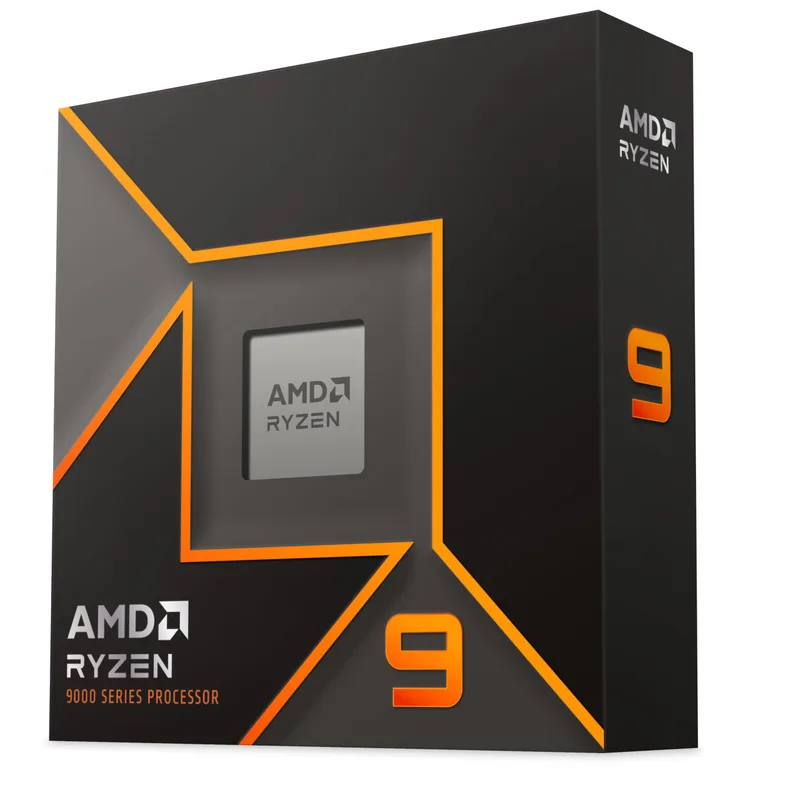
The 9950X at $499 is AMD’s top non-3D Zen 5 chip and the fastest standard CPU on AM5 for content creation. Its Cinebench 2024 multi-core of ~2,340 and ~8% Blender lead over the Core Ultra 9 285K make it the recommendation for professionals choosing between platforms for a rendering workstation. The $434 Prime Day ATL was exceptional; at $499 it’s still a fair price for 16 full-performance cores with Zen 5 IPC.
Step Down: The Ryzen 9 9900X
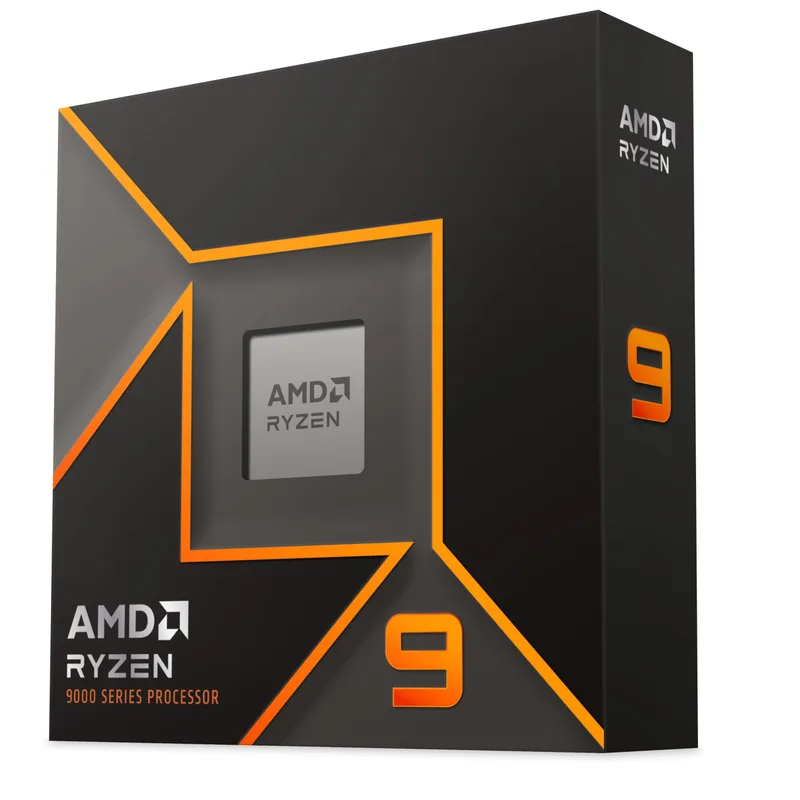
At $329, the Ryzen 9 9900X covers 80% of the 9950X’s multi-core capability for 34% less money. Its Cinebench 2024 multi score of ~1,768 and 120W TDP make it the practical choice for home studios and developers who need more than 8 cores but aren’t running professional rendering queues. The 9900X also cooler to run — 70°C under sustained all-core loads with a quality 240mm AIO versus the 9950X’s 89°C.
The 9900X makes sense if you’re building a workstation where rendering is a regular task but not the primary job. Video editors who cut 4K in DaVinci Resolve, developers compiling large codebases, and streamers running OBS alongside gaming all benefit from 12 Zen 5 cores without the 9950X’s cooling demands.
The Intel Alternative: Core Ultra 9 285K
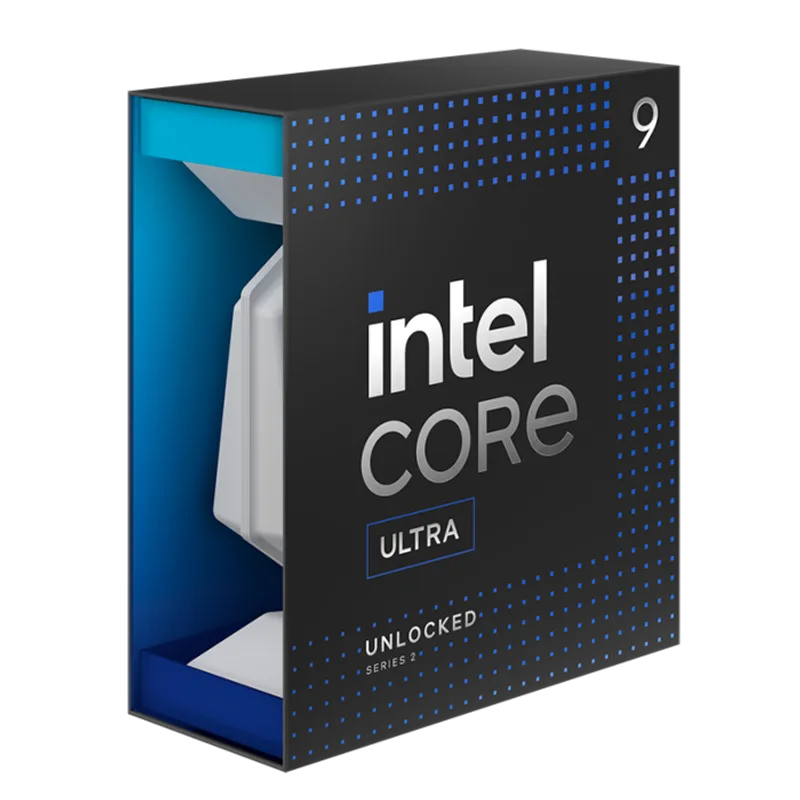
Intel’s Core Ultra 9 285K competes at the same ~$499 street price and represents a legitimate alternative for specific workflows. Its 24-core hybrid configuration (8 full P-cores + 16 E-cores) matches the 9950X in Cinebench 2024 multi-core within 3%, and the 285K’s 102 GB/s DDR5-6400 memory bandwidth outpaces the 9950X in applications that stress RAM throughput — large Photoshop documents, generative AI inference on CPU, and some video applications.
The 285K’s integrated Xe-LP graphics is a practical advantage: Quick Sync hardware encoding in DaVinci Resolve and Premiere Pro is faster than CPU-side encoding, and having a display output without a discrete GPU simplifies server or HTPC builds.
Where the 285K falls short against the 9950X: Blender. The 9950X’s 16 full-performance Zen 5 cores beat the 285K’s hybrid architecture by 6–10% in real-world rendering benchmarks. If Blender, Houdini, or Cinema 4D are central to your workflow, the 9950X is the correct pick.
Platform note: The 285K requires LGA1851 socket (Z890 or B860 board only — not backward compatible with Z790 or older Intel platforms). Budget $250–$400 for an LGA1851 board versus the broader AM5 ecosystem where budget B650 boards start at $130.
Cooler Compatibility
The 9950X’s 170W TDP is the highest standard TDP in the AM5 Zen 5 lineup (the 9950X3D shares it). Cooler selection matters more here than with the 9700X or 9900X.
Viable coolers for the 9950X:
- Minimum for all-core rendering: Corsair iCUE Link Titan 360 RX RGB ($190) or Thermalright Aqua Elite 360 V3 ($65) — both keep temps below 90°C under Cinebench sustained
- For maximum headroom: Noctua NH-D15 G2 ($180) — dual-tower air delivers comparable performance to a 360mm AIO at lower noise levels for all-core workloads
- Avoid: 240mm AIOs and single-tower air coolers under sustained all-core Blender or HandBrake jobs — they throttle the 9950X’s boost clocks and reduce multi-core output by 5–12%
A 280mm AIO is borderline — adequate for gaming and mixed workloads but may show thermal throttling on sustained Cinebench runs over 10+ minutes.
Frequently Asked Questions
Is the AMD Ryzen 9 9950X worth $499 in 2026? For content creators doing Blender rendering, video encoding, or simulation work: yes. The 16-core Zen 5 configuration is 25% faster than the 12-core 9900X in multi-threaded workloads at a $170 premium. For gamers, the answer is no — the $433 Ryzen 7 9800X3D beats it in every CPU-bound game by 15–25% at 1080p.
Does the Ryzen 9 9950X work with X670E motherboards? Yes. The 9950X uses AM5 socket and is backward compatible with all B650, X670, B650E, and X670E boards with a BIOS update. B850 and X870E boards released in 2025 also support it natively. AMD committed to AM5 socket longevity through 2027.
What RAM speed is optimal for the Ryzen 9 9950X? DDR5-6000 CL30 is the proven sweet spot for Zen 5. AMD’s EXPO profiles at 6000 MHz CL30 deliver the best bandwidth-to-latency ratio on AM5. DDR5-6400 CL32 shows ~2–3% gains in bandwidth-limited applications but at higher kit prices. Dual-rank kits at 6000 MHz CL30 (G.Skill Trident Z5 Neo RGB, Kingston FURY Beast) are the standard recommendation.
How does the 9950X compare to the 9950X3D? The 9950X3D adds 64 MB of 3D V-Cache (total 128 MB L3) for roughly $200–$250 more. The V-Cache dramatically improves gaming performance — the 9950X3D approaches 9800X3D gaming speeds. For pure rendering and productivity workloads, the 9950X3D provides zero benefit; Blender and Cinebench scores are essentially identical between the two variants. Buy the 9950X for rendering. Buy the 9950X3D if you need both top-tier gaming and professional rendering from one chip.
What PSU wattage does the Ryzen 9 9950X need? The 9950X itself consumes up to ~230W at its PPT ceiling. Pair with a minimum 850W PSU for a build with a mid-range GPU (RTX 5070, RX 9070 XT), or a 1000W unit with a high-end GPU like the RTX 5090 or RTX 5080. The CPU’s 170W TDP headroom matters less than the combined system load under simultaneous CPU+GPU stress.
The Bottom Line
The AMD Ryzen 9 9950X at $499 is the correct CPU for professional creative workflows on the AM5 platform in mid-2026. Its 16 Zen 5 cores deliver Cinebench 2024 multi-core of ~2,340, real-world Blender rendering 8% faster than the Core Ultra 9 285K, and 25% more multi-core throughput than the Ryzen 9 9900X ($329). The mandatory trade-off is a 170W TDP requiring a 360mm AIO or equivalent, and a $70 cooling overhead that narrows the price advantage over the 9900X in budget-constrained builds. If rendering or encoding time translates directly to productivity for your workflow, the 9950X earns its premium. If gaming dominates your use case, the Ryzen 7 9800X3D at $433 is the chip to buy instead.