The RTX 5090’s 575W TDP and the RX 9070 XT’s increasing mainstream adoption pushed 1000W PSUs from “overkill” to “recommended” for serious high-end builds in 2026. With ATX 3.1 now the baseline standard — delivering proper 200% transient load support for Ampere and beyond — the old 12VHPWR adapter era is behind us. These are the five 1000W power supplies worth buying right now, ranging from $134 for the compact MSI value pick to $239 for be quiet!‘s Titanium-certified flagship.
| Spec | MSI MAG A1000GL PCIE5 Unavailable 8.5/10 | Corsair RM1000e 2025 8.8/10 | Seasonic Focus GX-1000 ATX 3.1 9/10 | Corsair RM1000x 9.2/10 | be quiet! Dark Power 13 1000W 9.5/10 |
|---|---|---|---|---|---|
| wattage | 1000W | 1000W | 1000W | 1000W | 1000W |
| efficiency | 80+ Gold | 80+ Gold / Cybenetics Gold | 80+ Gold / Cybenetics Gold | 80+ Gold / Cybenetics Gold | 80+ Titanium (95.2% peak) |
| standard | ATX 3.1 / PCIe 5.1 | ATX 3.1 / PCIe 5.1 | ATX 3.1 / PCIe 5.1 | ATX 3.1 / PCIe 5.1 | ATX 3.1 / PCIe 5 |
| connector | Native 12V-2x6 | Native 12V-2x6 | Native 12V-2x6 | Native 12V-2x6 | Native 12V-2x6 |
| depth | 130mm | — | — | — | — |
| warranty | 10 years | 7 years | 10 years | 10 years | 10 years |
| Rating | 8.5/10 | 8.8/10 | 9/10 | 9.2/10 | 9.5/10 |
Prices change daily — tap Check Price for the current Amazon price.
Prices change daily — tap Check Price for the current Amazon price.
Quick Picks
- MSI MAG A1000GL PCIE5 — Best value at $134.99. ATX 3.1 Gold with a 130mm chassis that fits mid-tower cases where 140mm+ units won’t. Native 12V-2x6 cable included.
- Corsair RM1000x — Best overall. Rubycon caps, FDB zero-RPM fan, ±1% 12V regulation. The Gold-tier ceiling at $189.
- be quiet! Dark Power 13 1000W — Best silent operation. 80+ Titanium at 95.2% and Silent Wings fan below 20 dBA for acoustics-first builds.
Buying Guide: What to Look for in a 1000W PSU in 2026
Do You Actually Need 1000W?
For a system with an RTX 5090 (575W TDP) plus a Ryzen 9 9950X or Core Ultra 9 285K, total system draw peaks around 850–950W under sustained load. A 1000W unit puts you at 85–95% capacity — the efficiency sweet spot for most 80+ Gold PSUs. For a single-GPU build with an RTX 5070 Ti or RX 9070 XT, 850W is sufficient and 1000W is headroom for future upgrades. For dual-GPU workstation builds or systems with heavy PCIe expansion cards, 1000W is the floor.
ATX 3.1 vs ATX 3.0: What Actually Changed
ATX 3.1 tightens the excursion tolerance on the 12V rail to ±5% (vs ±7% on 3.0) and adds explicit support for GPUs drawing 200% of rated connector power in 100µs transients. In practice, this means the PSU won’t trip over-current protection during the spike loads that NVIDIA’s Founders Edition cards generate. All five picks here are ATX 3.1 native — avoid any 1000W PSU in 2026 that only carries ATX 3.0 or an adapter solution.
12V-2x6 vs 12VHPWR
The 12V-2x6 connector replaced the 12VHPWR design after several high-profile melting incidents on RTX 4090 adapter cables in 2023. It uses a mechanically keyed connector that cannot be partially inserted. Every PSU in this article ships with a native 12V-2x6 cable — no adapter required.
Gold vs Platinum vs Titanium Efficiency
| Rating | Efficiency at 50% load | 10-yr electricity cost vs Gold (24/7, $0.15/kWh) |
|---|---|---|
| 80+ Gold | ~90% | baseline |
| 80+ Platinum | ~92% | saves ~$100 |
| 80+ Titanium | ~94–95.2% | saves ~$180–$200 |
For a gaming PC running ~6 hours/day, the Platinum or Titanium premium is unlikely to pay back within 3–4 years at average US electricity rates. Buy Titanium for silence (the Dark Power 13’s fan barely spins at gaming loads), not purely for efficiency math.
Modular Cable Standards Are NOT Cross-Compatible
Corsair, Seasonic, and MSI all use different pinouts on their modular PSU connectors. A Seasonic cable will not work safely in a Corsair PSU and vice versa. If you’re upgrading from an older PSU and want to reuse cables, match brands. Otherwise, use the included cables.
Warranty Tiers
- 7-year: Corsair RM1000e 2025
- 10-year: MSI MAG A1000GL, Seasonic Focus GX-1000, Corsair RM1000x, be quiet! Dark Power 13
A 10-year warranty reflects the manufacturer’s confidence in component longevity. For a PSU in a high-end build, the longer warranty is worth prioritizing.
Detailed Reviews
1. MSI MAG A1000GL PCIE5 — Best Value
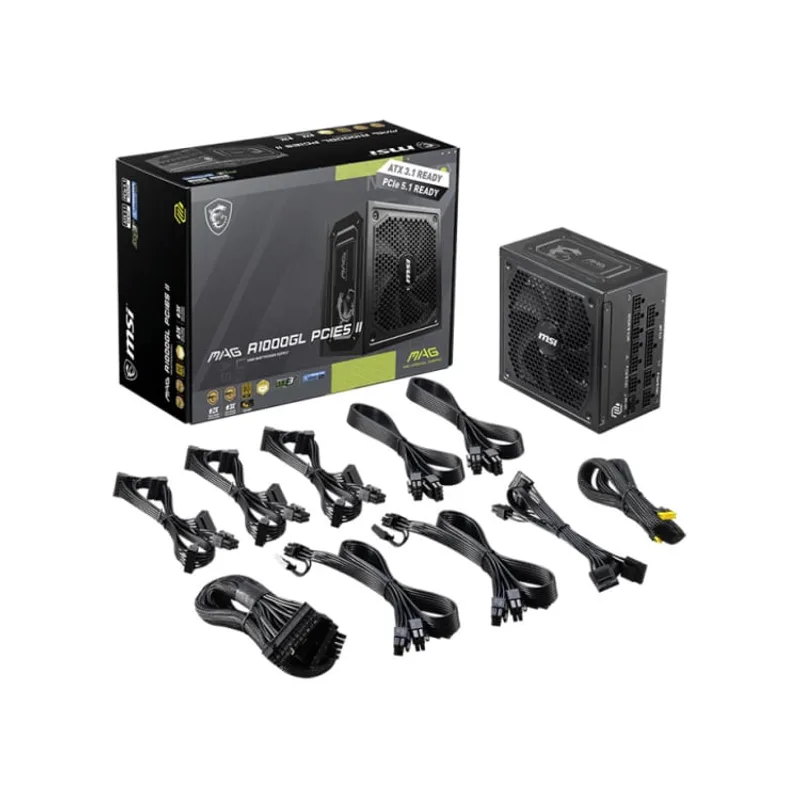
MSI MAG A1000GL PCIE5
At $134.99, the MSI MAG A1000GL is the most affordable ATX 3.1-native 1000W PSU from a major brand. The headline feature is its 130mm depth chassis — 10mm shorter than the typical 140mm ATX unit. That gap matters in cases like the Fractal Design Ridge or NZXT H5 Flow where the PSU bay clearance is tight.
The CWT (Channel Well Technology) platform inside the MAG A1000GL is the same platform used in several Corsair and EVGA budget units. At typical gaming loads (500–700W), 12V rail regulation stays within ±2% — perfectly acceptable. At full 1000W load, voltage drops slightly more than the Corsair RM1000x, which won’t affect any single-GPU gaming system.
The native dual-color 12V-2x6 cable is a nice visual touch that matches MSI’s GPU cable aesthetics. The fan runs at low RPM constantly (no zero-RPM mode), which may register as a faint hum in an otherwise quiet build. Acceptable for most, annoying in silent home theater PCs.
Who it’s for: Builder on a budget who needs ATX 3.1 for an RTX 5070/5070 Ti or RX 9070 XT build and doesn’t want to spend $50 more for features that won’t show up in gaming FPS.
2. Corsair RM1000e 2025 — Editor’s Pick
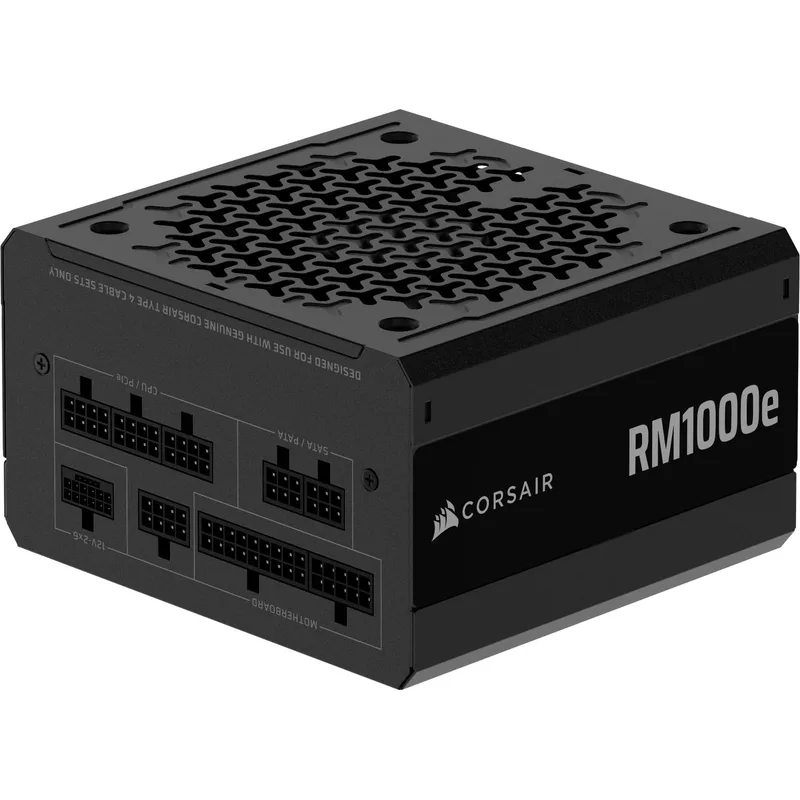
The Corsair RM1000e 2025 is the RM1000x’s value-oriented sibling — sharing the same ATX 3.1 platform and similar efficiency ratings, but cutting some component quality and warranty length to land at $149.99. It’s the right pick when you want Corsair’s build quality and cable management ecosystem without paying the full RM1000x price.
Cybenetics Gold certification means independent lab measurements confirm the efficiency claims, not just manufacturer self-reporting. Modern Standby Mode support is a niche but useful feature if you’re building a desktop that wakes from near-sleep states as fast as a phone — relevant for small-form-factor or living room builds.
The 105°C Japanese capacitors and 140mm FDB fan are solid for a unit in this price range. The seven-year warranty is the only meaningful step-down from the RM1000x. For a build you plan to keep three to five years, the RM1000e is excellent. For a build you’re investing in for a decade, spend the extra $40 for the RM1000x or Seasonic.
Who it’s for: Anyone building around an RTX 5080, RTX 5090, or multi-device setup who wants Corsair’s ecosystem (iCUE compatibility, sleeved cables, AIO integration) without the RM1000x premium.
3. Seasonic Focus GX-1000 ATX 3.1 — Best Reliability
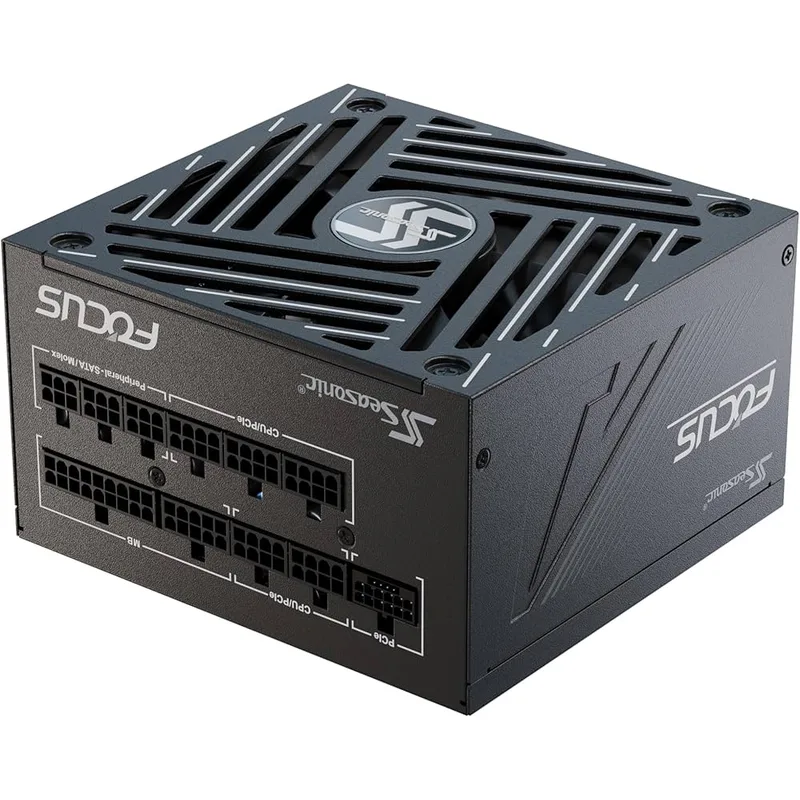
Seasonic has manufactured its own PSUs (rather than relying on third-party OEMs) for decades — the Focus GX-1000 ATX 3.1 is the latest revision of their flagship Gold platform. The fourth-generation OptiSink heatsink redesign, introduced in the ATX 3.1 version, reduces thermal resistance across the main heatsink — Seasonic reports 3–5°C lower operating temperatures versus the prior Focus GX V3 chassis.
Fan behavior is a strength: the 135mm fan enters a fully fanless mode below approximately 20% load and a semi-passive mode above that threshold until temperatures justify active cooling. In a typical gaming session at 600–700W, the fan spins slowly enough to be inaudible at normal desk distances.
The 10-year warranty from Seasonic is meaningful because Seasonic handles warranty claims directly — no third-party service center maze. At $175.99, this sits between the budget Corsair options and the premium RM1000x without sacrificing any functional feature that matters in daily use.
Who it’s for: Builders who prioritize long-term reliability over price, especially those who’ve had capacitor-failure PSU stories from budget units and want a manufacturer with a strong repair/replacement track record.
4. Corsair RM1000x — Best Overall
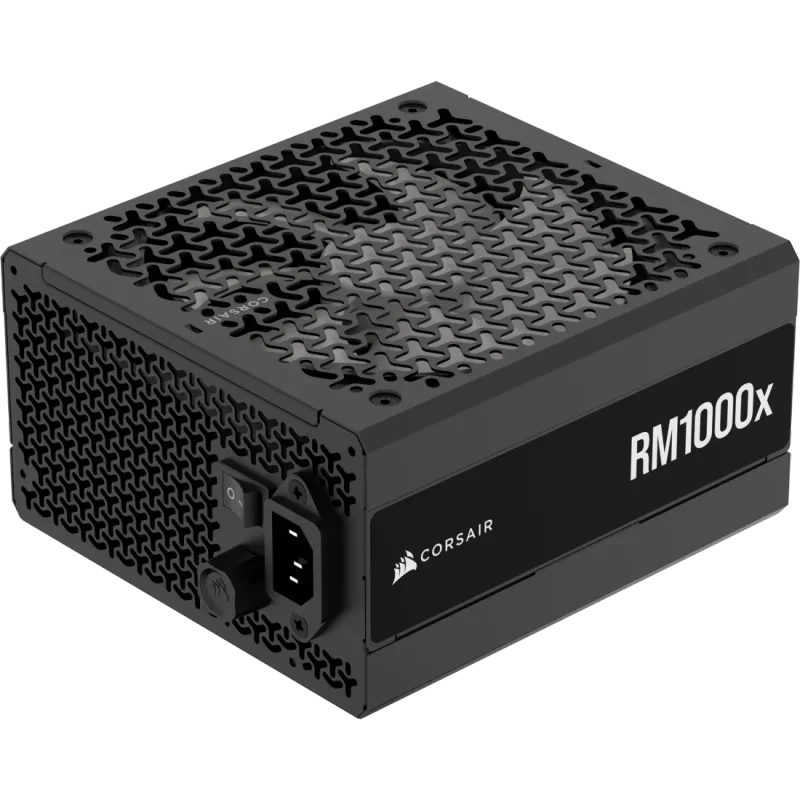
The Corsair RM1000x is the best Gold-rated 1000W PSU available in 2026 for most high-end PC builders. It uses Rubycon capacitors — a measurable step up from the generics found in budget-tier units — and an FDB (Fluid Dynamic Bearing) fan that Hardware Busters measured at ±1% 12V regulation under full load. Zero RPM mode kicks in below roughly 400W, covering light gaming and desktop workloads entirely without fan noise.
Independent reviews from OC3D, Hardware Busters, and Funky Kit in 2025–2026 all note that the RM1000x ATX 3.1 version (CP-9020271-NA) improved transient load handling over the prior ATX 3.0 model. The 12V-2x6 cable is pre-installed on the PSU side, not a loose adapter.
At $189.99, the RM1000x costs $40 more than the RM1000e and $55 more than the MSI MAG A1000GL. The gap in real-world performance between the RM1000x and RM1000e is detectable under instrumented test bench conditions but not in any gaming benchmark. You’re buying component longevity and peace of mind, not FPS. That’s a legitimate reason to spend the extra money.
Who it’s for: The default choice for anyone building a $1,500–$3,000 PC who wants a PSU that won’t be the thing they regret skimping on five years from now.
5. be quiet! Dark Power 13 1000W — Best Silent
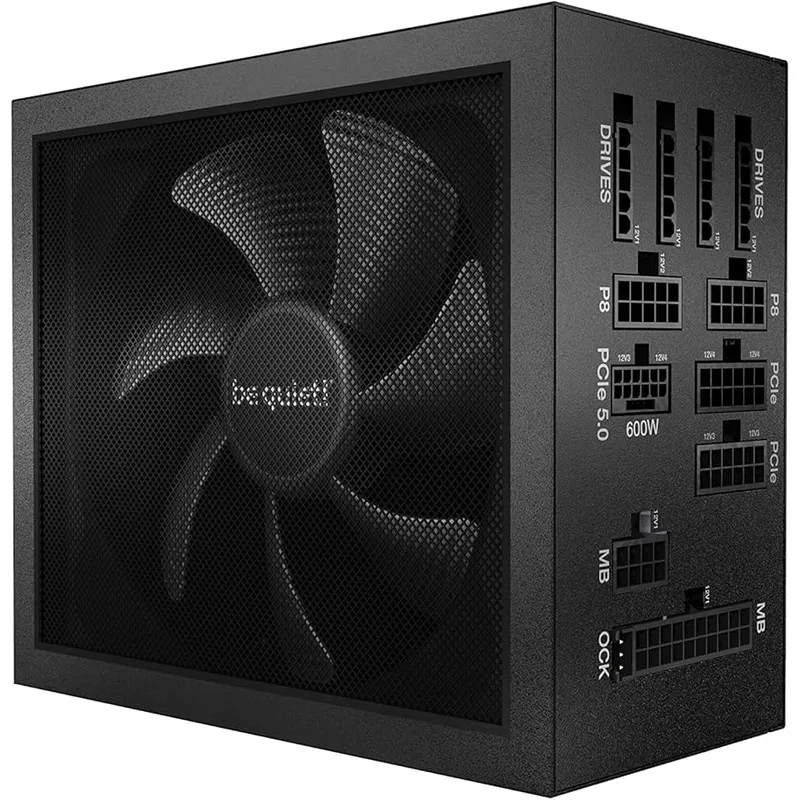
The be quiet! Dark Power 13 1000W is the only Titanium-certified option in this roundup and the quietest PSU you can buy at this wattage. The 135mm Silent Wings fan operates below 20 dBA at loads up to about 700W — essentially inaudible in a closed case next to a GPU blower. At full 1000W load, the fan audibly increases RPM, but that load point only occurs under sustained synthetic stress tests, not gaming.
The four independent 12V rails and hardware overclocking key are inherited from the Dark Power line’s workstation roots. Selecting single-rail mode combines all four 12V outputs for maximum current delivery to a single GPU — useful for stable RTX 5090 overclocking. Multi-rail mode distributes current for setups where short-circuit protection per device matters.
The 80+ Titanium 95.2% peak efficiency is real, but the payback math is unfavorable for a gaming PC at typical US electricity rates. The actual reason to pay $239 for this PSU is acoustics and be quiet!‘s Silent Wings fan engineering — not the efficiency numbers on the spec sheet.
The 165mm chassis depth is the one critical constraint. Measure the PSU bay clearance in your case before ordering — standard ATX cases accommodate 160–180mm, but smaller form factors may not.
Who it’s for: Home theater PC builders, content creators working in open rooms with no ambient noise, and anyone who has already spent $400+ on noise-dampening foam and case lining.
FAQ
Is 1000W enough for an RTX 5090 build? For a single-CPU system with an RTX 5090 and a current-gen CPU (Ryzen 9 9950X or Core Ultra 9 285K), total system power under gaming load peaks around 850–950W. A 1000W PSU sits at 85–95% capacity, which is within the efficiency curve but leaves minimal headroom. If you’re overclocking both CPU and GPU simultaneously, consider a 1200W unit. For stock-clocked systems, 1000W is the correct rating.
Can I use a 1000W PSU for a mid-range build with an RTX 5070? Yes, and it’s common. An RTX 5070 + Ryzen 7 9800X3D system draws around 450–550W under gaming load. A 1000W PSU runs at 45–55% load — right in the efficiency sweet spot for Gold-rated units. You’re not wasting power or money by oversizing; the PSU simply runs cooler and quieter at lower load percentages.
What does ATX 3.1 actually improve over ATX 3.0? ATX 3.1 tightens 12V rail excursion tolerance from ±7% to ±5%, adds explicit transient load response requirements for 200% peak current in 100 microsecond windows, and defines the 12V-2x6 connector as the standard GPU power interface. In practice, it means better protection against the kind of transient spikes that NVIDIA’s high-TDP cards generate during shader compilation and game loading.
Are modular PSU cables cross-compatible between brands? No. Corsair, Seasonic, MSI, and other manufacturers use different pinouts on their modular connectors. Using a Seasonic cable in a Corsair PSU (or vice versa) can cause incorrect voltages on the wrong pins, potentially damaging components. Always use the cables that came with your PSU, or purchase brand-specific replacement cables from the manufacturer.
Is the be quiet! Dark Power 13’s Titanium efficiency worth the premium? For electricity savings alone: no, for most users. At $0.15/kWh running 6 hours/day, the ~5% efficiency gain over Gold saves roughly $15–$20/year. The $100+ premium over the MSI MAG A1000GL takes 5–7 years to break even purely on energy costs. The real reasons to buy the Dark Power 13 are its Silent Wings fan acoustics and the multi-rail overclocking key — not electricity math.
The Bottom Line
For most high-end builds in 2026, the Corsair RM1000x at $189.99 is the right answer — Rubycon caps, FDB zero-RPM fan, ±1% 12V regulation, 10-year warranty, and ATX 3.1 native. Budget-focused builds should look at the MSI MAG A1000GL PCIE5 at $134.99 — it’s the most affordable ATX 3.1-compliant 1000W PSU from a major brand and the compact 130mm chassis is a genuine differentiator in tighter cases. Acoustics-first builds that justify the cost should choose the be quiet! Dark Power 13 1000W — nothing at this wattage is quieter.