The AMD Ryzen 9000 lineup is the strongest set of AM5 processors AMD has released to date. With the January 2026 arrival of the Ryzen 7 9850X3D and the earlier launch of the Ryzen 9 9950X3D, AMD now holds the top gaming and top productivity slots simultaneously. For builders targeting AM5 from budget to flagship, here is where each chip fits in June 2026.
| Spec | AMD Ryzen 7 9850X3D 9.6/10 | AMD Ryzen 7 9800X3D 9.3/10 | AMD Ryzen 9 9950X3D 9.1/10 | AMD Ryzen 7 9700X 8.5/10 | AMD Ryzen 5 9600X 8.2/10 |
|---|---|---|---|---|---|
| Cores/Threads | 8C / 16T | 8C / 16T | 16C / 32T | 8C / 16T | 6C / 12T |
| Base / Boost | 4.7 GHz / 5.6 GHz | 4.7 GHz / 5.2 GHz | 4.3 GHz / 5.7 GHz | 3.8 GHz / 5.5 GHz | 3.9 GHz / 5.4 GHz |
| L3 Cache | 104 MB (3D V-Cache) | 104 MB (3D V-Cache) | 144 MB (3D V-Cache) | 32 MB | 32 MB |
| TDP | 120W | 120W | 170W | 65W | 65W |
| Socket | AM5 | AM5 | AM5 | AM5 | AM5 |
| Architecture | Zen 5 | Zen 5 | Zen 5 | Zen 5 | Zen 5 |
| Rating | 9.6/10 | 9.3/10 | 9.1/10 | 8.5/10 | 8.2/10 |
Prices change daily — tap Check Price for the current Amazon price.
Prices change daily — tap Check Price for the current Amazon price.
Quick Picks
- Best gaming CPU overall: AMD Ryzen 7 9850X3D — 5.6 GHz boost and 104 MB V-Cache deliver the highest per-frame throughput of any consumer AM5 chip
- Best value gaming: AMD Ryzen 7 9800X3D — only 3–5% slower than the 9850X3D for $50 less, with identical thermal and power behavior
- Best budget AMD: AMD Ryzen 5 9600X — Zen 5 IPC at $179 brings 1440p performance within 6% of chips costing 50% more
Buying Guide: AM5 and Ryzen 9000 in 2026
Platform Compatibility
All Ryzen 9000 series processors use the AM5 socket (LGA1718). They are compatible with X670E, X670, B650E, B650, X870E, X870, and B850 chipset motherboards. AM4 motherboards are not compatible — AM5 is DDR5-only.
If you already own an AM4 board, none of these chips will drop in. The upgrade requires a new motherboard and DDR5 RAM. Factor that into total build cost before comparing to last-gen pricing.
3D V-Cache: What It Actually Does
AMD’s 3D V-Cache stacks additional L3 cache vertically on top of the CPU die using wafer-to-wafer bonding. The result is massively reduced cache miss rates in game engines. The Ryzen 7 9800X3D carries 96 MB of stacked cache on top of its 8 MB native L3 — totaling 104 MB. The Ryzen 9 9950X3D uses a second-gen dual-die design that hits 144 MB total.
In practice, this translates to 20–40% higher average FPS in CPU-limited gaming scenarios at 1080p and 1440p compared to non-V-Cache chips at the same clock speed. The gains are real and consistent across open-world titles, strategy games, and competitive shooters.
V-Cache chips do run hotter at the cache layer during sustained loads, which is why AMD maintains moderate 120–170W TDP ratings rather than aggressive boost behavior.
Which Chip for Which Use Case
| Use Case | Recommended Chip | Why |
|---|---|---|
| Pure gaming / 1080p esports | Ryzen 7 9850X3D | Highest FPS ceiling on AM5 |
| Gaming + streaming / content creation | Ryzen 9 9950X3D | V-Cache gaming + 16 cores for encoding |
| Mid-range gaming build | Ryzen 7 9800X3D | 97% of 9850X3D performance, $50 cheaper |
| Balanced productivity + occasional gaming | Ryzen 7 9700X | 65W, 8 cores, strong single-thread |
| Budget 1440p gaming or first AM5 build | Ryzen 5 9600X | Best $/frame in the sub-$200 tier |
DDR5 Requirements
All AM5 chips run DDR5. The sweet spot for Ryzen 9000 is DDR5-6000 CL30 — this matches the Infinity Fabric clock and delivers peak gaming throughput without requiring expensive DDR5-6400+ kits. Budget 32 GB for any serious gaming or workstation build; 16 GB begins to show constraints in modern titles.
Note that DDR5 prices remain elevated in June 2026 due to AI-driven DRAM demand. A 32 GB DDR5-6000 kit currently runs $250–$500 depending on brand and timing.
Detailed Reviews
1. AMD Ryzen 7 9850X3D — Best Gaming CPU 2026
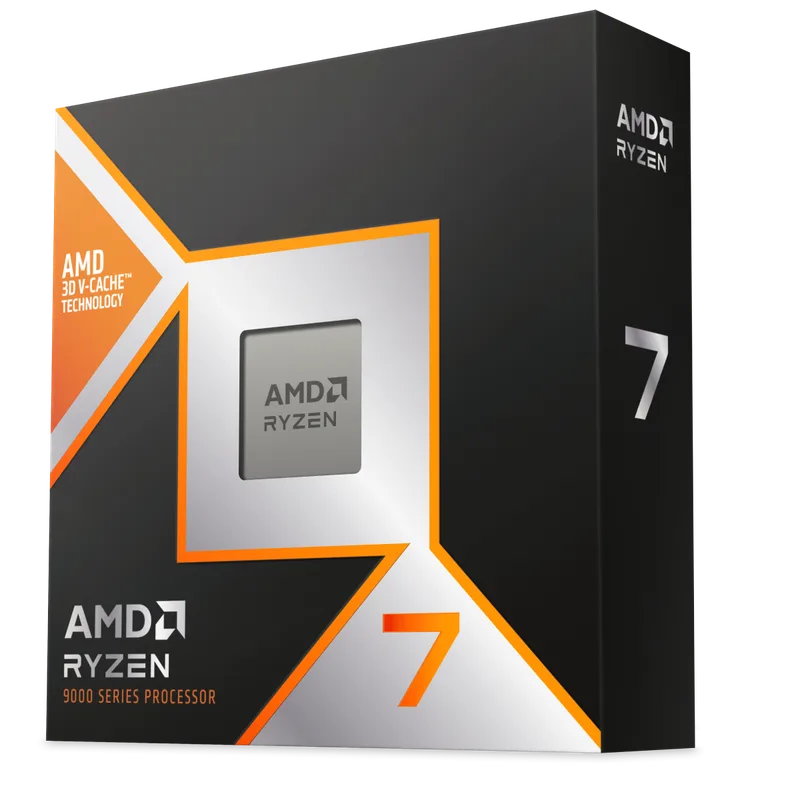
The AMD Ryzen 7 9850X3D launched January 29, 2026 as the immediate successor to the 9800X3D. The core specs are nearly identical — same 8 Zen 5 cores, same 104 MB V-Cache, same AM5 socket — but the boost clock rises from 5.2 GHz to 5.6 GHz. That 400 MHz increase translates to 3–5% higher average frame rates in CPU-sensitive titles, which is enough to reclaim the gaming performance crown from the 9800X3D.
According to independent benchmark data published at launch, the 9850X3D delivers 27% higher average FPS than the Intel Core i9-14900K and 31% higher than the Ryzen 9 9950X (non-3D) in a representative 8-game suite at 1080p. Against the Intel Core Ultra 9 285K, the gap widens to 38%.
The 120W TDP is reasonable for an 8-core gaming chip. A 240mm AIO or a high-quality dual-tower air cooler (NH-D15 G2, DeepCool AK620) handles it without thermal throttling. Compact ITX builds are also viable — this is not a 170W power hog.
At $499 street price, it sits $50 above the 9800X3D and $141 below the 9950X3D. For gamers who want the best without paying for 16-core productivity overhead, this is the logical endpoint.
Who should buy it: Dedicated gamers who want the highest frame rate AM5 can provide and aren’t doing heavy video encoding or 3D rendering.
2. AMD Ryzen 7 9800X3D — Best Value Gaming
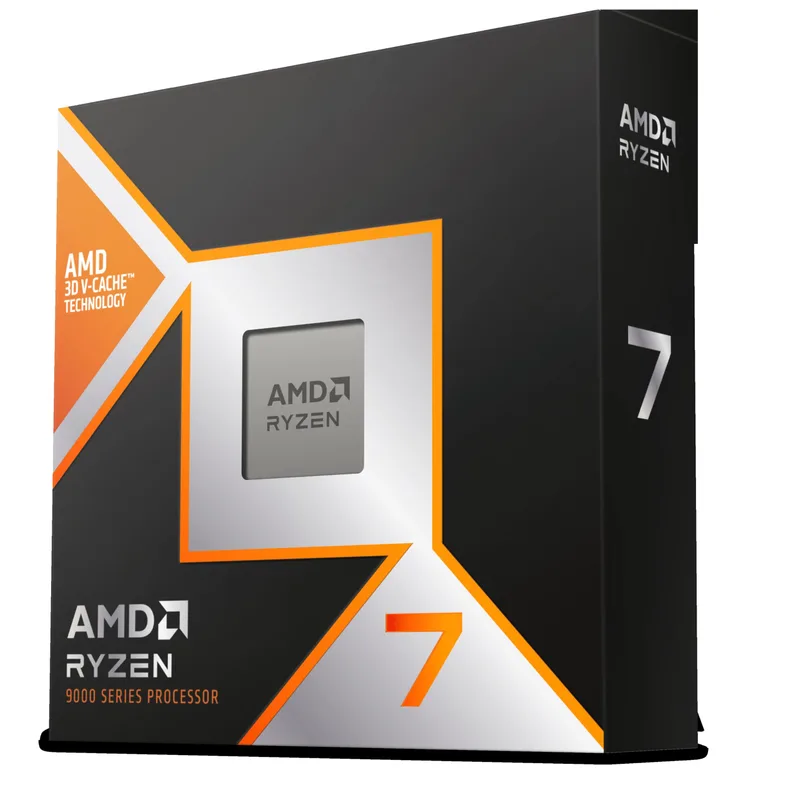
The AMD Ryzen 7 9800X3D shipped in November 2024 and remained the top gaming CPU through 2025 and into early 2026. With the 9850X3D’s arrival, it dropped $50 to its current ~$439–$449 street price. That makes the gap between the two chips surprisingly small in dollar terms but meaningful for price-conscious builders.
Per extensive owner feedback and independent analysis, the 9800X3D averages within 3–5% of the 9850X3D in gaming across a broad game set. In titles that aren’t heavily V-Cache dependent, the difference disappears entirely. Against non-3D competition, the 9800X3D is still decisively faster — the Core Ultra 9 285K costs $535 and trails by 38% in gaming.
Thermally, it is identical to the 9850X3D: 120W TDP, same cooler compatibility, same AM5 socket requirements. There is no practical reason to choose different cooling between the two.
Who should buy it: Gamers who want top-tier 3D V-Cache performance and can pocket $50 — or builders who find it on sale, which happens regularly.
3. AMD Ryzen 9 9950X3D — Best High-End AMD
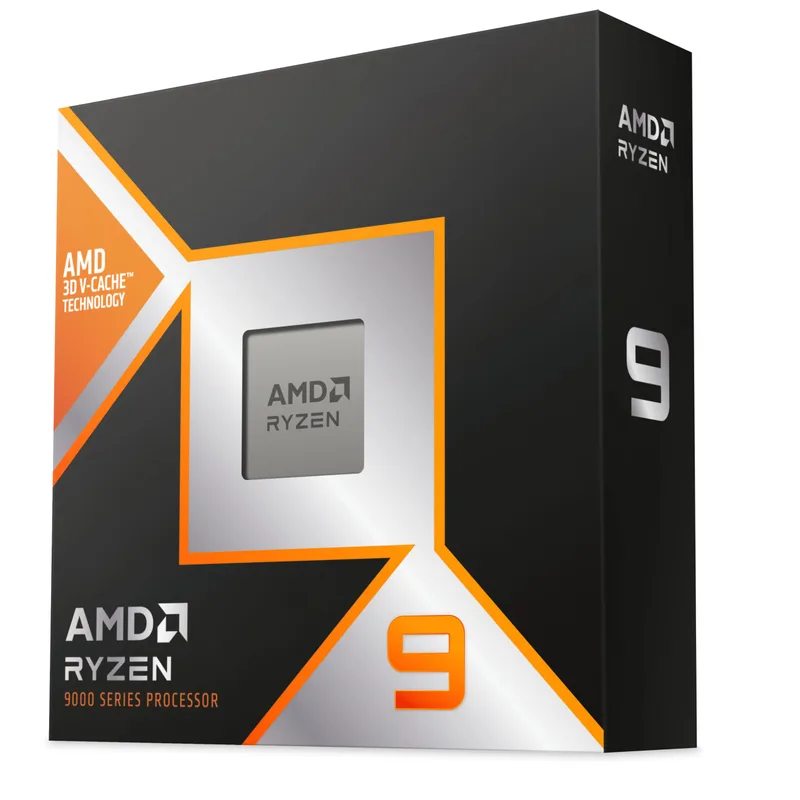
The AMD Ryzen 9 9950X3D is a different product class entirely. It pairs AMD’s 3D V-Cache technology with a 16-core, 32-thread die using a dual-CCD second-generation V-Cache design. The V-Cache CCD handles gaming workloads with 5.7 GHz boost. The second CCD operates without V-Cache at high frequencies for lightly-threaded productivity tasks.
In gaming, the 9950X3D reaches parity with the 9800X3D and 9850X3D — the per-thread performance of the V-Cache CCD is similar, so gaming frame rates are nearly identical. The difference emerges in workloads that utilize all cores simultaneously: Blender GPU-CPU hybrid renders, HandBrake 4K transcoding, and software compilation. Here the 9950X3D pulls 30–35% ahead of the 8-core chips.
The 170W TDP is the meaningful trade-off. A 360mm AIO is strongly recommended. Compact ITX cases with limited airflow should be avoided. Also worth noting: the 9950X3D2, a dual-CCD variant with V-Cache on both CCDs, launched in April 2026 at ~$899, positioned above this chip.
Who should buy it: Creators, streamers, and engineers who need simultaneous top gaming and production throughput in a single chip. Not the right tool if gaming is the only workload.
4. AMD Ryzen 7 9700X — Best Mainstream Pick
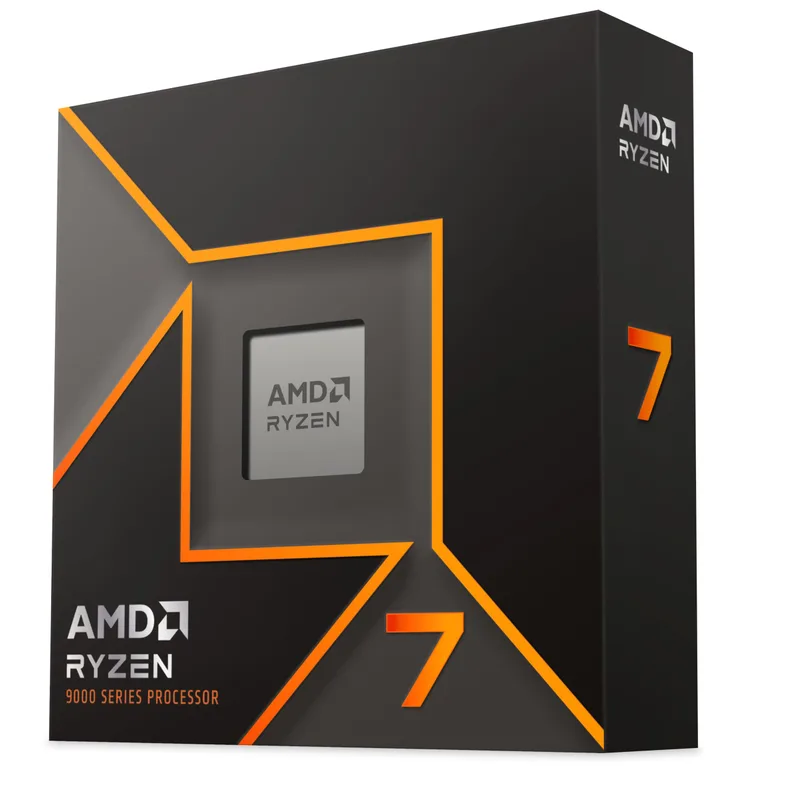
The AMD Ryzen 7 9700X is the non-X3D Zen 5 mainstream choice. Eight cores, 16 threads, 65W TDP, and a 5.5 GHz boost clock make it AMD’s most power-efficient higher-end desktop chip. It runs significantly cooler than X3D variants, and Zen 5’s IPC gains (estimated 10–16% per clock versus Zen 4) push single-thread performance past Intel’s comparable Core i5-14600K.
At ~$265 in June 2026, the 9700X sits in an awkward position. The 9800X3D has dropped to $449, making the V-Cache chip look attractive for the extra $184. However, the 9700X serves builders running a range of workloads who don’t need peak gaming — content creators encoding at moderate throughput, developers running multiple VMs, or home office users who also game at 1440p.
The 65W TDP means any standard 120mm tower cooler can handle it in winter and most 65W-rated coolers manage it year-round. It draws less power than a desktop i5, making it a natural fit for energy-conscious small-form-factor builds.
Who should buy it: Builders prioritizing thermal headroom and power efficiency over peak gaming throughput — or AM5 buyers who cannot stretch to X3D pricing.
5. AMD Ryzen 5 9600X — Best Budget AMD
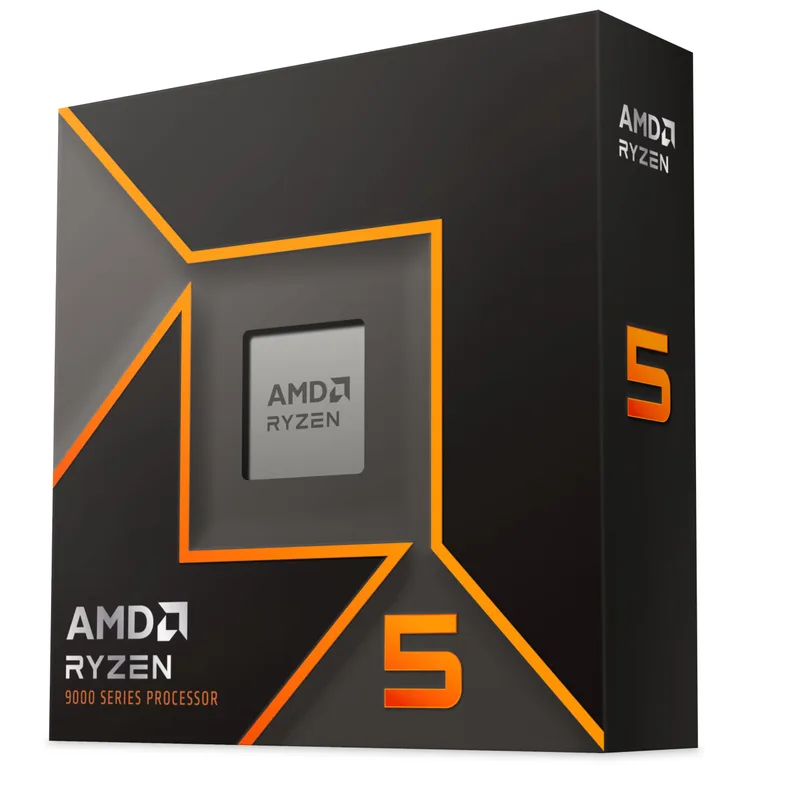
The AMD Ryzen 5 9600X dropped to ~$179 in June 2026, down from its $279 launch price. At this price point, it offers a compelling Zen 5 entry into AM5. Six cores and 12 threads with a 5.4 GHz boost handle everything from competitive shooters at 1080p to light content creation without complaint.
Compared to the Ryzen 7 9700X, the 9600X is about 6% slower in 1440p gaming and 35% slower in multithreaded workloads. The gaming gap is small enough that most players running at 1440p with mid-range GPUs (RTX 5070, RX 9070) won’t notice the difference in frame rate — the GPU becomes the bottleneck first. The productivity gap matters only for video encoding, 3D rendering, or multi-application workloads.
The 65W TDP and compact heat spreader work well in sub-$100 air coolers. Owners report stable manual overclocking to 5.5 GHz all-core, which partially recovers the performance gap versus the 9700X while staying within the thermal budget.
For a first AM5 build or a budget gaming rig targeting sub-$1,000 total cost, the 9600X delivers Zen 5 IPC without forcing a compromise elsewhere in the component list.
Who should buy it: Budget builders entering AM5 for the first time, or existing AM4 users doing a full platform upgrade on a tight budget.
Ryzen 9000 vs AM4: Is the Upgrade Worth It?
For AM4 users on Ryzen 5000 series, the upgrade decision depends on use case. Ryzen 5 5600X owners moving to a 9600X will see roughly 25% more IPC and 15% better gaming frame rates — meaningful but not system-defining if a GPU upgrade is also on the table.
For Ryzen 7 5800X3D owners, upgrading to the 9800X3D or 9850X3D delivers around 30–40% more average FPS in CPU-bound titles, primarily from the second-generation V-Cache implementation and Zen 5 IPC improvements. It requires a new AM5 motherboard ($180–$350) and DDR5 RAM ($250–$500 for 32 GB). Total platform cost to move from AM4 to AM5 is $430–$850 depending on board tier.
For pure gaming upgrades, the math works if your current CPU is a bottleneck (Ryzen 5 3600, Core i5-10600K era chips). If your CPU is already a 5800X3D or 7800X3D and you’re GPU-limited at 1440p or 4K, a GPU upgrade delivers more per dollar than a CPU platform change.
FAQ
Q: Do Ryzen 9000 chips work in AM4 motherboards? No. Ryzen 9000 is AM5 only (LGA1718). AM4 uses a different socket and DDR4 memory. The two platforms are not cross-compatible in any form.
Q: What’s the difference between Ryzen 9850X3D and 9800X3D? The 9850X3D runs a 5.6 GHz boost versus 5.2 GHz on the 9800X3D. Both chips use identical 8 Zen 5 cores with 104 MB of 3D V-Cache and the same 120W TDP. In gaming, the 9850X3D averages 3–5% faster. The 9800X3D costs about $50 less.
Q: Is 3D V-Cache worth it for productivity workloads? For pure productivity — video encoding, Blender rendering, compilation — non-V-Cache chips like the Ryzen 9 9950X or Ryzen 7 9700X outperform their X3D equivalents clock-for-clock because the cache stacking limits maximum boost frequency. The exception is the 9950X3D, which uses two CCDs and maintains a high-frequency non-V-Cache CCD for productivity.
Q: What cooler do I need for the Ryzen 7 9800X3D or 9850X3D? A 240mm AIO or dual-tower air cooler handles 120W comfortably. Noctua NH-D15 G2, DeepCool AK620, and Thermalright Peerless Assassin 120 SE V2 are all proven options. Low-profile coolers rated under 65W are not suitable.
Q: Does the Ryzen 5 9600X support overclocking? Yes. The X suffix on Ryzen processors indicates an unlocked multiplier. Owners have reported stable 5.4–5.5 GHz all-core overclocks with mid-range air coolers using Ryzen’s Precision Boost Overdrive (PBO) auto-tuning in BIOS.
The Bottom Line
The AMD Ryzen 7 9850X3D is the best gaming CPU AMD makes in June 2026 — period. At $499, it delivers the highest gaming frame rates on AM5 with a manageable 120W thermal footprint. If $50 matters, the Ryzen 7 9800X3D at ~$449 gives up less than 5% of that performance.
For builders needing gaming and creation power simultaneously, the Ryzen 9 9950X3D justifies its $640 price with 16 cores and 3D V-Cache gaming capability under one chip. Budget builders should go straight to the Ryzen 5 9600X — at $179, it brings Zen 5 IPC to AM5 without forcing sacrifices elsewhere.