Intel’s Arrow Lake Refresh Core Ultra 200S chips have started shipping with native support for DDR5-7200 CUDIMM — a 12.5% jump over the DDR5-6400 ceiling on the original Arrow Lake launch chips — and JEDEC’s incoming CQDIMM standard is already lined up as the next step for LGA1851 memory. CUDIMM kits from Kingston, G.Skill, and Corsair are real and shipping, but as of this roundup nearly every Amazon listing for them is either out of stock or priced several times above their normal street cost, which makes them a poor recommendation right now no matter how good the spec sheet looks. The five kits below are standard Intel XMP 3.0 UDIMM kits confirmed in stock at sane prices, chosen specifically for Arrow Lake’s DDR5-6400 native ceiling and its XMP 3.0 profile support — not the AMD EXPO-first kits that dominate most DDR5 roundups built around AM5.
| Spec | Kingston FURY Renegade RGB DDR5-7200 32GB CL38 9/10 | Patriot Viper Xtreme 5 DDR5-6400 32GB CL32 8.8/10 | ADATA XPG Lancer RGB DDR5-6400 32GB CL32 8.6/10 | G.Skill Ripjaws S5 DDR5-6000 32GB CL36 8.5/10 | Silicon Power Zenith DDR5-6000 32GB CL30 8.3/10 |
|---|---|---|---|---|---|
| Speed | DDR5-7200 MT/s | DDR5-6400 MT/s | DDR5-6400 MT/s | DDR5-6000 MT/s | DDR5-6000 MT/s |
| Timings | CL38-44-44 | CL32-40-40-84 | CL32 | CL36-36-36-96 | CL30 |
| Voltage | 1.45V (XMP) | 1.40V | 1.35V | 1.35V | 1.35V |
| Capacity | 32GB (2×16GB) | 32GB (2×16GB) | 32GB (2×16GB) | 32GB (2×16GB) | 32GB (2×16GB) |
| Profile | Intel XMP 3.0 | Intel XMP 3.0 | Intel XMP 3.0 | Intel XMP 3.0 + AMD EXPO | Intel XMP 3.0 |
| Sync | Infrared Sync Technology (RGB) | — | — | — | — |
| Rating | 9/10 | 8.8/10 | 8.6/10 | 8.5/10 | 8.3/10 |
Prices change daily — tap Check Price for the current Amazon price.
Prices change daily — tap Check Price for the current Amazon price.
Quick Picks
- Best overall: Kingston FURY Renegade RGB DDR5-7200 CL38 — matches the speed ceiling Intel’s own Arrow Lake Refresh chips now support natively
- Best value: Patriot Viper Xtreme 5 DDR5-6400 CL32 — hits Arrow Lake’s native 6400 MT/s ceiling at tight CL32 timings
- Best dual-platform pick: G.Skill Ripjaws S5 DDR5-6000 CL36 — the only kit here with both Intel XMP 3.0 and AMD EXPO profiles
Buying Guide: What Arrow Lake Actually Needs From RAM
Intel XMP 3.0, not AMD EXPO, is the profile that matters
Arrow Lake’s Core Ultra 200S memory controller reads Intel XMP 3.0 profiles. Plenty of DDR5 kits on Amazon — including several in the site’s own AM5-focused roundups — ship with AMD EXPO as the primary or only profile, which won’t auto-apply on a Z890 board. Four of the five kits here carry a dedicated XMP 3.0 profile; only the G.Skill Ripjaws S5 carries both, which matters if you think this RAM might migrate to an AMD build later.
6400 MT/s is the native ceiling on 1DPC — CUDIMM changes that, eventually
Original Arrow Lake desktop chips run DDR5-6400 as their native 1-DIMM-per-channel ceiling; anything faster is technically an XMP overclock the memory controller has to support, which is why board and BIOS compatibility varies more at 7200+ than it does at 6400. Arrow Lake Refresh chips push that native ceiling to 7200 MT/s using CUDIMM modules with an onboard clock driver, but CUDIMM retail stock on Amazon is thin and, at the time of this roundup, priced far above where it should sit even accounting for the ongoing DRAM shortage. Until that stock and pricing normalizes, a standard XMP 3.0 UDIMM kit at 6400 MT/s — like the Patriot Viper Xtreme 5 or ADATA XPG Lancer here — is the more practical buy.
Timings matter more than the headline MT/s number
The Silicon Power Zenith runs at a lower 6000 MT/s than most other kits here but at CL30, while the G.Skill Ripjaws S5 runs 6000 MT/s at a looser CL36. Real memory latency is roughly timings ÷ frequency, so the tighter CL30 kit actually edges out looser CL32-36 kits at the same or even higher MT/s rating. Don’t rank kits by MT/s alone — check the full timing string.
Voltage affects how much headroom your board’s memory VRM needs
Kits in this roundup range from 1.35V (Silicon Power, ADATA, G.Skill) up to 1.45V (Kingston’s DDR5-7200 kit). Higher voltage at higher frequency draws more current through the motherboard’s memory VRM section, which matters more on budget Z890/B860 boards with minimal memory VRM cooling than on flagship boards built for extreme XMP tuning.
Since you’re already picking RAM for a new Arrow Lake build, it’s worth pairing a quality CPU air cooler sized for LGA1851’s mounting spec — a handful of budget coolers still ship with LGA1700-only brackets that need a separate LGA1851 adapter.
Detailed Reviews
1. Kingston FURY Renegade RGB DDR5-7200 32GB CL38 — Best Overall
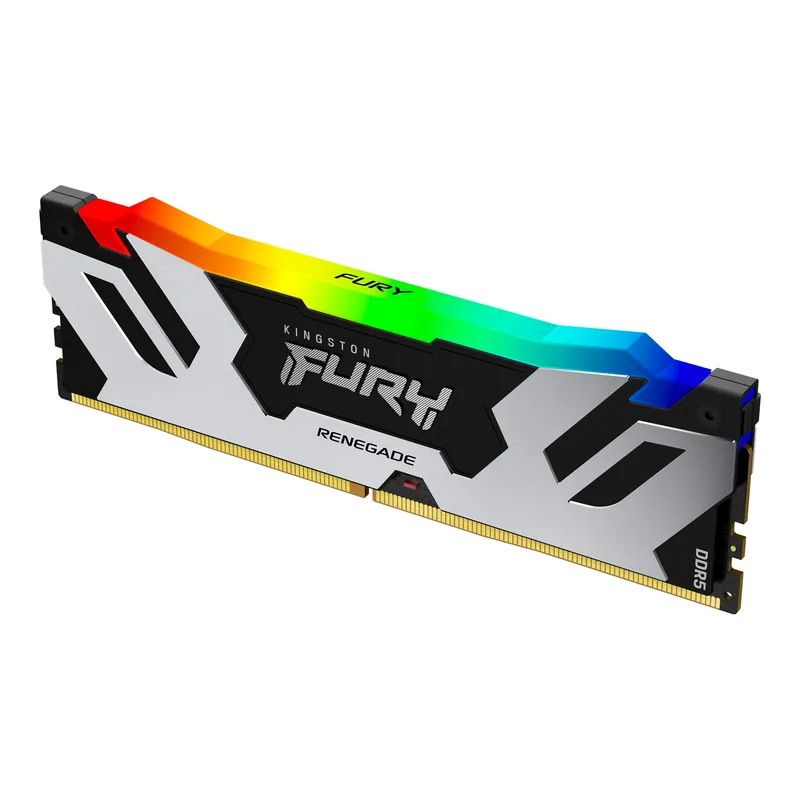
Kingston’s Renegade RGB kit runs DDR5-7200 at CL38-44-44 on a documented Intel XMP 3.0 profile — the same speed ceiling Intel’s Arrow Lake Refresh chips now support natively, and a real step past the original Arrow Lake launch chips’ 6400 MT/s ceiling. The infrared RGB sync keeps both modules’ lighting locked without a physical sync cable, which is a small but genuine convenience next to kits that need one module manually set as the master.
The tradeoff is voltage and board compatibility. At 1.45V, this kit runs warmer than every other kit in this roundup, so it’s worth checking your specific Z890 board’s memory VRM cooling before committing to a 7200 MT/s kit over a 6400 MT/s one. Boot stability at 7200 MT/s 1DPC also varies more by board and DIMM slot than it does at Arrow Lake’s native 6400 MT/s — check your motherboard’s QVL (qualified vendor list) if the board maker publishes one for this kit.
2. Patriot Viper Xtreme 5 DDR5-6400 32GB CL32 — Best Value
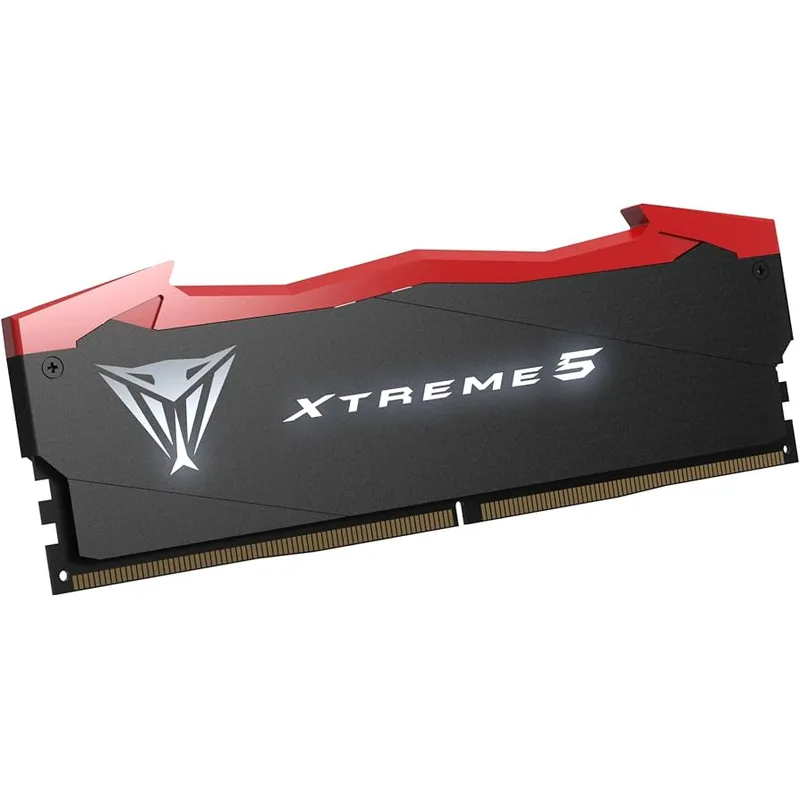
The Viper Xtreme 5 hits Arrow Lake’s native DDR5-6400 1DPC ceiling at CL32-40-40-84 and 1.40V — a tight timing set at exactly the frequency the memory controller is built to run without pushing past its own spec. That combination works out to roughly 10ns of real latency, competitive with kits that need a lower frequency to hit CL30. The aluminum Viper-head heat spreader skips RGB entirely, which keeps the module height low enough to clear tower coolers that crowd the DIMM slots on compact Z890 boards.
The catch is platform flexibility: this specific SKU carries Intel XMP 3.0 only, with no AMD EXPO profile, so it’s a one-way purchase for an Intel-only build. There’s also no RGB option if you want the modules to match a synced lighting theme elsewhere in the case.
3. ADATA XPG Lancer RGB DDR5-6400 32GB CL32 — Best RGB
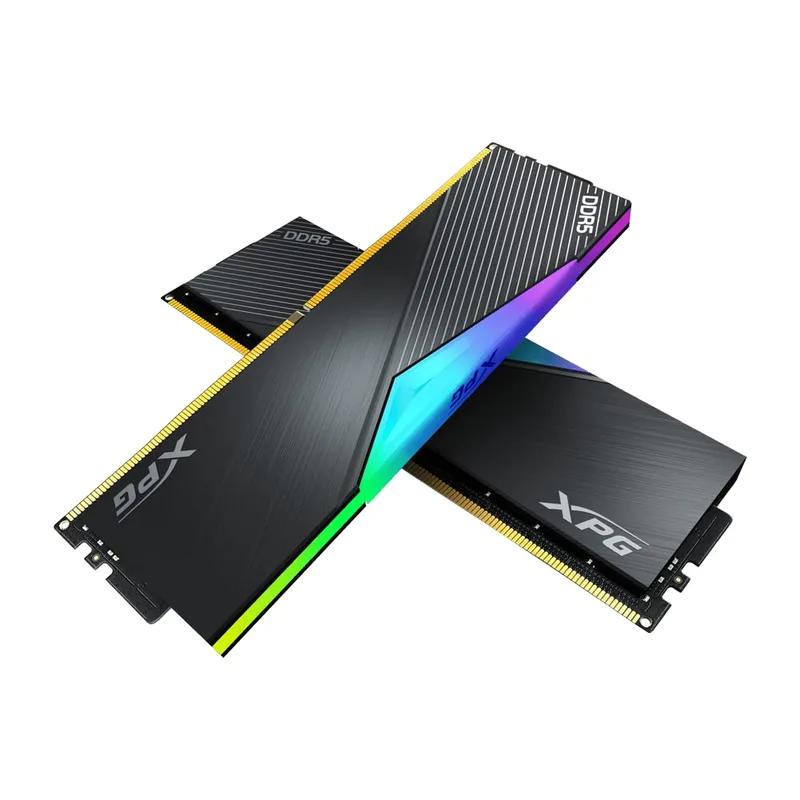
The XPG Lancer RGB matches the Patriot kit’s DDR5-6400 CL32 native Arrow Lake speed but does it at a lower 1.35V, which is the lowest voltage of any DDR5-6400 kit in this list. That’s a genuine plus for boards without dedicated memory VRM heatsinks. The RGB diffuser syncs with Asus Aura, Gigabyte Fusion, and MSI Mystic Light, giving it the RGB option the Patriot kit skips.
Amazon pricing on this exact RGB SKU has run noticeably above ADATA’s non-RGB Lancer kits during the current DRAM shortage, so it’s worth cross-checking the non-RGB variant if lighting isn’t the deciding factor. ADATA also doesn’t publish a heat spreader height for this specific kit, so measure against your cooler’s clearance spec rather than assuming it matches the Patriot or Kingston kits.
4. G.Skill Ripjaws S5 DDR5-6000 32GB CL36 — Best Dual-Platform Pick
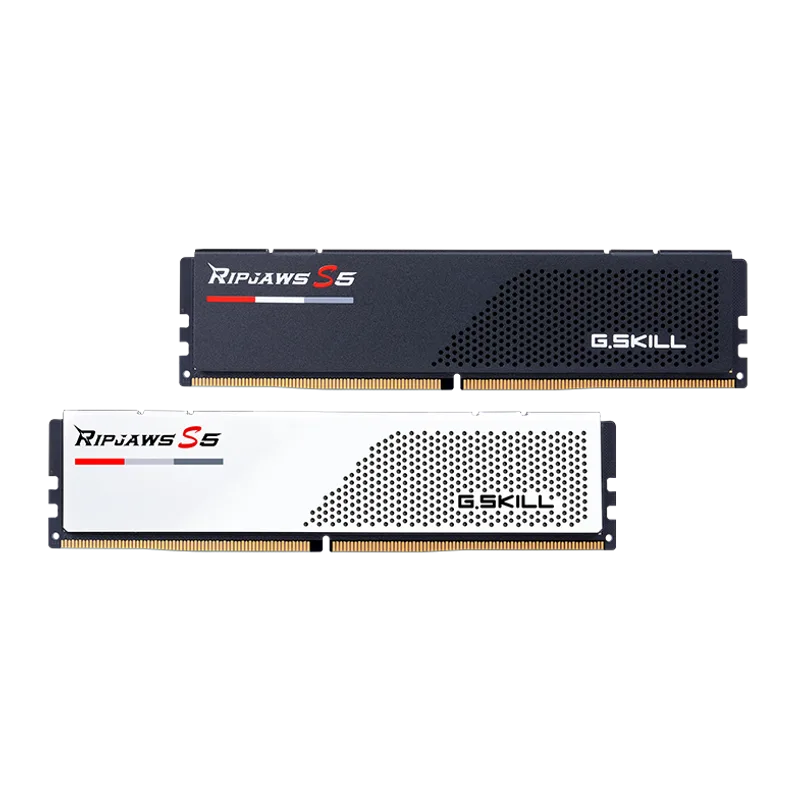
Every other kit in this roundup is Intel XMP 3.0 only. The Ripjaws S5 is the exception — it ships with both an XMP 3.0 and an AMD EXPO profile on the same modules, so it’s the one kit here that isn’t a dead end if this RAM ever ends up in a future AM5 build instead of staying in the Arrow Lake system it’s bought for. Its 33mm low-profile heat spreader also clears large tower air coolers more reliably than taller RGB kits.
The cost of that flexibility is timings: CL36-36-36-96 at 6000 MT/s is looser than the CL30-32 kits in this list, so it trails them on real latency despite similar pricing during the current shortage. It also skips RGB entirely, in a matte black finish that won’t stand out next to a fully lit Z890 build.
5. Silicon Power Zenith DDR5-6000 32GB CL30 — Best Low-Latency
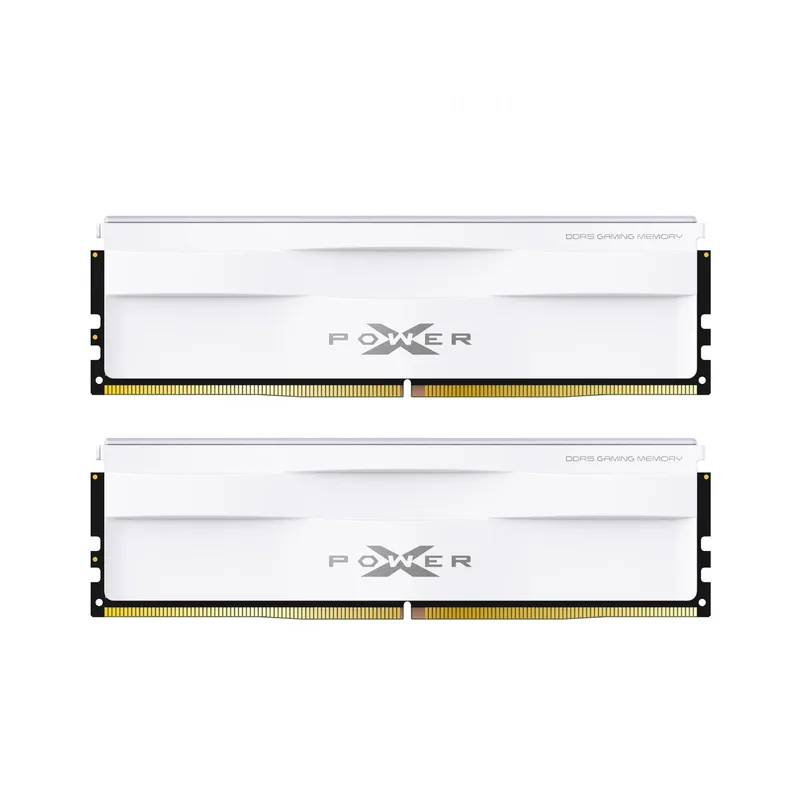
Silicon Power’s Zenith kit trades headline frequency for tighter timings: CL30 at 6000 MT/s and 1.35V undercuts the latency of several kits here running at higher MT/s but looser CL32-36 timings. It’s also been easier to find in stock through stretches of the 2026 DRAM shortage than some bigger-name kits, since Silicon Power carries less brand-driven demand than Corsair or G.Skill.
The tradeoff is that 6000 MT/s sits below Arrow Lake’s native 6400 MT/s ceiling, so it leaves some raw bandwidth on the table compared to the Patriot and ADATA kits in this list. Silicon Power also has a thinner track record of long-term owner reports on XMP stability than the more established RAM brands here.
FAQ
Does Arrow Lake need special RAM, or will any DDR5 kit work?
Any standard DDR5 UDIMM will physically fit and boot on a Z890/B860 LGA1851 board, but for the module to run at its rated speed rather than JEDEC defaults, it needs an Intel XMP 3.0 profile. Kits built primarily around AMD EXPO — common in AM5-focused roundups — either won’t have a matching Intel profile or will run at a lower fallback speed on an Arrow Lake board.
What’s CUDIMM, and should I wait for it?
CUDIMM (Clocked Unbuffered DIMM) adds an onboard clock driver that lets DDR5 modules hit higher stable frequencies — Intel’s Arrow Lake Refresh chips now natively support DDR5-7200 CUDIMM at 1DPC. It’s real, shipping hardware from Kingston, G.Skill, and Corsair, but Amazon stock on CUDIMM kits is currently thin and priced well above normal street cost. Unless you specifically need 8000+ MT/s and can find a CUDIMM kit at a sane price, a standard XMP 3.0 UDIMM kit at 6400-7200 MT/s covers the vast majority of Arrow Lake builds today.
Is DDR5-6400 or DDR5-7200 the better buy for Arrow Lake right now?
DDR5-6400 is Arrow Lake’s native 1DPC ceiling, so a 6400 MT/s kit like the Patriot Viper Xtreme 5 or ADATA XPG Lancer runs at rated speed with the least board-compatibility risk. DDR5-7200 kits like the Kingston FURY Renegade run above that native ceiling on an XMP overclock profile — still well-supported, but slightly more dependent on your specific motherboard and BIOS version booting cleanly at that speed on two DIMMs.
Why does this roundup skip AMD EXPO kits entirely?
It doesn’t skip them by accident — Arrow Lake’s Core Ultra 200S memory controller reads Intel XMP 3.0, not AMD EXPO, so an EXPO-only kit won’t auto-apply its rated profile on a Z890 board. The one exception here, the G.Skill Ripjaws S5, carries both profiles on the same modules specifically so it works at rated speed on either platform.
Do I need 32GB, or should I go higher for an Arrow Lake build?
32GB (2×16GB) covers current games and most productivity workloads comfortably and is what every kit in this roundup ships as. Heavier multitasking, large local AI models, or video editing workloads benefit from stepping up to a 64GB kit, but check your specific motherboard’s maximum supported capacity and DIMM slot count before buying more than two modules.
The Bottom Line
For most Arrow Lake builds, the Kingston FURY Renegade RGB DDR5-7200 CL38 gets you to the same speed ceiling Intel’s own Arrow Lake Refresh chips now support natively, without paying CUDIMM’s current inflated Amazon pricing. Budget-conscious builders should go with the Patriot Viper Xtreme 5 DDR5-6400 CL32 — it hits Arrow Lake’s native speed at tight timings for less. And if there’s any chance this RAM outlives the Arrow Lake build, the G.Skill Ripjaws S5’s dual XMP/EXPO profile is the only kit here that keeps that option open.