Intel’s 2026 CPU lineup covers two generations simultaneously: the original Arrow Lake chips (Core Ultra 9 285K, 7 265K, 5 245K) that launched in late 2024, and the Arrow Lake Refresh (Core Ultra 7 270K Plus, 5 250K Plus) that arrived March 26, 2026 with more cores, higher clocks, and better gaming performance. Both run on LGA1851 and require Z890, B860, or H870 motherboards with DDR5.
| Spec | Intel Core Ultra 7 Processor 270K Plus 9.1/10 | Intel Core Ultra 9 Desktop Processor 285K 8.5/10 | Intel Core Ultra 7 Desktop Processor 265K 8.2/10 | Intel Core Ultra 5 Processor 250K Plus 8.8/10 | Intel Core Ultra 5 Desktop Processor 245K 7.6/10 |
|---|---|---|---|---|---|
| Cores | 24 (8P + 16E) | 24 (8P + 16E) | 20 (8P + 12E) | 18 (6P + 12E) | 14 (6P + 8E) |
| Boost Clock | 5.5 GHz | 5.7 GHz | 5.5 GHz | 5.3 GHz | 5.2 GHz |
| Base TDP | 125W | 125W | 125W | 125W | 125W |
| Socket | LGA1851 | LGA1851 | LGA1851 | LGA1851 | LGA1851 |
| Cache | 36MB L3 | 40MB L3 | 30MB L3 | 24MB L3 | 24MB L3 |
| Memory Support | DDR5-7200 | DDR5-6400 | DDR5-6400 | DDR5-7200 | DDR5-6400 |
| Rating | 9.1/10 | 8.5/10 | 8.2/10 | 8.8/10 | 7.6/10 |
Prices change daily — tap Check Price for the current Amazon price.
Prices change daily — tap Check Price for the current Amazon price.
Quick Picks
- Core Ultra 7 270K Plus — $299 for 24 cores and 15% better gaming than the 265K at the same price. The clear best Intel CPU for most builds right now.
- Core Ultra 5 250K Plus — $219 for 18 cores and a 13% gaming boost over the 245K. Tom’s Hardware’s pick for best sub-$250 CPU.
- Core Ultra 9 285K — Only makes sense if you need the absolute highest single-core clock (5.7 GHz) for production workloads and don’t mind the $535 premium.
Platform Notes: LGA1851 and Z890
Before picking a CPU, understand the platform situation. LGA1851 is a single-generation socket — Intel has confirmed Nova Lake CPUs arrive at the end of 2026 on a new socket. You cannot upgrade an LGA1851 board to a future Intel generation.
AMD’s AM5 supports processors through at least 2027, which gives AMD builds a better upgrade runway. If platform longevity matters to you, this is a real consideration.
For the Z890 motherboard itself, budget $180–$250 for a solid mid-range board. The MSI MAG B860 Tomahawk WiFi ($180) and ASUS TUF Gaming Z890-Plus WiFi ($220) are the most commonly recommended options for Arrow Lake builds.
Memory: All 2026 Arrow Lake chips support DDR5-6400 natively. The 270K Plus and 250K Plus add native DDR5-7200 support without XMP, which narrows the gap between using a high-speed kit with or without a profile enabled.
Arrow Lake Refresh vs Original Arrow Lake
The 270K Plus and 250K Plus aren’t minor refreshes. The 270K Plus adds 4 E-cores and 6MB L3 cache compared to the 265K — resulting in 10–15% faster gaming at 1080p. The 250K Plus adds 4 E-cores compared to the 245K, with 13% faster gaming. Both refresh chips launch at lower prices than the originals did.
If you’re buying Intel in mid-2026, the refresh chips are the better purchase unless you find the original Arrow Lake chips at a significant discount.
Detailed Reviews
1. Intel Core Ultra 7 Processor 270K Plus
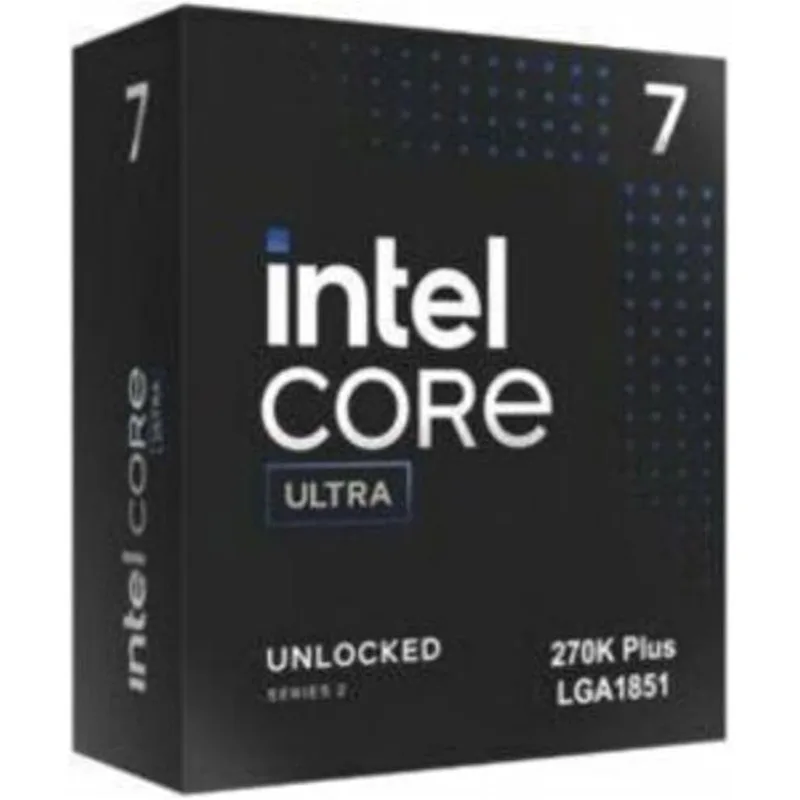
The Core Ultra 7 270K Plus is Intel’s best mainstream gaming CPU in 2026. At $299, it matches the Core Ultra 9 285K’s core configuration — 8 P-cores and 16 E-cores — and beats it in gaming by up to 7.7% in some titles. That’s a $236 savings for a chip that actually outguns the flagship in real-world gaming scenarios.
GamersNexus reviewed the 270K Plus and found it “not a waste of sand” — a significant turnaround from early Arrow Lake criticisms. Tom’s Hardware called the review “Back from the brink,” noting the refresh fixed the gaming regression that plagued the original 265K launch.
At 1080p, the 270K Plus posts an average of 5% ahead of the Ryzen 7 9700X across a 17-game test suite, and sits 4% faster overall when compared head-to-head. It’s still 20% slower than the Ryzen 7 9800X3D at 1080p — AMD’s cache-stacked chips remain the gaming kings — but for pure Intel value, the 270K Plus is the sharpest option.
The 36MB L3 cache and native DDR5-7200 support are meaningful improvements. In Cinebench 2024 multithreaded, the 270K Plus is only 1.2% behind the Ryzen 9 9950X ($499+), making it a serious content creation chip at a $200 lower price point.
Where it fits: Mainstream gaming and creator builds targeting 1080p or 1440p. The ideal pairing is an RTX 5070 or RX 9070 XT at $700–$800, targeting 1440p ultra settings.
2. Intel Core Ultra 9 Desktop Processor 285K
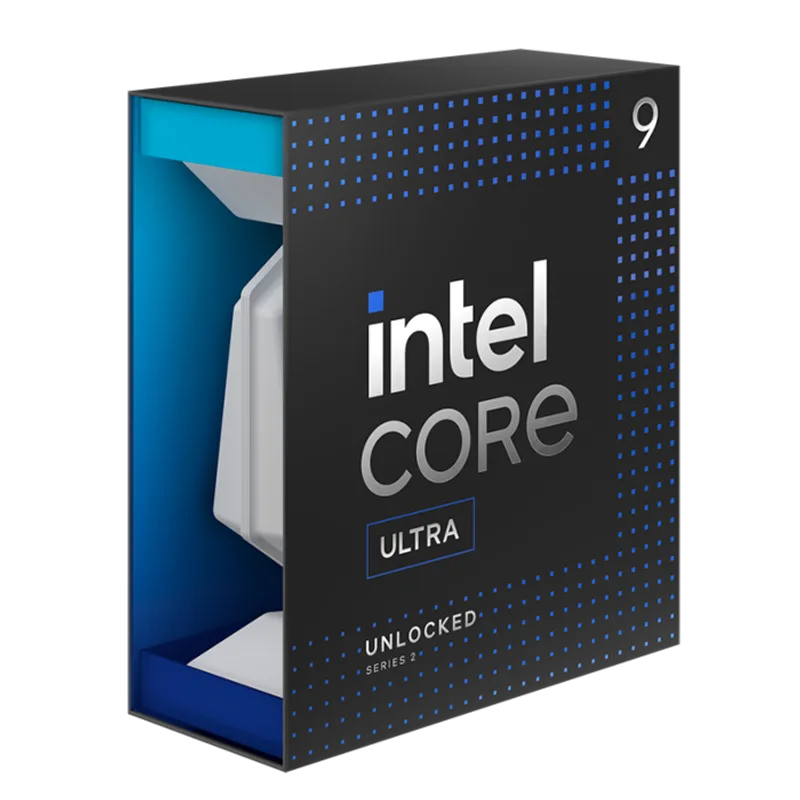
The Core Ultra 9 285K is the flagship Arrow Lake chip, and its main advantage over the 270K Plus is a 200 MHz higher boost clock (5.7 GHz vs 5.5 GHz) and 4MB more L3 cache (40MB vs 36MB). These differences matter for production workloads but are largely irrelevant for gaming.
In Cinebench R24 multithreaded, the 285K lands within 1.2% of the Ryzen 9 9950X, which typically sells for $499–$519. The 285K at $535 undercuts AMD’s flagship marginally while delivering comparable productivity throughput. For video editors, 3D renderers, and software developers running compilation-heavy workloads, this comparison matters.
Where the 285K disappoints is gaming. The 270K Plus actually outperforms the 285K in several CPU-limited titles because its efficiency cores boost higher and the chip’s power allocation to those cores is more aggressive. For gaming-focused builds, spending $236 more on the 285K compared to the 270K Plus produces zero practical benefit.
Where it fits: Professional workstations where maximum multithreaded throughput is the priority and gaming is secondary. Photographers using Lightroom, editors in Premiere Pro, and Blender artists will extract more value than pure gamers.
3. Intel Core Ultra 7 Desktop Processor 265K
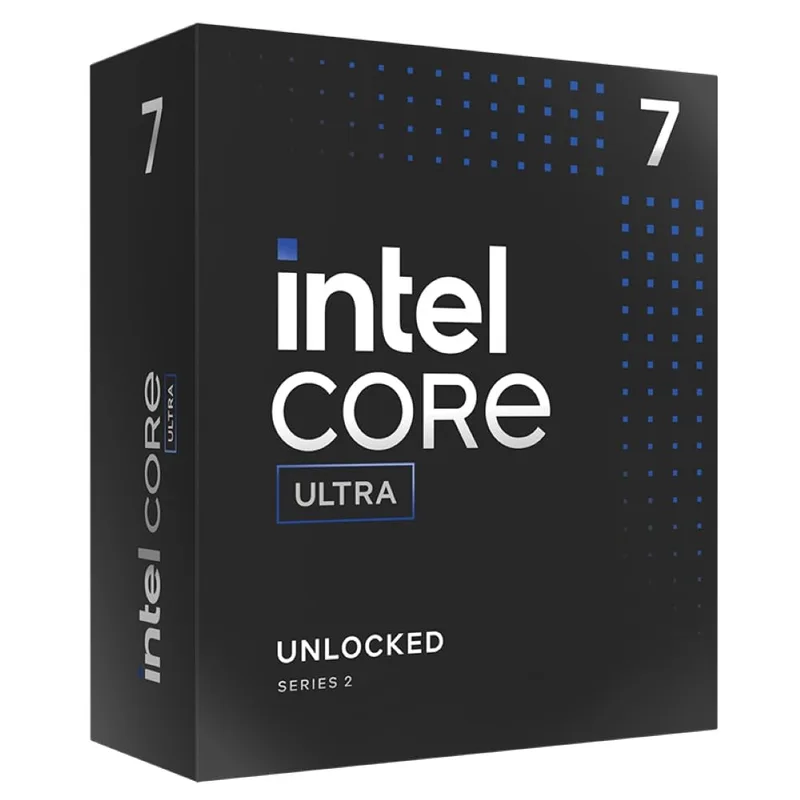
The Core Ultra 7 265K launched in late 2024 at $394 and has since dropped to ~$300 — the same price as the 270K Plus. That pricing reality makes the 265K a complicated recommendation.
The 265K has 20 cores (8P + 12E) versus the 270K Plus’s 24 cores. It carries 30MB of L3 cache versus 36MB. At the same street price, the 270K Plus beats it by 10–15% in gaming and by a larger margin in multithreaded production. The only scenario where the 265K makes sense over the 270K Plus is if you find it discounted significantly — say, $240 or below — where the performance gap becomes more acceptable.
The 265K is still a capable chip. Owners report reliable 1440p gaming performance and solid productivity, and the platform maturity (older BIOS, more user experience online) is a minor advantage for troubleshooters. But as a new purchase at $300, the math doesn’t work in its favor.
Where it fits: Primarily as a discounted purchase. If you spot it at $240 or less, it’s reasonable. At parity with the 270K Plus, skip it.
4. Intel Core Ultra 5 Processor 250K Plus
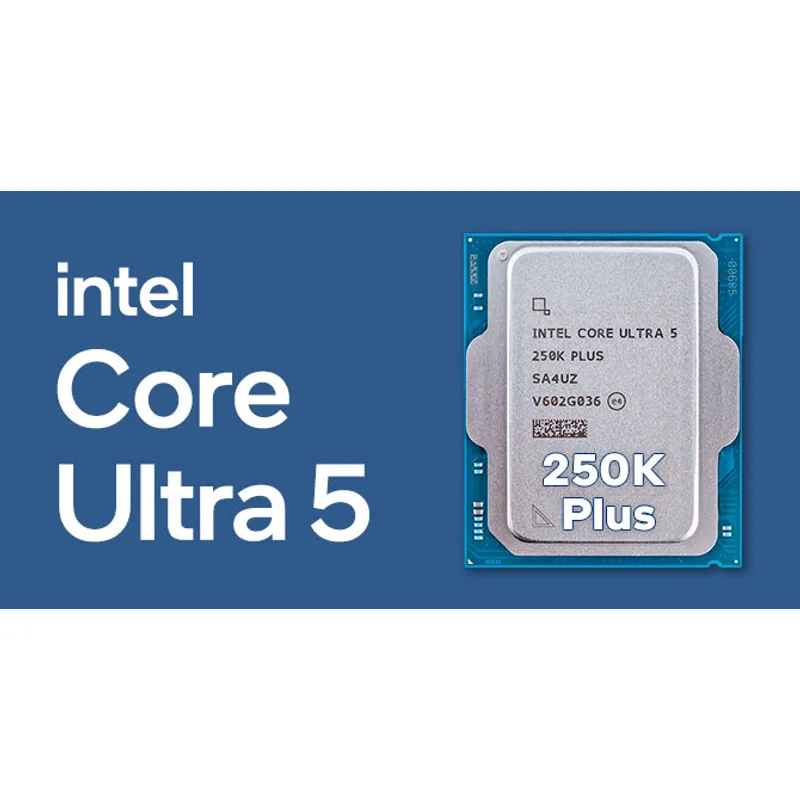
The Core Ultra 5 250K Plus is the most compelling value in the 2026 Intel lineup. At $219 for 18 cores and a 5.3 GHz boost, Tom’s Hardware called it “the new best $200 CPU” at launch. GamersNexus confirmed 13% faster gaming than the 245K at 1080p — a meaningful jump at effectively the same price point.
The 250K Plus brings 6 P-cores and 12 E-cores. That E-core count increase (from 8 to 12 versus the 245K) is where the gaming improvement comes from — Intel’s scheduler can distribute workloads more efficiently across the wider E-core cluster, reducing the P-core bottleneck in games that spawn many threads.
For production work, the 18-core layout handles HandBrake, Blender, and DaVinci Resolve noticeably better than the 14-core 245K. If you’re on a $1,000–$1,200 build budget that includes an RTX 5060 Ti 16GB or RX 9070, the 250K Plus is the CPU that fits.
The 250KF variant drops $20 to $199 but removes integrated graphics. If you plan to always run a discrete GPU (which you should in any gaming build), the 250KF is the smarter buy.
Where it fits: Budget-to-mid gaming and light creator builds. Pairs well with the RTX 5060 Ti or RX 9070 for 1080p and 1440p gaming.
5. Intel Core Ultra 5 Desktop Processor 245K
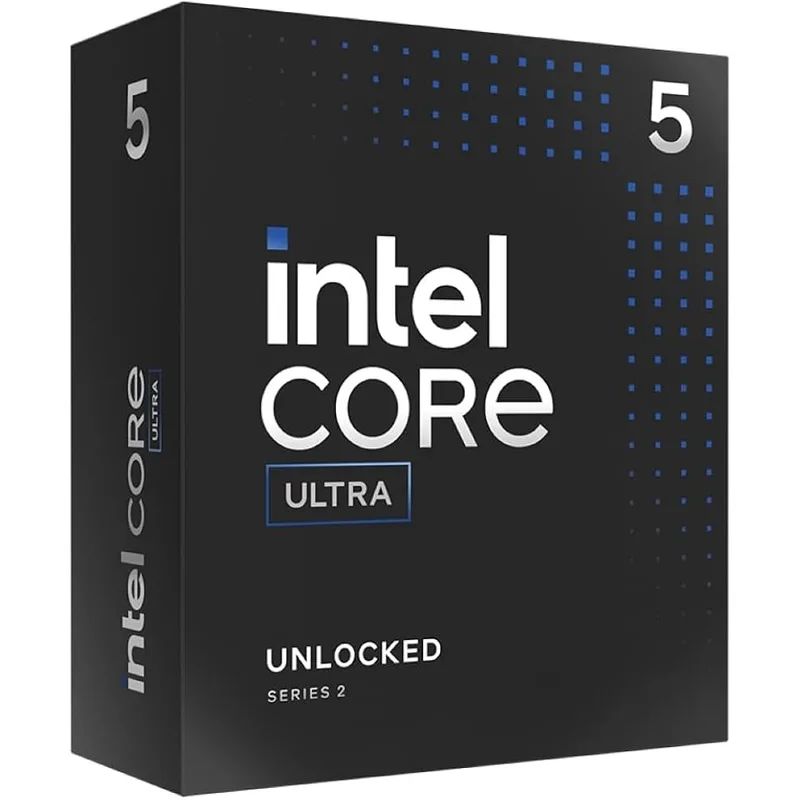
Intel Core Ultra 5 Desktop Processor 245K
The Core Ultra 5 245K is the original entry-level Arrow Lake chip, and in mid-2026 it occupies an awkward position. At ~$210, it’s only $9 cheaper than the 250K Plus — a chip that’s 13% faster in gaming and has 4 more E-cores.
The 245K’s 14-core configuration (6P + 8E) with 5.2 GHz boost and 24MB L3 is respectable for 1440p and 4K gaming where the GPU is the constraint and CPU differences wash out. But at 1080p in CPU-limited scenarios, the 245K trails the Ryzen 5 9600X (~$179) by up to 12% in some titles — a meaningful gap given the 9600X is $31 cheaper and offers AM5 platform longevity.
The core reason to choose the 245K in 2026 is clearance pricing. If it drops to $180 or below, it becomes a defensible entry into LGA1851 for someone who wants Intel’s eco system and doesn’t need the 250K Plus’s extra cores for production work.
Where it fits: Clearance buys at $180 or below, or builds where a discrete GPU handles all graphics and 1440p+ gaming is the primary use case.
FAQ
Should I buy Arrow Lake or Arrow Lake Refresh in 2026?
Arrow Lake Refresh (270K Plus, 250K Plus) — released March 26, 2026 — is the better buy at nearly every price point. The 270K Plus delivers 10–15% more gaming performance than the 265K at the same $299 street price. The 250K Plus edges out the 245K by 13% for effectively the same cost. The only reason to pick original Arrow Lake is significant discount pricing.
Is Z890 required for Arrow Lake and Arrow Lake Refresh?
Z890 unlocks full overclocking (the K-series chips). B860 and H870 boards support K-series chips with memory OC but no CPU overclocking. All three chipsets work with both the original Arrow Lake and the Arrow Lake Refresh chips — they share the LGA1851 socket.
How does the Core Ultra 7 270K Plus compare to the Ryzen 7 9800X3D?
The Ryzen 7 9800X3D ($433) leads the 270K Plus ($299) by approximately 20% in 1080p gaming. AMD’s 3D V-Cache advantage in gaming is real. The 270K Plus closes the gap at 1440p and 4K where GPU becomes the bottleneck. For pure gaming, the 9800X3D wins. For mixed gaming and production, the 270K Plus’s 24 cores close the gap significantly in production tasks.
Do these CPUs need a cooler?
No Intel K-series or KF-series chip includes a cooler in the box. For the 270K Plus and 285K at 125W base / 159–250W MTP, you need at least a 240mm AIO or a dual-tower air cooler like the Noctua NH-D15 G2. For the 250K Plus and 245K, a 120mm AIO or a solid single-tower air cooler handles thermals comfortably.
Is the LGA1851 platform a long-term platform?
No. Intel confirmed Nova Lake CPUs arrive at the end of 2026 on a new socket. LGA1851 will not receive future Intel generations. AMD’s AM5 platform is confirmed to support chips through at least 2027, making it a meaningfully more future-proof socket for the same generation of builds.
The Bottom Line
The Core Ultra 7 270K Plus at $299 is the strongest Intel CPU released in years — 24 cores, DDR5-7200 native support, and 10–15% better gaming than the 265K at the same price. For budget builds, the Core Ultra 5 250K Plus at $219 delivers 13% faster gaming than the 245K and earns multiple “best sub-$250 CPU” awards. The Core Ultra 9 285K serves content creators who need maximum multithreaded throughput and don’t want to pay AMD’s X3D premium. If platform longevity is your top priority, AMD’s AM5 is still the safer long-term socket — but if you’re buying Intel today, the Arrow Lake Refresh lineup is the best it’s been since the 13th Gen era.