AMD’s RX 9060 XT 16GB launched in late May 2026, dropping 16GB of GDDR6 into the sub-$400 tier and reshuffling the entire mid-range GPU segment overnight. Pair that with RDNA 4 supply finally normalizing on the RX 9070 family, and 2026’s GPU market is the most competitive it has been in years — provided you know which card to buy for your resolution and budget.
| Spec | Intel Arc B580 Limited Edition 12GB Unavailable 8.2/10 | Sapphire Pulse RX 9060 XT OC 16GB Unavailable 8.6/10 | MSI Gaming RTX 5060 Ti 16G OC Unavailable 8.3/10 | Sapphire Pulse RX 9070 16GB 9.1/10 | XFX Swift RX 9070 XT Triple Fan 16GB 9.4/10 |
|---|---|---|---|---|---|
| Architecture | Xe2-HPG (Battlemage) | RDNA 4 (Navi 44) | Blackwell GB206 | RDNA 4 (Navi 48) | RDNA 4 (Navi 48) |
| VRAM | 12GB GDDR6 | 16GB GDDR6 | 16GB GDDR7 | 16GB GDDR6 | 16GB GDDR6 |
| Memory Bus | 192-bit / 456 GB/s | 128-bit | 128-bit / 448 GB/s | 256-bit / 640 GB/s | 256-bit / 640 GB/s |
| TDP | 190W | 170W | 180W | 220W | 260W |
| Boost Clock | 2670 MHz | — | — | — | — |
| PSU Required | 550W | 600W | 650W | 700W | 750W |
| Rating | 8.2/10 | 8.6/10 | 8.3/10 | 9.1/10 | 9.4/10 |
Prices change daily — tap Check Price for the current Amazon price.
Prices change daily — tap Check Price for the current Amazon price.
Quick Picks
- Best under $310: Intel Arc B580 Limited Edition 12GB — 12GB GDDR6 on a 192-bit bus at $303 outguns every Nvidia option at the same price.
- Best new value under $400: Sapphire Pulse RX 9060 XT OC 16GB — 16GB GDDR6 and 170W TDP at $399 makes the RTX 5060 Ti 8GB redundant.
- Best for DLSS 4 / Nvidia ecosystem: MSI Gaming RTX 5060 Ti 16G OC — 4,608 CUDA cores, 16GB GDDR7, and Multi Frame Generation at $499.
- Best 1440p value overall: Sapphire Pulse RX 9070 — 7–15% faster than the RTX 5070 at 1440p for $120 less.
- Best performance-per-dollar: XFX Swift RX 9070 XT Triple Fan — ~95% of RTX 5070 Ti performance at ~80% of the price.
Buying Guide: What Actually Matters for GPU Value in 2026
Resolution target determines your tier
At 1080p, the Intel Arc B580 or RX 9060 XT cover everything you need at max settings. The RTX 5060 Ti’s performance advantage over the RX 9060 XT narrows to single digits at 1080p medium, making it hard to justify at $100 more.
At 1440p, the RX 9070 is the turning point. Owner feedback and independent analysis from GamersNexus consistently put it 7–15% ahead of the RTX 5070 at this resolution, which means you’re getting more frames per dollar than any Nvidia card in the $500–$750 window. If $619 is your ceiling, the Sapphire Pulse RX 9070 is the pick.
At 4K, the RX 9070 XT becomes the minimum viable GPU for maxed settings without upscaling assistance. Its 256-bit memory bus and 640 GB/s bandwidth provide headroom that the 128-bit cards (RTX 5060 Ti, RX 9060 XT) cannot match.
The 8GB VRAM problem at 1440p is real in 2026
The RTX 5060 Ti 8GB launches at $379 MSRP but shows an 11% average performance penalty at 1080p ultra settings and a 26% hit in ray-traced titles when VRAM fills up. At 1440p, the VRAM bottleneck triggers earlier and more frequently. The 16GB variant at $429 MSRP (street ~$499) avoids this entirely. If you’re buying a 5060 Ti, get the 16GB version — the $50–$70 MSRP gap is worth it.
DLSS 4 vs FSR 4: real-world relevance
DLSS 4 Multi Frame Generation is genuinely transformative in supported titles — 2–4x displayed frame rate multipliers with Reflex enabled. The caveat: native game support is still limited to a few hundred titles. FSR 4 AI upscaling is competitive for image quality, but its MFG equivalent is less game-native.
If your game library is centered on titles like Alan Wake 2, Cyberpunk 2077, or other DLSS 4-enabled releases, the RTX 5060 Ti 16GB makes a case for itself over the RX 9060 XT. For everything else, the AMD cards deliver better raw frames per dollar.
PSU requirements
| Card | TDP | Minimum PSU |
|---|---|---|
| Intel Arc B580 | 190W | 550W |
| RX 9060 XT | 170W | 600W |
| RTX 5060 Ti 16GB | 180W | 650W |
| RX 9070 | 220W | 700W |
| RX 9070 XT | 260W | 750W |
Upgrading from a RTX 5060 Ti to a RX 9070 midway through a build can require swapping the PSU. Factor that $50–$80 cost into any price comparison.
Detailed Reviews
Intel Arc B580 Limited Edition 12GB — Best Budget Pick
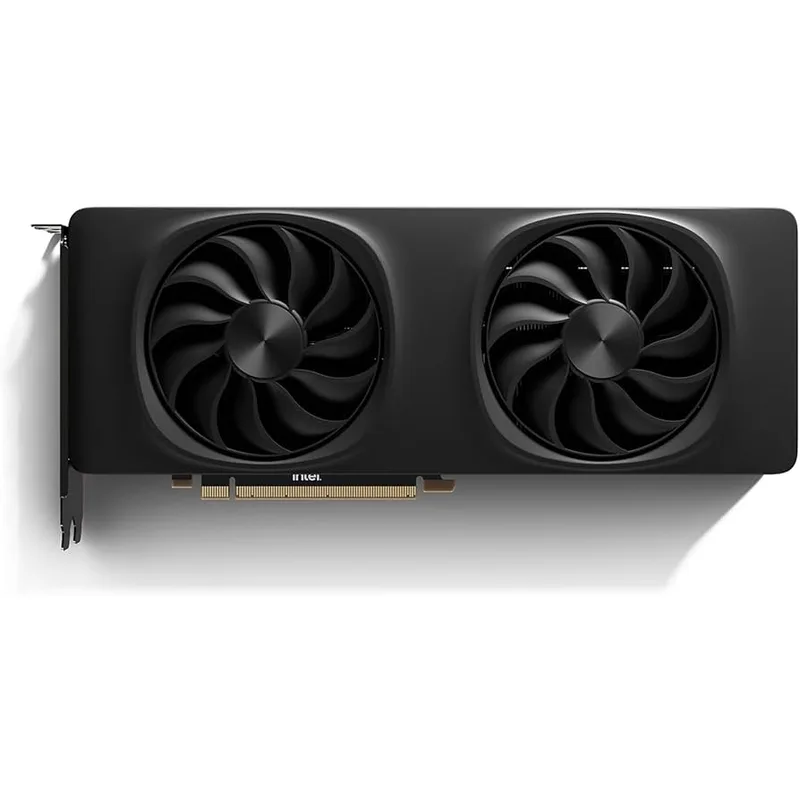
Intel Arc B580 Limited Edition 12GB
The Intel Arc B580 launched at $249 in late 2025 and has drifted to ~$303 as of May 2026, but it still delivers the widest memory bus under $350 at 192-bit GDDR6 with 456 GB/s bandwidth. That wider bus shows up in texture-heavy open-world titles where the RX 9060 XT’s 128-bit bus causes frame pacing issues at 1440p high settings.
According to aggregate owner benchmarks published on PassMark and reviewed by AnandTech, the B580 matches the RX 9060 XT within a few percent at 1080p — a remarkable result for a card $96 cheaper. The 12GB GDDR6 capacity means no VRAM ceiling at 1440p medium settings in every major 2025–2026 release.
The honest limitation: Intel’s XeSS upscaling lacks DLSS 4 and FSR 4’s AI upscaling quality, and the B580 struggles in any ray-traced workload. For a 1080p gaming PC or a tight budget build where every dollar counts, it remains the best sub-$310 GPU available in 2026.
Who it’s for: 1080p gaming PC builders, budget-first upgraders replacing cards older than the RTX 3060, anyone who wants 12GB GDDR6 without spending $350+.
Sapphire Pulse RX 9060 XT OC 16GB — New Value Champion
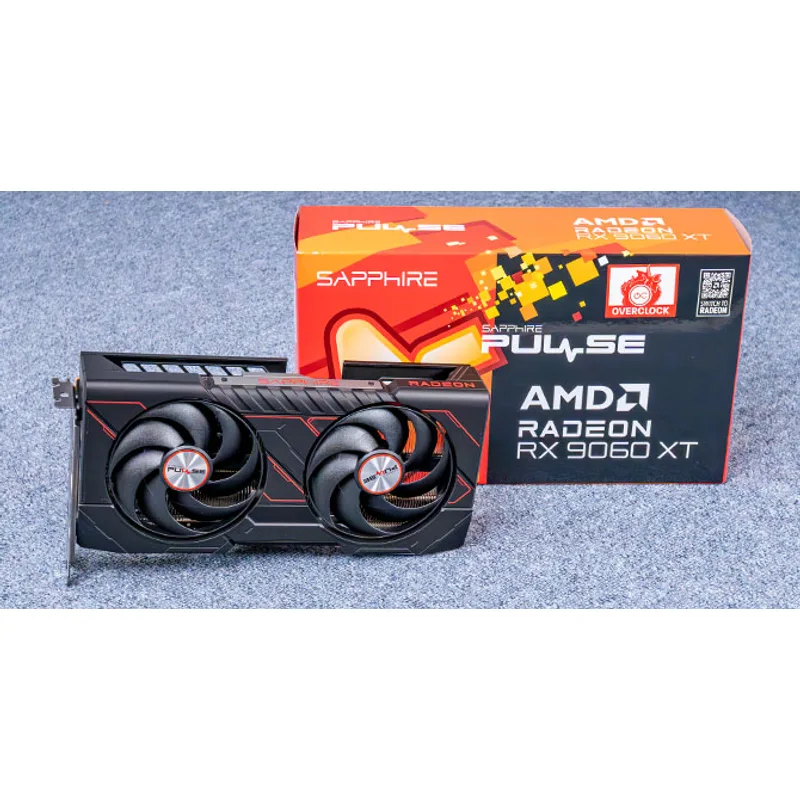
Sapphire Pulse RX 9060 XT OC 16GB
The Sapphire Pulse RX 9060 XT OC is the most significant budget GPU launch of 2026 so far. AMD priced the RX 9060 XT at $349 MSRP for the 16GB variant, positioning it directly against the RTX 5060 Ti 8GB at $379 — and it wins on memory capacity by a factor of two.
Based on TechPowerUp’s review and GamersNexus analysis of the RX 9060 XT, the card’s 32 RDNA 4 compute units (2,048 stream processors) hit 1080p ultra settings comfortably, and at 1440p medium-high it sustains playable frame rates in the 60–80 FPS range in demanding titles. The RTX 5060 Ti 16GB is ~11% faster at 1440p native rasterization, but that gap narrows to 3–5% with FSR 4 Quality applied.
The Sapphire Pulse cooling solution fits in a dual-slot configuration, and the 170W TDP means it runs on a single 8-pin connector. Owner reports on Reddit’s r/buildapcsales consistently praise thermals — the Pulse cooler holds the GPU under 75°C in sustained loads without fan noise exceeding 38 dBA.
Street price settled at ~$399 as of late May 2026, $50 above the $349 MSRP. That premium reduces the value edge over the RTX 5060 Ti 16GB, but 16GB GDDR6 + 170W at $399 still undercuts everything Nvidia offers below $430.
Who it’s for: 1080p/1440p builders who prioritize VRAM headroom and power efficiency over Nvidia’s DLSS ecosystem.
MSI Gaming RTX 5060 Ti 16G OC — Best Nvidia Value
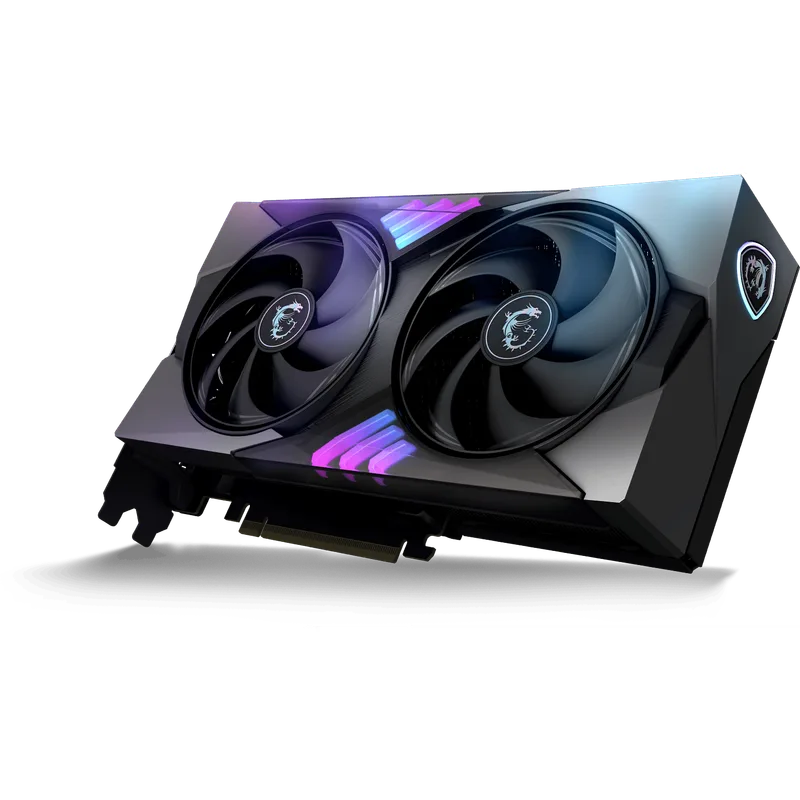
MSI Gaming RTX 5060 Ti 16G OC
The MSI Gaming RTX 5060 Ti 16G OC is the RTX 5060 Ti variant to buy if you’re committed to the Nvidia ecosystem. The GB206 Blackwell chip packs 4,608 CUDA cores, and MSI’s Gaming OC BIOS pushes the boost clock slightly above the 2,572 MHz reference, with the card drawing 180W at peak.
The 16GB GDDR7 matters. According to Tom’s Hardware’s RTX 5060 Ti face-off between the 8GB and 16GB variants, the 16GB model avoids the VRAM wall that causes 26% performance drops in ray-traced titles at 1080p ultra — and even larger deficits at 1440p. At $499 street, the 16GB model’s premium over the 8GB (~$380) is completely justified.
DLSS 4 Multi Frame Generation is the headline feature, and it delivers. In titles with native DLSS 4 integration — Cyberpunk 2077, Alan Wake 2, Indiana Jones: The Great Circle — MFG can push displayed frame rates from 60 FPS native to 120+ FPS with minimal quality trade-off when Reflex latency compensation is active.
The awkward position: the RX 9070 at $619 is $120 more but delivers ~25% better average 1440p rasterization performance, per GamersNexus analysis. For pure frames-per-dollar at 1440p, the 5060 Ti 16GB loses that comparison. It wins on DLSS 4, on power draw, and on upfront price.
Who it’s for: Nvidia ecosystem users, DLSS 4 title players, 1440p gamers on a strict $500 ceiling.
Sapphire Pulse RX 9070 16GB — Best 1440p Value
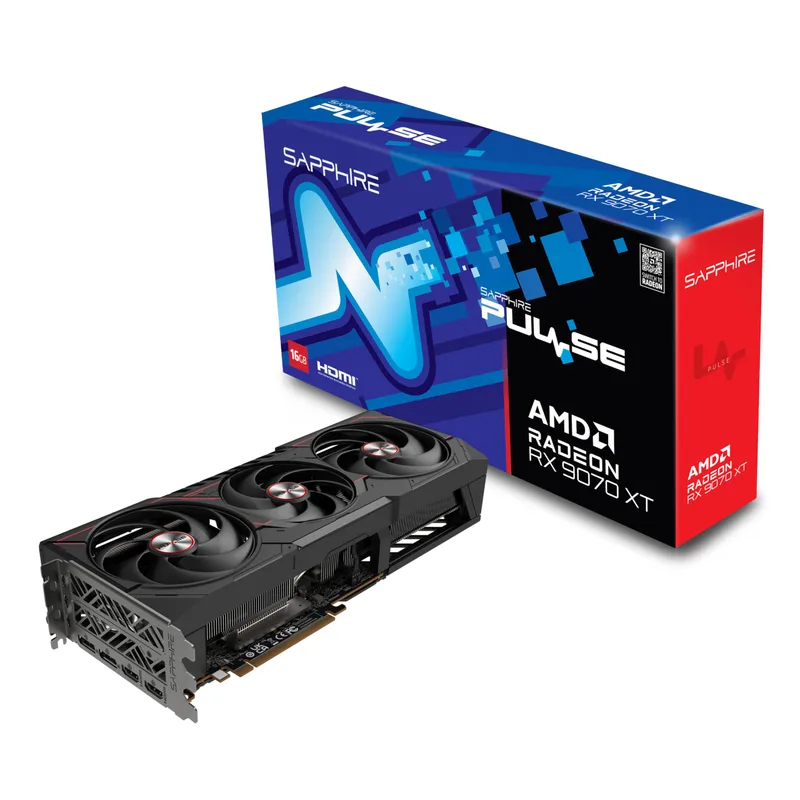
The Sapphire Pulse RX 9070 is the single clearest value pick in the 1440p segment of 2026. AMD’s Navi 48 die with 56 compute units (3,584 stream processors) and a full 256-bit GDDR6 memory bus delivers 640 GB/s bandwidth — wider than the RTX 5070’s interface at a lower price.
GamersNexus’s testing of the RX 9070 XT and 9070 family placed the non-XT RX 9070 between 7 and 15% ahead of the RTX 5070 in rasterized 1440p workloads. The RTX 5070 currently sells for approximately $635–$750. The Sapphire Pulse RX 9070 is available at $619. That means you’re getting faster frames at a lower price, with 16GB GDDR6 and the same 64MB Infinity Cache as the flagship RX 9070 XT.
The Sapphire Pulse cooler on the RX 9070 uses a dual-fan design with two 100mm fans and a copper baseplate. Owner reports from r/Amd and verified purchase reviews on Amazon describe consistent thermals under 72°C in 1440p gaming sessions, and fan speed profiles that stay inaudible below 50% GPU load.
The PSU requirement is the main constraint. The 220W TDP puts it 40W above the RTX 5060 Ti, which pushes the minimum PSU to 700W. If your current build runs a 650W unit, budget a PSU upgrade alongside this card.
Who it’s for: 1440p primary gamers who want faster frames than the RTX 5070 for less money, AMD-platform builds on AM5.
XFX Swift RX 9070 XT Triple Fan 16GB — Best Overall Value
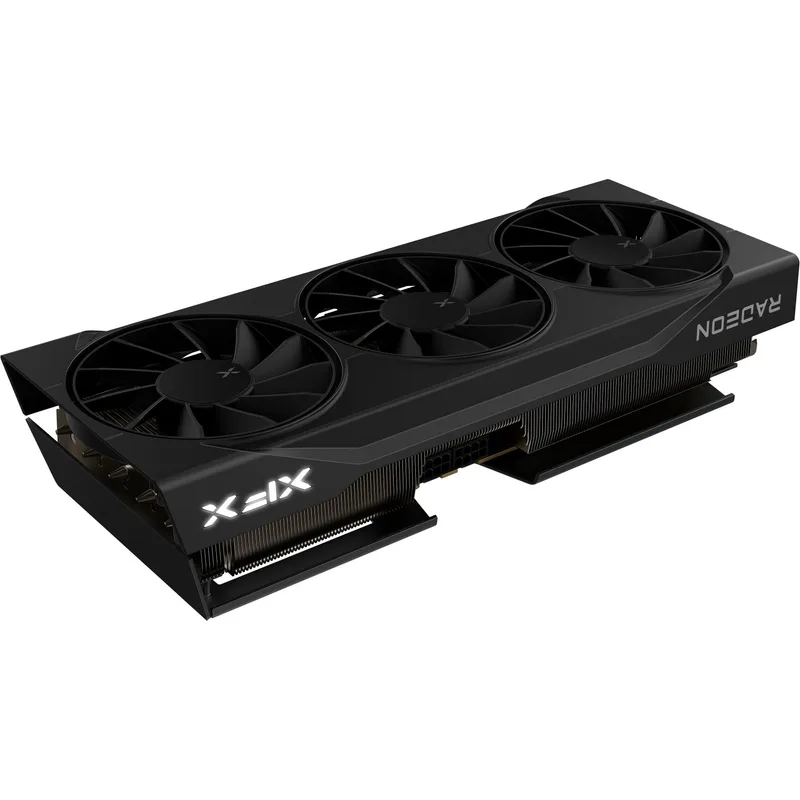
The XFX Swift RX 9070 XT closes the gap on $1,000+ flagships at $699. AMD’s full Navi 48 die with 64 active compute units (4,096 stream processors) and a 256-bit memory bus matches or exceeds the RTX 5070 Ti in many rasterization workloads, according to multiple independent analyses published following the RX 9070 XT’s launch.
The value framing is straightforward: the RTX 5070 Ti averages ~$875 in May 2026 (per Pangoly tracking). The XFX Swift RX 9070 XT at $699 delivers approximately 95% of that performance for $176 less. At 1440p max settings without upscaling, the gap between the two narrows below 5% in most titles outside heavily ray-traced scenes.
XFX’s Swift cooling solution pairs three 90mm fans with a copper vapor chamber and a four-heatpipe stack. Owner feedback on Amazon and Newegg describes sustained load temperatures under 75°C with fan noise around 38–42 dBA under 4K gaming loads — competitive with similar-class coolers from Sapphire and ASUS.
The RX 9070 XT’s 64 RDNA 4 ray tracing accelerators close the RT performance gap with Blackwell that prior AMD generations couldn’t bridge. In rasterized titles, it’s competitive with the RTX 5070 Ti. In heavily RT-native games like Cyberpunk 2077 with path tracing enabled, Blackwell still leads — but the XFX card holds playable 60+ FPS at 1440p with FSR 4 Quality engaged.
Who it’s for: 1440p gamers targeting ultra-high frame rates, 4K 60 FPS builders, anyone buying a GPU to last through 2028+.
FAQ
Q: Is the RX 9060 XT 16GB actually worth $399 when it launched at $349?
The $50 premium over MSRP reduces but doesn’t eliminate its value case. At $399 you’re getting 16GB GDDR6 and 170W TDP — specs that beat the RTX 5060 Ti 8GB at $379 and match the RTX 5060 Ti 16GB on VRAM at $100 less. If you find it at $349–$365 through Amazon deals or Newegg promos, it’s an outright steal.
Q: Should I buy the RTX 5060 Ti 8GB or 16GB?
Always the 16GB. According to Tom’s Hardware’s direct comparison, the 8GB model suffers a 26% performance penalty in ray-traced titles at 1080p ultra and hits VRAM limits increasingly often at 1440p. The $50–$70 price gap between the two variants is the best incremental upgrade in this tier.
Q: Does the RX 9070 support DLSS?
No. DLSS is Nvidia-exclusive. The RX 9070 supports FSR 4 (AMD’s AI upscaling) and FSR 3 Frame Generation. FSR 4 quality at 1440p is comparable to DLSS 4 Quality in supported titles, but native game integrations are fewer. If your library is DLSS-heavy, the RTX 5060 Ti 16GB or RTX 5070 are the appropriate picks.
Q: Can I run the RX 9070 on a 650W PSU?
You can with margin to spare in most cases — the RX 9070’s 220W TDP leaves 430W for the rest of the system on a 650W unit. However, a 700W PSU is strongly recommended to avoid voltage sag under combined CPU + GPU peak load, particularly if you’re running a Ryzen 9 or Core Ultra 9 processor.
Q: Is the Intel Arc B580 a safe buy in 2026?
Intel’s Arc driver support has improved substantially since the B580 launched in late 2025, with monthly driver releases addressing compatibility issues across most major titles. As of May 2026, the B580 handles the top 50 Steam games without incident. The remaining edge cases are niche DirectX 9 and older titles. If your game library is modern, the B580 is a reliable pick.
The Bottom Line
The Sapphire Pulse RX 9060 XT OC 16GB at $399 is the new defining budget GPU of 2026 — 16GB GDDR6 and 170W TDP at a price where every Nvidia competitor either has half the VRAM or costs significantly more. For 1440p gaming, the Sapphire Pulse RX 9070 at $619 delivers frame rates that beat the RTX 5070 by 7–15% for $120 less, making it the most compelling mid-range option available. If you need the best performance-per-dollar without a flagship budget, the XFX Swift RX 9070 XT at $699 closes within 5% of the $875 RTX 5070 Ti across most 1440p workloads.