Portable SSDs have become standard kit for PC gamers who move large game libraries between rigs, carry saves between LAN events, or need fast backup storage that keeps pace with NVMe-class internal drives. SanDisk’s February 2026 announcement of its next-generation lineup — including an upcoming Extreme PRO capable of 4,000 MB/s over USB — signals that external drive speeds are catching up to internal storage faster than expected, but right now the best options for gaming live in the 1,050–2,000 MB/s range at prices the market can actually support. For desktop external drives and higher-capacity backup options, see our best external SSDs for PC builders.
| Spec | Samsung T9 1TB Portable SSD 9.2/10 | ADATA SD810 1TB Portable SSD Unavailable 8.7/10 | Crucial X9 Pro 2TB Portable SSD Unavailable 8.4/10 | SanDisk Extreme PRO Portable SSD V2 1TB Unavailable 8.6/10 | Crucial X9 1TB Portable SSD 7.8/10 |
|---|---|---|---|---|---|
| Interface | USB 3.2 Gen 2x2 (20Gbps) | USB 3.2 Gen 2x2 (20Gbps) | USB 3.2 Gen 2 (10Gbps) | USB 3.2 Gen 2x2 (20Gbps) | USB 3.2 Gen 2 (10Gbps) |
| Read Speed | 2,000 MB/s | 2,000 MB/s | 1,050 MB/s | 2,000 MB/s | 1,050 MB/s |
| Write Speed | 2,000 MB/s | 2,000 MB/s | 1,050 MB/s | 2,000 MB/s | 1,050 MB/s |
| Capacity | 1TB | 1TB | 2TB | 1TB | 1TB |
| Durability | 3-meter drop resistant | IP68 + MIL-STD-810G | IP55 water and dust resistant | IP65 + silicone bumper case included | No IP rating |
| Warranty | 5 years | — | 5 years | — | 3 years |
| Rating | 9.2/10 | 8.7/10 | 8.4/10 | 8.6/10 | 7.8/10 |
Prices change daily — tap Check Price for the current Amazon price.
Prices change daily — tap Check Price for the current Amazon price.
Quick Picks
- Best overall: Samsung T9 1TB — 2,000 MB/s Gen 2x2 speeds in a premium drop-resistant build; the fastest non-premium-priced portable drive available
- Best value for speed: ADATA SD810 1TB — identical 2,000 MB/s Gen 2x2 performance to the T9 for $140 less, with superior IP68 water resistance
- Best for large libraries: Crucial X9 Pro 2TB — 2TB at $149 is the cheapest way to carry a full game library at real-world 1,050 MB/s speeds
Buying Guide: What to Know Before You Buy
USB 3.2 Gen 2 vs Gen 2x2 — The Speed Tier That Actually Matters
Every portable SSD in 2026 uses USB-C, but the interface underneath determines whether you get ~1,050 MB/s or ~2,000 MB/s.
- USB 3.2 Gen 2 (10Gbps): Caps at roughly 1,050 MB/s in real-world transfers. Works with virtually any modern laptop or desktop with a USB-C port. The Crucial X9 and X9 Pro are Gen 2 drives.
- USB 3.2 Gen 2x2 (20Gbps): Doubles theoretical bandwidth to 20Gbps, allowing drives like the Samsung T9 and ADATA SD810 to reach 2,000 MB/s. The catch: your host PC must also support Gen 2x2. Most Z790/X870 motherboards built in the last two years do; older B550/Z490 boards typically do not.
Check your motherboard spec sheet before paying the premium for a Gen 2x2 drive. A Samsung T9 plugged into a Gen 2 port will transfer at the same speed as the Crucial X9 — you pay $174 more and get nothing extra.
How Much Capacity Do You Actually Need?
Modern AAA games average 60–100GB per title. A curated library of 20 frequently played games lands around 1.5TB.
- 1TB: Fits roughly 10–15 large games. Enough for a travel selection or an overflow cache for current favorites.
- 2TB: Covers most active game libraries without requiring constant management. The Crucial X9 Pro 2TB at $149 makes this the value tier.
- 4TB and above: Overkill for most gamers, but increasingly relevant if you’re archiving Steam libraries while upgrading internal drives.
Ruggedness: IP Ratings Explained
IP65 means protected against dust ingress and directed water jets — survive a splash, not a swim. IP68 means full immersion protection (typically 1m+ depth). For gaming use cases where drops are more likely than submersion, IP65 is sufficient. The ADATA SD810’s IP68 is a genuine advantage for users who take drives outdoors or in environments with water exposure.
Will Games Run Directly Off a Portable SSD?
Yes, for most games. At 1,050 MB/s, a portable SSD loads modern open-world titles in times comparable to a mid-range internal NVMe on the previous console generation. At 2,000 MB/s, loading is nearly indistinguishable from many SATA SSDs. The bottleneck for most games is GPU and CPU, not storage, once you’re above ~500 MB/s.
Detailed Reviews
Samsung T9 1TB — Best Overall
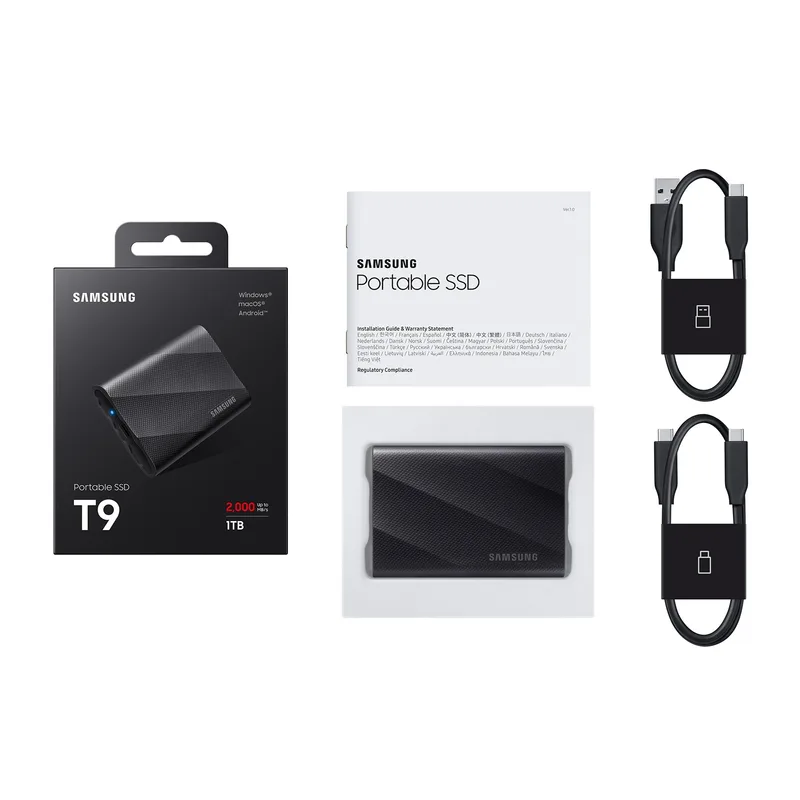
The Samsung T9 is the safest premium portable SSD pick for PC gamers who have a compatible host. Samsung rates both read and write at 2,000 MB/s over USB 3.2 Gen 2x2, and those figures hold up in sustained transfers of large game files — the kind of sequential workloads that stress less capable drives into thermal throttling.
The build quality stands above most of the competition. The T9 measures 88.4 × 59.7 × 14mm and weighs 63g, with a rubberized matte finish and reinforced corners that justify the 3-meter drop rating. Samsung Magician software adds optional password encryption and drive health monitoring, though neither is required to use the drive.
The 5-year warranty, Samsung’s retail support infrastructure, and the track record of the T7/T9 line all factor into the premium price. If your system supports Gen 2x2 and you want the maximum transfer speed available in a non-rugged portable form, the T9 1TB is the benchmark.
ADATA SD810 1TB — Best Value
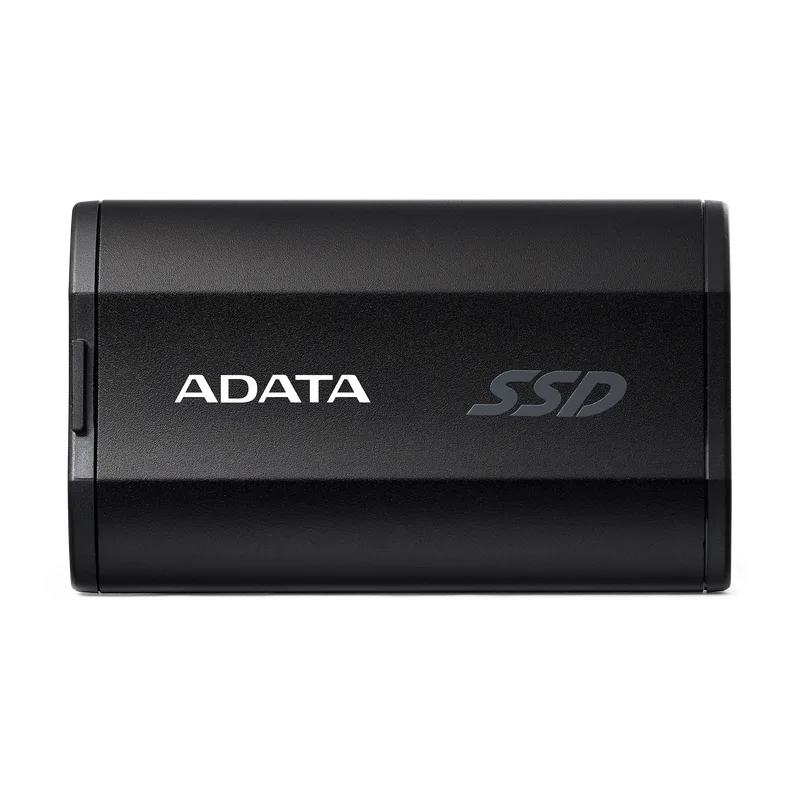
ADATA SD810 1TB Portable SSD
The ADATA SD810 is the most compelling value story in the portable SSD market for gamers right now. It matches the Samsung T9’s 2,000 MB/s rated speeds over USB 3.2 Gen 2x2, carries a superior IP68 water/dust rating, and meets MIL-STD-810G shock and vibration standards — all for around $109.
The aluminum alloy shell is the SD810’s other key differentiator. Plastic-bodied drives trap heat during sustained writes, causing controller throttling that drops effective write speeds mid-transfer. The aluminum casing conducts heat away faster, which Tom’s Hardware and TechRadar reviewers noted keeps the SD810 near its rated speeds longer than most competitors at this price point. The tradeoff is that the drive does get warm in hand during extended large transfers.
At $140 less than the Samsung T9 for identical interface speeds and higher water resistance, the SD810 is the rational choice for anyone prioritizing price-per-performance rather than brand recognition.
Crucial X9 Pro 2TB — Best for Large Libraries
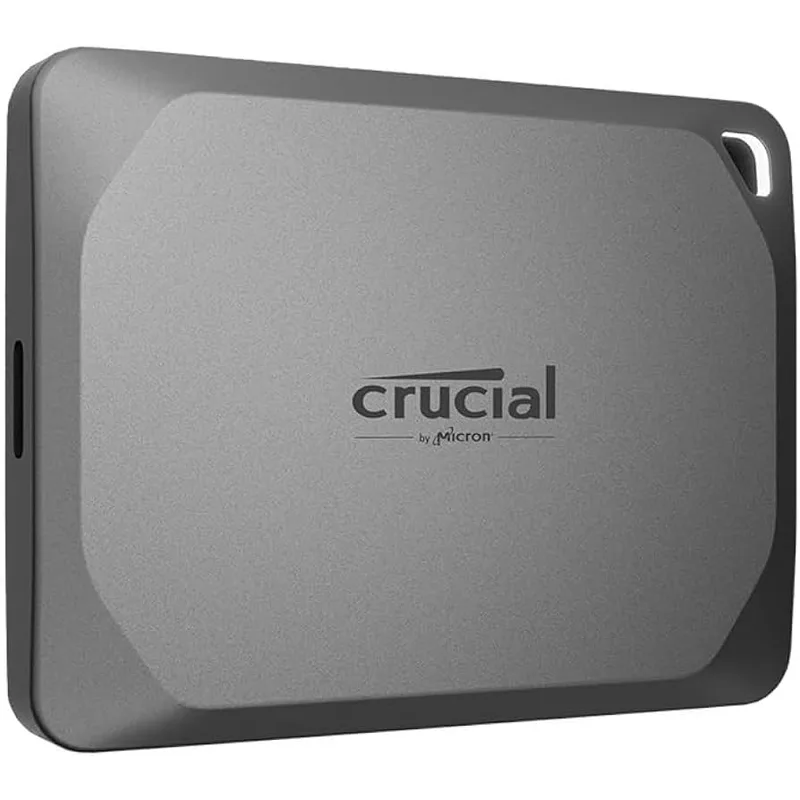
Crucial X9 Pro 2TB Portable SSD
The Crucial X9 Pro 2TB occupies the most practical position in this roundup for the average PC gamer: 2TB of IP55-protected storage at 1,050 MB/s for $149. That’s $0.075 per gigabyte, the lowest cost-per-GB here by a meaningful margin.
At 1,050 MB/s sequential reads and writes, the X9 Pro is fast enough to install games directly from the drive without perceptible loading penalties versus an internal drive in most titles. The symmetrical speeds mean copying from the drive back to an internal NVMe is just as fast as loading onto the drive initially.
The IP55 rating handles desk spills and light rain; the 5-year warranty matches the premium drives in this list. Where the X9 Pro falls short is interface speed — it uses USB 3.2 Gen 2 (10Gbps), which means even a Gen 2x2-capable host port will not help. If you’re moving 100GB game files regularly and have a Gen 2x2 port available, the ADATA SD810 or Samsung T9 will cut transfer times roughly in half. If capacity and price matter more than maximum throughput, the X9 Pro 2TB is the clear choice.
SanDisk Extreme PRO Portable SSD V2 1TB — Most Rugged
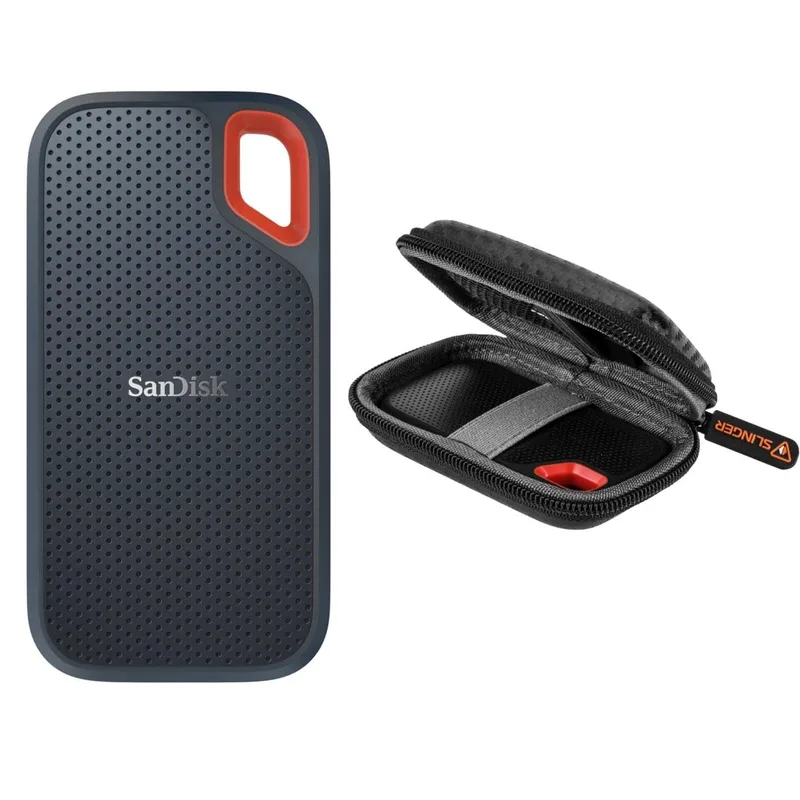
SanDisk Extreme PRO Portable SSD V2 1TB
The SanDisk Extreme PRO V2 delivers 2,000 MB/s USB 3.2 Gen 2x2 performance in the most complete package of any drive here: an aluminum IP65-rated body, a silicone bumper case with carabiner loop, and 256-bit AES hardware encryption with password protection — all in the box.
SanDisk’s Extreme PRO has been the go-to recommendation for creative professionals who need fast, encrypted, and protected portable storage since the first-generation launch, and the V2 maintains that position. For PC gamers, the encryption is relevant if you store game save data alongside any sensitive files, and the included case makes this the best option for commuters who drop drives.
The premium comes at a real cost: $279 buys 1TB, versus the ADATA SD810’s identical Gen 2x2 speeds for $109. The SanDisk’s IP65 is also marginally less protective than the SD810’s IP68. You’re paying for the SanDisk brand, the included accessories, and the encryption hardware — all of which are genuinely useful, but not universally worth the price difference.
Crucial X9 1TB — Best Budget
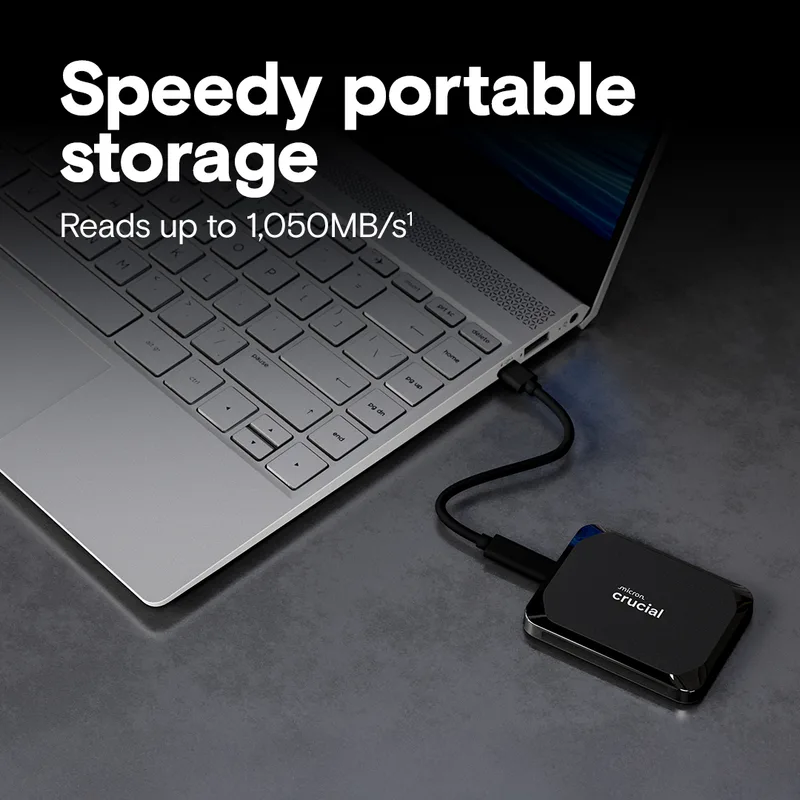
At $75, the Crucial X9 1TB is the baseline recommendation for PC gamers who need extra portable storage without special ruggedness or Gen 2x2 speed requirements. It hits a genuine 1,050 MB/s over USB 3.2 Gen 2, recognizes automatically on Windows, macOS, and Android without reformatting, and is compact enough for any bag or pocket.
The limitations are real: no IP water/dust rating means this drive does not belong near pools, heavy rain, or dusty worksites. The 3-year warranty (versus 5-year on the X9 Pro) is another downgrade. At $10–15 more per terabyte, the X9 Pro adds IP55 resistance and longer coverage — worth considering if the drive will be used outside a controlled desktop environment.
For strictly indoor use — LAN parties, game transfers between two PCs, backup drives that live in a desk drawer — the X9 1TB delivers exactly what it promises at the lowest price here.
FAQ
Do I need USB 3.2 Gen 2x2 to get fast speeds from a portable SSD?
You need a Gen 2x2 host port and a Gen 2x2 drive to reach 2,000 MB/s. If your motherboard only has Gen 2 ports (10Gbps), the Samsung T9 and ADATA SD810 will still work and transfer at ~1,050 MB/s — no faster than the Crucial X9. Check your board’s USB spec before buying a premium Gen 2x2 drive.
Can I use a portable SSD to play games directly, or only for storage and transfer?
You can play most games directly off a portable SSD at speeds above ~500 MB/s with no perceptible difference from a mid-tier internal drive. All five drives in this roundup exceed that threshold. Load times in open-world titles may be slightly longer than on a top-tier PCIe 5.0 internal drive, but the gap is under a few seconds in most titles.
What’s the difference between the Crucial X9 and Crucial X9 Pro?
The X9 Pro adds IP55 water/dust resistance and a 5-year warranty. The standard X9 has no IP rating and a 3-year warranty. Both hit 1,050 MB/s over USB 3.2 Gen 2. For $10–15 more per terabyte, the Pro version is the better long-term buy for anything used outside a desk.
Is a portable SSD fast enough for PS5 extended storage?
No. The PS5’s USB port maxes out around 900 MB/s over USB 3.2 Gen 2, and Sony requires games be stored on internal NVMe PCIe 4.0 storage — or a Sony-certified internal drive — to run. A portable SSD on a PS5 can archive or transfer games, but cannot run them directly. For PC and Xbox, the picture is better: Xbox Series X|S supports USB-attached storage for game play, and all five drives here exceed Xbox’s minimum speed requirements.
Will the NAND shortage affect portable SSD prices in 2026?
Internal M.2 SSDs (Samsung 990 Pro, WD Black SN8100) have seen 100–300% price increases from 2025 lows due to AI datacenter demand. Portable SSDs have been less affected because they rely more on older NAND nodes less demanded by hyperscalers. Prices for portable drives are higher than 2025 lows, but the increases are more moderate — 20–40% rather than triple-digit spikes.
The Bottom Line
For most PC gamers, the ADATA SD810 1TB is the rational pick: it matches the best speeds available (2,000 MB/s Gen 2x2) at the lowest price for that performance tier, with IP68 protection that outclasses pricier options. If you prioritize brand reputation and a premium build, the Samsung T9 1TB is the definitive Gen 2x2 portable drive. For maximum capacity at minimum cost, the Crucial X9 Pro 2TB at $149 covers a full game library at 1,050 MB/s with IP55 protection — more practical than fast for most use cases.