The Intel Core Ultra 5 245K had a rough launch in October 2026 — early reviews from GamersNexus and TechSpot found it slower than the i5-14600K it was supposed to replace, a result that generated significant backlash. Intel pushed microcode updates and Windows scheduler improvements that helped recover some ground. By May 2026, the 245K street price has dropped to ~$219, and Intel also released the Core Ultra 5 250K Plus in March 2026 — an Arrow Lake Refresh chip at the same $219 with more E-cores and better IPC. This review covers where the 245K actually stands at its current price, how it compares to AMD’s competing chips, and whether the 250K Plus situation changes the calculus entirely.
| Spec | Intel Core Ultra 5 245K 7.4/10 | AMD Ryzen 5 9600X 8.6/10 | AMD Ryzen 7 9700X 8.8/10 |
|---|---|---|---|
| cores | 14 cores (6 P + 8 E) / 14 threads | 6 cores / 12 threads | 8 cores / 16 threads |
| base_clock | 4.2 GHz P-core base / 5.2 GHz boost | 3.9 GHz base / 5.4 GHz boost | 3.8 GHz base / 5.5 GHz boost |
| cache | 24 MB L3 | 38 MB total (32 MB L3 + 6 MB L2) | 40 MB total (32 MB L3 + 8 MB L2) |
| tdp | 125W base / 159W MTP | 65W | 65W |
| socket | LGA1851 (Arrow Lake) | AM5 (Zen 5) | AM5 (Zen 5) |
| memory | DDR5-6400 native | DDR5-5600 (up to DDR5-6000 OC) | DDR5-5600 (up to DDR5-6000 OC) |
| Rating | 7.4/10 | 8.6/10 | 8.8/10 |
Prices change daily — tap Check Price for the current Amazon price.
Prices change daily — tap Check Price for the current Amazon price.
Specifications
| Spec | Intel Core Ultra 5 245K |
|---|---|
| Architecture | Arrow Lake (Lion Cove P-cores + Skymont E-cores) |
| Cores / Threads | 14C / 14T (6 P-cores + 8 E-cores, no HT on P-cores) |
| P-Core Base / Boost | 4.2 GHz / 5.2 GHz |
| E-Core Base / Boost | 3.6 GHz / 4.6 GHz |
| L3 Cache | 24 MB |
| TDP / MTP | 125W / 159W |
| Socket | LGA1851 |
| Memory Support | DDR5-6400 native (JEDEC) |
| PCIe | PCIe 5.0 x16 (GPU) + PCIe 4.0 x4 (NVMe) |
| iGPU | Intel Graphics (4 Xe cores) |
| MSRP at Launch | $309 |
| Street Price (May 2026) | ~$219 |
Arrow Lake Architecture: What Changed
Arrow Lake replaced Raptor Lake’s homogeneous P-core approach with a proper hybrid design. The six Lion Cove P-cores are Intel’s highest-IPC x86 design, replacing Raptor Cove from the 14th-gen era. The eight Skymont E-cores represent a similar generational leap in efficiency-core performance. Intel also dropped Hyper-Threading from the P-cores — a controversial decision that results in 14 threads from 14 cores rather than the 20 threads the i5-14600K’s 14 cores provided.
The native memory controller targets DDR5-6400 without overclocking — faster than previous Intel gen’s DDR5-5200 native support. Arrow Lake also introduced a fully disaggregated chiplet design, separating the compute tile from the I/O and SoC tiles. This is the same architectural direction AMD has used for years, and Intel’s implementation on Intel’s 20A and TSMC N5 processes comes with PCIe 5.0 bandwidth for both the GPU slot and future storage.
The design required significant work on Intel’s power management and on Windows-side task scheduling. At launch, Windows was sending workloads to the wrong cores — a fundamental issue that cost the chip 5-15% in gaming. Microsoft shipped a scheduler fix in late 2026, and Intel followed with BIOS updates through 2025. By 2026, with current Z890 BIOS versions, the scheduling issue is resolved for the vast majority of use cases.
Gaming Performance
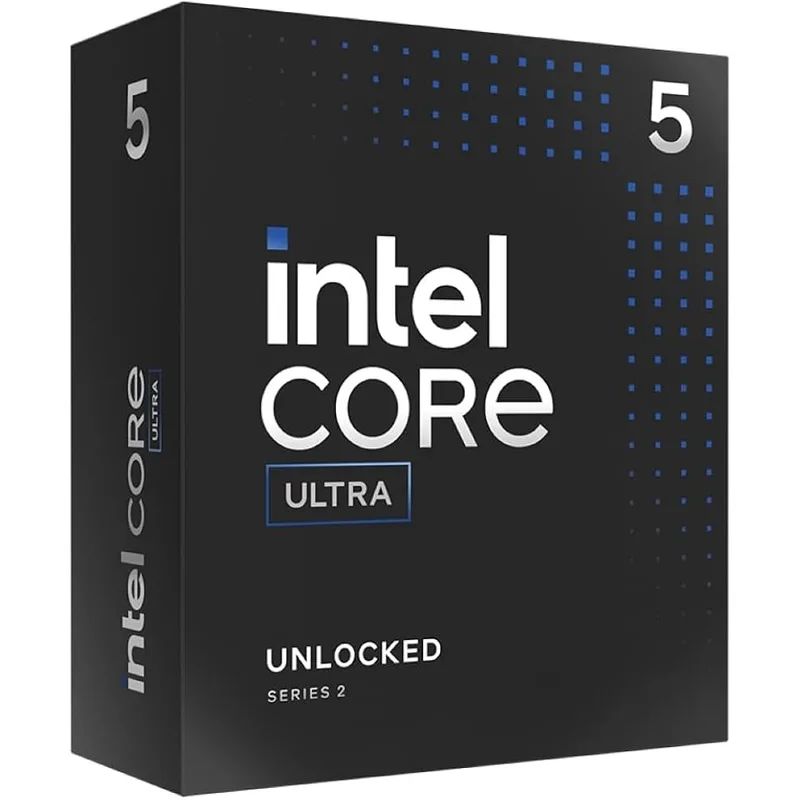
Arrow Lake’s gaming performance after patches lands in a narrower range than launch reviews suggested. Based on benchmark data from GamersNexus and TechSpot, the 245K generally trades blows with the Ryzen 5 9600X in lightly threaded titles and sits 8-15% behind the Ryzen 7 9700X in CPU-limited scenarios. The gap from the initial launch reviews has partially closed, but the 9700X’s gaming advantage is real and persistent.
Gaming Benchmarks (Approximate, 1080p CPU-Limited)
Approximate averages drawn from GamersNexus and TechSpot benchmark data. Results vary by board, BIOS version, and RAM speed.
| Game | Core Ultra 5 245K | Ryzen 5 9600X | Ryzen 7 9700X |
|---|---|---|---|
| Star Wars Jedi: Survivor | ~142 fps avg | ~150 fps avg | ~161 fps avg |
| The Last of Us Part 1 | ~180 fps avg | ~175 fps avg | ~181 fps avg |
| Hogwarts Legacy | ~160 fps avg | ~158 fps avg | ~173 fps avg |
| Cyberpunk 2077 | ~155 fps avg | ~161 fps avg | ~181 fps avg |
The 245K competes closely with the 9600X in less CPU-intensive titles like The Last of Us Part 1, but its worse result in Cyberpunk 2077 — historically sensitive to task scheduling — highlights that Arrow Lake’s hybrid core design still has edge cases. Enabling “Prioritize P-Cores” in Cyberpunk’s settings partially mitigates the gap but doesn’t eliminate it.
For 1440p gaming at 144Hz, the GPU becomes the bottleneck in almost every scenario. At that resolution, you won’t notice the difference between the 245K and the 9700X unless you’re running a top-tier GPU and playing CPU-sensitive titles. The gap matters most at 1080p with a fast GPU, or in esports titles at 240-360Hz where you’re CPU-limited.
Productivity Performance
This is where the 245K genuinely earns its keep. The 14-core hybrid design — especially those 8 E-cores running Skymont — competes well in parallelized workloads. In Cinebench R23 multi-core, the 245K scores approximately 26,000-27,000 points, roughly 25% ahead of the Ryzen 7 9700X (~21,000) and 67% ahead of the Ryzen 5 9600X’s (~16,000).
For video encoding in HandBrake, 3D rendering in Blender, or software compilation jobs, the 245K is meaningfully faster than either AMD chip at this price point. If you split your system time between gaming and content creation — streaming, video editing, 3D work, or development — the 245K’s multi-threaded headroom is genuinely useful.
Single-core performance is competitive with AMD’s Zen 5 chips. The 5.2 GHz P-core boost clock keeps up with the 9600X’s 5.4 GHz and 9700X’s 5.5 GHz in clock-speed-sensitive tasks, with Cinebench single-core scores landing within 5% of either AMD chip.
Thermals and Power
Under gaming load, the 245K draws approximately 112W — confirmed in multiple reviewer measurements, which is 35-65W below the i5-14600K’s sustained gaming draw. This makes the 245K meaningfully cheaper to cool and run long-term. A 240mm AIO handles the 245K without throttling in gaming workloads, and a quality 5-pipe air tower like the DeepCool AK620 or Noctua NH-U12A keeps temperatures stable under 80°C in gaming and well under 90°C in productivity.
Under full sustained load (e.g., extended Cinebench or video encoding), the 245K can approach its 159W MTP ceiling. For a workload-heavy system, budget for a 280mm AIO or a large dual-tower cooler. Intel does not include a cooler in the 245K box.
The contrast with the Ryzen 5 9600X and 9700X is stark. Both AMD chips operate at 65W TDP with a ~88W PPT cap, running 60-75W lower than the 245K under gaming load. A $40 tower cooler is sufficient for either AMD chip; the 245K needs something in the $50-75 range to operate comfortably at its MTP ceiling.
Platform: LGA1851 and Z890
The 245K requires an LGA1851 socket, which means a Z890 motherboard. Z890 boards start at roughly $180-200 for reliable entry-level options — the ASUS TUF Gaming Z890-Plus WiFi at ~$261 is a strong mid-tier choice with solid VRM stages and all the connectivity you need. Z890 includes PCIe 5.0 support for future NVMe drives and GPUs, WiFi 7 on most boards, and DDR5-native memory across the lineup.
The key platform advantage of LGA1851 over AMD’s AM5 is the 250K Plus upgrade path: if you buy a Z890 board now, you can drop in a Core Ultra 5 250K Plus or the higher-end 270K Plus later without changing anything else. AM5 boards offer a similar upgrade path to future Ryzen chips, so this isn’t unique to Intel — but it’s still a useful note for anyone planning a phased build.
Z890 board pricing is competitive with B850/X870 for AMD. Entry Z890 boards run $180-220; comparable AM5 B850 boards start around $195-230. The platform cost gap between Intel and AMD is smaller in 2026 than it was at Arrow Lake’s 2026 launch.
The 250K Plus Problem
In March 2026, Intel released the Core Ultra 5 250K Plus as part of the Arrow Lake Refresh lineup. At ~$219 — the same street price as the 245K — it adds 4 additional E-cores (12 total vs 8), raises the cache from 24 MB to 30 MB, bumps the boost clock to 5.3 GHz, and benefits from revised microcode that handles gaming task scheduling better out of the box. Reviewers at Tom’s Hardware called it “the new best $200 CPU” and GamersNexus confirmed meaningful gaming and productivity gains over the 245K.
At equal pricing, choosing the 245K over the 250K Plus is difficult to justify unless you find the 245K on sale below ~$190 or you’re picking up the 245KF (no iGPU) which routinely dips to $175-185 and represents a stronger value proposition. The 245KF makes particular sense if you already have a dedicated GPU and aren’t building a temporary display output.
The 245K isn’t a bad chip — it’s a competent Arrow Lake part at a price that has corrected significantly from its $309 launch MSRP. But it’s best viewed as a buying opportunity when discounted below the 250K Plus’s street price, not as the default Intel pick at $219.
The Competition
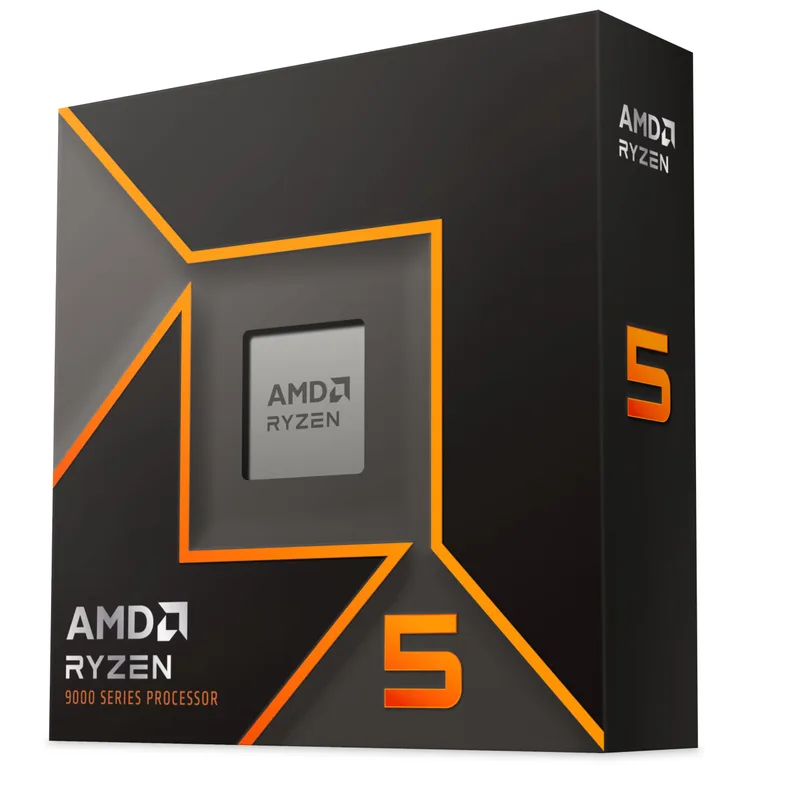
AMD Ryzen 5 9600X
AMD Ryzen 5 9600X at ~$179 is the strongest argument against the 245K. The 9600X delivers comparable or slightly faster gaming performance in most titles at $40 less, consumes 55-65W less power under load, runs on a $50 tower cooler instead of a $60-80 one, and lands on AM5 with future upgrade options. Where the 245K wins — Cinebench multi-core, video encoding, heavy parallelized workloads — the 9600X falls ~25% behind. That trade-off matters if you do content creation work; it doesn’t matter at all if you only game.
For a direct head-to-head, see our Ryzen 5 9600X vs Core Ultra 5 245K comparison.
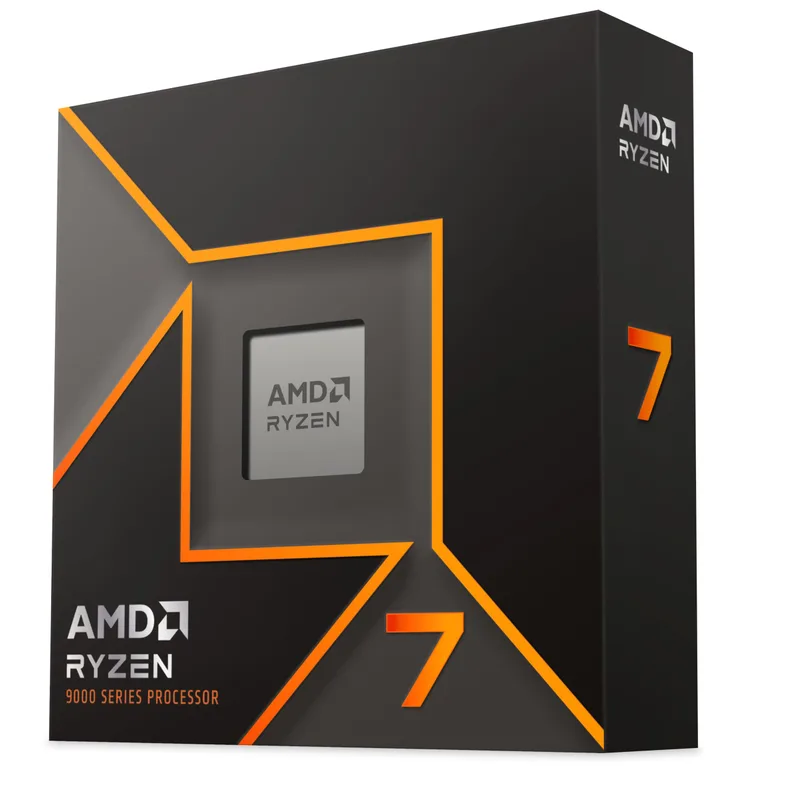
AMD Ryzen 7 9700X
AMD Ryzen 7 9700X at ~$265 is the most capable gaming CPU in this price range. It delivers 5-15% better average frame rates than the 245K in CPU-limited gaming, operates at 65W with excellent thermals, and handles 8-core workloads like streaming and 3D modeling without bottlenecks. The $46 premium over the 245K is fair if gaming performance is your primary metric. Where the 245K has the edge is multi-core workloads — the 245K’s 14-core configuration pulls ahead by roughly 25% in Cinebench multi-core.
FAQ
Does the 245K still make sense to buy in 2026?
Yes, but only at the right price. At $219 it’s hard to recommend over the 250K Plus at the same price or the Ryzen 5 9600X at $179. The 245KF variant at $175-185 is a more compelling case — you lose the iGPU but save enough to offset the platform cost. Watch for sale pricing below $190 for the full 245K.
What motherboard should I use with the 245K?
Any Z890 board with a solid VRM handles the 245K comfortably. The ASUS TUF Gaming Z890-Plus WiFi (~$261) is a reliable mid-range pick with 16+1+2+1 power stages, WiFi 7, and four M.2 slots including PCIe 5.0. For a budget-oriented build, entry-level Z890 boards around $180-200 work fine since the 245K’s 125W TDP doesn’t stress VRM limits.
How does the 245K compare to the Core i5-14600K it replaced?
Gaming performance is similar or slightly worse in some titles, better in others — the i5-14600K’s 20-thread count (vs 14 on the 245K) helped in game-engine tasks that scaled well with Hyper-Threading. However, the 245K draws 35-65W less power under gaming load and runs a much cooler platform. The 14600K platform (LGA1700) is now end-of-life with no further upgrade path; LGA1851 with Z890 remains current. For a new build in 2026, there’s no reason to choose LGA1700 unless you’re buying discounted used parts.
Does the 245K have integrated graphics?
Yes. The 245K includes Intel Graphics (4 Xe cores), which supports display output for initial system setup and troubleshooting. It’s not intended for gaming — the integrated GPU handles desktop use and basic video decode. The 245KF variant saves $30-40 by removing the iGPU entirely; choose it if you already have a discrete GPU ready at build time.
Can the 245K handle game streaming alongside gaming?
With GPU-based encoding (NVENC on Nvidia, AV1 on Radeon RX 9000), yes — the 245K handles gaming and streaming simultaneously without meaningful FPS loss. The 14-core configuration has headroom for software encoding too, though x264 at high quality settings will tax the chip. For streaming-focused builds, the 245K has an advantage over the 9600X’s 6 cores. For a full GPU breakdown for streaming, see our best GPUs for streaming guide.
The Bottom Line
The Intel Core Ultra 5 245K at ~$219 is a capable CPU that has recovered significantly from its troubled launch. Arrow Lake’s microcode and scheduler fixes resolved the worst gaming performance regressions, and the chip’s multi-threaded performance genuinely beats AMD’s equivalents in parallelized workloads. Power draw is meaningfully lower than the Raptor Lake chip it replaced.
The problem is the context. The Ryzen 5 9600X at $179 delivers comparable gaming performance with half the power draw. The Ryzen 7 9700X at $265 beats it in gaming. And the Core Ultra 5 250K Plus launched in March 2026 at the same $219 with more cores, more cache, and better out-of-box performance.
The 245K’s strongest case is the 245KF variant at $175-185 — no iGPU, but you’re getting Arrow Lake’s multi-threaded performance and LGA1851 platform access at a price that’s genuinely competitive. If you find the full 245K on sale below $190, it’s worth picking up. At $219 alongside the 250K Plus, the choice is clear: buy the refresh.