The RTX 50-series launch pushed ATX 3.1 from a nice-to-have into a real requirement. The RTX 5080’s 360W TDP and the 5090’s 575W peak demand mean that PSU selection in 2026 matters more than it did two years ago — and not just for wattage. The ATX 3.1 standard’s native 12V-2x6 connector handles up to 600W transient spikes without the melt risk associated with the older 12VHPWR connector, and virtually every reputable PSU released since mid-2025 includes it. The five units below cover 750W through 1000W, all fully ATX 3.1 compliant, and range from $99 to $150.
| Spec | Corsair RM850e (2025) 9.3/10 | Corsair RM750e (2025) Unavailable 9/10 | Corsair RM1000e (2025) 9.1/10 | Seasonic Focus GX-850 V4 9/10 | be quiet! Pure Power 12 M 850W Unavailable 8.6/10 |
|---|---|---|---|---|---|
| wattage | 850W | 750W | 1000W | 850W | 850W |
| efficiency | Cybenetics Gold (~90%) | Cybenetics Gold (~90%) | Cybenetics Gold (~90%) | Cybenetics Platinum (~92%) | 80 Plus Gold (~90%) |
| standard | ATX 3.1 / PCIe 5.1 | ATX 3.1 / PCIe 5.1 | ATX 3.1 / PCIe 5.1 | ATX 3.1 / PCIe 5.1 | ATX 3.1 / PCIe 5.0 |
| connector | Native 12V-2x6 | Native 12V-2x6 | Native 12V-2x6 | Native 12V-2x6 | 12VHPWR + 6+2 pin included |
| modular | Fully modular | Fully modular | Fully modular | Fully modular | Modular |
| warranty | 7 years | 7 years | 7 years | 10 years | 10 years |
| Rating | 9.3/10 | 9/10 | 9.1/10 | 9/10 | 8.6/10 |
Prices change daily — tap Check Price for the current Amazon price.
Prices change daily — tap Check Price for the current Amazon price.
Quick Picks
- Best overall — Corsair RM850e (2025): 850W ATX 3.1 for $119. Right-sized for RTX 5070 Ti builds and below, fully modular, Cybenetics Gold certified. The default recommendation for 90% of gaming builds.
- Best value at 850W — be quiet! Pure Power 12 M 850W: 850W for $99 with a 10-year warranty. Best-in-class noise output and the cheapest credible ATX 3.1 option available.
- Best for RTX 5080 builds — Corsair RM1000e (2025): 1000W in a compact 140mm chassis. The RTX 5080’s 360W TDP leaves you 640W for the rest of the system.
Buying Guide: What to Look for in a 2026 Gaming PSU
ATX 3.1 vs ATX 3.0 — Does It Actually Matter?
ATX 3.1 tightened the spec for GPU transient power handling. Under the old ATX 3.0 standard, PSUs had to handle 2× their GPU connector’s rated wattage in instantaneous spikes. ATX 3.1 extends this to 3× for the native 12V-2x6 connector.
In practice, this matters most for the RTX 5080 and 5090. NVIDIA’s own PSU recommendations list 850W for the 5080 — but that assumes a native 12V-2x6 connection and an ATX 3.1 PSU. Using an older ATX 3.0 unit with an adapter cable is not recommended and was responsible for a significant portion of reported cable melt incidents during the RTX 40-series launch cycle.
For the RTX 5060 Ti, 5070, and 5070 Ti, an ATX 3.0 unit with a proper 12VHPWR cable is technically fine. For 5080 and above, buy ATX 3.1.
How Much Wattage Do You Actually Need?
| GPU | GPU TDP | Recommended PSU Wattage |
|---|---|---|
| RTX 5060 (155W) | 155W | 650W |
| RTX 5060 Ti (180W) | 180W | 650W |
| RTX 5070 (200W) | 200W | 750W |
| RTX 5070 Ti (285W) | 285W | 750W |
| RX 9070 XT (220W) | 220W | 750W |
| RTX 5080 (360W) | 360W | 850W minimum, 1000W recommended |
| RTX 5090 (575W) | 575W | 1000W minimum |
Add 65–120W for a mid-to-high-end CPU (Ryzen 9800X3D or Core Ultra 9 285K at full load), plus 50–100W for storage, fans, and RAM. A Ryzen 9800X3D + RTX 5070 Ti system draws roughly 450–500W under gaming load, making 750W comfortable and 850W generous.
Efficiency Ratings: Gold vs Platinum
80 Plus Gold guarantees 87–89% efficiency at 50% load. Cybenetics Gold is stricter — it requires 90% efficiency at 50% load and measures real power factor correction, not just AC-to-DC efficiency.
The practical difference at 500W gaming load:
- 80 Plus Gold: ~56W wasted as heat
- Cybenetics Gold: ~50W wasted
- Cybenetics Platinum: ~40W wasted
Over a year of 8-hour/day gaming, Cybenetics Platinum saves roughly $5–8 compared to Gold at average US electricity rates. Meaningful on a workstation that runs 24/7, negligible for a dedicated gaming PC.
Fully Modular vs Semi-Modular
Every PSU in this roundup is fully modular. All cable connections detach from the PSU — you only route the cables you need. Semi-modular units have fixed 24-pin and EPS CPU cables. For a gaming build, fully modular is worth the $10–15 premium for the cable management alone.
Fan Noise and Zero-RPM Mode
The Corsair RMe (2025) line and Seasonic Focus GX V4 both feature zero-RPM modes at low load — under gaming conditions drawing 300–450W, the fan is often completely stopped. The be quiet! Pure Power 12 M’s 120mm fan spins constantly but stays below 18 dBA, which is quieter than most case fans at low speed.
Detailed Reviews
1. Corsair RM850e (2025) — Best Overall
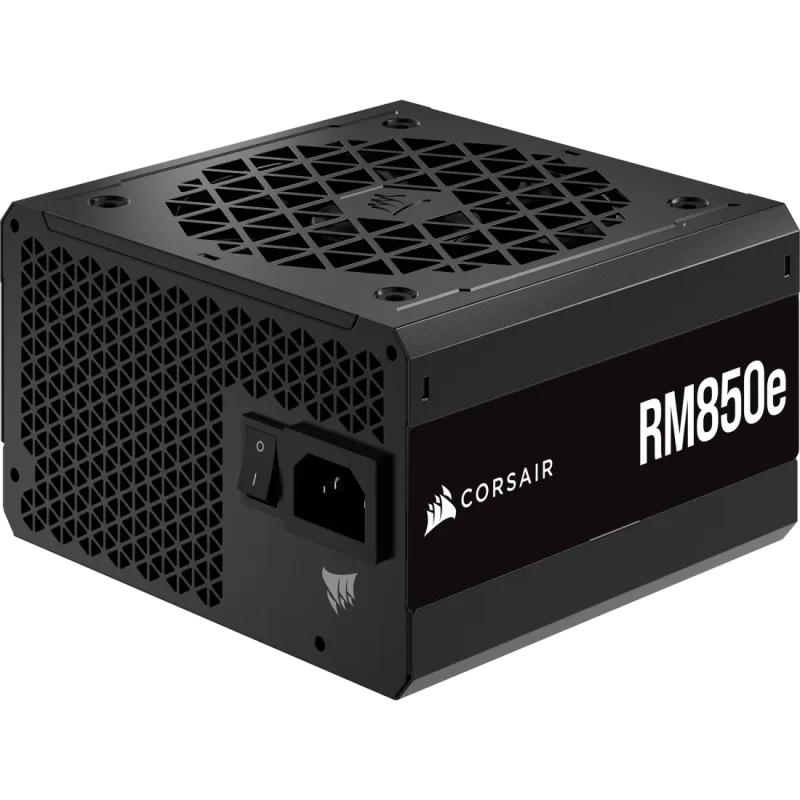
The RM850e (2025) replaced the previous RM850e (2026) with a full ATX 3.1 redesign and a native 12V-2x6 output socket. The distinction matters: the 2026 model used a 12VHPWR plug with an adapter cable, which was technically ATX 3.0 compliant but carried the same adapter-related concerns as any VHPWR implementation. The 2025 revision eliminates the adapter entirely.
Efficiency-wise, Cybenetics measured the RM850e (2025) at 90.2% at 50% load (425W) — comfortably above the 80 Plus Gold threshold. Noise output is exceptional: at 425W, the fan stays below 25 dBA, and below roughly 340W it stops entirely.
The 140mm chassis depth fits virtually every mid-tower. Corsair’s modular cables are sleeved and reasonably flexible, though some builders prefer the third-party cable sets for tighter routing. The 7-year warranty is the main area where Seasonic pulls ahead.
Who should buy this: Anyone building with an RTX 5070, 5070 Ti, or RX 9070 XT. At $119, this is the go-to recommendation before you need 1000W.
2. Corsair RM750e (2025) — Best for Mid-Range Builds
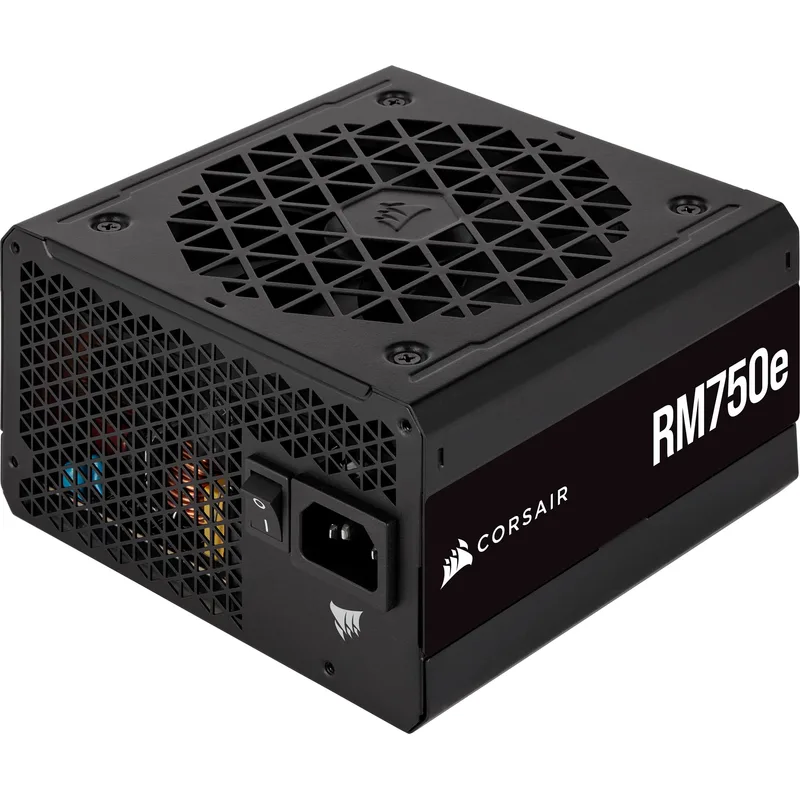
Corsair RM750e (2025)
The RM750e (2025) uses the same platform and internals as the RM850e — identical efficiency rating, identical zero-RPM fan behavior, identical ATX 3.1 compliance. The only difference is 100W less headroom and a $10 lower price.
For RTX 5060 Ti builds, this is the correct PSU. An RTX 5060 Ti (180W) paired with a Ryzen 7 9700X (65W gaming TDP) and typical accessories draws roughly 300–350W under gaming load. 750W provides 400W of headroom — more than enough for transient spikes and future peripheral additions.
The native 12V-2x6 connector on the RM750e is rated for up to 600W transient delivery, which exceeds the 5060 Ti’s spec sheet by a comfortable margin. No adapters, no concerns.
Who should buy this: RTX 5060, 5060 Ti, and RTX 5070 builds where the GPU’s TDP doesn’t exceed 200W. A Ryzen 9800X3D + RTX 5070 system running 750W is fine under gaming loads — step up to 850W only if you’re overclocking heavily.
3. Corsair RM1000e (2025) — Best for High-End Builds
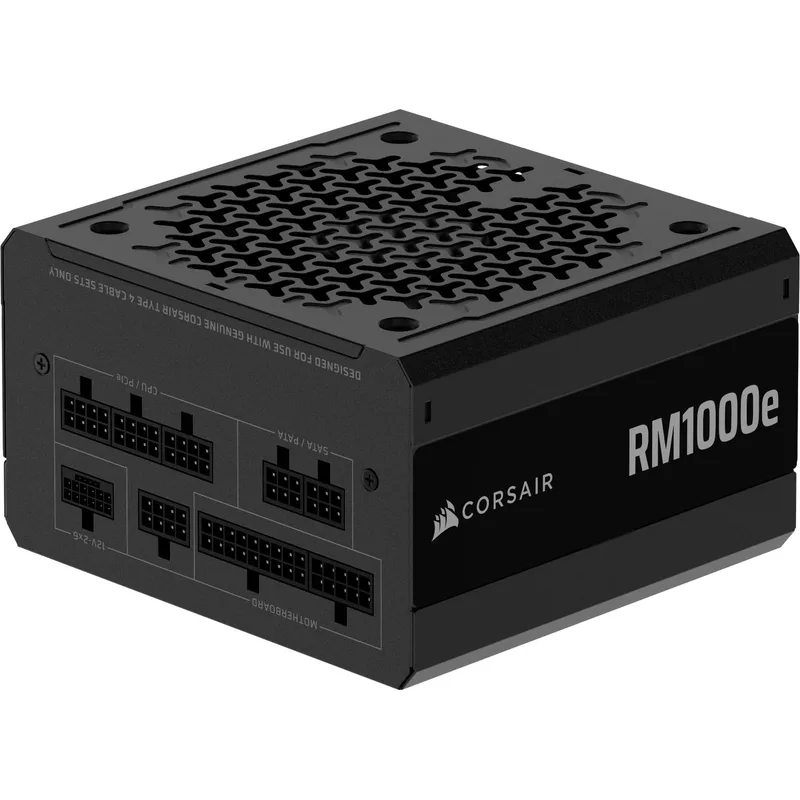
NVIDIA recommends an 850W PSU for the RTX 5080 — but that’s a minimum, not an ideal. The RTX 5080 pulls 360W sustained, and with a Core Ultra 9 285K or Ryzen 9 9950X3D at full load, total system draw approaches 500–550W. An 850W unit has only 300W of headroom at that point.
The RM1000e gives you 450–500W of headroom, which comfortably absorbs the RTX 5080’s documented 3× transient spikes. Tom’s Hardware measured the 2025 revision’s output regulation within ±1.5% across all rails — better than the ±3% many budget units show under transient conditions.
At 140mm depth, this fits in every ATX case that accommodates the RM850e. The wattage increase doesn’t add physical bulk — it adds current capacity on the 12V rail.
Who should buy this: RTX 5080 builds, workstations that also game, and anyone who plans to upgrade to an RTX 5090-tier GPU within two years. For a detailed look at the Corsair RM1000x — an alternative 1000W modular option — see our Corsair RM1000x review.
4. Seasonic Focus GX-850 V4 — Best 10-Year Warranty
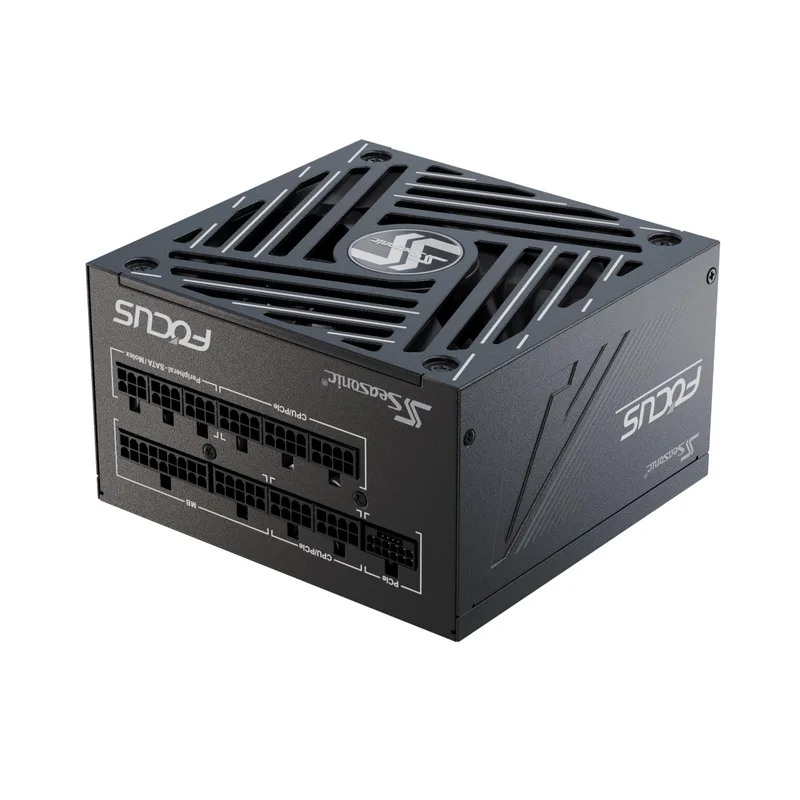
Seasonic’s Focus GX V4 is the 2024/2025 refresh of the company’s most popular PSU line, updated to ATX 3.1 with native 12V-2x6 output. The Cybenetics Platinum efficiency rating — measured at 92% at 50% load — is 2% better than the Corsair RMe series’ Gold rating.
The 10-year warranty is the main differentiator. Corsair’s RMe series caps at 7 years. For a workstation or home server that runs continuously, the longer coverage is worth the $21 premium over the RM850e. For a pure gaming PC, the practical difference is minor — PSUs rarely fail between years 7 and 10 in gaming use cases. For a full head-to-head on how Corsair and Seasonic stack up across wattage tiers, see our Corsair vs Seasonic PSU comparison.
The 135mm FDB fan uses a hybrid mode but some owner reports note the fan spins at a low RPM under moderate load rather than stopping completely like the Corsair zero-RPM implementation. At 20–22 dBA, it’s inaudible in a case with side panels, but purists will notice the difference.
Who should buy this: Long-term builders, workstation-adjacent setups, or anyone who prioritizes longevity documentation over absolute value.
5. be quiet! Pure Power 12 M 850W — Best Value
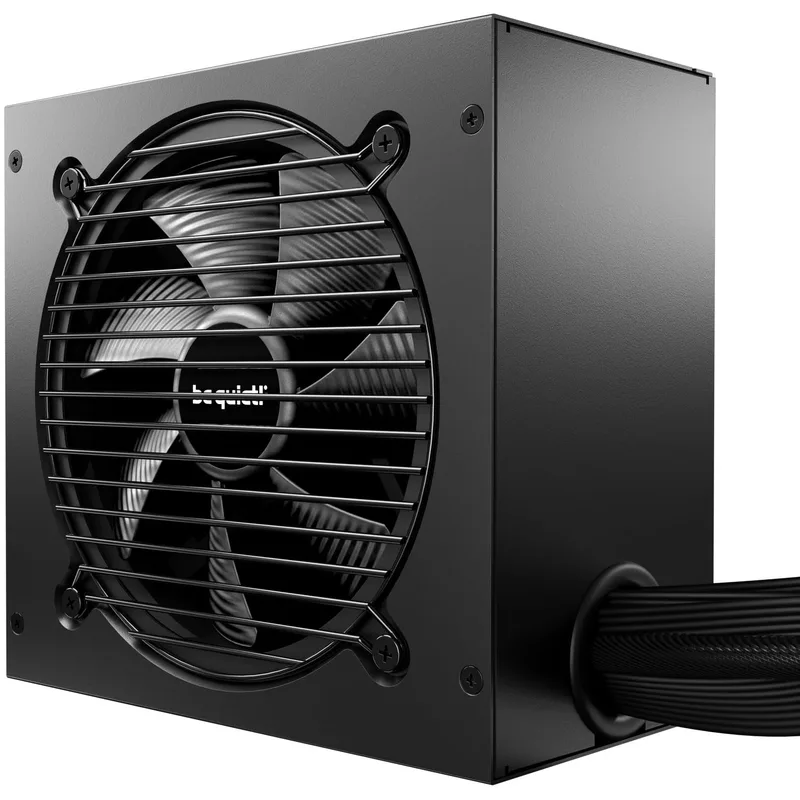
be quiet! Pure Power 12 M 850W
At $99, the Pure Power 12 M 850W is the cheapest unit in this roundup with a reputable brand, 10-year warranty, and 850W capacity. That combination doesn’t usually exist at this price — be quiet! achieves it by using a slightly older connector design (12VHPWR cable rather than a native 12V-2x6 socket) and a less aggressive zero-RPM implementation.
The 12VHPWR distinction matters for understanding compatibility. The Pure Power 12 M ships with a 12VHPWR cable that connects to a standard 6+2-pin output socket. It functions correctly with every RTX 50-series GPU, but it’s not a natively-terminated 12V-2x6 connector from the PSU side — the transient handling relies on the cable’s rated specs rather than the PSU’s internal 12V-2x6 socket. For RTX 5060 Ti through 5070 Ti builds, this poses no practical issue. For RTX 5080 builds, the native 12V-2x6 design of the Corsair RMe series or Seasonic Focus GX V4 is preferable.
The 120mm be quiet! fan is genuinely quiet: independent acoustic measurements by Cybenetics show the Pure Power 12 M 850W averaging below 18 dBA at 50% load. The dual 12V rails deliver stable power — GPU and CPU draw from separate rails, which reduces voltage sag under simultaneous transients.
Who should buy this: Budget-conscious builders using RTX 5060 through RTX 5070 Ti, especially in quieter case builds. Strongest option if you want 850W with a 10-year warranty for under $100.
FAQ
Do I need ATX 3.1 for the RTX 5070 Ti?
Technically, ATX 3.0 with a proper 12VHPWR cable works fine for the RTX 5070 Ti (285W TDP). ATX 3.1 is strongly recommended for the RTX 5080 (360W TDP) and required for the RTX 5090 (575W TDP). Since all five PSUs in this roundup are ATX 3.1 compliant, the question is mostly academic — you’re already covered.
Is 750W enough for an RTX 5080?
No. NVIDIA lists 850W as the minimum for RTX 5080 systems, and the 5080 has documented 3× transient spikes above its 360W sustained draw. A 750W unit may technically handle some builds but operates near its ceiling. The Corsair RM850e (2025) or RM1000e (2025) are the correct choices for RTX 5080 builds.
What’s the difference between 80 Plus Gold and Cybenetics Gold?
80 Plus certifies efficiency at 20%, 50%, and 100% load under controlled lab conditions. Cybenetics uses a stricter methodology with more load points and measures power factor correction separately. A Cybenetics Gold certification generally indicates better real-world efficiency than a standard 80 Plus Gold label. All Corsair RMe (2025) units carry Cybenetics Gold.
Should I buy a semi-modular PSU to save money?
The price gap between semi-modular and fully modular has narrowed significantly. In 2026, a fully modular 850W unit from a reputable brand costs $99–140 — comparable to semi-modular options from the same brands. Fully modular simplifies cable management and makes reinstallation easier; the savings no longer justify the fixed cable clutter for most builds. For a dedicated roundup of the best fully modular PSU options from Corsair, Seasonic, and NZXT, see our best modular power supplies guide.
How long should a gaming PSU last?
A quality ATX 3.1 PSU from a reputable brand should last 10–15 years in a gaming workload. The main failure modes are capacitor aging (especially in hot environments) and connector wear from frequent disconnection. Choosing a unit with 105°C-rated capacitors — like all five in this roundup — significantly extends lifespan compared to budget PSUs using 85°C-rated components.
The Bottom Line
For most gaming builds in 2026, the Corsair RM850e (2025) at $119 covers everything up to the RTX 5080 and is the cleanest all-around recommendation. If you’re building with an RTX 5060 or 5070, the Corsair RM750e (2025) saves $10 with identical quality. RTX 5080 builders should step up to the Corsair RM1000e (2025) — at $150 it buys 400W+ of headroom and the same compact 140mm form factor. The be quiet! Pure Power 12 M 850W at $99 is the right pick if budget is tight and your GPU is below the 5080 tier. For a dedicated comparison of 850W-only ATX 3.1 options, see our best 850W power supplies guide.