Prices verified May 2026. Affiliate links support PCBuildRanked at no extra cost to you.
Budget gaming PC prices have risen sharply in 2026. The AI-driven DRAM shortage has hit DDR4 alongside DDR5 — the 16GB kit in this build that cost ~$45 in 2026 now runs ~$165. A platform that cost $500 in early 2025 now runs closer to $850-900. That’s the market reality. What this build delivers for that money: 1080p gaming at 60+ FPS across every modern title, 100-160 FPS in competitive shooters, and a clear upgrade path through 2028.
The Intel Core i5-12400F + Intel Arc B570 10GB combination is the sharpest budget gaming option in May 2026. The Arc B570 replaced the RX 6600 as the value pick at this tier — it benchmarks ~15% faster at 1080p, carries 10GB GDDR6 versus 8GB, and costs $20 less at current prices. Pair it with the i5-12400F, which sits within 5% of Intel’s current i5-245KF in 1080p gaming, and you have a system that handles Cyberpunk 2077, Elden Ring, and Baldur’s Gate 3 at 1080p High-to-Ultra without compromise. New to PC building? Our beginner’s guide to building your first PC covers every assembly step. For budget GPU alternatives at this tier, see our best budget GPUs under $300 roundup.
| Spec | Intel Core i5-12400F 8.7/10 | ASRock Intel Arc B570 Challenger 10GB OC 8.6/10 | ASRock B760M Pro RS/D4 Unavailable 8.3/10 | Corsair Vengeance LPX 16GB DDR4-3200 8.4/10 | WD Blue SN570 1TB NVMe Unavailable 8.2/10 | Corsair CX550 550W 80+ Bronze Unavailable 8/10 |
|---|---|---|---|---|---|---|
| cores | 6 cores / 12 threads | — | — | — | — | — |
| clock | 2.5 GHz base / 4.4 GHz boost | — | — | — | — | — |
| socket | LGA1700 | — | LGA1700 | — | — | — |
| tdp | 65W | ~131W | — | — | — | — |
| cache | 18 MB L3 | — | — | — | — | — |
| process | Intel 7 (10nm) | — | — | — | — | — |
| Rating | 8.7/10 | 8.6/10 | 8.3/10 | 8.4/10 | 8.2/10 | 8/10 |
Prices change daily — tap Check Price for the current Amazon price.
Prices change daily — tap Check Price for the current Amazon price.
Build at a Glance
| Component | Part | Price |
|---|---|---|
| CPU | Intel Core i5-12400F | Check price |
| GPU | ASRock Intel Arc B570 Challenger 10GB OC | Check price |
| Motherboard | ASRock B760M Pro RS/D4 | Unavailable |
| RAM | Corsair Vengeance LPX 16GB DDR4-3200 | Check price |
| Storage | WD Blue SN570 1TB NVMe | Unavailable |
| PSU | Corsair CX550 550W 80+ Bronze | Unavailable |
| Case | Cooler Master MasterBox Q300L | Check current price |
| Total | Check current price |
Watch deal events on the DDR4 memory specifically — that’s where $20-40 in savings is most recoverable on this build. GPU and CPU prices are relatively stable at the budget tier.
Why These Parts
CPU: Intel Core i5-12400F — A 6-core, 12-thread processor running to 4.4 GHz on the LGA1700 socket. At $150, it competes with Intel’s current Arrow Lake i5-245KF ($249) in 1080p gaming within a 5% margin. The platform advantage over AMD AM5 is DDR4 support: the i5-12400F + B760M Pro RS/D4 + DDR4-3200 16GB totals $445 — and while the Ryzen 5 9600 AM5 platform can run slightly cheaper when DDR5 prices are normal, the current DRAM shortage keeps AM5 at a cost premium. LGA1700 also supports a direct drop-in upgrade to 13th Gen without any board swap.
GPU: ASRock Intel Arc B570 Challenger 10GB OC — The Arc B570 is the clear value leader at the $229 budget tier in May 2026. It benchmarks roughly 15% faster than the RX 7600 at 1080p in published reviews, and its 10GB GDDR6 on a 160-bit bus handles high-resolution texture packs that exposed the RX 6600’s 8GB/128-bit limits. For $229, this is more GPU than was possible at this price point 12 months ago. If the budget stretches to $309, the Intel Arc B580 adds 12GB and comfortable 1440p capability.
Motherboard: ASRock B760M Pro RS/D4 — The DDR4 variant keeps memory costs lower during an expensive DRAM period. Two M.2 slots, dual-channel DDR4 support, and compatibility with 12th through 14th Gen Intel CPUs are everything this build needs.
RAM: 16GB DDR4-3200 — The AI-driven DRAM shortage has hit DDR4 hard — prices quadrupled from 2026 lows. DDR4 remains $40-80 cheaper than equivalent DDR5 capacity, which justifies the Intel DDR4 platform choice. 16GB in dual-channel at 3200 MHz is the minimum for current AAA gaming. If the budget has $30 of flex, a 32GB kit future-proofs better.
Storage: 1TB NVMe — The SN570 at 3,500 MB/s loads most titles in 5-7 seconds. The real-world gap to PCIe Gen4 is under 1 second in game loading benchmarks. 1TB is the minimum for a primary gaming drive. For more on storage sizing, see our how much storage do you need for gaming guide.
PSU: 550W 80+ Bronze — The i5-12400F + Arc B570 draws approximately 180W at the wall during gaming. 550W provides 370W of headroom — adequate for GPU boost spikes, fans, and USB peripherals. The CX550 is a reliable entry-tier Corsair unit backed by a 5-year warranty.
Component Deep Dives
Intel Core i5-12400F
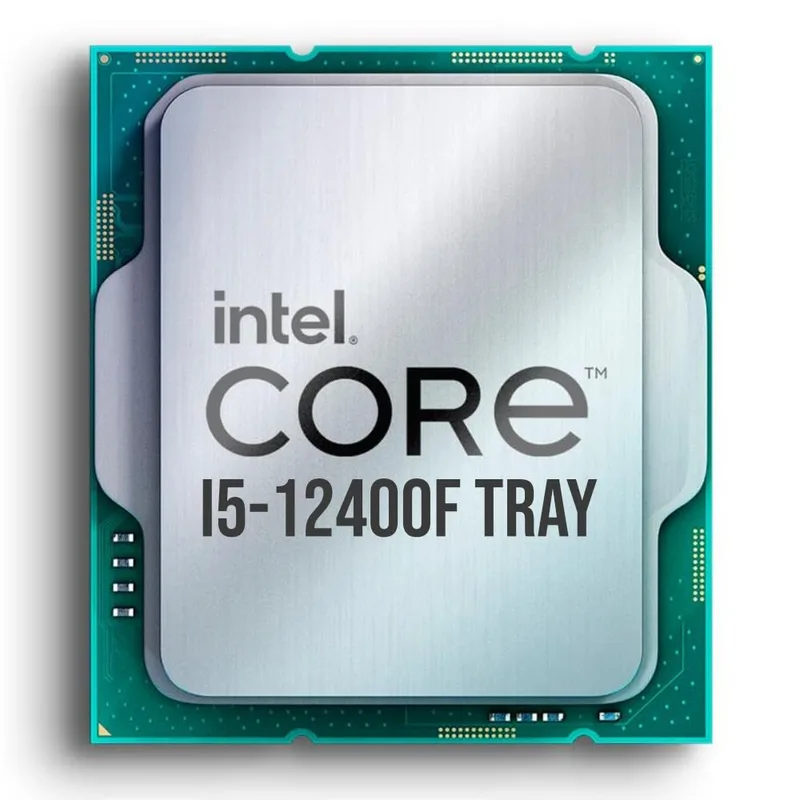
The i5-12400F uses Intel’s Alder Lake architecture: six Performance cores running at up to 4.4 GHz with no Efficiency cores. This simplified layout avoids the scheduler overhead that affected some hybrid 13th/14th Gen configurations in older game engines. For gaming, all six cores run at full clock speeds without OS thread assignment complications.
The included Intel LGA1700 stock cooler handles this 65W processor at stock clocks. Peak gaming temperatures stay around 70-75°C — within Intel’s specifications. No aftermarket cooler budget is needed for this build.
Upgrade path: the B760M Pro RS/D4 accepts 13th and 14th Gen Intel CPUs without any changes. An i5-13600K ($175-200 used) adds four Efficiency cores and approximately 12% single-thread performance on the same board without touching memory or the case.
ASRock Intel Arc B570 Challenger 10GB OC
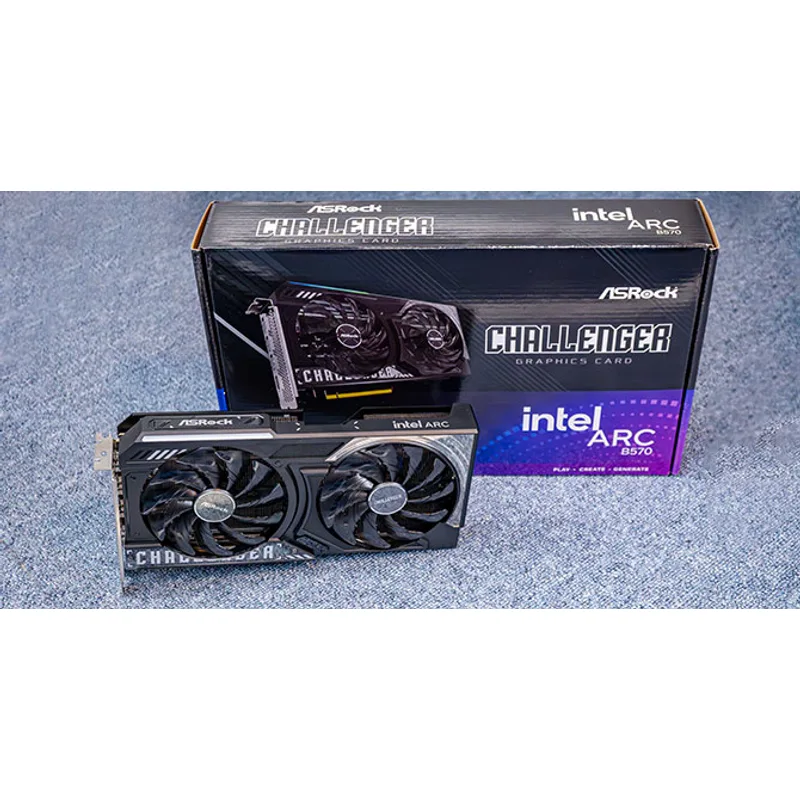
The Arc B570 uses Intel’s Xe2 (Battlemage) architecture with 10GB GDDR6 on a 160-bit bus. The wider memory bus compared to the RX 6600’s 128-bit design provides more bandwidth for texture-heavy scenarios — in Red Dead Redemption 2 with Ultra textures or Baldur’s Gate 3 at maximum quality, the B570 avoids the frame pacing dips that characterize narrower-bus budget GPUs.
At 1080p, the Arc B570 delivers 65-75 FPS in Cyberpunk 2077 at Ultra without ray tracing, 85-100 FPS in Elden Ring at maximum settings, and 120-140 FPS in Fortnite at Epic quality. Competitive titles — CS2, Apex Legends, Warzone — reach 150-200 FPS at high settings on this CPU + GPU combination.
Intel’s Arc driver stack improved substantially through 2025. DirectX 12 and Vulkan titles run cleanly. Some DX11 games show occasional frame pacing irregularities — a known Arc limitation Intel continues to address through driver updates. Intel XeSS upscaling is supported across a growing library; check intel.com for the current title list.
The ASRock Challenger variant runs dual fans with 0dB passive mode at low loads. Under sustained gaming load, fans reach approximately 1,800 RPM — inaudible through a closed case panel.
ASRock B760M Pro RS/D4
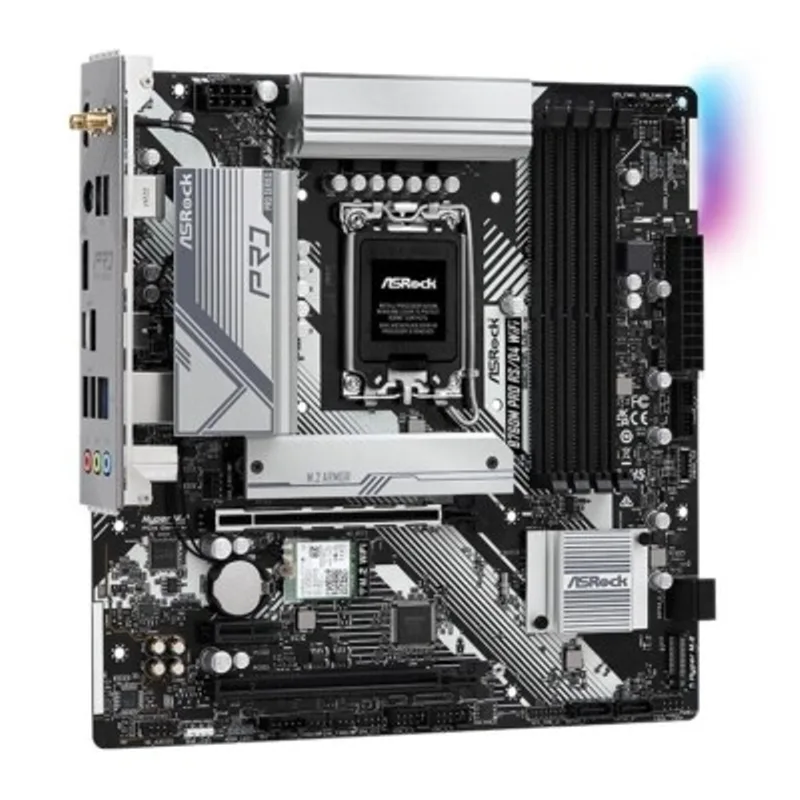
ASRock B760M Pro RS/D4
The B760M Pro RS/D4 is a Micro-ATX DDR4 board for the LGA1700 platform. Its purpose in this build is cost reduction: DDR4 memory runs $60-80 less per 16GB than equivalent DDR5 at current prices, and the board itself is $30-50 less than entry DDR5 alternatives.
Power delivery handles the 65W i5-12400F without issue and supports a 125W i5-13600K in a well-ventilated case. The top M.2 slot runs PCIe 4.0 x4 for the SN570; the second M.2 is SATA-only, suited for budget SATA SSD expansion later. The PCIe x16 slot operates at PCIe 4.0 x8 electrically — more than adequate bandwidth for the Arc B570.
No Wi-Fi on this board. A USB 3.0 Wi-Fi 6 adapter ($15-20) works for general use; competitive players should wire ethernet for consistent latency in online games.
Corsair Vengeance LPX 16GB DDR4-3200
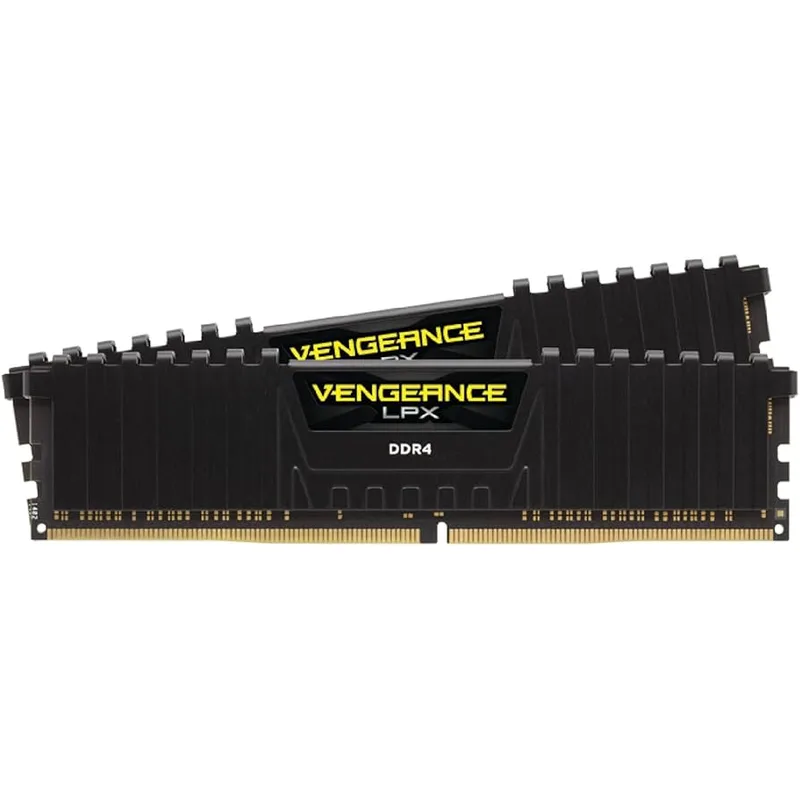
Corsair Vengeance LPX 16GB DDR4-3200
Enable XMP immediately after the first boot. The B760M Pro RS/D4 defaults to 2133 MHz without it — a 33% speed reduction that costs 5-8% in gaming frame rates. The setting is under BIOS → OC Tweaker → XMP Profile 1. One toggle, 30 seconds, done.
The LPX at DDR4-3200 CL16 runs stable at XMP with no manual timing adjustment needed. Analysis on B760 platforms shows DDR4-3600 delivers under 2% gaming gains over DDR4-3200 at current prices — not worth the premium.
The AI-driven DRAM shortage pushed this kit from ~$45 (2026 low) to ~$165 in May 2026. DDR4 and DDR5 prices are not forecast to normalize until late 2027 per market analysts. If budget allows, buying 32GB now rather than upgrading later is the smarter long-term move.
WD Blue SN570 1TB NVMe
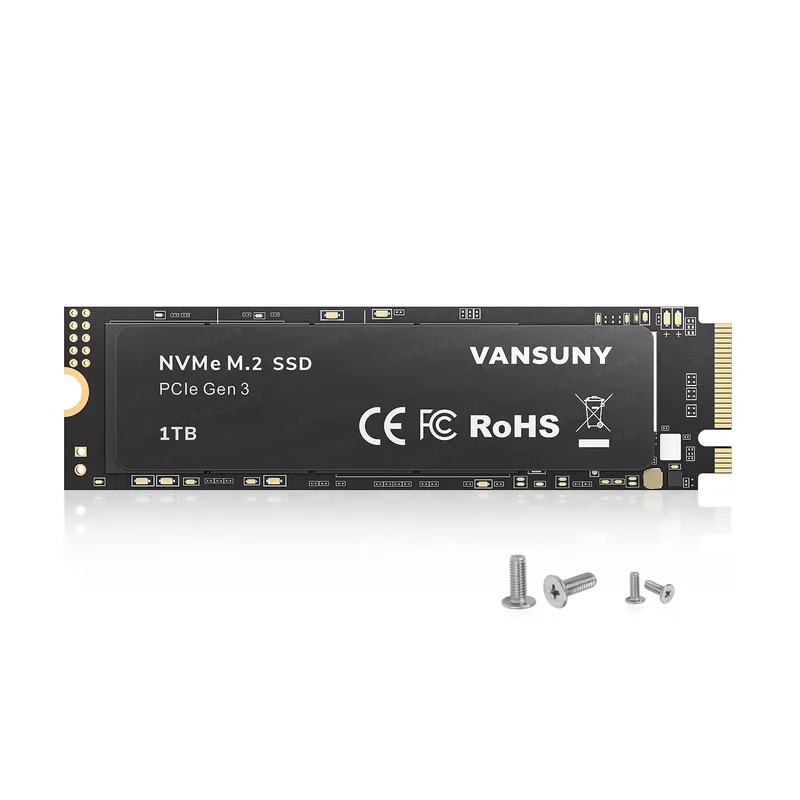
WD Blue SN570 1TB NVMe
The SN570 is a single-sided M.2 2280 drive that fits every M.2 slot regardless of thermal pad or heatspreader clearance. The DRAM-less SM2267XT controller reaches rated sequential speeds; for gaming access patterns (primarily sequential reads at launch, mixed during play) the DRAM-less design shows no measurable penalty.
600 TBW endurance means writing 100GB per day for 16 years before reaching the rated limit. The 5-year Western Digital warranty covers the most likely failure period. For a full comparison of NVMe options across all price points, see our best NVMe SSDs guide.
Corsair CX550 550W 80+ Bronze
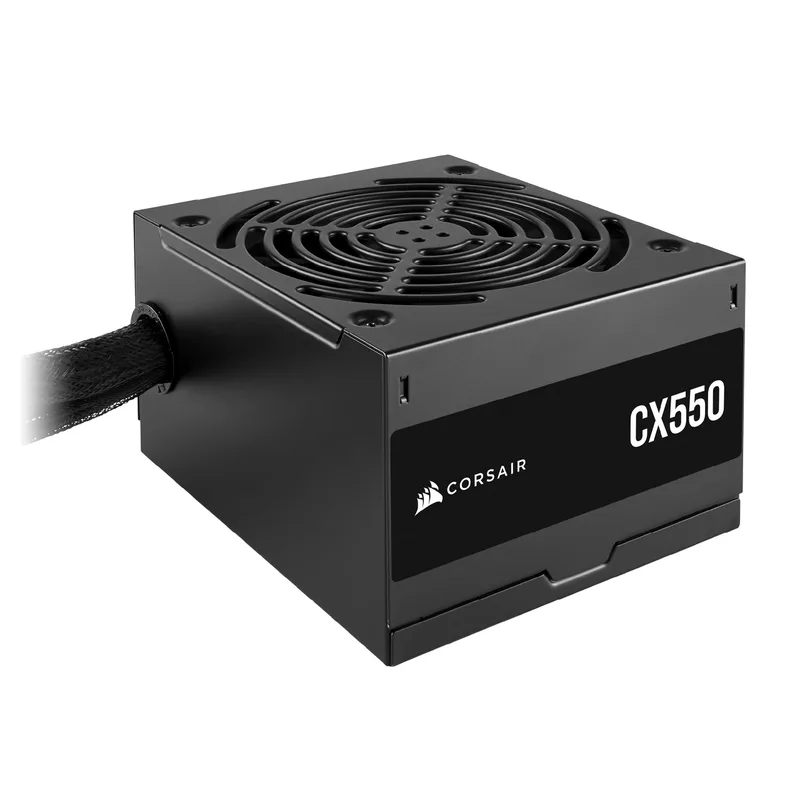
Corsair CX550 550W 80+ Bronze
The CX550 uses Japanese capacitors rated to 105°C — the same specification found in Corsair’s more expensive RM line, not a cost-cut. The i5-12400F + Arc B570 combination draws approximately 130W GPU + 50W CPU under full gaming load. At 36% of rated capacity, the PSU operates in its highest-efficiency band and runs quietly.
Corsair’s CX line has shipped millions of units with a strong budget-tier reliability record. The 5-year warranty covers the period when PSU failures are most likely. If the budget has $10-15 of flexibility, the Corsair CX650M ($65) adds 100W headroom and semi-modular cables — semi-modular makes cable management significantly cleaner in the Q300L’s compact interior.
Build Tips
RAM slot placement: With two sticks, install in slots 2 and 4 (labeled A2/B2 in the B760M manual) for dual-channel. Single-channel costs 4-6% gaming performance — never run a single stick.
XMP at first boot: Memory defaults to 2133 MHz without XMP. Go to BIOS → OC Tweaker → XMP Profile 1. Takes 30 seconds and recovers 5-8% frame rate.
Arc B570 driver: Download Arc drivers from intel.com before launching games after Windows installation. The inbox Windows driver is significantly outdated. Reboot after install.
Stock cooler installation: Mount the LGA1700 push-pin cooler with the board on a flat surface before installing into the case. Press all four pins simultaneously. Confirm all four are locked — a partially seated cooler causes immediate thermal throttling.
Cable routing: Route the 8-pin GPU power cable through the case’s rear channel before installing the GPU. Bundle unused PSU cables (SATA/Molex leads) with velcro ties and tuck into the 3.5” drive bay area behind the motherboard tray.
First boot checklist: Enable XMP (OC Tweaker → XMP Profile 1) → set NVMe as boot drive → verify CPU temperature below 40°C at idle → confirm GPU detected under PCIe devices.
Performance Expectations
All figures at 1080p with the Arc B570 and i5-12400F at stock. Ray tracing disabled throughout.
| Game | Settings | Expected FPS |
|---|---|---|
| Cyberpunk 2077 | Ultra, no RT | 65-75 FPS |
| Elden Ring | Max settings | 85-100 FPS |
| Spider-Man Remastered | High | 65-75 FPS |
| Fortnite | Epic | 120-140 FPS |
| Call of Duty: Warzone | High | 100-120 FPS |
| GTA V | Very High | 100-120 FPS |
| Red Dead Redemption 2 | High | 65-75 FPS |
| Baldur’s Gate 3 | Ultra | 60-70 FPS |
| Apex Legends | High | 130-160 FPS |
| CS2 | High | 160-200 FPS |
Enable Intel XeSS at Quality preset in supported titles (Cyberpunk 2077, Control, Deathloop) for 15-25 FPS gains with minimal visual degradation. Check intel.com for the full XeSS-supported game list.
Upgrade Path
First upgrade: GPU (~12-18 months). When the budget reaches $300-320, the Intel Arc B580 adds 12GB VRAM and pushes the build into comfortable 1440p territory. The CX550 handles the B580’s ~190W TDP without replacement.
Second upgrade: RAM to 32GB. A 32GB DDR4-3200 kit runs ~$130-140 in May 2026 — buy 32GB now if budget allows rather than upgrading later. If upgrading, sell the existing 16GB kit for $60-80 to offset the cost.
Third upgrade: CPU. The i5-12400F holds through 2027 without bottlenecking a mid-range GPU in most games. When it shows its age, an i5-13600K ($175-200 used) drops into the same B760M board and delivers ~12% single-thread improvement plus four additional Efficiency cores for multi-tasking.
What you cannot upgrade: The B760 chipset disables overclocking. For an overclockable build, a Z790 platform requires a full board swap.
FAQ
Can this build run a 144Hz monitor?
Yes, in competitive games. CS2, Apex Legends, Warzone, and Fortnite all reach 120-200 FPS at 1080p High/Epic settings — a 144Hz monitor stays well-fed. In single-player AAA games (Cyberpunk 2077, RDR2), frame rates target 65-75 FPS, where 60Hz or 75Hz is a better match. See our best budget gaming monitors under $300 for picks that pair with this build.
Why not AMD Ryzen 5 9600 + AM5?
The Ryzen 5 9600 ($159) + A620M board ($80) + DDR5-5600 16GB ($120-130) = $360-370 for CPU/board/RAM. This build’s Intel platform totals $445 for the same three components. AM5 is closer to price-competitive than it was 12 months ago, and its upgrade path (Ryzen 9000 series, future X3D chips) is stronger. For a detailed platform comparison, see our best CPUs under $250 guide.
Do I need an aftermarket CPU cooler?
No. The Intel LGA1700 stock cooler handles the 65W i5-12400F at stock with temperatures in the 70-75°C range — within spec. It’s audible under load but not obtrusive. If noise matters or you plan a future K-series CPU upgrade, a Thermalright Peerless Assassin 120 SE ($35) or Cooler Master Hyper 212 Black ($30) both fit the Q300L and drop temps 10-15°C.
Is 1TB enough storage in 2026?
Barely. Modern AAA installs run 80-150GB — 1TB holds 7-12 large games simultaneously. It works if you cycle through titles and uninstall finished games. Adding a 2TB SATA SSD ($70-90) to the second M.2 SATA slot in 6-12 months expands bulk storage without touching the NVMe. See our how much storage do you need for gaming guide for more detail.
Can this build run 1440p?
Partially. The Arc B570 handles 1440p in competitive and less-demanding titles (CS2, Fortnite, older games) at 60+ FPS. In demanding titles like Cyberpunk 2077 at 1440p Ultra, expect 40-50 FPS native — playable with XeSS Quality preset enabled (~55-65 FPS after upscaling). For consistent native 1440p gaming, the Arc B580 ($309) is the right choice.
Why Arc B570 over the RX 6600?
In May 2026 the RX 6600 costs ~$249 while the Arc B570 costs ~$229 and benchmarks faster at 1080p. The B570 carries 10GB GDDR6 versus the RX 6600’s 8GB, on a wider 160-bit bus. The RX 6600 made sense at $200 in 2026; at current prices it no longer represents better value than Intel’s Battlemage alternative.
The Bottom Line
Budget gaming in May 2026 costs more than it did 18 months ago. At ~$864, this build delivers genuine 1080p performance: the Intel Core i5-12400F handles every modern game without CPU bottlenecking at this resolution, and the ASRock Arc B570 Challenger 10GB OC delivers more VRAM and more rasterization speed than the RX 6600 it replaced at a lower price. The DDR4 memory is where the most savings are recoverable — watch for deal events. For builders with another $50-100 in budget, the how to build an $800 gaming PC guide takes this platform further.